李宁

Search documents
国信证券晨会纪要-20260119
Guoxin Securities· 2026-01-19 00:55
Group 1: Outdoor Apparel Industry - The outdoor footwear and apparel industry has maintained rapid growth since 2021, with a CAGR of 25.3% for outdoor apparel and 18.4% for outdoor footwear, projected to grow by 24.5% and 16.3% respectively in 2025 [24][26] - Online sales of outdoor footwear are growing at over 40%, while growth in outdoor apparel has slowed to low single digits since Q2 2025; specific categories like down jackets and quick-dry clothing are experiencing strong growth, with some quarterly YoY growth nearing 100% [24][26] - The industry is seeing increased competition among brands, with top brands like Kailas and Berghaus maintaining high growth through specialized product lines, while others like The North Face are underperforming; pricing trends are weakening overall, but some high-demand brands are still able to increase prices [24][26] Group 2: AI Application in Computing Industry - Major international companies are focusing on AI application in vertical scenarios, with OpenAI launching ChatGPT Health and Amazon optimizing cross-border e-commerce operations through AI [28] - Domestic companies are also advancing in AI applications, with Alibaba upgrading health services and ByteDance's Volcano Engine becoming a key AI cloud partner for major events [28] - The market for AI applications is expected to see significant growth, with predictions indicating that the GEO market will reach $24 billion globally by 2026, driven by high consumer trust in AI applications in China [30][32] Group 3: Public Utilities Industry - The public utilities sector, including electricity, gas, and water, is characterized by its "essential" nature, with stable long-term growth prospects; the transition to low-carbon energy sources is expected to increase the share of clean energy consumption to 28.6% by 2024 [32][33] - The global electricity shortage is becoming more pronounced, leading to increased electricity prices and making the sector an attractive investment area, particularly as AI development accelerates [33]
朝闻国盛:市场短期调整或已基本到位
GOLDEN SUN SECURITIES· 2026-01-19 00:03
Group 1 - The report indicates that the market's short-term adjustment may have reached its limit, with a potential new upward trend expected to begin soon, supported by healthy market dynamics and a majority of sectors showing signs of recovery [6][12][17] - The banking sector is undergoing a transformation, with policies encouraging increased equity asset allocation in bank wealth management, which is expected to drive long-term growth despite short-term challenges [17][18][21] - The geothermal energy sector in the U.S. is experiencing increased demand driven by data centers, with significant investment opportunities identified in companies like Kaishan [23][24] Group 2 - The coal industry is facing a mixed outlook, with global shipping volumes expected to decline, particularly in the EU, while some regions like South Africa and Southeast Asia show growth [26][27] - The pharmaceutical sector is witnessing advancements with the commercialization of innovative drugs like RAY1225, which is expected to enhance long-term competitiveness for companies like Zhongsheng Pharmaceutical [29] - The textile and apparel industry is projected to see a cautious recovery in orders, with recommendations for companies that demonstrate strong operational capabilities and market positioning [31][32]
东吴证券晨会纪要2026-01-19-20260119
Soochow Securities· 2026-01-18 23:37
Macro Strategy - The report indicates that structural "targeted interest rate cuts" have been implemented, and there is still room for "reserve requirement ratio (RRR) cuts and interest rate cuts" in 2026, especially if the RMB exchange rate and bank net interest margins remain stable [1][2][9] - It is expected that monetary policy in 2026 will be adjusted based on economic and financial conditions, with specific timing to be determined through comprehensive assessment [2][9] Fixed Income and Industry Analysis Industry Overview: Spandex - As of January 15, 2026, the price of spandex in China is 23,000 yuan/ton, with a price difference of 10,864 yuan/ton, indicating a high price percentile since 2018 [3][5] - The spandex industry is nearing the end of capacity expansion, and the elimination of outdated capacity is expected to improve industry conditions [3] - By the end of 2025, China's spandex capacity is projected to be 1.44 million tons/year, with an industry operating rate of 85% [3] - The industry concentration is high, with the top five companies holding 84% of the market share, indicating a significant head effect [3] - Demand for spandex is expected to grow rapidly, with a CAGR of 11% from 2017 to 2024, driven by its applications in textiles and hygiene products [5] Company Analysis: Huafeng Chemical - Huafeng Chemical is expected to maintain a spandex capacity of 400,000 tons/year by the end of 2025, with an additional 75,000 tons/year capacity expected to be gradually put into production by the end of 2026 [5] - The company is positioned to benefit from the anticipated improvement in industry conditions due to capacity elimination and increasing demand [5] Company Analysis: Xinxing Chemical Fiber - Xinxing Chemical Fiber is projected to have a spandex capacity of 220,000 tons/year by the end of 2025, with plans for an additional 100,000 tons/year capacity, with the first phase expected to start construction in Q1 2026 [5] - The company is also expected to benefit from the industry's recovery as outdated capacities are phased out [5] Company Analysis: Taihe New Materials - Taihe New Materials is expected to have a spandex capacity of 100,000 tons/year by the end of 2025, contributing to the overall industry capacity and benefiting from the anticipated demand growth [5]
1月16日【港股Podcast】恆指、李寧、美團、京東集團、中芯國際、比亞迪股份
Ge Long Hui· 2026-01-18 20:23
Market Analysis - The Hang Seng Index (HSI) experienced a slight decline of nearly 0.3% on January 16, with intraday highs reaching 27,100 points, close to the upper Bollinger Band, before retreating [1] - The market is currently in a consolidation phase, with limited overall volatility and a trading volume that initially shrank before showing slight recovery [1] - There is a notable divergence in market sentiment, with bullish investors expecting a continuation of the upward trend, while bearish investors anticipate a potential drop to around 26,300 points [1] Derivative Investment Insights - Investors holding overnight bull and bear certificates should be cautious of the risk of forced buybacks, especially over the weekend [2] - Technical analysis indicates support levels for the HSI at 26,100 points, with a potential extreme drop to 25,700 points, while resistance levels are at 27,400 and 27,800 points [2] Company-Specific Analysis Li Ning (02331.HK) - On January 16, Li Ning's stock price broke through the 20 yuan mark, reaching a high of 20.62 yuan before closing at 20.4 yuan, with a noticeable increase in trading volume [3] - The Relative Strength Index (RSI) is nearing 80, indicating potential for a pullback, making it challenging to reach the 25 yuan target in the short term [3] - Key resistance levels are identified at 21.4 yuan and 21.8 yuan, with further upward movement requiring time for consolidation and volume accumulation [3] Meituan-W (03690.HK) - Meituan's stock has shown significant volatility, with a high of 108 yuan and a recent low of 99 yuan, stabilizing around the 100 yuan mark [4] - The stock exhibits a pattern of bouncing off the lower Bollinger Band and facing resistance at the upper band, presenting trading opportunities for short-term investors [4] - Key support is at 96.8 yuan, with a potential drop to 93.5 yuan if this level is breached [4] JD.com - JD.com's stock price has been on a downward trend, closing at 113.6 yuan on January 16, slightly below the middle Bollinger Band [6] - The short-term support level is at 109.7 yuan, with a risk of further decline to 105.5 yuan if this support fails [6] SMIC (00981.HK) - SMIC's stock price showed positive movement, reaching a high of 79.7 yuan and closing at 79.2 yuan, approaching the 80 yuan mark [6] - The stock is currently in a state of indecision, with no clear trend direction, and trading within a narrow range of 74.3 yuan to 81.3 yuan [7] BYD Company (01211.HK) - BYD's stock price briefly surpassed the 100 yuan mark, although it retreated by the end of the trading day [8] - The primary resistance level is at 101.7 yuan, with a potential challenge at 105.7 yuan if this level is breached [8] - Current technical signals indicate a predominance of sell signals, suggesting potential pressure on the stock price in the short term [8]
可选消费W03周度趋势解析:美联储独立性和未来货币政策稳定性的担忧和要求设置信用卡利率上限,本周海外消费集体下挫-20260118
Haitong Securities International· 2026-01-18 14:35
Investment Rating - The report assigns an "Outperform" rating to multiple companies including Nike, Midea Group, JD Group, and Anta Sports, among others [1]. Core Insights - Concerns regarding the independence of the Federal Reserve and future monetary policy stability have led to a collective decline in overseas consumer sectors [4][11]. - The snack sector has shown resilience, outperforming the MSCI China index, while other sectors such as luxury goods and overseas sportswear have faced significant declines [4][11]. - The report highlights that most sectors are currently undervalued compared to their historical averages, indicating potential investment opportunities [9][15]. Sector Performance Summary - **Snack Sector**: Increased by 1.7%, with Wei Long's revenue guidance for 2026 projected to grow over 15% due to innovative products and channel expansion [6][14]. - **Jewelry Sector**: Rose by 1.6%, driven by Chow Tai Fook's strong operational performance expectations for FY26Q3 [6][14]. - **Overseas Cosmetics**: Gained 1.1%, with E.L.F Beauty's sales growth exceeding previous guidance [6][14]. - **Domestic Sportswear**: Increased by 1.5%, with Li Ning's revenue meeting expectations and a positive outlook for net profit margins [8][14]. - **Pet Sector**: Grew by 0.3%, with strong annual growth despite a slight decline in December [8][14]. - **Gambling Sector**: Slight decline of 0.1%, with Galaxy Entertainment showing resilience as a preferred investment choice [8][14]. - **Domestic Cosmetics**: Decreased by 0.3%, with expectations for recovery in 2026 [8][14]. - **Retail Sector**: Fell by 1.5%, with Target's positive leadership changes noted [8][14]. - **Luxury Goods**: Declined by 2.9%, impacted by market concerns over credit risks following Saks Global's bankruptcy [8][14]. - **Overseas Sportswear**: Experienced a significant drop of 4.0%, with major brands like Nike and Adidas facing declines [8][14]. - **Credit Card Sector**: Decreased by 5.1%, influenced by proposed caps on credit card interest rates [8][14]. Valuation Analysis - The report indicates that the expected PE ratios for various sectors in 2025 are below their historical averages, suggesting potential undervaluation: - Overseas Sportswear: 30.4x (57% of historical average) - Domestic Sportswear: 13.5x (71% of historical average) - Jewelry: 22.8x (43% of historical average) - Luxury Goods: 27.4x (49% of historical average) - Gambling: 16.2x (26% of historical average) - Overseas Cosmetics: 41.0x (61% of historical average) - Domestic Cosmetics: 27.3x (51% of historical average) - Pet Sector: 36.9x (50% of historical average) - Snack Sector: 29.8x (72% of historical average) - Retail: 29.9x (54% of historical average) - US Hotels: 34.8x (21% of historical average) - Credit Cards: 28.3x (54% of historical average) [9][15].
餐饮、潮玩及家电行业周报-20260118
Haitong Securities International· 2026-01-18 14:34
Investment Rating - The report assigns an "Outperform" rating to several companies including Pop Mart, Anta Sports, Huazhu Group, Li Ning, Miniso, Atour Group, and Xtep International, with target prices ranging from 6.99 to 354.00 [1]. Core Insights - The integration of AI and advertising models is gradually taking effect, with Generative Engine Optimization (GEO) expected to dominate the traffic competition in the AI-driven search era. The GEO market is projected to grow significantly, with a forecasted global market size of USD 11.2 billion in 2025, reaching USD 100.7 billion by 2030 [3][13]. - Key companies in the sector, such as Qingmu Technology, are actively developing their e-commerce ecosystems and leveraging proprietary systems to enhance their market position [4]. Company Performance - Top performers this week include Guoquan (+11.9%), Haidilao (+10.7%), Nayuki (+6.5%), SuperHi (+5.4%), and Hisense (+3.8%). Conversely, underperformers include JS Global Life (-4.6%), Roborock (-5.2%), TCL Electronics (-6.3%), Chagee (-8.2%), and Pop Mart (-9.3%) [6][14]. - Haidilao has appointed Zhang Yong as CEO, aiming to bring new perspectives and enhance board efficiency [8][15]. Industry Dynamics - Qdama and YUEN KEE FOOD have submitted listing applications to the Hong Kong Stock Exchange, with projected revenues showing growth [11][12]. - Big Catering has also submitted a listing application, with significant revenue growth reported for 2024 and Q3 2025 [12].

纺织服饰周专题:部分服饰制造公司2025年营收公布
GOLDEN SUN SECURITIES· 2026-01-18 13:12
Investment Rating - The report recommends a "Buy" rating for several companies including Shenzhou International, Huayi Group, Anta Sports, and Li Ning, with respective 2026 PE ratios of 12x and 15x for Shenzhou International and Huayi Group [2][9][26]. Core Insights - The textile and apparel industry is experiencing a mixed performance, with some companies showing resilience while others face challenges due to fluctuating orders and profit margins [1][3]. - The report anticipates a cautious improvement in downstream orders for 2026, supported by healthy inventory levels and strong sales performance from certain brands [2][20]. - The sportswear segment is expected to outperform the broader apparel market, driven by strong inventory management and long-term growth potential [3][26]. Summary by Sections Recent Revenue Performance - Several apparel manufacturers reported their 2025 revenue, with Feng Tai Enterprises, Ru Hong, and Yu Yuan Group showing year-on-year changes of -4.5%, +3.2%, and +0.5% respectively for the full year [1][12]. - In December 2025, Feng Tai Enterprises, Ru Hong, and Yu Yuan Group reported monthly revenues down by -0.6%, -3.6%, and -3.7% respectively [1][12]. Industry Outlook - The report indicates a weakening industry sentiment since H2 2025, with Southeast Asia's export performance continuing to surpass that of China [2][17]. - For 2026, the report expects cautious improvements in orders, with a focus on core brand performance and inventory management [20]. Investment Recommendations - Recommended stocks include Shenzhou International and Huayi Group, with Shenzhou International expected to achieve a 10% revenue growth in 2025 and Huayi Group's profits anticipated to recover gradually [2][25]. - Other companies to watch include Wei Xing Co., Kai Run Co., and Jing Yuan International, which are expected to benefit from the anticipated recovery in orders [2][26]. Market Performance - The textile and apparel sector has underperformed compared to the broader market, with the Shanghai and Shenzhen 300 index down by 0.57% while the textile manufacturing sector fell by 0.77% [30].




广发证券纺织服饰行业:纺织服装与轻工行业数据周报1.12-20260118
GF SECURITIES· 2026-01-18 08:06
Core Insights - The textile and apparel industry is experiencing a positive outlook due to rising wool prices and a tight supply-demand balance, with recommendations to focus on leading companies exploring new product lines for growth [5][6] - The report highlights the potential of companies like Li Ning, which is expected to benefit from its partnership with the Chinese Olympic Committee for the 2025-2028 period, leveraging the upcoming Los Angeles Olympics to enhance brand and performance [5] - The report also emphasizes the growth opportunities in the home textile sector, particularly for companies like Luolai Life and Mercury Home Textile, which are capitalizing on the rising sleep economy [5] Textile and Apparel Industry Review - During the period from January 10 to January 16, the Shanghai Composite Index fell by 0.45%, while the ChiNext Index rose by 1.29%. The textile and apparel sector (SW) decreased by 0.38%, ranking 22nd among 31 primary industries [13][15] - The report indicates that the latest PE (TTM) for the textile and apparel industry is 20.75X, with historical highs and lows of 57.80X and 14.44X, respectively [15][16] Key Company Valuation and Financial Analysis - Companies such as Mercury Home Textile (closing price: 20.25 CNY, target price: 23.08 CNY), and Nanshan Zhishang (closing price: 18.54 CNY, target price: 27.61 CNY) are highlighted for their strong growth potential [6] - The report provides detailed financial metrics for various companies, including EPS, PE ratios, and ROE, indicating a generally favorable investment outlook across the sector [6] Light Industry Manufacturing Review - The light industry sector is showing signs of recovery, with improved sales driven by real estate policy changes and consumer upgrades [5] - The report notes that the paper industry is expected to benefit from reduced production by leading companies, leading to a rebound in paper prices [5] Data Tracking in Textile and Apparel - The report tracks significant price movements in key materials, such as PA66 and PA6, with PA66 priced at 14,833 CNY/ton, reflecting a year-on-year decrease of 13.64% [5] - It also highlights the decline in textile exports from China, with a 4.10% drop in textile export value and a 10.10% drop in apparel export value in December 2025 [5]
美国12月成屋销售超预期,AI眼镜迎催化:轻工制造
Huafu Securities· 2026-01-18 04:06
Investment Rating - The report maintains an "Outperform" rating for the industry [4] Core Insights - December home sales in the U.S. exceeded expectations, indicating a potential improvement in consumer demand related to the real estate chain [3] - META aims to double the production capacity of AI RAY-BAN glasses to 20 million units by 2026, suggesting investment opportunities in companies like 康耐特光学, 明月镜片, and 博士眼镜 [3] - Despite weak domestic consumption in home goods and stationery, leading companies are at historical low stock prices, presenting opportunities for valuation recovery [3] Summary by Sections Real Estate and Related Consumption - U.S. home sales in December reached an annualized total of 4.35 million units, up 1.4% year-on-year and 5.1% month-on-month, surpassing expectations of 4.22 million units [6] - The Trump administration has announced plans to enhance housing affordability, including a proposal to prohibit institutional investors from purchasing single-family rental homes [6] Home Goods and Furniture - The home goods sector continues to face challenges, with a reported 4.4% year-on-year decline in sales for large-scale home goods markets in December [41] - The furniture manufacturing industry saw a cumulative revenue decline of 9.1% year-on-year from January to November [43] Paper and Packaging - As of January 16, 2026, prices for various paper products showed mixed trends, with double glue paper at 4725 CNY/ton (unchanged) and corrugated paper down to 2725 CNY/ton (a decrease of 95.63 CNY/ton) [48] - The report highlights a decline in the revenue of the paper and paper products industry, with a cumulative year-on-year revenue drop of 2.7% from January to November [63] Consumer Goods - The medical segment of the consumer goods sector is expected to see growth, with strategic initiatives aimed at enhancing product offerings and operational excellence [5] - The stationery sector is recommended for investment, particularly in companies like 晨光股份, which is expected to maintain steady growth [5] New Tobacco Products - The report notes ongoing investigations into Chinese competitors by British American Tobacco regarding electronic cigarette regulations in the U.S., indicating potential market shifts [10]
靠扒“脏”数据,这家公司干到估值数亿
虎嗅APP· 2026-01-17 13:44
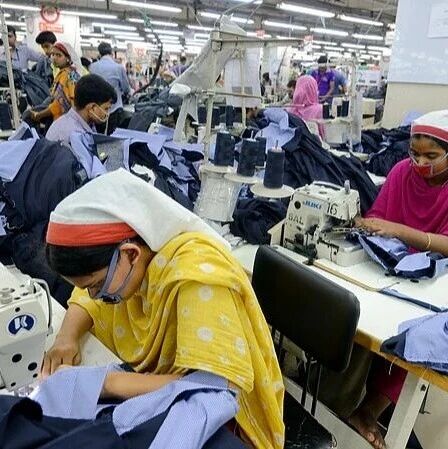
Core Viewpoint - The article discusses how a Chinese startup, Qingdao Vector Spiral, is leveraging artificial intelligence (AI) to transform the traditional garment manufacturing industry, addressing communication issues across the entire supply chain and aiming to enhance productivity through AI integration [5][10]. Group 1: Industry Challenges and Opportunities - The garment industry is characterized by fragmentation, with many small workshops and a lack of structured data, making it difficult to implement digital transformation effectively [7][19]. - Traditional 3D technology in garment design is costly and lacks the creative and generative capabilities that AI offers, which can lead to more efficient and innovative design processes [8][20]. - The startup has developed the largest database in the garment industry and holds the only vertical model registration for the sector, indicating a significant competitive advantage [7][10]. Group 2: AI Implementation and Data Strategy - The company faced challenges in data collection due to the lack of structured data in the industry, necessitating manual data gathering and cleaning processes to create a comprehensive dataset for AI training [11][23]. - By establishing a "four-in-one" data structure that links fabric, design, production, and final product images, the company aims to overcome previous digital transformation failures [11][12]. - The total data volume has exceeded 200 million raw image data points, showcasing the scale of their data engineering efforts [24]. Group 3: Market Entry and Growth Strategy - The company initially targeted the Japanese market for its AI applications due to less competition and higher data quality, successfully acquiring hundreds of clients [30][31]. - Following success in Japan, the company is expanding into the Chinese market, focusing on production enterprises and adapting to complex local demands [32][36]. - The company has established a strong market presence, claiming to have the highest market share among large garment production groups in China [32]. Group 4: Future Developments and Business Model - The company plans to evolve its business model from SaaS to a "technology middle platform" that can standardize non-standard demands into technical components for faster delivery [38]. - Future offerings include "digital labor" that aims to replace traditional roles with AI-driven solutions, thereby optimizing labor costs in the garment industry [39][40]. - The company anticipates significant revenue growth, projecting a threefold increase annually based on enhanced technology capabilities and market expansion [43][44].