Momenta

Search documents
无人驾驶头部公司集体预喜,Robotaxi商业化收入大幅提升
Xuan Gu Bao· 2025-05-21 23:32
Group 1 - Baidu's "萝卜快跑" provided over 1.4 million rides in Q1 2025, a 75% year-on-year increase, totaling over 11 million rides to date [1] - "萝卜快跑" expanded internationally by entering Dubai and Abu Dhabi, with public road testing already underway in Dubai [1] - WeRide reported Q1 2025 revenue of 72.44 million yuan, with a gross margin of 35.0%, and Robotaxi revenue of 16.1 million yuan, accounting for 22.3% of total revenue [1] Group 2 - The year 2025 is anticipated to be a pivotal year for Robotaxi mass production and commercialization, with companies like Xiaoma Zhixing, Momenta, and WeRide expected to benefit [2] - The B-end shared mobility market is rapidly expanding, with a predicted surge in Robotaxi sales around 2026-2027, and by 2030, shared mobility is expected to account for 6.0% of the domestic market [2] - Robotaxi is projected to replace traditional shared mobility and some private car markets, with an optimistic estimate that Robotaxi will capture about 36% of the B-end shared mobility market by 2030, targeting a market size of 200 billion yuan [2] Group 3 - Qianli Technology is closely tied to Cao Cao Mobility, with its Robotaxi business expected to move towards commercialization [3] - BAIC Blue Valley's product lineup includes the Extreme Fox Alpha T5 Robotaxi [4]

削减电动化投资 本田重回混动战略
Bei Jing Shang Bao· 2025-05-21 16:42
Group 1 - Honda has adjusted its electric vehicle (EV) sales target, now expecting EV sales to be below the previously announced 30% by 2030 due to a slowdown in the EV market [1] - The company plans to enhance its hybrid vehicle lineup, aiming to launch 13 next-generation hybrid models globally over the next four years starting in 2027 [1] - Honda's total vehicle sales target is to increase by over 3.6 million units by 2030, with hybrid vehicle sales expected to rise by 2.2 million units [1] Group 2 - For the fiscal year 2024, Honda reported a revenue increase of 6.2% to 21.69 trillion yen, but operating profit and net profit saw significant declines, with operating profit down 12.2% to 1.21 trillion yen and net profit down 24.5% to 835.84 billion yen [2] - The company anticipates that tariffs from various countries will impact the operating profit by 650 billion yen in the next fiscal year, with an estimated effect on 550,000 vehicles and a profit impact of about 300 billion yen [2] - Honda's revenue forecast for fiscal year 2025 is 20.3 trillion yen, a decrease of 6.4%, with operating profit expected to drop by 58.8% to 500 billion yen and net profit projected to fall by 70.1% to 250 billion yen [2] Group 3 - Honda is developing a new generation of Advanced Driver Assistance Systems (ADAS) to be widely adopted in its electric and hybrid models launching in North America and Japan in 2027 [3] - In China, Honda is collaborating with Momenta to create an ADAS suitable for local road conditions, with all new models in the Chinese market set to feature this technology [3] - The company aims to implement a robust supply chain strategy focused on mixed production lines for electric and hybrid vehicles, ensuring the supply of electric components centered around batteries [3] Group 4 - Honda plans to modularize its electric motorcycles and will start production at a new factory in India in 2028, aiming to capture the leading market share in the electric motorcycle sector [4] - The strategic adjustments by Honda reflect the broader challenges faced by traditional automakers in the electrification wave, balancing high R&D costs with uncertain market demand [4] - Other automakers, like Ford, have also shifted focus from electric to hybrid vehicles due to lower-than-expected demand, indicating a trend among traditional manufacturers [4]

融资、组无人车队、筹备IPO 享道出行高调抢位新赛道
Jing Ji Guan Cha Wang· 2025-05-21 14:57
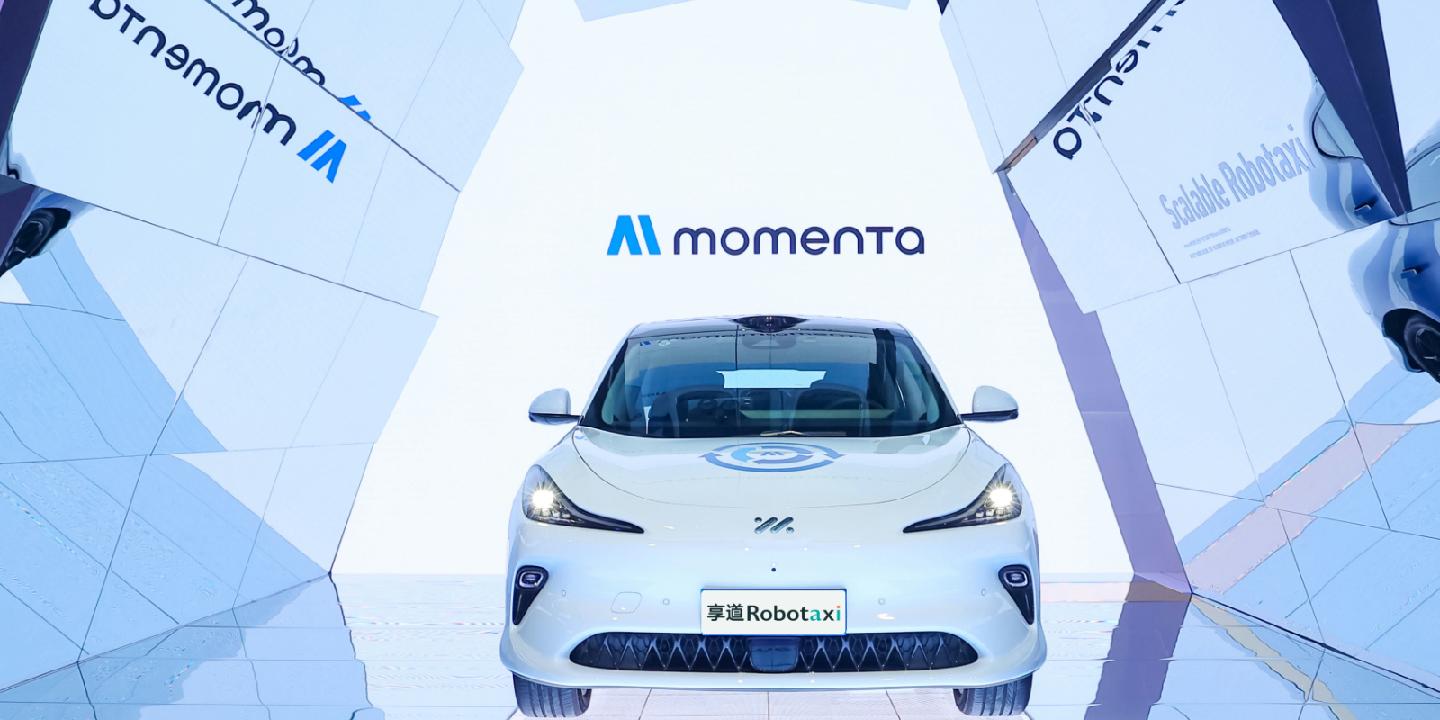
Core Viewpoint - The shared mobility sector is witnessing significant strategic moves, particularly by the company Xiangdao Mobility, which has completed a C-round financing of over 1.3 billion yuan and is accelerating its IPO process while launching a Robotaxi fleet in Shanghai [2][3][4]. Financing and Strategic Partnerships - Xiangdao Mobility's C-round financing of 1.3 billion yuan is the largest in the shared mobility sector in the past three years, involving various industry funds and local government resources [4][5]. - The company has formed a strategic partnership with Momenta to launch a scalable Robotaxi operation, with plans to deploy a fleet of 200 vehicles by 2026 [5][6]. Business Model and Market Position - Xiangdao Mobility has clarified its three main business lines: personal mobility, enterprise mobility, and future mobility, with ride-hailing being its primary business [2][4]. - The company aims to position itself as a "one-stop smart mobility comprehensive body," emphasizing its integration of automotive resources, technology, and ecosystem [10]. Robotaxi Operations - The Robotaxi fleet will utilize the production model of the SAIC Zhiji LS6, which is expected to enhance operational stability and reduce costs [6][7]. - The company has already completed over 330,000 orders and driven more than 2.5 million kilometers, indicating a strong foundation for large-scale Robotaxi operations [9]. IPO Aspirations - Xiangdao Mobility is under pressure to expedite its IPO process, especially as competitors like Caocao Mobility and others are also pursuing public listings [9][10]. - The company aims to achieve profitability in its ride-hailing business by mid-2024, which is crucial for its IPO plans [9].

Robotaxi新消息密集释放,量产元年来临谁在领跑?
美股研究社· 2025-05-21 11:59
Core Viewpoint - The Robotaxi industry is experiencing a significant competitive race for commercialization, with major players in both the US and China making substantial advancements towards operational deployment by 2025 [1][2]. Group 1: Market Overview - The global Robotaxi market is projected to grow from $290 million in 2025 to $66.6 billion by 2030, with China expected to capture over half of the global market share [4]. - The transition from the fourth to the fifth stage of Robotaxi development is critical, as many companies have spent 5-7 years in technology validation and exploration [4][6]. Group 2: Technological Advancements - Companies like Xiaoma Zhixing have achieved significant milestones, operating nearly 300 Robotaxis and accumulating over 45 million kilometers in testing, laying a solid foundation for mass production [6]. - Xiaoma Zhixing's self-developed "World Model" and "Virtual Driver" technologies enable extensive simulation and real-time adaptability, enhancing operational reliability [10][11]. Group 3: Cost and Production - Achieving large-scale production of Robotaxis hinges on reliability and economic viability, with a focus on cost control and vehicle-level integration [8][11]. - Xiaoma Zhixing's seventh-generation vehicle system is set to reduce production costs by 70% compared to previous models, enhancing economic feasibility for mass production [11][13]. Group 4: Commercialization Path - The commercialization of Robotaxis is progressing towards a clear operational model, with Xiaoma Zhixing aiming for single-vehicle profitability by 2025 through cost reductions and efficient monitoring [15][19]. - The expansion of application scenarios from closed environments to urban areas is crucial, with Xiaoma Zhixing targeting high-density markets such as city centers and transportation hubs [18][19]. Group 5: Competitive Landscape - The competitive landscape is evolving, with companies like Waymo and Cruise facing challenges while Chinese firms like Xiaoma Zhixing leverage local advantages to accelerate their market presence [6][19]. - Partnerships with various automotive manufacturers are reducing supply chain dependencies and ensuring stable production capacity for Robotaxi services [13].
2025上海车展,零部件企业破局重构产业格局
Jing Ji Guan Cha Bao· 2025-05-21 08:32
Core Insights - The 2025 Shanghai Auto Show serves as a significant platform for the automotive supply chain, showcasing a transformation from "supporting players" to "leading players" in the industry [1][16] - The exhibition area for auto parts spans 100,000 square meters, hosting over 1,500 suppliers from 28 countries, marking it as the largest auto parts display in history [2][4] - The event highlights the shift towards smart and electric vehicles, with a notable presence of both traditional suppliers and new tech companies [2][3] Industry Transformation - The automotive supply chain is evolving with technology companies entering the market, changing the competitive landscape from hardware manufacturing to a software-hardware integrated ecosystem [3] - The collaboration between component suppliers and vehicle manufacturers is shifting from "supplying" to "joint development," as seen in partnerships like Huawei with Jianghuai Auto and CATL with SAIC [3][5] Scale and Competition - More than half of the world's top 100 auto parts suppliers participated in the show, showcasing their advanced technologies and products [4][5] - Domestic companies like CATL and Huawei are demonstrating significant growth and technological advancements, indicating a shift in industry power dynamics [5][11] Technological Innovations - The event showcased breakthroughs in battery technology, including CATL's sodium-ion battery and BYD's all-solid-state battery, which address safety and performance concerns [7][8] - Major Tier 1 suppliers are accelerating local R&D efforts, with Bosch and Continental introducing advanced driver assistance systems that leverage local technology [9][10] Local Market Dynamics - Chinese auto parts companies are rapidly gaining ground, with over 1,200 domestic automotive chips displayed, reflecting a shift from being a backup option to a primary choice for automakers [11] - Companies like Huawei and CATL are setting benchmarks in technology and ecosystem development, with innovative solutions like rapid battery swapping and smart vehicle systems [12][13] Global Strategy and Localization - Multinational companies are deepening their local strategies in China, with significant investments and a focus on integrating into the local automotive ecosystem [13][14] - The trend of localization is becoming essential for global suppliers, as they adapt to the unique demands of the Chinese market while also aiming for global outreach [15][16]

智能辅助驾驶竞速与暗战:万亿市值谁领衔,技术功能哪家强?
Bei Ke Cai Jing· 2025-05-21 04:11
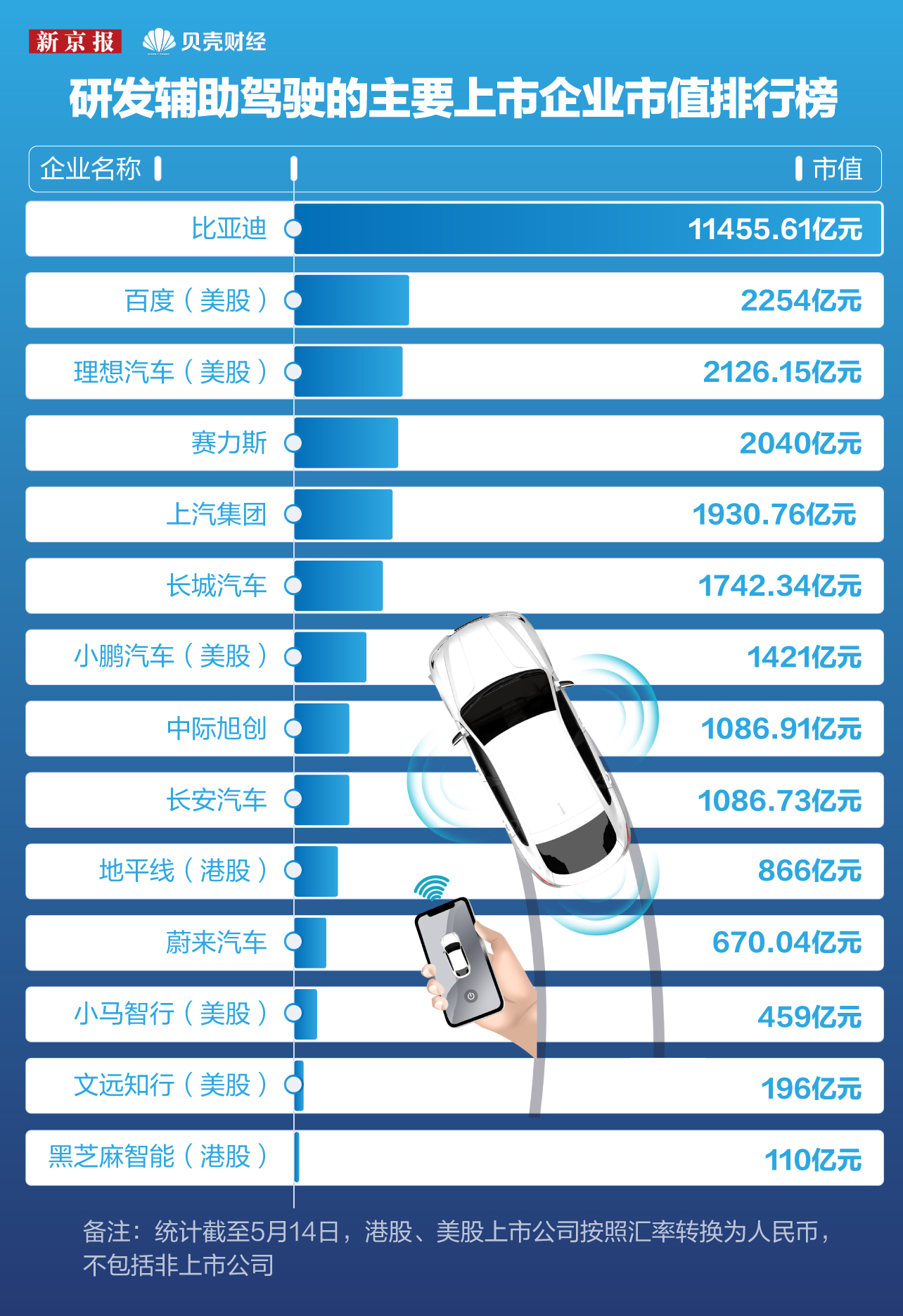
Core Insights - The intelligent driving industry is undergoing rapid transformation driven by advancements in technology such as chips, lidar, AI algorithms, and vehicle-road collaboration, leading to the commercialization of smart assisted driving [1][2] - By 2025, the competition in the smart assisted driving sector will not only be about technical parameters but also about market positioning and strategic partnerships among companies [1][2] - The total number of companies involved in smart assisted driving in China has exceeded 1,000, with at least 300 listed companies in A-shares, Hong Kong, and US markets [1][3] Market Capitalization and Competition - As of May 14, 2025, the top five companies in A-shares related to smart assisted driving by market capitalization are BYD (1.11 trillion yuan), Seres (213.4 billion yuan), SAIC Motor (192.2 billion yuan), Great Wall Motors (172.9 billion yuan), and Zhongji Xuchuang [4] - The competition among the second-tier companies is intensifying, with market capitalizations of Seres, SAIC, and Great Wall Motors closely clustered within a few billion yuan [4][7] - In the US market, companies like Xpeng and Li Auto are also competing closely in terms of market capitalization [4] Sales Performance - BYD leads the global market in new energy vehicle sales, achieving 4.272 million units sold in 2024, a year-on-year increase of 41.26%, which provides a strong data foundation for its assisted driving development [8][9] - The competition for BYD is not only among domestic manufacturers but also with Tesla, with BYD adopting a strategy of making smart assisted driving technology accessible to lower-priced vehicles [9] Ecosystem and Development Strategies - The smart assisted driving technology is rapidly evolving, with companies pursuing either full-stack self-research or collaborative approaches to differentiate their solutions [12][19] - BYD and Xpeng are examples of companies that are leading in self-research, while Huawei is noted for its collaborative "friend circle" model, partnering with multiple automakers [13][19] - Momenta stands out in the supply chain with a broad customer base, collaborating with seven of the top ten global automakers and over 130 production models [21] Supply Chain Dynamics - The competition among supply chain companies is characterized by a wide range of partnerships and diverse customer types, with companies striving to expand their client base [21] - In the lidar sector, companies like Hesai and RoboSense are engaged in fierce competition, with plans to significantly reduce prices to make lidar technology more accessible [21][24] - The chip sector is also highly competitive, with domestic companies striving to replace established players like Mobileye in the L2 market [24] Industry Challenges and Future Outlook - The commercialization of L3 and higher-level autonomous driving technologies faces regulatory hurdles, with no clear guidelines on liability and road regulations yet established [26][27] - Despite the challenges, the intelligent driving industry in China is on a growth trajectory, with companies like BYD and Huawei leading the way in making assisted driving technology more accessible [28] - The ultimate goal of the industry remains to surpass human driving capabilities in terms of safety and efficiency [28]

13亿,阿里巴巴投过的上海独角兽要IPO了
3 6 Ke· 2025-05-21 03:42
Core Insights - Xiangdao Mobility has completed a C-round financing of over 1.3 billion RMB, marking a significant breakthrough in capital and indicating the immense potential of the mobility industry amid the wave of smart technology [1][2][10] - The company plans to accelerate its "ACTS" technology strategy, focusing on big data, artificial intelligence, smart transportation, and intelligent safety, while also aiming for a Hong Kong IPO [2][10] - Xiangdao Mobility aims to solidify its leading position in the mid-to-high-end mobility market, expand into overseas markets, and promote the commercialization of Robotaxi services [1][3][10] Financing and IPO Plans - The recent C-round financing is expected to expedite Xiangdao Mobility's IPO process in Hong Kong [2] - Previous funding rounds included partnerships with Alibaba and CATL, enhancing data capabilities and safety in mobility services [2][10] Business Expansion and Strategy - Xiangdao Mobility has established a service network in nearly 100 cities across China, with a compound annual growth rate of approximately 30% during the 14th Five-Year Plan period [3] - The company is extending its operations to international markets while maintaining a focus on core cities [3][10] Robotaxi Development - As the first L4-level autonomous driving operation platform backed by an automotive manufacturer in China, Xiangdao's Robotaxi has completed over 330,000 orders and traveled over 2.5 million kilometers since its launch in 2021 [4] - The company plans to expand its Robotaxi fleet to 200 vehicles by 2026, leveraging partnerships with Momenta to enhance operational capabilities [4][7] Strategic Partnerships - A strategic cooperation agreement has been signed with Momenta to create the world's first mass-produced Robotaxi fleet, starting operations in Shanghai [5][6] - This partnership aims to facilitate the commercialization of autonomous driving technology and enhance operational efficiency [6][7] Industry Context - The mobility industry is undergoing a transformation towards smart and connected services, with autonomous driving technology expected to play a crucial role in future growth [11][12] - The market for autonomous ride-hailing services is projected to approach 450 billion RMB by 2025, driven by advancements in technology and increasing consumer demand [13][14]
自动驾驶出海:墙内开花香墙外
Zhong Guo Qi Che Bao Wang· 2025-05-20 06:08
Core Viewpoint - The recent surge in Chinese autonomous driving companies expanding internationally highlights their technological advancements and strategic partnerships, particularly with global ride-hailing giant Uber [2][3][4]. Group 1: International Expansion - Chinese autonomous driving companies are increasingly entering international markets, with a focus on L4 autonomous driving as a breakthrough point [3][5]. - WeRide announced a strategic partnership with Uber to expand Robotaxi services to 15 international cities over the next five years, targeting Europe and the Middle East [3][4]. - Momenta is set to introduce autonomous vehicles on Uber's platform in international markets, with commercial operations starting in Europe by early 2026 [4][5]. Group 2: Strategic Collaborations - WeRide is collaborating with various partners, including Swiss authorities and Renault, to launch autonomous driving services in Europe [4][5]. - Momenta's partnership with Uber is seen as a critical step in achieving global-scale autonomous driving, integrating Robotaxi technology into mass-produced vehicles [4][8]. - Xiaoma Zhixing also plans to collaborate with Uber to introduce Robotaxi services in the Middle East, expanding to North America and Southeast Asia [4][5]. Group 3: Market Dynamics - The choice of international markets by Chinese autonomous driving companies reflects a regional differentiation strategy, with Southeast Asia and the Middle East being preferred due to their openness and clear scenarios [5][6]. - The UAE and Saudi Arabia view autonomous driving as a core component of smart city initiatives, driving demand for new energy and unmanned vehicles [6][12]. - The European market is also evolving, with the EU Commission launching an action plan to ensure the automotive industry transitions to smarter and cleaner vehicles [6][12]. Group 4: Technological Advancements - The shift from hardware-centric to software algorithm capabilities is evident as Chinese companies enhance their adaptability to various scenarios [7][9]. - Momenta's "no-map" technology allows for autonomous driving in complex road conditions without relying on high-definition maps, marking a significant advancement in international competitiveness [8][9]. - The development of L2 and L4 technologies is expected to coexist, with Chinese companies achieving high engineering maturity and stability in autonomous driving solutions [9][10]. Group 5: Future Outlook - The penetration rate of L2 and above autonomous driving functions in China is projected to reach 62% by 2025, indicating strong consumer trust in these technologies [10][11]. - The collaboration between domestic suppliers and international partners is expected to enhance the global presence of Chinese autonomous driving technologies [11][12]. - The ongoing development of autonomous driving technology is supported by favorable government policies in various countries, facilitating faster market entry and application [12][13].

雷军低谷的背后,智驾降温了?市场数据里隐藏着什么信号?
Sou Hu Cai Jing· 2025-05-18 11:50
Group 1 - The recent period has been challenging for Xiaomi, particularly due to the trust crisis triggered by the fatal accident involving the Xiaomi SU7, prompting a reevaluation of smart driving technology in the industry [1] - The market for smart driving features remains strong, with a survey indicating that nearly 30% of consumers are willing to pay over 10,000 yuan for advanced driving assistance systems [3] - The penetration rate of L2 and above driving assistance features in the new energy passenger car market reached 66.3% in early 2025, indicating a growing consumer focus on smart driving capabilities [3] Group 2 - The penetration rate of new energy vehicles in China surpassed that of fuel vehicles, reaching 51.5% in April, with predictions suggesting it will exceed 70% by 2030 [6] - The competition among new energy vehicle manufacturers is intensifying, with Leap Motor achieving a 173% year-on-year increase in deliveries, becoming the top seller in April [10] - The Leap B10 model, which features a lower price point for laser radar technology, significantly contributed to its sales, highlighting the importance of competitive pricing in the smart driving market [12] Group 3 - The smart driving market is characterized by a split between safety ethics and rising consumer demand, leading to a search for balance within the industry [9] - The market is dominated by three main models: third-party solutions like Momenta, vertical integration by Huawei, and in-house development by companies like XPeng [18] - Momenta holds a 60% market share in the urban NOA supply chain, while Huawei's HI model accounts for nearly 30%, indicating the strong position of domestic suppliers in the smart driving sector [19][20] Group 4 - Traditional automotive giants are recognizing new opportunities in the smart driving space, particularly in safety, which has become a competitive advantage [23] - The competition in the smart driving sector is evolving from merely stacking features to a multidimensional battle focusing on safety experience, scale, and ecosystem [23]



指数突破!可是没赚钱?!
格兰投研· 2025-05-14 14:18
Core Viewpoint - The market is currently in a bullish phase, with expectations for the index to rise above 3600, despite some skepticism from the majority who anticipate a pullback [2][3]. Group 1: Market Performance - The index has successfully surpassed the 3400 mark, indicating a positive trend in the market [1]. - The banking sector has reached a total market capitalization exceeding 10 trillion yuan, marking a historical high [5]. - The Shenwan Banking Index closed at 4227 points, just under 100 points away from its historical peak of 4325 points set in 2007, suggesting a potential for further gains [6][7]. Group 2: Fund Management and Market Dynamics - The recent market rally is attributed to new public fund management guidelines, which have prompted fund managers to adjust their portfolios to avoid performance penalties [8][12]. - The new regulation states that fund managers whose products underperform by more than 10 percentage points compared to benchmarks over three years will face significant salary reductions [13][14]. - This has led to a trend where fund managers are buying index-weighted stocks to align their performance with the market, particularly in underrepresented sectors like banking and insurance [15][16]. Group 3: Investment Strategy - Despite the short-term bullish sentiment, there are concerns about potential bubbles in banking stocks, suggesting a cautious approach to investment [18]. - The recommended strategy for retail investors is to adopt a left-side ambush approach, focusing on long-term value rather than short-term market movements [19]. - The essence of actively managed funds should remain focused on high-risk, high-reward opportunities, rather than merely tracking indices [20]. Group 4: Industry Innovations - Tesla is advancing its Robotaxi initiative, with plans to produce the Cybercab at a cost of under $30,000, aiming for mass production of at least 2 million units annually [23][26]. - The shift towards Robotaxi services is expected to create new business models, transitioning Tesla from a traditional car manufacturer to a software-driven company [26]. - The year 2025 is anticipated to be pivotal for the Robotaxi sector, as technological advancements and cost reductions are expected to enhance profitability for operators [31][32].