
三星

Search documents
锂价冲上每吨18万!铜铝及DRAM都涨价!新能源汽车利润堪忧?
Zhong Guo Qi Che Bao Wang· 2026-01-29 04:03
Core Viewpoint - The significant rise in prices of raw materials such as lithium, copper, and aluminum, along with DRAM storage chips, is expected to impact the electric vehicle (EV) industry, leading to increased production costs and potential profit erosion for manufacturers [2][3][4]. Group 1: Raw Material Price Increases - Lithium carbonate prices have surged, with futures reaching 182,000 yuan/ton, marking a two-year high, and spot prices increasing from 75,700 yuan/ton to 175,000 yuan/ton over a year [2]. - The cost of aluminum for a typical mid-sized electric vehicle has increased by 600 yuan, while copper costs have risen by 1,200 yuan in the last three months [3]. - The price of automotive DRAM storage chips has skyrocketed by 180% in three months, with costs per vehicle rising from approximately $100 to 2,000 yuan, an increase of 1,300 yuan [3][5]. Group 2: Impact on Electric Vehicle Costs - For a pure electric vehicle with an 80 kWh battery, the increase in lithium costs alone could add approximately 3,800 yuan to the vehicle's production cost [3]. - Range-extended electric vehicles and plug-in hybrids are also facing cost increases, with lithium costs rising by about 1,900 yuan and 1,000 yuan respectively [4]. - The overall cost pressures from rising prices of lithium, copper, and aluminum are significant for all types of electric vehicles [4]. Group 3: Challenges for Automotive Manufacturers - Major automotive manufacturers may struggle to pass on increased costs to consumers due to intense market competition, potentially leading to profit margins approaching zero [6][7]. - Smaller manufacturers, already at a disadvantage, face heightened cash flow pressures and may be forced out of the market due to their inability to absorb rising costs [7]. - The competitive landscape is forcing all manufacturers, regardless of size, to confront unprecedented challenges due to the rising costs of raw materials [7]. Group 4: Strategic Responses - Companies are focusing on enhancing product value through advanced features like high-level intelligent driving and smart cockpit systems to offset rising costs [9]. - The shift towards value enhancement rather than mere scale expansion is becoming a new industry trend, emphasizing technological innovation and quality improvement [10]. - Many companies are exploring overseas markets to mitigate risks associated with rising costs, taking advantage of favorable trade policies in regions like Canada [9][10].


行业聚焦:全球智能运动追踪器行业头部生产商市场份额及排名调查(附核心企业名单)
QYResearch· 2026-01-29 03:47
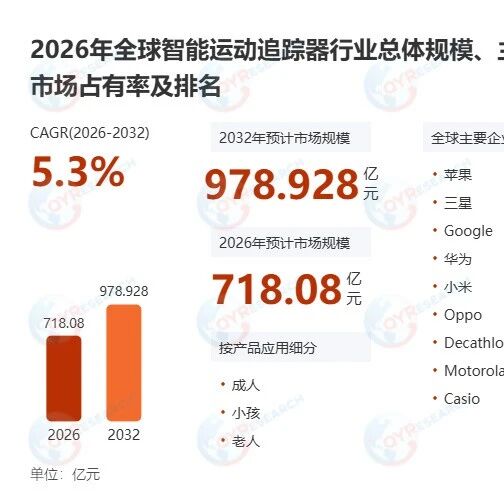
Core Viewpoint - The global smart fitness tracker market is projected to reach $14.4 billion by 2032, with a compound annual growth rate (CAGR) of 5.3% from 2026 to 2032 [3][19]. Global Market Overview - The smart fitness tracker market is expected to grow significantly, with a forecasted market size of $14.4 billion by 2032, reflecting a CAGR of 5.3% [3][19]. - Major manufacturers in the global market include Apple, Samsung, Google, Huawei, Xiaomi, Oppo, Decathlon, Motorola, and Casio, with a concentration of manufacturing in East Asia due to its robust supply chain and cost-effective production capabilities [5]. Industry Chain Analysis - The industry chain consists of upstream components such as sensors and core electronic parts, midstream brand owners and product engineering, and downstream consumers and enterprise applications [7]. - Upstream components include PPG optical heart rate modules, accelerometers, GPS, and various electronic parts [7]. - Midstream activities involve industrial design, firmware development, and product management [7]. - Downstream, consumers utilize fitness trackers for monitoring health metrics, while enterprises leverage aggregated data for health programs [7]. Regulatory Environment - The EU's AI Act classifies fitness trackers with clinical-grade monitoring functions as "high-risk AI systems," requiring third-party audits and transparency reports [8]. - The FDA is reclassifying fitness trackers with ECG or continuous blood pressure monitoring capabilities as Class II medical devices, necessitating pre-market approval [8]. - The EU Digital Product Passport initiative mandates manufacturers to provide lifecycle data for devices to enhance supply chain transparency [8]. Industry Development Trends - There is a shift towards clinical-grade health functionalities and medical validation, with manufacturers integrating advanced biometric sensors and seeking regulatory certifications [9]. - AI-driven personalized services are being embedded in trackers to provide tailored health insights and proactive health guidance [9]. - The industry is moving towards sustainable manufacturing practices, including the use of recyclable materials and modular designs [9]. - Fitness trackers are increasingly integrating into broader smart ecosystems, enhancing user experience through seamless data flow across devices [9]. Development Opportunities - Emerging markets in Southeast Asia, Africa, and Latin America present significant opportunities for localized innovations in affordable fitness trackers [10]. - The integration of clinical-grade fitness trackers into formal healthcare systems offers growth potential, particularly for chronic disease monitoring [10]. - B2B opportunities are expanding as companies invest in employee health management programs, creating demand for customized fitness tracker solutions [10]. - There is a notable unmet demand for inclusive products targeting underserved populations, such as the elderly and individuals with disabilities [10]. Industry Challenges - The industry faces regulatory complexities and fragmentation, with varying regional regulations impacting compliance costs and market entry [11]. - Data privacy and cybersecurity concerns are heightened as fitness trackers collect sensitive biometric data, necessitating robust security measures [11]. - Market saturation and commoditization pressures are leading to intense price competition and challenges in product differentiation [11]. - Limitations in accuracy and user trust regarding biometric tracking can hinder the adoption of fitness trackers in clinical applications [11].
美联储暂缓降息,科创半导体ETF、半导体设备ETF华夏回调,存储基本面仍扎实
Sou Hu Cai Jing· 2026-01-29 03:44
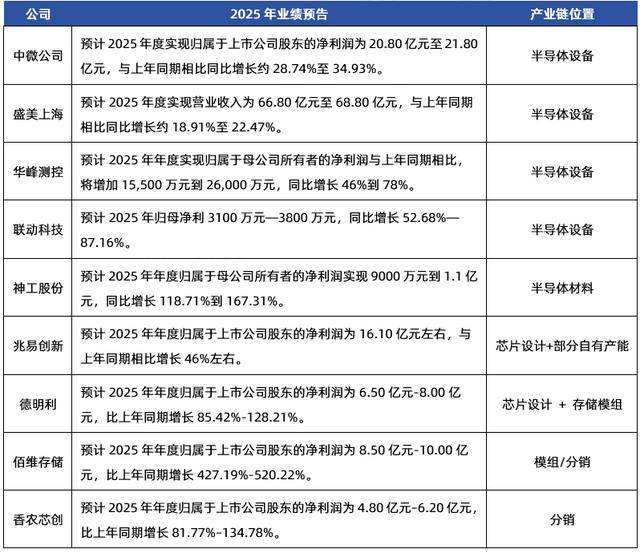
Group 1 - The core viewpoint of the articles highlights the impact of the Federal Reserve's interest rate decisions on the semiconductor industry, indicating that high rates lead to cautious capital expenditure among companies, while lower rates stimulate investment in technology and equipment [2][3] - The semiconductor sector is experiencing a mixed performance, with some stocks rising while others fall, but the trend of domestic substitution remains a key trading logic in the market [1] - Historical data shows that during past interest rate cuts, global semiconductor sales have significantly increased, suggesting a strong correlation between monetary policy and semiconductor demand [3] Group 2 - The fundamentals of the memory chip market remain solid, with companies like SK Hynix and Samsung reporting record revenues and profits in the fourth quarter, indicating robust performance in the sector [4][5] - Several companies in the semiconductor supply chain are expected to achieve substantial profit growth in 2025, with projections indicating increases in net profits ranging from approximately 28.74% to over 520% for various firms [6] - For investors, a strategy of index-based investment in semiconductor ETFs is recommended to mitigate risks associated with individual stocks, with several ETFs available that cover the entire semiconductor industry chain [7]

巩固霸主地位!传SK海力士拿下英伟达Vera Rubin平台七成HBM订单
Zhi Tong Cai Jing· 2026-01-29 03:33
Core Viewpoint - SK Hynix has secured approximately 70% of NVIDIA's latest AI and high-performance computing platform Vera Rubin's high bandwidth memory (HBM) orders, significantly exceeding market expectations of 50% [1] Group 1: Market Position - SK Hynix's share of the global HBM4 market is projected to reach 54% by 2026, with Samsung and Micron following at 28% and 18% respectively [1] - NVIDIA and AMD have completed quality testing for Samsung's HBM4 products, indicating competitive dynamics in the market [1] Group 2: Financial Performance - SK Hynix reported record high revenue and operating profit for Q4 2025, driven by the rapid growth in demand for storage chips due to AI infrastructure development [1] Group 3: Strategic Initiatives - SK Hynix plans to establish an AI solutions company in the U.S. to explore new growth opportunities in the AI sector [1] - The company is set to become the exclusive supplier of advanced storage chips for Microsoft's new AI chip Maia 200 [1]


巩固霸主地位!传SK海力士拿下英伟达(NVDA.US)Vera Rubin平台七成HBM订单
Zhi Tong Cai Jing· 2026-01-29 03:16
这一消息发布当日,SK海力士公布了2025年第四季度财报,受AI基础设施快速发展带动存储芯片需求 攀升影响,公司营收与营业利润均创下历史新高。 SK海力士同时宣布,将在美国设立一家AI解决方案公司(暂定名为AI Company),以此挖掘AI领域新的 增长引擎。 据周二的报道称,韩国存储芯片制造商SK海力士已斩获英伟达(NVDA.US)最新人工智能(AI)与高性能 计算平台Vera Rubin的约70%高带宽内存(HBM)订单。 知情人士表示,SK海力士拿下的英伟达Vera Rubin平台HBM4产品订单占比达70%,这一比例远超此前 市场预估的50%。市场预测,2026年SK海力士将占据全球HBM4市场54%的份额,三星(SSNLF.US)与美 光(MU.US)则分别以28%和18%的占比紧随其后。目前,英伟达和AMD(AMD.US)也已完成对三星 HBM4产品的质量测试。 本周早些时候有报道称,SK海力士将成为微软(MSFT.US)新款AI芯片Maia200的先进存储芯片独家供应 商。 ...
未知机构:东吴电子陈海进PCB观点重申重视M9升级确定性把握高端材料涨价弹性-20260129
未知机构· 2026-01-29 02:15
Summary of Conference Call Notes Industry Overview - The focus is on the PCB (Printed Circuit Board) and CCL (Copper Clad Laminate) materials industry, particularly in the context of advancements in computing power and high-speed interconnects [1][2]. Key Points and Arguments - **M9 Upgrade Certainty**: The evolution of system architecture indicates that the iteration of interconnect bandwidth is the most certain technological trend driving the upgrade of computing power chips. The transition to 224Gbps and above SerDes is pushing competition towards optimized collaboration between computing power and interconnects [1]. - **Performance Requirements**: The new generation of Broadcom's switching chips, which align with the 224Gbps standard, necessitates a unified high-speed interconnect standard, imposing cross-generation performance requirements on PCB and CCL material systems. At 224Gbps, PCB insertion loss constraints are becoming stricter, requiring a low loss of 1dB at critical frequencies, which traditional M7/M8 materials cannot meet [1]. - **Core Raw Materials**: The M9 upgrade is highly certain, with core raw materials identified as hydrocarbon/polyphenylene ether resin, HVLP4/5 copper foil, and quartz cloth/NEZGlass [1]. Market Trends - **Price Increase in CCL Industry**: A systematic price increase in the copper-clad laminate industry is expected to begin in 2025 due to tightening supply and demand, indicating a mid-term industry trend rather than a short-term speculation [3]. - **Rising Costs**: The increase in upstream copper prices and the price hikes in high-end copper foil are driven by high-end demand and limited production capacity, leading to strong cost transmission [4]. - **CCL Companies' Pricing Power**: CCL companies have significant pricing power, allowing them to adjust prices to offset costs while also restoring gross margins for high-end products. The release of high-end PCB capacity in 2026 will increase demand elasticity for high-performance CCLs, while upstream material supply remains tight, concentrating profit elasticity among leading CCL and upstream material companies [5]. Related Companies - Companies mentioned include: - **Philips** and **Dongcai Technology** in the CCL industry [3]. - **Nanya Technology** and **Shengyi Technology** in the context of computing power and supply chain dynamics [6]. Risks - **Supply Chain Volatility**: There are risks associated with supply chain fluctuations, potential underperformance in downstream demand, and increasing industry competition [7].
未知机构:招商电子存储跟踪之海力士点评季度和年度业绩均创历史新高供给受限现状将持续-20260129
未知机构· 2026-01-29 02:05
2026全年需求增长预期:DRAM出货量同比+20%以上,NAND出货量同比+high-10%;26Q1指引DRAM出货量环比 持平,NAND出货量受基数效应影响环比小幅下降(含Solidigm合并数据)。 2025年:营收97.15万亿韩元,同比+47%,净利润42.95万亿韩元,同比+117%,营业利润率高达49%,HBM业务 成为最大增长引擎,全年营收同比增长超过2倍。 25Q4:营收32.83万亿韩元,同比+66%/环比+34%,净利润为15.25万亿韩元,同比+90%/环比+21%,营业利润率 为58%。 出货量与ASP:25Q4 DRAM出货量环比个位数增长,ASP环比+mid-20%;25Q4 NAND出货量环比+10%,ASP环比 +30%(含Solidigm合并数据)。 【招商电子】存储跟踪之海力士点评:季度和年度业绩均创历史新高,供给受限现状将持续存在 2025年:营收97.15万亿韩元,同比+47%,净利润42.95万亿韩元,同比+117%,营业利润率高达49%,HBM业务 成为最大增长引擎,全年营收同比增长超过2倍。 25Q4:营收32.83万亿韩元,同比+66%/环比+34%,净利润 ...
先进封装,再起风云
半导体行业观察· 2026-01-29 01:15
Core Insights - The semiconductor industry is shifting focus from process technology to advanced packaging as AI chip demand surges and high bandwidth memory (HBM) becomes more prevalent [2][4] - Gartner predicts a 21% growth in the global semiconductor market by 2025, reaching approximately $793.45 billion, with advanced packaging technology becoming a key growth driver [2] - Major players like TSMC, Intel, and Samsung are intensifying their R&D and investments in advanced packaging, leading to heightened competition [2][4] TSMC's Innovations - TSMC's WMCM (Wafer-Level Multi-Chip Module) technology is set to revolutionize packaging for Apple's A20 chip, with mass production expected by the end of 2026 [3] - WMCM integrates memory with CPU, GPU, and NPU on a single wafer, significantly improving signal transmission and thermal performance while reducing costs [3][4] Intel's Strategy - Intel is showcasing its glass substrate technology combined with EMIB (Embedded Multi-Die Interconnect Bridge), aiming to redefine multi-chip interconnect rules [5][9] - The new packaging sample features a large size and advanced stacking architecture, addressing bandwidth limitations for AI accelerators and high-performance computing [5][8] Samsung's Approach - Samsung is focusing on thermal management innovations with its Heat Pass Block (HPB) technology, enhancing heat dissipation in mobile SoCs [10][12] - HPB technology reduces thermal resistance by 16% and lowers chip operating temperatures by 30%, addressing performance throttling in high-load scenarios [12][13] Advanced Packaging Market Trends - The advanced packaging market is characterized by multiple competing technologies, with 2.5D/3D packaging expected to see a compound annual growth rate of 23% from 2023 to 2029 [15] - TSMC's CoWoS capacity is projected to double by 2026, primarily serving major clients like NVIDIA [15][17] Future Directions - Material innovation is crucial for advanced packaging, with glass substrates emerging as a viable alternative to organic substrates due to their superior thermal stability and wiring density [29][30] - Heterogeneous integration is becoming mainstream, allowing for the combination of different chip types within a single package, enhancing performance and efficiency [31][32] - Thermal management is evolving to address the increasing power density of chips, with solutions like HPB setting new benchmarks for packaging-level heat management [33] - Photonic-electronic integration (CPO) is anticipated to revolutionize data transmission, addressing bandwidth and power consumption challenges in data centers [34]



索尼电视卖身TCL,“中产白月光”还能卖上万块吗?
3 6 Ke· 2026-01-29 01:07
Core Viewpoint - The collaboration between TCL and Sony marks the end of the Japanese television era and signifies the rise of the Chinese television industry on a global scale [2][3][10]. Group 1: Company Collaboration - TCL and Sony have signed a memorandum of understanding to establish a joint venture, with TCL holding 51% and Sony 49%, focusing on global operations of Sony's television and home audio businesses [2][3]. - The joint venture is expected to begin operations in April 2027, pending regulatory approvals [3][4]. - This partnership aims to leverage Sony's expertise in audio-visual technology and TCL's strengths in display technology and cost control to create innovative products [6][11]. Group 2: Market Dynamics - The global television market is projected to see a total shipment of 220 million units in 2025, with TCL expected to ship approximately 30.4 million units, capturing a market share of 13.8% [6][11]. - Sony's television market share has significantly declined to about 1.25% in China, indicating a shift in consumer preferences and market dynamics [10][11]. - The competition in the television market is increasingly dominated by Chinese brands, with TCL and Hisense gaining substantial market shares, particularly in Japan [18][19]. Group 3: Industry Trends - The Japanese television giants have been gradually exiting the market, with significant sales and transfers of their businesses to Chinese companies over the past decade [17][19]. - The shift from traditional television to smart home integration is evident, as consumers increasingly seek multifunctional and aesthetically pleasing devices [27][30]. - The future of television is evolving towards becoming a central hub for smart home technology, with a focus on user experience and integration into daily life [29][30].



马斯克称特斯拉需自建芯片厂
Jin Rong Jie· 2026-01-29 01:03
马斯克表示,特斯拉公司需要建造并运营一座名为"TeraFab"的工厂来生产 半导体。这项庞大的工程将 耗资数十亿美元,标志着该公司业务范围的进一步扩张,不再局限于核心的电动汽车业务。"为了消除 未来三四年内可能出现的产能瓶颈,我们必须建造一座特斯拉TeraFab,"马斯克表示,"一座规模庞大 的工厂,涵盖逻辑、存储器和封装等多个环节,而且将在美国本土生产。"马斯克表示,包括台积电、 三星和美光科技在内的现有供应商无法满足特斯拉的芯片供应需求。 ...
