
经济周期

Search documents
美股再创佳绩?高盛拆解市场韧性密码,下半年布局看这几点
Zhi Tong Cai Jing· 2025-08-11 13:49
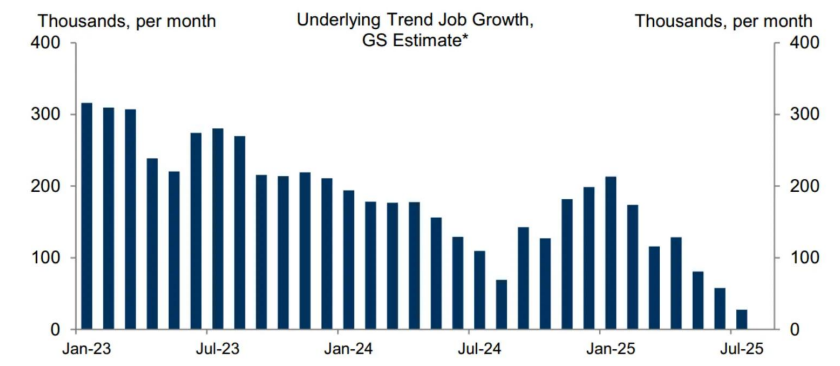
Group 1: U.S. Stock Market Narrative - The U.S. stock market showed resilience despite signs of weakness in the labor market, with the S&P 500 recovering losses and the Nasdaq 100 reaching a new all-time high [4][3] - Three hypotheses were proposed to explain this resilience: new AI stimuli, healthy capital flows despite reduced speculative demand, and the notion that stock markets do not directly reflect the economy [5][6][7] Group 2: Market Framework - The overall market sentiment remains positive, but increased risk asset holdings may complicate future trading [8] - AI spending has exceeded expectations, while employment growth has significantly declined since Q1, leading to a volatile market environment [8] - Short-term risk balance is uncertain, with expectations of consolidation in August and a challenging technical situation in September, but a bullish trend is anticipated for the second half of 2025 [8] Group 3: Key Points and Data Analysis - The U.S. labor market's health is under scrutiny, with mixed initial jobless claims and a disappointing ISM services index, leading to a GDP tracking expectation of 1.2% for Q3 [12] - Systematic trading institutions have largely completed their buying of global index futures, and discretionary investors have increased long positions, while retail investor demand has weakened [12] - The impact of tariffs is seen as destructive but not catastrophic, with the market no longer viewing it as a significant variable [13] Group 4: U.S. Technology Sector - Major U.S. tech companies reported strong Q2 earnings, with growth acceleration across various sectors, including cloud computing and AI [14] - The Nasdaq 100 index's P/E ratio is approaching historical highs, suggesting a need for consolidation, but potential earnings growth justifies a positive outlook on tech valuations [14] - Concerns about AI's impact on employment are noted, with a significant rise in unemployment rates among tech workers aged 20-30 since early 2024 [14] Group 5: Global Market Insights - The Japanese stock market has shown resilience, with the Nikkei index reaching new highs, while India's market faces challenges despite strong fundamentals [15] - Market depth and risk transfer ease are deteriorating, indicating a sensitive trading environment with increased price volatility [15] Group 6: Credit Market Dynamics - The surge in new corporate bond issuances suggests ample credit supply in the U.S. financial system, supported by ongoing demand and rising coupon rates [16] - A favorable policy environment for large corporations is noted, with pressures on consumers due to rising prices and stagnant real wage growth [16] Group 7: Investment Strategy - The recommended investment strategy includes going long on U.S. stocks (particularly tech), value storage assets (gold, silver, Bitcoin), shorting the dollar, and steepening yield curve trades [16] - This strategy is viewed as a preferred defensive measure for 2025, despite potential short-term underperformance in certain components [16]

2025年上半年地方资产管理公司行业分析
Lian He Zi Xin· 2025-08-07 07:15
Investment Rating - The report does not explicitly state an investment rating for the local asset management company (AMC) industry [2] Core Insights - The demand for resolving non-performing assets (NPAs) has increased due to fluctuations in the domestic macroeconomic environment, providing significant growth opportunities for the NPA management industry [4] - The local AMCs play a crucial role in the diversified market structure of the NPA management industry, primarily focusing on the acquisition, management, and disposal of NPAs [9][10] - The regulatory environment has evolved, with the establishment of a unified regulatory framework aimed at promoting the healthy development of the local AMC industry [12][20] Summary by Sections Industry Overview - The NPA management industry is characterized by a supply chain that includes upstream sources of NPAs, midstream management companies, and downstream investors [4][6] - The primary sources of NPAs include banks, non-bank financial institutions, and non-financial institutions, with banks being the traditional and largest source [5] Market Dynamics - The local AMCs have stabilized in number since 2021, with 59 recognized by regulatory authorities as of mid-2025, predominantly state-owned [9][10] - The development of local AMCs is closely correlated with the scale and quality of NPAs in their respective regions, influenced by local economic and regulatory environments [10] Regulatory Environment - The regulatory framework has shifted from a lenient approach to a more stringent one since 2019, with the introduction of the "153 Document" and the recent "Interim Measures for the Supervision and Management of Local Asset Management Companies" [11][12] - The new regulations emphasize compliance, risk management, and a return to core business functions for local AMCs, establishing specific quantitative indicators for monitoring [12][21] Business Trends - The local AMC industry is experiencing diversification in market supply, disposal methods, and financing channels, with a growing emphasis on "investment banking" style asset processing [15][16] - There is a noticeable internal differentiation within the industry, with state-owned AMCs receiving more support compared to their private counterparts, which face increasing operational challenges [17][18] Future Outlook - The local AMC industry is expected to continue evolving, with opportunities arising from economic recovery, real estate risk resolution, and financial institution reforms, despite facing significant competitive and regulatory pressures [20][21]
宏观经济与股票市场
Zhao Yin Guo Ji· 2025-08-06 02:42
Economic Overview - The U.S. economy is projected to experience a nominal GDP growth rate of approximately 5% in 2024, followed by a slight decline to 4.9% in 2025 and 4.6% in 2026 due to tariff impacts and diminishing policy effects[64] - China's economic recovery is characterized by fluctuations, with GDP growth expected to rise from 4.6% in Q3 2024 to 5.4% in Q1 2025, before declining again[64] Stock Market Performance - In the economic contraction phase, stocks generally decline significantly, with essential consumption, energy, utilities, and healthcare sectors outperforming, while real estate and technology sectors lag behind[18] - During the economic recovery phase, stocks in discretionary consumption, real estate, technology, and materials sectors show the highest gains, while utilities and essential consumption sectors underperform[18] Sector Analysis - In the economic expansion phase, technology, finance, and real estate sectors tend to outperform, while utilities, essential consumption, and healthcare sectors underperform[18] - Average annual returns for the consumer discretionary sector during the recovery phase are 40.8%, with a market outperformance rate of 64.5%[15] Economic Indicators - Key economic indicators include consumer confidence, manufacturing orders, and employment rates, which are closely linked to stock market performance[28][29] - The U.S. consumer confidence index has a direct correlation with the S&P 500 index, indicating that increased consumer confidence typically leads to stock market gains[27] Monetary Policy and Interest Rates - The U.S. Federal Reserve's monetary policy is influenced by the Taylor rule, which incorporates inflation rates and unemployment levels to determine the federal funds rate[43] - High fiscal deficit rates combined with low household savings rates contribute to high inflation and interest rates in the U.S. economy[46] Currency and International Relations - The U.S. dollar index is expected to fluctuate, potentially dropping below 95, with a slight rebound anticipated towards the end of the year[55] - The relationship between the U.S.-China nominal GDP growth rates and interest rate differentials will influence the USD/CNY exchange rate, with projections suggesting a slight appreciation of the yuan[114] Investment Strategy - The S&P 500 is forecasted to rise by 3% in the second half of the year and 8.5% for the entire year, with a favorable outlook on sectors such as information technology, communication services, finance, healthcare, and essential consumption[50]
黑天鹅事件出现!市场行情要转向了
大胡子说房· 2025-08-05 13:02
Core Viewpoint - The article discusses the unexpected resilience of the Chinese stock market (A-shares) amidst global market declines following disappointing U.S. non-farm payroll data, suggesting that the anticipated U.S. interest rate cuts could benefit the Chinese market [1][3]. Group 1: Market Performance - The Shanghai Composite Index rose to 3617.60, gaining 34.29 points (+0.96%), while the Shenzhen Component and ChiNext also saw increases [2]. - Despite global market turmoil, the Chinese market experienced a two-day rally, defying expectations of a downturn [1]. Group 2: Economic Analysis - The article attributes the strength of the Chinese market to the potential shift in capital flows due to U.S. interest rate cuts, which could favor the Chinese economy [3]. - A significant factor in China's economic struggles is identified as the interest rate differential between China and the U.S., with the current U.S. federal funds rate at 4.25%-4.50% and China's 5-year LPR at 3.5%, creating a roughly 1% difference [4]. - The disparity in deposit rates is even more pronounced, with U.S. 1-year fixed deposit rates between 4%-4.6% compared to China's 0.95%, leading to a deposit rate differential exceeding 4% [4]. Group 3: Historical Context - Historically, China's interest rates were higher than those in the U.S., particularly during periods of robust economic growth, which attracted significant capital inflows and fueled real estate market prosperity [10]. - The shift in interest rates began around April 2022, when Chinese rates fell below U.S. rates, coinciding with a downturn in the Chinese real estate market and broader economic challenges [11]. Group 4: Future Outlook - The article posits that the current low valuation of Chinese capital markets is largely influenced by the ongoing U.S. interest rate hike cycle and the significant interest rate differential [15]. - A potential shift to a U.S. interest rate cut could lead to a recovery in Chinese asset prices, as seen during previous rate cut cycles [17].

洪灏:牛市的逻辑
2025-08-05 03:15
Summary of Key Points from Conference Call Industry or Company Involved - The discussion primarily revolves around the macroeconomic strategies and market conditions in the United States and China, with a focus on the implications for various asset classes, including equities and commodities. Core Insights and Arguments 1. **US-China Trade Relations**: The recent US-China trade talks in Stockholm were constructive, with both sides agreeing to extend discussions on tariffs and countermeasures for 90 days, indicating a potential easing of trade tensions [1] 2. **US Economic Expansion**: The US economy has been expanding for 63 consecutive months, avoiding recession, but the growth rate has been declining over the decades, currently averaging around 2% [2] 3. **Labor Productivity and AI**: The US labor productivity cycle appears to be at a low point but is expected to improve due to the ongoing AI revolution, which could increase demand for precious metals [2] 4. **Market Speculation**: There are signs of increased speculation in the US market, with a surge in penny stocks and call options, indicating a potential market top [3] 5. **Dollar Dynamics**: The relationship between the US dollar and long-term inflation expectations has changed since the Fed's rapid interest rate hikes began in 2021, with the dollar now seen as a high-yield investment rather than just a currency [6] 6. **China's Economic Outlook**: China's economy performed better than expected in the first half of the year, but there are concerns about growth pressures in the second half, leading to increased government spending and subsidies [7] 7. **Commodity Prices**: Upstream commodity prices are rising, although recent corrections may be due to regulatory guidance to prevent excessive price increases [7] 8. **Inflation Transmission**: Historical data shows that changes in upstream inflation eventually affect downstream consumer prices, indicating that expectations, rather than current prices, drive market behavior [8] 9. **Stock Market Performance**: If deflationary expectations are curbed, it could positively impact stock market performance, as upstream price increases lead to improved profit margins across the capital market [10] 10. **Market Sentiment and Strategy**: There is a prevailing market sentiment that the state may reduce holdings if the index exceeds 3500, but this logic may not hold if the market continues to rise [12] Other Important but Potentially Overlooked Content - The analysis suggests that the current market conditions are characterized by high liquidity, which may support continued market activity despite signs of overbought conditions [12] - The discussion emphasizes the importance of changing expectations in the market, which can lead to shifts in demand and price levels, rather than just focusing on current price movements [8]
指数从正常估值到高估,会涨多少呢?|投资小知识
银行螺丝钉· 2025-08-04 13:26
Group 1 - The core viewpoint of the article suggests that while the valuation of indices may increase by 20%-40%, the actual growth in earnings of the underlying listed companies remains unpredictable [2][3] - Earnings growth is identified as a decisive factor for the index's rise, influenced by the strength of each economic cycle, which explains the varying degrees of market rallies in different bull markets such as those in 2007, 2009, and 2015 [3] - There is a potential scenario where the index valuation increases, but earnings decline, leading to a situation where the overall index gain may be less than expected, such as a 20% valuation increase coupled with a 10% earnings decline resulting in a total index increase of less than 100% [3]

三重周期的呼唤:人在变老,钱在加速变老
虎嗅APP· 2025-07-30 00:16
Core Viewpoint - The article emphasizes the importance of dividend investment, highlighting a significant shift in the Chinese economy from investment-driven to consumption-driven, which is reflected in the A-share market transitioning from a financing-dominated to a dividend-return-dominated market [4][9][23]. Economic Cycle - The article discusses the economic cycle, indicating that the gap between investment and consumption in China's GDP is narrowing, with a predicted crossover by 2024 [8]. - It notes that the A-share market has historically been criticized as a "money-grabbing market," but a turning point occurred in 2022 when dividends surpassed financing for the first time [9]. - The article argues that high-level financing has been a core theme in the A-share market for over 30 years, influencing market operations significantly [10][12]. Style Cycle - The article mentions that style cycles are often discussed in the A-share market, but quantifying these cycles is challenging due to the complexity of data [27][28]. - It draws parallels between international market trends and A-share market dynamics, suggesting that understanding these cycles is crucial for investment strategies [32][33]. Professional Cycle - The article asserts that the asset management industry is fundamentally a service industry, where matching funds with assets is key, rather than merely focusing on stock trading abilities [68][69]. - It highlights the demographic shifts in wealth distribution, particularly in the U.S., where older generations hold a significant portion of net assets, indicating a global trend of aging populations and wealth concentration [71].

摸象:宏观视角的中观高频跟踪
Changjiang Securities· 2025-07-26 11:24
Group 1: High-Frequency Data Utilization - High-frequency tracking allows for timely monitoring of economic conditions and more accurate expectations management[11] - OECD categorizes macro data into Hard Data, Soft Data, and Financial Data, with a focus on weekly Hard Data for analysis[13] - High-frequency data can provide forward-looking guidance on economic trends, compensating for the lag in macro data releases[17] Group 2: Economic Indicators and Trends - The report highlights that PMI data is released with a 5-day lag, while economic data is typically delayed by 2.5 weeks, impacting timely decision-making[17] - The correlation between real GDP growth and real estate investment has weakened, indicating a shift in economic drivers[30] - Despite interest rate cuts, credit demand remains weak, with both household and corporate credit impulses showing low recovery rates[32] Group 3: Inventory and Production Cycles - The report notes that inventory cycle patterns have been disrupted by capacity cycles, leading to irregular inventory management[35] - The analysis of production signals indicates fluctuations in power generation and value-added output, complicating economic assessments[69] Group 4: Leading Indicators and Economic Forecasts - Leading indicators suggest nominal growth may peak in Q3 2025, with expectations for various sectors such as exports and infrastructure investment to stabilize[40] - The report emphasizes the importance of establishing a framework for leading indicators to better predict economic performance[25]
六百万的瓜
Sou Hu Cai Jing· 2025-07-24 01:23
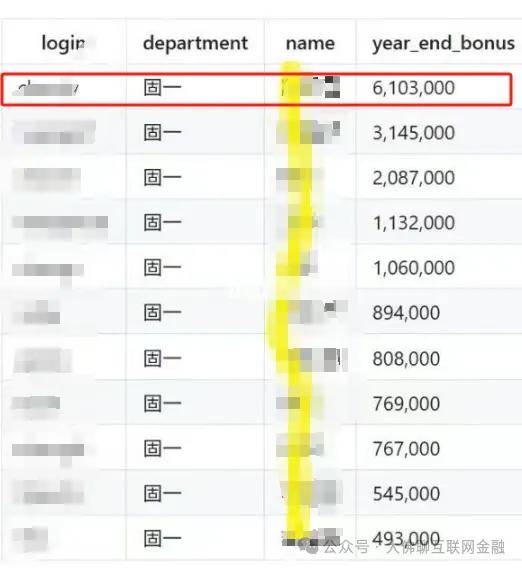
Core Viewpoint - A recent leak revealed the salary details of employees at a fund company, highlighting the high compensation of a fixed income manager, which sparked discussions about the disparity between fund managers' earnings and the returns for investors [1][2]. Group 1: Salary and Compensation - The fixed income manager, referred to as Manager Chen, reportedly has a monthly salary of 135,000 yuan and an annual bonus of 6.1 million yuan, leading to a total annual income of approximately 7.72 million yuan [1][2]. - The fund company later denied the authenticity of the leaked data, citing privacy concerns and reported the matter to the authorities [2]. Group 2: Fund Performance and Management Fees - In 2022, Manager Chen managed a fund with a scale of around 20 billion yuan, which is considered normal during favorable bond market conditions [3]. - The management fee for pure bond funds is typically around 3%, which could yield several million yuan in revenue for the company, especially if the fund includes equities, potentially increasing the fee to about 5% [3]. Group 3: Market Conditions and Future Outlook - The bond market has faced challenges since 2023, with lower profitability for short-term bonds compared to long-term bonds, which are more sensitive to interest rate changes [5]. - The expectation of future interest rate cuts by the Federal Reserve may influence bond prices, with a potential increase in demand for long-term bonds [5]. Group 4: Manager's Career and Performance - Manager Chen has a strong track record, with only 4 out of 73 funds he managed resulting in losses, giving him a success rate of approximately 94.5% [7]. - After 17 years at his previous company, Manager Chen left for a new position, reportedly due to dissatisfaction with salary caps in the financial industry, and is now on a compensation model that includes equity [6].
能源及有色行业2025下半年投资策略:透视商品周期,看好下游高质量发展驱动
Donghai Securities· 2025-07-23 09:30
Report Industry Investment Rating No relevant information provided. Core Viewpoints - The complexity,产业链, and price trends of commodities are analyzed, and the relationship between commodity prices and various economic factors is explored [6][10][14]. - The impact of geopolitical conflicts, supply - demand balance, and economic cycles on oil prices is discussed, and future oil price trends are predicted [42][58]. - The supply - demand situation, price trends, and influencing factors of various commodities such as power coal, natural gas, aluminum, and copper are analyzed [98][106][120][166]. Summary by Relevant Catalogs Commodity Classification and Characteristics - Commodities are divided into physical and non - physical commodities, including energy, metals, agriculture, and financial rights [5]. - Commodities have complexity,产业链 characteristics, and price trends related to economic cycles, with factors such as supply - demand, geopolitics, and interest rates affecting prices [6][10]. Commodity Prices and Economic Factors - Gold has long - term value - preservation functions, and the price CAGR of some resources increased from 2020 - 2024 due to various factors [14]. - The price trends of commodities are related to GDP, inflation, and economic cycles, with industrial commodities showing higher cycle fluctuations than agricultural products [14][19]. - The price cycles of commodities have characteristics such as turning points, duration of prosperity and recession, and are affected by factors like supply shocks and technological progress [24]. Oil Price Analysis - The relationship between oil prices and factors such as the Fed's interest rate, U.S. Treasury yields, inventory, and geopolitics is analyzed [10][33][42]. - Future oil price trends are predicted based on supply - demand balance, geopolitical conflicts, and economic cycles, with oil prices expected to be relatively strong in 2024 and oscillate downward in 2025 [42]. Other Commodity Analysis - Power coal supply - demand is relatively balanced, with prices expected to remain low due to sufficient inventory [98][102]. - Domestic natural gas demand is stable, with supply exceeding demand in some periods, and prices are expected to decline [106][109]. - Aluminum prices are related to PMI, GDP, and CPI, and the supply - demand situation, cost, and profit of the aluminum industry are analyzed [120][131][151]. - Copper prices are affected by factors such as Fed's interest rate policy, supply - demand, and geopolitics, and are expected to be in the range of $9500 - 12000/ton [166][173].