
反内卷政策

Search documents
历史新高!7千亿“铜王”涨疯了
Ge Long Hui· 2025-09-25 10:33
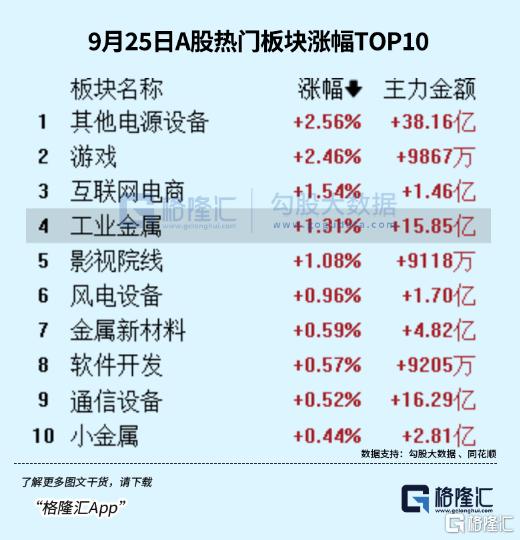
Core Viewpoint - The recent copper mine incident has reignited a surge in industrial metal stocks in the A-share market, following a previous rise in cobalt-related stocks due to policy adjustments in the Democratic Republic of Congo [1][8]. Group 1: Market Performance - As of September 25, the industrial metal sector in the A-share market rose by 1.31%, with net inflows of nearly 1.6 billion yuan [1][2]. - Major industrial metal stocks, including Zijin Mining and Jiangxi Copper, saw increases of over 5%, contributing to a broader rally in the sector [3][4]. - The overall industrial metal sector has increased by over 50% since April, with nearly 20 stocks doubling in market value [9]. Group 2: Key Events and Drivers - The Grasberg mine incident in Indonesia, which resulted in production halts and a projected 35% drop in copper output by 2026, has significantly impacted copper prices, pushing them to a new high of 82,710 yuan per ton [8][9]. - The copper business of Zijin Mining accounted for 27.8% of its sales revenue and 38.5% of its gross profit, highlighting the importance of copper in its overall performance [7]. - The recent policy changes in the Democratic Republic of Congo regarding cobalt exports are expected to tighten supply, potentially leading to higher prices in the long term [12][13]. Group 3: Economic Context - The anticipated interest rate cuts by the Federal Reserve are expected to stimulate demand for industrial metals, as lower rates can enhance the relative attractiveness of these commodities [15][17]. - Domestic policies aimed at reducing "involution" are also contributing to a more favorable environment for industrial metals, as they encourage supply-side reforms and economic stability [16][20]. - Analysts suggest that the industrial metal sector is likely to continue its upward trend, supported by macroeconomic improvements and strategic shifts in the market [14][20].



“反内卷”托底,煤价重回700元震荡
Dong Zheng Qi Huo· 2025-09-25 09:46
Report Summary 1. Industry Investment Rating No industry investment rating is provided in the report. 2. Core View Since the first half of 2025, power demand has turned negative, and coal prices have accelerated their decline. In July, coal supply actively controlled production, pushing coal prices back above the long - term agreement price of 670 yuan. Looking ahead to the fourth quarter, the negative growth of thermal power continues, and it is difficult to boost the daily consumption of thermal power under the suppression of new energy installations. Coal prices above 700 yuan/ton put some pressure on the costs of marginal power plants and are unlikely to break through significantly. However, the supply side will maintain active production control, and with factors such as winter stockpiling, it is expected that thermal coal prices will remain in a range of 650 - 720 yuan/ton. The negative growth of daily power consumption is difficult to reverse in the short term, and attention should be paid to the long - term production control policies and implementation on the supply side [3]. 3. Summaries by Related Contents 3.1 Port Coal Price - In the third quarter, the "anti - involution" policy dominated the coal price trend. The price of port 5500K coal oscillated upwards from a minimum of 620 yuan and closed at 707 yuan/ton at the end of September. This price increase was mainly driven by upstream and policy initiatives, with the demand side passively accepting. Chemical and cement demand improved quarter - on - quarter in the third quarter, while power consumption continued to show negative growth [5]. 3.2 Demand - **Thermal Power Impact**: In summer, poor hydropower generation led to a passive increase in thermal power consumption. After September, with the improvement of temperature and rainfall, the national CCTD power consumption has been showing continuous year - on - year negative growth, and power plant inventories have increased passively [10]. - **Non - power Industries**: The performance of non - power industries remains divided. The chemical industry's production rate and coal consumption continue to grow, while the cement industry maintains negative growth [16]. 3.3 Anti - involution Policy - **Policy Comparison**: Compared with the 2015 - 2016 anti - involution policy, the 2025 policy has a different background, targeting more industries. The 2025 policy initially focused on the new energy field and later spread to coal, breeding, and basic energy - chemical products. The policy requires strict control of coal mine over - production, with self - inspections in August and national energy bureau re - inspections in September [21]. - **Impact on Production**: Under the anti - involution policy, coal mine production rates are difficult to return to the first - half high. From July to August, the year - on - year decline in raw coal production was over 3%. Shanxi and Inner Mongolia had the most significant declines, and high - frequency data shows that Shaanxi's production rate has been low since September [23][24]. 3.4 Import - **Import Trend**: In the first half of the year, the surplus of coal supply and demand was mainly offset by reducing imported coal. From January to July, the cumulative coal imports in the country were 257 million tons, a year - on - year decrease of 13%. Since August, the continuous expansion of the price difference between domestic and foreign coal has attracted a rapid return of imported coal. In August, the import volume of thermal coal quickly rebounded to 32 million tons, approaching the level of the same period last year [33][38]. 3.5 Supply - Demand Balance - **Supply - Demand Table**: The report provides a revised supply - demand balance table for thermal coal from 2019 to 2025E, showing changes in total capacity, raw coal production, clean coal production, imported coal, exports, total supply, and total demand [44].
现货提涨,煤焦小幅上涨
Bao Cheng Qi Huo· 2025-09-25 09:44
Industry Investment Rating - Not provided Core Views - On September 25, the coke main contract closed at 1,760 yuan/ton, with an intraday increase of 2.00%. The spot market saw the Rizhao Port quasi - first - grade wet - quenched coke flat - price index unchanged week - on - week, while the Qingdao Port quasi - first - grade wet - quenched coke ex - warehouse price dropped 3.33% week - on - week. With thin profits for coke enterprises, rising coking coal prices, and pre - holiday restocking demand, coke started its first price increase. The coke fundamentals have no prominent contradictions, and the market is in a wait - and - see mode, with the futures fluctuating in a range. The future trend depends on new benefits from anti - involution policies [3][32]. - On September 25, the coking coal main contract closed at 1,234.5 points, with an intraday increase of 0.98%. The Ganqimaodu Port Mongolian coal price rose 5.79% week - on - week. The national coking coal output increased week - on - week but was lower than the same period last year. The 288 Port Mongolian coal customs clearance reached a high. The demand from coking plants and steel mills was basically flat week - on - week. The coking coal's real - world fundamentals have limited support, but pre - holiday restocking expectations and end - of - month coal mine production cut expectations support the price, keeping the main contract in high - level oscillation [4][33]. Summary by Directory Industry News - In August 2025, the global crude steel output of 70 countries/regions was 145.3 million tons, a year - on - year increase of 0.3%. Output in different regions had varying changes: Africa decreased by 3.8%, Asia and Oceania increased by 0.4%, the EU (27 countries) decreased by 2.8%, other European countries increased by 2.1%, the Middle East increased by 21.5%, North America increased by 1.6%, Russia and other CIS countries + Ukraine decreased by 4.9%, and South America decreased by 5.0% [7]. - On September 25, the coking coal price in the Linfen Anze market rose by 10 yuan/ton, with the low - sulfur primary coking coal A9, S0.5, V20, G85 ex - factory price at 1,590 yuan/ton [8]. Spot Market - Coke: Rizhao Port quasi - first - grade flat - price was 1,470 yuan/ton, unchanged week - on - week, down 6.37% month - on - month and 13.02% year - on - year; Qingdao Port quasi - first - grade ex - warehouse price was 1,450 yuan/ton, down 3.33% week - on - week, 2.03% month - on - month and 10.49% year - on - year [9]. - Coking coal: Ganqimaodu Port Mongolian coal was 1,280 yuan/ton, up 5.79% week - on - week, 8.47% month - on - month and year - on - year, down 7.25% compared to the same period; Jingtang Port Australian - produced coking coal was 1,610 yuan/ton, unchanged week - on - week, up 1.90% month - on - month and 8.05% year - on - year, down 3.01% compared to the same period; Jingtang Port Shanxi - produced coking coal was 1,710 yuan/ton, up 6.21% week - on - week, 4.91% month - on - month and 11.76% year - on - year, down 2.84% compared to the same period [9]. Futures Market - Coke: The main contract closed at 1,760 yuan/ton, up 2.00%, with a trading volume of 26,758 lots (an increase of 4,131 lots) and an open interest of 45,691 lots (an increase of 704 lots) [12]. - Coking coal: The main contract closed at 1,234.5 points, up 0.98%, with a trading volume of 735,240 lots (a decrease of 370,034 lots) and an open interest of 683,520 lots (a decrease of 16,170 lots) [12]. Related Charts - Coke inventory: Charts show the inventory data of 230 independent coking plants, port coke, 247 steel mill coking plants, and total coke inventory over different years [13][15][16]. - Coking coal inventory: Charts display the inventory data of mine - mouth coking coal, full - sample independent coking plants, ports, and 247 sample steel mills over different years [20][22][23]. - Other charts: Include domestic steel mill production, Shanghai terminal wire rod procurement, coal washing plant production, and coking plant operation conditions [26][28][30]. Market Outlook - Coke: The market has a wait - and - see attitude. The future trend depends on new benefits from anti - involution policies [3][32]. - Coking coal: The main contract will maintain high - level oscillation due to pre - holiday restocking and end - of - month production cut expectations, despite limited real - world fundamental support [4][33].
供需均有减弱预期,多晶硅盘面宽幅震荡
Hua Tai Qi Huo· 2025-09-25 05:35
Report Summary 1. Industry Investment Rating No information provided. 2. Core Views - For industrial silicon, the current fundamentals have little change, and the industrial silicon futures price is mainly affected by the overall commodity sentiment and policy - related news. The valuation is low, and if there are relevant policies, the futures price may rise. For polysilicon, the supply - demand fundamentals are average, and both supply and demand are expected to decline in the fourth quarter. The futures price is affected by anti - involution policies and weak market reality, with large fluctuations. In the long - term, it is suitable to buy polysilicon futures at low prices [2][6]. 3. Summary by Related Content Industrial Silicon - **Market Analysis** - **Futures Price**: On September 24, 2025, the industrial silicon futures price fluctuated. The main contract 2511 opened at 8950 yuan/ton and closed at 9020 yuan/ton, a change of 0.84% from the previous settlement price. The position of the main contract 2511 was 270931 lots, and the number of warehouse receipts was 49925 lots, a decrease of 38 lots from the previous day [1]. - **Supply Side**: The spot price of industrial silicon rose slightly. The price of East China oxygen - fed 553 silicon was 9400 - 9600 yuan/ton, and 421 silicon was 9600 - 9800 yuan/ton. The silicon prices in various regions were relatively stable. As of September 18, the total social inventory of industrial silicon in major regions was 54.3 tons, a week - on - week increase of 0.4 tons [1]. - **Demand Side**: The price of silicone DMC was stable at 10900 - 11200 yuan/ton. Downstream enterprises maintained a rigid demand - based procurement rhythm. Although monomer factories had a stronger willingness to hold prices, price increases were restricted, and the demand was affected by the approaching National Day holiday [2]. - **Strategy** - **Unilateral**: Short - term range trading, and buy - hedging on dips. - **Others**: No strategies for inter - delivery, cross - product, spot - futures, or options [2]. Polysilicon - **Market Analysis** - **Futures Price**: On September 24, 2025, the main contract 2511 of polysilicon futures fluctuated. It opened at 50300 yuan/ton and closed at 51380 yuan/ton, a 2.41% change from the previous trading day. The position was 111187 lots, and the trading volume was 242016 lots [2]. - **Spot Price**: The spot price of polysilicon was stable. The price of N - type material was 50.00 - 55.00 yuan/kg, a decrease of 0.15 yuan/kg. The inventory of polysilicon manufacturers decreased, while the inventory of silicon wafers increased. The weekly output of polysilicon decreased by 0.50% to 31000 tons, and the output of silicon wafers increased by 0.29% to 13.92GW [2][4]. - **Enterprise Event**: Oriental Hope's Xinjiang polysilicon project will conduct annual maintenance on its three - phase production lines with capacities of 60,000 tons, 60,000 tons, and 90,000 tons respectively. This maintenance is expected to improve product quality and production stability, and it will not have a significant impact on the overall supply [5]. - **Strategy** - **Unilateral**: Short - term range trading. - **Others**: No strategies for inter - delivery, cross - product, spot - futures, or options [6].
固收专题报告:信用反内卷后怎么看煤炭和钢铁债?
CAITONG SECURITIES· 2025-09-25 05:27
Report Industry Investment Rating No relevant content provided. Core Views - Coal prices bottomed out and rebounded, and steel industry profits are slowly recovering. Whether it is driven by "anti - involution" remains to be explored [2][89]. - For coal, supply - side factors such as reduced production in major coal - producing areas and shrinking imported coal volumes, along with increased demand from power plants and high - profit steel mills, are expected to lead to a slight year - on - year decrease in coal production this year and a volatile coal price [4][89]. - The steel industry's profit is slowly recovering. Although real estate is a major drag, infrastructure, manufacturing, and exports support demand. However, long - term supply - demand pressure remains significant [4][89]. - In the secondary market, coal bonds have active trading, with the weekly number of traded bonds hitting a new high this year, and medium - to - long - term trading has become more active since the second quarter. Steel bonds have a significantly increased trading proportion in ultra - short - term bonds [4][90]. - In terms of low - valuation trading, there are many low - valuation steel bonds within 1Y, and after the "anti - involution" policy in July, the number of low - valuation medium - to - long - term coal bonds has increased significantly [4][90]. - For investment strategies, for coal enterprises, those with high return requirements can focus on Jizhong Energy, Pingmei Group, and Kailuan Group within 2Y, and high - grade coal bonds can appropriately extend the duration. For steel enterprises, Baoshan Iron & Steel Co., Ltd. and Shougang Group can appropriately extend the duration, and within 1.5Y, Hebei Iron & Steel Group and Shandong Iron & Steel Group can be considered [4][91][92]. Summary by Related Catalogs 1. Anti - Involution Impact 1.1 Coal: Coal Price Bottomed Out and Rebounded - Since 2024, coal prices have been in a downward trend. In 2025, coal prices bottomed out and rebounded in July. The main reasons include reduced coal supply due to extreme rainfall in major coal - producing areas, shrinking imported coal volumes, increased coal demand from power plants due to high temperatures, and high - profit steel mills driving up coking coal demand [4][8][19]. - It is expected that the annual coal production this year may be slightly lower than that in 2024, and coal prices will remain volatile [28][31][89]. 1.2 Steel: Profit Slowly Recovering - Steel prices first declined and then rebounded in 2025. The industry's profit has been repaired to a certain extent, with the total profit from January to July reaching 643.6 billion yuan, a new high in the past three years [32][33]. - On the demand side, real estate is a major drag, but infrastructure, manufacturing, and exports support steel demand. On the supply side, policies are guiding the control of production capacity, and the growth rate of crude steel production has been decreasing [38][39][42]. - Although "anti - involution" may help with profit repair, long - term supply - demand pressure remains [47]. 2. Secondary Market Observation of Coal and Steel Bonds 2.1 Overview of Outstanding Bonds - As of September 23, the outstanding scale of coal bonds is 727.8 billion yuan, and that of steel bonds is 440.6 billion yuan. Both are mainly concentrated in the 1.75 - 2.25% valuation range and are dominated by medium - and short - term bonds [48]. 2.2 Analysis of Coal Bonds - The valuation of coal bonds first increased and then decreased this year. Short - term bond yields are at a historically low level, while long - term yields have increased recently. The credit spreads of 1 - 3Y medium - and high - grade coal bonds have narrowed to a historically low level [56][58]. - For coal enterprises, those with high return requirements can focus on Jizhong Energy, Pingmei Group, and Kailuan Group within 2Y, and high - grade coal bonds can appropriately extend the duration around large and high - quality coal enterprises [61]. 2.3 Analysis of Steel Bonds - The yields of steel bonds with different implicit ratings and maturities have declined to a low level since 2024. After the "anti - involution" policy in July, short - term low - grade steel bonds performed better [64]. - The credit spreads of 1 - 3Y medium - and high - grade steel bonds have continued to decline and are close to a historically low level. The current value of further credit - rating downgrading is not high, and high - grade bonds can appropriately extend the duration to about 3Y [68][70]. - For steel enterprises, Baoshan Iron & Steel Co., Ltd. and Shougang Group can appropriately extend the duration, within 1.5Y, Hebei Iron & Steel Group and Shandong Iron & Steel Group can be considered, and Liuzhou Iron & Steel Group can also be of interest to investors with high return requirements [73]. 2.4 Recent Characteristics of Secondary Market Transactions - Coal bonds have active trading, with the weekly number of traded bonds hitting a new high this year. Medium - to - long - term trading has become more active since the second quarter. Steel bonds have a significantly increased trading proportion in ultra - short - term bonds [77][79]. - Since the first quarter of this year, the weekly number of low - valuation steel bond transactions has increased significantly. After the "anti - involution" policy in July, the number of low - valuation coal bond transactions has also increased, especially for medium - to - long - term coal bonds [83][86]. 3. Summary - Coal production decreased year - on - year in July, and it is expected that the annual coal production will slightly decrease year - on - year, with coal prices remaining volatile. The steel industry's profit is slowly recovering, but long - term supply - demand pressure remains [4][89]. - In the secondary market, coal bonds have active trading, and medium - to - long - term trading has become more active. Steel bonds have a significantly increased trading proportion in ultra - short - term bonds. The number of low - valuation medium - to - long - term coal bond transactions has increased recently [4][90]. - For investment strategies, coal enterprises with high return requirements can focus on certain enterprises within 2Y, and high - grade coal bonds can appropriately extend the duration. Steel enterprises should avoid those with deteriorating profitability and high short - term liquidity pressure, and different steel enterprises can be considered according to different duration and return requirements [4][91][92].
沪镍、不锈钢早报-20250925
Da Yue Qi Huo· 2025-09-25 02:49
Report Summary 1. Industry Investment Rating No industry investment rating is provided in the report. 2. Core Views - **沪镍**: The outer market continues to rebound with support from the 20 - day moving average. The price of nickel ore is firm, and freight rates are stable with a slight increase. The price of nickel - iron rises slightly, but nickel - iron enterprises are still in the red. Stainless - steel inventory is falling, and the "Golden September and Silver October" period has seen good inventory reduction. New - energy vehicle production and sales data are good, but the installation of ternary batteries is declining, with limited boost to nickel demand. The long - term oversupply pattern remains unchanged. The 2511 contract of Shanghai nickel will fluctuate around the 20 - day moving average [2]. - **不锈钢**: The spot price of stainless steel is flat. In the short term, the price of nickel ore and freight rates are firm, and the price of nickel - iron is rising steadily, with a firm cost line. Stainless - steel inventory is falling, and the "Golden September and Silver October" period has seen good inventory reduction. The 2511 contract of stainless steel will have a wide - range fluctuation around the 20 - day moving average [3]. 3. Summary by Relevant Catalogs **Price Overview** - **镍**: On September 24, the price of SMM1 electrolytic nickel was 122,450 yuan, up 500 yuan from the previous day; the price of 1 Jinchuan nickel was 123,650 yuan, up 500 yuan; the price of 1 imported nickel was 121,600 yuan, up 500 yuan; and the price of nickel beans was 123,750 yuan, up 500 yuan. The price of the Shanghai nickel futures main contract was 121,450 yuan, up 540 yuan, and the price of LME nickel was 15,435 US dollars, up 95 US dollars [11]. - **不锈钢**: On September 24, the average price of stainless steel was 14,012.5 yuan, and the price of the stainless - steel futures main contract was 12,895 yuan, up 5 yuan. The prices of cold - rolled coils in major regions remained unchanged [11]. **Inventory** - **镍**: As of September 24, LME nickel inventory was 230,586 tons, an increase of 132 tons; Shanghai Futures Exchange nickel warehouse receipts were 24,971 tons, a decrease of 493 tons. The total inventory was 255,557 tons, a decrease of 361 tons [14]. - **不锈钢**: As of September 19, the inventory in Wuxi was 579,200 tons, in Foshan was 288,000 tons, and the national inventory was 987,100 tons, a decrease of 25,400 tons compared with the previous period. The inventory of the 300 - series was 617,900 tons, a decrease of 5,800 tons. On September 24, the stainless - steel futures warehouse receipts were 88,233 tons, a decrease of 775 tons [18][19]. **Raw Material Prices** - **镍矿**: On September 24, the price of red - clay nickel ore CIF (Ni1.5%) was 57 US dollars per wet ton, unchanged from the previous day; the price of red - clay nickel ore CIF (Ni0.9%) was 29 US dollars per wet ton, unchanged. The freight rates from the Philippines to Lianyungang and Tianjin Port remained unchanged [21]. - **镍铁**: The price of high - nickel (8 - 12) was 955.5 yuan per nickel point, unchanged; the price of low - nickel (below 2) was 3,450 yuan per ton, a decrease of 20 yuan [21]. **Cost** - **不锈钢 production cost**: The traditional production cost was 13,165 yuan, the scrap - steel production cost was 13,511 yuan, and the low - nickel + pure - nickel production cost was 16,859 yuan [23]. - **Nickel import cost**: The converted import price was 124,350 yuan per ton [26]. **Influencing Factors** - **Positive factors**: The "Golden September and Silver October" demand boost expectation, the anti - involution policy, and the cost line support at 120,000 yuan [6]. - **Negative factors**: The domestic production continues to increase significantly year - on - year, there is no new growth point in demand, and the long - term oversupply pattern remains unchanged; the installation volume of ternary batteries is decreasing year - on - year [6].
建信期货工业硅日报-20250925
Jian Xin Qi Huo· 2025-09-25 02:25
Group 1: Report General Information - Report date: September 25, 2025 [2] - Research team: Energy and Chemical Research Team [3] - Researchers: Li Jie (Crude Oil and Fuel Oil), Ren Junchi (PTA/MEG), Peng Haozhou (Industrial Silicon/Polycrystalline Silicon), Peng Jinglin (Polyolefins), Liu Youran (Pulp), Feng Zeren (Glass and Soda Ash) [1][3] Group 2: Market Performance and Outlook Market Performance - Industrial silicon futures prices fluctuated. Si2511 closed at 9020 yuan/ton, with a trading volume of 353,767 lots and an open interest of 270,931 lots, a net decrease of 2,765 lots [4] - Spot prices: Sichuan 553 at 9150 yuan/ton, Yunnan 553 at 8850 yuan/ton; Inner Mongolia 421 at 9500 yuan/ton, Xinjiang 421 at 9500 yuan/ton, Sichuan 421 at 9850 yuan/ton [4] Market Outlook - Industrial silicon supply-demand pressure remains high. The output in the fourth week of September increased to 94,700 tons, and the monthly output is expected to reach 420,000 tons. The demand for polysilicon is optimistically estimated at 145,000 tons, organic silicon at 120,000 tons, and exports and alloy demand at 110,000 tons, with a supply-demand gap of 45,000 tons [4] - The market has no inventory reduction drive. The situation of "weak reality + strong policy expectations" makes funds more sensitive to policy drivers. The stable and rising spot prices have stimulated the recent futures prices to fluctuate strongly, but the risk appetite of pre-holiday funds has decreased, and the market will continue to fluctuate widely [4] Group 3: Market News - On September 24, the futures warehouse receipt volume of the Guangzhou Futures Exchange was 49,925 lots, a net decrease of 38 lots from the previous trading day [5] - The relevant departments are actively promoting industry self-discipline and capacity governance in key industries. In August, the year-on-year decline in ex-factory prices of industries such as coal, steel, new energy vehicles, and photovoltaics narrowed, which is conducive to the return of price operation to a reasonable range [5]
本币市场:资金面整体均衡
Jin Rong Shi Bao· 2025-09-25 02:05
Core Insights - The overall liquidity in the interbank market remained balanced in August 2025, with a decrease in trading volume and balances in the money market, while major repo rates declined [1][2] - The Shanghai Composite Index reached a nearly 10-year high, and the recovery of VAT on government bond interest income contributed to a decrease in bond issuance and trading [1][4] - Long-term bond yields continued to rise, with the yield curve steepening, and the interest rate swap curve shifted upward [1][6] Group 1: Liquidity and Market Operations - The central bank maintained a supportive liquidity stance, with significant net injections in the open market, totaling 446.6 billion yuan for the month [2] - The central bank's MLF and reverse repos saw substantial net injections, with MLF at 300 billion yuan and reverse repos at 300 billion yuan [2] - Major repo rates, including overnight repo rates, saw slight declines, with DR001 and R001 down to 1.35% and 1.40% respectively [2][3] Group 2: Bond Market Dynamics - In August, the interbank market issued bonds totaling 4.72 trillion yuan, a decrease of 10.8% month-on-month and 13% year-on-year [4] - The net financing from bonds was 1.87 trillion yuan, reflecting a month-on-month decrease of 18.7% and a year-on-year decrease of 19.2% [4] - The yields on long-term government bonds fluctuated, with the 10-year bond yield ranging from 1.69% to 1.85%, and the yield curve steepening [4][5] Group 3: Interest Rate Swaps and Trading Activity - The interest rate swap curve shifted upward, with significant increases in long-term swap rates, particularly for 5-year and 10-year swaps [6] - The average daily trading volume for RMB interest rate swaps decreased, with a total nominal principal of 4.1 trillion yuan, reflecting a 3% decline [6][7] - Standard bond futures and interest rate options also saw a decrease in daily trading volume, indicating reduced market activity [7]
大越期货玻璃早报-20250925
Da Yue Qi Huo· 2025-09-25 02:00
交易咨询业务资格:证监许可【2012】1091号 大越期货投资咨询部 胡毓秀 从业资格证号:F03105325 投资咨询证号:Z0021337 联系方式:0575-85226759 重要提示:本报告非期货交易咨询业务项下服务,其中的观点和信息仅作参考之用,不构成对任何人的投资建议 。 我司不会因为关注、收到或阅读本报告内容而视相关人员为客户;市场有风险,投资需谨慎。 玻璃早报 2025-9-25 每日观点 玻璃: 1、基本面:玻璃生产利润回落,行业冷修高位,开工率、产量下降至历史同期低位;下游深加工 订单整体偏弱,不及往年同期,地产终端需求疲弱;偏空 2、基差:浮法玻璃河北沙河大板现货1080元/吨,FG2601收盘价为1237元/吨,基差为-157元,期 货升水现货;偏空 3、库存:全国浮法玻璃企业库存6090.80万重量箱,较前一周减少1.10%,库存在5年均值上方运 行;偏空 4、盘面:价格在20日线上方运行,20日线向上;偏多 5、主力持仓:主力持仓净空,空减;偏空 6、预期:玻璃基本面疲弱,短期预计震荡偏空运行为主。 影响因素总结 利多: 1、"反内卷"政策影响下,浮法玻璃行业存产能出清预期。 利空 ...
徽商期货:不锈钢下方支撑较强
Qi Huo Ri Bao· 2025-09-25 00:34
Group 1: Market Outlook - The short-term outlook for stainless steel futures indicates a range-bound fluctuation with a support level at 12,750 yuan/ton and a resistance level at 13,300 yuan/ton, driven by strong hedging pressure [1][5] - The market sentiment has been influenced by the "anti-involution" policy, leading to a rebound in stainless steel futures prices, which have recently surpassed the 13,300 yuan/ton mark [1] Group 2: Raw Material Prices - Nickel ore prices remain firm despite an increase in imports and port inventories, with domestic nickel pig iron prices showing limited decline [2] - The price of chromium ore has remained stable, while chromium iron prices have seen a slight increase, indicating a strong market sentiment among producers [2] Group 3: Downstream Demand - Downstream demand for stainless steel has shown improvement with a 4.16% month-on-month increase in apparent consumption in August, although levels remain below expectations [4] - Social inventory of stainless steel has decreased for four consecutive weeks, but the rate of decline is slowing, indicating a tightening supply situation [4] Group 4: Production Costs - The cash cost of 304 cold-rolled stainless steel has risen to approximately 12,900 yuan/ton, reflecting an upward shift in cost structure [3]