去产能

Search documents
突传利好!1.7万亿板块,迎重磅消息!
券商中国· 2025-07-23 12:57
Core Viewpoint - The coal sector is expected to benefit from a new round of anti-involution and capacity reduction measures initiated by the National Energy Administration, aimed at stabilizing coal supply and optimizing industry order [2][3][9]. Group 1: Policy Announcement - The National Energy Administration issued a notification on July 10, 2025, regarding the organization of coal mine production situation checks to promote stable and orderly coal supply [2][5]. - The notification indicates that the coal supply-demand situation has been generally loose this year, with prices continuously declining, leading some coal enterprises to produce beyond their announced capacity, disrupting market order [3][4]. Group 2: Inspection Scope and Requirements - The inspection will cover coal mines in eight provinces, including Shanxi, Inner Mongolia, and Anhui, focusing on whether the annual coal output exceeds announced capacity and if production plans are reasonable [5][6]. - Violations will be categorized and dealt with according to the nature and severity, with corrective actions mandated for companies exceeding production limits [6][7]. Group 3: Market Reaction and Investment Outlook - Following the announcement, the coal sector saw a significant increase, with a rise of over 6% on July 22, 2025, although it experienced a slight decline the following day [9][10]. - Analysts suggest that the anti-involution measures will help stabilize supply-demand relationships and optimize industry order, with high-quality coal companies still showing strong attributes such as high barriers to entry and cash flow [2][9]. - The current proportion of loss-making companies in the coal industry stands at 53.6%, significantly higher than 35% in 2016, indicating a pressing need for the anti-involution actions to restore profitability [9][11]. Group 4: Price Trends and Future Expectations - As of July 21, 2025, the price of Qinhuangdao 5500 kcal thermal coal was 642 RMB/ton, reflecting a week-on-week increase of 12 RMB/ton, and a rebound of 27 RMB/ton from the yearly low [10]. - Analysts predict that with improved demand and more rational supply releases, coal prices are expected to rise further, creating a safer and more sustainable development environment for the industry [10][11].



去产能预期带动上涨氛围
Hua Tai Qi Huo· 2025-07-23 05:26
1. Report Industry Investment Rating - No information provided in the content 2. Core View of the Report - The recent theme in the chemical sector is the rectification expectation of plants in operation for over 20 years. The capacity of methanol plants in China in operation for over 20 years accounts for 8%. The expectation of capacity reduction has driven up the chemical market, but the methanol spot price has been slow to follow, and the basis has continued to weaken. Overseas methanol plants are operating at a high level, leading to high pressure on China's imports and a rapid increase in port inventories. For downstream MTO, the maintenance plans of some MTO plants have not been implemented, and attention should be paid to the progress of production reduction in late July. The short - term situation at ports remains weak. In the inland areas, coal - based methanol plants are undergoing short - term centralized maintenance, with the operating rate at a short - term low, but it will gradually recover by the end of the month. The traditional downstream shows strong demand, with MTBE showing stronger - than - expected resilience and acetic acid operating at a stable rate. Inland methanol plant inventories have decreased again, indicating that the inland market is stronger than the port market [3] 3. Summary by Relevant Catalogs 3.1 Methanol Basis & Inter - period Structure - The report presents multiple figures related to methanol basis and inter - period spreads, including the basis between methanol in different regions (such as Taicang, Lunan, Inner Mongolia North Line, etc.) and the main futures contract, as well as the spreads between different methanol futures contracts (e.g., 01 - 05, 05 - 09, 09 - 01). The data sources are from Flush and Huatai Futures Research Institute [7][9][22] 3.2 Methanol Production Profit, MTO Profit, and Import Profit - Figures show the production profit of coal - based methanol in Inner Mongolia, the MTO profit in East China (PP&EG type), and import spreads such as the difference between Taicang methanol and CFR China, as well as the price differences between CFR Southeast Asia, FOB US Gulf, FOB Rotterdam and CFR China. The data sources are from Flush and Huatai Futures Research Institute [26][27][31] 3.3 Methanol Operation and Inventory - The total port inventory of methanol, MTO/P operating rate (including integrated plants), inland factory sample inventory, and China's methanol operating rate (including integrated plants) are presented in figures. The data sources are from Flush and Huatai Futures Research Institute [34][35][37] 3.4 Regional Price Differences - Figures show regional price differences such as the difference between northern Shandong and the northwest, the difference between Taicang and Inner Mongolia, and the differences between other regions. The data sources are from Flush and Huatai Futures Research Institute [39][46][49] 3.5 Traditional Downstream Profits - Figures show the production gross margins of traditional downstream products such as formaldehyde in Shandong, acetic acid in Jiangsu, MTBE in Shandong, and dimethyl ether in Henan. The data sources are from Flush and Huatai Futures Research Institute [50][52][60] 4. Market News and Important Data 4.1 Inland Market - Q5500 thermal coal in Ordos is priced at 450 yuan/ton (unchanged), and the production profit of coal - based methanol in Inner Mongolia is 615 yuan/ton (unchanged). Inland methanol prices vary by region: Inner Mongolia North Line is 1990 yuan/ton (unchanged), with a basis of 133 yuan/ton (down 46 yuan); Inner Mongolia South Line is 1990 yuan/ton (unchanged); Linyi in Shandong is 2335 yuan/ton (up 35 yuan), with a basis of 78 yuan/ton (down 11 yuan); Henan is 2170 yuan/ton (up 10 yuan), with a basis of - 87 yuan/ton (down 36 yuan); Hebei is 2190 yuan/ton (unchanged), with a basis of - 7 yuan/ton (down 46 yuan). The inventory of inland plants is 352340 tons (down 4560 tons), and the inventory of plants in the northwest is 218000 tons (down 10000 tons). The pending orders of inland plants are 243119 tons (up 21879 tons), and those of plants in the northwest are 113600 tons (up 13600 tons) [1] 4.2 Port Market - Methanol in Taicang is priced at 2412 yuan/ton (up 14 yuan), with a basis of - 45 yuan/ton (down 32 yuan); CFR China is 275 US dollars/ton (up 2 US dollars), and the import price difference in East China is - 20 yuan/ton (down 2 yuan). Methanol in Changzhou is 2410 yuan/ton; in Guangdong, it is 2410 yuan/ton (up 10 yuan), with a basis of - 47 yuan/ton (down 36 yuan). The total port inventory is 790200 tons (up 71300 tons), with the inventory in Jiangsu ports at 454000 tons (up 59000 tons), in Zhejiang ports at 180000 tons (up 4500 tons), and in Guangdong ports at 106000 tons (down 6000 tons). The downstream MTO operating rate is 85.10% (up 0.27%) [2] 4.3 Regional Price Differences - The price difference between northern Shandong and the northwest is 15 yuan/ton (up 30 yuan); the difference between Taicang and Inner Mongolia is - 128 yuan/ton (up 14 yuan); the difference between Taicang and southern Shandong is - 173 yuan/ton (down 21 yuan); the difference between southern Shandong and Taicang is - 177 yuan/ton (up 21 yuan); the difference between Guangdong and East China is - 182 yuan/ton (down 4 yuan); the difference between East China and Sichuan - Chongqing is - 23 yuan/ton (down 21 yuan) [2] 5. Strategy - Unilateral: Buy on dips for hedging - Inter - period: Do reverse spreads when the MA09 - 01 inter - period spread is high - Cross - variety: Shrink the spread between PP2601 and 3MA2601 when it is high [4]
广发期货《黑色》日报-20250723
Guang Fa Qi Huo· 2025-07-23 03:30
数据来源:Wind、Mysteel、富宝资讯、广发期货研究所。请仔细阅读报告尾端免责声明。 免费声明 体报告中的信息均来源于被广发明货有限公司认为可靠的已公开资料,但广发期货对这些信息的准确性及完整性不作任何保证。本报告反映研究人员的不同现点、见解 、并不代表广发明货或其附属机构的立场。在任何情况下、报告内容仅供参考.报告中的信息或所表达的意见并不构成所述品种买卖的出价或询价.投资者 风险自担。本报告旨在发送给广发期货特定客户及其他专业人士.版权归广发期货所有.未经广发期货书面授权、任何人不得对本报告进行任何影式的发布 据此报资。 复制。如引用、刊发. 需注明出处为"广发期货"。 | 钢材产业期现日报 | | | | | | | --- | --- | --- | --- | --- | --- | | 投资咨询业务资格:证监许可 [2011] 1292号 2025年7月23日 | | | 周敏波 | 6560400Z | | | 钢材价格及价差 | | | | | | | 品种 | 现值 | 前值 | 张庆 | 某差 | 单位 | | 螺纹钢现货(华东) | 3370 | 3320 | 50 | 3 | | ...
招银国际每日投资策略-20250723
Zhao Yin Guo Ji· 2025-07-23 02:49
Industry Insights - The Chinese equipment manufacturing industry is expected to benefit significantly from the rural road upgrade and renovation, which could create a market worth trillions of yuan [2][4]. - The newly implemented Rural Road Regulations emphasize improving road network quality and promoting integrated urban-rural transportation development [2]. Market Potential - As of the end of 2024, China's rural road total mileage is projected to be 4.64 million kilometers, accounting for approximately 85% of the national road total [4]. - It is estimated that 9% of rural roads (around 410,000 kilometers) may require upgrades over the next decade, with upgrade costs ranging from 30 million to 50 million yuan per kilometer, leading to potential annual expenditures of 1.2 trillion to 2 trillion yuan [4]. Beneficiaries - Companies such as SANY Heavy Industry, Zoomlion Heavy Industry, Hengli Hydraulic, Weichai Power, and China National Heavy Duty Truck are expected to benefit from the rural road upgrades, acting as catalysts for the engineering machinery and heavy truck sectors [5].
反内卷推动行业加快出清,A500ETF基金(512050)冲击四连阳
Xin Lang Cai Jing· 2025-07-22 06:52
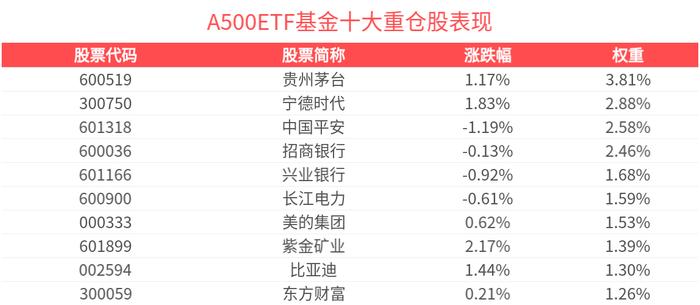
Group 1 - The A500 Index (000510) has shown a 0.52% increase, with notable gains from constituent stocks such as China Energy Engineering (601868) up 10.20% and Tunnel Engineering (600820) up 10.07% [1] - The A500 ETF (512050) has also risen by 0.60%, marking its fourth consecutive increase, with the latest price at 1.01 yuan [1] - A new round of "de-involution" and capacity reduction actions has commenced across multiple industries, driven by policy signals aimed at alleviating deflationary expectations from the supply side [1] Group 2 - The A500 Index is designed to reflect the overall performance of the 500 most representative listed companies across various industries, selected based on market capitalization and liquidity [2] - As of June 30, 2025, the top ten weighted stocks in the A500 Index include Kweichow Moutai (600519) and CATL (300750), collectively accounting for 20.67% of the index [2] Group 3 - The top ten stocks in the A500 Index and their respective weightings include: - Kweichow Moutai: 1.17% increase, 3.81% weight - CATL: 1.83% increase, 2.88% weight - China Ping An: -1.19% decrease, 2.58% weight - China Merchants Bank: -0.13% decrease, 2.46% weight - Industrial Bank: -0.92% decrease, 1.68% weight - Yangtze Power: -0.61% decrease, 1.59% weight - Midea Group: 0.62% increase, 1.53% weight - Zijin Mining: 2.17% increase, 1.39% weight - BYD: 1.44% increase, 1.30% weight - Eastmoney: 0.21% increase, 1.26% weight [3] Group 4 - The A500 ETF (512050) has several related funds, including the 华夏中证A500ETF联接 series and the 华夏中证A500指数增强 series [5]
铁矿石早报(2025-7-22)-20250722
Da Yue Qi Huo· 2025-07-22 02:29
Report Summary 1. Industry Investment Rating No specific industry investment rating is provided in the report. 2. Core Viewpoints - The fundamentals of iron ore show that steel mill hot metal production is decreasing, the arrival level this month has dropped, the overall supply - demand is loose, port inventories are decreasing, there are rumors of crude steel reduction policies, and the trade war is easing, presenting a neutral situation [2]. - The basis indicates that spot prices at Rizhao Port and Qingdao Port are at a premium to futures, showing a neutral state [2]. - Port inventories stand at 14,381.51 tons, increasing month - on - month and decreasing year - on - year, which is neutral [2]. - The price is above the 20 - day moving average and the 20 - day moving average is upward, showing a bullish tendency [2]. - The net position of the iron ore main contract is short, with short positions decreasing, showing a bearish tendency [2]. - With the expected decline in domestic demand and the impact of capacity - reduction plans on the market, the market is expected to fluctuate with a bullish bias [2]. 3. Summary by Related Catalogs Daily Viewpoints - **Fundamentals**: Steel mill hot metal production decreases, supply arrival drops, overall supply - demand is loose, port inventories decrease, there are rumors of crude steel reduction policies, and the trade war eases, neutral [2]. - **Basis**: Rizhao Port PB powder spot converted to futures price is 827, basis is 18; Qingdao Port Super Special powder spot converted to futures price is 887, basis is 78, spot at a premium to futures, neutral [2]. - **Inventory**: Port inventory is 14,381.51 tons, increasing month - on - month and decreasing year - on - year, neutral [2]. - **Disk**: Price above 20 - day moving average and 20 - day moving average upward, bullish [2]. - **Main Position**: Net short position of the main iron ore contract, short positions decreasing, bearish [2]. - **Expectation**: Domestic demand declines, capacity - reduction plans impact the market, market expected to fluctuate with a bullish bias [2]. Factors Affecting the Market - **Likely to be Bullish**: High hot metal production, decreasing port inventories, import losses, rising downstream steel prices with strong tolerance for high - priced raw materials [6]. - **Likely to be Bearish**: Increased future shipments, weak terminal demand [6].
“反内卷”加码扩围,低通胀何时改善?
Tebon Securities· 2025-07-18 09:41
Group 1: Current Inflation Status - The CPI in June 2025 increased by only 0.1% year-on-year, significantly below the 2% inflation target[3] - The PPI in June 2025 dropped to -3.6%, marking the lowest level in the year and continuing a negative trend for 33 consecutive months[3][19] - Key factors contributing to low CPI include weak performance in food and energy prices, underestimating the impact of "de-real estate," and weak demand for durable goods and services[3][15][18] Group 2: Policy Implications and Future Outlook - The "anti-involution" policy is expected to have a weaker impact on inflation compared to "capacity reduction" policies, as it focuses on market mechanisms rather than administrative measures[3][26] - CPI recovery to above 2% is anticipated to be slow due to ample supply and underappreciated real estate factors[3][29] - PPI is projected to turn positive by Q2 2026, with a forecasted year-end PPI of -1.3% in 2025[3][29] Group 3: Risks and Market Dynamics - Risks include unexpected downturns in the real estate market and insufficient policy effectiveness[3][29] - The relationship between PPI and commodity prices is crucial, with coal, rebar, lithium carbonate, copper, pork, and crude oil being significant influencers[3][20][22] - Recent commodity price trends show a decline in coal and rebar prices, while copper has shown signs of recovery[3][22]
光伏步入去产能,工业硅企稳回升
Tong Guan Jin Yuan Qi Huo· 2025-07-18 03:02
Report Industry Investment Rating No relevant content provided. Core Views of the Report - The US tariff policy and Trump's vision of manufacturing reshoring and revitalizing the traditional petrochemical energy system will challenge global economic growth and drag down the global photovoltaic industry. In the second half of the year, China's manufacturing industry is expected to return to an expansion trend. The anti - involution meeting will promote effective capacity reduction in the photovoltaic industry, and the expansionary fiscal policy and flexible and loose monetary policy will inject vitality into the Chinese economy [3][61]. - In terms of supply, the production in Xinjiang was under pressure in the first half of the year, the production in Sichuan and Yunnan was extremely low during the dry season, and the new production capacity in Inner Mongolia and Gansu was limited. The number of open furnaces nationwide decreased. After the anti - involution meeting, the photovoltaic industry's capacity reduction will accelerate in the second half of the year. It is expected that the annual output in 2025 will drop to 3.8 million tons, a decrease of about 22% compared with last year [3][61]. - In terms of demand, the anti - involution meeting emphasizes eliminating backward production capacity in the photovoltaic industry. The downstream battery and component markets will reduce production and load, and the terminal ground - based power station installation volume and photovoltaic glass production will decline significantly. The upstream silicon materials will enter a passive contraction cycle. Organic silicon has limited price - increase space under the dual pressures of cost squeeze and demand decline, and the output of aluminum alloy may not rebound due to the slowdown in real - estate completion and infrastructure investment. It is expected that the total consumption of industrial silicon in China in 2025 will decrease by about 5% compared with last year [3][48][62]. - In the second half of 2025, with the gradual clearance of excess capacity in the photovoltaic industry, the supply - demand pattern of industrial silicon will improve significantly. The domestic manufacturing industry will return to the expansion range, and the futures price may enter a stable upward cycle. It is expected that the main operating range of industrial silicon in the second half of 2025 will be between 8,000 - 10,500 yuan/ton [3][62]. Summary by Directory 2025 First - Half Market Review - In the first half of 2025, the industrial silicon futures price first declined and then rebounded. The price dropped from 11,130 yuan/ton at the beginning of the year to a minimum of 6,990 yuan/ton in early June, a decline of 37.2%. In the first quarter, the supply - demand imbalance was aggravated. Although the production in the southwest was low, the new production capacity in Gansu and Inner Mongolia was put into operation, and the consumption of silicon materials decreased. After April, enterprises rushed to install before the new policy on May 31, but the price still fell. After the anti - involution meeting in June, the price rebounded from the bottom, and the main contract rebounded to 8,280 yuan/ton by the end of June [8]. Macroeconomic Analysis Strengthening the Domestic Cycle and Promoting a Unified Market, with the Central Bank's Monetary Policy Remaining Moderately Loose - In the first half of the year, China's economy faced challenges such as the deterioration of the global trade situation and the slowdown of GDP growth. The central bank implemented a series of policies, including lowering the 7 - day reverse repurchase rate by 0.1% to 1.4%, reducing the deposit - reserve ratio by 0.5%, and increasing re - loan quotas. China's economy showed a stable and progressive trend in the first half of the year, with industrial production accelerating, high - tech industries developing rapidly, and domestic demand gradually recovering [10][11]. Manufacturing PMI Marginally Expanded and Rebounded, and the Anti - Involution Meeting Emphasized Capacity Reduction in Key Industries - In June, China's official manufacturing PMI index rebounded to 49.7, close to the boom - bust line. The production and new - order indexes were in the expansion range, indicating an improvement in the manufacturing industry's prosperity. The anti - involution meeting emphasized the governance of the photovoltaic industry's low - price and disorderly competition, aiming to guide the withdrawal of backward production capacity and promote high - quality development [12][14]. Fundamental Analysis Domestic Production: Xinjiang's Production Remained at a High Level Throughout the Year - In the first half of the year, the production in the northern main production areas of industrial silicon gradually recovered, but the recovery in Xinjiang was less than expected. The production in Sichuan and Yunnan was at a historical low during the dry season. The new production capacity in Inner Mongolia and Gansu compensated for the shortage in the southwest. In the second quarter, the production in the main production areas rebounded slightly. The total industrial silicon output in the first half of the year was 1.869 million tons, a significant decrease of 17.9% year - on - year. The output proportion was gradually shifting to the north [16][17]. The Newly - Added Domestic Production Capacity from 2025 - 2026 Will Significantly Slow Down - As of June this year, China's total industrial silicon production capacity reached 7.483 million tons, with an effective production capacity of 7.408 million tons. The average capacity utilization rate in 2024 was only 65.6%. From the first quarter of this year to the end of 2026, the total newly - added construction and put - into - production capacity is 2.382 million tons, with 1.782 million tons planned for 2025 and only 600,000 tons expected in 2026. The supply - side reform of the photovoltaic industry will ease the over - supply pressure [30][31]. Domestic Inventory Remained at a High Level, and the Export Growth Rate Slightly Declined - As of July 3, the domestic social inventory of industrial silicon was 552,000 tons, a slight increase of 13,000 tons compared with the end of last year. The warehouse - receipt inventory of the Guangzhou Futures Exchange first increased and then decreased. From January to May, the cumulative export of industrial silicon was 272,400 tons, a year - on - year decrease of 7%. Although the external demand for industrial silicon is increasing, the export volume is expected to decline slightly in the second half of the year due to the supply - side reform of the photovoltaic industry [38][39]. Industrial Silicon Demand Analysis The Anti - Involution Meeting Guides Capacity Reduction, and the Photovoltaic Industry's Supply - Side Reform Is in Progress - In the first half of the year, the polysilicon market was in a difficult situation, with high inventory, falling prices, and weak demand. After the anti - involution meeting, the production volume in July may drop to below 90,000 tons, a significant decrease of more than 20% compared with December last year. The silicon wafer, battery, and component markets also faced challenges such as over - supply and price decline. The photovoltaic glass manufacturers agreed to jointly reduce production by 30%, and the photovoltaic installation volume is expected to decline significantly in the third quarter [41][44]. Organic Silicon: Cost Collapse and Weak Demand, with Limited Rebound Space Expected in the Second Half of the Year - From January to June, the cumulative output of organic silicon DMC was 1.227 million tons, a year - on - year increase of 5.3%. The DMC price declined due to cost collapse and weak demand. The production profit in the second quarter shrank significantly, and some small and medium - sized enterprises were forced to stop production for maintenance. It is expected that the output of organic silicon will decline in the third quarter [45]. The Aluminum Alloy Output Increased Steadily, but the Real - Estate and Building Materials Industries May Struggle in the Second Half of the Year - From January to May, the cumulative output of aluminum alloy was 7.405 million tons, a year - on - year increase of 7.7%. However, the real - estate market's completion growth rate is expected to be sluggish, and the infrastructure investment growth rate has cooled slightly. The output growth rate of aluminum alloy is expected to drop to 3 - 5% in the second half of the year, and the processing fees of various aluminum products may continue to decline [47]. The Demand Growth Rate of Industrial Silicon Will Continue to Slow Down in the Second Half of 2025 - The photovoltaic industry will face capacity - reduction pressure in the second half of the year, and the demand for industrial silicon from organic silicon and aluminum alloy will also be affected. It is expected that the total consumption of industrial silicon in 2025 will decrease by about 5% compared with last year [48]. 2025 Second - Half Market Outlook - The US tariff policy and Trump's policies will challenge the global photovoltaic industry. In the second half of the year, China's manufacturing industry will expand, and the anti - involution meeting will promote the photovoltaic industry's capacity reduction. The supply of industrial silicon will decrease, and the demand will also slow down. It is expected that the supply - demand pattern will improve, and the futures price will enter a stable upward cycle, with the main operating range between 8,000 - 10,500 yuan/ton [61][62].
11家光伏公司预亏最高180亿,谁能最先“上岸”?
阿尔法工场研究院· 2025-07-17 12:02
Core Viewpoint - The performance of photovoltaic listed companies has shown significant differentiation in the first half of the year, with expectations for recovery in the second half driven by capacity reduction efforts [1][6]. Group 1: Performance Overview - As of July 15, 11 photovoltaic companies in A-shares reported a total loss of 156.75-180.55 billion yuan for the first half of the year, with Longi, JA Solar, Tongwei, and TCL Zhonghuan accounting for a significant portion of these losses [1][2]. - Despite many companies still facing losses, the downstream battery and module sectors have seen improvements, with several companies reporting narrowed losses and even profitability, such as Hengdian East Magnetic and Aiko Solar [1][4]. Group 2: Reasons for Performance Differentiation - The primary reasons for the performance differentiation among photovoltaic companies include: 1. Upstream silicon material and wafer companies are struggling with oversupply and high inventory, leading to severe losses. As of June, polysilicon inventory reached 140 GW, four times the average monthly demand [7][10]. 2. Downstream battery and module companies, particularly integrated giants, have benefited from market recovery in volume and price, with Longi achieving a shipment of 40 GW, regaining its position as the global leader [7][8]. 3. New technologies and overseas market expansion have been key for battery and module companies to improve performance, with companies like Aiko and Hengdian East Magnetic seeing significant growth in overseas sales [8][9]. Group 3: Outlook for the Second Half - The most significant factor influencing the photovoltaic market in the second half is the capacity reduction process, with strong policy support expected to address the issue of overcapacity [10][11]. - The recent establishment of a "storage alliance" among several companies aims to acquire smaller polysilicon firms, which could stabilize the market and lead to price increases [11][12]. - Three categories of companies are expected to see performance rebounds in the second half: 1. Silicon material companies, particularly Tongwei and GCL, are likely to benefit first from price recovery due to their cost advantages [12][13]. 2. Companies with premium advantages in the BC industry chain, such as Aiko and Longi, are expected to improve profit margins as BC component penetration increases [13]. 3. Niche leaders in auxiliary industries and equipment manufacturers, such as Yujing Co. and Nanfang Glass, are also projected to perform well as the overall photovoltaic market improves [14].

CF40研究院:反内卷≠去产能,治理供需失衡的重点仍在于扩内需
Sou Hu Cai Jing· 2025-07-17 07:15
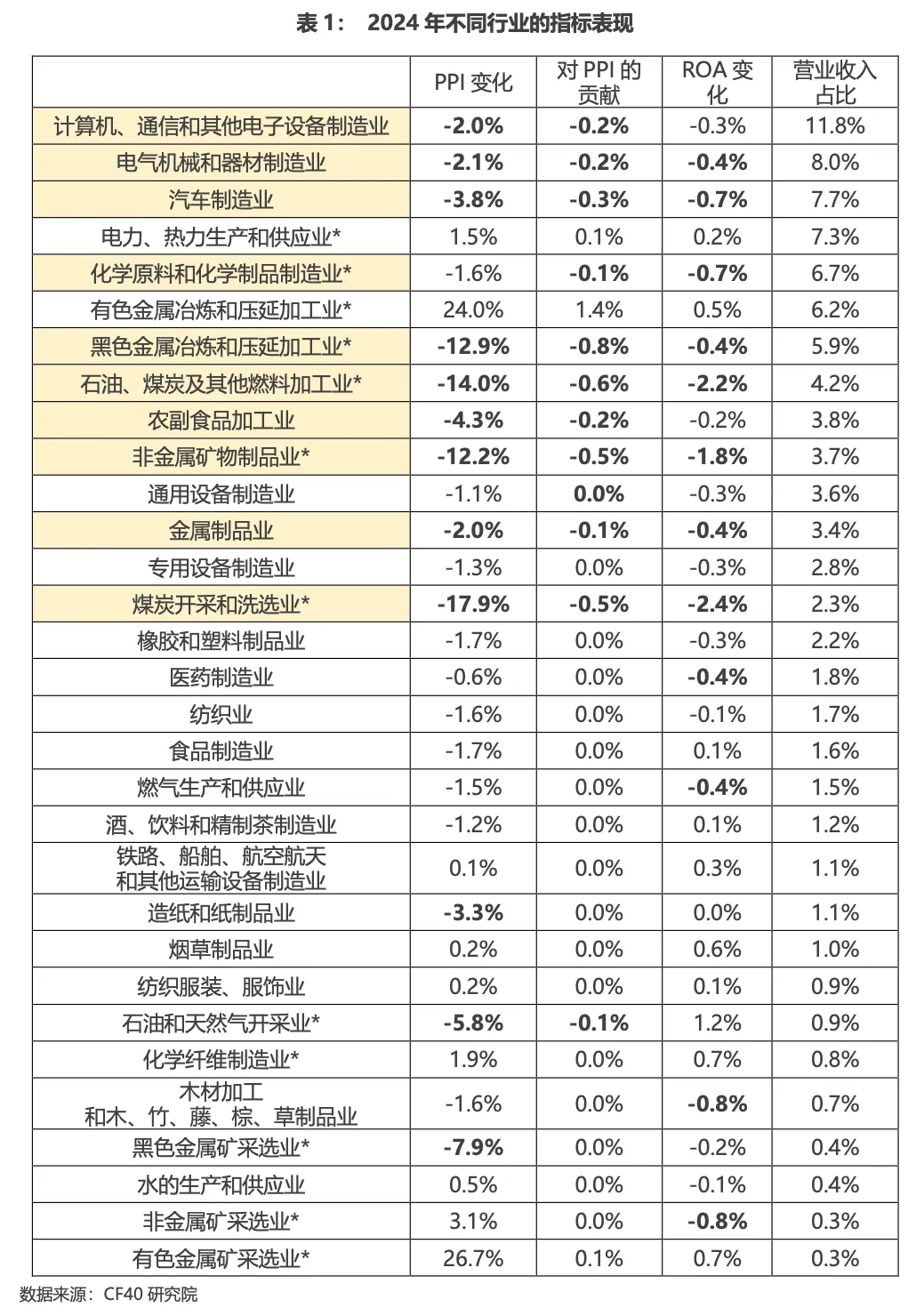
Core Viewpoint - The recent "anti-involution" policy in China is not equivalent to "capacity reduction" but aims to correct market failures and establish fair competition, thereby stimulating innovation and promoting high-quality economic development [1][2][3] Industry Overview - The "anti-involution" initiative has been initiated in industries such as photovoltaic, steel, automotive, and cement, with a focus on enhancing product quality and orderly exit of outdated capacity [1][2] - The current supply-demand imbalance is primarily due to insufficient demand rather than significant capacity expansion in most industries [2][3] Policy Implications - The CF40 research suggests that the focus should remain on expanding effective domestic demand rather than solely on capacity reduction [1][3] - Future policy directions should shift from subsidizing industries to subsidizing consumption [1][2] Industry Performance Analysis - The analysis indicates that the "new three types" of industries, including electric machinery, automotive manufacturing, and computer communications, have significantly higher revenue shares compared to previous capacity reduction industries [8][9] - In 2023, the capital expenditure growth rate for the "new three types" industries was 21.0%, contributing 2.78 percentage points to the overall manufacturing capital expenditure growth rate [8][9] Potential Capacity Reduction Industries - Based on the decision tree model, seven industries are identified as potentially facing capacity reduction, including coal mining, petroleum and coal processing, and automotive manufacturing [4][5] - The cumulative PPI change, contribution to PPI growth, and ROA are critical dimensions for assessing potential capacity reduction [4][5] Demand and Supply Dynamics - The automotive industry faces a core issue of unmet potential demand rather than absolute capacity overcapacity, with potential annual sales estimated at 43.26 million vehicles by 2030 [18][19] - The actual depreciation scale of vehicles has been significantly lower than potential levels, indicating suppressed demand [18][19] Conclusion on New Industries - The "new three types" industries are characterized by high capital and technology intensity, and their capacity should be analyzed on a case-by-case basis rather than assuming a general overcapacity [9][19]