
财政政策

Search documents
北大国发院院长:面对经济不确定性,短期需更积极的财政政策
Nan Fang Du Shi Bao· 2025-06-24 09:35
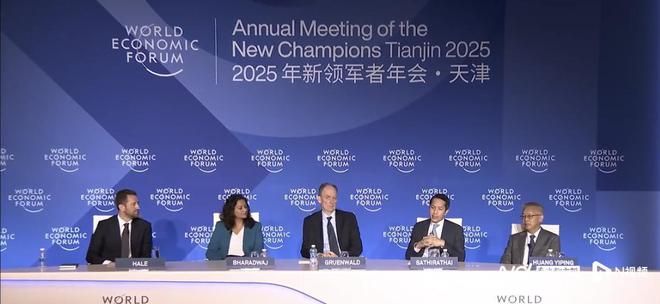
Group 1 - The World Economic Forum's 16th Annual Meeting of the New Champions, also known as the "Summer Davos Forum," was held in Tianjin from June 24 to June 26 [1] - A majority of economists surveyed believe that current U.S. economic policies will have a lasting impact on the global economy, with 87% predicting delays in strategic business decisions and increased recession risks [3] - Huang Yiping, Dean of the National School of Development at Peking University, emphasized the need for more proactive fiscal policies in the face of economic uncertainty [3] Group 2 - Huang Yiping highlighted the importance of distinguishing between short-term and long-term fiscal policies, advocating for constraints on government spending to avoid sustainability issues [3] - The concept of fiscal sustainability was discussed, indicating its significance for the functioning of government and the achievement of national development strategies [4] - Huang also pointed out the necessity to boost domestic demand and consumption in China, given the changing dynamics of global markets [4] Group 3 - The chief economist's briefing indicated that artificial intelligence is expected to drive growth, but 47% of respondents anticipate job losses as a result [5]

直击夏季达沃斯|黄益平:以中国经济韧性应对全球不确定性
Zhong Guo Jing Ying Bao· 2025-06-24 06:12
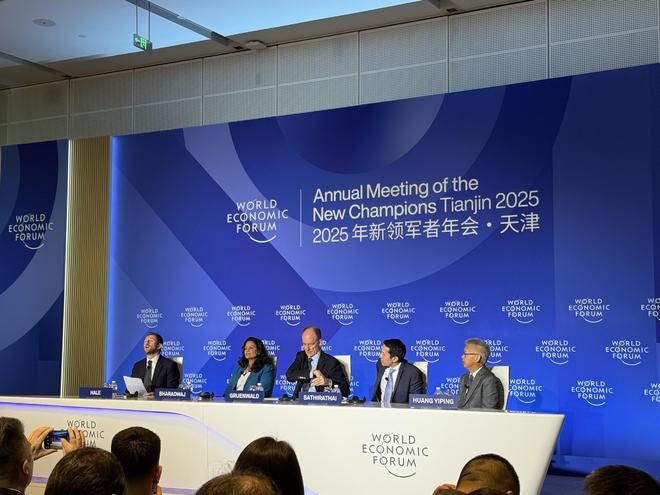
Core Insights - The 2025 Summer Davos Forum (New Champions Annual Meeting) is being held in Tianjin, highlighting global economic uncertainties and the impact of geopolitical conflicts on market confidence and inflation [2] Economic Performance - China's economy is currently performing steadily, with GDP growth expected to remain above 5% in Q2, indicating a generally positive economic outlook for the first half of the year [2] - Strong performance in exports and industrial production in recent quarters reflects the resilience of the economy, supported by government policies aimed at boosting consumption [2] Fiscal Policy Discussion - There is a need to differentiate between short-term and long-term fiscal policy objectives, with long-term fiscal health being crucial to avoid sustainability issues [3] - In response to external uncertainties that may slow economic growth, it is recommended to adopt an expansionary fiscal policy to create space for further economic stabilization [2][3]
因势利导,进退有度
Dong Zheng Qi Huo· 2025-06-24 04:16
Report Industry Investment Rating - The short - term (1 - 3 months), medium - term (3 - 6 months), and long - term (6 - 12 months) trend ratings for treasury bonds are all "oscillating" [5] Core Viewpoints of the Report - The fundamental situation is favorable for treasury bonds, with the bullish sentiment more obvious in the first half of the second half of the year, but the potential for further bullishness is limited. The market is expected to experience fluctuations, and investors are advised to adopt appropriate trading strategies [1][3][64] - Monetary policy is moderately loose, but the central bank may warn about interest - rate risks. Market sentiment is more cautious, and there are differences in institutional behavior and bond valuations compared to previous years, which limit the upward space of the bond market [2][65][88] - The bond market trend in the second half of the year is divided into three stages. Investment strategies include unilateral band operations, cross - variety strategies, and positive - arbitrage strategies for short - term varieties [3][92][96] Summary by Directory 1. 2025Q1 Treasury Bond Trend Review - In the first half of 2025, treasury bond futures went from weak to strong and then to narrow - range oscillation, experiencing three stages: decline from the beginning of the year to mid - March, rise from late March to early April, and narrow - range oscillation from mid - April to mid - June [15] - The yield curve first flattened and then oscillated. The basis of medium - and short - term varieties gradually returned to normal from a low level, while the basis of TL did not deviate significantly from the seasonal level [18] - The bond market showed new features this year, such as being insensitive to domestic economic fundamentals but sensitive to trade frictions, with the central bank having stronger regulatory ability, persistent negative carry for short - term varieties, and institutional behavior causing occasional disturbances [21] 2. Fiscal and Fundamental Aspects: The Trade War is Complex, and Domestic Low - Volatility Will Continue - **Trade War is Long - Term, Complex, and Has a "Stagflation" Effect**: The trade war is a long - term measure for the US to address its credit crisis. It is complex in its progress, and high tariffs will lead the US into a stagflation environment [24][27][31] - **Export Decline Pressure Becomes Apparent, and Domestic Demand Weakening Pressure Increases**: Trade frictions lead to a decline in overseas demand, which in turn reduces China's export growth. Domestic demand also faces challenges, especially in the real estate market, and consumption and private investment are also under pressure. Fiscal support is crucial for stabilizing demand [33][42][54] - **Fiscal Policy Supports the Economy, and Domestic Macroeconomy Runs with Low Volatility**: The proportion of functional finance is increasing. Fiscal policy should be moderately proactive, with a higher probability of quasi - fiscal policies. Fiscal policy will support economic growth, but the supply - demand imbalance will persist, and inflation will remain low [55][58][63] 3. Monetary Policy and Bond Market Valuation: Similar Policy Rhythms, Different Mindsets and Valuations - **Exchange - Rate Depreciation Pressure Eases, and Monetary Policy is Moderately Loose**: The RMB exchange - rate depreciation pressure has significantly eased. Monetary policy is moderately loose, with a high probability of a 10BP interest - rate cut in August - September. The central bank may warn about long - term interest - rate risks [65][66][73] - **Market Mindset, Institutional Behavior, and Bond Valuations Differ from Previous Years**: The market mindset is more cautious. Institutional behavior is affected by "liability shortage," and bond valuations are high, which limit the upward space of the bond market [78][81][87] 4. Market Outlook and Strategy: Actively Explore Futures Strategies - **Market Rhythm: Gradually Accelerate, Then Decline**: The bond market in the second half of the year is expected to go through three stages: strengthening from July - August, a high probability of decline from September - October, and slow strengthening from November - December [92][93] - **Strategy Analysis: Band - Operation Thinking, Explore Futures Strategies**: Unilateral strategies suggest that allocation portfolios should buy mid - term long positions on dips, and trading portfolios should conduct band operations. Cross - variety strategies recommend paying attention to the strategy of going long on 2TS and short on T. Positive - arbitrage strategies suggest seizing the tail - end opportunities of short - term varieties. Hedging strategies recommend paying attention to short - hedging strategies from September - October [96][98][103]
博时市场点评6月23日:三大指数反弹,计算机涨幅领先
Xin Lang Ji Jin· 2025-06-23 08:51
每日观点 【博时市场点评6月23日】三大指数反弹,计算机涨幅领先 资金追踪 市场成交额为11470.95亿元,较前一交易日上涨。两融余额上周五收报18124.82亿元,较前一交易日下 跌。 数据来源:同花顺,截至2025年6月23日。基金有风险,投资需谨慎。基金管理人承诺以诚实信用、勤 勉尽责的原则管理和运用基金资产,但不保证基金一定盈利,也不保证收益。基金的过往业绩并不预示 其未来表现。 6月22日,在中国人民银行和香港金融管理局共同推动下,跨境支付通正式上线,标志着内地与香港快 速支付系统已实现互联互通,今后两地居民可实时办理跨境汇款。当日,全国首笔跨境支付通内地居民 南向、港人北向汇款业务落地深圳。 简评:跨境支付通是内地与香港合作的重要举措之一,通过连接内地与香港快速支付系统实现互联互 通,有效提升跨境支付效率,便利经贸活动和人员往来,有利于巩固和提升香港国际金融中心及离岸人 民币业务枢纽的地位,更好地满足内地与香港居民对跨境汇款和支付的需求。 市场复盘 6月23日,A股三大指数上涨。截至收盘,上证指数报3381.58点,上涨0.65%;深证成指报10048.39点, 上涨0.43%;创业板指报201 ...
如何实现投资与消费的相互促进
Sou Hu Cai Jing· 2025-06-22 20:32
Group 1 - The relationship between investment and consumption is interdependent, and both are essential for expanding total demand in the economy [2][3] - Government spending should focus on both investment and consumption to stimulate economic growth, with current policies showing a structural bias towards investment [2][3] - The accumulation of material capital through investment is fundamental for economic growth, while consumption contributes to human capital, which is increasingly important in an innovation-driven economy [2][4] Group 2 - The debate over whether to prioritize investment or consumption is less productive than understanding their relationship within the overall economic cycle [3] - Government spending has become an integral part of daily economic cycles, and its effectiveness is hindered by issues such as mismatched flows and uncertainty in spending responsibilities [3][6] - A shift towards a human-centered logic in economic development is necessary, focusing on meeting people's needs through both investment and consumption [4][5] Group 3 - Urban-rural dualism restricts the mobility of farmers, impacting their access to equal public services and opportunities, which highlights the need for government investment and consumption to address these social identity issues [5][6] - Promoting social equity requires addressing inequalities in starting points and opportunities, with government policies aimed at facilitating migration and urbanization [7] - The central-local fiscal relationship is crucial for effective government investment and consumption, with local government spending being a significant component of overall fiscal policy [8][9] Group 4 - Current data shows that central government spending has increased by 9%, while local government spending has only grown by 3.9%, indicating insufficient expansion at the local level [9] - To implement more effective fiscal policies, reforms in the central-local fiscal relationship are essential, particularly in increasing the share of central government spending [9]

个税的蝴蝶效应——5月财政数据点评
一瑜中的· 2025-06-22 15:43
Core Viewpoint - The article emphasizes the significant growth of individual income tax (IIT) in May, which has outperformed other tax categories, indicating a potential positive trend amidst overall fiscal challenges [4][11]. Group 1: Individual Income Tax (IIT) Insights - In May, the IIT increased by 12.3% year-on-year, leading all tax categories, following a 9% increase in April [4][11]. - From January to May, IIT is the only major tax category showing positive growth at 8.2%, significantly above the annual budget target of 3.2% [4][11]. - The growth in IIT is attributed to wage increases and dividend income, with wages accounting for 65.5% and dividends for 13.3% of IIT [5][6]. Group 2: Sustainability of IIT Growth - The growth in IIT may continue due to delayed salary adjustments for civil servants and increased trading volume in dividend stocks [5][6]. - The potential release of pent-up consumption from delayed salary adjustments could sustain IIT growth into the latter half of 2024 [5][6]. Group 3: Impact on Incremental Policies - IIT's growth could offset the scale of incremental policy measures but may not change the direction of these policies [7][22]. - If IIT maintains its growth rate, it could exceed budget expectations by approximately 700 billion [7][22]. - Future incremental policies will be influenced by fiscal needs and economic demands, with key meetings scheduled for late July and August [8][9][10]. Group 4: Fiscal Data Analysis - In May, overall fiscal revenue showed a slight increase of 0.1%, with central government revenue maintaining a positive growth of 0.4% while local revenue turned negative at -0.1% [25][27]. - The manufacturing sector, particularly in computer and communication equipment, showed double-digit growth in tax revenue [27]. - Government fund income turned negative at -8.1% in May, primarily due to declining land sales revenue [41].

【广发宏观团队】三季度的增长条件
郭磊宏观茶座· 2025-06-22 11:32
广发宏观周度述评(第19期) 广发宏观周度述评(第1-18期,复盘必读) 内容 第一, 三季度的增长条件。 2025年上半年,中国实际增长有效修复。"两新"、出口、服务类消费是经济的三大带动力量。前5个月设备工器具投资同比17.3%; 限额以上家电、手机零售同比分别为30.2%、27.1%;出口同比6.0%;服务零售额同比增长5.2%[1]。 三季度经济增长条件如何? 从约束因素来看,主要有三点:(1)关税影响可能有一个滞后显现。5月出口同比初步有放缓迹象[2],6月集装箱吞吐量[3]、EPMI出口订单也呈现类似指向 [4];(2)房地产处于一轮小周期减速脉冲中,5月地产销售、投资降幅有所扩大,一二三线城市新建商品住宅价格指数环比均转负[5];(3)社零单月同比5月至 6.4%的高位,反映前期积极政策效果的释放,这一增速已经不低(2020年以来年度增速最高是2023年的7.2%,之前一年负增长形成低基数;2019年实际GDP 同比6.1%,对应社零同比8.0%)。部分地区国补换档期间不排除存在月度波动。 从最新的边际变化来看,6月EPMI出现一定程度放缓。EPMI、PMI、BCI三大"软指标"年初以来的走势均 ...

2025年5月财政数据快评:收支两端同时走弱,财政力度指数回落
Guoxin Securities· 2025-06-21 12:09
Revenue Insights - National general public budget revenue for January to May 2025 was CNY 96,623 billion, a year-on-year decrease of 0.3%[2] - Tax revenue for the same period was CNY 79,156 billion, down 1.6% year-on-year, while non-tax revenue increased by 6.2% to CNY 17,467 billion[2] - In May, general public budget revenue showed a slight increase of 0.1% year-on-year, down from 1.9% in the previous month[3] Expenditure Trends - General public budget expenditure reached CNY 112,953 billion from January to May 2025, reflecting a year-on-year growth of 4.2%[2] - In May, general public expenditure growth slowed to 2.6%, down from 5.8% in the previous month[13] - Infrastructure-related expenditure saw a significant decline, with a year-on-year decrease of 7.7% in May, compared to a previous increase of 2.2%[14] Fiscal Policy Analysis - The fiscal policy strength index fell for the first time in 2025, indicating a simultaneous weakening of revenue and expenditure[4] - The broad expenditure growth rate was 4% in May, a sharp decline from 12.9% previously, while broad revenue growth was -1.2%, down from 2.7%[25] - Government fund budget revenue turned negative in May, with a year-on-year decrease of 8.1%, primarily due to a 14.6% drop in land transfer income[20]
5月财政数据点评:收入改善有波折,支出放缓待发力
Changjiang Securities· 2025-06-21 07:33
丨证券研究报告丨 中国经济丨点评报告 [Table_Title] 收入改善有波折,支出放缓待发力 ——5 月财政数据点评 报告要点 [Table_Summary] 2025 年 1-5 月财政收支有以下特点:1)财政收入累计降幅收窄,但税收修复边际有所放缓; 2)个人所得税延续修复,地产相关税收拖累加剧;3)财政支出节奏边际放缓,基建支出降幅 走扩;4)政府性基金收入降幅走扩、支出放缓。往前看,若下半年国内外形势出现新的变化, 财政应对主要有三条:1)加速存量,重点关注用于项目建设的专项债发行是否提速;2)调整 存量,重点关注财政资金对于地产相关、促消费、保民生等领域的支持和补贴力度;3)储备增 量,包括政府债限额空间、央行利润上缴、财政结余资金、类财政工具、新增政府债额度等。 分析师及联系人 [Table_Author] 于博 宋筱筱 蒋佳榛 SAC:S0490520090001 SAC:S0490520080011 SAC:S0490524080005 SFC:BUX667 SFC:BVZ974 2025 年 6 月 20 日,财政部公布 2025 年 1-5 月财政数据:1-5 月,全国一般公共预算收入 ...