
反内卷

Search documents
国金证券:A股新的主线浮出水面 把握当下切换窗口期
智通财经网· 2025-12-28 11:49
Group 1 - The core viewpoint is that a new investment theme for 2026 is emerging in commodity markets, real industry chains, and foreign exchange markets, driven by a scenario where investment exceeds consumption [1] - The report recommends focusing on industrial resource products that resonate with AI investment and global manufacturing recovery, including copper, aluminum, tin, lithium, crude oil, and oil transportation [1] - It also highlights the Chinese equipment export chain with global comparative advantages, confirming a cyclical bottom, including sectors like power grid equipment, energy storage, lithium batteries, photovoltaics, engineering machinery, and commercial vehicles [1] Group 2 - The A-share market is experiencing a gradual upward trend, with the cross-year market rally starting, moving beyond a single narrative focused on AI to a broader range of themes including domestic demand and new industry topics [2] - The price increase chain has become a market focus, driven by rising raw material prices and the effects of anti-involution policies, leading some companies to reduce production and jointly raise prices [3] - The ongoing global manufacturing recovery is expected to continue with investment outpacing consumption, while the relationship between AI investment and metal prices is compared to past trends in coal and new energy [4] Group 3 - The new external circulation pattern is leading to a new cycle of RMB appreciation, primarily driven by the weakening dollar and seasonal capital inflows, with expectations of a recovery in China’s export resilience [5] - The RMB's appreciation is alleviating cost pressures from rising prices of commodities and integrated circuits, benefiting sectors such as communication equipment, environmental governance, aviation, electronics, and lithium batteries [6] - Historical trends indicate that during periods of RMB appreciation, the sales gross margin of companies exposed to high external demand typically experiences a slight increase followed by a decrease, suggesting a nuanced impact on export competitiveness [6]

2026Q1煤炭供应是否会出现开门红?
Changjiang Securities· 2025-12-28 11:45
Investment Rating - The industry investment rating is "Positive" and maintained [9] Core Insights - The report suggests that the coal output in Q1 2026 may not see significant growth due to policy constraints overshadowing seasonal supply patterns. The expected year-on-year increase in raw coal output is likely to be limited [2][7] - The coal price is under pressure due to weak demand and high inventory levels, but there is potential for stabilization if demand improves and supply remains tight [6][19] - Investment recommendations include focusing on companies with both defensive and offensive characteristics, such as Yanzhou Coal Mining Company and China Shenhua Energy, as well as those with low valuations and limited shares like Huayang Co. and Jinkong Coal [7][19] Summary by Sections Recent Tracking - The coal index (Yangtze) fell by 0.7%, underperforming the CSI 300 index by 2.65 percentage points, ranking 29th out of 32 industries [6][18] - As of December 26, the market price for Qinhuangdao power coal was 672 RMB/ton, down 31 RMB/ton week-on-week [6][19] Q1 Coal Supply Outlook - Historical data shows a 60% probability of year-on-year increases in Q1 coal output over the past decade, but policy factors are now more influential than seasonal trends [7] - The report emphasizes that the "opening red" in coal supply is more a result of policy adjustments rather than seasonal patterns, with significant constraints on production capacity expected in Q1 2026 [7] Investment Recommendations - The report recommends focusing on companies that can balance dividends and growth, highlighting Yanzhou Coal Mining Company A+H and China Shenhua Energy A+H as key picks [7] - For aggressive growth, companies like Huayang Co. and Jinkong Coal are suggested if demand improves and coal prices exceed expectations [7]
惊世阳谋!人民币持续走强,突围战悄然打响,全球资本重新站队
Sou Hu Cai Jing· 2025-12-28 11:37
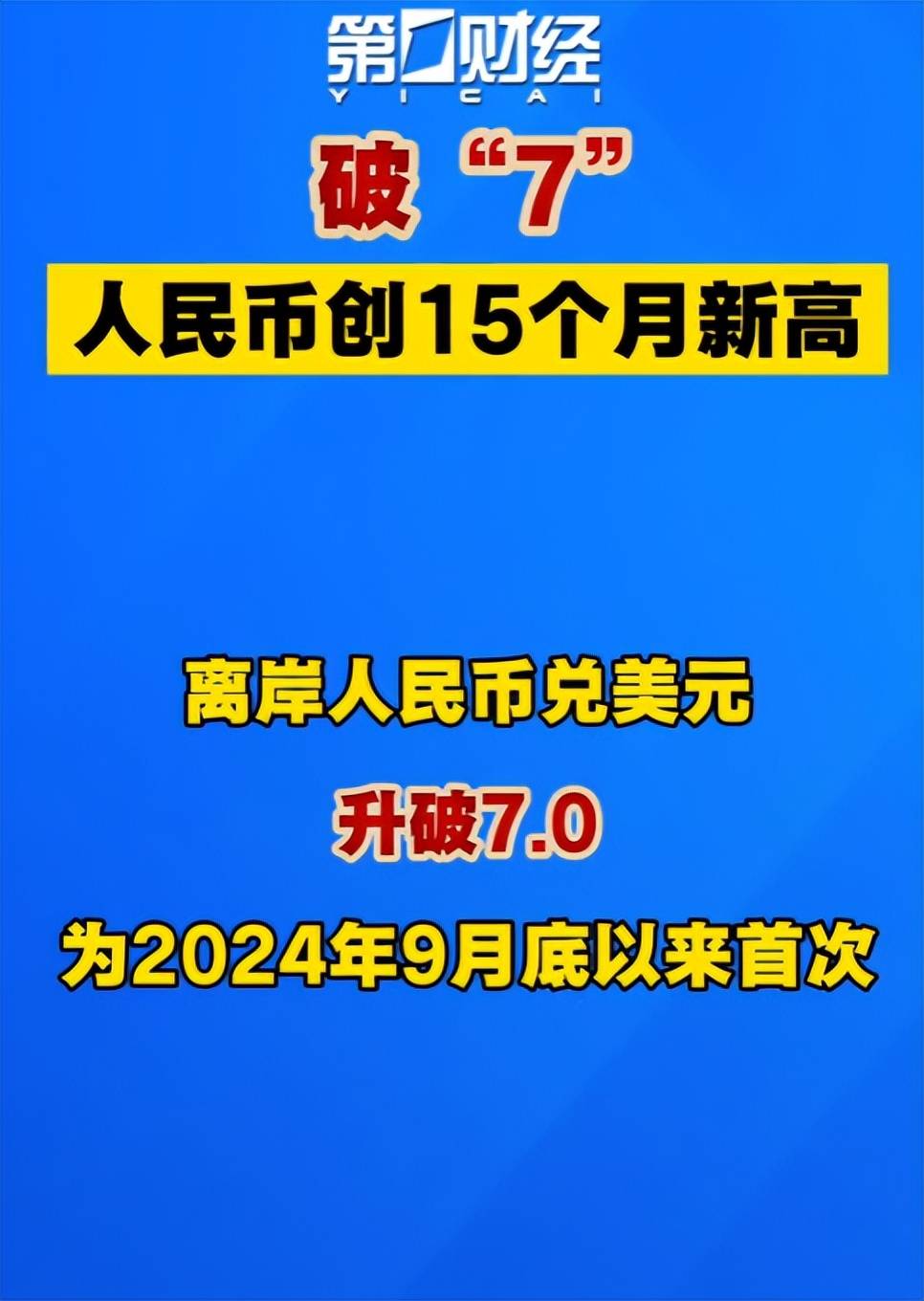
Core Viewpoint - The recent appreciation of the Chinese yuan, breaking the 7.0 mark against the US dollar, signifies a shift in trade dynamics and reflects the underlying geopolitical strategies among major economies [1][3][4]. Group 1: Economic Context - The yuan's rise is attributed to a record trade surplus and strong export performance, leading to increased foreign exchange earnings [6]. - The appreciation is not merely a result of market supply and demand but is part of a calculated strategy in the context of global power dynamics [4][6]. Group 2: Geopolitical Dynamics - The ongoing competition among the US, Europe, and China has intensified, with the US recognizing China's advancements in high-end technology and manufacturing capabilities [10]. - The US has initiated a process of de-globalization, attempting to bring manufacturing back home through tariffs and technology restrictions, which has led to a coordinated depreciation of the yuan by Western economies [12][10]. Group 3: Strategic Responses - In response to external pressures, China has opted for a proactive strategy of allowing the yuan to appreciate, countering the intended effects of Western economic policies [14][20]. - This strategy aims to mitigate the impact of currency appreciation on export profits by encouraging price increases, thus protecting domestic businesses from a price war [16][20]. Group 4: Industry Implications - The strategy of price increases is seen as a means to strengthen leading industry players and promote technological advancements, as weaker firms are likely to be eliminated in the process [22][24]. - By allowing for moderate price increases, China aims to provide breathing room for Western manufacturers, thereby avoiding a complete collapse of their industries and fostering a more stable competitive environment [26][30]. Group 5: Market Reactions - Despite the yuan's appreciation, Chinese exports remain robust, with trade surpluses continuing to rise, indicating a persistent reliance on Chinese goods by Western economies [30][33]. - The current market dynamics have led to increased demand for commodities, with prices for metals like copper and aluminum reaching new highs, driven by Western countries' stockpiling in response to supply chain vulnerabilities [36][40]. Group 6: Future Outlook - The ongoing developments in the yuan's valuation and China's strategic positioning in global trade are expected to continue shaping the landscape of international finance and economic relations [42][44]. - The narrative of China's manufacturing resilience and strategic foresight is likely to play a significant role in its future economic trajectory and global standing [44].

黑色金属周报合集-20251228
Guo Tai Jun An Qi Huo· 2025-12-28 11:31
1. Report Industry Investment Rating No relevant information provided. 2. Core Viewpoints of the Report - Steel: With macro support and industry constraints, steel prices will maintain a range - bound oscillation. The black industry chain is in a situation of weak supply and demand, and the slow destocking of hot - rolled coils restricts the overall rebound of steel prices [6][8]. - Iron ore: Supported by macro expectations, iron ore prices will oscillate at a high level. Although the black fundamentals lack directional drivers, the overall risk appetite of the market and the commodity market trends support the valuation of iron ore [83][85]. - Coking coal and coke: The supply - demand expectation continues to weaken, and the valuation drops again. Before the Spring Festival, the upward space is limited, mainly showing a weak rebound, and price fluctuations are mainly affected by the news [135][137]. - Ferrosilicon and silicomanganese: With weak support from demand, the futures prices will oscillate in a narrow range. Macro sentiment and weak - stable demand have led to a slight increase in the price center, but there is pressure on the upward space due to new starts and restarts on the supply side [223][225]. 3. Summary of Each Section 3.1 Steel (Rebar and Hot - Rolled Coil) - **Supply, Demand, and Inventory**: Rebar supply was 184.42 million tons, with a week - on - week increase of 2.71 million tons and a year - on - year decrease of 31.9 million tons. Demand was 202.7 million tons, with a week - on - week decrease of 6.01 million tons and a year - on - year decrease of 16.9 million tons. Inventory was 434.3 million tons, with a week - on - week decrease of 18.3 million tons and a year - on - year increase of 34.5 million tons. Hot - rolled coil supply was 293.5 million tons, with a week - on - week increase of 1.6 million tons and a year - on - year decrease of 13.6 million tons. Demand was 307 million tons, with a week - on - week increase of 8.8 million tons and a year - on - year increase of 4.3 million tons. Inventory was 377.2 million tons, with a week - on - week decrease of 13.5 million tons and a year - on - year increase of 70.1 million tons [7]. - **Macro Environment**: Overseas, there was an interest rate cut in December, releasing liquidity. Domestically, the Central Economic Work Conference mentioned "anti - involution" again, and the overall macro - environment was warm. The National Development and Reform Commission proposed to optimize and upgrade traditional industries [8]. - **Demand**: For rebar, new - house sales remained at a low level, indicating weak market confidence, while second - hand house sales were high, showing rigid demand. For hot - rolled coil, the production schedules of the home appliance and automobile industries were poor, and the demand peak season did not peak. After January 1, 2026, the new steel export regulations will be implemented, making stricter standards and restricting export [26][29][49][50]. - **Profit**: Rebar spot profit was 168 yuan/ton, with a week - on - week increase of 9 yuan/ton, and the main contract profit was 197 yuan/ton, with a week - on - week decrease of 33 yuan/ton. Hot - rolled coil spot profit was - 16 yuan/ton, with a week - on - week increase of 19 yuan/ton, and the main contract profit was 150 yuan/ton, with a week - on - week decrease of 47 yuan/ton [43][63]. 3.2 Iron Ore - **Supply**: Overseas shipments remained at a relatively high level, and the overall supply was still abundant. Rumors about Rio Tinto's attempt to change the pricing model in early next year had little marginal impact on prices [85]. - **Demand**: The pig iron output remained flat week - on - week, and the raw material inventory of steel mills rebounded from a low level, possibly driven by restocking [85]. - **Contract Performance**: The main 05 contract price oscillated downward, closing at 783.00 yuan/ton, with a position of 581,000 lots, a week - on - week increase of 45,800 lots. The average daily trading volume was 227,000 lots, a week - on - week decrease of 42,500 lots [87]. - **Spot Price**: The recent increase in spot prices was relatively limited. For example, the price of PB powder was strong, and the price difference between Karara powder and PB powder narrowed to a new low [91][124]. 3.3 Coking Coal and Coke - **Supply**: Some domestic coal mines reduced production and carried out maintenance after completing their annual production tasks, and the production decreased significantly in the short term. The Mongolian coal at Ganqimaodu Port continued to have high customs clearance, and the port inventory exceeded 3.8 million tons [135]. - **Demand**: The pig iron output remained low, and the winter - storage market was delayed. The supply - demand situation of coke remained weak, and there was still a possibility of a fourth round of price cuts [138]. - **Inventory**: The total coking coal inventory increased by 909,000 tons week - on - week, with inventory accumulation in all links. The coke total inventory increased by 144,000 tons week - on - week [138][140]. - **Price**: The price of coking coal and coke futures fluctuated. The main factors affecting the price were the game between long and short positions near the delivery date, the topic of "anti - involution" in the coal industry, and the expected tightening of imported coal [137]. 3.4 Ferrosilicon and Silicomanganese - **Market Performance**: This week, the prices of ferrosilicon and silicomanganese oscillated in a narrow range, with a slight upward shift in the price center. The main factors were macro - sentiment and weak - stable performance on the demand side [225]. - **Supply**: Ferrosilicon production was 98,500 tons this week, with a week - on - week decrease of 1,300 tons, and the weekly operating rate was 29.5%, with a week - on - week decrease of 1.3 percentage points. Silicomanganese production was 192,600 tons this week, with a week - on - week increase of 4,300 tons, and the weekly operating rate was 36.78%, with a week - on - week increase of 1.17 percentage points [224][237][278]. - **Demand**: From the performance of downstream steel mills, the blast - furnace operating rate and the actual pig iron output were relatively stable. The demand for ferrosilicon and silicomanganese was weakly supported [225][247][296]. - **Inventory**: The inventory of silicomanganese sample enterprises increased, and the inventory of steel mills decreased except in East China. The inventory of ferrosilicon sample enterprises decreased, and the inventory of steel mills decreased except in East China [251][255][297][298].
化工行业周报20251228:国际油价持平,MDI价格略跌、醋酸价格上涨-20251228
Bank of China Securities· 2025-12-28 11:30
Investment Rating - The report rates the chemical industry as "Outperform" [1] Core Views - The report suggests focusing on undervalued leading companies in the industry, the impact of "anti-involution" on supply in related sub-industries, and the increasing importance of self-sufficiency in electronic materials companies and certain new energy materials companies amid price increases [1][9] Industry Dynamics - As of December 22-28, 2025, among 100 tracked chemical products, 34 saw price increases, 32 saw declines, and 34 remained stable. 55% of products had month-on-month average prices rising, while 35% fell, and 10% remained unchanged [8][27] - International oil prices remained stable, with WTI crude futures closing at $56.74 per barrel (up 0.14%) and Brent crude at $60.64 per barrel (up 0.28%) [28] - MDI prices slightly decreased, with pure MDI averaging 18,100 CNY/ton (down 4.23% week-on-week) and polymer MDI at 14,300 CNY/ton (down 2.39%) [29] - Acetic acid prices increased to 2,496 CNY/ton (up 2.93% week-on-week) [30] Investment Recommendations - As of December 27, 2025, the SW basic chemical industry P/E ratio (TTM excluding negative values) is 25.60, at the 76.58% historical percentile, while the P/B ratio is 2.33, at the 61.10% historical percentile. The SW oil and petrochemical industry P/E ratio is 13.17, at the 37.56% historical percentile, and the P/B ratio is 1.28, at the 36.98% historical percentile [9] - Recommendations include focusing on undervalued leading companies, the impact of "anti-involution" on supply, and the importance of self-sufficiency in electronic materials and certain new energy materials companies [9] - Long-term investment themes include expected demand recovery supported by policies, continuous optimization of supply, and the potential for performance and valuation improvements for leading companies [9] - Recommended stocks include Wanhua Chemical, Hualu Hengsheng, Satellite Chemical, and others [9]
石油化工行业周报:PX供需偏紧景气回暖,PTA供给支撑毛利修复-20251228
Shenwan Hongyuan Securities· 2025-12-28 11:14
Investment Rating - The report maintains a "Positive" outlook on the petrochemical industry, highlighting a recovery in PX supply-demand dynamics and PTA profitability restoration [3][5]. Core Insights - The PX market is expected to see a tightening supply-demand balance, with a recovery in operating rates from 78% in 2023 to over 85% as downstream PTA production ramps up in 2024-2025. This is anticipated to lead to a significant improvement in market conditions [5][6]. - PTA production capacity in China is projected to increase from 46.08 million tons in 2018 to 86.02 million tons by 2024, accounting for 75% of global capacity. The report indicates that there will be no new capacity additions post-2026, leading to a collaborative reduction phase in the industry [13][19]. - The upstream oil sector is experiencing rising oil prices, with Brent crude futures closing at $60.64 per barrel, reflecting a 0.28% increase week-on-week. This is expected to support the profitability of refining companies [5][26]. - The polyester sector is showing mixed performance, with PTA profitability increasing while polyester filament profits are declining. The report emphasizes the need to monitor demand changes closely [19]. Summary by Sections PX Market - PX supply-demand is tightening, with a forecasted increase in operating rates to over 85% due to no new capacity additions and seasonal maintenance in early 2026 [5][6]. - The report notes that the PX price has risen to $878.87 per ton, a week-on-week increase of 5.61% [19]. PTA Market - PTA production capacity is expected to reach 71.14 million tons in 2024, a 13% year-on-year increase. The report anticipates a collaborative reduction phase starting in 2026 due to no new capacity additions [13][19]. - PTA prices have shifted from a downward trend to an upward trend, with current prices in East China averaging 4,936 RMB per ton, reflecting a 6.94% increase week-on-week [19]. Upstream Oil Sector - Brent crude oil prices have increased, with a weekly average price of $61.91 per barrel, indicating a positive trend for upstream oil companies [5][26]. - The report highlights a decrease in the number of active drilling rigs in the U.S., with 545 rigs reported, a decrease of 44 year-on-year, suggesting a potential impact on future oil supply [41]. Investment Recommendations - The report recommends focusing on high-quality companies in the polyester sector, such as Tongkun Co. and Wankai New Materials, as well as major refining companies like Hengli Petrochemical and Rongsheng Petrochemical due to expected improvements in profitability [19].




烧碱:短期反弹高度有限,关注1月交割压力,PVC:短期反弹高度有限
Guo Tai Jun An Qi Huo· 2025-12-28 09:08
1. Report Industry Investment Rating - No information provided in the given content. 2. Core Views of the Report 2.1烧碱 - Short - term rebound height is limited, and attention should be paid to the delivery pressure in January. The supply is high, and the demand is weak. Although there is a short - term rebound driven by alumina, the fundamental situation has not improved substantially [5]. 2.2 PVC - Short - term rebound height is limited. The high - output and high - inventory structure is difficult to change in the short term. Although there are factors driving a phased rebound, the overall situation of high production and weak demand remains [6]. 3. Summary by Relevant Catalogs 3.1观点综述 3.1.1烧碱 - Supply: The average capacity utilization rate of Chinese caustic soda sample enterprises with a capacity of 200,000 tons or more is 86.0%, a week - on - week increase of 1.3%. Next week, the overall start - up is expected to increase slightly. - Demand: The alumina industry has a pattern of high production and high inventory, and the demand for caustic soda is difficult to expand significantly. Non - aluminum demand is at a rigid level and will face a slack season. Export orders are few, and the price difference between 50% caustic soda and 32% caustic soda is still weak. - View: Caustic soda follows the rebound of alumina in the short term, but the rebound space may be limited if manufacturers do not cut production. Pay attention to the delivery pressure of the 01 contract in January. - Valuation: The marginal device cost in Shandong is calculated to be 2,280 yuan/ton. - Strategy: For unilateral trading, the short - term rebound is limited; for inter - period and inter - variety trading, there are no specific strategies [5]. 3.1.2 PVC - Supply: The high - output structure of PVC is gradually improving. The start - up this week has decreased, and the output is expected to increase slightly next week. In 2026, the maintenance efforts in spring and summer may exceed this year. - Demand: Domestic demand related to the real estate industry is weak, and the willingness of enterprises to stock up is low. Export demand is also difficult to increase significantly. - View: The valuation of PVC is at a low level, but the rebound space is limited. The high - output and high - inventory structure is difficult to change in the short term. It is recommended to wait for the substantial large - scale maintenance plan on the supply side to appear before entering the market. - Valuation: The basis is strengthening, the month - to - month spread is weakening, and the warehouse receipts are at a high level, with a neutral - to - high valuation. - Strategy: For unilateral trading, conduct range operations with the upper pressure of the 05 contract at 4,850 - 4,900 yuan/ton and the lower support at 4,600 - 4,700 yuan/ton; for inter - period trading, conduct 1 - 5 reverse arbitrage; for inter - variety trading, there is no specific strategy [6]. 3.2烧碱价格及价差 - The main short - selling logic includes high supply and high inventory, the continuous existence of alumina production cut expectations, new production capacity in the next year, slow - down in export growth, and changes in delivery areas and delivery premiums and discounts. The main long - buying logic includes anti - deflation and anti - involution trends, large losses in the integrated profit of caustic soda and PVC, and the expansion of the export market due to the shutdown of overseas chlor - alkali plants [9]. - The basis of caustic soda 01 is weakening, and the 1 - 5 month - to - month spread is also weakening [12]. - Although the export market still has support, it is also facing structural adjustment. The cumulative export volume of caustic soda from January to October 2025 is 3.74 million tons, a year - on - year increase of 36.7%. It is expected that the annual export volume will exceed 4 million tons in 2025 [19]. - The FOB price in Northeast Asia is declining, currently around $355 per dry ton. The export profit of caustic soda has certain fluctuations [21]. - The regional arbitrage space between Shandong and Guangdong is acceptable, and the price difference between flake caustic soda and liquid caustic soda is declining. The price difference between 50% caustic soda and 32% caustic soda is also declining, which is negative for caustic soda [27][30][32]. 3.3烧碱供应 - The market structure shows an increase in production and a decline in inventory. The average capacity utilization rate of Chinese caustic soda sample enterprises with a capacity of 200,000 tons or more is 86.0%, a week - on - week increase of 1.3%. The factory inventory of fixed liquid caustic soda sample enterprises with a capacity of 200,000 tons or more nationwide is 442,200 tons (wet tons), a week - on - week decrease of 4.83% and a year - on - year increase of 39.57%. The capacity utilization ratio of the national liquid caustic soda sample enterprises is 27.34%, a week - on - week decrease of 2.08% [39][40][43]. - Attention should be paid to the significant reduction in maintenance after December. In 2025 and 2026, caustic soda production capacity will continue to be put into operation, with a capacity growth rate of over 3% [45][47]. - In December, the large - scale industrial electricity price in Shandong Province has been reduced, and the cost of caustic soda has limited support. The price of liquid chlorine has not been significantly subsidized, and the cost support for caustic soda is also limited. The downstream consumption of chlorine, such as propylene oxide, epichlorohydrin, dichloromethane, and chloroform, has different operating conditions and profit situations [48][52][54]. 3.4烧碱需求 - In 2025, the alumina production capacity has expanded significantly, with a new production capacity of 9.5 million tons expected. In 2026, the new production capacity may reach 13.9 million tons. However, the alumina industry is currently facing a situation of declining start - up, rising inventory, and declining profits, and there is a production cut expectation. The low profit of alumina leads to cautious procurement of caustic soda by alumina plants, and the inventory of caustic soda is difficult to transfer smoothly downstream [66][68][70]. - The pulp industry is in a slack season, and the terminal profit is continuously compressed. The new production capacity of pulp is continuously being put into operation. The finished paper industry has a stable start - up. The viscose staple fiber and printing and dyeing industries have a declining start - up. The water treatment industry has a declining start - up, and the output of the ternary precursor industry is declining [84][89][95]. 3.5 PVC价格及价差 - The main contract of PVC has changed, the basis is oscillating and weakening, and the 1 - 5 month - to - month spread is oscillating and weakening [104]. 3.6 PVC供需 - The start - up of PVC has decreased month - on - month. The capacity utilization rate of PVC production enterprises this week is 77.23%, a month - on - month decrease of 0.15% and a year - on - year decrease of 3.39%. In 2025, 2.2 million tons of new PVC production capacity will be put into operation, and there will be no new production capacity in 2026 [108][109][114]. - The comprehensive profit of the PVC industry has reached a new low in recent years, and Shandong chlor - alkali enterprises are in a loss situation. The production enterprises of PVC have slightly reduced their inventory, but the social inventory is at a high level. The terminal demand in the real estate industry has not significantly improved, the start - up of the PVC downstream industry has decreased overall, the export of PVC is expected to weaken, and the warehouse receipts have declined but are still at a high level [117][121][139].
中信证券:以震荡市思维应对跨年行情
Xin Lang Cai Jing· 2025-12-28 08:45
Core Insights - In December, 39 out of 360 industry/theme ETFs reached new highs, primarily in the communication, non-ferrous metals, and military (aerospace) sectors, indicating strong market consensus on these areas [2][11] - Established sectors like communication and non-ferrous metals are seen as core investment themes, while emerging sectors such as commercial aerospace are gaining traction amid market volatility [1][3] Group 1: Performance of ETFs - The communication ETFs saw an average increase of 10% since October, with an annual average increase of 91.5% [2][12] - Non-ferrous metal ETFs experienced an average increase of 20.1% since October, with an annual average increase of 95.2% [2][12] - Military and aerospace ETFs had an average increase of 18.7% since October, with satellite ETFs rising by an average of 34.5% [2][12] Group 2: Emerging Investment Themes - Commercial aerospace is viewed as an active investment choice during market fluctuations, similar to previous low-altitude themes, driven by narratives around US-China space infrastructure competition [3][4] - The commercial aerospace sector, while promising, does not match the scale of humanoid robotics or low-altitude economies, indicating a more modest growth potential [4][14] Group 3: Under-the-Radar Sectors - Sectors like chemicals and engineering machinery are quietly rising and have reached new annual highs, reflecting China's manufacturing competitiveness and pricing power [5][15] - These sectors are characterized by low media attention and fragmented industry discussions, making them susceptible to being overlooked despite their potential for profit margin improvement [5][15] Group 4: Anti-Inflation Trends - Sectors related to anti-inflation, such as new energy and steel, are showing signs of recovery, with market sensitivity to supply dynamics increasing [6][16] - Recent supply chain disruptions in the new energy sector have led to positive stock price reactions, indicating market expectations for tangible supply reductions [6][16] Group 5: Investment Strategy - The current market strategy emphasizes structural opportunities in a volatile market, focusing on sectors with low heat and concentration but increasing attention and potential for long-term ROE improvement, such as chemicals, engineering machinery, and new energy [7][17] - The strategy also includes monitoring the trend of RMB appreciation, with sectors like brokerage and insurance being positioned as both offensive and defensive choices [7][17]

螺纹钢、热轧卷板周度报告-20251228
Guo Tai Jun An Qi Huo· 2025-12-28 08:43
螺纹钢&热轧卷板周度报告 黑色分析师:李亚飞 投资咨询号:Z0021184 日期:2025年12月28日 Guotai Junan Futures all rights reserved, please do not reprint 螺纹&热卷观点:宏观托底产业压制,钢价维持区间震荡 ◼ 逻辑:宏观托底产业压制,钢价维持区间震荡 | 2025/12/26 | | 供应 | | (万吨) | | | | | 需求 | (万吨) | | | | | 库存 | | | | 现货 | 主力 | 01-05 | 现货 | 盘面 | | --- | --- | --- | --- | --- | --- | --- | --- | --- | --- | --- | --- | --- | --- | --- | --- | --- | --- | --- | --- | --- | --- | --- | --- | | | 当周值 | | | 环差 | 同差 | | 当周值 | | | 环差 | | 同差 | | 当周值 | 环差 | | | 同差 | 价格 | 基差 | 价差 | 利润 | 利润 | | 铁水 | ...
基础化工行业周报:聚酯链景气上行,有机硅有望启动-20251228
Guotou Securities· 2025-12-28 08:31
Investment Rating - The report maintains an investment rating of "Outperform the Market - A" for the chemical industry [5] Core Views - The polyester chain is experiencing an upward trend, with expectations for the silicone industry to start recovering [2][10] - Supply-demand expectations are improving, particularly for PX and PTA, with no new capacity expected in 2026, leading to a tighter supply situation [2][10] - The report highlights the importance of industry collaboration and self-discipline among major manufacturers to stabilize prices and improve profitability [3][10] Summary by Sections 1. Core Insights - The PX industry has seen no new capacity additions for two consecutive years, with limited supply expected until new projects in Q4 2026 [2] - PTA has officially ended its rapid expansion phase, with no new capacity expected in 2026, and some companies are proactively reducing production [2] - The polyester filament industry is benefiting from a mature self-discipline mechanism, leading to significant price increases [3] 2. Industry Performance - The chemical sector has shown strong performance, with the industry index rising by 4.2% in the last week, outperforming major indices [24] - Year-to-date, the chemical industry index has increased by 33.6%, indicating strong recovery potential [24] 3. Stock Recommendations - Recommended stocks include Tongkun Co., New Fengming, Hengyi Petrochemical, and Hengli Petrochemical in the polyester sector [9][21] - For the silicone sector, recommended stocks include Xinsilicon, Dongyue Silicon, and Hoshine Silicon [10][21] 4. Price and Margin Analysis - Recent price increases for PX and PTA have been noted, with PX prices reaching 7318 RMB/ton and PTA at 5040 RMB/ton, marking significant week-on-week increases [1][2] - The report anticipates that the profitability of polyester products will improve due to better supply-demand dynamics [2][3]