顺周期

Search documents
关注核聚变、AI基建、高端机床等板块投资机会 | 投研报告
Zhong Guo Neng Yuan Wang· 2025-12-16 04:02
Group 1: Mechanical Equipment Industry Overview - The mechanical equipment industry rose by 1.79% during the week of December 8-12, 2025, ranking 5th among 31 primary industries [1][2] - Sub-industries performance: specialized equipment (+3.34%), general equipment (+2.72%), rail transit equipment (+0.37%), engineering machinery (+0.19%), and automation equipment (-0.12%) [1][2] Group 2: Investment Recommendations - The market risk appetite is expected to improve following the completion of the third-quarter report disclosures, suggesting a focus on technology growth and cyclical recovery [2] - Recommended sectors include technology areas such as PCB equipment, controllable nuclear fusion, humanoid robots, and semiconductor equipment, as well as cyclical sectors like engineering machinery and general equipment recovery [2] Group 3: Semiconductor Industry Developments - The global competition in computing power is intensifying, accelerating the process of self-sufficiency in the semiconductor industry chain [3] - Domestic GPU companies like Moore Threads and Muxi are advancing towards IPOs, while international cloud computing giants like Amazon are iterating advanced self-developed AI chips [3] - The listing of Naxin Micro indicates a rapid push towards domestic replacement across the entire semiconductor industry chain [3] Group 4: Humanoid Robot Industry Progress - The humanoid robot industry is maturing, with clearer commercialization paths as evidenced by competitions and conferences [4] - Companies like Zhiyuan Robot and Galaxy General Robot are completing shareholding reforms, indicating increased industry maturity and the initiation of capital cycles [4] - The industry is entering a critical phase focused on genuine advancements, with 2026 seen as a potential starting point for mass production [4] Group 5: Machine Tool Industry Insights - Japan's machine tool orders have seen continuous growth for five months, with overseas orders increasing by 23.2% year-on-year, driven by capital expenditures in markets like North America, China, and India [5] - Domestic policies are supporting the high-end machine tool sector, with a focus on core component self-research capabilities [5] Group 6: Controlled Nuclear Fusion Developments - The industrialization of controllable nuclear fusion is advancing from research to engineering validation, with significant projects underway [6] - Companies like Hangyang Co. have successfully entered the core systems of fusion devices, indicating structural opportunities in the industry [6] Group 7: Excavator Sales Performance - Excavator sales in November 2025 reached 20,027 units, a year-on-year increase of 13.9%, with domestic sales at 9,842 units (+9.11%) and exports at 10,185 units (+18.8%) [7] - The industry is benefiting from a new round of concentrated replacement cycles and large project initiations, with strong growth potential for leading companies [7] Group 8: Industrial Robot Production Trends - In October 2025, industrial robot production increased by 17.9% year-on-year, driven by government policies encouraging equipment upgrades [8] - The industry may see a reversal of difficulties, with opportunities arising from structural adjustments and diversification of application scenarios [8] Group 9: Forklift Industry Outlook - The Asia International Logistics Technology and Transportation Systems Exhibition showcased advancements in smart equipment and low-carbon technologies, which are expected to positively impact the forklift sector [9] - The forklift industry is experiencing significant sales growth, with ongoing upgrades towards automation and intelligence [9]
A股三大主线逆势走强
Zhong Guo Zheng Quan Bao· 2025-12-15 09:31
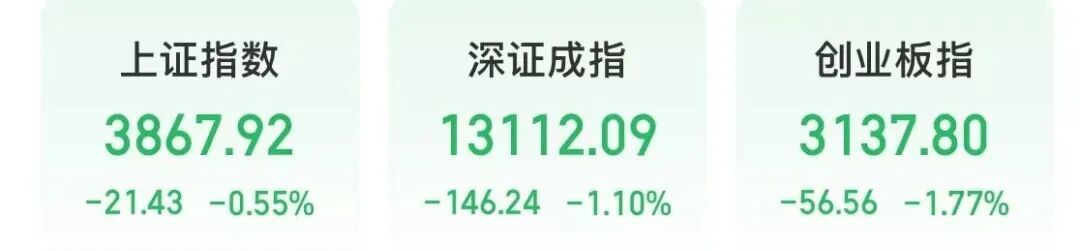
Group 1: Market Overview - The cyclical market shows significant performance, with major consumption sectors like dairy and retail experiencing substantial gains, while financial sectors such as insurance, banking, and securities also saw increases [1] - Technology stocks experienced a pullback, particularly in computing and semiconductor sectors, with the Shanghai Composite Index down by 0.55%, Shenzhen Component Index down by 1.1%, and ChiNext Index down by 1.77% [1] Group 2: Retail and Commercial Aerospace - Retail and commercial aerospace sectors are attracting active market funds, with retail benefiting from favorable policies and commercial aerospace seeing continuous event-driven catalysts [2] - Specific retail stocks like Hongqi Chain, Quanxinhao, and Baida Group reached their daily limit up, with Baida Group achieving three consecutive limit-ups [2] Group 3: Consumption and Policy Support - The Ministry of Commerce and other regulatory bodies announced measures to enhance collaboration between commerce and finance, aiming to boost consumption through 11 specific initiatives [3] - The implementation plan aims to create three trillion-level consumption sectors and ten hundred-billion-level consumption hotspots by 2027, with a focus on high-quality development and interaction between supply and demand [4] Group 4: Steel Sector Performance - The steel sector saw an increase, with companies like Fushun Special Steel and Taiyuan Iron & Steel experiencing significant gains [8] - The Ministry of Commerce and the General Administration of Customs announced export license management for certain steel products starting January 1, 2026, indicating a potential stabilization and improvement in the steel industry [10] - Structural investment opportunities are identified in the steel sector, focusing on advanced equipment, regional leaders, and companies benefiting from the new energy cycle [10]


廖市无双:“春季攻势”会提前到来吗?
2025-12-15 01:55
Summary of Conference Call Records Industry or Company Involved - The discussion primarily revolves around the Chinese stock market, focusing on various indices such as the Shanghai Composite Index, ChiNext Index, Hang Seng Technology Index, and the STAR Market (科创50). Core Points and Arguments 1. **Market Outlook and Risks** - The market may face short-term correction risks, with the period around the Chinese New Year potentially being a peak. The Shanghai Composite Index rebounded to 3,936 points, nearing resistance levels, while the ChiNext Index's sustainability is questioned due to reliance on optical module stocks [1][2][3]. 2. **Performance of Major Indices** - The Shanghai Composite Index has rebounded from a low of 3,800 points to 3,936 points, approaching expected resistance levels. The ChiNext Index has recovered 70%-80% of its previous decline, indicating potential for new highs, driven by leading optical module stocks [3][10]. 3. **Sector Performance** - The communication sector has shown strong performance, primarily led by optical module stocks. The defense and military sector has strengthened due to geopolitical factors, while hard technology sectors like electronics, machinery, and battery cells have also performed well [6][7]. 4. **Brokerage Sector Analysis** - The brokerage sector is currently in a structural adjustment phase, with limited potential for significant market movements in the short term. Regulatory allowances for increased leverage do not guarantee immediate bullish trends [5][11]. 5. **Investment Strategy Recommendations** - Investors are advised to reduce positions if the market rises directly before the Chinese New Year. If the market consolidates, opportunities may arise in the ChiNext and Hang Seng Technology Index, particularly in stocks that have seen significant declines [15][16]. 6. **Future Market Trends** - The ChiNext Index is expected to undergo a period of consolidation, with a high likelihood of downward adjustments due to concentrated capital in optical modules and lack of healthy rotation among sectors [10][12]. 7. **Focus Areas for 2025** - Key areas for investment in 2025 should include domestic demand-related sectors such as chemicals and black commodities, which align with cyclical recovery logic. Additionally, sectors like home appliances, pharmaceuticals, and AI applications are highlighted for their potential [22][17]. 8. **Market Dynamics and Style Rotation** - The market is experiencing rapid style rotation, with growth and cyclical stocks currently favored. The end of the year typically sees a preference for large-cap value stocks, but growth-oriented technology and certain consumer stocks are becoming more active [18][20]. 9. **Impact of New Regulations** - New public fund regulations are expected to have medium to long-term effects on market styles, with high-beta sectors currently in favor. Investors should consider these changes when selecting benchmarks and strategies [24]. 10. **International Market Insights** - International trends, such as liquidity from overseas rate cuts, may influence domestic investment strategies, particularly in resilient sectors like innovative pharmaceuticals and robotics [21]. Other Important but Possibly Overlooked Content - The historical performance of the home appliance sector in December shows an 80% success rate over the past decade, indicating potential for seasonal investment opportunities [17]. - The current market sentiment reflects a lack of enthusiasm for traditional industries like coal and real estate, suggesting a shift in investor focus towards more innovative sectors [8][19].
国泰海通证券开放式基金周报(20251214):建议均衡偏成长风格配置,重视科技成长风格基金,兼顾大金融、顺周期等资产-20251214
国泰海通· 2025-12-14 12:51
Report Industry Investment Rating No relevant content provided. Core Viewpoints of the Report - A shares fluctuated last week, with the communication, national defense and military industry, and electronics sectors performing well. It is recommended to allocate in a balanced and growth - biased style, emphasizing technology - growth style funds and also considering large - finance and pro - cyclical assets [1][3][4]. - In the stock market, China's stock market is expected to enter a cross - year offensive, and the index will take a new step upwards. In the bond market, it is expected that credit risks will be generally controllable in 2026, and the rhythm of low spreads and high volatility may continue [14][15]. Summary According to the Directory 1. Last Week's Market Review - **A - share Market**: A shares fluctuated last week (20251208 - 20251212). The communication, national defense and military industry, and electronics sectors performed well. The Shanghai Composite Index fell 0.34% to 3889.35, and the Shenzhen Component Index rose 0.84% to 13258.33. Among the 31 Shenwan primary industries, 9 industries rose and 22 fell. The top - performing industries were communication, national defense and military industry, electronics, machinery, and power equipment, with weekly increases of 6.27%, 2.8%, 2.63%, 1.38%, and 1.19% respectively [6][7]. - **Bond Market**: The bond market rose. On December 10, 2025, the National Bureau of Statistics released the November 2025 price data. The CPI rebounded to 0.7% year - on - year, and the PPI fell to - 2.2% year - on - year. The overall price level still needed to be boosted. The new progress of Vanke's bond extension drove the bond market to recover and rise. The yields of 1 - year and 10 - year treasury bonds and national development bonds all declined [8]. - **US Stock Market**: US stocks fluctuated. The Federal Reserve announced a 25 - basis - point interest rate cut on Wednesday, which was in line with market expectations. However, on Friday, negative news from two major technology giants, Broadcom and Oracle, triggered concerns about the AI bubble again. Coupled with some Fed officials' opposition to easing monetary policy, the technology sector was under significant pressure. The Dow Jones Industrial Index rose 1.05%, the S&P 500 Index fell 0.63%, and the Nasdaq Index fell 1.62% [6][9]. - **Commodity Market**: Oil prices fell, and gold and silver prices rose. The International Energy Agency (IEA) predicted that by 2026, the global oil supply would exceed demand by 381.5 million barrels per day. The energy index fell 6.42%, and the prices of various oil products declined. The precious metals index rose 2.38%, with COMEX gold rising 2.05% and COMEX silver rising 5.13% [9]. 2. Last Week's Fund Market Review - **Stock - type Funds**: Stock - type funds rose 0.38% last week. Some funds heavily invested in overseas computing power, chip semiconductors, and other sectors performed well. Index funds related to communication equipment, artificial intelligence, and semiconductors performed well [6][10][11]. - **Bond - type Funds**: Bond - type funds rose 0.07% last week. Among them, partial - debt bond funds and convertible - bond funds with equity assets in sectors such as electronics and military industry performed well [10][11]. - **QDII Funds**: Among QDII funds, those mainly investing in the global technology field performed well. Equity - type QDII funds fell 1% last week, and QDII bond - type funds fell 0.07% [12]. - **Other Funds**: The annualized yield of money funds was 1.21%. Gold ETFs and their linked funds rose 0.8%, and commodity - type funds rose 0.84% [12][13]. 3. Future Investment Strategy - **Macro - situation**: The Fed cut interest rates by 25BP, and it is expected that the Fed will continue to cut interest rates in 2026. The Fed chair's replacement may affect the pace of interest rate cuts. It is predicted that US bond yields will first decline and then rise in 2026, and US stocks will still have continuous support [14]. - **Stock Market**: China's stock market will enter a cross - year offensive, and the index will take a new step upwards. It is recommended to focus on technology, securities, and some consumer sectors [14][15]. - **Bond Market**: In 2026, it is expected that credit risks will be generally controllable, and the rhythm of low spreads and high volatility may continue. It is recommended to mainly focus on short - and medium - term credit sinking to dig for coupons and pay attention to the trading opportunities of medium - and long - term bonds at phased highs caused by events or policy shocks [15][16]. - **Fund Investment**: For stock - hybrid funds, it is recommended to allocate in a balanced and growth - biased style, emphasizing technology - growth style funds and also considering large - finance and pro - cyclical assets. For bond funds, it is recommended to focus on flexible fixed - income products. For money funds, there are no trending investment opportunities. For commodity funds, gold ETFs can be appropriately allocated [4][17]. 4. Latest Fund Market Developments - **Regulatory Policy**: The regulatory authorities issued the "Draft for Soliciting Opinions on the Code of Conduct for the Sale of Publicly Offered Securities Investment Funds", aiming to standardize the fund sales behaviors of fund companies' direct sales and agency sales institutions [18]. - **Industry Development**: The public fund index - enhancement business has entered a fast - track development. As of December 10, 168 new index - enhancement funds have been established this year, with a total new - issuance scale of over 92 billion yuan, exceeding the total new - issuance of index - enhancement products in the past three years [20]. - **New Fund Products**: 23 new funds were established last week, with an average subscription period of about 13 days and an average raised share of 792 million shares, with a total raised share of 18.218 billion shares [21]. - **Fund Dividends**: 84 funds will conduct equity registration in the coming week. The most notable one is Huashang Advantage Industry A, which will distribute a dividend of 2.347 yuan per 10 shares [22].
行业动态更新:11月CPI继续正增长,关注顺周期β与新消费α
Yin He Zheng Quan· 2025-12-14 12:34
Investment Rating - The report maintains a "Recommended" rating for the food and beverage industry [1] Core Insights - The November CPI shows continued positive growth, with a year-on-year increase of 0.7% compared to 0.2% in October. Food prices also turned positive, with a year-on-year increase of 0.2% [5][6] - The central economic work conference emphasizes expanding domestic demand, which is expected to improve per capita income and drive recovery in the food and beverage sector [5][6] - The report highlights the potential for new consumption (higher quality goods and services) to contribute positively to the industry [5] Summary by Sections 1. November CPI and Economic Focus - November CPI increased by 0.7% year-on-year, marking two consecutive months of positive growth. Food prices rose by 0.2% year-on-year, with fresh vegetable prices increasing by 15% [5][6] - The central economic work conference prioritizes expanding domestic demand and improving income plans, which is expected to benefit the food and beverage industry [5][6] 2. Data Tracking: December Price Trends - As of December 12, 2025, the price of Feitian Moutai continued to decline, with prices at 1495/1485 RMB for whole and individual bottles, down 85 RMB from November 30 [7] - Core raw material prices show mixed trends, with packaging material prices declining year-on-year, while some raw materials like aluminum and paper boxes saw increases [16][27] 3. Market Review: December Index Performance - The food and beverage index fell by 3.5% as of December 12, 2025, underperforming the Wind All A index by 4.5%, ranking 27th among 31 sub-industries [47][49] - All ten sub-sectors experienced declines, with beer, seasoning, and soft drinks showing relatively smaller drops [47][49] 4. Investment Recommendations - The report suggests focusing on companies in the mass consumer sector, including Dongpeng Beverage, Nongfu Spring, and others, as well as key players in the liquor sector like Kweichow Moutai and Shanxi Fenjiu [50][51] - New consumption trends are expected to continue, with opportunities in snack and functional beverage markets, while traditional consumption is anticipated to improve [50][51]

2026年港股展望:风物长宜放眼量
Soochow Securities· 2025-12-12 13:31
Group 1 - The core view of the report indicates that Hong Kong stocks outperformed global investor expectations in 2025, with the Hang Seng Index rising by 30%, the Hang Seng Tech Index by 26.7%, and the Hang Seng China Enterprises Index by 26.2%, surpassing major global markets such as the S&P 500, DAX, and Nikkei 225 [1][8][11] - The report anticipates that Hong Kong stocks will continue to rise in 2026 due to several factors, including expected interest rate cuts by the Federal Reserve, a temporary easing of Sino-US relations, and synchronized monetary and fiscal policies in China [1][16][21] - The report emphasizes that the main investment themes for 2026 will be technology and cyclical sectors, with a focus on innovative pharmaceuticals, suggesting a barbell strategy for portfolio allocation to mitigate potential risks from overseas macroeconomic and political uncertainties [1][3][16] Group 2 - The report highlights that the first half of 2026 is expected to present more trading opportunities, driven by domestic and international factors, including a favorable policy environment in China and anticipated interest rate cuts by the Federal Reserve [2][16] - It is noted that the cyclical sectors are likely to benefit from domestic policies aimed at reducing internal competition and improving global demand, with a focus on commodities and real estate stocks in Hong Kong [3][16] - The report also points out the potential for continued inflows of southbound capital into Hong Kong stocks, driven by a "wealth effect" as market performance improves [1][11][16]
中加基金固收周报|市场情绪偏低,聚焦科技
Xin Lang Cai Jing· 2025-12-12 07:56
Market Overview - A-shares showed mixed performance last week with declining trading volume [1][7] - The market experienced a rebound amidst low liquidity and weak technical indicators, although financing data showed improvement [16] Macroeconomic Analysis - The Bank of Japan's Governor hinted at a possible interest rate hike later this month, signaling a hawkish stance [5][14] - Japan's economy shows signs of recovery with rising wages, while a weak yen has led to imported inflation pressures [5][14] - International markets have begun pricing in potential liquidity tightening following the Bank of Japan's statements, although the impact remains limited [5][14] Short-term Outlook - As year-end approaches, institutional fund activity is low, leading to reduced market liquidity and increased pricing power for quantitative funds [8][17] - The technology growth sector is particularly sensitive to marginal catalysts, with expectations for significant policy outcomes from upcoming meetings [8][17] - A potential influx of capital estimated in the hundreds of billions is anticipated to support a spring market rally [8][17] Mid-term Perspective - The technology growth sector remains a favored direction, with no fundamental changes in the economic backdrop or technology narrative [8][18] - Defensive dividend sectors are recommended for continued allocation, with increased insurance capital and stable economic expectations providing support [10][19] Long-term View - The long-term dynamics of the U.S.-China rivalry are becoming clearer, with increasing skepticism about U.S. governance and institutional credibility [9][18] - The Chinese equity market may benefit from sustained foreign capital inflows, supported by a favorable exchange rate for the yuan against the dollar [9][18] - The trend towards long-term capital from public offerings and insurance funds is expected to strengthen, with significant stock holdings by major insurance companies [9][18] Industry Insights - For defensive dividend sectors, maintaining allocation ratios is advised, with a focus on catalysts in certain industries and stable attributes in Hong Kong stocks [10][19] - In aggressive sectors, technology remains a key focus, particularly in AI and related fields, with attention to short-term catalysts in domestic computing and commercial aerospace [10][19] - The market may see opportunities in undervalued domestic demand sectors and high-growth areas, contingent on strong catalysts [10][19]
信达证券:中国制造业进入全球化发展周期 结构性发展领域涌现更多机会
智通财经网· 2025-12-12 01:31
Core Viewpoint - The pricing logic of Chinese stocks is subtly changing, with China taking a more proactive role in global trade, and the manufacturing sector entering a globalization development cycle. The real estate market is stabilizing, leading to a shift in economic thinking, while macro tail risks are decreasing. New technologies and industries are emerging, creating more opportunities in structural development areas [1]. Group 1: New Consumption Trends - The pet food industry is experiencing a simultaneous increase in volume and price, driven by diversified growth and strong brand loyalty, suggesting significant potential for leading brands [2]. - The gold and jewelry sector is expected to maintain a favorable outlook through 2026, with a focus on the value retention of gold jewelry and the strengthening of leading brands [2]. - The collectible toy market is evolving towards a global business model, transitioning from a single product focus to an integrated IP and ecosystem approach, highlighting the importance of strong brand positioning [2]. - The new tobacco sector is seeing stricter regulations but a steady recovery in the compliant market, with increased penetration of heated tobacco products (HNB) [2]. - The AI smart glasses market is projected to grow significantly, with sales expected to reach 1.8 million units by 2026, indicating a shift in product development priorities [2]. - The two-wheeler market is undergoing regulatory changes that are optimizing the industry structure, with leading companies expected to benefit from improved product offerings [2]. Group 2: Cyclical Opportunities - The home furnishings sector is anticipated to remain in an adjustment phase until 2026, with growth driven by demand for soft and smart home products [3]. - The paper industry is facing a tightening supply of wood chips, which may support a gradual recovery in pulp prices, with leading companies expected to enhance their competitive advantages [3]. - The metal packaging industry is seeing increased concentration, with expectations of slight price increases in 2026, while the paper and plastic packaging sectors are maintaining stable demand [3]. Group 3: Export Dynamics - Following the US interest rate cuts, expectations for real estate improvement are rising, and corporate orders are showing signs of recovery, with leading companies benefiting from localized production strategies [5]. - Companies with global layouts, such as home furnishings and automotive brands, are demonstrating resilience and expanding their brand influence through mature local operations [5]. Group 4: Textile and Apparel - The outdoor apparel market is projected to grow significantly, with a CAGR of 9.6% for outdoor clothing and 9.2% for footwear from 2025 to 2029, driven by product innovation [6]. - The men's clothing and home textile sectors are showing resilience, with leading companies benefiting from high dividend yields and online sales growth [6]. - The textile manufacturing sector is optimistic about external demand, with healthy channel inventories and improving orders, particularly in Indonesia as a key production destination [6].

交通运输行业2026年投资策略:时来天地皆同力
GF SECURITIES· 2025-12-11 05:08
Core Insights - The report emphasizes that domestic demand is recovering ahead of external demand, with a focus on low base effects in 2026, making bottomed-out sectors worth attention [3] - It highlights that upstream sectors are recovering before downstream sectors, with significant demand elasticity expected in early 2026, particularly in bulk supply chains and dry bulk shipping [3] - The report notes that price increases are anticipated before volume growth, with a focus on dry bulk shipping, e-commerce logistics, and airlines benefiting from supply constraints and favorable oil exchange rates [3] Industry Overview - The transportation sector ranked 29th in the market as of December 10, 2025, reflecting significant pressure on fundamentals, with a -1% performance in the Shenwan primary transportation index [18][19] - The report identifies structural opportunities in logistics and shipping, despite the overall economic cycle affecting the sector [20] - It indicates that the transportation sector's performance is closely tied to economic fundamentals, with a notable correlation between ROE and economic cycles [23] Sub-industry Analysis - In logistics, domestic demand is stabilizing while external trade remains robust, with expectations of price increases due to anti-involution policies [11][20] - The airline sector is experiencing improvements in supply and demand, with a focus on capturing opportunities in private airlines and airport duty-free consumption recovery [11][20] - The shipping sector, particularly dry bulk shipping, is highlighted as a cost-effective opportunity for 2026, driven by supply and demand dynamics [11][20] Investment Strategy - The report suggests a strategy of seeking alpha within beta, focusing on sectors with low beta characteristics that are expected to turn around in 2026 [11][20] - It emphasizes the importance of identifying individual stocks within the transportation sector that can outperform the broader market, given the anticipated recovery in demand [11][20] - The report outlines a cautious but optimistic outlook for 2026, with a focus on sectors that have shown resilience and potential for recovery [11][20]


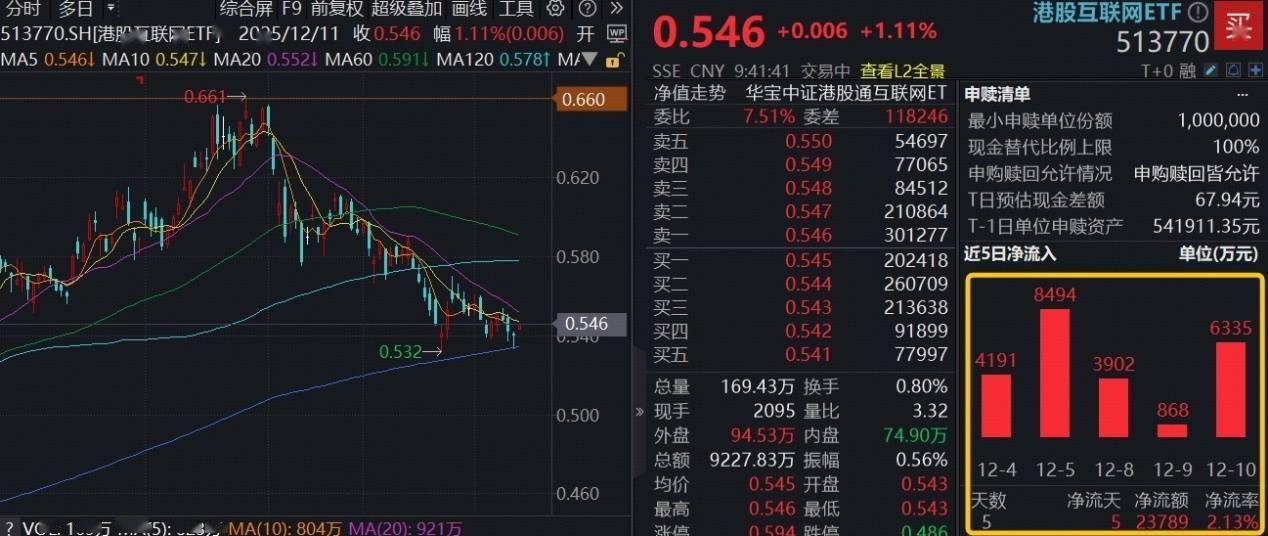
ETF盘中资讯|牵手Meta,阿里突传利好!百亿港股互联网ETF(513770)涨逾1%,连续5日大举吸金2.38亿元!
Sou Hu Cai Jing· 2025-12-11 02:04
Core Viewpoint - The Federal Reserve's recent interest rate cut has positively impacted the Hong Kong stock market, particularly benefiting technology stocks and AI-related investments [1][2][3] Group 1: Market Reaction - Following the Federal Reserve's decision to cut rates by 25 basis points, the Hong Kong stock market opened higher, with the Hang Seng Index rising by 0.55% [1][2] - Major tech stocks such as Bilibili, Tencent, Alibaba, and Meituan saw gains of over 1%, indicating strong market sentiment [1][3] Group 2: AI and Internet Sector Developments - Alibaba's recent collaboration with Meta to optimize its AI model through the Qianwen platform is expected to accelerate growth in Alibaba's AI applications [3] - Analysts from CITIC Securities express optimism about the internet sector's cyclical attributes combined with the upward trend in AI, suggesting that major players will likely benefit from AI advancements [3] - The Hong Kong Internet ETF (513770) has attracted significant capital, with a net inflow of 238 million yuan over five consecutive days, reflecting growing investor interest in AI and tech stocks [1][3] Group 3: ETF and Investment Opportunities - The Hong Kong Internet ETF (513770) tracks the CSI Hong Kong Internet Index and has a significant allocation to leading companies in AI and cloud computing, with over 73% of its top ten holdings in this sector [3] - The ETF has a market size exceeding 10 billion yuan and an average daily trading volume of over 600 million yuan, indicating strong liquidity and investor engagement [3] - For investors seeking to balance technology exposure with stability, the Hong Kong Large Cap 30 ETF (520560) offers a diversified strategy that includes both high-growth tech stocks and stable dividend-paying companies [5]