新消费

Search documents
“新消费”不仅成全了泡泡玛特!也成就了这两家私募!同犇投资、复胜资产霸榜前10!
私募排排网· 2025-06-12 08:16
| 排序 | 公司简称 | 被私募调研次 数 | 5月涨跌幅(%) | | 季度持有 持有流通股数 机构持有流通股 | | 所属方向/板块 | | --- | --- | --- | --- | --- | --- | --- | --- | | | | | | 的机构数 | (万股) | 市值(万元 | | | 1 | 菜绅通灵 | 5 | 67.81 | 6 | 6303.03 | 41284.82 | 饰品 | | 2 | 曼卡龙 | 3 | 45.48 | 9 | 11026.41 | 131986.07 | 谷子经济、饰品 | | 3 | 潮宏基 | 3 | 45.30 | 29 | 44106.18 | 358583.23 | 盲盒经济、饰品 | | ব | | 7 | 44.16 | 3 | 514.83 | 12175.85 | 宠物经济 | | 5 | | 1 | 34.78 | 3 | 5826.66 | 83146.44 | 为泡泡玛特提供 产品设计服务 | | | 烦请扫码 | 1 | 30.36 | 3 | 25492.89 | 354606.15 | 饮料乳品 | | | | 15 ...


亚朵一季报隐忧:加盟收入与经营效率变动背离 零售副业亮眼难解“流量依赖症”
Xin Lang Zheng Quan· 2025-06-12 04:05
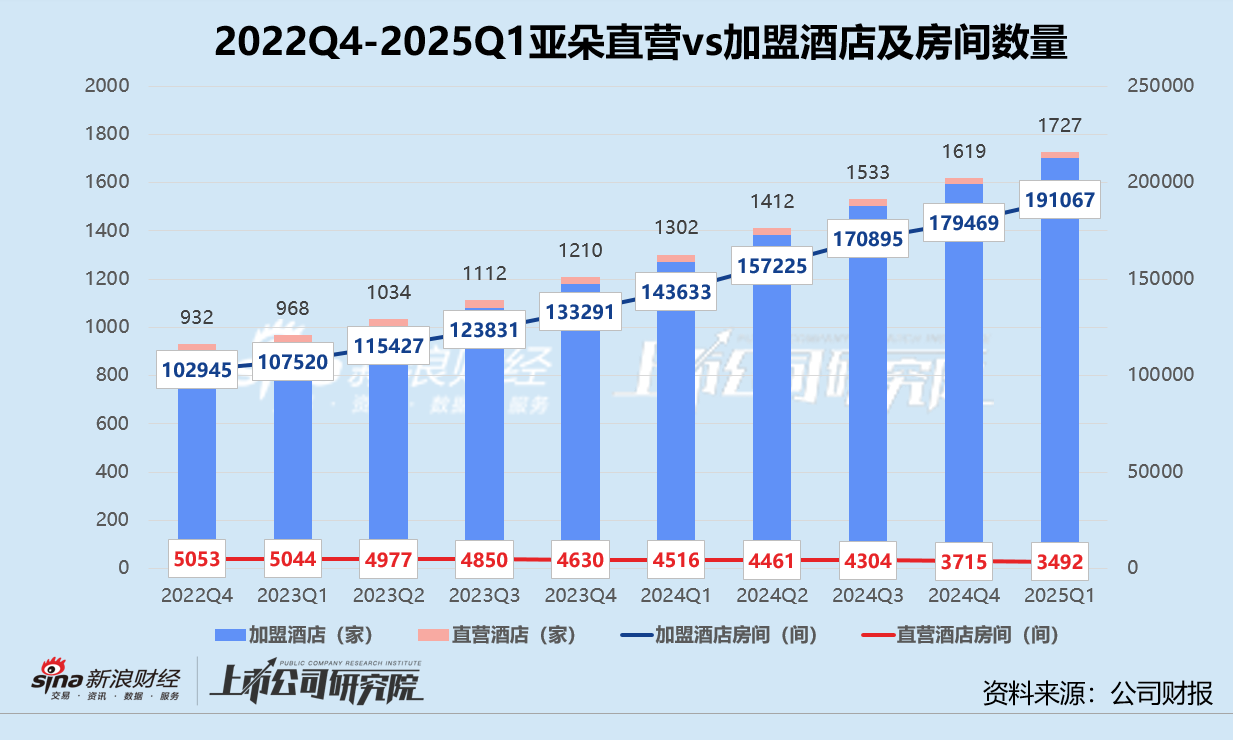
Core Viewpoint - The recent incident involving a pillowcase at Atour Hotel has raised concerns about hygiene and operational efficiency, coinciding with a decline in the company's financial performance, leading to investor apprehension about its future in the new consumption sector [1][2]. Financial Performance - In Q1 2025, Atour Group reported total revenue of 1.906 billion yuan, a year-on-year increase of 29.8%, but net profit decreased by 5.6% to 243 million yuan [2]. - Adjusted net profit, excluding stock-based compensation, was approximately 345 million yuan, reflecting a 32.3% year-on-year increase [2]. - The number of franchise hotels reached 1,702, with a total of nearly 200,000 operational rooms, marking a net increase of 431 hotels and 47,400 rooms compared to Q1 2024 [2]. Operational Efficiency - The average daily room rate for franchise hotels fell to approximately 415.1 yuan, the lowest since Q1 2023, with an occupancy rate of 70.1%, down from 73.1% in Q1 2024 [5]. - Average revenue per available room decreased to 304.4 yuan, down 6.9% year-on-year and 9.5% quarter-on-quarter [5]. - The performance of same-store operations showed a decline, with average daily room rates and occupancy rates at their lowest in nine quarters [8]. Retail Business Growth - Atour's retail revenue reached 694 million yuan in Q1 2025, a 66.4% year-on-year increase, contributing 36.4% to total revenue [9]. - The sales volume of the popular "deep sleep" pillow series exceeded 3.8 million units in 2024, with total retail GMV reaching 11.39 billion yuan and 25.92 billion yuan in 2023 and 2024, respectively [9][10]. - Despite impressive sales figures, the retail business heavily relies on e-commerce, with over 90% of GMV coming from online channels [10]. Competitive Landscape - Atour's retail strategy faces challenges due to reliance on OEM production, making its competitive edge less stable compared to peers like Mijia and Luckin Coffee, which have established their supply chains [12]. - The increasing competition in the retail space, with established players like Huazhu Group and traditional bedding brands enhancing their product offerings, poses a threat to Atour's market position [12].

游戏板块持续活跃,游戏ETF(516010)涨超2%,近5日净流入额超3.2亿元
Mei Ri Jing Ji Xin Wen· 2025-06-12 03:27
Group 1 - The gaming sector remains active, with the gaming ETF (516010) rising over 2% and a trading volume exceeding 120 million yuan, indicating strong capital inflow with a net inflow of over 320 million yuan in the past five days [1] - Recent new game launches have performed well, with significant contributions from high-quality products expected to be released in the second half of the year, including Tencent's "Valorant Mobile" and Perfect World's "Yihuan" [1] - The partnership between Kuaishou's Keling AI and NetEase's mobile game "Nirvana in Fire" aims to enhance social gameplay through advanced AI video generation technology, expanding Keling AI's commercial application in the gaming industry [1] Group 2 - Leading companies in the film and gaming sectors are actively exploring new revenue streams by developing and selling IP toy products, thereby expanding their income scale and enhancing the commercial value of upstream IP and downstream channel enterprises [2] - The expansion of China's new consumer market and AI-driven media technology is expected to further enhance the commercial value of IP, presenting potential investment opportunities in the gaming ETF (516010) [2]
港股“狂飙”:南向资金创纪录涌入,机构押注科技、消费与红利资产
Huan Qiu Wang· 2025-06-12 03:08
Market Performance - The Hong Kong stock market has outperformed major global markets since 2025, with the Hang Seng Index and Hang Seng Tech Index both showing over 21% cumulative gains as of June 11, 2023 [1] - The net inflow of southbound funds has exceeded 670 billion HKD this year, setting a historical record for the same period, significantly boosting the market's performance [1] - Nearly 80% of the stocks in the Hang Seng Index have risen, with BYD leading the charge with over 60% growth [1] Sector Performance - The healthcare, materials, and information technology sectors have led the market, with gains of 50.54%, 36.41%, and 28.32% respectively [1] - The financial and discretionary consumer sectors have also recorded gains exceeding 22% [1] Investment Outlook - Analysts from CICC highlight structural advantages in the Chinese macro and market environment, such as stable dividend returns and growth lines in new consumption, AI technology, and innovative pharmaceuticals, making Hong Kong stocks more attractive compared to other markets [3] - Multiple brokerage firms maintain an optimistic outlook for the second half of the year, with expectations of a rebound in valuations and earnings in the fourth quarter [3] - Predictions suggest that southbound capital inflows could reach between 200 billion to 300 billion HKD in the second half, with total annual inflows potentially exceeding 1 trillion HKD [3] Investment Recommendations - CICC recommends focusing on stable returns (like deposits, government bonds, and dividend assets) and growth returns (such as technology, new consumption, and innovative pharmaceuticals) [4] - Huatai Securities identifies consumption and technology as key investment themes, favoring internet consumption, pharmaceuticals, personal care products, and hard tech sectors [4] - The primary market for Hong Kong stocks is showing signs of recovery, with opportunities in the brokerage sector due to increased demand for cross-border wealth management [4]


近一周日均成交额居同标的产品第一,A500指数ETF(159351)开盘十分钟成交额超1.2亿元
2 1 Shi Ji Jing Ji Bao Dao· 2025-06-12 02:22
Group 1 - The A-share market opened lower on June 12, with the CSI A500 Index down 0.44%, while stocks like Giant Network rose over 7% [1] - The A500 Index ETF (159351) fell 0.41% with a trading volume exceeding 120 million yuan within the first ten minutes, indicating active trading [1] - The average daily trading volume of the A500 Index ETF over the past week was 2.859 billion yuan, ranking first among similar products [1] Group 2 - The A-share market is expected to operate in a "slow bull" manner by 2025, influenced by the new "National Nine Articles" and a "four trillion" investment trend [2] - Domestic macro policies are gradually being implemented, with a focus on the technology sector, which is expected to stabilize the market and support upward movement [2] - Recommendations include focusing on long-term funds entering the market, artificial intelligence in the technology sector, and consumer-related sectors with fundamental support [2]
宝城期货资讯早班车-20250612
Bao Cheng Qi Huo· 2025-06-12 01:21
1. Report Industry Investment Rating No relevant content provided. 2. Core Viewpoints of the Report - The China - US economic and trade consultation mechanism's first meeting achieved positive results, stabilizing bilateral economic and trade relations [2][14] - The global commodity market shows various trends, with different performances in metals, energy, and agricultural products [5][9][10] - The bond market is performing strongly, and the currency market has complex interest - rate changes [21][22] - The stock market has certain trends, with A - shares and Hong Kong stocks rising, and insurance funds accelerating their entry into the market [31][32] 3. Summary by Relevant Catalogs 3.1 Macro Data - In Q1 2025, GDP grew by 5.4% year - on - year, remaining stable compared to the previous quarter [1] - In May 2025, the manufacturing PMI was 49.5%, up from the previous month, while the non - manufacturing PMI was 50.3%, slightly down [1] - In April 2025, social financing scale increment decreased significantly compared to the previous month, and financial institution RMB loans also decreased [1] 3.2 Commodity Investment 3.2.1 Metals - Spot gold reached a four - day high due to concerns about the Middle East situation. Central banks are increasing gold reserves at a record pace [5] - Copper, tin, lead, and other metal inventories in the London Metal Exchange decreased, with some reaching multi - year lows [6] - Zimbabwe will ban lithium concentrate exports from 2027 [6] 3.2.2 Coal, Coke, Steel, and Minerals - On June 11, 19 steel mills raised scrap steel purchase prices [7] 3.2.3 Energy and Chemicals - The National Energy Administration will carry out hydrogen energy pilot projects [8] - The European market drives the growth of US natural gas futures trading [9] - The global oil and gas industry outlook is deteriorating due to factors such as US tariffs [9] 3.2.4 Agricultural Products - China's cotton planting area has reached 4482.3 million mu this year, with good growth, especially in Xinjiang [10] - Global coffee prices soared in 2024, and Brazil's coffee production decline affected the market [10] - Argentina's wheat production forecast for the 2025/26 season decreased [11] 3.3 Financial News 3.3.1 Open Market - On June 11, the central bank conducted 1640 billion yuan of 7 - day reverse repurchase operations, with a net withdrawal of 509 billion yuan [13] 3.3.2 Key News - The China - US economic and trade consultation mechanism's first meeting achieved positive results [14] - As of May, over 1.6 trillion yuan of replacement bonds were issued, completing over 80% of this year's target [15] - Many provinces have adjusted their budgets to increase borrowing and spending [16] 3.3.3 Bond Market - The bond market performed strongly, with rumors of the central bank inquiring about six - month term repurchase. Treasury bond futures rose [21] - European bond yields generally rose, while US bond yields fell [24] 3.3.4 Foreign Exchange Market - The on - shore RMB against the US dollar rose, and the US dollar index fell [25] 3.3.5 Research Report Highlights - Shenwan Fixed Income believes that convertible bond valuations are expected to rise [27] - CITIC Fixed Income argues that China does not have an asset - liability balance sheet recession problem [27] - CICC Research Report shows that China's consumer market features "consumption segmentation" [28] 3.4 Stock Market - The Shanghai Stock Exchange is promoting the inclusion of Science and Technology Innovation Board ETFs in the fund transfer platform [31] - A - shares and Hong Kong stocks rose, with insurance funds accelerating their entry into the market [31][32] - The stock - repurchase and share - increase re - loan tool is stabilizing the capital market [32]
新消费:当情绪价值成为“刚需”
淡水泉投资· 2025-06-12 00:16
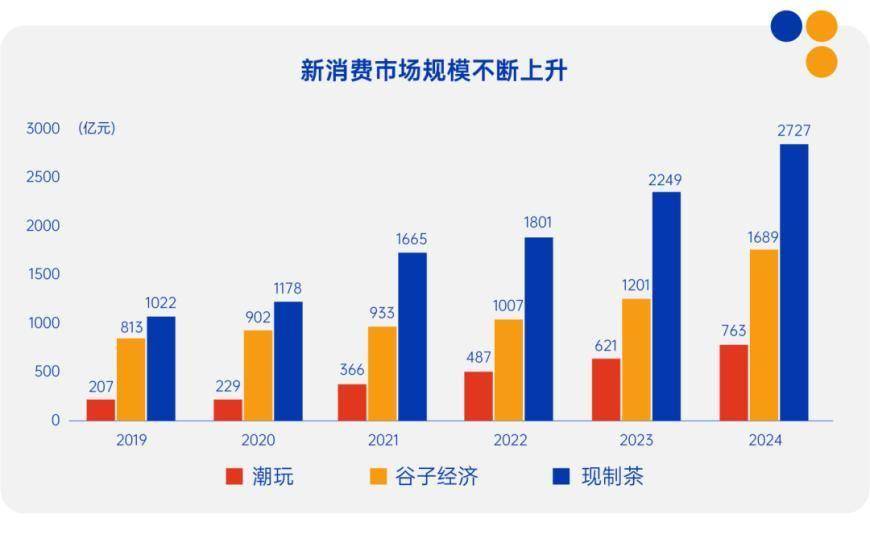
Core Viewpoint - The article discusses the evolution of consumer behavior in China, emphasizing the shift from basic survival needs to emotional and experiential consumption, driven by economic development and demographic changes [4][5][15]. Group 1: New Consumption Trends - The concept of "new consumption" has gained traction, with examples like a rising cosmetics brand achieving a valuation exceeding $10 billion within four years of its establishment [3]. - Consumers are increasingly focused on emotional satisfaction and self-fulfillment, moving beyond mere product functionality [4]. - The 95 post-90s generation has become a significant consumer force, with annual spending reaching approximately 8-9 trillion yuan, accounting for nearly 50% of sales during major shopping events [5]. Group 2: Emotional Consumption Drivers - The transition to an "atomized" social structure has led to the rise of emotional consumption and the single economy, as traditional social ties weaken [5]. - The COVID-19 pandemic and geopolitical uncertainties have heightened the demand for emotional consumption, with the market for concerts expected to grow from 12 billion yuan in 2019 to 45 billion yuan by 2024 [15]. - Emotional consumption has shifted from being optional to essential, as consumers seek to maintain psychological well-being in uncertain times [15]. Group 3: Brand Power and Market Dynamics - The success of a consumption model relies on the ability of companies to manage brand power, which is increasingly influenced by product quality and distribution channels [10]. - The shift from traffic dividends to content dividends means that strong product quality is essential for gaining market share in a fragmented channel environment [12]. - The capital market views assets that can be priced based on emotional value as scarce growth opportunities, less affected by economic cycles and geopolitical risks [18]. Group 4: Challenges and Future Outlook - The core driver of new consumption is consumer passion, which translates into strong purchasing intent and high repurchase rates [19]. - However, sustaining this passion is challenging; only brands that can elevate their products to art and cultivate a loyal customer base will thrive in the long term [19].

港股市场持续走强机构看好三大投资方向
Zhong Guo Zheng Quan Bao· 2025-06-11 21:25
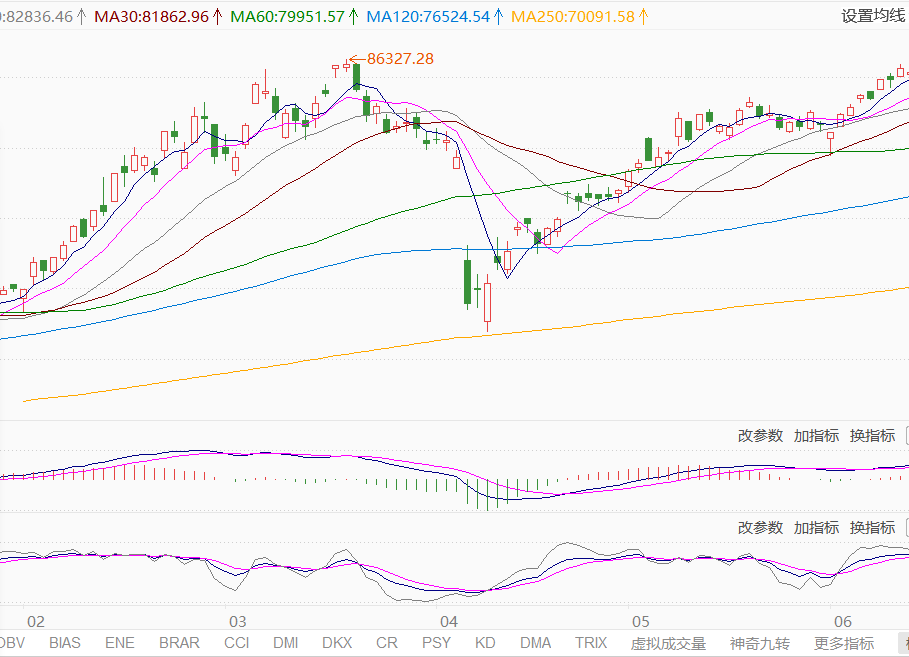
今年以来,港股市场表现亮眼,截至6月11日收盘,恒生指数、恒生科技指数累计涨幅均超21%,恒生 指数成分股中总市值超1万亿港元的股票均上涨,涨幅最大的比亚迪股份累计涨逾60%,总市值最大的 腾讯控股累计涨逾25%。南向资金持续加仓港股市场,今年以来累计净流入超6700亿港元,创历史同期 新高。 近日,中信证券、华泰证券、国泰海通等多家券商机构召开2025年中期策略会。对于下半年的港股市 场,机构人士认为,国内政策发力驱动基本面修复,港股有望延续震荡向上趋势,南向资金在下半年仍 将持续增配港股市场,红利、科技、新消费等方向有望受青睐。 港股市场表现亮眼 在DeepSeek引领中国资产重估叙事的大背景下,今年以来港股市场表现全球领先。不过,受海外因素 扰动,其在4月一度出现明显回调。 截至6月11日收盘,恒生指数、恒生中国企业指数、恒生科技指数今年以来分别累计上涨21.47%、 21.62%、22%,领涨全球主要市场。 ● 本报记者 吴玉华 胡雨 对于今年以来港股市场上涨的原因,中金公司研究部海外策略首席分析师刘刚认为,当前中国有结构亮 点的宏观与市场环境更有利于港股,这是因为无论是提供稳定回报的分红,还是作为结 ...


“618”大促,券商支招!
Zhong Guo Ji Jin Bao· 2025-06-11 14:12
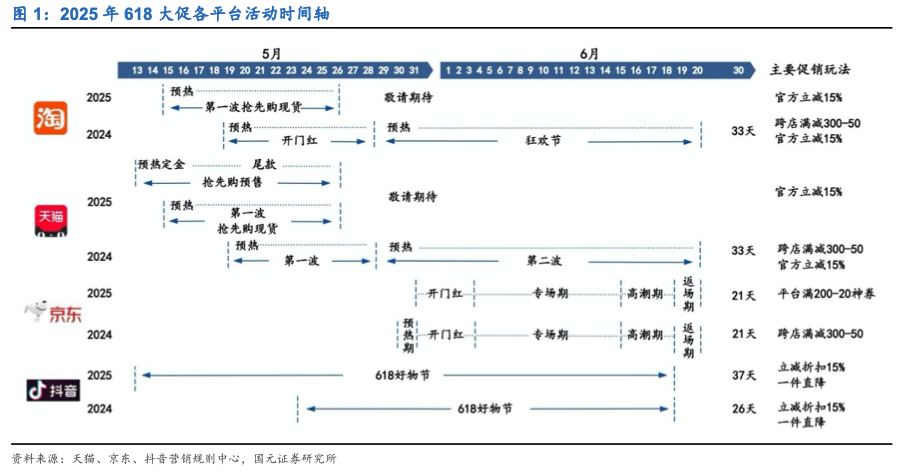
Group 1 - The "618" promotional event is gaining momentum, with various securities firms analyzing discount activities across major platforms and providing detailed strategies for investors [1][3] - This year's "618" features simpler and more direct discount rules compared to previous years, with platforms like Tmall offering an official 15% discount, Douyin providing a 15% direct discount, and JD.com implementing various direct reduction strategies [3][5] - The home appliance category remains a focal point during the promotion, with significant subsidies from the government and enhanced discounts, particularly for popular products like robotic vacuum cleaners [5] Group 2 - Investment firms are advising investors to focus on new consumption and pet-related sectors as potential investment opportunities during the "618" event [6][7] - The domestic consumption sector is showing strong performance due to multiple factors, with certain segments like beauty care, gold and jewelry, and IP toys attracting significant investment [7] - The pet industry has seen impressive sales growth during the "618" event, with a notable increase in high-value user engagement and a doubling of transaction volume for over 500 brands [7]
基金经理投资笔记 | 潮玩爆火背后:新消费投资,懂产品,更要懂人心
Sou Hu Cai Jing· 2025-06-11 11:40
Core Insights - The article discusses the transformation in the consumer industry, highlighting the shift from "channel-driven" to "emotion-driven" purchasing behavior, particularly in the context of new consumption trends [1][6][10] Group 1: New vs. Old Consumption - New consumption relies more on product strength, while old consumption is heavily dependent on channel strength [5][11] - New consumption encompasses categories like beauty care, trendy toys, and bulk snacks, along with certain companies from traditional and internet sectors [5][11] - The emergence of new consumption is a result of both changing consumer demands and rapid evolution in communication and sales channels [6][10] Group 2: Investment Framework - The core of consumer goods investment lies in brand power, which is defined as the combination of product and channel strength [2][5] - Companies with strong brand power typically exhibit higher net profit margins and faster turnover rates, contributing to high return on equity (ROE) [2] - Investment should focus on smaller companies that are in the process of building brand power, as this phase often correlates with the highest growth potential [2] Group 3: Changes in Consumer Behavior - The evolution of communication media has shifted consumer roles from passive recipients to active seekers of products that suit their preferences [8][9] - The rise of e-commerce has transformed sales channels, allowing consumers to directly access desired products without relying on local retailers [9][10] - New consumption products are characterized by distinct heterogeneity, appealing to specific audiences who appreciate their uniqueness [9][11] Group 4: Future Trends - The investment in new consumption is fundamentally a contest of aesthetic appreciation and understanding of lifestyle [11] - The beauty care industry is seen as a leading indicator for new consumption investment, with its marketing strategies and product approaches likely influencing other sectors in the future [11]