
去美元化

Search documents
黄金上涨背后的全球货币体系变革丨孙立坚专栏
2 1 Shi Ji Jing Ji Bao Dao· 2026-01-13 23:19
Core Viewpoint - The recent surge in international gold prices, despite seeming irrational, is a result of multiple long-term structural forces converging, indicating a profound structural shift in the gold market [2] Group 1: Market Dynamics - The traditional pricing model for gold, which suggests that prices are primarily determined by inflation expectations or the real interest rate of the dollar, has failed multiple times since 2022, particularly during periods of aggressive interest rate hikes by the Federal Reserve [2][3] - Central banks have emerged as "steadfast buyers," maintaining annual net gold purchases at historically high levels since 2022, reflecting strategic asset reallocation rather than short-term speculation [2][3] Group 2: Structural Changes in the Monetary System - The rise in gold purchases by central banks is closely linked to a "quiet earthquake" in the current international monetary system, facing structural challenges due to intensified great power competition and strategies like "de-risking" and "friend-shoring" [3] - Gold is viewed as a reserve asset with no counterparty risk, making it an ideal foundation for a "de-dollarized" reserve system, representing a natural evolution from a unipolar to a multipolar or "block" reserve system [3][4] Group 3: Buyer Characteristics - The gold market has differentiated into three distinct types of "steadfast buyers": 1. Central banks, especially from emerging economies, which purchase gold as a non-price elastic reserve asset [4][5] 2. Institutional investors, such as sovereign wealth funds and family offices, that allocate a fixed proportion of their portfolios to non-correlated assets or disaster hedges [5] 3. New marginal buyers, including private companies issuing stablecoins, which buy and hold substantial amounts of physical gold to support their stablecoin values [5] Group 4: Future Outlook - The future trajectory of gold prices will be deeply intertwined with the evolution of the international monetary system, where the relative decline of the dollar will see gold, major sovereign currencies, and Special Drawing Rights (SDR) collectively serving as reserve assets [6] - Investors must adopt a broader analytical framework that includes geopolitical risk assessments, global debt sustainability analysis, and the degree of coordination (or lack thereof) in major economies' monetary policies [6] - The recent record highs in gold prices reflect not just numerical fluctuations but a rebalancing of global monetary power, indicating that the current dynamics in the gold market transcend simple trading strategies and are shaping the future of the international financial order [6]
黄金上涨背后的全球货币体系变革
2 1 Shi Ji Jing Ji Bao Dao· 2026-01-13 22:22
Core Viewpoint - The recent surge in international gold prices reflects a convergence of multiple long-term structural forces rather than mere daily price fluctuations, indicating a profound transformation in the gold market [2] Group 1: Market Dynamics - The traditional pricing model of gold, which relies on inflation expectations or real interest rates, has failed since 2022, as gold prices remained resilient despite aggressive interest rate hikes and rising real rates [2] - Central banks have emerged as "steadfast buyers," maintaining record-high annual net gold purchases since 2022, driven by strategic asset reallocation and concerns over the dollar-centric reserve system [2][3] Group 2: Structural Changes in the Monetary System - The rise in gold purchases by central banks is linked to a "quiet earthquake" in the international monetary system, facing structural challenges due to intensified great power competition and strategies like "de-risking" and "friend-shoring" [3] - Gold is viewed as a reserve asset with no counterparty risk, making it an ideal foundation for a "de-dollarized" reserve system, reflecting a natural evolution from a unipolar to a multipolar or "block" reserve system [3] Group 3: Short-term vs Long-term Drivers - Short-term market dynamics remain sensitive to traditional indicators such as Federal Reserve policy expectations, inflation data, and stock market risk sentiment, influencing gold's appeal as a financial asset [3] - Long-term trends in gold prices are driven by geopolitical intensity, global supply chain restructuring, and the diversification of central bank reserves, assessing the long-term credibility of fiat currency systems [4] Group 4: Buyer Characteristics - Three distinct categories of "steadfast buyers" have emerged in the gold market: central banks, particularly from emerging economies; institutional investors like sovereign wealth funds; and private companies issuing stablecoins that back their value with physical gold [5] - These buyers tend to buy and hold gold rather than engage in short-term trading, effectively locking in substantial physical gold supply and altering market liquidity structures, making gold prices more sensitive to marginal demand changes [5] Group 5: Future Outlook - The future trajectory of gold will be closely tied to the evolution of the international monetary system, with the relative decline of the dollar and the emergence of a multi-anchor system where gold plays a crucial role as a common denominator and ultimate payment method during crises [6] - Investors must shift their analytical frameworks to include geopolitical risk assessments and the sustainability of global debt, moving beyond a narrow focus on U.S. economic data and Federal Reserve meetings [6]


人民币反击,中国连续14个月增持黄金,抛售5570亿美债
Sou Hu Cai Jing· 2026-01-13 16:39
Group 1 - The article highlights a significant shift in global financial markets, with the US dollar index dropping nearly 10% over the past 12 months, while the Chinese yuan has appreciated over 4% [1][15] - Central banks worldwide, excluding the US, have increased their gold reserves to a total value of $3.98 trillion, nearing the $3.8 trillion total value of US Treasury bonds, indicating a structural change in reserve asset allocation from bonds to gold [3][4] - The article emphasizes that gold is regaining its status as a primary financial asset, a position it has not held since 1996, marking a historical turning point in asset allocation [4][5] Group 2 - The People's Bank of China has initiated a new cycle of gold purchases starting in November 2024, with total gold reserves projected to reach 7.415 million ounces (approximately 2306.39 tons) by December 2025, reflecting a strategic move amid a weakening dollar and rising geopolitical risks [8][10] - Over the past 14 months, China has sold approximately $79.9 billion in US Treasury bonds, a planned adjustment rather than a panic sell-off, with proceeds used for gold purchases and diversifying foreign exchange reserves [12][14] - The article discusses a long-term trend of de-dollarization, as evidenced by the significant reduction in China's US Treasury holdings, which have decreased by over 47% from their peak in November 2013 [12][14] Group 3 - The article outlines a strategic framework where increasing gold reserves enhances asset stability and diversity, while reducing reliance on US dollar assets and strengthening the yuan's international appeal [15][17] - The potential future scenarios include the Federal Reserve being forced to accelerate interest rate cuts, further weakening the dollar and increasing gold prices, or the emergence of a new reserve asset system where gold's status continues to rise [18][21] - The article concludes that the strategic adjustments made by China reflect a long-term vision, emphasizing the importance of maintaining reserve assets in the face of increasing global uncertainties [22][23]
多只电力设备ETF上涨;金银相关ETF规模大增丨ETF晚报
Sou Hu Cai Jing· 2026-01-13 14:08
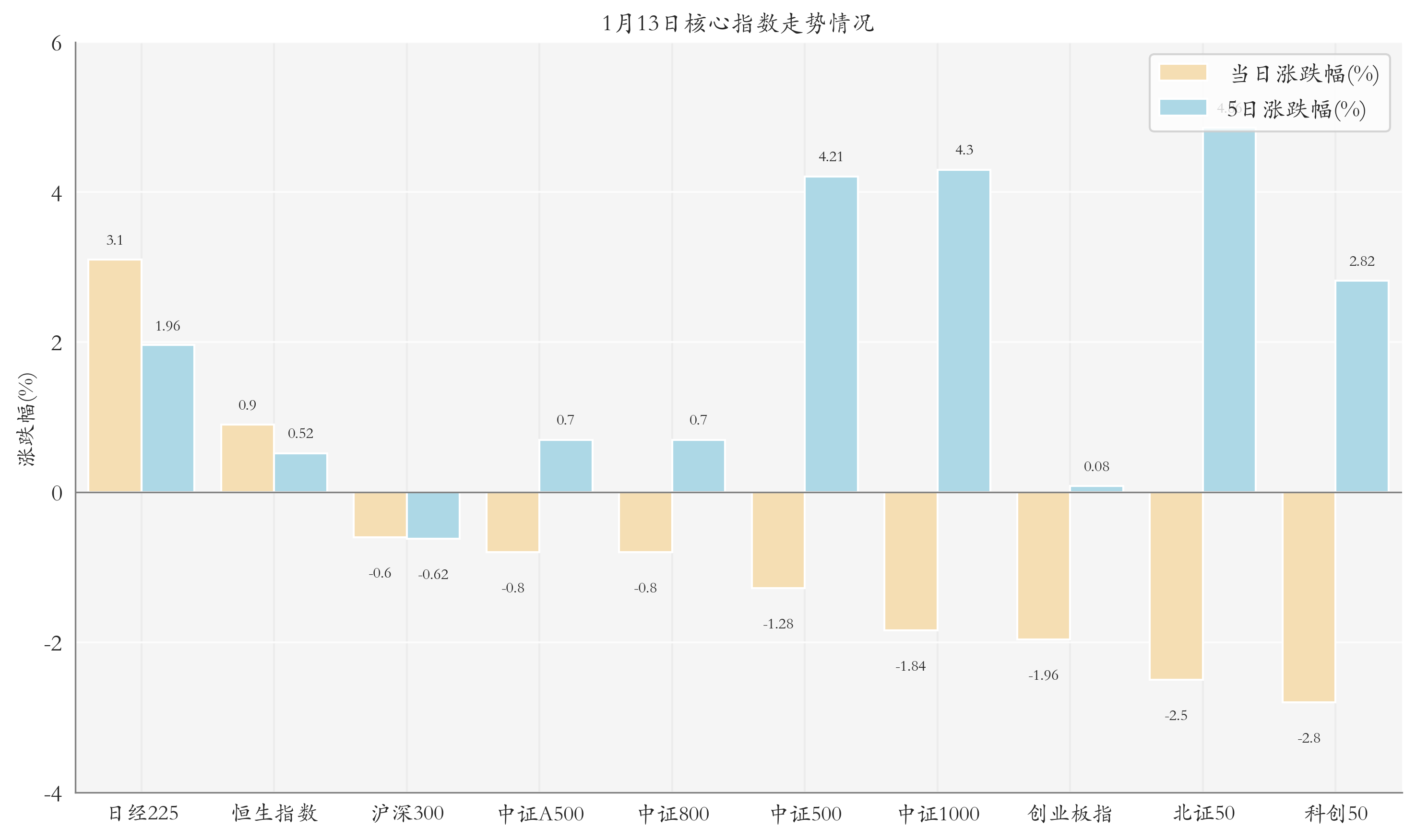
ETF Industry News - The three major indices experienced fluctuations and declines, with the Shanghai Composite Index down by 0.64%, the Shenzhen Component Index down by 1.37%, and the ChiNext Index down by 1.96%. However, several ETFs in the power equipment sector saw increases, including the Grid ETF (561380.SH) which rose by 7.37%, the Grid Equipment ETF (159326.SZ) which increased by 2.83%, and another Grid ETF (159320.SZ) which went up by 2.69% [1] - Gold and silver prices surged, with London spot gold reaching a high of $4610.68 per ounce, up over 2%, and silver rising more than 7% to surpass $85 per ounce. This led to a significant inflow of funds into gold ETFs, with net subscriptions exceeding 400 million shares in the first seven trading days of 2026. The Huaan Gold Easy ETF's scale reached 97.29 billion yuan, approaching the 100 billion yuan mark [2][3] - The first "trillion" asset manager in the ETF sector has emerged, with Huaxia Fund's ETF management scale surpassing 1 trillion yuan. This marks a significant milestone in the development of China's ETF market, which has grown from the launch of its first product in 2004 to now having over 60 trillion yuan in total ETF assets. The market is divided into three tiers, with the top three managers holding over 40% of the market share [4] Market Performance Overview - On January 13, the three major indices collectively declined, with the Shanghai Composite Index closing at 4138.76 points, the Shenzhen Component Index at 14169.4 points, and the ChiNext Index at 3321.89 points. The Nikkei 225 and Hang Seng Index showed positive performance, with daily changes of 3.1% and 0.9%, respectively [5] - In terms of sector performance, the oil and petrochemical, pharmaceutical, and non-ferrous metal sectors ranked highest, with daily increases of 1.62%, 1.21%, and 0.91%, respectively. Conversely, the defense, electronics, and telecommunications sectors saw declines of 5.5%, 3.3%, and 2.88% [8] ETF Market Performance - The overall performance of ETFs was categorized by investment type, with cross-border ETFs showing the best average daily increase of 0.53%, while thematic stock ETFs had the worst performance with an average decline of 1.73% [11] - The top-performing ETFs included the Grid ETF (561380.SH), Oil and Gas Resources ETF (563150.SH), and Grid Equipment ETF (159326.SZ), with daily returns of 7.37%, 2.84%, and 2.83%, respectively [13] - The highest trading volumes were recorded for the A500 ETF (159352.SZ), with a transaction amount of 8.801 billion yuan, followed by the CSI A500 ETF (159338.SZ) at 8.701 billion yuan, and the Sci-Tech Innovation 50 ETF (588000.SH) at 6.940 billion yuan [17]
ETF日报:多个区域的地缘政治风险上升,推升了黄金的风险溢价
Xin Lang Cai Jing· 2026-01-13 13:06
Market Overview - The three major indices collectively adjusted, with the Shenzhen Component Index falling over 1% and the ChiNext Index dropping nearly 2%. The trading volume in the Shanghai and Shenzhen markets reached 3.65 trillion yuan, an increase of 49.6 billion yuan from the previous trading day [1][9]. - A-share market has shown strong performance since the beginning of the year, with abundant liquidity and record-high trading volumes. Investor optimism for the first half of 2026 is supported by frequent catalysts in the technology sector, including IPOs in AI and semiconductors, and innovations in AI applications [10]. Sector Performance - The pharmaceutical sector led the gains today, with the Innovation Drug ETF (517110) rising by 2.69% and the Biopharmaceutical ETF (512290) increasing by 1.57%. This is attributed to several overseas innovative drug collaborations and catalysts [13][14]. - AI healthcare is experiencing global catalysts, with OpenAI integrating health dialogue features into ChatGPT, enhancing user access to health data [14]. Gold Market Insights - Spot gold prices in London surpassed $4,600 per ounce, with Citigroup raising its 0-3 month target price to $5,000 per ounce. State Street indicated a greater than 30% chance of gold hitting this target this year [11]. - Geopolitical risks have increased, driving up gold's risk premium. The U.S. administration is discussing potential interventions in Iran, which could escalate conflicts in the Middle East [12][11]. Electricity and Infrastructure - The electricity sector showed relative strength, driven by the upcoming National Grid meetings and ongoing power supply issues in North America. The approval of high-voltage direct current projects has accelerated since mid-2025, indicating strong demand for electricity infrastructure [15][6]. - The global energy transition is creating a need for enhanced electricity grid construction to support renewable energy integration, particularly in underdeveloped regions [15]. Investment Recommendations - Investors are advised to consider the China Securities A500 ETF (159338) for broad exposure to leading companies across various sectors, and to adopt a "dumbbell" strategy focusing on technology and dividends to balance growth and volatility [10]. - For gold investments, options include direct investment in physical gold and gold ETFs that cover the entire industry chain [12]. Future Outlook - The market is expected to continue its upward trend due to ample liquidity and high demand in the AI sector. However, a potential phase of correction may occur following rapid market gains [10]. - The pharmaceutical sector's global competitiveness is strengthening, with upcoming earnings announcements from innovative drug companies anticipated to act as catalysts [14].

美国对伊朗所有贸易伙伴加税25%!对中俄的精准打击!欲锁死伊朗
Sou Hu Cai Jing· 2026-01-13 12:35
Core Viewpoint - The recent unilateral sanctions imposed by the U.S. aim to directly target Iran while also delivering precise strikes against China and Russia, attempting to force global alignment through trade tariffs [1] Trade Data Summary - In 2024, trade between China and Iran is projected to reach $13.37 billion, with China exporting $8.93 billion in essential goods and importing $4.44 billion primarily in energy and minerals [3] - Non-oil trade between China and Iran has also been significant, exceeding $30.4 billion in the first 11 months of 2025, with China being Iran's largest trading partner, accounting for over 30% of its total exports [3] - The trade between Russia and Iran is expected to reach $4.8 billion in 2024, marking a 16.2% year-on-year increase, with an additional 8% growth in the first three quarters of 2025 [3] Impact on China - The 25% tariff will primarily impact China's exports to the U.S., which are mainly machinery and electrical products with an average profit margin of less than 5%, leading to increased export costs [5] - However, China has already initiated currency settlement and "oil-for-infrastructure" models with Iran, mitigating risks associated with dollar transactions [5] - The trade volume between China and Iran represents only 2% of China's total trade with the U.S., allowing China to adjust its supply chain and expand into ASEAN markets to offset potential losses [5] Impact on Russia - The sanctions may accelerate cooperation between Russia and Iran, as their trade is primarily settled in rubles and rials, minimizing the impact of the U.S. dollar system [7] - Both countries are working towards a free trade agreement within the Eurasian Economic Union, aiming to increase their trade volume to $10 billion [7] - The sanctions will not disrupt the energy complementarity between Russia and Iran, as Russia can leverage Iran to access Middle Eastern energy routes while providing nuclear technology and military support to Iran [7] Consequences of U.S. Actions - The sanctions are likely to accelerate the de-dollarization process, with 95% of trade between China and Russia already settled in local currencies, making barter trade and local currency settlements more common among the three countries [7] - The unilateral sanctions may undermine U.S. international credibility, as many countries are likely to reject alignment with U.S. policies, with a Pew survey indicating that over half of the populations in 19 countries lack confidence in U.S. handling of international affairs [7] - The sanctions could lead to increased global oil prices, as Iran exports 1.4 million barrels of oil daily and Russia exports 7.4 million barrels, potentially disrupting global energy supply and exacerbating inflation in the U.S. [9]
特朗普明示“子弹上膛”,收拾伊朗前,他要先给中国来个下马威?
Sou Hu Cai Jing· 2026-01-13 10:38
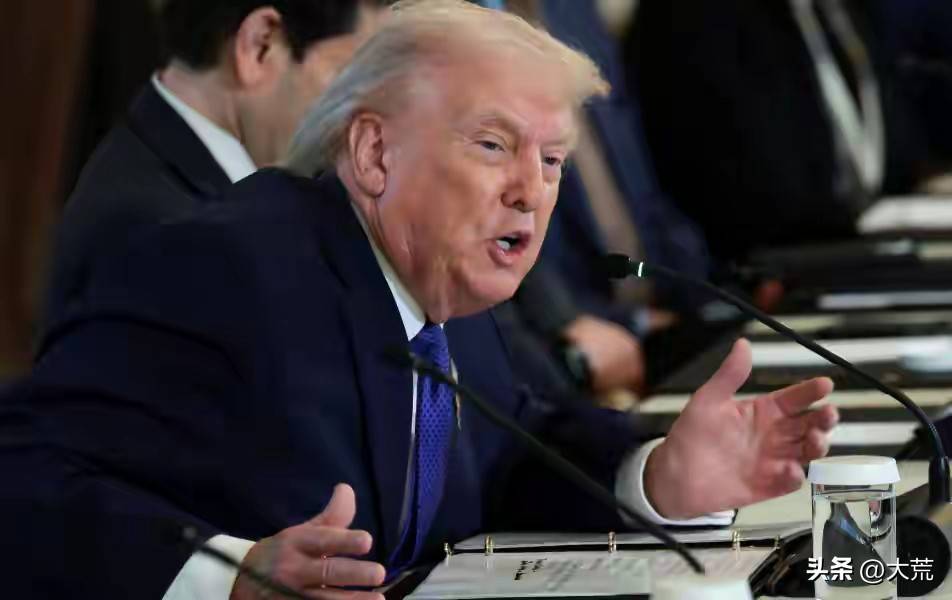
Core Viewpoint - The article discusses President Trump's announcement of a 25% punitive tariff on all countries engaging in trade with Iran, emphasizing the strategic ambiguity and potential implications for global trade dynamics [1][3][10]. Group 1: Tariff Implications - The punitive tariffs are aimed at countries with "commercial ties" to Iran, creating uncertainty for nations like India and Turkey, which are already managing complex supply chains [5][7]. - This "long-arm jurisdiction" approach simplifies global supply chains into a binary choice, pressuring countries to align with U.S. policies or face tariffs [7][12]. Group 2: U.S.-Iran Trade Dynamics - The significant trade volume between China and Iran is viewed as a challenge to U.S. interests, with the U.S. aiming to disrupt this relationship to reinforce its geopolitical strategy in the Asia-Pacific region [9][10]. - The tariffs could impose hidden costs on Chinese goods, creating a perception that products from China are "tainted" if they are linked to Iranian trade [12][18]. Group 3: Political Context - The timing of the tariff announcement coincides with legal scrutiny over Trump's use of the International Emergency Economic Powers Act, suggesting a strategy to create a "national security crisis" to bolster his authority [14][16]. - The article posits that Trump's aggressive tariff strategy may backfire, leading to a shift away from dollar dependence and the establishment of alternative economic systems among emerging markets [25][27]. Group 4: Global Economic Response - Countries like Iran have developed mechanisms to circumvent U.S. dollar dominance, including expanding the use of the yuan and barter systems, which could insulate them from U.S. sanctions [21][23]. - The article warns that Trump's tariff strategy may inadvertently accelerate the formation of a parallel economic system that excludes U.S. participation, potentially undermining the established international order [25][27].
星展银行:预计2026年上半年美联储有望启动一次降息操作
Sou Hu Cai Jing· 2026-01-13 10:17
Group 1: Global Market Outlook - The global market is expected to show significant differentiation in 2025, with US stocks continuing to strengthen and reach new highs in the second half of the year, while Hong Kong and A-shares stabilize [1] - DBS Bank maintains a balanced stock-bond allocation principle for 2026, suggesting a 50:50 or 60:40 stock-bond structure, with a focus on US, Hong Kong, and A-share markets [1] - The bank holds a relatively optimistic view on the development prospects of domestic enterprises [1] Group 2: Economic and Policy Insights - DBS Bank predicts a soft landing for the US economy, despite slowing GDP growth and a weak job market, supported by steady profit growth in core industries [1] - A potential interest rate cut by the Federal Reserve is anticipated in the first half of 2026, with short-term balance sheet expansion already initiated in January [1] - The overall policy direction will focus on inflation control, with a target range of 2.5%-3% for stable inflation, which may lead to continued accommodative monetary policy [1] Group 3: Sector Focus - The technology sector is highlighted as a focal point for investment, with solid earnings and sustainable business models, unlike the 2000 internet bubble [2] - The medical sector is also favored, particularly in pharmaceuticals and biotechnology, leveraging AI to reduce R&D costs and improve efficiency, as well as in medical devices due to a significant supply gap [2] - Asian markets are seen as a core destination for diversified investment, with a weakening dollar enhancing the attractiveness of Asian currencies [2] Group 4: Chinese Market and Industry Selection - High-quality Chinese enterprises are viewed as highly attractive, with A-shares and Hong Kong stocks becoming core investment targets [3] - The "14th Five-Year Plan" emphasizes new productivity, green technology, and innovation, with tech and new economy stocks nearing 50% weight in the MSCI China Index [3] - Investment opportunities are categorized into two tiers: the first tier focuses on technology and new economy sectors with high growth and ROE, while the second tier includes industrial, energy, and financial sectors with solid development foundations [3]
ATFX:当黄金不再只看CPI脸色 破纪录后什么才是真正的推手
Xin Lang Cai Jing· 2026-01-13 09:32
Group 1 - The core concern is the threat from the Trump administration to investigate Federal Reserve Chairman Jerome Powell, raising worries about the Fed's independence, which led to a significant increase in gold prices, reaching record highs before stabilizing [1][4] - Gold prices experienced a 2% increase in the previous trading day, settling around $4,585 per ounce, while the US dollar weakened and US Treasury yields fell across the board [1][4] - The market is anticipating the latest US CPI report, with expectations of a 0.3% month-over-month increase in core CPI and a slight rise in the year-over-year rate from 2.6% to 2.7% [1][4] Group 2 - Following the release of the US non-farm payroll data, the market is betting that the Federal Reserve will pause interest rate cuts for a longer period, with traders estimating a 45% chance of a rate cut in April and a higher likelihood in June [2][5] - Despite economic growth, persistent inflation concerns continue to solidify gold's role as a safe-haven asset, with one-year inflation expectations remaining at 4.2% and five-year expectations rising to 3.4% [2][5] Group 3 - Short-term reactions to the CPI report may lead to a technical pullback in gold prices if the CPI exceeds expectations, but this is seen as profit-taking rather than a fundamental shift [3][6] - The fundamental drivers for gold prices include central bank purchases under "de-dollarization" and global geopolitical risks, suggesting that any price pullbacks may be temporary [3][6] - Regardless of the CPI report's outcome, the mid-term narrative of falling inflation, economic soft landing, potential Fed rate cuts by mid-year, and a structural bull market for gold is unlikely to change [3][6]
【黄金期货收评】贵金属长期核心驱动因素稳健 沪金微涨1027元
Jin Tou Wang· 2026-01-13 09:28
【机构观点】 【黄金期货最新行情】 数据显示,1月13日上海黄金现货价格报价1027.39元/克,相较于期货主力价格(1027.18元/克)升水 0.21元/克。 美国司法部已就美联储总部翻修相关事宜,对美联储主席鲍威尔启动刑事调查。鲍威尔对此回应称,此 举史无前例,应结合特朗普政府对美联储的持续威胁这一背景来看待,目的是就降息问题进一步向他施 压。 当地时间1月12日下午,美国总统特朗普发文称,任何与伊朗进行商业往来的国家,其与美国的所有商 业往来都将面临25%的关税。该命令即日起生效。 | 1月13日 | 收盘价(元/克) | 当日涨跌幅 | 成交量(手) | 持仓量(手) | | --- | --- | --- | --- | --- | | 沪金主力 | 1027.18 | 1.01% | 197421 | 103633 | 打开APP,查看更多高清行情>> 【基本面消息】 上一个交易日COMEX黄金期货涨2.40%报4608.80美元/盎司,COMEX白银期货涨7.33%报85.16美元/盎 司。当前地缘局势持续紧张,美国方面联储新任主席提名人公布在即,全面关税面临最高法院裁决;市 场不确定性加剧。 ...