猪周期

Search documents
国投期货统计局三季度生猪数据点评
Guo Tou Qi Huo· 2025-10-20 11:03
1. Report Industry Investment Rating - No relevant content 2. Core Viewpoints of the Report - In the first three quarters of 2025, the year-on-year growth rates of pig inventory, pig slaughter volume, and pork production further expanded compared to the first half of the year, leading to supply - side pressure and a continuous decline in pig prices to historical lows [14]. - The pig production capacity cycle in China has likely peaked, with the farrowing sow inventory peaking in August 2025 and declining in September. According to the theoretical calculation of pig slaughter 10 months after farrowing sow inventory, the pig slaughter volume is expected to peak around June next year, and the supply pressure will remain high [14][15]. - The low pig price in October is likely the first emotional bottom - building. Considering the continuous supply pressure and the off - season of demand, there is a high probability of a second bottom - building in pig prices in the first half of next year [15]. 3. Summary by Relevant Catalogs Pig Inventory - At the end of the third quarter, the national pig inventory was 436.8 million heads, a year - on - year increase of 9.86 million heads (2.3%) and a quarter - on - quarter increase of 12.33 million heads (2.9%). It is expected to continue growing in the fourth quarter due to the previous growth of farrowing sow inventory [6][7]. Farrowing Sow Inventory - At the end of September, the farrowing sow inventory was 40.35 million heads, a year - on - year decrease of 280,000 heads (0.7%) and a quarter - on - quarter decrease of 90,000 heads (0.2%). The decline indicates that the industry has entered a production capacity reduction cycle due to losses in piglet sales and pig fattening caused by low pig prices [3]. Pig Slaughter Volume - In the first three quarters, the national pig slaughter volume was 529.92 million heads, a year - on - year increase of 9.62 million heads (1.8%), with the growth rate 1.2 percentage points higher than that in the first half of the year and continuous growth for three quarters. In the third quarter, the pig slaughter volume was 163.73 million heads, compared with 156.35 million heads in the same period last year [9]. Pork Production - In the first three quarters, the pork production was 43.68 million tons, a year - on - year increase of 1.28 million tons (3.0%), reaching the highest level in the past 10 years. The increase is due to the 1.8% year - on - year increase in pig slaughter volume and the higher average pig slaughter weight than the previous year (128.25 kg as of October 16 this year compared to 126.34 kg last year) [11][12].
猪价,继续下跌还是触底反弹?
Qi Huo Ri Bao· 2025-10-18 23:38
Core Viewpoint - The pig market is experiencing significant price declines, with both spot and futures prices hitting new lows due to oversupply and insufficient capacity reduction in the industry [1][2][4]. Price Trends - As of the first week of October, the average price of live pigs in China was 12.90 yuan/kg, down 2.8% week-on-week and 29.5% year-on-year [1]. - Futures prices for near-month contracts have approached 11,000 yuan/ton, with a decline of over 9% since October [1][2]. Supply and Demand Dynamics - The supply of live pigs has exceeded market expectations, leading to a fundamental shift from profitability to losses in the industry since September [2][3]. - Analysts indicate that the current market conditions suggest a prolonged period of oversupply, with limited potential for price recovery even with seasonal demand increases [1][3]. Capacity Adjustment - The industry is facing a dual loss situation for both piglets and fattening pigs, with an increase in the sentiment to cull sows, but the pace of capacity reduction remains slower than expected [3][4]. - Some leading companies have responded to calls for capacity adjustment, but many smaller firms are either making minor adjustments or maintaining a wait-and-see approach [4]. Future Outlook - If the reduction in sow capacity begins to materialize in October, it could lead to a decrease in fattening pig capacity by August 2026, but the market may still face oversupply until then [4]. - The price of live pigs is expected to fluctuate, with a potential high point unlikely to exceed 14 yuan/kg and a low point unlikely to drop below 10 yuan/kg without panic selling [4][5]. Market Sentiment and Policy Impact - The government has been actively involved in regulating the industry, with multiple meetings held to discuss capacity control, indicating a commitment to stabilizing prices [3][4]. - Analysts suggest that while the current price levels are under pressure, government policies aimed at guiding reasonable price recovery may shorten the duration of the current pressure period [5].


ETF日报:“反内卷”政策的落地节奏和效力决定了中国经济特别是制造业的修复水平,可关注养殖ETF等
Xin Lang Ji Jin· 2025-10-17 12:07
Market Overview - The A-share market experienced a significant decline, with the Shanghai Composite Index dropping by 1.95%, the Shenzhen Component Index by 3.04%, and the ChiNext Index by 3.36% [1] - The trading volume in the Shanghai and Shenzhen markets reached 1.94 trillion, an increase of 6.9 billion compared to the previous trading day [1] - Concerns over the high valuation levels of technology growth stocks have led to a collective sell-off in this sector, which had previously shown strong performance [1][2] Short-term and Long-term Outlook - In the short term, there may be continued downward pressure on the market, but the long-term bull market is not expected to end, and the current pullback may present a good opportunity for active allocation [1][6] - The market has been oscillating around the 3900-point mark, with multiple attempts to break through both upwards and downwards [1][2] Sector Performance - The technology sector has faced significant corrections, with the ChiNext Index's maximum drawdown approaching -12% and the Sci-Tech 50's drawdown exceeding -14% [7] - The "反内卷" (anti-involution) and technology sectors are highlighted as key areas for investment, reflecting market optimism regarding corporate profitability and valuation levels [9][10] Livestock Industry Insights - The livestock sector, particularly pig farming, is showing signs of recovery, with the price of pigs rising from below 14 yuan to around 21 yuan, marking an increase of nearly 50% [12] - The Ministry of Agriculture has initiated measures to control pig production, indicating a shift towards reducing supply, which is expected to support price increases in the future [12][14] - Major pig farming companies like Muyuan Foods and Wens Foodstuffs have reported significant profit improvements, with net profits of 18.9 billion yuan and 9.2 billion yuan, respectively [12] Cost Control and Industry Dynamics - The pig farming industry has seen significant cost optimization, with leading companies reducing their costs to approximately 12-13 yuan per kilogram [17] - The industry is entering a phase of capacity reduction, with the number of breeding sows decreasing, which is expected to support future price increases [14][16] Gold Market Analysis - Gold prices have reached historical highs, with London gold spot prices peaking at 4380 points, driven by ongoing geopolitical tensions and economic uncertainties [19] - The demand for gold as a "safe-haven" asset is expected to remain strong due to concerns over inflation and economic stagnation in the U.S. [20][21]
四川饲料大王首富变“首负”:欠了近千亿,一年光利息就要18亿
Sou Hu Cai Jing· 2025-10-16 11:24
Core Insights - The article discusses the rise and fall of Liu Yonghao, once a billionaire known as the "Quail King," who faced significant financial losses due to miscalculating the pig cycle market [1][2]. Group 1: Background and Early Success - Liu Yonghao was born in 1951 into a poor family, with his father earning only 38 yuan per month, which shaped his early life experiences [4]. - Despite financial hardships, Liu Yonghao and his brothers pursued education, leading him to become a teacher before venturing into business [4][6]. - The entrepreneurial spirit was ignited when Liu Yonghao observed his brother earning 300 yuan in a few days, prompting him to consider starting a business [6][8]. Group 2: Business Expansion and Achievements - Liu Yonghao and his brothers initially attempted to start an electronics factory but shifted focus to agriculture due to regulatory challenges [8][10]. - They successfully entered the poultry industry, producing 15 million quails by 1986, which established Liu Yonghao as the "World Quail King" [12][18]. - The launch of the first domestic pig feed, "Hope No. 1," in 1995 revolutionized the market, leading to rapid growth and the establishment of New Hope Group [17][20]. Group 3: Challenges and Financial Decline - The African swine fever outbreak in 2018 led to a drastic reduction in pig populations, causing a surge in pork prices, which Liu Yonghao capitalized on by expanding pig farming operations [25][27]. - New Hope Group's aggressive expansion resulted in significant financial losses, with a record loss of 9.6 billion yuan in one year due to overcapacity and rising costs [33][35]. - By 2023, the company's total debt reached 93.68 billion yuan, transforming Liu Yonghao from a billionaire to a significant debtor [37][39].


上游跌价抵触,猪价低位震荡
Zhong Xin Qi Huo· 2025-10-15 02:44
1. Report Industry Investment Ratings - **Oils and Fats**: Soybean oil, palm oil, and rapeseed oil are expected to fluctuate [5]. - **Protein Meal**: Soybean meal and rapeseed meal are expected to fluctuate [6]. - **Corn and Starch**: Expected to fluctuate weakly [7]. - **Hogs**: Expected to fluctuate weakly [8]. - **Natural Rubber**: Expected to fluctuate; 20 - rubber is expected to fluctuate [10]. - **Synthetic Rubber**: Expected to fluctuate [14]. - **Cotton**: Expected to fluctuate weakly [15]. - **Sugar**: Expected to fluctuate weakly [16]. - **Pulp**: Expected to fluctuate weakly [20]. - **Offset Paper**: Expected to fluctuate [21]. - **Logs**: Expected to fluctuate weakly [23]. 2. Core Views of the Report - The report analyzes the market trends of various agricultural products, including supply - demand relationships, inventory changes, and policy impacts. Overall, most agricultural products are expected to face a situation of weak fluctuations in the short - to - medium term, with a few showing potential for long - term improvement [1][5][7]. 3. Summary by Directory 3.1 Market Views - **Oils and Fats**: Due to factors such as the smooth progress of Brazilian soybean planting, the "shutdown" of the US government affecting data updates, and changes in Indonesian biodiesel policies, soybean oil, palm oil, and rapeseed oil are expected to fluctuate. The domestic soybean oil inventory may peak and decline, while palm oil may continue to accumulate inventory, and rapeseed oil inventory may continue to decrease [5]. - **Protein Meal**: The current supply pressure is dominant. With the smooth progress of US soybean harvesting, poor export prospects, and rapid sowing in South America, soybean meal and rapeseed meal are expected to fluctuate. The domestic supply of soybean meal is expected to increase in the fourth quarter, and the consumption demand is expected to be stable or slightly increase [6]. - **Corn and Starch**: New grain sales pressure is coming, and the futures and spot prices continue to decline. In the short term, the new grain harvest pressure needs to be resolved, and there is a risk of a short - term rebound due to tight inventory. In the long term, the corn market is expected to be in a pattern of short - term weakness and long - term strength [7]. - **Hogs**: After continuous price declines, farmers resist price cuts, and a small amount of second - fattening has entered the market. Supply is abundant in the short - term, and the demand is in the off - season after the National Day. In the long term, if the "anti - involution" policy is implemented, the supply pressure is expected to ease in the second half of 2026 [8]. - **Natural Rubber**: Due to weak fundamentals and the impact of the overall commodity atmosphere, the price center has moved down slightly. The macro factor accounts for a large proportion, and it is recommended to wait and see. It is expected to maintain a fluctuating bottom - seeking trend [10]. - **Synthetic Rubber**: The market sentiment is weak, the cost side is weakening, and the overall production this year is high, resulting in high inventory. It is expected to maintain a fluctuating bottom - grinding trend, and there is a possibility of hitting a new low for the year [14]. - **Cotton**: Based on the expectation of a large increase in production in the new season, the cotton price is expected to fluctuate weakly. Before the large - increase production expectation is disproven, the operation idea is to short on rebounds [15]. - **Sugar**: In October, Brazil's sugar exports increased significantly, and both domestic and international sugar prices declined. In the long - term, the global sugar market is expected to have an oversupply situation, and the sugar price is expected to continue to decline [18]. - **Pulp**: In the short term, the futures price is sideways, and the spot price has increased. The main reason is the large virtual - to - real ratio of the 01 contract. Fundamentally, there are more negative factors, and it is expected to fluctuate weakly [20]. - **Offset Paper**: The spot price is stable, and the futures price fluctuates. The supply - demand pattern is loose, and there is pressure to lower prices in the tender [21]. - **Logs**: The delivery side is negative, and the futures price is in a weak state. The demand is weak, and the inventory is at a relatively high level. It is expected to fluctuate weakly [23]. 3.2 Variety Data Monitoring - The report lists various agricultural product varieties, including oils and fats, protein meal, corn, starch, hogs, cotton, sugar, pulp, offset paper, and logs, but specific data monitoring details are not provided in the text [25][45][58]. 3.3 Commodity Index - **Composite Index**: The comprehensive index, specialty index (including the Commodity 20 Index and the Industrial Products Index), and sector index (Agricultural Products Index) are presented. The Agricultural Products Index increased by 0.06% on October 14, 2025, decreased by 1.81% in the past 5 days, decreased by 5.08% in the past month, and decreased by 3.22% since the beginning of the year [182][184].
国投期货农产品日报-20251014
Guo Tou Qi Huo· 2025-10-14 12:55
Report Industry Investment Ratings - Soybeans (Domestic): ★☆☆, indicating a slight bullish bias but limited operability on the trading floor [1] - Soybean Meal: ★★★, suggesting a clear bullish trend and relatively appropriate investment opportunities [1] - Soybean Oil: ★★★, implying a clear bullish trend and relatively appropriate investment opportunities [1] - Palm Oil: ★★★, indicating a clear bullish trend and relatively appropriate investment opportunities [1] - Rapeseed Meal: ★☆☆, showing a slight bullish bias but limited operability on the trading floor [1] - Rapeseed Oil: ★★★, suggesting a clear bullish trend and relatively appropriate investment opportunities [1] - Corn: ★☆☆, indicating a slight bullish bias but limited operability on the trading floor [1] - Live Pigs: ★★★, implying a clear bullish trend and relatively appropriate investment opportunities [1] - Eggs: ★☆☆, showing a slight bullish bias but limited operability on the trading floor [1] Core Viewpoints - Overall, the report analyzes the market conditions of various agricultural products, including soybeans, soybean meal, soybean oil, palm oil, rapeseed meal, rapeseed oil, corn, live pigs, and eggs. It provides insights into supply, demand, price trends, and investment strategies for each product [2][3][4] - The report suggests that while some products face supply and demand challenges, others show potential for price increases or are in a state of weak oscillation. Investors are advised to pay attention to policy changes, international trade relations, and seasonal factors [6][7][8] Summary by Product Soybeans - Domestic soybeans are in a consolidation state after a rebound. The recent auction had a 66.3%成交 rate with an average price of 3900 yuan/ton. Domestic soybeans are stronger than imported ones, and the price difference is widening. Concerns about US soybean export demand may pressure US soybean prices [2] Soybean & Soybean Meal - The main contract of domestic soybean meal futures decreased by 1.16% today. As of October 10, the inventory of imported soybeans in major domestic oil mills was 812 million tons, showing an increase. Domestic soybean supply in the fourth quarter is generally stable, but there may be a shortage in the first quarter of next year if Sino - US trade relations worsen. US soybean sales are slow, and relevant policies are delayed. It is advisable to wait and observe [3] Soybean Oil & Palm Oil - Both soybean oil and palm oil followed the general decline of most commodities today. However, from the perspective of the oil - meal ratio, oils are still stronger than meals. The US soybean price is expected to be pressured by weak demand. The Malaysian palm oil market has weak demand and inventory pressure, while the Indonesian market is more resilient. It is recommended to buy oils at low prices after the price bottoms out [4][5] Rapeseed Meal & Rapeseed Oil - Rapeseed futures declined today and were among the top decliners in the oil - seed sector. The macro - economic sentiment has a greater impact than the fundamentals. Domestic rapeseed and rapeseed oil supply is abundant, and rapeseed is not cost - effective in the demand side. It is recommended to use rapeseed as a short - position in cross - competitor strategies. Canadian rapeseed prices are expected to be under pressure in the short term, and the domestic rapeseed market will likely oscillate weakly [6] Corn - Dalian corn futures are oscillating widely at the bottom. The new corn harvest in the northeast may lead to a price decline, but the winter wheat price increase may have an impact. The corn price is currently weak at the bottom, and a policy - based bottom is approaching [7] Live Pigs - The live pig futures market rebounded with increased positions. The decline of the spot price has slowed down, and some areas have seen a price rebound. Although the current price is at the bottom historically, there are no obvious bullish factors in the fundamentals. The industry is in the process of capacity reduction, which will support the futures contracts of the second half of next year [8] Eggs - The spot price of eggs has mixed trends, with some areas rising and others falling. The futures market shows a rebound in the near - term contracts and a decline in the far - term contracts. The mid - term egg price bottom has not been determined, and the industry needs to accelerate the elimination of old hens. It is recommended to hold a short position in the near - term contracts and a long position in the far - term contracts [9]
逆市四连阳!业内首只农牧渔ETF(159275)单日吸金超5200万元
Xin Lang Ji Jin· 2025-10-14 00:47
Core Viewpoint - The agricultural, animal husbandry, and fishery (农牧渔) sector is showing resilience in the A-share market, with the Agricultural and Fishery ETF (159275) experiencing significant net inflows and maintaining a strong performance despite broader market pressures [1][2]. Industry Overview - The agricultural, animal husbandry, and fishery sector has undergone a prolonged correction from February 2021 to September 2024, but has recently rebounded alongside the A-share market, although valuations remain low [2]. - The current price-to-book ratio of the index tracked by the Agricultural and Fishery ETF is 2.64, placing it in the 32.14 percentile over the past decade, indicating a favorable long-term investment opportunity [2]. - The pig farming industry, a core segment of the agricultural sector, is currently at a price low not seen in four years, suggesting limited downside risk. Future trends may include production stabilization and price increases, leading to improved profitability for quality enterprises [2]. Policy and Market Dynamics - Recent government policies have focused on controlling production capacity and optimizing the competitive landscape within the pig farming industry, with expected acceleration in capacity reduction in the fourth quarter [2]. - The seed industry is also receiving significant policy support, with advancements in biotechnology and the potential for accelerated commercialization of genetically modified crops, enhancing the competitive edge of leading companies [3]. - The animal health sector is expected to see increased market share for leading firms, driven by ongoing policy focus [3]. Investment Opportunities - The Agricultural and Fishery ETF (159275) is the first ETF to track the comprehensive agricultural index, covering various segments such as pig farming, aquaculture feed, animal health, and seeds, thus providing broad exposure to the agricultural value chain [4]. - The top ten holdings of the index account for 61.1% of its weight, featuring leading companies in the sector, which enhances the index's representativeness [4]. - Historically, the index has outperformed similar thematic indices and broad market indices, with a cumulative return of 95.45% since December 31, 2013, and a remarkable 145.61% return from January 1, 2019, to March 1, 2021 [4].
旺季大跌后,猪周期如何演绎?
2025-10-13 14:56
Summary of Conference Call Notes Industry Overview - The global ETF gold holdings have significantly increased, with a net inflow of 146 tons year-to-date, marking the largest single-month increase since March 2022. The North American market contributed the majority of this increase, reflecting concerns over U.S. economic risks, Federal Reserve policies, and geopolitical tensions [1][2] - The oil market is under pressure due to global risk asset sell-offs, despite OPEC's October meeting aligning with expectations for a slight reduction in production increases. Brent crude oil is expected to find support at around $60 per barrel [1][4] - The copper market is experiencing supply-side risks, particularly due to a Freeport incident leading to a supply-demand imbalance. Long-term fundamentals remain positive, with expectations of a copper shortage from 2025 to 2026 [1][6] Key Points on Specific Markets Gold Market - The rise in gold prices since September is primarily driven by safe-haven demand rather than expectations of interest rate cuts. The increase in ETF holdings in non-U.S. regions, especially Asia, is noteworthy [1][5] Oil Market - OPEC's recent actions included accelerating production cuts from April to September, with Saudi Arabia increasing production by approximately 1 million barrels. However, the market is expected to face downward pressure due to seasonal declines in downstream consumption and rising U.S. inventories [1][3][4] Pork Market - The pork market has seen a significant decline in prices, with a 15% drop in 2025 attributed to increased supply during peak seasons without a corresponding rise in demand. Future developments in the pork cycle will depend on supply-demand balance, policy adjustments, and breeding costs [1][7][8] - For October to November, pork prices are expected to continue declining, with planned slaughter volumes increasing by 5.5% and high slaughter weights maintained [1][9] - The medium-term outlook suggests that pork prices will not rebound significantly from Q4 2025 to H1 2026 due to ongoing supply pressures from increasing piglet numbers and policy measures affecting supply dynamics [1][10] - Long-term projections for H2 2026 indicate a target of 39 million breeding sows, with current losses in breeding profits accelerating the culling process. However, any significant capacity reduction in the near term may provide some price rebound opportunities [1][11] Additional Insights - The copper market is expected to remain in a state of shortage from 2025 to 2026, with favorable long-term fundamentals supporting price increases despite short-term market risk preferences [1][6] - The current futures market shows the 11 contract at a balanced state, indicating some supply pressure has been alleviated, while potential opportunities exist in the 09 contract due to deep losses in the 11 contract [1][12]
猪周期拐点将至?全市场首只农牧渔ETF(159275)最高上探1.5%!标普红利ETF逆市劲涨1.2%
Xin Lang Ji Jin· 2025-10-12 11:56
Market Overview - The A-share market experienced a collective pullback on October 10, following a strong opening on October 9, with the ChiNext and STAR Market showing larger declines [1] - High-dividend stocks, such as the S&P Dividend ETF (562060), rose by 1.2%, while sectors like batteries, semiconductors, and non-ferrous metals faced significant declines [1][2] - The agricultural sector showed resilience, with the first agricultural ETF (159275) reaching a peak increase of 1.5% before closing up 0.8% [1][5] Sector Performance - The technology sector faced a broad sell-off, particularly in AI-related stocks, with the Sci-Tech AI ETF (589520) dropping 4.75% [1][2] - Coal stocks strengthened due to seasonal demand for heating, with expectations of price increases if supply constraints are enforced [3] - The agricultural sector is seeing a potential turning point in the pig cycle, supported by recent policy signals aimed at reducing production capacity [7][10] Investment Insights - Analysts suggest focusing on AI infrastructure and applications as key investment opportunities, particularly in machinery and semiconductor equipment [4] - The agricultural sector is viewed as a favorable investment due to low valuations and supportive policy changes, with the agricultural ETF (159275) showing strong net subscriptions [8][11] - The internet sector in Hong Kong is experiencing volatility, with major stocks like Alibaba and Tencent facing declines, but long-term growth prospects remain positive [12][15] Fund Flows and ETF Performance - The internet ETF (513770) in Hong Kong saw a decline of 3.41%, but still attracted buying interest during dips, indicating investor confidence [12][15] - The non-ferrous metals ETF (159876) experienced a drop of 3.33% but received significant net subscriptions, highlighting ongoing investor interest in the sector [22][26] - Overall, the market is characterized by a high-low rotation, with strong performance in certain sectors like coal and agriculture amidst broader market corrections [3][5]
非瘟再现+政策强力去产能,猪周期拐点将至?农牧渔ETF(159275)逆市上探1.5%,四大细分领域获机构看好!
Xin Lang Ji Jin· 2025-10-10 11:54
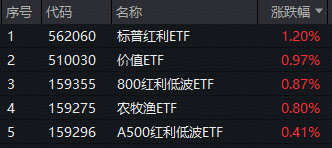
Core Viewpoint - The agricultural, animal husbandry, and fishery sector showed strong performance on October 10, with the first agricultural ETF (159275) experiencing a significant increase in net subscriptions and notable gains in constituent stocks [1][3]. Market Performance - The agricultural ETF (159275) opened lower but quickly rebounded, closing up 0.8% after reaching a maximum intraday gain of 1.5%. It recorded a net subscription of 52 million units by the end of the day [1]. - Key stocks in the sector, such as TianKang Biological and GuanNong Co., saw increases exceeding 7%, while several others, including XiongDi Technology and ShengWu Shares, rose over 4% [1]. Industry Dynamics - The pig farming industry is undergoing capacity reduction, with a reported decrease of 400,000 breeding sows compared to the previous month and a total reduction of 3.4 million from the peak last year [2]. - Recent outbreaks of African swine fever in Vietnam and Guangxi, China, have heightened risks for the farming sector. A meeting on September 16 emphasized policies aimed at reducing production capacity [2][3]. Investment Outlook - Analysts from Pacific Securities and Dongfang Securities suggest that the current fundamentals and policy changes favor capacity reduction in the pig farming industry, indicating potential long-term investment value as most listed companies are at historical low valuations [3][4]. - The agricultural sector's valuation remains low, with the agricultural ETF's underlying index trading at a price-to-book ratio of 2.61, which is in the lower 34.9% of the past decade, suggesting a favorable entry point for investors [3]. Future Trends - The trend towards improving quality and efficiency in the pig farming industry is expected to continue, with outdated capacities being phased out and market dynamics shifting towards higher prices in the long term [4][5]. - Investment opportunities are identified in various segments, including pig farming, feed, animal health, and crop planting, as the demand for these sectors is anticipated to rise with the recovery of pig stocks [5][6].