
期货价格波动

Search documents
碳酸锂期货主力合约月内已涨近3成,广期所发布风控措施
Guan Cha Zhe Wang· 2025-12-26 01:47
Core Viewpoint - The lithium carbonate futures market has experienced a significant price increase, driven by supply-side disruptions and strong downstream demand, leading to heightened market attention [1][2] Group 1: Price Movement - On December 24, the main contract for lithium carbonate futures surged past 120,000 yuan/ton, with an intraday increase exceeding 7%. The contract closed at 123,520 yuan/ton, maintaining a high level [1] - Since December, the price of the contract has risen approximately 29% from around 90,000 yuan/ton [1] Group 2: Supply and Demand Dynamics - The price increase is attributed to expectations of supply constraints due to the planned cancellation of expired mining rights in Yichun, Jiangxi, and concerns over potential delays in the resumption of large mines [1] - Downstream demand is supported by pre-holiday stockpiling by battery material manufacturers and robust orders in the energy storage sector, contributing to a positive market sentiment and ongoing inventory depletion [1] Group 3: Regulatory Response - In response to the rapid price increase and heightened market sentiment, the Guangzhou Futures Exchange announced risk control measures effective December 26, including a daily opening limit of 400 contracts for near-month contracts and an adjustment of the minimum opening order quantity to 5 contracts [2] - While some institutions acknowledge the long-term supply-demand balance, they also caution against short-term price correction risks, noting that current price increases may already reflect future supply expectations [2]
盘中反转!铂、钯价格走势分化,原因是?
Qi Huo Ri Bao· 2025-12-25 23:37
Core Viewpoint - The recent fluctuations in platinum and palladium futures prices are influenced by external market conditions, leading to a significant divergence in their performance, with platinum prices rising while palladium prices fell sharply [1][5]. Group 1: Market Performance - On December 25, platinum futures opened significantly lower but later reached a new high, with the main contract closing at 686.95 yuan/gram, an increase of 4.51% [1]. - In contrast, palladium futures maintained a weak trend, closing at 529.05 yuan/gram, down 7.65% [1][3]. - The trading volume for platinum futures was reported at 21,240 contracts, while palladium futures had a trading volume of 21,661 contracts [2][3]. Group 2: Market Dynamics - The recent price movements are attributed to a combination of macroeconomic factors, tightening supply, and rising bullish sentiment in the market [5]. - The price surge for both metals began in mid-December, following the EU Commission's postponement of the "ban on combustion engines," with prices increasing over 40% from the previous highs [5]. - The widening price gap between domestic and international markets indicates a strong bullish sentiment, with the price difference for platinum and palladium expanding to over 110 yuan/gram [5]. Group 3: Regulatory Measures - In response to increased market volatility and trading activity, the exchange has implemented measures to guide market trading back to rationality, including adjustments to minimum order sizes and trading limits for platinum and palladium futures [3][5]. - Analysts believe these measures will help stabilize the market and encourage rational trading behavior among participants [5]. Group 4: Future Outlook - Analysts suggest that the supply dynamics for platinum are more favorable compared to palladium, with potential geopolitical tensions affecting supply from major producing countries [6]. - The current market phase is characterized by high volatility and sensitivity, necessitating careful risk management and position control for traders [6].


中国期货每日简报-20251225
Zhong Xin Qi Huo· 2025-12-25 03:23
Report Industry Investment Rating - Not provided in the given content Core Viewpoints - On December 24, equity index futures rose, CGB futures stabilized, and most commodities advanced, with silver, platinum, palladium, and lithium carbonate leading the gains [2][3][10] - Beijing adjusted housing purchase restrictions, and the PBOC emphasized continuing to implement a moderately accommodative monetary policy [3][32][34] Summary by Directory 1. China Futures (Futures Movements) 1.1 Overview - On December 24, equity index futures (IC rose 1.6%, IM rose 1.9%, TL rose 0%) rose, CGB futures stabilized. Most commodities advanced. Silver, platinum, and palladium were the top gainers in commodity futures, while SCFIS (Europe), poly-silicon, and soybean meal were the top decliners [10][11][12] 1.2 Daily Raise (Rising Varieties) 1.2.1 Copper - On December 24, copper rose 2.3% to 96,100 yuan per ton. The Federal Reserve's rate - cut stance and balance - sheet expansion supported copper prices. Supply disruptions and low long - term contract TC/RCs tightened supply, but weak demand in the off - season limited price increases [16][17][18] 1.2.2 Iron Ore - On December 24, iron ore rose 0.3% to 779.5 yuan per ton. Overseas shipments decreased, arrivals at domestic ports declined, and demand for molten iron dropped. Port inventories increased, while steel mill inventories decreased, and the year - end inventory replenishment game intensified [21][22][24] 1.2.3 Steel Rebar - On December 24, steel rebar rose 0.1% to 3,136 yuan per ton. Environmental restrictions led to a decline in iron and steel production, but rebar production rebounded. Demand was supported by exports and rush construction, and overall steel inventories continued to decline, but current inventory levels remained higher year - on - year [27][28][29] 2. China News (Chinese News) 2.1 Macro News - The PBOC's Monetary Policy Committee emphasized continuing to implement a moderately accommodative monetary policy and strengthening counter - cyclical and inter - cyclical adjustments at its 2025 Q4 meeting [32][34] - Beijing adjusted housing purchase restrictions, easing home - buying conditions for non - registered families and unifying commercial loan rates for first and second homes [33][34] 2.2 Industry News - The PBOC and seven other departments supported exploring cross - border digital yuan payment pilots between the Chinese mainland and Singapore [35][37] - The SASAC stated that central SOEs should enhance listed company quality and market value management [36][37]
美豆油价格有所反弹 12月17日大商所豆油期货仓单环比上个交易日持平
Jin Tou Wang· 2025-12-18 03:05
Group 1 - The core viewpoint of the news is that CBOT soybean oil futures prices have rebounded, with the current price at 49.22 cents per pound, reflecting a 0.20% increase from the opening price [1] - On December 17, CBOT soybean oil futures opened at 49.02 cents, reached a high of 49.13 cents, and closed at 49.13 cents, marking a 0.49% increase [2] - The Brazilian soybean industry association (Abiove) reported that by October 2025, Brazil's factories are expected to process 4.39 million tons of soybeans, resulting in a soybean oil production of 900,000 tons [2] Group 2 - As of December 17, the Dalian Commodity Exchange had a soybean oil futures warehouse receipt of 25,964 lots, which remained unchanged from the previous trading day [2] - The national first-class soybean oil transaction volume on December 17 was 9,500 tons, a decrease of 53.20% compared to the previous trading day [2]
豆粕:美豆微跌,连粕或低位震荡,豆一,抛储影响,偏弱震荡
Guo Tai Jun An Qi Huo· 2025-12-18 02:20
Report Summary 1. Report Industry Investment Rating - Not mentioned in the provided content 2. Core View - The report predicts that soybean meal may experience low - level fluctuations due to a slight decline in US soybeans, while soybean No.1 may show weak fluctuations under the influence of state reserve sales [1] 3. Summary by Related Catalogs **Fundamental Tracking** - **Futures Prices**: DCE soybean No.1 2601 closed at 4090 yuan/ton during the day session, down 12 yuan (-0.29%), and 4053 yuan/ton at night, down 39 yuan (-0.95%); DCE soybean meal 2605 closed at 2756 yuan/ton during the day, down 7 yuan (-0.25%), and 2746 yuan/ton at night, down 20 yuan (-0.72%); CBOT soybean 01 closed at 1058.5 cents/bushel, down 4.75 cents (-0.45%); CBOT soybean meal 03 closed at 301.8 dollars/short ton, down 4.5 dollars (-1.47%) [1] - **Spot Prices**: The spot basis of soybean meal (43%) is M2605 + 370, with prices in different regions and time periods showing various changes, such as in Shandong, East China, and South China. Some prices are flat compared to the previous day, while others have small increases or decreases [1] - **Industrial Data**: The trading volume of soybean meal was 13.95 million tons per day on the previous trading day, compared to 1.35 million tons per day two days ago. The inventory was 100.92 million tons per week on the previous trading day, compared to 104.55 million tons per week two days ago [1] **Macro and Industry News** - On December 17, 2025, CBOT soybean futures fell for the fourth consecutive day due to concerns about Chinese demand. Although there were new export deals announced, including 19.8 million tons sold to China and 12.5 million tons sold to unknown destinations in the 2025/26 season, the prices still closed lower [1][3] **Trend Intensity** - The trend intensity of soybean meal is 0, and the trend intensity of soybean No.1 is 0, referring to the price fluctuations of the main - contract futures on the day of the report [3]
需求高峰期来临 PTA期现价格或宽幅震荡偏强
Jin Tou Wang· 2025-12-16 09:03
Core Viewpoint - The PTA market is experiencing a slight downward adjustment, with spot prices around 4600 yuan per ton and futures showing a minor decline, indicating a stable demand environment despite some supply reduction [1][2][3] Group 1: Market Prices - On December 16, the PTA spot market is weakly consolidating, with trading references around 4600 yuan per ton [1] - The main PTA futures contract closed at 4668.00 yuan per ton, down 0.60%, with a trading range between 4640.00 and 4702.00 yuan per ton [1] Group 2: Inventory Levels - As of December 16, the number of PTA futures warehouse receipts is 137,949, a decrease of 1,008 from the previous trading day [2] - PTA factory inventory stands at 3.86 days, a slight decrease of 0.06 days from the previous week, but an increase of 0.17 days compared to the same period last year [2] - Polyester factory PTA raw material inventory is at 7.2 days, down 0.3 days from last week and down 0.65 days from the same time last year [2] Group 3: Supply and Demand Analysis - According to Huachuang Futures, PTA supply has slightly decreased while demand remains stable, indicating no inventory pressure [3] - With the stabilization of coal and crude oil prices, PTA prices are supported, suggesting limited downside potential [3] - The upcoming peak demand period for winter clothing is expected to lead to a wide fluctuation in PTA prices, primarily trending towards a stronger performance [3]
开盘|国内期货主力合约跌多涨少 多晶硅、焦煤跌超5%
Xin Lang Cai Jing· 2025-12-08 01:01
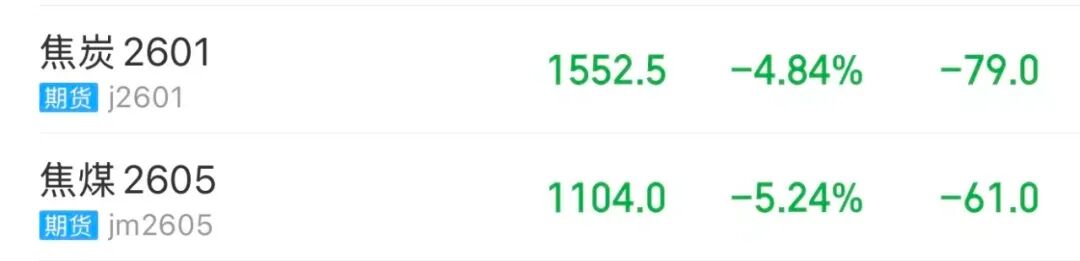
Market Overview - On December 8, 2025, the domestic futures market opened with more declines than gains, with polysilicon and coking coal dropping over 5%, and coke falling over 4% [3][7] - Other commodities such as double-sided paper, ethylene glycol (EG), starch, corn, urea, industrial silicon, methanol, and PVC also saw declines exceeding 1% [3][7] Specific Commodity Performance - The main contract for polysilicon (2601 M) decreased by 5.80%, closing at 52,780 [9] - Coking coal (2605 M) fell by 5.24%, with a price of 1,104.0 [9] - Coke (2601 M) experienced a decline of 4.81%, priced at 1,553.0 [9] - Other notable declines included double-sided paper (2602 M) down 1.98% and ethylene glycol (2601 M) down 1.62% [9] Production and Demand Insights - According to Donghai Futures' report, polysilicon production in November was 120,400 tons, a month-on-month decrease of 12.4%, with expectations for continued slight declines in December [5][9] - The weak fundamentals and soft terminal demand have led to frequent price reductions downstream, resulting in a decrease in production across multiple segments for December [5][9] - The introduction of two new delivery brands, Xinjiang Jingnuo and Dongfang Xiwang, by the Guangxi Futures Exchange was noted [5][9]

深夜 大跌!煤焦市场多空博弈加剧
Qi Huo Ri Bao· 2025-12-08 00:24
Core Viewpoint - The volatility in coking coal and coke futures prices has increased, with traditional trading logic failing this year, leading to significant price declines in recent weeks [1][3]. Group 1: Price Trends - Coking coal and coke futures saw substantial declines, with coking coal dropping 17% in November and coke prices falling 11% during the same period [3]. - The main futures contracts for both coking coal and coke experienced a sharp drop in the last trading session [1]. Group 2: Supply and Demand Dynamics - Coking coal prices have been under pressure due to a combination of factors, including increased imports and a decline in demand from steel mills, which have seen a reduction in iron output [3][4]. - Domestic coking coal production remains low, with recent weekly output at 1.9 million tons, the lowest for this time of year, while premium coal production is at 754,000 tons, significantly below last year's levels [3]. Group 3: Market Outlook - The outlook for coking coal prices is bearish, with expectations of stable supply but weak demand as the market enters a seasonal lull [4][5]. - The current futures contract for coking coal has dropped to around 1,000 yuan per ton, while the mainstream spot warehouse receipt cost exceeds 1,100 yuan per ton, indicating a significant premium [4].
产能利用率恢复性提升 合成橡胶期货急速上涨
Jin Tou Wang· 2025-12-02 06:08
Core Viewpoint - Synthetic rubber futures experienced a rapid increase, with the main contract reaching a peak of 10,675.0 yuan, closing at 10,670.0 yuan, reflecting a rise of 3.84% [1] Group 1: Market Analysis - According to Ruida Futures, the BR2601 contract is expected to fluctuate in the range of 10,000 to 10,600 yuan in the short term [2] - Southwest Futures anticipates a wide range of price consolidation for styrene-butadiene rubber in the upcoming period, with limited downside potential [3] Group 2: Supply and Demand Dynamics - The domestic production of styrene-butadiene rubber is recovering as many previously shut down facilities are restarting, leading to an increase in supply [2] - The demand side shows a decrease in the operating rate of tire companies, with an increase in inventory turnover days, indicating a lack of strong terminal demand [3] - As of November 19, the social inventory of styrene-butadiene rubber stood at 31,500 tons, reflecting a week-on-week increase of 2.24% [3]

棕榈油:高产边际交易减弱,技术反弹,豆油:区间震荡为主
Guo Tai Jun An Qi Huo· 2025-11-28 02:07
1. Report Industry Investment Rating - No information provided on the industry investment rating in the reports. 2. Core Views of the Report - Palm oil: The trading of high - yield margins weakens, and there is a technical rebound [1]. - Soybean oil: It mainly fluctuates within a range [1]. 3. Summary by Relevant Catalogs 3.1 Fundamental Tracking Futures | Futures | Closing Price (Day Session) | Daily Change | Closing Price (Night Session) | Night - Session Change | | ---- | ---- | ---- | ---- | ---- | | Palm oil main contract | 8,528 yuan/ton | 1.04% | 8,598 yuan/ton | 0.82% | | Soybean oil main contract | 8,224 yuan/ton | 0.91% | 8,236 yuan/ton | 0.15% | | Rapeseed oil main contract | 9,772 yuan/ton | - 0.48% | 9,793 yuan/ton | 0.21% | | Malaysian palm oil main contract | 4,089 ringgit/ton | 1.67% | 4,121 ringgit/ton | 0.76% | | CBOT soybean oil main contract | 51.05 cents/pound | 0.79% | - | - | | Futures | Previous Trading Day's Trading Volume | Volume Change | Previous Trading Day's Open Interest | Open Interest Change | | ---- | ---- | ---- | ---- | ---- | | Palm oil main contract | 383,418 lots | - 120,764 | 365,152 lots | - 17,145 | | Soybean oil main contract | 225,589 lots | - 8,550 | 357,514 lots | - 25,925 | | Rapeseed oil main contract | 240,541 lots | - 70,749 | 181,941 lots | - 17,805 | [1] Spot | Spot | Price | Price Change | | ---- | ---- | ---- | | 24 - degree palm oil (Guangdong) | 8,390 yuan/ton | 100 yuan/ton | | First - grade soybean oil (Guangdong) | 8,570 yuan/ton | 100 yuan/ton | | Fourth - grade imported rapeseed oil (Guangxi) | 10,180 yuan/ton | 0 yuan/ton | | Malaysian palm oil FOB (continuous contract) | 1,020 dollars/ton | 5 dollars/ton | [1] Basis | Basis | Value | | ---- | ---- | | Palm oil (Guangdong) | - 138 yuan/ton | | Soybean oil (Guangdong) | 346 yuan/ton | | Rapeseed oil (Guangxi) | 408 yuan/ton | [1] Spread | Spread | Previous Trading Day | Two Trading Days Ago | | ---- | ---- | ---- | | Rapeseed - palm oil futures main - contract spread | 1,379 yuan/ton | 1,458 yuan/ton | | Soybean - palm oil futures main - contract spread | - 304 yuan/ton | - 290 yuan/ton | | Palm oil 1 - 5 spread | N/A | - 58 yuan/ton | | Soybean oil 1 - 5 spread | N/A | 200 yuan/ton | | Rapeseed oil 1 - 5 spread | N/A | 279 yuan/ton | [1] 3.2 Macro and Industry News - SGS estimates that Malaysia's palm oil exports from November 1 - 25 were 583,574 tons, a 40.77% decrease from the same period last month [2]. - Malaysia's palm oil exports to China in the first 10 months of this year decreased by about 29% year - on - year, facing challenges in competitiveness, logistics, pricing, and market positioning [3][4]. - GAPKI data shows that Indonesia exported 2.2 million tons of palm oil in September, lower than 2.26 million tons in the same period last year, and produced 3.93 million tons of crude palm oil in September [4]. - Continuous heavy rain in Indonesia's Sumatra Island caused floods and landslides, resulting in 52 deaths as of November 27 [4]. - US farmers are expected to reduce corn planting area and increase soybean planting area next year. Surveys show that 53% of economists expect soybean planting area to be 82 - 84 million acres, 40% think it will be 84 - 86 million acres, and 7% think it will exceed 86 million acres. S&P Global estimates that the corn planting area will be 95 million acres and the soybean planting area will be 84.5 million acres [5]. - Brazilian 2025/26 soybean crop production is expected to reach a record 178 million tons. Although planting was delayed in some areas due to abnormal weather, the planting area increased by about 1 million hectares. Brazilian farmers' agricultural profit is expected to drop from 45% to 33%, and agricultural costs will increase. The soybean price per hectare will reach 4,223 reais, higher than 3,918 reais last year, and the price per bag will drop from 109 reais to 106 reais [6]. - Brazil's Paraná state's 2025/26 soybean production is expected to be 21.96 million tons, stable compared with the October estimate and a 4% increase from last year [6]. - Anec data shows that Brazil exported 839,997 tons of soybeans, 595,009 tons of soybean meal, and 1,122,093 tons of corn from November 16 - 22, and plans to export 1,042,151 tons of soybeans, 850,134 tons of soybean meal, and 1,672,547 tons of corn from November 23 - 29 [6]. 3.3 Trend Intensity - Palm oil trend intensity: 0; Soybean oil trend intensity: 0. The trend intensity ranges from - 2 to 2, with - 2 being the most bearish and 2 being the most bullish [7].