中美贸易摩擦

Search documents
晨会纪要:2025年第175期-20251017
Guohai Securities· 2025-10-17 02:00
Group 1 - The core viewpoint of the report indicates that the impact of anti-involution on PPI is changing, with a noted improvement in PPI trends despite ongoing challenges in consumer demand [2][8] - In September, the CPI year-on-year decreased by 0.3%, showing a slight recovery from August, but still fell short of market expectations [2][3] - The PPI year-on-year decreased by 2.3%, but the decline was less severe than in August, indicating a potential stabilization in the PPI trend [2][3] Group 2 - The report highlights that the CPI for food items dropped significantly, with a year-on-year decline of 4.4%, primarily due to oversupply issues in the pork market [5][7] - Core CPI continues to rise, driven significantly by gold prices, with gold jewelry and platinum jewelry prices increasing by 42.1% and 33.6% year-on-year, respectively [2][5] - The report notes that while the PPI for durable consumer goods showed a decline of 0.4% month-on-month, the PPI for daily consumer goods increased by 0.4 percentage points compared to August, indicating some improvement [4][5] Group 3 - The report suggests that the weak demand in the consumer market is limiting the transmission of PPI changes to downstream living goods prices [4][8] - The analysis of high-frequency data indicates some stabilization in prices for certain construction industry goods, which may alleviate downward pressure on PPI [6][8] - The report emphasizes that the ongoing anti-involution policies are still in effect, but their impact on prices is becoming less pronounced, with a need to consider international trade events in future PPI trends [8]
港股开盘 | 恒指低开0.14% 新东方(09901)跌超5%
智通财经网· 2025-10-17 01:38
恒生指数低开0.14%,恒生科技指数跌0.07%。新东方跌超5%,金沙中国跌超1%。紫金矿业涨超5%, 蔚来涨近6%。 国泰海通研报称,港股市场IPO增量显著,有望进一步推动投行业务收入增长。 东吴证券认为,关税重回视野,港股短期波动风险加大。往后看,中长期上行趋势还在。其一,短期中 美关税问题超市场预期,或导致港股有回调风险。叠加近期美股AI泡沫叙事再起,港股AI科技方向短 期波动或会加大。资金会转向避险行业。其二,除关税外,投资者仍关心本月四中全会十五五规划定调 会。如果政策超预期,市场修复力度会更强。其三,中长期看,我们对港股并不悲观。一是,全球仍处 在降息周期,货币宽松背景下,股市仍有上涨空间;二是,AI产业趋势不可阻挡,中国AI产业加速,港 股科技龙头仍有上涨空间。三是,我们认为明年一季度,经济基本面和企业盈利会进一步改善。 本文转载自腾讯自选股,智通财经编辑:陈雯芳。 关于港股后市 浦银国际指出,近期中美贸易摩擦再度升级将提升短期市场的不确定性,若贸易摩擦进一步升级,或将 导致市场波动加大。该行认为,在当前市场对贸易谈判预期更充分、资金面更宽裕、盈利开始成为市场 驱动力的情况下,短期回调难以改变港 ...
宝城期货贵金属有色早报-20251017
Bao Cheng Qi Huo· 2025-10-17 01:34
投资咨询业务资格:证监许可【2011】1778 号 宝城期货贵金属有色早报(2025 年 10 月 17 日) ◼ 品种观点参考 时间周期说明:短期为一周以内、中期为两周至一月 | 品种 | | 短期 | 中期 | 日内 | 观点参考 | 核心逻辑概要 | | --- | --- | --- | --- | --- | --- | --- | | 黄金 | 2512 | 上涨 | 上涨 | 震荡 偏强 | 长线看强 | 中长线上行趋势不变,中美摩擦 助推行情 | | 铜 | 2512 | 上涨 | 上涨 | 上涨 | 长线看强 | 矿端扰动再起,资金关注度快速 上升,中美贸易加剧波动 | 说明: 1.有夜盘的品种以夜盘收盘价为起始价格,无夜盘的品种以昨日收盘价为起始价格,当日日盘收盘价为终点价格, 计算涨跌幅度。 2.跌幅大于 1%为下跌,跌幅 0~1%为震荡偏弱,涨幅 0~1%为震荡偏强,涨幅大于 1%为上涨。 3.震荡偏强/偏弱只针对日内观点,短期和中期不做区分。 品种:黄金(AU) 日内观点:震荡偏强 中期观点:上涨 参考观点:长线看强 核心逻辑:昨夜金价持续强势,纽约金和伦敦金逼近 4400 美元/盎 ...
有色金属日报-20251017
Wu Kuang Qi Huo· 2025-10-17 01:16
1. Report Industry Investment Rating No information provided regarding the report industry investment rating. 2. Core Viewpoints of the Report - The trade situation remains volatile, and the weakening of the US dollar index has led to new highs in precious metal prices. The supply - demand relationship of copper provides strong support for prices, and short - term price declines may be limited. Aluminum prices are expected to continue to oscillate strongly. Short - term trends of lead, zinc, tin, nickel, lithium carbonate, alumina, stainless steel, and cast aluminum alloy are also analyzed, with corresponding price ranges provided [2][3][6]. 3. Summary by Metal Copper - **Market Information**: Trade situation is volatile, the US dollar index is weak, and copper prices oscillate upwards. LME copper inventory decreases, domestic electrolytic copper social inventory and bonded area inventory increase slightly, and the spot import loss narrows. The refined - scrap price difference narrows [2]. - **Strategy Viewpoint**: Overseas copper mine production cuts and reduced domestic refined copper output tighten supply expectations, and short - term price declines may be limited. The reference operating range for the Shanghai copper main contract is 84,500 - 86,000 yuan/ton, and for the LME copper 3M contract is 10,500 - 10,750 US dollars/ton [3]. Aluminum - **Market Information**: Domestic inventory decreases, and the US may introduce an automobile tariff grace period. Aluminum prices are strongly trending. LME aluminum inventory decreases, and domestic aluminum ingot and aluminum rod inventories decline [5]. - **Strategy Viewpoint**: With the increase in the domestic aluminum - water ratio, seasonal consumption recovery, and strong exports, the pressure of aluminum ingot inventory accumulation is small, and prices may continue to oscillate strongly. The reference operating range for the Shanghai aluminum main contract is 20,900 - 21,200 yuan/ton, and for the LME aluminum 3M contract is 2,750 - 2,820 US dollars/ton [6]. Lead - **Market Information**: The Shanghai lead index closes slightly lower. LME lead price declines, and domestic social inventory remains unchanged. The refined - scrap price difference is 75 yuan/ton [8]. - **Strategy Viewpoint**: The apparent lead ore inventory rises slightly, and the production of primary lead smelting remains high. The waste lead inventory declines, and the production of secondary lead smelting is at a low level. The lead ingot factory inventory accumulates. The short - term Shanghai lead is expected to be strong [9]. Zinc - **Market Information**: The Shanghai zinc index closes slightly lower, and the LME zinc price rises. Domestic social inventory accumulates slightly, and the zinc ingot export window opens [10]. - **Strategy Viewpoint**: Domestic zinc smelting enterprises operate normally during holidays, and most downstream enterprises maintain normal production. The LME registered zinc warehouse receipts are at a low level, and there is still a structural risk. Short - term Shanghai zinc is expected to oscillate at a low level with increased volatility [11]. Tin - **Market Information**: The Shanghai tin main contract price declines slightly. The import of tin ore is at a low level due to slow resumption of production in Myanmar and Indonesia's crackdown on illegal mining. The smelting enterprise operating rate is low, and downstream demand is mixed. The consumption margin improves during the peak season, but high prices still suppress consumption [13]. - **Strategy Viewpoint**: Short - term supply and demand are in a tight balance, and with the recovery of peak - season demand, tin prices may oscillate at a high level. It is recommended to wait and see. The reference operating range for the domestic main contract is 270,000 - 290,000 yuan/ton, and for overseas LME tin is 34,000 - 36,000 US dollars/ton [14]. Nickel - **Market Information**: Nickel prices oscillate. Spot market transactions are average, and brand premiums rise slightly. Nickel ore prices are stable, nickel - iron prices are weak, and MHP coefficient prices are high [15]. - **Strategy Viewpoint**: Short - term trade frictions may reduce market risk appetite, but the impact on nickel prices is relatively small. In the short term, weak nickel - iron prices and high refined nickel inventory pressure may drag down nickel prices, but in the long term, there are supporting factors. It is recommended to wait and see, and consider buying on dips if the price drops significantly. The reference operating range for the short - term Shanghai nickel main contract is 115,000 - 128,000 yuan/ton, and for the LME nickel 3M contract is 14,500 - 16,500 US dollars/ton [16][17]. Lithium Carbonate - **Market Information**: The spot index of lithium carbonate rises, and the futures contract price also increases. The market's available spot is tight, and the premium strengthens [19]. - **Strategy Viewpoint**: Social inventory and exchange warehouse receipts continue to decline. If consumption remains strong and resonates with the macro - environment, lithium prices may break through the upper limit. Short - term strong oscillation is more likely. The reference operating range for the Guangzhou Futures Exchange lithium carbonate 2601 contract is 73,000 - 77,800 yuan/ton [20]. Alumina - **Market Information**: The alumina index declines slightly, and the trading volume increases. The spot price in Shandong drops, and the import window closes. The futures warehouse receipts decrease [22]. - **Strategy Viewpoint**: Ore prices have short - term support but may face pressure after the rainy season. The over - capacity situation in the alumina smelting end is difficult to change in the short term, and inventory accumulation continues. It is recommended to wait and see for macro - sentiment resonance. The reference operating range for the domestic main contract AO2601 is 2,600 - 3,000 yuan/ton, and attention should be paid to supply - side policies, Guinean ore policies, and the Fed's monetary policy [23]. Stainless Steel - **Market Information**: The stainless steel main contract price rises slightly, and the trading volume increases. Spot prices in different markets show different trends, and raw material prices are stable. Social inventory decreases, but 300 - series inventory increases [25]. - **Strategy Viewpoint**: After the holiday, social inventory accumulates significantly, but terminal consumption is flat. The market does not show the characteristics of the traditional peak season. Spot prices decline, and market sentiment is pessimistic. The market trend is expected to be weak [26]. Cast Aluminum Alloy - **Market Information**: The AD2511 contract price rises, the trading volume and open interest increase. The price of domestic mainstream ADC12 is stable, and the inventory of recycled aluminum alloy ingots in the domestic mainstream market decreases [28]. - **Strategy Viewpoint**: The firm cost provides support for the aluminum alloy price, but the current market sentiment is volatile, and the delivery pressure of the near - month contract is relatively large, limiting the upward price space [29].
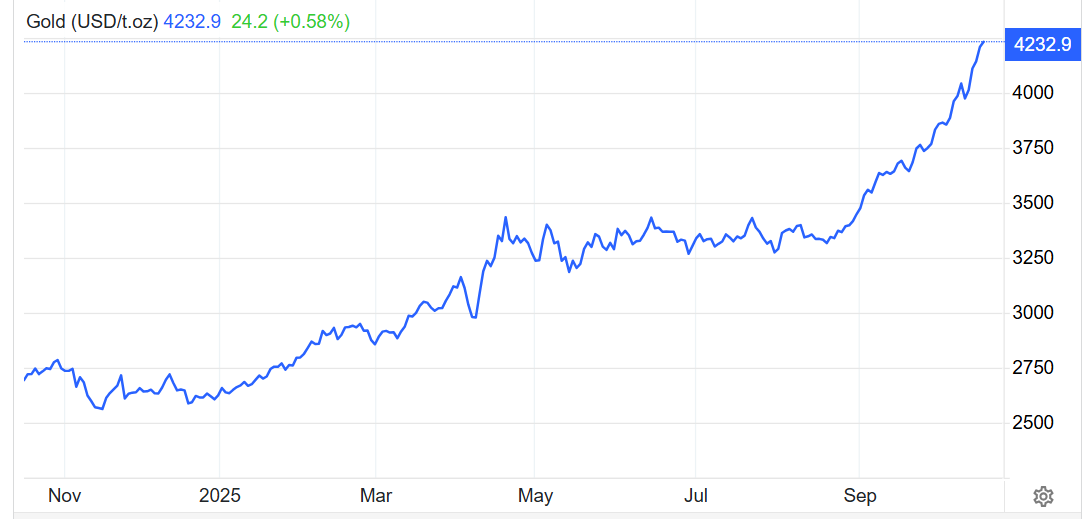
刚刚,突破4350美元/盎司,金价再创新高!特朗普:将与普京在布达佩斯举行会晤
Qi Huo Ri Bao· 2025-10-16 23:38
特朗普:将与普京在布达佩斯举行会晤 据新华社消息,美国总统特朗普16日在社交媒体上发文说,他当天与俄罗斯总统普京进行了长时间通话,主要讨论结束俄乌冲突及其后的俄美贸易等议 题。双方将在匈牙利首都布达佩斯举行面对面会晤。 特朗普写道,他和普京的通话"富有成效""取得很大进展"。双方同意下周举行美俄高级别会晤,美方代表团将由国务卿鲁比奥率领,会晤地点有待确定。 在高级别会晤后,他和普京将在布达佩斯会晤,谈论如何结束俄乌冲突。特朗普没有提及美俄领导人会晤的日期。 金价再创新高,交易所、银行提示风险 昨夜今晨,现货黄金价格大涨,盘中一度突破4378美元/盎司,再创历史新高。截至发稿,现货黄金价格报4356.13美元/盎司。 16日,上海黄金交易所发布通知,内容提到,近期影响市场稳定的因素较多,国际贵金属价格波动剧烈。提示投资者做好风险防范工作,合理控制仓位, 理性投资。 上期所发布通知,近期国际形势复杂多变,贵金属市场波动较大,请各有关单位采取相应措施,提示投资者做好风险防范工作,理性投资,共同维护市场 平稳运行。 近日,工商银行、建设银行等多家银行发布提示,近期国内外贵金属价格波动加剧,市场风险提升。建议投资者基于 ...





固收-债市“收官战”,预计Q4债市表现优于Q
2025-10-16 15:11
Summary of Conference Call on Bond Market Outlook Industry Overview - The conference call focuses on the bond market, specifically the performance and outlook for the fourth quarter of 2025. Key Points and Arguments Bond Market Performance - The bond market experienced a prolonged adjustment in Q3, with a minor decline in yields, contrasting with the rapid adjustments seen at the beginning of the year [1][3] - It is anticipated that the bond market will perform better in Q4 compared to Q3, with the 10-year government bond yield expected to reach 1.7% initially, and potentially drop to 1.65% if it breaks through [1][4] Economic Indicators - China's economy showed a quarter-on-quarter growth of over 1% and a year-on-year growth exceeding 5% in the first three quarters, indicating that the economy has not significantly weakened [1][5] - A low interest rate environment is aligned with the current economic fundamentals, but further weakening of the fundamentals is necessary for lower interest rates [1][5] Impact of U.S.-China Trade Tensions - Ongoing uncertainties regarding U.S.-China trade tensions could affect the capital and bond markets, necessitating caution in investment strategies [1][6] - The market currently expects a tough stance from the Trump administration, but there is significant uncertainty regarding future trade policies [1][7] Market Dynamics - Trade tensions influence the bond market through equity market fluctuations and monetary easing [1][8] - The correlation between the equity and bond markets has weakened as the stock market rises above 3,900 points, indicating that further equity gains may have limited negative impacts on the bond market [1][8] Fund Sales and Redemption Fees - The most significant impact from increased fund sales and redemption fees has already passed, with redemption fees fully accounted for in fund assets, thus not significantly affecting overall market points [1][9] - However, certain bond types, such as long credit bonds, may still face some pressure [1][9] Future Outlook - The expected recovery range for Q4 is between 1.65% and 1.7%, with no significant risks or changes in odds currently visible [1][10] - A detailed outlook for 2026 will be provided in the annual strategy report [2][10]
有色震荡,铝价偏强
Bao Cheng Qi Huo· 2025-10-16 10:32
1. Report Industry Investment Rating No relevant content provided. 2. Core Views of the Report - **Copper**: The Shanghai copper price dropped in the afternoon and then rebounded in a V - shape, with little change in the position. The main contract price fluctuated around 85,000. The short - term market digested the negative impact of Sino - US trade friction, while the medium - and long - term supply contraction and macro - easing logic remained unchanged. Attention should be paid to the long - short game at the 85,000 mark [4]. - **Aluminum**: The Shanghai aluminum price increased in position and rose. The main contract price approached the 21,000 mark at the end of the session. The non - ferrous metals as a whole fluctuated, and the aluminum price was relatively strong. The short - term market digested the negative impact of Sino - US trade friction, and the market focus shifted to the medium - and long - term macro and industrial aspects. The decline in the social inventory of electrolytic aluminum on Thursday supported the aluminum price. Attention should be paid to the pressure at the 21,000 mark [5]. - **Nickel**: The Shanghai nickel price fluctuated and rose, with a slight decline in the position. The short - term market digested the negative impact of Sino - US trade friction, and the non - ferrous metal sector as a whole stabilized. The nickel price was weak due to the weak industry and remained at a low level since late September. Attention should be paid to the low - level support [6]. 3. Summary by Related Catalogs 3.1 Industry Dynamics - **Copper**: BHP is considering reopening four long - closed copper mines in Arizona, USA. The potential restart plan will focus on the Globe–Miami area, and BHP also plans to re - process the tailings of the closed operations there [8]. - **Aluminum**: On October 16, 2025, the inventory of aluminum rods in Guangdong was 61,500 tons, and that in Wuxi was 43,500 tons, with a total of 105,000 tons, a decrease of 1,000 tons compared with the previous period. The Mysteel electrolytic aluminum social inventory was 615,000 tons on October 16, a decrease of 27,000 tons compared with October 13 [9][10]. - **Nickel**: On October 16, the price of SMM1 electrolytic nickel was 120,700 - 123,600 yuan/ton, with an average price of 122,150 yuan/ton, a decrease of 150 yuan/ton compared with the previous trading day. The mainstream spot premium quotation range of Jinchuan 1 electrolytic nickel was 2,400 - 2,500 yuan/ton, with an average premium of 2,450 yuan/ton, an increase of 150 yuan/ton compared with the previous trading day. The spot premium and discount quotation range of domestic mainstream brand electrowon nickel was - 100 - 100 yuan/ton [11]. 3.2 Related Charts - **Copper**: The report includes charts such as copper basis, copper monthly spread, electrolytic copper domestic explicit inventory, overseas copper exchange inventory, LME copper cancelled warrant ratio, and SHFE warrant inventory [12][14][15]. - **Aluminum**: The report includes charts such as aluminum monthly spread, electrolytic aluminum domestic social inventory, alumina inventory, electrolytic aluminum overseas exchange inventory, and aluminum rod inventory [25][27][29]. - **Nickel**: The report includes charts such as nickel basis, LME nickel cancelled warrant ratio, LME nickel trend, SHFE inventory, and nickel ore port inventory [37][38][40].
日度策略参考-20251016
Guo Mao Qi Huo· 2025-10-16 08:51
Report Summary 1. Investment Ratings by Industry - **Macro Finance**: - Stock Index: Bullish in the short term, with potential risks from tariff policy fluctuations [1] - Treasury Bonds: Neutral, with asset shortage and weak economy favorable but short - term central bank warnings on interest rate risks [1] - Precious Metals: Cautiously bullish on short - term rebound, but high - level volatility risks exist [1] - Copper: Bullish, supported by supply disruptions and improved macro - liquidity [1] - Other Metals: Varying degrees of bullish, bearish, or neutral depending on specific market conditions [1] - **Non - Ferrous Metals**: - Most metals are rated as "Oscillating", with specific market factors influencing short - term trends [1] - Lithium Carbonate: Bullish, driven by seasonal demand and supply - demand imbalance [1] - **Black Metals**: - Most products are rated as "Oscillating" or "Weak", with unclear industrial drivers and high inventory in some cases [1] - **Agricultural Products**: - Palm Oil: Mixed signals, with a wait - and - see approach for now [1] - Other products: Varying ratings based on supply - demand, policy, and international trade factors [1] - **Energy and Chemicals**: - Most products are rated as "Oscillating", "Weak", or "Bearish", affected by factors such as supply - demand balance, geopolitical situation, and production status [1] - **Other**: - Shipping: Potential for a rebound at low levels, with expectations of stabilizing [1] 2. Core Views - **Overall Market**: The market is generally affected by factors such as Sino - US trade friction, central bank policies, and supply - demand dynamics across different industries. Uncertainty persists, leading to a mix of bullish, bearish, and oscillating trends in various sectors [1] - **Specific Industry Drivers**: - In the non - ferrous metals industry, supply disruptions and policy changes are key factors [1] - In the black metals industry, unclear industrial drivers and high inventory are major concerns [1] - In the agricultural products industry, international trade policies, supply - demand balance, and seasonal factors play important roles [1] - In the energy and chemicals industry, geopolitical situation, production capacity, and demand seasonality are significant drivers [1] 3. Summary by Industry Macro Finance - **Stock Index**: Short - term bullish, but beware of tariff policy fluctuations and pay attention to the potential Sino - US leaders' meeting at the APEC meeting in South Korea at the end of the month [1] - **Treasury Bonds**: Asset shortage and weak economy are favorable, but short - term central bank warnings on interest rate risks may limit upward movement [1] - **Precious Metals**: Fed Chairman Powell's dovish remarks boost the rebound, but high - level volatility risks remain [1] - **Copper**: Supply disruptions and improved macro - liquidity support the upward trend [1] - **Other Metals**: Each metal has its own unique supply - demand and market factors influencing its short - term trend [1] Non - Ferrous Metals - **Most Metals**: Oscillating, affected by factors such as Sino - US trade friction, supply disruptions, and inventory levels [1] - **Lithium Carbonate**: Bullish, driven by the approaching peak season for new energy vehicles, strong energy storage demand, and overall supply - demand imbalance [1] Black Metals - **Most Products**: Oscillating or weak, with unclear industrial drivers, high inventory, and supply - demand imbalances [1] - **Coking Coal and Coke**: Similar logic, with short - term price exploration not over, but chasing short positions is not advisable [1] Agricultural Products - **Palm Oil**: Mixed signals, with news of Indonesian export regulations favoring far - month contracts, while near - month contracts lack new drivers [1] - **Other Products**: Varying trends based on international trade policies, supply - demand balance, and seasonal factors [1] Energy and Chemicals - **Most Products**: Oscillating, weak, or bearish, affected by factors such as OPEC production policies, geopolitical situation, and demand seasonality [1] - **PTA, Ethylene Glycol, etc.**: Each product has its own specific supply - demand and production - related factors influencing its price [1] Other - **Shipping**: Potential for a rebound at low levels, with expectations of stabilizing as it enters the换月节奏 and approaches the full - cost line [1]
黄金牛市逻辑再强化! 政府停摆削弱增长叙事 美国经济每周可能蒸发150亿美元
Zhi Tong Cai Jing· 2025-10-16 08:29
美国财政部的一位高级官员当地时间周三晚间表示,已持续两周的联邦政府停摆每周基准下可能令美国经济损失高达150亿美元的经济产出,此举更正了此 前不久美国财政部长斯科特.贝森特(Scott Bessent)早些时候给出的错误说法——他此前称损失高达每天150亿美元。 联邦政府停摆开始切入"美国经济的肌肉" 贝森特在新闻发布会上表示,政府停摆已开始"切入"美国经济的"最强壮肌肉部分"。贝森特强调,流入美国经济的投资浪潮(包括对人工智能的巨额投资)是 可持续的,而且才刚刚开始,但联邦政府的停摆正日益成为这些巨额投资的阻碍。 "确实存在着被压抑的需求,但特朗普总统(Donald Trump)通过其政策路径释放了这一繁荣,"贝森特在华盛顿举行的国际货币基金组织与世界银行年会期间 接受采访时表示。 对于钟情于黄金的投资者们来说,美国政府停摆带来的巨大潜在损失,对于今年以来狂飙超60%跑赢MSCI全球股市基准指数且屡创历史新高的黄金价格来 说无疑是重大积极催化。 "每周损失150亿美元"这一字眼带来的停摆冲击加剧了对美国增长放缓与政策不确定性的担忧,市场随之强化降息押注、偏好避险资产,这几个传导链条都 倾向于支撑金价创新高的 ...


港股异动︱航运股表现活跃 中远海能、东方海外国际均涨超3%
Zhi Tong Cai Jing· 2025-10-16 06:37
Core Viewpoint - The shipping stocks are experiencing active performance due to the upcoming implementation of the U.S. 301 port fee measures on October 14, which has prompted China to announce retaliatory port fees on U.S. vessels. This situation is expected to create short-term volatility in shipping rates, particularly in the oil transportation sector, where rates have already surged due to recent sanctions and fee announcements [1][2]. Group 1: Shipping Stock Performance - Cosco Shipping Energy (01138) rose by 3.21% to HKD 9.65 [1] - Orient Overseas International (00316) increased by 3% to HKD 126.9 [1] - Cosco Shipping Holdings (01919) gained 2.97% to HKD 12.82 [1] - Yang Ming Marine Transport (02510) saw a rise of 1.7% to HKD 8.39 [1] Group 2: Impact of U.S.-China Port Fee Measures - The U.S. port fee measures are expected to have a limited overall impact on freight rates, but initial implementation chaos may lead to rate fluctuations [1] - The introduction of special port fees by China on U.S. vessels is anticipated to increase costs for shipping companies, potentially leading to a stronger motivation for cost pass-through and increased bargaining power for these companies [2] - In the medium to long term, shipping companies may adjust their capacity across global routes to mitigate the impact of port fees, but the significant role of China in global dry bulk, energy transport, and manufacturing exports necessitates ongoing observation of the situation [2] Group 3: Oil Shipping Market Outlook - Following the recent sanctions and the announcement of special port fees, there is heightened concern regarding port congestion and supply chain efficiency, leading to a significant increase in VLCC shipping rates week-on-week [1] - The combination of seasonal demand and the current market conditions suggests that oil shipping rates are likely to perform strongly in the short term [1]