
供过于求

Search documents
供应压力持续释放,猪价偏弱运行
Hua Tai Qi Huo· 2025-09-30 05:14
1. Report Industry Investment Rating - The investment rating for both the pig and egg markets is cautiously bearish [3][5] 2. Core Viewpoints - The pig market is in a situation of oversupply, with supply pressure expected to increase after the holiday due to continued high - level group sales and ineffective inventory reduction [2] - The egg market will maintain a pattern of strong supply and weak demand as the double - festival boost is over and all - level inventories are abundant [4] 3. Summary by Related Catalogs Pig Market Market News and Important Data - Futures: The closing price of the live pig 2511 contract yesterday was 12,295 yuan/ton, a change of - 280.00 yuan/ton from the previous trading day, a decline of 2.23% [1] - Spot: In Henan, the price of external ternary live pigs was 12.55 yuan/kg, down 0.10 yuan/kg from the previous day; in Jiangsu, it was 12.77 yuan/kg, down 0.03 yuan/kg; in Sichuan, it was 11.84 yuan/kg, down 0.23 yuan/kg [1] - Agricultural product prices: On September 29, the "Agricultural Product Wholesale Price 200 Index" was 118.80, down 0.05 points from the previous day. The average wholesale price of pork in the national agricultural product wholesale market was 19.32 yuan/kg, up 0.8% [1] Market Analysis - This week, the spot price has been declining. Due to the approaching holiday, group farms are rushing to meet the slaughtering schedule, increasing supply. Consumption has increased slightly, but the market is still in an oversupply situation, and inventory has not been effectively reduced [2] Strategy - Cautiously bearish [3] Egg Market Market News and Important Data - Futures: The closing price of the egg 2511 contract yesterday was 3016 yuan/500 kg, a change of - 20.00 yuan from the previous trading day, a decline of 0.66% [3] - Spot: In Liaoning, the egg spot price was 3.33 yuan/jin, unchanged; in Shandong, it was 3.75 yuan/jin, unchanged; in Hebei, it was 2.96 yuan/jin, down 0.11 yuan/jin [3] - Inventory: On September 29, 2025, the national production - link inventory was 1.03 days, up 0.03 days from the previous day, an increase of 3.00%. The circulation - link inventory remained unchanged [3] Market Analysis - The double - festival stocking is basically over, and the festival boost effect is poor. The arrival volume in sales areas has decreased significantly, the goods movement in all links is slow, and terminal demand is weak. The market will maintain a pattern of strong supply and weak demand [4] Strategy - Cautiously bearish [5]
百利好晚盘分析:市场屏气凝神 静待降息落地
Sou Hu Cai Jing· 2025-09-17 09:21
Gold Market - Gold prices reached an important level of $3,700, marking a historical high with a year-to-date increase of over 40%, making it one of the best-performing assets globally this year [1] - The last time such a significant annual increase in gold prices occurred was in 1979, driven by an energy crisis that raised global inflation and impacted the world economy [1] - Historical trends indicate that when the Federal Reserve lowers interest rates during rising inflation, gold tends to perform well, with prices never declining in the following year under such conditions over the past 25 years [1] - Analysts suggest that gold may replicate the bull market of the late 1970s, as a new rate-cutting cycle by the Federal Reserve has begun, leading to inevitable inflation increases and enhanced attractiveness of gold [1] - Technical analysis shows signs of a potential short-term downward trend in gold prices, with a key resistance level at $3,675 [1] Oil Market - Oil prices experienced a slight rebound but remain limited due to a dual challenge of increasing supply and demand concerns, indicating that the rebound potential is constrained [2] - The International Energy Agency (IEA) forecasts that global supply growth will exceed expectations by 2025, driven by OPEC+'s production increase plans aimed at regaining market share [2] - OPEC+ may tolerate a mid-term decline in oil prices as their production costs are significantly lower than shale oil, despite the potential for a weaker dollar due to Federal Reserve rate cuts providing limited support for oil prices [2] - Recent data shows a decline in long positions and net long positions in WTI crude oil futures, reflecting a bearish sentiment in the market [2] - Technical indicators suggest that oil prices are facing downward pressure, with a resistance level at $64.60 [2] Dollar Index - The dollar index hit a new low since early July, breaking out of previous trading ranges, indicating potential for further declines [3] - The Federal Reserve is expected to announce a rate cut, with investors closely monitoring the extent of the cut, as inflation concerns may lead to a cautious approach from the Fed [3] - Diverging opinions among Federal Reserve officials exist regarding the number of rate cuts, creating uncertainty about the continuity of future rate cuts [3] - Technical analysis indicates a bearish trend in the dollar index, with a potential for short-term rebounds, focusing on a resistance level at 97.20 [4] Nikkei 225 - The Nikkei 225 index closed with a small bearish candle, indicating overbought conditions and potential for a price pullback [5] - A breakout above previous trading ranges could signal a completion of the current structure, prompting consideration for exiting long positions if acceleration occurs [5] Copper Market - Copper prices showed a slight decline, facing significant resistance from upper price levels [6] - Technical indicators suggest weakening upward momentum, with potential for further short-term adjustments, focusing on a resistance level at $4.57 [6] Economic Data Overview - U.S. retail sales for August increased by 0.6%, surpassing market expectations of 0.5% and previous value of 0.2% [7] - Eurozone's ZEW economic sentiment index rose from 25.1 to 26.1, indicating improved economic outlook [8] - Eurozone's industrial production for July rebounded to 0.3% from a previous -0.6%, although still below market expectations of 0.4% [8] Upcoming Economic Events - Eurozone's final CPI year-on-year for August is expected to remain at 2.1% [9] - U.S. new housing starts for August are projected at an annualized rate of 1.365 million units, down from the previous 1.428 million [10] - U.S. EIA crude oil inventory data for the week ending September 12 is anticipated to show a decrease of 857,000 barrels, contrasting with a previous increase of 3.939 million barrels [11]


丰倍生物IPO:行业竞争加剧业绩承压,负债高企偿债压力不小
Sou Hu Cai Jing· 2025-09-10 11:09
Core Viewpoint - The company, Fengbei Biological Technology Co., Ltd., is set to go public on the Shanghai Stock Exchange, aiming to raise 1 billion yuan for expansion projects in the waste oil resource utilization sector [1][3]. Financial Performance - The company has experienced declining revenue and net profit from 2022 to 2024, with revenues of 1.71 billion yuan, 1.73 billion yuan, and 1.95 billion yuan, and net profits of 135.92 million yuan, 123.04 million yuan, and 115.32 million yuan respectively, indicating a downward trend [3]. - The sales prices of the company's main products have also shown a downward trend during the same period [3][4][5]. Product Pricing - The sales prices for the company's biodiesel formulation products decreased from 0.77 million yuan/ton in 2022 to 0.61 million yuan/ton in 2024, while industrial-grade mixed oil prices fell from 0.91 million yuan/ton to 0.62 million yuan/ton [4]. - The sales prices for biofuels and oil chemical products also declined, with biofuels dropping from 0.98 million yuan/ton to 0.73 million yuan/ton, and oil chemical products from 1.18 million yuan/ton to 0.89 million yuan/ton [5]. Inventory and Liabilities - The company's inventory has been increasing, with values of 104.24 million yuan, 198.38 million yuan, and 242.01 million yuan from 2022 to 2024, indicating a growing stockpile [6]. - The raw materials, primarily waste oil and industrial-grade mixed oil, accounted for a rising proportion of total inventory, increasing from 30.77% in 2022 to 40.71% in 2024 [6]. - The company has a significant amount of current liabilities, with total current liabilities of 373.14 million yuan, 336.64 million yuan, and 358.53 million yuan over the same period, primarily consisting of short-term loans and accounts payable [7][8]. Legal Issues - The company is involved in ongoing litigation related to a fire incident at a leased facility, which resulted in significant inventory losses and subsequent lawsuits from various parties [10][11].

成本支撑短期反弹,苯乙烯供过于求
Tong Hui Qi Huo· 2025-09-03 14:31
Report Summary 1. Investment Rating The provided content does not mention the industry investment rating. 2. Core Viewpoints - Pure benzene: On September 2, international oil prices fluctuated higher, which supported the cost side of pure benzene and improved market sentiment. Although the futures price of pure benzene decreased, the spot price decline was small, and the basis strengthened. From the supply side, the loss of domestic pure benzene due to maintenance is gradually being offset by new production capacity, and the overall supply rhythm remains stable. However, the increase in imported pure benzene arriving at ports starting from September is expected to be a pressure point. In terms of inventory, the port inventory decreased, indicating a short - term tight balance in supply. The demand side is clearly differentiated. Overall, the rise in crude oil provides cost support, and the spot market may remain strongly volatile in the short term, but there is still a risk of a mid - term market correction as import pressure increases [3]. - Styrene: On September 2, the styrene futures price decreased, and the basis widened. Although the futures price was under pressure, the rise in crude oil drove the stabilization of pure benzene, which provided some support for the cost side of styrene. The overall operating rate of styrene remained stable, and subsequent new installations will increase the capacity utilization rate. In terms of inventory, the social inventory of styrene increased significantly, indicating continuous supply pressure. The downstream demand structure is differentiated. Overall, the rebound in oil prices drives cost stabilization, and the styrene price is expected to recover with the market fluctuations in the short term, but the contradiction between high supply and inventory accumulation will still limit its rebound space, and the weak pattern is difficult to change [4]. 3. Summary by Relevant Catalogs 3.1 Daily Market Summary - **Fundamentals** - **Prices**: On September 2, the main contract of styrene closed down 1.13% at 6934 yuan/ton, with a basis of 66 (+44 yuan/ton); the main contract of pure benzene closed down 1.23% at 5936 yuan/ton [3]. - **Costs**: On September 2, Brent crude oil closed at $64.6 per barrel (+$0.6 per barrel), WTI crude oil closed at $68.1 per barrel (+$0.6 per barrel), and the spot price of pure benzene in East China was 5810 yuan/ton (-75 yuan/ton) [3]. - **Inventory**: Styrene inventory was 17.9 tons (+1.8 tons), a 10.8% increase compared to the previous period, indicating a large inventory accumulation. The port inventory of pure benzene was 13.8 tons (-0.6 tons), a 4.2% decrease compared to the previous period [3]. - **Supply**: Styrene plants will undergo maintenance in September, and supply is expected to decrease. Currently, the weekly production of styrene is 36.9 tons (-0.2 tons), and the factory capacity utilization rate is 78.1% (-0.4%) [3]. - **Demand**: The operating rates of downstream 3S products varied. The capacity utilization rate of EPS was 58.3% (-2.6%), ABS was 70.8% (-0.3%), and PS was 59.9% (+2.4%) [3]. 3.2 Industrial Chain Data Monitoring - **Prices of styrene and pure benzene**: On September 2, the futures price of styrene decreased by 1.13% to 6934 yuan/ton, and the spot price decreased by 0.27% to 7490 yuan/ton; the futures price of pure benzene decreased by 1.23% to 5936 yuan/ton, and the spot price in East China decreased by 1.27% to 5810 yuan/ton. The prices of upstream products such as Brent crude oil, WTI crude oil, and naphtha all increased slightly [6]. - **Production and inventory of styrene and pure benzene**: From August 22 to August 29, the production of styrene in China decreased by 0.59% to 36.9 tons, and the production of pure benzene increased by 0.24% to 45.2 tons. The port inventory of styrene in Jiangsu increased by 10.84% to 17.9 tons, and the factory inventory increased by 2.35% to 21.1 tons. The national port inventory of pure benzene decreased by 4.17% to 13.8 tons [7]. - **Operating rates**: From August 22 to August 29, the capacity utilization rates of pure benzene downstream products such as styrene, caprolactam, phenol, and aniline all decreased to varying degrees, while the capacity utilization rate of PS among styrene downstream products increased by 2.4% to 59.9% [8]. 3.3 Industry News - The United States has imposed high tariffs on some Asian (especially South Korean) chemical products, leading to adjustments in the global petrochemical industry structure. South Korea has been forced to reduce its ethylene cracking capacity, and some European regions have closed factories due to high energy costs [9]. - In the first half of 2025, the overall losses of China's refining and chemical industry continued to intensify, with the total loss amount increasing by about 8.3% compared to the same period last year, and the loss in the refining and chemical sector alone exceeding 9 billion yuan, highlighting the fierce competition and profit compression in the industry [9]. - With the accelerated implementation of private refining and chemical integration projects, China's pure benzene production capacity has formed a pattern with East China as the core and coordinated development in South China and Northeast China. However, there are still many small - and medium - sized production capacities in the industry, and the overall concentration remains low [9].
信义能源(03868):费用下降抵消限电影响(买入)
Bank of China Securities· 2025-08-04 08:19
Investment Rating - The report maintains a BUY rating on Xinyi Energy with a target price of HK$1.50 [5][6][7] Core Insights - Xinyi Energy's net profit for 1H25 increased by 23% year-on-year, surpassing market expectations. The company successfully reduced interest expenses by 19% year-on-year through active debt refinancing, alongside a decline in tax expenses, which helped mitigate the impact of worsening curtailment, resulting in a gross profit margin (GPM) drop to 62%, the lowest since its listing in 2019 [5][6][7] - The company has demonstrated capital expenditure discipline in recent quarters, achieving positive free cash flow (FCF) in 1H25. Its expansion into the Malaysian market is expected to be ROE-accretive in the long term [6][7] Summary by Sections Xinyi Energy - Xinyi Energy's 1H25 net profit grew by 23% YoY, exceeding consensus estimates. The company reduced interest expenses by 19% YoY through active debt refinancing, which, along with lower tax expenses, helped it overcome the challenges posed by increased curtailment, leading to a GPM of 62%, the lowest since its IPO [5][6][7] - The company has shown good capital expenditure discipline, resulting in positive FCF in 1H25. Its entry into the Malaysian market is anticipated to enhance its ROE [6][7] Xinyi Solar - Xinyi Solar reported a 59% YoY decline in net profit to RMB745.8 million, aligning with prior profit alerts. The interim dividend was set at HK$0.042 per share, down 58% YoY. The management lowered the 2025 production guidance by 10.4% to 8.137 million tonnes due to industry capacity reductions [8][9][10] - The report maintains a HOLD rating on Xinyi Solar with a target price of HK$3.00, advising investors to remain cautious until negative events occur and industry inventory decreases further [9][10] Shenhua Energy - Shenhua Energy plans to acquire several assets, including coal production entities and a mine-mouth power plant. Concerns have been raised regarding the potential negative impact on payout ratios, ROE, and EPS due to the size of the deal and financing methods [14][15][16] - The report maintains a HOLD rating on Shenhua Energy with a target price of HK$32.18 for its H shares [15][16]

房价全面下跌,专家说:未来三年的房价将创"历史新低"?可能吗?
Sou Hu Cai Jing· 2025-08-01 00:47
Core Viewpoint - The real estate market is experiencing unprecedented declines, with predictions of further drops leading to historical lows in property prices, particularly in certain cities [3][6][10]. Group 1: Market Decline - The adjustment in the real estate market began around 2021, with overall price declines reported between 40% to 50% in various regions [3][6]. - Experts suggest that the current market conditions may lead to prices falling below historical lows, with some cities potentially seeing prices revert to levels not seen in the past five to ten years [6][10]. Group 2: Contributing Factors - The market is facing a supply-demand imbalance, characterized by high inventory levels, especially in third and fourth-tier cities, coupled with a declining population and changing attitudes towards homeownership among younger generations [8][10]. - A significant portion of the younger population, specifically 70% of those born in the 2000s, prefer renting over buying, indicating a shift in market dynamics [8]. Group 3: Future Predictions - Experts predict that the real estate market will undergo a revaluation, where properties that once sold for millions may drop to significantly lower prices, potentially below developers' cost lines [10][12]. - The trend of declining prices is expected to persist for several years, making it difficult for the market to recover in the short term [10]. Group 4: Recommendations for Buyers - For first-time homebuyers, the current price drops may present opportunities for better value, but caution is advised against rushing into purchases [12][14]. - Investors are encouraged to closely monitor policy changes and market conditions, particularly in first and second-tier cities, while avoiding third and fourth-tier cities due to high risks and uncertainties [15][16].

HBM芯片,要降价?
3 6 Ke· 2025-07-24 10:12
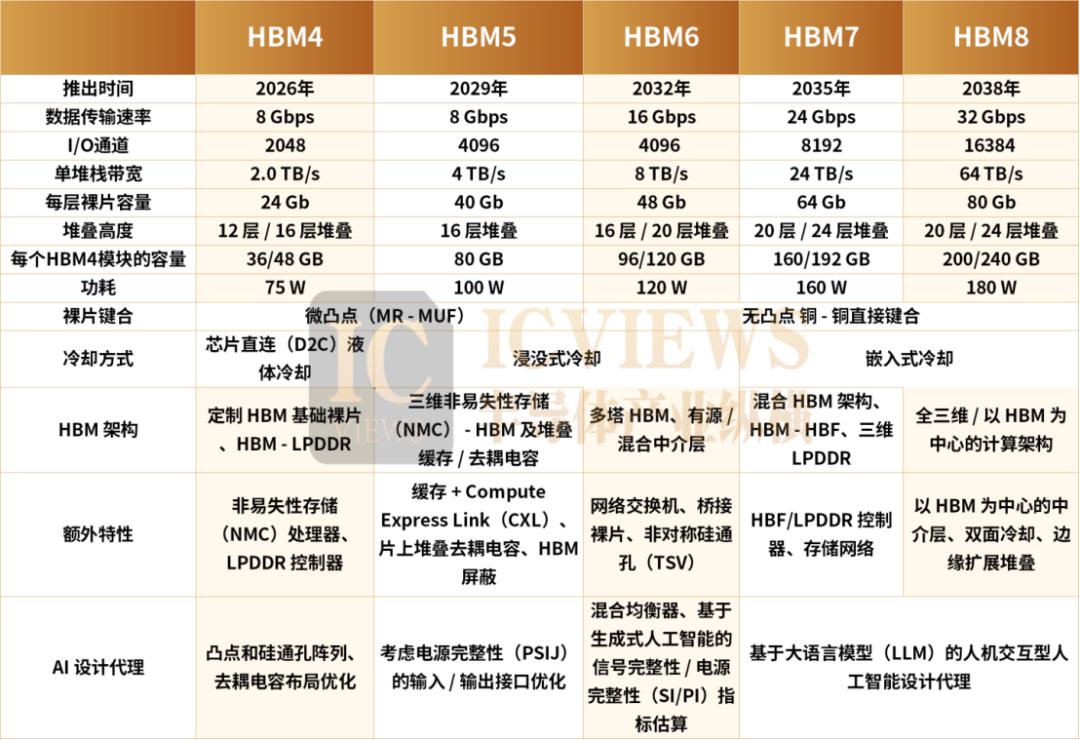
Core Insights - Goldman Sachs analysts predict that HBM prices may drop by 10% by 2026 due to oversupply in the market [1][3] - The pricing power in the HBM market is shifting from manufacturers to customers, particularly represented by Nvidia, indicating a loss of SK Hynix's previous dominance in securing 80%-90% of Nvidia's orders [2][3] Supply and Demand Dynamics - The primary reason for the anticipated price drop is "oversupply," as major players like Samsung, SK Hynix, and Micron accelerate production, leading to a significant increase in HBM supply that will exceed demand [3][4] - Goldman Sachs has revised its total addressable market (TAM) for HBM in 2026 down by 13%, from $51 billion to $45 billion, and reduced growth expectations from 45% to 25% [3] - By the end of 2025, SK Hynix plans to increase its monthly production capacity from 65,000 wafers to 150,000 wafers, while Samsung's capacity is expected to reach 150,000 wafers, and Micron aims for 90,000 wafers [5] Market Competition and Product Trends - SK Hynix currently holds about 50% of the HBM market share, significantly higher than Samsung's 30% and Micron's 20% [8] - The demand for HBM products is expected to be driven by the ASIC market, particularly from companies like Amazon, Meta, and Google, which are rapidly increasing their demand for custom semiconductors [6][7] - The introduction of HBM4 in 2026 is anticipated to be a significant focus, with SK Hynix and Samsung both ramping up their production efforts [15][16] Future Outlook - UBS suggests that despite short-term noise in the memory market, SK Hynix is likely to maintain its leadership position in the HBM sector, especially with the growing demand from AI platforms [14] - The competitive landscape for HBM4 will be crucial, as Samsung aims to regain market share after setbacks in previous product launches [15][17] - The technological roadmap for HBM from 2025 to 2040 indicates a shift towards higher performance and efficiency, with HBM4 expected to play a pivotal role in the AI chip storage market [19][20]


《特殊商品》日报-20250709
Guang Fa Qi Huo· 2025-07-09 02:51
Group 1: Rubber Industry Report Industry Investment Rating No information provided. Core View The fundamentals of natural rubber are expected to weaken. Short positions above 14,000 should be held. Attention should be paid to the raw material supply in each production area and the changes in US tariffs [1]. Summary by Directory - **Spot Prices and Basis**: The price of Yunnan state - owned full - latex in Shanghai decreased by 0.36%, and the full - latex basis decreased by 216.67%. The price of Thai standard mixed rubber remained unchanged. The price of cup - shaped rubber decreased by 0.63%, while the price of glue remained unchanged. The price of raw materials in Hainan increased by 1.59% [1]. - **Inter - monthly Spreads**: The 9 - 1 spread remained unchanged, the 1 - 5 spread decreased by 50.00%, and the 5 - 9 spread increased by 2.19% [1]. - **Fundamental Data**: In May, the production in Thailand increased by 157.52%, the production in Indonesia increased by 3.19%, the production in India increased by 5.07%, and the production in China increased significantly. The weekly operating rates of semi - steel and full - steel tires decreased, the domestic tire production decreased slightly, the tire export volume increased by 7.72%, and the natural rubber import volume decreased by 13.35% [1]. - **Inventory Changes**: The bonded area inventory increased by 2.40%, and the factory - warehouse futures inventory of natural rubber on the SHFE increased by 7.67%. The inbound and outbound rates of dry rubber in Qingdao decreased [1]. Group 2: Log Industry Report Industry Investment Rating No information provided. Core View The log market is expected to enter a pattern of weak supply and demand. The 09 contract is expected to fluctuate weakly in the short term [3]. Summary by Directory - **Futures and Spot Prices**: The 2509 log contract closed at 785.5 yuan/cubic meter, down 1.5 yuan/cubic meter. The spot prices of major deliverable standards remained unchanged [3]. - **Supply**: The monthly port shipping volume from New Zealand to China, Japan, and South Korea increased by 13.20%, and the number of departing ships decreased by 7.94% [3]. - **Inventory**: As of July 4, the total inventory of national coniferous logs was 3.23 million cubic meters, a decrease of 130,000 cubic meters from the previous week [3]. - **Demand**: The weekly demand increased by 0.12 million cubic meters. As of July 4, the daily average outbound volume of logs was 6.69 million cubic meters [3]. Group 3: Industrial Silicon Industry Report Industry Investment Rating No information provided. Core View The spot price of industrial silicon is stable, and the futures price is rising. In the short term, the futures price is expected to fluctuate strongly, but in the long term, the oversupply situation may intensify [4]. Summary by Directory - **Spot Prices and Basis of the Main Contract**: The prices of various types of industrial silicon remained mostly unchanged, and the basis decreased [4]. - **Inter - monthly Spreads**: The 2507 - 2508 spread increased by 350.00%, the 2508 - 2509 spread remained unchanged, the 2509 - 2510 spread increased by 20.00%, and the 2510 - 2511 spread decreased by 66.67% [4]. - **Fundamental Data (Monthly)**: In June, the national industrial silicon production increased by 6.50%, the production in Xinjiang increased by 1.90%, the production in Yunnan increased by 146.26%, and the production in Sichuan increased by 73.22%. The production of organic silicon DMC increased by 13.75%, and the production of polysilicon increased by 5.10%. The export volume of industrial silicon in May decreased by 8.03% [4]. - **Inventory Changes**: The factory - warehouse inventory in Xinjiang decreased by 13.19%, the social inventory increased by 1.85%, the non - warehouse receipt inventory increased by 3.98%, and the warehouse receipt inventory decreased by 0.53% [4]. Group 4: Polysilicon Industry Report Industry Investment Rating No information provided. Core View The polysilicon futures price has risen, but the fundamentals remain weak. Although the policy expectation drives the price up, the downstream demand is still weak, and attention should be paid to the terminal demand and absorption [5]. Summary by Directory - **Spot Prices and Basis**: The average price of N - type re -投料 increased by 8.33%, the average price of N - type granular silicon increased by 7.35%, and the basis of N - type materials increased by 219.42% [5]. - **Futures Prices and Inter - monthly Spreads**: The PS2506 contract increased by 5.12%. Some inter - monthly spreads changed significantly [5]. - **Fundamental Data**: The weekly production of polysilicon increased by 1.69%, the monthly production in June increased by 5.10%. The import and export volumes of polysilicon and silicon wafers changed in May, and the silicon wafer production decreased in the week and increased slightly in June [5]. - **Inventory Changes**: The polysilicon inventory increased by 0.74%, and the silicon wafer inventory decreased by 4.43% [5]. Group 5: Glass and Soda Ash Industry Report Industry Investment Rating No information provided. Core View The soda ash market is in an oversupply situation, and a short - selling strategy on rebounds is recommended. The glass market is expected to fluctuate narrowly, and observation is recommended [6]. Summary by Directory - **Glass - related Prices and Spreads**: The spot prices in North, East, Central, and South China remained unchanged. The 2505 and 2509 glass contracts increased slightly, and the 05 basis decreased by 8.11% [6]. - **Soda Ash - related Prices and Spreads**: The spot prices in North, East, Central, and Northwest China remained unchanged. The 2505 and 2509 soda ash contracts increased by 0.81%, and the 05 basis decreased by 8.77% [6]. - **Supply**: The soda ash operating rate decreased by 1.08%, the weekly production decreased by 1.07%, the float glass daily melting volume increased by 0.64%, and the photovoltaic daily melting volume decreased by 4.02% [6]. - **Inventory**: The glass factory - warehouse inventory decreased slightly, the soda ash factory - warehouse inventory increased by 2.41%, and the soda ash delivery warehouse inventory decreased by 17.99% [6]. - **Real Estate Data**: The year - on - year growth rates of new construction area, construction area, completion area, and sales area of real estate changed, with the completion area and sales area showing improvement [6].
核心矛盾仍是供过于求 纯碱短期下行趋势难改
Zhong Guo Chan Ye Jing Ji Xin Xi Wang· 2025-07-07 22:33
Core Viewpoint - The soda ash market has been experiencing a downward trend in prices since late April, currently stabilizing around 1150 yuan/ton, with some traders anticipating a potential rebound due to historically low prices [1] Supply and Demand Dynamics - The primary issue in the soda ash industry remains oversupply, with ongoing capacity expansion and no clear plans for capacity reduction, indicating that a market reversal will take time [1] - Short-term production is affected by declining profits, leading to some maintenance schedules being moved forward to March and May, resulting in fewer planned maintenance activities during the traditional peak in July and August [1] - Unless profits continue to decline or inventory pressures increase, production reductions this summer may be limited, with production fluctuations expected to be less pronounced compared to historically low-profit years like 2020 [1] Demand Factors - The recent decline in photovoltaic glass prices has raised expectations for production cuts, which in turn suppresses soda ash demand [1] - By July 2024, the daily melting volume of photovoltaic glass is expected to peak and decline, posing significant downward pressure on soda ash prices [1] - Despite a nearly 20% increase in daily melting volume of photovoltaic glass since the beginning of the year, the current weakening trend, combined with poor profitability in both float glass and photovoltaic glass sectors, makes it difficult for soda ash demand to gain positive support [1] Price Trends and Market Outlook - Without substantial production cuts on the supply side, soda ash prices are unlikely to change their downward trend, although there may be short-term trading opportunities based on changes in the inventory levels of spot and futures traders [2] - In a low-profit environment, soda ash producers have a weak incentive to lower prices, and new downward price movements may require guidance from futures prices [2] - The previous long-term contango in futures has led to significant inventory depletion among spot traders, and if the basis improves, there may be short-term trading opportunities, but overall industry reversal will still depend on substantial improvements in supply-demand dynamics [2]
化工日报:以伊冲突缓和,聚酯产业链大幅回落-20250625
Hua Tai Qi Huo· 2025-06-25 05:17
Report Industry Investment Rating - PX/PTA/PF/PR are rated neutral [5] Core Viewpoints - After the easing of the Israel-Iran conflict, the polyester industry chain declined significantly due to the sharp drop in crude oil prices caused by the ceasefire. The industry will return to fundamental trading, and future market trends are affected by multiple factors including geopolitics, supply and demand fundamentals, and device operations [1] - In the short term, the oil market pressure is limited as it enters a stage of both increasing supply and demand. However, in the fourth quarter of this year, the market may turn bearish as demand growth elasticity is expected to be significantly less than supply [2] - The gasoline crack spread has limited upside, and the aromatics market is affected by factors such as export volume and short - process device profitability [2] - Each product in the polyester industry chain has different situations in terms of price, profit, inventory, and production plans, and attention should be paid to the implementation of production reduction plans and inventory changes [3][4] Summary by Directory 1. Price and Basis - Present the TA main contract, basis, and inter - period spread trends, PX main contract trends, basis, and inter - period spread trends, PTA East China spot basis, and short - fiber basis [10][11][13] 2. Upstream Profits and Spreads - Include PX processing fees (PXN), PTA spot processing fees, South Korean xylene isomerization profits, and South Korean STDP selective disproportionation profits [19][22] 3. International Spreads and Import - Export Profits - Cover the toluene US - Asia spread, toluene South Korean FOB - Japanese naphtha CFR spread, and PTA export profits [27][29] 4. Upstream PX and PTA Start - up - Show the operating rates of PTA in China, South Korea, and Taiwan, as well as the operating rates of PX in China and Asia [30][33][35] 5. Social Inventory and Warehouse Receipts - Provide information on PTA weekly social inventory, PX monthly social inventory, PTA total warehouse receipts + forecast volume, PTA warehouse warehouse receipt inventory, PX warehouse receipt inventory, and PF warehouse receipt inventory [38][41][42] 6. Downstream Polyester Load - Include filament sales volume, short - fiber sales volume, polyester load, direct - spinning filament load, polyester staple fiber load, polyester bottle - chip load, filament factory inventory days, Jiangsu and Zhejiang loom start - up rates, Jiangsu and Zhejiang texturing machine start - up rates, Jiangsu and Zhejiang dyeing start - up rates, and filament profits [49][51][62] 7. PF Detailed Data - Contain polyester staple fiber load, polyester staple fiber factory equity inventory days, 1.4D physical inventory, 1.4D equity inventory, recycled cotton - type staple fiber load, difference between original and recycled fibers, pure polyester yarn start - up rate, pure polyester yarn production profit, polyester - cotton yarn start - up rate, and polyester - cotton yarn processing fee [75][82][86] 8. PR Fundamental Detailed Data - Provide polyester bottle - chip load, bottle - chip factory bottle - chip inventory days, bottle - chip spot processing fees, bottle - chip export processing fees, bottle - chip export profits, bottle - chip inter - month spreads [90][92][101]