
反内卷政策

Search documents
大变局、新蓝海:九方智投首席策略荟解码“十五五”投资新坐标
Di Yi Cai Jing· 2025-12-31 13:51
Core Insights - The event held by Jiufang Zhituo focused on investment opportunities and challenges in the context of China's economic landscape as it transitions into the 14th Five-Year Plan's conclusion and the 15th Five-Year Plan's initiation [1][2] Economic Outlook - China's economy is expected to maintain a growth rate of 4% to 5% in 2026, supported by fiscal policies and technological advancements [1][4] - The global economy is projected to continue its stable recovery, with the U.S. economy growing around 3% and Europe experiencing moderate recovery [4] Policy and Market Dynamics - The 15th Five-Year Plan emphasizes stabilizing economic growth, enhancing consumption rates above 50%, and driving industrial upgrades through technological innovation [4][6] - The capital market is shifting from a "financing main channel" to a "capital allocation hub," focusing on innovation and balanced investment [11] Investment Opportunities - High-end manufacturing, technology consumption, and artificial intelligence are identified as key sectors for structural investment opportunities [1][4] - The A-share market is expected to see a growth range of 10% to 20% in 2026, with a focus on technology, resources, and consumer sectors [10][12] Sector-Specific Insights - The AI sector is anticipated to shift from upstream computing power to downstream applications, with significant investment opportunities in mobile technology and AI healthcare applications [14][19] - The precious metals market is expected to remain strong, with gold and silver benefiting from ongoing demand and market dynamics [15][21] Technological Advancements - The fourth technological revolution, characterized by AI, green energy, and quantum information, positions China to potentially lead in new technological arenas during the 15th Five-Year Plan [7][19] - The nuclear fusion sector is highlighted as a strategic focus, with significant investment opportunities in companies involved in core equipment and large scientific projects [21]



【年终盘点】港股收官!恒指全年飙升28%,有色领跑涨幅榜
Sou Hu Cai Jing· 2025-12-31 12:40
Group 1 - The Hong Kong stock market experienced a strong performance in 2025, with the Hang Seng Index rising by 27.77% and the Hang Seng Tech Index increasing by 23.45% [2][4] - The trading volume in the Hong Kong market significantly increased compared to previous years, indicating heightened trading activity and a broad release of market profit potential [2] - The market's upward trend was driven by a clear rotation of sector leadership throughout the year, including AI technology, innovative pharmaceuticals, and the metals sector [4][6] Group 2 - The technology sector was a major contributor to market gains, with the Hang Seng Tech Index rising by 20.74% in Q1 2025, outperforming the Hang Seng Index's 15.25% increase during the same period [5] - Key drivers included investments in computing infrastructure, large model development, and AI applications, leading to significant valuation reassessments for companies like Alibaba [6] - The innovative pharmaceuticals sector gained momentum due to a surge in business development (BD) transactions, benefiting from improved global liquidity as the Federal Reserve began a rate-cutting cycle [6][7] Group 3 - The metals sector emerged as the strongest performer by year-end, with copper stocks rising by 261.85%, gold and precious metals by 197.85%, and other metals and minerals by 187.91% [9][10] - The rise in metal prices was attributed to multiple favorable factors, including the global trend of "de-dollarization," supply-demand imbalances, and domestic policies optimizing supply structures [9][11] - Notable individual stock performances included Zijin Mining rising by 162% and Shandong Gold increasing by over 183% [11] Group 4 - The overall strong performance of the Hong Kong stock market in 2025 was a result of a combination of valuation recovery, improved industry sentiment, and enhanced global liquidity [15][16] - Emerging industries such as AI, renewable energy, and innovative pharmaceuticals provided a wealth of high-growth investment opportunities, supporting long-term price increases [16] - Looking ahead to 2026, expectations remain positive for the Hong Kong market, with potential continued upward momentum driven by liquidity improvements and corporate profit recovery [16]

12月PMI数据解读:年末脉冲,助力收官
Guoxin Securities· 2025-12-31 11:52
Manufacturing PMI Insights - In December, the Manufacturing PMI rose to 50.1%, an increase of 0.9 percentage points, marking the first return above the growth threshold since April[2][4] - The increase in the Manufacturing PMI ended a continuous contraction of 8 months, with the current level being 1.4 percentage points higher than the average of the past three years[7] - New orders index increased by 1.6 percentage points to 50.8, while the production index rose by 1.7 percentage points, indicating a slight widening of the production-demand gap to 0.9 percentage points[8] Non-Manufacturing PMI Insights - The Non-Manufacturing PMI increased by 0.7 percentage points to 50.2, significantly outperforming the average of 48.1 for the same period in previous years[10] - The construction sector saw a substantial rise, with the PMI increasing by 3.2 percentage points to 52.8, while the service sector PMI rose slightly to 49.7[10][11] - In December, 10 out of 20 non-manufacturing sectors were in a growth phase, an increase from the previous month, with notable performance in postal and telecommunications sectors[6][11] Economic Outlook - The economic data for December suggests a potential recovery compared to November, with Q4 growth expected to be no less than 4.5%[3] - The implementation of 500 billion yuan in policy financial tools and local debt arrangements is believed to have contributed to the recovery in production and construction activities[3] - The manufacturing output price index has risen for two consecutive months, reflecting the effectiveness of policies aimed at reducing competition pressures within industries[3][5]
2025年12月PMI点评:供需两端发力,PMI超预期回升
CDBS· 2025-12-31 09:53
Group 1: Report Industry Investment Rating - Not provided in the given content Group 2: Core Viewpoints of the Report - In December 2025, the manufacturing PMI unexpectedly rebounded to 50.1%, up 0.9 percentage points from the previous month, returning to the expansion range above the boom - bust line and indicating a positive signal of stabilizing and rising manufacturing prosperity [3][8]. - The supply and demand sides improved synergistically. The production index was 51.7% in December, up 1.7 percentage points from the previous month, and the new order index was 50.8%, up 1.6 percentage points. The new export order index was 49.0%, up 1.4 percentage points. High - tech manufacturing had strong momentum and provided structural support [3][9]. - Inventory is still at the bottom - grinding stage, and the purchase price index declined slightly. The raw material inventory index rose by 0.5 percentage points to 47.8%, and the finished - product inventory index rose by 0.9 percentage points to 48.2%. The purchase price index was 53.1%, down 0.5 percentage points from the previous month [12][13]. - The rebound of PMI is expected to be the starting point for the rebound of the nominal GDP growth rate in 2026. With policy support, improved expectations, and the accumulation of internal momentum, the economy in 2026 is expected to start steadily [4][15]. Group 3: Summary by Related Catalogs Event - On December 31, 2025, the National Bureau of Statistics announced the December PMI. The manufacturing PMI in December was 50.1%, up 0.9 percentage points from the previous month [2][7] 12 - month Manufacturing PMI Rebound - The December PMI of 50.1% was significantly higher than the market expectation of 49.6%, returning to the expansion range for the first time since April 2025. It was a counter - seasonal rebound, and its signal and continuity are worthy of attention [3][8] Supply - Demand Synergy Improvement - In terms of production, the December production index was 51.7%, up 1.7 percentage points. In terms of demand, the new order index was 50.8%, up 1.6 percentage points, and the new export order index was 49.0%, up 1.4 percentage points. High - tech manufacturing, equipment manufacturing, and consumer goods industries showed strong momentum [3][9] Inventory and Purchase Price - The raw material inventory index rose to 47.8%, and the finished - product inventory index rose to 48.2%, still in the passive replenishment stage but showing marginal improvement. The purchase price index was 53.1%, down 0.5 percentage points. The anti - involution policy's price - pulling effect may shift to mid - stream manufacturing [12][13] PMI Rebound and Economic Outlook - The rebound of PMI in December is expected to be the starting point for the marginal improvement of the economy in 2026. With the joint action of policies, expectations, and internal momentum, the economy in 2026 is expected to start steadily [4][15]
渤海证券研究所晨会纪要(2025.12.31)-20251231
BOHAI SECURITIES· 2025-12-31 00:33
Macro and Strategy Research - The core support for A-share performance in 2026 is expected to come from price stability rather than volume growth, with PPI showing signs of recovery in October and November 2025, indicating a potential narrowing of year-on-year declines in 2026 [3][4] - The "anti-involution" policy is anticipated to provide significant price support in 2025, with ongoing efforts to regulate capacity in key industries, which may stabilize prices and reduce the risk of PPI turning negative [4][5] - External factors, including potential interest rate cuts by the Federal Reserve ahead of the 2026 midterm elections, could positively influence PPI recovery and global commodity prices [5] Fixed Income Research - The report discusses how bond ETFs' premiums and discounts affect the underlying securities' prices, particularly during market adjustments, where investor confidence impacts ETF net asset values [6][7] - The liquidity of underlying assets is significantly affected during deep discounts, leading to increased market pressure and potential price discovery issues [8] - The report emphasizes the importance of understanding the relationship between ETF pricing and underlying bond performance, particularly in the context of market fluctuations and liquidity constraints [9] Industry Research - In the steel sector, demand is expected to weaken seasonally, leading to increased inventory pressure, while macroeconomic conditions remain supportive for price stability [19][21] - The copper market is facing supply constraints due to incidents at major mines, which may support prices despite weak demand; the sector is expected to benefit from increased demand in electric vehicles and infrastructure [22] - The aluminum industry is projected to see stable profits due to strict production limits and potential demand growth from new energy sectors, with the "anti-involution" policy expected to improve the supply landscape [22] - Gold prices are influenced by geopolitical risks and U.S. economic data, with long-term trends favoring gold as a hedge against economic instability [22] - The rare earth sector is poised for growth due to strategic export controls and increasing demand from high-tech industries, suggesting a positive outlook for related companies [23]
造纸轻工周报 2025/12/22-2025/12/26:关注底部高股息资产、轻工企业积极外延布局;造纸板块受益人民币升值、反内卷-20251230
Shenwan Hongyuan Securities· 2025-12-30 12:49
Investment Rating - The report emphasizes a focus on high-dividend safety margin assets in the packaging and home furnishing sectors, indicating a stable industry landscape for leading companies like Yongxin Co., Yutong Technology, Huawang Technology, and Meiyingsen [3][4][5][8]. Core Insights - The report highlights the potential benefits from the appreciation of the RMB, which is expected to lower paper procurement costs and support paper prices due to increased wood pulp prices and traditional peak seasons. It also suggests a medium to long-term focus on anti-involution policies in the paper industry [3][10]. - The home furnishing sector is anticipated to see valuation recovery driven by stable real estate policies and improving second-hand housing conditions, which will support demand for renovation and expansion [8][21]. - The report identifies opportunities in the export sector, particularly in furniture, as the U.S. interest rate cuts may boost consumption, and emphasizes the importance of supply chain and brand internationalization for companies like Jiangxin Home and Yongyi Co. [3][12]. - The pet products sector is noted for its robust export business and potential for synergistic growth through acquisitions, with companies like Yiyi Co. and Yuanfei Pet being highlighted [3][16]. Summary by Sections 1. Packaging Industry - The packaging industry is characterized by a mature competitive landscape, with leading companies reducing capital expenditures and demonstrating advantages in overseas layouts and customer resources. Companies like Yongxin Co. and Yutong Technology are noted for their stable high-dividend policies and growth potential [4][5][7]. 2. Home Furnishing Industry - The home furnishing sector is experiencing accelerated consolidation, with valuation recovery expected due to supportive real estate policies. Companies such as Kuka Home and Sophia are highlighted for their strong dividend yields and potential for market share recovery [8][21][29]. 3. Paper Industry - The paper industry is seeing a gradual recovery in demand, with prices expected to stabilize and rise due to strong production control from overseas pulp mills. Companies like Sun Paper and Nine Dragons Paper are recommended for their potential to benefit from these trends [10][11]. 4. Export Sector - The export sector is influenced by currency fluctuations, with a focus on companies that are well-positioned for international operations. Jiangxin Home and Yongyi Co. are noted for their strong product offerings and international market strategies [12][13]. 5. Pet Products Sector - The pet products sector is highlighted for its growth potential, with companies like Yiyi Co. and Yuanfei Pet showing strong performance in exports and brand development [16][17]. 6. Light Industry Enterprises - Light industry companies are undergoing significant changes, with firms like Anfu Technology and Jianlin Home focusing on strategic acquisitions and technological advancements to enhance their market positions [3][18].
原油震荡,化工内部仍分化看待
Tian Fu Qi Huo· 2025-12-30 12:29
1. Report Industry Investment Rating - Not provided in the given content 2. Core View of the Report - Short - term crude oil fluctuates driven by geopolitics, with high trading difficulty and few participation opportunities. The PX - PTA, a leading chemical variety, may peak and start to correct, and the chemical industry will face a structurally differentiated market in the medium term after the correction [2]. 3. Summary by Related Catalogs Crude Oil - Logic: Geopolitics is the main short - term driver. Recent events such as the US seizing Venezuelan oil tankers, the受阻 of the Russia - Ukraine peace plan, and the possibility of Israel attacking Iran increase geopolitical uncertainties, making trading difficult [3]. - Technical Analysis: The daily - level shows a medium - term downward structure, and the hourly - level shows a short - term oscillatory structure. The strategy is to wait and see in the hourly cycle [4]. Chemicals (1) Asphalt - Logic: The fundamentals maintain a pattern of both weak supply and demand. With the escalation of the US - Venezuela situation, there is a risk of raw material supply disruption. It can be pre - arranged before the technical structure's upward trend is broken [8]. - Technical Analysis: The hourly - level shows a short - term upward structure. It reached a short - term high today but failed to break through due to lack of volume. The short - term support below has moved up to 2965. The strategy is to take half - profit on long positions before the holiday, and set the remaining half - position's stop - profit at 2965 [8]. (2) Styrene - Logic: The port inventory is accumulating, reaching the highest in five years, and the total industrial chain inventory is at a historical high. The demand is weak in the off - season, and there is still pressure of over - inventory in January and February [10]. - Technical Analysis: The hourly - level shows a short - term upward structure. It reached a short - term high today with an unobvious breakthrough and insufficient volume. The short - term support is at 6700. The strategy is to take profit on the remaining half of long positions [10][12]. (3) Rubber - Logic: The spot price of Thai cup lump rubber is firm, and some funds flow into low - priced products due to a warm macro - sentiment, driving the price up. However, the downstream tire inventory is over - stocked, and the domestic rubber inventory is accumulating seasonally, reaching a year - on - year high. It still faces great pressure after the short - term rise [13]. - Technical Analysis: The daily - level shows a medium - term oscillatory structure, and the hourly - level shows a short - term upward structure but should be treated as oscillatory. It oscillated today, and the short - term support is at 15520. The strategy is to wait and see in the hourly cycle [13]. (4) Synthetic Rubber - Logic: The short - term price of the raw material butadiene is firm due to inventory reduction, and some funds flow into low - priced products due to a warm macro - sentiment, driving the price up. However, high - level production of butadiene will lead to high supply pressure later [16]. - Technical Analysis: The daily - level shows a medium - term upward structure, and the hourly - level shows a short - term upward structure. It oscillated today without changing the short - term upward structure. The short - term support is at 11200. The strategy is to hold long positions in the hourly cycle and set the stop - profit at 11200 [16]. (5) PX - Logic: The fundamentals of PX - PTA are strong in both reality and expectation. Funds have flowed in since last week. However, the short - term increase is too large, the basis has widened rapidly, and the downstream polyester's acceptance of high prices is low. It faces a corrective market [20]. - Technical Analysis: The hourly - level shows a short - term upward structure. It oscillated today. After a large reduction in positions yesterday, it may have reached a short - term peak, but confirmation is needed. The hourly - level support is at 7260. The strategy is to hold the remaining half - position of long positions with the stop - profit at 7260, and exit if the hourly - line closes below this level [20][23]. (6) PTA - Logic: Similar to PX, the fundamentals of PX - PTA are strong in both reality and expectation. Funds have flowed in since last week. However, the short - term increase is too large, the basis has widened rapidly, and the downstream polyester's acceptance of high prices is low. It faces a corrective market [24]. - Technical Analysis: The hourly - level shows a short - term upward structure. It oscillated today. After a large reduction in positions, it may have reached a short - term peak, but confirmation is needed. The hourly - level support is at 5070. The strategy is to hold the remaining half - position of long positions with the stop - profit at 5070, and exit if the hourly - line closes below this level [24]. (7) PP - Logic: The fundamentals of the olefin industry chain where PP - plastics belong are still weak, with new production capacity pressure and the off - season of demand. After the main contract change, the impact of fundamental reality on the market weakens. It is not advisable to chase short positions excessively. Pay attention to expected trading and the possibility of anti - involution policies [26]. - Technical Analysis: The hourly - level shows a short - term upward structure. It increased in volume and broke through the short - term pressure at 6315 today, turning the hourly - level structure to long. The short - term support below is at 6255. The strategy is to wait and see in the hourly cycle [26]. (8) Methanol - Logic: The port inventory is continuously decreasing, but the downstream MTO is under maintenance. The inventory pressure is improved, but the demand expectation is weak. The overall fundamental driving force is not strong. Pay attention to expected trading and the possibility of anti - involution policies [29]. - Technical Analysis: The daily - level shows a medium - term downward structure, and the hourly - level shows a short - term upward structure. It increased in volume and broke through today, making the short - term structure upward again. The short - term support is at 2120. The strategy is to wait and see in the hourly cycle [29]. (9) PVC - Logic: Although the total PVC inventory is still at a historical high year - on - year, due to large profit losses and low chlor - alkali profits, the PVC production and output have declined for three consecutive weeks. After entering the pattern of both weak supply and demand, the total inventory has also decreased for three consecutive weeks, reducing the supply pressure in the short term. The expectation of spring maintenance in the first quarter and the anti - involution sentiment may drive the market up in the short term [33]. - Technical Analysis: The daily - level shows a medium - term downward structure, and the hourly - level shows a short - term upward structure. It increased in price with a reduction in positions today, but the volume was insufficient, and it cannot be confirmed as the end of the correction. The short - term support is at 4670 - 4680. The strategy is to hold long positions in the hourly cycle and set the stop - profit at 4670 - 4680 [33]. (10) Ethylene Glycol - Logic: The losses of ethylene glycol plants are expanding, and the number of maintenance plans is increasing, which is expected to reduce the domestic supply pressure. However, the port inventory is still accumulating, exceeding the median of the past five years. Two 720,000 - ton production capacity plants in Taiwan stopped production last week, and there is an expectation of improvement in port inventory accumulation [34]. - Technical Analysis: The daily - level shows a medium - term downward structure, and the hourly - level shows an upward structure. It increased in price with a reduction in positions today. The hourly - line closed at a new high, but the breakthrough was not obvious and the volume was insufficient. The short - term support is temporarily at 3775. The strategy is to wait and see in the hourly cycle [36]. (11) Plastic - Logic: Similar to PP, the fundamentals of the olefin industry chain where PP - plastics belong are still weak, with new production capacity pressure and the off - season of demand. After the main contract change, the impact of fundamental reality on the market weakens. It is not advisable to chase short positions excessively. Pay attention to expected trading and the possibility of anti - involution policies [38]. - Technical Analysis: The daily - level shows a medium - term downward structure, and the hourly - level shows a downward structure. It oscillated today, and the hourly - level structure has not reversed. The short - term pressure above is at 6545. The strategy is to wait and see in the hourly cycle [38]. (12) Soda Ash - Logic: The pattern of high supply and high inventory remains unchanged, and the inventory has changed from decreasing to increasing. The medium - term pressure of oversupply still exists, but the cost - effectiveness of holding short positions is reduced. It is only suitable for short - position allocation [41]. - Technical Analysis: The hourly - level shows an upward structure. It increased in price with a reduction in positions today, maintaining the short - term upward structure. The short - term support below has moved up to 1170. The strategy is to wait and see after taking profit on long positions yesterday [41]. (13) Caustic Soda - Logic: The pattern of high supply, high inventory, and weak demand remains unchanged. The supply - demand driving force is still downward without a reversal, but there is little space for chasing short positions. After the main contract change, the impact of fundamental reality on the market weakens. Pay attention to expected trading and the possibility of anti - involution policies [44]. - Technical Analysis: The hourly - level shows an upward structure. It increased in price with a reduction in positions today, continuing the short - term upward structure. The short - term support is at 2190. The strategy is to hold long positions in the hourly cycle and set the stop - profit at 2190 [44].
南华期货2026年度工业硅、多晶硅展望:硅途向远,静待春来
Nan Hua Qi Huo· 2025-12-30 12:22
Report Industry Investment Rating - The overall valuation of the industrial silicon industry is neutral, and there are structural opportunities in the low - valuation area [3][47] - The polysilicon industry is still policy - dominated, and its development is affected by policy implementation and dynamic adjustment [5] Core Views of the Report - In 2025, the industrial silicon industry featured "costs first decreasing then increasing, stable production growth, differentiated regional开工率, and prominent over - capacity". In 2026, the supply - demand balance will remain loose, with over - capacity as the core issue [1][3] - In 2025, the polysilicon industry was strongly affected by policies, showing characteristics of "ineffective pricing mechanism, production recovery in the second half of the year, and demand fluctuating with the photovoltaic industry chain". In 2026, it may show a situation of "increasing supply and decreasing demand" [2][5] Summary by Relevant Catalogs Chapter 1: View Summary 1.1 Summary - **Industrial Silicon**: In 2025, costs first decreased due to lower raw material prices in the first half and then increased as coal prices rose in the second half. Production increased steadily, with开工率 showing regional and phased differences. Exports were weakly stable, with an estimated volume of 70 - 74 tons [1] - **Polysilicon**: In 2025, the pricing mechanism was ineffective. Production recovered in the second half, and demand was "high in the front and low in the back" affected by the "531 rush - to - install wave". After the anti - involution policy in June, profits rebounded, and the industry's production enthusiasm was boosted [2] 1.2 Future Outlook - **Industrial Silicon**: In 2026, the supply - demand balance will remain loose, with an expected supply growth rate of about 4.3% and a demand growth rate of about 5%. Attention should be paid to cost and price changes and the risk of short - term supply - demand mismatches [3] - **Polysilicon**: In 2026, it may show a "supply increase and demand decrease" situation, with a supply growth rate of about 3.7% and a demand growth rate of about - 10%. The profit transmission in the industrial chain is the key observation point, and policy implementation should be focused on [5] Chapter 2: Market Review 2.1 2025 Industrial Silicon Market Price Trend - **First Quarter**: The price declined due to weak supply - demand and pricing restructuring caused by the new delivery system. Supply increased, and demand was weak. Although there were short - term sentiment boosts, the overall supply - surplus situation remained [6] - **Second Quarter**: The price continued to decline due to high inventory, weak downstream demand, cost collapse expectations, and regional supply increases [7] - **Third and Fourth Quarters**: In the third quarter, the price rose due to the "anti - involution" sentiment, cost support, and downstream demand. In the fourth quarter, it was affected by the expected production cut in the polysilicon industry and profit - taking [7][8] 2.2 2025 Polysilicon Market Price Trend - **First Quarter**: The price fluctuated widely, driven by industry expectations and chain sentiment, with price increases at the beginning and drops after the Spring Festival [10] - **Second Quarter**: The price declined due to supply - demand deterioration, with a 14% drop in April. There were short - term rebounds but then continued to fall [11] - **Third Quarter**: The price rose significantly due to the "anti - involution" policy and market expectations [11] - **Fourth Quarter**: The price fluctuated in a range with a rising center, affected by policy expectations and supply - demand in the spot market [11] Chapter 3: Core Focus Points 3.1 Industrial Silicon - **Cost**: In 2025, costs decreased in the first half and increased in the second half, mainly due to raw material price changes [13] - **Supply**: Production increased steadily due to low start - stop costs and flexible production.开工率 was supported by cost collapse in the first half and profit recovery in the second half. Xinjiang had high开工率, and the Southwest had seasonal fluctuations [18][20] - **Import and Export**: Exports were affected by policies and overseas supply, and were expected to be weakly stable in 2026, with an estimated volume of 70 - 74 tons [23] - **New Capacity in 2026**: The industry was over - capacity, and the new planned capacity was about 45 tons, mainly integrated capacity [25] 3.2 Polysilicon - **Cost**: The cost was composed of electricity, silicon powder, and other auxiliary costs, and the market - based pricing mechanism was temporarily ineffective [27] - **Supply**: In 2025, production decreased in the first half and recovered in the second half after the anti - involution policy [29] - **Terminal Demand**: In 2025, demand was affected by the "531 rush - to - install wave", showing a "high - then - low" trend. In 2026, demand growth may be - 10% due to policy changes [31][5] - **Component Import and Export**: China's photovoltaic component exports were strong in 2025, with high volumes in the first half and a surge in the second half [33] - **Photovoltaic Power Generation**: In 2025, China's solar power generation reached 461.6 billion kWh, a year - on - year increase of 38.12%, providing key support for green - power supply [35] 3.3 Organosilicon - In 2025, the industry had high capacity, weak demand, and low开工率, with marginal improvement at the end of the year. In 2026, the supply - demand situation was uncertain [38] 3.4 Aluminum Alloy - In 2025, the domestic aluminum alloy industry had stable production growth, with a cumulative output of about 10.63 million tons, a year - on - year increase of about 5.8%. In 2026, demand for industrial silicon was expected to continue to grow [40][41] Chapter 4: Valuation Feedback and Supply - Demand Outlook 4.1 Valuation Feedback - **Industrial Silicon Profit**: Since May 2025, profits have increased due to lower hydropower costs and the "anti - involution" policy. The overall valuation is neutral, and attention should be paid to cost and price changes and enterprises with cost advantages or product - structure optimization capabilities [45][47] - **Polysilicon Profit**: Since June 2025, profits have rebounded rapidly, and the current profitability is good. Attention should be paid to profit transmission in the industrial chain [49][52] 4.2 Supply - Demand Outlook - **Industrial Silicon Supply - Demand Balance**: In 2026, the supply growth rate is expected to be about 4.3%, and the demand growth rate is about 5%. The over - capacity situation remains, and attention should be paid to production fluctuations caused by the hydropower season change [53] - **Polysilicon Supply - Demand Balance**: In 2026, the supply may increase by about 3.7%, and the demand may decrease by about 10%, with a slight supply - demand surplus [55]
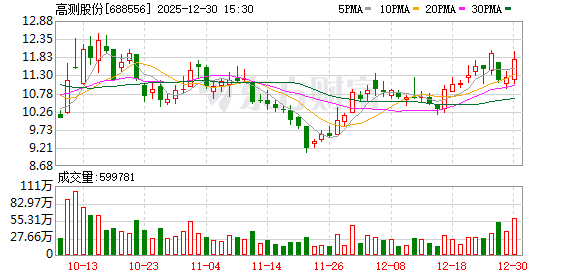
高测股份:公司三季度已实现单季度盈利
Zheng Quan Ri Bao· 2025-12-30 12:05
Group 1 - The core viewpoint is that the photovoltaic industry is experiencing a recovery in profitability due to the implementation of anti-involution policies, leading to a gradual increase in prices across various segments [2] - The company has reported a recovery in the profitability of its silicon wafer cutting and processing services, which is expected to further enhance its main business profitability [2] - In the third quarter, the company achieved a quarterly profit, and with the ongoing support of anti-involution policies and internal cost reduction efforts, the main business profitability is anticipated to continue improving [2]

造纸轻工周报:关注底部高股息资产、轻工企业积极外延布局;造纸板块受益人民币升值、反内卷-20251230
Shenwan Hongyuan Securities· 2025-12-30 08:29
Investment Rating - The report maintains a positive outlook on the paper and light industry sectors, highlighting high dividend safety margin assets and companies with strong growth potential [1][2]. Core Insights - The report emphasizes the importance of focusing on high dividend safety margin assets in the packaging and home furnishing sectors, benefiting from the appreciation of the RMB and the expected decrease in paper procurement costs [2][4]. - It identifies key companies in the packaging sector such as Yongxin Co., Yutong Technology, Huawang Technology, and Meiyingsen, as well as home furnishing leaders like Kuka Home, Mousse, Oppein, and Sophia [2][4]. - The paper industry is expected to benefit from rising wood pulp prices and seasonal demand, with companies like Sun Paper, Nine Dragons Paper, and Bohui Paper being highlighted for their potential [2][4]. - The report also discusses the export sector, noting the impact of RMB appreciation and the importance of supply chain and brand expansion for companies like Jiangxin Home, Yongyi Co., Jiayi Co., and Zhongxin Co. [2][4]. Summary by Sections Packaging Sector - The packaging industry is characterized by a mature competitive landscape, with leading companies reducing capital expenditures and demonstrating advantages in overseas markets [5][6]. - Yongxin Co. is noted for its stable high dividend policy and strong performance in soft packaging and film business, with a dividend rate of 84% to 81% from 2020 to 2024 [5]. - Yutong Technology has expanded its global supply chain, enhancing its operational efficiency and increasing its dividend rate to 70% by 2025 [6]. - Huawang Technology is positioned well in the decorative paper market, with expectations of improved profitability due to limited new supply and rising demand [7]. - Meiyingsen is recognized for its strategic overseas expansion and high dividend yield, with a focus on emerging markets [8]. Home Furnishing Sector - The home furnishing industry is experiencing accelerated consolidation, with a positive outlook driven by supportive real estate policies and improving consumer confidence [9][10]. - Companies like Kuka Home and Sophia are expected to benefit from the increasing demand for home renovation and the implementation of "old-for-new" policies [10][23]. - The report highlights the importance of retail capabilities and supply chain improvements for companies to enhance their market share and profitability [23][24]. Paper Industry - The paper industry is anticipated to see a recovery in demand and pricing, supported by strong control over production by overseas pulp mills [11][13]. - Companies such as Sun Paper and Nine Dragons Paper are expected to benefit from the stabilization of pulp prices and improved supply-demand dynamics [11][13]. - The report notes that the industry has been at a low point for several years, but a mid-term recovery is expected as demand gradually increases [11][13]. Export Sector - The export sector is influenced by the global economic environment, with a focus on companies that are expanding their international presence and brand recognition [14][15]. - Jiangxin Home is noted for its innovative product offerings and strong growth in customer numbers, while Yongyi Co. is positioned to capitalize on the growing demand for ergonomic chairs [15][16]. - Jiayi Co. is recognized for its strategic expansion in the insulated cup market, while Zhongxin Co. is highlighted for its growth potential in the pulp molding sector [16][17]. Pet Products Sector - The pet products sector is experiencing robust growth, with companies like Yiyi Co. and Yuanfei Pet benefiting from strong export performance and brand development [18]. - Yiyi Co. is expected to see significant revenue growth due to its acquisition strategy and strong sales performance [18]. - Yuanfei Pet is noted for its rapid growth in the domestic market and expansion of its product offerings [18]. Light Industry Sector - The report emphasizes the importance of monitoring changes in the light industry, with companies like Anfu Technology and Jianlin Home focusing on strategic acquisitions and technological advancements [19][20]. - Anfu Technology is expected to enhance its profitability through increased ownership in Nanfeng Battery and expansion into new business areas [19]. - Jianlin Home is transitioning towards smart robotics, leveraging its existing technology and market position [20].


