
宏观经济

Search documents
富士高实业(00927.HK)中期收入4.35亿港元 同比下跌15.8%
Ge Long Hui· 2025-11-26 11:24
Group 1 - The company reported a revenue of HKD 434.9 million for the six months ending September 30, 2025, representing a decline of 15.8% [1] - The loss attributable to equity holders of the company was HKD 3.2 million, a decrease of 119.4% compared to a profit of HKD 16.5 million in 2024 [1] - The basic loss per share was HKD 0.75, compared to a basic earnings per share of HKD 3.88 in 2024 [1] Group 2 - The company declared an interim dividend of HKD 0.01 per share, down from HKD 0.02 per share in 2024 [1] - The company faced significant challenges due to fluctuating U.S. tariff policies and adverse macroeconomic factors affecting the entire industry [1] - The uncertain environment, particularly regarding tariff developments, has led the industry to adopt a cautious approach, resulting in extended order cycles and strategic adjustments in business plans [1]
中信期货2026年度策略会成功召开
Qi Huo Ri Bao· 2025-11-26 09:14
Group 1: Conference Overview - The 2026 Strategy Conference by CITIC Futures was successfully held on November 26, 2025, in Shanghai, focusing on the theme "Sailing Forward" [1] - The conference featured one main forum and eight sub-forums, discussing macroeconomic trends, equity, bonds, commodities, exchange rates, and overseas markets [1] - The event gathered investors from various sectors, promoting an exchange of ideas and insights [1] Group 2: Economic Outlook - The Vice President of the China Macroeconomic Society, Zhu Baoliang, projected a 5% economic growth for China in 2025, supported by growth policies and export activities [2] - Challenges such as insufficient domestic demand, a sluggish real estate market, and increasing local government debt were highlighted, indicating potential overcapacity in the economy [2] - Recommendations for 2026 include maintaining a stable economic growth target of around 5%, implementing proactive fiscal policies, and enhancing market confidence [2] Group 3: Global Economic Insights - CITIC Securities' Chief Macro Analyst, Cui Rong, noted that 2025's tariff disruptions would lead to a clearer global economic environment in 2026, with reduced uncertainties in geopolitics and monetary policies [3] - The forecast includes a cautious outlook on global financial market liquidity and lower returns on risk assets compared to 2025, despite a continued boom in AI technology [3] - Concerns regarding the fragility of AI financing cycles and potential economic risks related to the U.S. midterm elections were also mentioned [3] Group 4: Market and Asset Allocation - CITIC Futures' Deputy Director, Zeng Ning, expressed an optimistic macro outlook for 2026, driven by a sustained easing of global liquidity and fiscal expansions in the U.S. and Europe [4] - The asset allocation strategy suggests a balanced approach, with an emphasis on precious metals and commodities, while adjusting positions based on supply and demand dynamics [4] - Expectations for oil prices indicate a potential downward pressure on price levels, suggesting a cautious approach to oil investments [4]
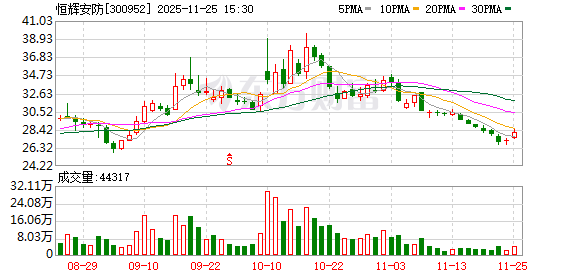
恒辉安防:公司股价受宏观经济、市场情绪等多重因素影响
Zheng Quan Ri Bao· 2025-11-25 11:13
Core Viewpoint - The company emphasizes that its stock price is influenced by multiple factors including macroeconomic conditions and market sentiment, while its performance adheres strictly to accounting standards and is audited for accuracy [2]. Group 1: Company Performance and Strategy - The recent pre-disclosure of share reduction is primarily aimed at allowing former employees to exit their incentive stock options, which is intended to optimize the incentive mechanism and enhance its effectiveness [2]. - The company asserts that its main business remains stable and that it is progressing steadily in new market segments [2]. - Future efforts will focus on operational improvements and value enhancement to reward investors with solid performance, with relevant updates to be disclosed as required [2].


广发期货《有色》日报-20251125
Guang Fa Qi Huo· 2025-11-25 03:00
Report Industry Investment Ratings No investment ratings were provided in the reports. Core Views Tin - Short - term macro fluctuations are large, but considering the strong fundamentals, maintain a bullish view on tin prices. Hold existing long positions and monitor macro changes and the recovery of supply from Myanmar [3]. Zinc - The downward pressure on the domestic supply side has eased. The price is likely to fluctuate, with the main contract reference range of 22,200 - 22,800 [7]. Copper - In the medium - to - long - term, supply - demand contradictions support the upward movement of the copper price bottom. Pay attention to macro drivers such as overseas interest - rate cut expectations, with the main contract reference range of 85,500 - 86,800 [9]. Nickel - The macro situation is stable, and the fundamentals are weak. However, due to upstream production cuts and low valuations, the price may fluctuate and recover. In the medium term, the supply glut restricts the upside potential, with the main contract reference range of 116,000 - 120,000 [13]. Stainless Steel - Policy - driven factors are difficult to have an immediate impact. The cost support is weakening, and the fundamentals have not improved significantly. The short - term price is expected to be weak, with the main contract reference range of 12,200 - 12,600 [15][16]. Aluminum - The alumina price is expected to remain in a bottom - range oscillation, with the main contract reference range of 2,700 - 2,850 yuan/ton. The electrolytic aluminum price is expected to maintain a high - level oscillation, with the main contract reference range of 21,100 - 21,700 yuan/ton [17]. Aluminum Alloy - The ADC12 price is expected to maintain an oscillating pattern in the short term, with the main contract reference range of 20,300 - 20,900 yuan/ton [18]. Industrial Silicon - The price of industrial silicon is expected to remain in a low - level oscillation. The market is likely to face inventory accumulation pressure in November, with the main price fluctuation range of 8,500 - 9,500 yuan/ton [19]. Lithium Carbonate - The short - term market may maintain a weak and oscillating adjustment, with the main contract reference range of 86,000 - 90,000 yuan/ton [20]. Polysilicon - The price is expected to remain in a high - level range oscillation, maintaining a forward market structure. For trading strategies, consider going long around 50,000 yuan/ton in the futures market and holding or closing profitable positions for sell put options in the options market [22]. Summary by Related Catalogs Tin - **Spot Price and Basis**: SMM 1 tin increased by 0.76% to 293,500 yuan/ton, and the LME 0 - 3 spread rose by 0.71% to 95.67 dollars/ton [2]. - **Fundamentals**: In October, tin ore imports increased by 33.49% to 11,632 tons, and SMM refined tin production increased by 53.09% to 16,090 tons [2]. - **Inventory**: SHEF inventory decreased by 0.46% to 6,229 tons, while social inventory increased by 2.83% to 7,654 tons [3]. Zinc - **Price and Spreads**: SMM 0 zinc ingot decreased by 0.27% to 22,380 yuan/ton, and the import loss was 4,280 yuan/ton [7]. - **Fundamentals**: In October, refined zinc production increased by 2.85% to 61.72 million tons, and the export volume increased by 243.79% to 0.85 million tons [7]. - **Inventory**: China's seven - region zinc ingot social inventory decreased by 3.58% to 15.10 million tons, and LME inventory increased by 0.21% to 4.7 million tons [7]. Copper - **Price and Basis**: SMM 1 electrolytic copper increased by 0.49% to 86,235 yuan/ton, and the import loss was 858 yuan/ton [9]. - **Fundamentals**: In October, electrolytic copper production decreased by 2.62% to 109.16 million tons, and the import volume decreased by 15.61% to 28.21 million tons [9]. - **Inventory**: Domestic mainstream port copper concentrate inventory increased by 8.80% to 70.49 million tons, and SHFE inventory increased by 1.09% to 11.06 million tons [9]. Nickel - **Price and Basis**: SMM 1 electrolytic nickel increased by 0.90% to 117,750 yuan/ton, and the 1 Jinchuan nickel premium increased by 3.57% to 4,350 yuan/ton [13]. - **Cost**: The cost of integrated MHP - produced electrolytic nickel decreased by 4.84% to 110,810 yuan/ton [13]. - **Inventory**: SHFE inventory decreased by 1.92% to 39,795 tons, and LME inventory decreased by 0.18% to 253,482 tons [13]. Stainless Steel - **Price and Spreads**: The 304/2B (Wuxi Hongwang 2.0 coil) price remained unchanged at 12,700 yuan/ton, and the futures - spot spread decreased by 7.76% to 235 yuan/ton [15]. - **Fundamentals**: China's 300 - series stainless steel crude steel production decreased by 0.72% to 178.70 million tons, and the export volume decreased by 14.43% to 35.81 million tons [15]. - **Inventory**: The 300 - series social inventory (Wuxi + Foshan) decreased by 0.89% to 49.29 million tons, and SHFE inventory decreased by 0.83% to 6.44 million tons [15]. Aluminum - **Price and Spreads**: SMM A00 aluminum decreased by 0.09% to 21,360 yuan/ton, and the import loss was 1,868 yuan/ton [17]. - **Fundamentals**: In October, alumina production increased by 2.39% to 778.53 million tons, and electrolytic aluminum production increased by 3.52% to 374.21 million tons [17]. - **Inventory**: China's electrolytic aluminum social inventory decreased by 5.11% to 61.30 million tons, and LME inventory decreased by 0.37% to 54.6 million tons [17]. Aluminum Alloy - **Price and Spreads**: SMM aluminum alloy ADC12 remained unchanged at 21,350 yuan/ton, and the Foshan broken primary aluminum scrap - to - refined spread remained unchanged at 1,749 yuan/ton [18]. - **Fundamentals**: In October, regenerated aluminum alloy ingot production decreased by 2.42% to 64.50 million tons, and the import volume decreased by 7.06% to 7.64 million tons [18]. - **Inventory**: The regenerated aluminum alloy weekly social inventory increased by 1.44% to 5.65 million tons [18]. Industrial Silicon - **Price and Spreads**: The price of industrial silicon decreased by 50 - 100 yuan/ton, and the 2512 - 2601 spread decreased by 100% to 0 [19]. - **Fundamentals**: National industrial silicon production increased by 7.46% to 45.22 million tons, and the export volume decreased by 35.82% to 4.51 million tons [19]. - **Inventory**: The social inventory increased by 0.37% to 54.80 million tons, and the warehouse receipt inventory decreased by 2.02% to 20.76 million tons [19]. Lithium Carbonate - **Price and Basis**: SMM battery - grade lithium carbonate decreased by 0.16% to 92,150 yuan/ton, and the lithium spodumene concentrate CIF average price decreased by 1.65% to 1,071 dollars/ton [20]. - **Fundamentals**: In October, lithium carbonate production increased by 5.73% to 92,260 tons, and the demand increased by 8.70% to 126,961 tons [20]. - **Inventory**: The total lithium carbonate inventory decreased by 10.90% to 84,234 tons in October [20]. Polysilicon - **Price and Spreads**: The N - type polysilicon spot price decreased by 0.10% to 52,250 yuan/ton, and the futures main contract decreased by 0.08% to 23,315 yuan/ton [22]. - **Fundamentals**: Weekly polysilicon production increased by 1.12% to 2.71 million tons, and the import volume increased by 11.96% to 0.14 million tons in October [22]. - **Inventory**: Polysilicon inventory increased by 1.50% to 27.10 million tons, and the polysilicon warehouse receipt decreased by 3.07% to 7,270 [22].
宝城期货国债期货早报-20251125
Bao Cheng Qi Huo· 2025-11-25 02:21
Group 1: Report's Investment Rating - There is no information about the industry investment rating provided in the report. Group 2: Core Viewpoints - The report suggests that in the short - term, treasury bond futures will mainly fluctuate and consolidate. The short - term expectation of interest rate cuts has declined, but the long - term expectation of a loose monetary policy still exists. The upward momentum of treasury bond futures is limited in the short term, and they will mainly show an oscillatory pattern [1][5]. Group 3: Summary by Related Catalogs 3.1 Variety Viewpoint Reference - Financial Futures Stock Index Sector - For the TL2512 variety, the short - term view is "oscillatory", the medium - term view is "oscillatory", and the intraday view is "weak". The reference view is "oscillatory consolidation", with the core logic being that the short - term expectation of interest rate cuts has declined while the long - term loose expectation still exists [1]. 3.2 Main Variety Price Market Driving Logic - Financial Futures Stock Index Sector - For varieties TL, T, TF, and TS, the intraday view is "weak", the medium - term view is "oscillatory", and the reference view is "oscillatory consolidation". The core logic is that treasury bond futures fluctuated and slightly rebounded yesterday. In October, economic data such as consumption and investment weakened, and the problem of insufficient effective domestic demand still exists. The long - term policy loose expectation supports treasury bond futures, but the necessity of policy intensification within the year is not strong, and the possibility of a comprehensive interest rate cut in the short term is low, limiting the upward momentum of treasury bond futures. Currently, there are signs of weakening both at home and abroad, and short - term risk - aversion demand supports the demand side of treasury bonds [5].
中信期货晨报:国内商品期货涨跌参半,非金属建材涨幅居前-20251125
Zhong Xin Qi Huo· 2025-11-25 02:20
1. Report Industry Investment Rating No relevant content provided. 2. Core Viewpoints of the Report - Overseas: On the evening of November 21st, the New York Fed President's speech hinted at a possible near - term interest rate cut, boosting the December rate - cut expectation. The Fed's expectation management is shifting, and it's possible that key figures will turn dovish in the next two weeks. The US GDP in the third and fourth quarters is expected to face pressure due to various factors such as the decline in core shipments in August, rising unemployment rate in September, and weakening manufacturing PMI in November [5]. - Domestic: The domestic endogenous momentum remains weak and stable. The issuance of 500 billion policy - based financial instruments in October, the accelerated issuance of special bonds in November, and the release of the debt - resolution surplus quota may bring marginal benefits to infrastructure investment in the fourth quarter. The central bank may not be in a hurry to further relax policies in the short term [5]. - Asset Views: Due to the Fed's divergence on the December rate cut, the hawkish tone of the October meeting minutes, and the better - than - expected September non - farm data, the December rate - cut expectation was once suppressed, and the US dollar index rose. After the New York Fed President's dovish speech, the market sentiment was boosted. It is recommended to allocate assets evenly in the fourth quarter and pay attention to the opportunities of stock indices, non - ferrous metals (copper, aluminum, tin), and precious metals [5]. 3. Summary by Related Catalogs 3.1 Market Performance - **Stock Index Futures**: The CSI 300 futures rose 0.15% daily and weekly, fell 4.24% monthly and 3.96% quarterly, and rose 13.11% this year. The SSE 50 futures fell 0.07% daily and weekly, 2.35% monthly and 1.49% quarterly. The CSI 500 futures rose 0.85% daily and weekly, fell 5.735% monthly and 6.25% quarterly, and rose 19.93% this year. The CSI 1000 futures rose 1.10% daily and weekly, fell 3.71% monthly and 4.20% quarterly, and rose 21.31% this year [2]. - **Treasury Bond Futures**: The 2 - year Treasury bond futures rose 0.014 daily and weekly, fell 0.08% monthly, rose 0.134 quarterly, and fell 0.54% this year. The 5 - year Treasury bond futures rose 0.03% daily and weekly, fell 0.16% monthly, rose 0.25% quarterly, and fell 0.61% this year [2]. - **Foreign Exchange**: The US dollar index was flat daily, rose 0.100% weekly, 0.42% monthly, and 2.383% quarterly. The euro - US dollar exchange rate had no change daily and weekly, fell 23 pips monthly and 221 pips quarterly, and rose 1160 pips this year [2]. - **Interest Rates**: The 7 - day inter - bank pledged repo rate was flat daily, weekly, and quarterly, fell 1 bp monthly, and fell 30 bp this year. The 10 - year Chinese government bond yield rose 0.3 bp daily, was flat weekly, rose 2.1 bp monthly, fell 44 bp quarterly, and rose 0.1 bp this year [2]. - **Hot Industries**: The national defense and military industry rose 4.45% daily and weekly, fell 0.31% monthly and 2.95% quarterly, and rose 17.50% this year. The media industry rose 3.53% daily and 3.50% weekly, rose 0.68% monthly, fell 5.07% quarterly, and rose 30.89% this year [2]. - **Overseas Markets**: NYMEX WTI crude oil fell 1.834 daily, fell 2.93% weekly, 4.76% monthly, 7.13% quarterly, and 19.33% this year. ICE Brent crude oil fell 1.05% daily, 2.77% weekly, 3.21% monthly, 5.50% quarterly, and 16.469% this year [2]. - **Domestic Commodities**: The container shipping to Europe route rose 0.80% daily and weekly, rose 0.97% monthly, fell 4.52% quarterly, and fell 30.50% this year. Gold rose 0.36% daily and weekly, rose 0.58% monthly, 6.10% quarterly, and 50.634% this year [3]. 3.2 Short - term Market Judgments - **Financial**: Stock index futures are expected to rise in a volatile manner, stock index options to fluctuate, and Treasury bond futures to move in a narrow range [6]. - **Precious Metals**: Gold and silver are expected to move sideways [6]. - **Shipping**: The container shipping to Europe route and steel are expected to move sideways, and iron ore is also expected to trade within a range [6]. - **Black Building Materials**: Most black building materials such as coke, coking coal, and silicon iron are expected to move sideways, with some low - valued varieties having potential for a phased rebound [6]. - **Non - ferrous Metals and New Materials**: Most non - ferrous metals are expected to move sideways, with aluminum and lithium carbonate expected to rise in a volatile manner, and nickel expected to decline in a volatile way [6]. - **Energy and Chemicals**: Crude oil, LPG, asphalt, high - sulfur fuel oil, and low - sulfur fuel oil are expected to decline in a volatile manner. Most other energy and chemical products are expected to move sideways [8]. - **Agriculture**: Most agricultural products are expected to move sideways, with some such as soybean oil and sugar expected to decline in a volatile way [8].
宏观经济周报-20251124
工银国际· 2025-11-24 07:05
Economic Indicators - The ICHI Composite Economic Index slightly declined this week but remains near the critical zone, influenced by the base effect from strong post-holiday recovery in previous weeks[1] - The Consumer Sentiment Index rebounded significantly, returning to the expansion zone, indicating enhanced resilience in demand[1] - The Investment Sentiment Index remained stable, reflecting a slight contraction due to the interplay of previous infrastructure investments and high base effects[1] Employment Trends - The unemployment rate for urban youth aged 16-24 (excluding students) in China decreased to 17.3% in October from 17.7% in September, showing the impact of manufacturing expansion and job creation policies[2] - The "14th Five-Year Plan" emphasizes promoting high-quality employment, focusing on structural and institutional improvements to alleviate structural unemployment[2] - Policies aim to enhance youth employment stability and labor participation rates through education reform and new employment forms[2] Global Economic Context - The Federal Reserve's current policy rate is between 3.75% and 4.00%, with inflation expected to return to 2% by 2026, indicating a prolonged process[7] - In September, the U.S. added approximately 119,000 non-farm jobs, exceeding market expectations, but the unemployment rate rose to 4.4%, reflecting signs of marginal weakness in the labor market[7]
中国宏观周报(2025年11月第3周):农产品批发价季节性回落-20251124
Ping An Securities· 2025-11-24 05:08
Industrial Sector - Steel and building materials production has rebounded, while the operating rate of float glass has decreased[2] - The apparent demand for steel building materials has increased, while the operating rate for the textile polyester sector has shown seasonal weakness[2] - The operating rates for automotive tires have slightly declined this week[2] Real Estate - New home sales in 30 major cities decreased by 20.8% year-on-year, but the growth rate improved by 8.7 percentage points compared to last week[2] - The second-hand housing listing price index fell by 0.98% week-on-week, indicating a slight narrowing of the decline[2] Domestic Demand - Movie box office revenue increased by 74.7% year-on-year, with a daily average of 83.89 million yuan[2] - The volume of postal express deliveries has grown by 8.3% year-on-year, showing recovery in logistics[2] - Retail sales of major home appliances decreased by 34.6% year-on-year, a decline of 7.2 percentage points compared to the previous value[2] External Demand - Port cargo throughput increased by 3.4% year-on-year, while container throughput rose by 7.4%[2] - The export container freight index rose by 2.6% week-on-week, indicating a slight increase in shipping costs[2] Prices - The agricultural product wholesale price index fell by 0.1% week-on-week, reflecting seasonal trends[2] - The industrial product prices weakened, with the South China industrial product index dropping by 1.9%[2]
宏观短期偏空,矿端犹存约束,沪铜震荡:铜周报20251123-20251124
Guo Lian Qi Huo· 2025-11-24 03:33
Report Title - Copper Weekly Report 20251123: Short - term Macroeconomic Bearish, Mine - end Constraints Remain, Shanghai Copper Oscillates [1] Core View - The macro situation is short - term bearish, there are still constraints at the mine end, and Shanghai copper shows an oscillating trend [1] Summary by Directory Price Data - The copper spot premium increased as the market declined and terminal purchasing willingness rebounded [10] - This week, the LME copper 0 - 3M premium first fell and then rose, with limited month - on - month changes [13] Fundamental Data - This week, the average price of the copper concentrate TC index decreased by $0.11 per ton month - on - month to - $42.32 per ton, remaining at a low level [17] - According to SMM, the inventory of copper concentrates in ten ports increased by 57,000 tons month - on - month to 704,900 tons [20] - The price difference between refined and scrap copper weakened month - on - month [22] - The estimated output of electrolytic copper in China in November will decrease by 0.4% month - on - month and increase by 8.2% year - on - year [24] - In October, China imported 279,900 tons of refined copper and exported 65,900 tons, with a net import of 214,000 tons [25] - This week, the spot inventory of electrolytic copper continued to decrease month - on - month, while the bonded area inventory continued to increase [27] - LME copper inventories increased, and COMEX copper inventories continued to accumulate [28] - The operating rate of refined copper rods continued to increase month - on - month as the market corrected, downstream purchasing sentiment improved, and orders rebounded [30] - From November 1st to 16th, the retail sales of new energy vehicles in the national passenger car market increased by 2% year - on - year and 7% compared with the same period last month [33] - The overall production volume of domestic photovoltaic module enterprises in November is expected to decline month - on - month [35] - The planned production volume of domestic household air conditioners in November decreased by 23.7% compared with the actual production volume of the same period last year [36] Macroeconomic Data - In October, China's new social financing was 81 billion yuan, new RMB loans were 22 billion yuan, and the gap between M2 and M1 widened [39] - The preliminary value of the Eurozone's manufacturing PMI in November unexpectedly fell below the boom - bust line [42] - The minutes of the Fed meeting showed serious differences [43]
宏观经济周报:增长换引擎,财富换赛道-20251123
Guoxin Securities· 2025-11-23 05:12
Economic Outlook - The goal for GDP per capita by 2035 is set at $29,000, necessitating a shift in China's economic logic from solely pursuing GDP growth to a new paradigm focusing on productivity enhancement, moderate inflation, and currency appreciation[1] - The new growth paradigm emphasizes the importance of nominal GDP growth and inflation levels, which directly impacts corporate profitability and capital returns[1] Market Dynamics - The equity market is positioned for a systematic revaluation, supported by three main factors: profit foundation, valuation environment, and relative returns[1] - The expectation of RMB appreciation is a significant driver for valuation improvements, enhancing the attractiveness of RMB assets and drawing global capital to Chinese assets[2] Asset Allocation Trends - There is a notable shift in asset preference from real estate and bonds to equities, driven by the changing yield characteristics of various asset classes in a moderate inflation environment[2] - Bonds, while still a stabilizing component, are expected to see diminishing capital gains potential, while real estate is facing downward pressure due to income and price expectations[2] Consumption and Production Insights - Recent data indicates a recovery in consumption, with metro passenger flow increasing by 5.9% year-on-year and logistics delivery volume rising by 5.8%[12] - Production shows structural improvement, particularly in real estate-related sectors, with a narrowing decline in rebar production and a continued decrease in inventory levels[14] Trade and External Factors - Port cargo throughput has decreased to 266 million tons, reflecting a structural adjustment in external demand, while the export container freight index has risen to 1094.03 points[25] - Geopolitical tensions, particularly with Japan, have introduced new uncertainties into the external trade environment, impacting market sentiment[25] Fiscal and Monetary Policy - The broad deficit for the week ending November 23 reached 204.3 billion, with a cumulative total of 11.2 trillion, indicating a slower pace compared to the previous year[35] - The monetary market remains in a loose state, with indicators suggesting continued low interest rates and a high willingness to leverage in the bond market[44]