悦己消费

Search documents
行业点评报告:5月社零增速稳步上行,内需动力进一步修复
KAIYUAN SECURITIES· 2025-06-17 06:21
Investment Rating - The industry investment rating is "Positive" (maintained) [1] Core Viewpoints - The report indicates that the retail sales data for May 2025 showed a better-than-expected growth of 6.4% year-on-year, driven by the early launch of the "618" shopping festival and the ongoing effects of the "old-for-new" policy [4][5] - The food and beverage sector is expected to benefit from an improving macroeconomic environment, with consumer income and willingness to spend likely to improve in the medium to long term [3][4] - The white liquor industry is currently in a bottoming phase, but is expected to attract attention due to low valuations and increasing dividend yields [3][6] - The snack food sector is experiencing growth driven by channel innovation and product diversification, with emerging channels like Sam's Club and online e-commerce showing high growth trends [6] Summary by Sections Retail Sales Performance - In May 2025, the retail sales of consumer goods increased by 6.4% year-on-year, with a month-on-month increase of 1.3 percentage points compared to April [4] - The food and oil category saw a year-on-year growth of 14.6%, while the beverage category grew by 0.1% and the tobacco and alcohol category increased by 11.2% [4][10][16] Quarterly Observations - The retail sales growth is expected to rebound in Q2 2025, with food and oil categories maintaining high growth rates [5] - The retail sales of food and oil, beverages, and tobacco and alcohol categories for April-May 2025 were +12.2%, -0.5%, and +6.3% year-on-year, respectively [5] Industry Insights - The white liquor sector is under pressure due to regulatory impacts and seasonal demand weakness, while the snack food sector is thriving with strong growth opportunities [6] - The report highlights specific companies to watch in the snack food sector, including Ximai Food, Yanjinpuzi, and Wancheng Group, which are expected to benefit from new consumption trends [3][6]
5月经济数据解读:政策效果充分释放,经济表现好于预期
Yin He Zheng Quan· 2025-06-16 08:43
Economic Performance - In May, industrial added value grew by 5.8% year-on-year, while the service production index increased by 6.2%[1] - The GDP growth rate for May is estimated at 5.6%, consistent with the previous value[1] - Social retail sales in May rose by 6.4% year-on-year, marking the highest growth rate since 1999[1] Consumption Trends - The "old-for-new" policy significantly boosted consumption, with home appliance sales increasing by 53.0% and communication equipment by 33.0%[1] - "Self-indulgence" consumption categories, such as sports and entertainment goods, saw growth rates of 28.3% and 21.8% respectively[1] Investment Insights - Fixed asset investment (excluding rural households) reached 191,947 billion yuan, growing by 3.7% year-on-year; manufacturing investment grew by 8.5%[1] - Real estate development investment fell by 10.7% year-on-year, with an estimated monthly decline of 11.98%[1] Industrial Production - Industrial added value for May was 5.8%, down from 6.1% in April, indicating a marginal slowdown[2] - Manufacturing investment growth is expected to slow down further due to external uncertainties and diminishing returns from equipment renewal policies[1] Employment Situation - The urban survey unemployment rate decreased to 5.0% in May, down from 5.1% in April[2] - Local household unemployment improved significantly, while unemployment among migrant workers increased slightly[2]
互联网传媒周报:巨人网络《超自然行动组》表现突出-20250615
Shenwan Hongyuan Securities· 2025-06-15 13:30
Investment Rating - The report maintains a positive outlook on the gaming sector, particularly recommending Giant Network's "Supernatural Action Group" due to its strong performance and growth potential [6]. Core Insights - The gaming sector is expected to benefit from clear policy support and its nature as a resilient consumer segment, with a price-to-earnings (PE) ratio below 20x, indicating attractive odds for investment [6]. - Giant Network's "Supernatural Action Group" has shown significant growth in daily active users (DAU) since the beginning of the year, demonstrating its long-term operational capabilities and potential for revenue growth [6]. - Century Huatong's revenue increased by 16% in March, maintaining its position as the second-largest mobile game publisher in China, with notable titles achieving record global revenues [6]. - The report highlights the potential of various sectors including trendy consumer products, music, concerts, and gaming, with specific mentions of companies like Alibaba Pictures and Pop Mart [6]. Summary by Sections Gaming Sector - Continued recommendation for the gaming sector, with a focus on Giant Network's "Supernatural Action Group" and Century Huatong's strong revenue growth [6]. - Notable performance of other companies such as Netease and various emerging titles in the mobile gaming market [6]. Entertainment and Media - Positive outlook on consumer spending in trendy products and music, with companies like NetEase Music and Tencent Music showing growth in paid user segments [6]. - Alibaba Pictures rebranding to Damai Entertainment and its strategic moves in the concert and IP derivative markets [6]. AI Applications - Attention on undervalued AI applications with rapid commercialization progress, highlighting companies like Meitu and Kuaishou [6]. - Kuaishou's AI video monetization exceeding 100 million RMB monthly, indicating strong market performance [6]. Advertising Sector - Concerns regarding the recent adjustments in Focus Media due to market fears of domestic demand weakness, but the company maintains advantages in elevator advertising and high dividend ratios [6].

消费还在降级吗?
海豚投研· 2025-06-15 11:00
Core Viewpoint - The article discusses the concept of "new consumption" in the context of the Chinese market, highlighting the blending of various consumer goods categories into a single investment theme, despite underlying economic challenges and the need for a coherent narrative to support this concept [2][4]. Group 1: New Consumption Concept - The term "new consumption" is used to describe a collection of consumer stocks that have performed well, but the underlying data suggests that overall consumption is still struggling [3][4]. - The article critiques the idea of categorizing all rising consumer stocks under "new consumption," arguing that it dilutes the true essence of what constitutes new consumer behavior [3][4]. - The focus on individual stock performance (alpha opportunities) is emphasized over sector-based investment strategies (beta opportunities), particularly in the consumer sector [5][4]. Group 2: Consumer Behavior Insights - The article argues that the notion of "consumption downgrade" is misleading, as consumer behavior is influenced by psychological factors and social interactions rather than purely economic conditions [8][12]. - It identifies three psychological characteristics of consumer behavior: the expression of personal desires, social context, and lifestyle habits, which all contribute to consumption patterns [11][12]. - The concept of "value replacement" is introduced, where consumers seek lower-priced alternatives without sacrificing quality, exemplified by the rise of discount snack stores [12][13]. Group 3: Investment Strategy in Consumer Stocks - The article outlines four key requirements for researching consumer stocks, emphasizing the importance of understanding stock price movements and valuation [6]. - It suggests that stable growth companies in the consumer sector can achieve significant long-term returns, contrasting with the volatility often seen in tech stocks [5][6]. - The focus should be on identifying leading brands and major products that can drive individual stock performance, rather than relying solely on broader market trends [10][5]. Group 4: Trends in Consumer Spending - The article discusses the trend of interest-based consumption, where consumers are increasingly drawn to products that fulfill personal interests or emotional needs [20][19]. - It highlights the importance of "breaking the circle" for niche products to reach a broader audience, using the example of collectible items like blind boxes [21][20]. - The concept of marginal propensity to consume is explored, indicating that spending growth is often driven by specific demographic groups with higher willingness to spend [25][26]. Group 5: Market Dynamics and Channel Evolution - The article notes that the fast-moving consumer goods (FMCG) sector is undergoing significant changes due to the rise of new retail models, which are reshaping competition and brand dynamics [40]. - It emphasizes that successful brands must adapt to evolving consumer preferences and distribution channels to maintain relevance in a rapidly changing market [40][39]. - The discussion includes the impact of social media and digital marketing on consumer behavior and brand engagement, particularly for emerging products [30][31].


消费新常态下,茅台酒发生了哪些变化?
Sou Hu Cai Jing· 2025-06-15 06:29
Group 1 - The core viewpoint emphasizes the resilience of value investors in the face of market fluctuations, focusing on long-term potential rather than short-term noise [1] - Recent price declines in the liquor market are attributed to speculative behavior rather than genuine demand shifts, with expectations of recovery as the Mid-Autumn Festival approaches [2] - The stability of prices for older vintages of Moutai reflects their strong demand for consumption and collection, indicating a shift towards rational pricing in the market [4] Group 2 - The trend of consumers increasingly using Moutai in non-business settings highlights a shift in consumption patterns, with a focus on personal enjoyment and quality [6] - The overall liquor market is witnessing a concentration of demand towards premium brands, with Moutai benefiting from its established reputation and quality during industry adjustments [7] - The cultural products associated with Moutai are experiencing high demand, indicating a growing trend of consumers seeking personal fulfillment through collection and enjoyment [4][6]


消费还在降级吗?
海豚投研· 2025-06-14 07:45
Core Viewpoint - The article discusses the concept of "new consumption," which combines various consumer stocks that have shown price increases, rather than categorizing them by type. This approach reflects a deeper issue in the A-share market's investment mentality, focusing on themes and concepts rather than fundamental analysis [2][5]. Group 1: New Consumption Concept - The "new consumption" concept is a collection of consumer stocks that have performed well, but it lacks a coherent narrative, as many included categories do not fit the definition of new consumption [4][5]. - The article argues that the focus on "new consumption" is a result of a broader trend in the A-share market, where investment decisions are often driven by themes rather than the underlying fundamentals of individual companies [5][6]. Group 2: Consumption Trends - The article highlights that despite a general decline in consumer spending, certain sectors like home appliances and electric vehicles have shown growth, largely driven by policy support [3][12]. - It emphasizes that the notion of "consumption downgrade" is misleading; instead, it reflects a shift in consumer behavior influenced by psychological factors and economic conditions [15][16]. Group 3: Investment Strategies - The article outlines four key requirements for researching consumer stocks: stable growth, focus on leading companies, individual stock alpha opportunities, and long-term odds [9]. - It suggests that successful consumer stocks often exhibit a long-term growth trend, with prices potentially doubling every three years [8]. Group 4: Price Sensitivity and Consumer Behavior - The article discusses the importance of price sensitivity among consumers, noting that many are now more focused on value for money rather than simply upgrading their purchases [22][28]. - It introduces the concept of "value replacement," where consumers opt for lower-priced alternatives without sacrificing quality, which has become a cultural phenomenon rather than just an economic response [20][21]. Group 5: Emerging Trends in Consumption - The article identifies "interest consumption" or "self-indulgent consumption" as a growing trend, particularly among younger consumers who seek unique and personalized products [30][31]. - It also notes that products with high marginal consumption propensity are often linked to social media trends, which can lead to rapid popularity but may not sustain long-term loyalty [41][42]. Group 6: Market Dynamics and Channel Evolution - The article highlights the transformation of retail channels, emphasizing that new retail models are replacing traditional supermarkets, significantly impacting the competitive landscape for consumer brands [57][58]. - It points out that the success of consumer products is increasingly tied to effective channel management and understanding consumer behavior, rather than merely relying on brand recognition [56].

每经热评|港股“三朵金花”估值迭创新高 “悦己消费”为破内卷提供新思路
Mei Ri Jing Ji Xin Wen· 2025-06-13 08:13
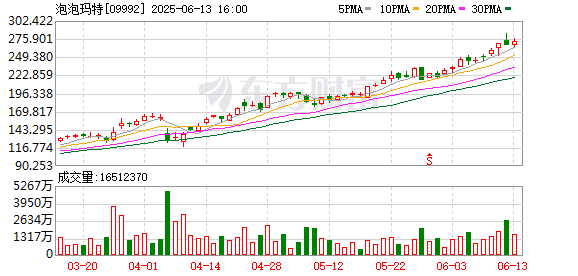
在资本市场,以"三朵金花"为代表,包括宠物经济、医美化妆、疗愈经济、新饮品等行业或细分领域, 被统一称为"悦己消费",即相关消费行为通常以满足消费者情感价值、个性化需求及自我提升为核心。 过去一年时间,"三朵金花"股价均实现翻倍甚至数倍增长,整个"悦己消费"也成为资本市场最火热的概 念。 每经评论员杜恒峰 在混杂着不解、怀疑、惊叹、遗憾的声音中,6月12日泡泡玛特盘中股价摸高至283.4港元,再创历史新 高,总市值一度突破3800亿港元;同为港股"三朵金花"的老铺黄金,收盘价上涨5.66%至914港元,总市 值1578亿港元,将周大福这样的老牌巨头甩在了身后;另一朵"金花"蜜雪集团收盘价也维持在历史高 位,总市值2023亿港元。 事实上,"悦己消费"也为企业摆脱"内卷式"竞争提供了新的思路,泡泡玛特不需要卷价格,蜜雪集团也 不是想要通过低价垄断新茶饮市场。正是对自身市场清晰的定位、对产品和服务的极致打磨,由此形成 的竞争力不仅仅适用于中国市场,也能在国际市场闯出一片天地。 契合年轻消费者需求、有增长、不内卷、有国际化潜力,这是"悦己消费"估值迭创新高的定价逻辑。消 费市场竞争残酷,消费者偏好、预算分配也随时在 ...
从户外运动、宠物经济到酒类贸易,日企挖掘中国“悦己消费”新机遇
Di Yi Cai Jing· 2025-06-13 05:15
Core Insights - The emerging trend of "self-indulgent consumption" in the Chinese market is attracting attention from Japanese companies [1][5] - The second "Japan Sake Month" event in Shanghai showcased over 1,000 Japanese alcoholic products, indicating a growing interest in Japanese beverages among Chinese consumers [1][3] Industry Developments - The event featured 81 exhibitors and was organized by the Japan External Trade Organization (JETRO), highlighting the importance of trade relations between Japan and China [1][3] - The event is now the largest Japanese sake trade fair in China, reflecting the increasing demand for Japanese alcoholic beverages [3] Market Opportunities - Japanese sake exports are projected to reach approximately 43.47 billion yen (around 2.09 billion RMB) in 2024, with a year-on-year increase of 6.37% in export value [4] - China remains the largest market for Japanese sake exports, with an expected export value of about 11.68 billion yen in 2024 [4] Consumer Trends - Young Chinese consumers are increasingly willing to spend on emotional or experiential purchases, driving growth in sectors like pet economy and outdoor activities [5] - The trend of "self-indulgent consumption" is noted as a significant factor influencing purchasing decisions among young consumers [5] Strategic Initiatives - Japanese companies are adapting their products for the Chinese market by incorporating local elements and targeting younger demographics [4][5] - Shanghai Takashimaya has committed 100 million RMB to enhance its offerings in the Shanghai market, reflecting confidence in the local business environment [5] Bilateral Economic Relations - The interdependence between Japan and China in terms of product consumption and imports is emphasized, indicating potential for further economic cooperation [6]

今年的消费,有人能说清楚吗?|创作者征集
虎嗅APP· 2025-06-12 11:10
Core Insights - The article highlights a shift in consumer behavior among young people in China, characterized by a blend of "refined poverty" and "emotional wealth," where individuals are willing to spend significantly on experiences while being frugal on everyday purchases [1] - The concept of "self-pleasure consumption" is gaining traction, with 46.28% of young consumers prioritizing personal enjoyment in their spending habits [1] - The article invites content creators to share their observations on new consumption trends and the evolution of consumer behavior leading into 2025 [1] Group 1: Changes in Consumer Behavior - Young consumers are increasingly willing to spend on emotional value rather than just price, indicating a shift from "cost-effectiveness" to "emotional value" [2] - Small purchases, such as coffee and collectibles, are being made to enhance happiness, reflecting a trend towards seeking joy in everyday spending [2] - The rise of "micro-vacations" suggests a new necessity for escapism, indicating a change in how leisure is perceived and consumed [2] Group 2: New Consumption Categories and Scenarios - The article discusses the emergence of new consumption categories, such as health-focused beverages, which are defining contemporary youth culture [3] - There is a notable shift in consumption scenarios, moving from indoor fitness to outdoor activities like cycling and camping, showcasing a broader lifestyle change [3] - The role of technology, including AI and big data, in influencing purchasing decisions is examined, questioning whether it leads to increased spending or more precise buying [3]

今年的消费,有人能说清楚吗?|创作者征集
虎嗅APP· 2025-06-12 11:10
Core Insights - The article highlights a shift in consumer behavior among young people in China, characterized by a blend of "refined poverty" and "emotional wealth," where individuals are willing to spend significantly on experiences while being frugal on everyday purchases [1] Group 1: Changes in Consumer Behavior - Young consumers are increasingly prioritizing "self-pleasure" in their spending, with this category accounting for 46.28% of their consumption needs in 2024 [1] - The concept of "next level" consumption in 2025 indicates a more fragmented and conscious approach to spending, focusing on immediate gratification while also considering long-term value [1] Group 2: Event and Participation - The article invites content creators to share their observations on new consumption phenomena and thoughts on "2025 consumption" through video submissions, with a chance to win from a prize pool [2][3] - The event encourages discussions on why young people are willing to spend on emotional experiences rather than just price-value, highlighting the importance of happiness derived from small purchases [2] Group 3: Consumer Trends and Categories - The article discusses the notion that consumption downgrade does not equate to a decline in quality of life, emphasizing how to spend less while enjoying life [3] - It mentions emerging consumption categories and scenarios, such as health-focused beverages and outdoor activities, reflecting a shift in lifestyle choices among young consumers [3]