美元走弱

Search documents
关税“大限”逼近,弱美元延续,人民币汇率正迈向7.1
Di Yi Cai Jing· 2025-07-03 12:48
Group 1: Currency Trends and Impacts - The potential for the USD/CNY exchange rate to fall within the 7.1 to 7.15 range may lead exporters to convert more USD deposits back to RMB, with estimates suggesting that up to $100 billion of the $700 billion held by exporters could be exchanged [1][16] - The recent appreciation of the RMB against the USD has been notable, with the central parity rate reaching 7.1523 on July 3, indicating a significant upward trend [1][13] - Analysts suggest that the ongoing structural weakness of the USD, influenced by potential interest rate cuts by the Federal Reserve and European fiscal stimulus measures, is contributing to the RMB's strength [1][8] Group 2: Trade Negotiations and Tariffs - The U.S. has announced a 20% tariff on Vietnamese goods, while Vietnam has proposed zero tariffs on U.S. products, indicating a complex trade relationship that could impact both economies [3] - The EU and U.S. negotiations are tense, with no substantial progress on the proposed 20% "reciprocal" tariffs, and the automotive sector remains a core point of contention [4] - Canada and the U.S. are working towards a trade agreement, with key issues including steel tariffs and automotive duties still unresolved [4][5] Group 3: Market Reactions and Economic Outlook - The U.S. stock market has shown resilience, reaching new highs despite ongoing trade uncertainties, attributed to the belief that extreme government actions are limited by economic fundamentals [7] - The global supply chain's stability is emphasized, with concerns that disruptions could lead to inflation and economic pressures, particularly in the context of U.S.-China trade relations [7] - The Euro has strengthened significantly against the USD, with a nearly 10% appreciation noted, reflecting broader market trends and currency dynamics [8][10]

防御性资产受青睐,港股成全球资本新“避风港”
Huan Qiu Wang· 2025-07-03 06:41
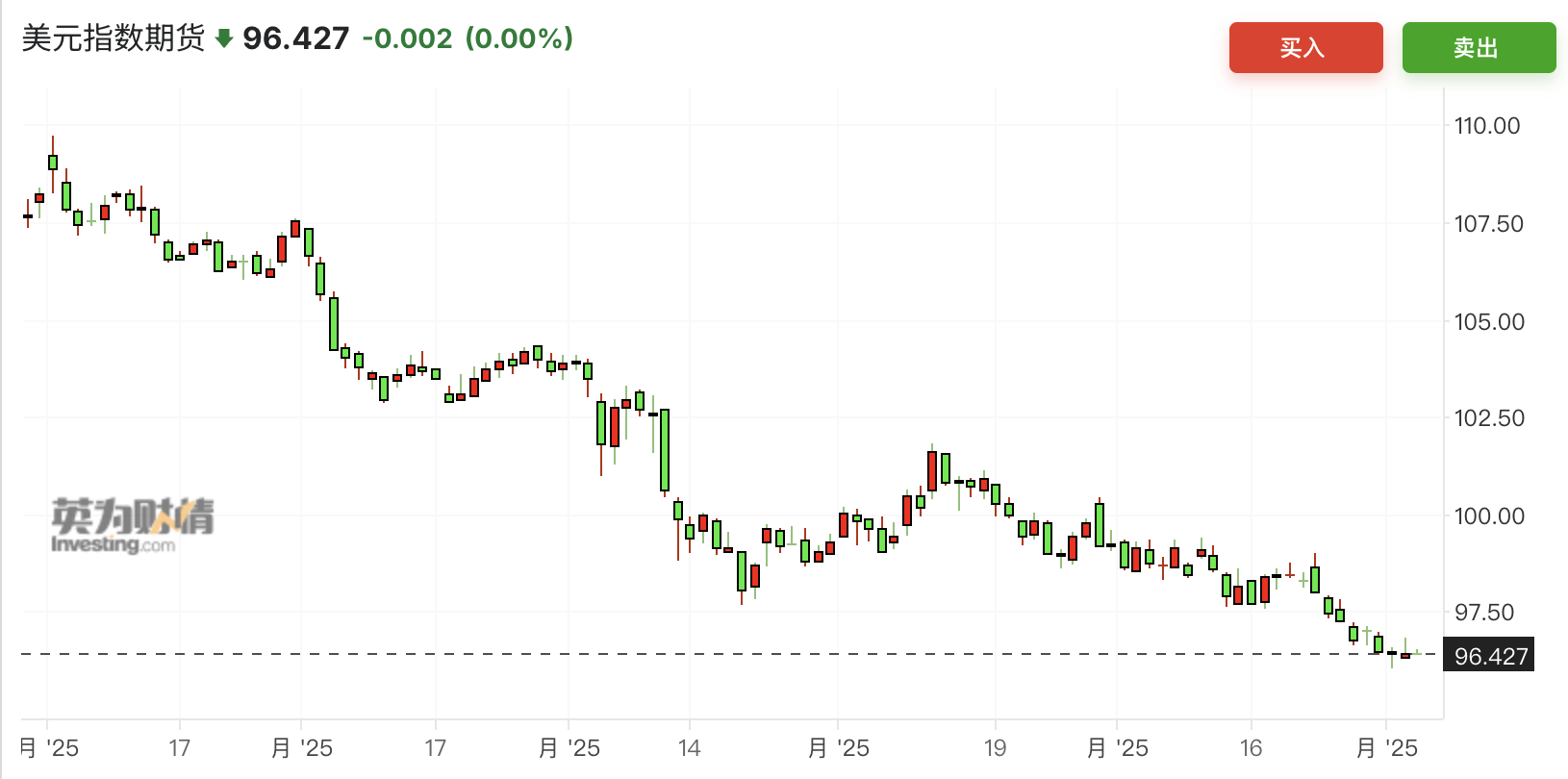
Group 1 - The global market is focused on the upcoming US tariff negotiations, with the July 9 deadline approaching, leading to a pessimistic outlook on the US dollar [1][2] - The US dollar index has dropped over 7% since the implementation of "reciprocal tariffs" in April, while Asian currencies have collectively rebounded to new highs since October of the previous year [1][2] - The Senate's passage of the "big and beautiful" tax and spending bill is expected to increase the US fiscal deficit by $3.9 trillion over the next decade, raising concerns about the sustainability of US finances [2][3] Group 2 - There is a growing sentiment to "short the dollar" as the market anticipates the outcome of the US tariff negotiations, leading to a depreciation of the dollar and an appreciation of non-US currencies [2][3] - The Hong Kong stock market is becoming a preferred destination for defensive assets due to its sensitivity to US Federal Reserve policies and geopolitical factors, with a significant influx of capital expected [5][6] - The valuation of Hong Kong stocks remains significantly lower than that of US markets, with the Hang Seng Index projected to have a price-to-earnings ratio of 11 times and a dividend yield of 3.2% by 2025 [6]
中辉有色观点-20250702
Zhong Hui Qi Huo· 2025-07-02 09:07
Report Industry Investment Rating No relevant content provided. Core Views of the Report - Gold is expected to experience high - level fluctuations. The long - term bullish logic for gold remains unchanged due to factors such as the progress of the US fiscal expansion bill, the weakening of the US dollar, and the long - term reshaping of the global order [1][3]. - Silver will have range - bound fluctuations as its logical drivers remain relatively stable, and the ratio of gold to silver has returned to the normal range [1]. - For copper, it is recommended to hold long positions. Although there is a risk of a high - level pullback, the long - term outlook for copper is positive [1][6]. - Zinc is under pressure. In the long run, there is an increase in supply and a decrease in demand, so opportunities to short on rallies should be grasped [1][9]. - Lead's rebound is under pressure due to an expected increase in supply in July and unoptimistic downstream battery consumption [1]. - Tin's rebound is also under pressure as the supply from Myanmar's tin mines has not recovered and the consumption in the terminal field has entered the off - season [1]. - Aluminum is in a short - term rebound trend. However, as the terminal enters the off - season, there is an expectation of inventory accumulation [1][12]. - Nickel is under pressure. The cost support has weakened, and the downstream stainless - steel industry has inventory accumulation pressure [1][14]. - Industrial silicon's rebound is under pressure. There are rumors of large - scale factory restarts, and the cost support has weakened [1]. - For lithium carbonate, the fundamentals remain in an oversupply situation, and the market has significant differences in downstream production schedules [1][15]. Summary by Variety Gold and Silver - **Market Performance**: SHFE gold closed at 776.1, up 1.11% from the previous value, and COMEX gold closed at 3349, up 1.01%. SHFE silver closed at 8810, up 0.55%, and COMEX silver closed at 36, down 0.30%. The Shanghai gold - to - silver ratio was 88.09, up 0.56% [2]. - **Basic Logic**: The US fiscal expansion bill has made progress. The US Senate passed the "Great Beauty" bill on July 1st, including a $4.5 - trillion tax cut and a $1.2 - trillion spending cut. Other countries have made compromises in trade negotiations. The US dollar has continued to weaken significantly, with the Bloomberg dollar index falling for six consecutive months in June [3]. - **Strategy Recommendation**: Consider long - term investment in gold when the price is around 760. Silver will have range - bound fluctuations, with strong support at 8560 [4]. Copper - **Market Performance**: The closing price of SHFE copper was 80390, up 0.46% from the previous day. The LME copper price was 9934, up 0.66%, and the COMEX copper price was 509.9, down 0.24% [5]. - **Industrial Logic**: Overseas copper mine supply is tight, and the processing TC of copper concentrates has dropped to - 43.57 dollars/ton. During the consumption off - season, the demand from the power and new - energy vehicle sectors has offset the lack of demand from traditional sectors such as construction [5]. - **Strategy Recommendation**: Hold existing long positions in copper, and take partial profits when the price is high. Be vigilant about the risk of a high - level pullback. In the short term, focus on the range of [78500, 81000] for SHFE copper and [9700, 9900] dollars/ton for LME copper [6]. Zinc - **Market Performance**: The closing price of SHFE zinc was 22175, down 0.36% from the previous day. The LME zinc price was 2713.5, down 1.00% [8]. - **Industrial Logic**: In 2025, the supply of zinc mines is expected to be more abundant. Although there was a strike at a large zinc smelter in Peru, the overall supply of zinc mines is at a high level, and the TC has continued to rebound. Domestic inventories have slightly increased, and the downstream galvanizing enterprises' performance is lower than in previous years [8]. - **Strategy Recommendation**: Zinc is under pressure. In the long run, short on rallies. Focus on the range of [22000, 22600] for SHFE zinc and [2650, 2750] dollars/ton for LME zinc [9][10]. Aluminum - **Market Performance**: The closing price of LME aluminum was 2602 dollars/ton, up 0.17%, and the closing price of SHFE aluminum was 20635 yuan/ton, up 0.27%. The price of alumina was under pressure and declined [11]. - **Industrial Logic**: For electrolytic aluminum, the overseas macro - sentiment has improved. However, as the terminal enters the off - season, the inventory of aluminum ingots and aluminum rods is showing signs of accumulation. For alumina, the import of overseas bauxite remains at a high level, and the domestic production capacity has rebounded [12]. - **Strategy Recommendation**: Look for opportunities to short on rallies for SHFE aluminum, paying attention to changes in aluminum ingot inventories. The main operating range is [20000 - 20800]. Alumina will operate in a low - level range [12]. Nickel - **Market Performance**: The closing price of LME nickel was 15190 dollars/ton, up 0.43%, and the closing price of SHFE nickel was 120720 yuan/ton, down 0.09%. The price of stainless steel also declined [13]. - **Industrial Logic**: The supply of nickel mines from the Philippines has increased, and the price of Indonesian nickel mines has decreased, weakening the cost support. The domestic refined nickel inventory has increased, and the stainless - steel industry is facing inventory accumulation pressure during the off - season [14]. - **Strategy Recommendation**: Short on rallies for nickel and stainless steel, paying attention to inventory changes. The main operating range for nickel is [118000 - 122000] [14]. Lithium Carbonate - **Market Performance**: The main contract LC2509 of lithium carbonate closed at 62780 yuan/ton, up 0.84%. The weekly production of lithium carbonate was 17598 tons, up 1.79%, and the weekly inventory was 136837 tons, up 1.44% [15]. - **Industrial Logic**: There are significant differences in the market's expectations for downstream production schedules. In the long - term, the supply of lithium carbonate exceeds demand, and the total inventory continues to reach new highs [15]. - **Strategy Recommendation**: Short on rallies within the range of [61800 - 63300] [16].
高盛预警:非农就业数据或成美元新一轮走弱导火索 欧元和日元有望受益
智通财经网· 2025-07-02 06:49
Group 1 - The upcoming US June employment report is expected to be a critical turning point for the US dollar's trajectory, with potential implications for monetary policy expectations [1] - The foreign exchange market is undergoing significant changes, with traditional macroeconomic data becoming the primary driver of currency fluctuations, overshadowing geopolitical tensions and domestic fiscal policy disputes [1] - A decline in risk aversion has led to downward pressure on US short-term Treasury yields, further diminishing the dollar's safe-haven appeal [1] Group 2 - Goldman Sachs views the June employment report as a "stress test" for the dollar's performance, with a significant miss in expectations likely to trigger concentrated selling of the dollar [2] - If the employment data meets expectations, the market is likely to continue the trend of "moderate dollar depreciation + benefits for risk assets" [2] - This shift in the foreign exchange market narrative is moving away from being driven by geopolitical and fiscal policy factors towards being dominated by traditional economic data [2]

市场主流观点汇总-20250701
Guo Tou Qi Huo· 2025-07-01 11:41
Report Summary 1. Report Industry Investment Rating No information provided regarding the report industry investment rating. 2. Core View of the Report The report aims to objectively reflect the research views of futures companies and securities companies on various commodity varieties, track hot - spot varieties, analyze market investment sentiment, and summarize investment driving logics. It is based on the publicly - released research reports of institutions in the current week, and the closing price data is from last Friday, with the weekly change calculated as the change in the closing price from the previous Friday [2]. 3. Summary by Relevant Catalogs 3.1行情数据 - **Commodities**: From June 23 to June 27, 2025, commodities such as coke, copper, and iron ore had price increases, with coke rising 2.67%, copper rising 2.47%, and iron ore rising 1.92%. Commodities like corn, gold, and palm oil had price decreases, with corn falling 1.04%, gold falling 1.56%, and palm oil falling 1.87%. Crude oil had a significant drop of 12.02% [3]. - **A - shares**: During the same period, the CSI 500 rose 3.98%, the SSE 50 rose 1.27%, and the CSI 300 rose 1.95% [3]. - **Overseas Stocks**: The Nikkei 225 rose 4.55%, the Nasdaq Index rose 4.25%, and the S&P 500 rose 3.44% [3]. - **Bonds**: The 5 - year Chinese Treasury bond rose 0.64%, the 10 - year Chinese Treasury bond rose 0.30%, and the 2 - year Chinese Treasury bond rose 0.19% [3]. - **Foreign Exchange**: The euro - US dollar exchange rate rose 1.69%, the US dollar index fell 1.52%, and the US dollar central parity rate fell 0.09% [3]. 3.2大宗商品观点汇总 3.2.1宏观金融板块 - **Stock Index Futures**: Among 8 institutions' views, 2 were bullish, 1 was bearish, and 5 were for a sideways market. Bullish factors included rising Fed rate - cut expectations, a low risk - premium rate of the CSI 300, increased issuance of equity - oriented public funds, and sufficient bottom - supporting funds. Bearish factors included short - term difficulty in improving corporate fundamentals, the central bank's change in monetary policy stance, and over - heated market sentiment [4]. - **Treasury Bond Futures**: Among 7 institutions' views, 3 were bullish, 1 was bearish, and 3 were for a sideways market. Bullish factors included net liquidity injection by the central bank, weak credit and inflation data, and strong demand for bond allocation. Bearish factors included the central bank's change in monetary policy stance, the stock - bond seesaw effect, and rising long - term interest rates [4]. 3.2.2能源板块 - **Crude Oil**: Among 9 institutions' views, 3 were bullish, 2 were bearish, and 4 were for a sideways market. Bullish factors included falling US and Cushing crude oil inventories, reduced Russian exports, and geopolitical tensions. Bearish factors included the decline in geopolitical premiums, expected OPEC production increases, and weak terminal demand [5]. - **Eggs**: Among 8 institutions' views, 2 were bullish, 2 were bearish, and 4 were for a sideways market. Bullish factors included postponed peak - season stocking, approaching stocking season, potential egg - price increases, and reduced supply due to heat. Bearish factors included limited decline in laying - hen inventory, high chick - replenishment volume, high new - production capacity, and postponed downstream stocking [5]. 3.2.3有色板块 - **Copper**: Among 7 institutions' views, 5 were bullish, 0 were bearish, and 2 were for a sideways market. Bullish factors included rising Fed rate - cut expectations, improved risk appetite, and falling global visible inventories. Bearish factors included the substitution effect of recycled copper, weakening downstream procurement, and weakening terminal demand [6]. - **Methanol**: Among 7 institutions' views, 0 were bullish, 1 was bearish, and 6 were for a sideways market. Bullish factors included limited port - available goods, expected low port inventories, and increased downstream demand. Bearish factors included expected increases in Iranian imports, port inventory accumulation, potential MTO device maintenance, and a loosening supply - demand pattern [6]. 3.2.4贵金属 - **Gold**: Among 7 institutions' views, 4 were bullish, 1 was bearish, and 2 were for a sideways market. Bullish factors included rising Fed rate - cut expectations, a downward trend in real interest rates, and the strengthening of gold's safe - haven property. Bearish factors included reduced safe - haven demand, capital flowing to risky assets, and technical - level sell - offs [7]. 3.2.5黑色板块 - **Iron Ore**: Among 8 institutions' views, 2 were bullish, 2 were bearish, and 4 were for a sideways market. Bullish factors included increased molten - iron production, expected decline in overseas shipments, and improved macro sentiment. Bearish factors included rising port inventories, increased global shipments, weakening demand for five major steel products, and narrowing basis [7].
美元走弱提振英镑,但英国财政风险隐现
news flash· 2025-07-01 10:16
Core Viewpoint - The weakening of the US dollar has boosted the British pound, reaching its highest level since October 2021, but risks related to the UK's public finances are emerging [1] Group 1: Currency Performance - The GBP/USD exchange rate has risen due to uncertainties surrounding US policies, putting pressure on the dollar [1] - The British pound has reached its highest level since October 2021 [1] Group 2: UK Fiscal Challenges - The UK government is facing public finance difficulties, which may lead to a decline in the pound [1] - The Labour Party's proposal for welfare reforms to save costs has faced strong opposition from backbench MPs, with dozens expected to vote against the reforms [1] - Analysts indicate that without finding future cost-saving measures, tax increases or borrowing will be necessary in the autumn budget, both of which could put pressure on the pound [1]
挑战监管容忍度,新台币大跌后再度飙升!
Hua Er Jie Jian Wen· 2025-07-01 07:46
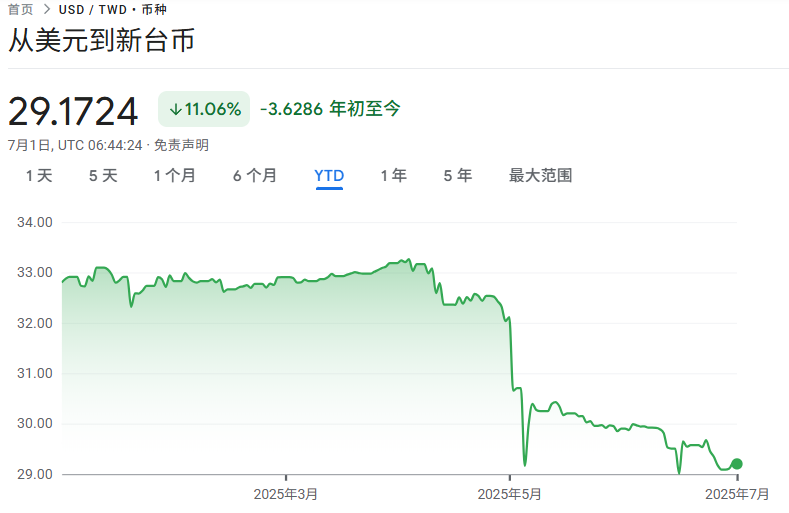
Core Viewpoint - The recent volatility of the New Taiwan Dollar (NTD) poses challenges to regulatory tolerance, with significant fluctuations impacting local businesses and the financial market [1][4][5]. Group 1: NTD Volatility - The NTD experienced a significant increase of 2.5% against the USD, marking the largest single-day gain since early May, bringing its year-to-date appreciation to 12%, the strongest among Asian currencies [1][4]. - The previous trading day saw the NTD plummet by 2.5%, the largest single-day drop since 2001, indicating a pattern of extreme volatility [4][5]. - Analysts suggest that the fluctuations reflect a delicate balance for regulators between maintaining exchange rate stability and responding to the weakening USD [4][5]. Group 2: Impact on Local Businesses - The recent volatility coincides with local companies preparing to release their semi-annual reports, which could directly affect the financial performance of firms, including life insurance companies and exporters [4][5]. - The surge in the NTD was driven by significant dollar sales from local exporters and foreign capital inflows, prompting public banks to intervene by purchasing USD to stabilize liquidity [5][6]. Group 3: Regulatory Response - Regulatory authorities are increasingly concerned about the NTD's appreciation, which poses risks to Taiwan's export-dependent economy and pressures life insurance companies holding USD-denominated assets [6][7]. - The Financial Supervisory Commission (FSC) has implemented measures allowing life insurance companies to increase foreign exchange reserves to offset potential losses from NTD appreciation [7][8]. - The central bank has also intensified warnings regarding currency purchases by local trading companies and has taken steps to limit foreign capital speculation on the NTD, demonstrating a commitment to stabilizing the exchange rate [8].
棋至中局 取势顺势 投研人士论道下半年资产配置
Shang Hai Zheng Quan Bao· 2025-06-30 19:10
Core Viewpoint - The global market has experienced significant volatility in the first half of the year, with structural opportunities in A-shares and Hong Kong stocks, and a continuous rise in gold prices, leading to impressive returns for institutions that have adapted to these trends [10]. Group 1: Global Market Trends - The weakening of the US dollar is attributed to multiple factors, including concerns over the sustainability of US fiscal policy and geopolitical tensions, which have driven funds towards safe-haven assets like gold [12]. - The trend of a weaker dollar is expected to continue, benefiting non-US assets, particularly European stocks and emerging market equities [13]. - The collective concerns regarding US debt and credit issues have contributed to the dollar's decline, while European fiscal stimulus and Japan's economic conditions have strengthened the euro and yen [13]. Group 2: Investment Opportunities in China - In the A-share market, there are significant opportunities in new economy sectors and industries experiencing localized growth, with a focus on improving corporate profitability and cash flow [14]. - Key areas of interest include undervalued sectors like banking, companies with strong overseas growth potential, and high-growth technology fields such as AI, robotics, and innovative pharmaceuticals [15][16]. - The A-share market is seen as a potential source of excess returns due to its low valuation and supportive policies aimed at economic recovery [16]. Group 3: Asset Allocation Strategies - A balanced approach to asset allocation is recommended, focusing on non-US developed market stocks, US mid-cap quality stocks, and emerging market equities [18]. - In the fixed income space, there is a need to select stable yield assets while actively participating in interest rate trading, particularly in high-quality credit bonds [19]. - The investment strategy should also include diversification into convertible bonds and high-dividend stocks to enhance stable returns, while maintaining a core position in gold due to its expected continued strength [20].

豆粕生猪:等待报告指引,连粕减仓上行
Jin Shi Qi Huo· 2025-06-30 11:41
豆粕生猪:等待报告指引 连粕减仓上行 宋歌 songge@jsfco.com 期货从业资格号:F03112006 投资咨询从业证书号:Z0018625 表 1:豆粕生猪期货日度数据监测 | | 美白朗兴 JIDGHI FILTURE | | | 粕 类 生 猪 每 日 数 据 追 踪 | | | | | --- | --- | --- | --- | --- | --- | --- | --- | | | 指标 | 截至 | 单位 | マ日 | 昨日 | 涨跌 | 涨跌幅 | | 期間 | DCE豆粕: 01 | 6月30日 | 元/吨 | 2999 | 2987 | 12.00 | 0.40% | | | DCE豆粕: 05 | 6月30日 | 元/吨 | 2713 | 2707 | 6.00 | 0.22% | | | DCE豆粕: 09 | 6月30日 | 元/吨 | 2961 | 2946 | 15.00 | 0.51% | | | CZCE菜籽粕: 01 | 6月30日 | 元/吨 | 2301 | 2290 | 11.00 | 0.48% | | | CZCE菜籽粕: 05 | 6月30日 | 元 ...
瑞达期货贵金属产业日报-20250630
Rui Da Qi Huo· 2025-06-30 10:12
的财政赤字抬高以及美元信用边际受损仍利多金价,联储官员继续释放鸽派降息信号或提振白银工业属性 本报告中的信息均来源于公开可获得资料,瑞达期货股份有限公司力求准确可靠,但对这些信息的准确性及完整性不做任 ,进而打开银价进一步的上行空间。短期注意回调风险,沪金2508合约关注区间:750-780元/克;沪银250 何保证,据此投资,责任自负。本报告不构成个人投资建议,客户应考虑本报告中的任何意见或建议是否符合其特定状况。本 8合约关注区间:8700-9000元/千克。 报告版权仅为我公司所有,未经书面许可,任何机构和个人不得以任何形式翻版、复制和发布。如引用、刊发,需注明出处为 瑞达期货股份有限公司研究院,且不得对本报告进行有悖原意的引用、删节和修改。 贵金属产业日报 2025-06-30 | 项目类别 | 数据指标 | 最新 | 环比 数据指标 | 最新 | 环比 | | --- | --- | --- | --- | --- | --- | | 期货市场 | 沪金主力合约收盘价(日,元/克) | 767.58 | 1.18 沪银主力合约收盘价(日,元/千克) | 8762 | -30 | | | 主力合约持仓 ...