
成本支撑

Search documents
黑色产业链日报-20251112
Dong Ya Qi Huo· 2025-11-12 11:03
Report Date - The report is dated November 12, 2025 [1] Industry Investment Ratings - Not provided in the report Core Views - Overall, finished steel products are supported by raw material costs but constrained by inventory on the upside, expected to trade in a range. The operating range for rebar may be between 2900-3200, and for hot-rolled coil between 3100-3400. Attention should be paid to the de-stocking speed of steel and downstream consumption [3] - Iron ore prices are expected to continue their weak trend in the short term due to macroeconomic and fundamental pressures [22] - Coal and coke futures and spot prices may face adjustment pressure in the short term, but the downside for coking coal spot prices may be limited in the medium to long term [32] - Ferroalloys are expected to trade in a range, supported by cost but facing high inventory and weak demand [47] - Soda ash prices are restricted by high inventory but supported by cost, with limited upside and downside space [57] - Glass prices are under pressure due to weak sales and high inventory, but there is cost support and policy expectations in the long term [82] Steel Section Futures Prices - On November 12, 2025, the closing prices of rebar 01, 05, and 10 contracts were 3038, 3096, and 3138 respectively; the closing prices of hot-rolled coil 01, 05, and 10 contracts were 3255, 3267, and 3288 respectively [4] Spot Prices - On November 12, 2025, the aggregated rebar price in China was 3231 yuan/ton; the aggregated hot-rolled coil price in Shanghai was 3270 yuan/ton [10][12] Price Ratios and Spreads - On November 12, 2025, the 01 roll-to-rebar spread was 217 yuan/ton; the 01 rebar/01 iron ore ratio was 4; the 01 rebar/01 coke ratio was 2 [16][19] Iron Ore Section Futures Prices - On November 12, 2025, the closing prices of iron ore 01, 05, and 09 contracts were 774, 747.5, and 724.5 respectively [23] Spot Prices - On November 12, 2025, the price of Rizhao PB powder was 775 yuan/ton; the price of Rizhao Karara fines was 876 yuan/ton; the price of Rizhao Super Special was 670 yuan/ton [23] Fundamental Data - As of November 7, 2025, the daily average pig iron output was 234.22 million tons; the 45-port inventory was 14898.83 million tons [26] Coal and Coke Section Futures Prices - On November 11, 2025, the coking coal 09-01 spread was 128; the coke 09-01 spread was 228.5 [35] Spot Prices - On November 11, 2025, the ex-factory price of Anze low-sulfur coking coal was 1660 yuan/ton; the ex-factory price of Linfen quasi-first-grade wet coke was 1430 yuan/ton [36] Profit and Ratios - On November 11, 2025, the on-site coking profit was -121 yuan/ton; the main ore-to-coke ratio was 0.453 [35] Ferroalloy Section Silicon Iron - On November 11, 2025, the silicon iron basis in Ningxia was 42; the silicon iron 01-05 spread was -38 [47] Silicon Manganese - On November 11, 2025, the silicon manganese basis in Inner Mongolia was 206; the silicon manganese 01-05 spread was -58 [49] Soda Ash Section Futures Prices - On November 12, 2025, the closing prices of soda ash 05, 09, and 01 contracts were 1287, 1354, and 1214 respectively [58] Spot Prices - On November 12, 2025, the market price of heavy soda ash in North China was 1300 yuan/ton; the market price of light soda ash in North China was 1250 yuan/ton [61] Glass Section Futures Prices - On November 12, 2025, the closing prices of glass 05, 09, and 01 contracts were 1169, 1240, and 1049 respectively [83] Spot Sales - From November 1 to 7, 2025, the sales rate in Shahe area ranged from 100% to 166% [84]
广发期货《有色》日报-20251112
Guang Fa Qi Huo· 2025-11-12 07:01
1. Report Industry Investment Ratings No information about industry investment ratings is provided in the reports. 2. Core Views - **Copper**: The price of copper rebounded slightly yesterday. In the medium and long term, the supply - demand contradiction supports the upward shift of the bottom center of copper prices. The main contract is expected to be in the range of 85,500 - 87,500 yuan/ton. Pay attention to the marginal changes in demand and overseas liquidity [1]. - **Zinc**: The Shanghai zinc market oscillated at a high level yesterday. The supply - side pressure may be limited, and the demand is not outstanding. The LME zinc price has an upper limit, while the Shanghai zinc may be stronger than LME zinc, with the main contract reference range of 22,300 - 23,000 yuan/ton [3]. - **Industrial Silicon**: The spot price of industrial silicon is stable, and the futures price oscillates downward. The market still faces inventory accumulation pressure in November, but the pressure is reduced compared with October. It is expected to oscillate at a low level, with the main price range of 8,500 - 9,500 yuan/ton [4]. - **Polysilicon**: The spot price of polysilicon is stable, and the futures price oscillates downward. It is expected to oscillate in a high - level range. Pay attention to the support of the spot price, the establishment of platform companies, production control, and the increase in demand orders. The futures should focus on the support at 50,000 yuan/ton [5]. - **Tin**: The supply of tin ore is tight, and the demand is weak. The market sentiment has improved, and long positions can be held. If the supply from Myanmar recovers well, the tin price may weaken; otherwise, it is expected to continue to be strong [7]. - **Aluminum (Alumina)**: The alumina market oscillated at a low level yesterday. The supply pressure is high, and the cost support is weakening. It is expected to maintain a weak oscillation, with the main contract reference range of 2,750 - 2,900 yuan/ton [9]. - **Aluminum (Electrolytic Aluminum)**: The electrolytic aluminum market oscillated at a high level yesterday. The macro - drive is strong, but the fundamental support is weak. It is expected to fluctuate between event - driven and weak fundamentals, with the main contract range of 21,000 - 21,800 yuan/ton [9]. - **Nickel**: The Shanghai nickel market oscillated narrowly yesterday. The market is mixed with long and short factors. It is expected to oscillate in a range, with the main contract reference range of 118,000 - 124,000 yuan/ton. Pay attention to macro - expectations and Indonesian industrial policies [10]. - **Stainless Steel**: The stainless - steel market continued to weaken yesterday. The supply pressure remains, the demand is not boosted, and the social inventory is slowly decreasing. It is expected to continue to oscillate weakly, with the main contract range of 12,400 - 12,800 yuan/ton. Pay attention to macro - expectations and steel mill supply [12]. - **Lithium Carbonate**: The lithium carbonate market was strong yesterday. The short - term fundamentals provide support, but the upward movement is mainly driven by funds. The main contract LC2601 is expected to oscillate and adjust. Pay attention to the marginal changes in demand after the peak season and the progress of large - factory复产 [14]. - **Aluminum Alloy**: The casting aluminum alloy market oscillated strongly yesterday. With cost support and a tight supply - demand balance, the ADC12 price is expected to oscillate strongly, with the main contract range of 20,400 - 21,200 yuan/ton. Pay attention to the improvement of scrap aluminum supply, downstream procurement rhythm, and inventory reduction [16]. 3. Summaries by Relevant Catalogs Copper - **Price and Basis**: The prices of various copper products increased slightly, with the SMM 1 electrolytic copper rising 0.27% to 86,765 yuan/ton. The refined - scrap price difference decreased by 0.97% to 3,367 yuan/ton [1]. - **Fundamentals**: In October, the electrolytic copper production decreased by 2.62% to 109.16 million tons, and in September, the import volume increased by 26.50% to 33.43 million tons. The domestic mainstream port copper concentrate inventory increased by 0.57% to 62.97 million tons [1]. Zinc - **Price and Spread**: The SMM 0 zinc ingot price rose 0.40% to 22,660 yuan/ton. The import loss increased to 4,958 yuan/ton [3]. - **Fundamentals**: In October, the refined zinc production increased by 2.85% to 61.72 million tons. The zinc ingot social inventory in seven regions decreased by 1.30% to 15.96 million tons [3]. Industrial Silicon - **Price and Basis**: The prices of different grades of industrial silicon were stable. The basis of some products increased, such as the basis of SI4210 increasing by 32.35% [4]. - **Fundamentals**: In November, the national industrial silicon production increased by 7.46% to 45.22 million tons, and the export volume decreased by 8.36% to 7.02 million tons [4]. Polysilicon - **Price and Spread**: The spot price of polysilicon was stable, and the futures price decreased by 3.33% to 51,930 yuan/ton. The silicon wafer price decreased significantly [5]. - **Fundamentals**: In the week, the silicon wafer production decreased by 5.55% to 13.45 GW, and the polysilicon production decreased by 4.26% to 2.70 million tons [5]. Tin - **Price and Basis**: The SMM 1 tin price rose 0.66% to 287,700 yuan/ton. The import loss decreased by 1.13% to 14,819.94 yuan/ton [7]. - **Fundamentals**: In September, the domestic tin ore import decreased by 15.13% to 8,714 tons, and in October, the SMM refined tin production increased by 53.09% to 16,090 tons [7]. Aluminum (Alumina) - **Price and Spread**: The average price of alumina in Shandong increased by 0.36% to 2,795 yuan/ton. The import loss increased to 2,320 yuan/ton [9]. - **Fundamentals**: In October, the alumina production increased by 2.39% to 778.53 million tons [9]. Aluminum (Electrolytic Aluminum) - **Price and Spread**: The SMM A00 aluminum price rose 0.60% to 21,620 yuan/ton. The import loss increased slightly [9]. - **Fundamentals**: In October, the electrolytic aluminum production increased by 3.52% to 374.21 million tons, and the import volume increased by 13.57% to 24.68 million tons [9]. Nickel - **Price and Basis**: The SMM 1 electrolytic nickel price rose 0.08% to 121,300 yuan/ton. The futures import loss increased by 1.86% to 1,859 yuan/ton [10]. - **Fundamentals**: The Chinese refined nickel production increased by 0.84% to 35,900 tons, and the import volume increased by 124.36% to 38,164 tons [10]. Stainless Steel - **Price and Basis**: The price of 304/2B stainless - steel coils decreased. The price of 8 - 12% high - nickel pig iron decreased by 0.27% to 912 yuan/nickel point [12]. - **Fundamentals**: The production of 300 - series stainless - steel crude steel in China increased by 0.38% to 182.17 million tons. The social inventory of 300 - series decreased slightly [12]. Lithium Carbonate - **Price and Basis**: The SMM battery - grade lithium carbonate price rose 1.92% to 82,300 yuan/ton. The basis decreased by 858.62% [14]. - **Fundamentals**: In October, the lithium carbonate production increased by 5.73% to 92,260 tons, and the total inventory decreased by 10.90% to 84,234 tons [14]. Aluminum Alloy - **Price and Spread**: The SMM aluminum alloy ADC12 price rose 0.23% to 21,500 yuan/ton. The scrap - refined price difference of some products changed [16]. - **Fundamentals**: In October, the regenerated aluminum alloy ingot production decreased by 2.42% to 64.50 million tons, and the social inventory increased by 1.82% to 5.58 million tons [16].
《有色》日报-20251112
Guang Fa Qi Huo· 2025-11-12 06:36
1. Report Industry Investment Ratings No information about industry investment ratings is provided in the reports. 2. Core Views of the Reports Copper - The price of copper rebounded slightly yesterday. In the medium - long term, the supply - demand contradiction supports the upward shift of the bottom center of copper prices. The main contract is expected to trade between 85,500 - 87,500 yuan/ton, and future attention should be paid to demand - side marginal changes and overseas liquidity [1]. Zinc - The Shanghai zinc futures oscillated at a high level yesterday. The supply - side pressure may be limited in the future, and the demand side has no outstanding performance. The LME zinc has upward pressure, while the export of zinc ingots may boost domestic zinc prices. The main contract is expected to trade between 22,300 - 23,000 yuan/ton [3]. Industrial Silicon - The spot price of industrial silicon stabilized, while the futures price oscillated downward. In November, the market still faces inventory accumulation pressure, but it is less than that in October. The price is expected to oscillate at a low level, mainly in the range of 8,500 - 9,500 yuan/ton [4]. Polysilicon - The spot price of polysilicon stabilized, the component quotation increased, but the silicon wafer price dropped significantly, and the futures price oscillated downward. The market is expected to oscillate at a high level, and attention should be paid to the spot support strength, platform company establishment, production control, and demand - side order increase [5]. Tin - The supply of tin ore remains tight, and the demand shows no obvious improvement. The market sentiment has improved, and long positions should be held. If the supply in Myanmar recovers smoothly, the tin price may weaken; otherwise, it is expected to continue to run strongly [7]. Alumina - The alumina futures oscillated at a low level yesterday. The supply pressure is high, and the cost support is gradually shifting down. The price is expected to continue to oscillate weakly, with the main contract reference range of 2,750 - 2,900 yuan/ton [9]. Electrolytic Aluminum - The electrolytic aluminum futures continued to oscillate at a high level yesterday. The market shows a pattern of strong macro - drive and weak fundamental support. The price is expected to fluctuate between 21,000 - 21,800 yuan/ton, and attention should be paid to LME warehouse receipt flow, domestic inventory changes, and overseas macro - trends [9]. Nickel - The Shanghai nickel futures oscillated narrowly yesterday. The market is mixed with long and short factors. The price is expected to oscillate in a range, with the main contract reference range of 118,000 - 124,000 yuan/ton, and attention should be paid to macro - expectations and Indonesian industrial policies [10]. Stainless Steel - The stainless - steel futures continued to weaken yesterday. The policy and macro - drive are gradually weakening, and the fundamentals have not improved significantly. The price is expected to oscillate weakly in the short term, with the main contract reference range of 12,400 - 12,800 yuan/ton, and attention should be paid to macro - expectations and steel mill supply [12]. Lithium Carbonate - The lithium carbonate futures ran strongly yesterday. The short - term fundamentals provide support for the price, but the upward movement of the futures is mainly driven by funds. The futures may oscillate and adjust in the short term, and attention should be paid to the end - of - year resumption of large factories and downstream marginal changes [14]. Aluminum Alloy - The cast aluminum alloy market oscillated strongly yesterday. Supported by cost and with a tight supply - demand balance, the ADC12 price is expected to oscillate strongly, with the main contract reference range of 20,400 - 21,200 yuan/ton. Attention should be paid to scrap aluminum supply, downstream procurement, and inventory reduction [16]. 3. Summaries According to Relevant Catalogs Price and Basis - **Copper**: SMM 1 electrolytic copper price was 86,765 yuan/ton, up 0.27% from the previous day. The spot - futures basis and other price - related indicators showed different changes [1]. - **Zinc**: SMM 0 zinc ingot price was 22,660 yuan/ton, up 0.40% from the previous day. The import profit and loss, month - to - month spread, etc. also changed [3]. - **Industrial Silicon**: The price of East China oxygen - passing S15530 industrial silicon remained unchanged at 9,500 yuan/ton, and the basis increased by 52.38% [4]. - **Polysilicon**: The average price of N - type re - feeding material remained at 52,200 yuan/kg, and the main futures contract dropped 3.33% to 51,930 yuan/ton [5]. - **Tin**: SMM 1 tin price was 287,700 yuan/ton, up 0.66% from the previous day. The LME 0 - 3 premium increased by 11.10% [7]. - **Aluminum**: SMM A00 aluminum price was 21,620 yuan/ton, up 0.60% from the previous day. The import profit and loss and month - to - month spread changed accordingly [9]. - **Nickel**: SMM 1 electrolytic nickel price was 121,300 yuan/ton, up 0.08% from the previous day. The LME 0 - 3 decreased by 2.68% [10]. - **Stainless Steel**: The price of 304/2B (Wuxi Hongwang 2.0 coil) was 12,750 yuan/ton, down 0.39% from the previous day. The spot - futures spread increased by 24.66% [12]. - **Lithium Carbonate**: SMM battery - grade lithium carbonate average price was 82,300 yuan/ton, up 1.92% from the previous day. The basis decreased by 858.62% [14]. - **Aluminum Alloy**: SMM aluminum alloy ADC12 price was 21,500 yuan/ton, up 0.23% from the previous day. The month - to - month spread and other indicators changed [16]. Fundamental Data Production and Import/Export - **Copper**: In October, the electrolytic copper production was 109.16 million tons, a month - on - month decrease of 2.62%. In September, the import volume was 33.43 million tons, a month - on - month increase of 26.50% [1]. - **Zinc**: In October, the refined zinc production was 61.72 million tons, a month - on - month increase of 2.85%. In September, the import volume was 2.27 million tons, a month - on - month decrease of 11.61% [3]. - **Industrial Silicon**: In October, the national industrial silicon production was 45.22 million tons, a month - on - month increase of 7.46%. The export volume in October was 7.02 million tons, a month - on - month decrease of 8.36% [4]. - **Polysilicon**: In October, the polysilicon production was 13.40 million tons, a month - on - month increase of 3.08%. In September, the import volume was 0.13 million tons, a month - on - month increase of 28.46% [5]. - **Tin**: In September, the tin ore import was 8,714 tons, a month - on - month decrease of 15.13%. In October, the SMM refined tin production was 16,090 tons, a month - on - month increase of 53.09% [7]. - **Aluminum**: In October, the alumina production was 778.53 million tons, a month - on - month increase of 2.39%. The electrolytic aluminum production was 374.21 million tons, a month - on - month increase of 3.52% [9]. - **Nickel**: In October, the Chinese refined nickel production was 35,900 tons, a month - on - month increase of 0.84%. The import volume was 38,164 tons, a month - on - month increase of 124.36% [10]. - **Stainless Steel**: In October, the production of Chinese 300 - series stainless steel crude steel (43 manufacturers) was 182.17 million tons, a month - on - month increase of 0.38%. The import volume was 12.03 million tons, a month - on - month increase of 2.70% [12]. - **Lithium Carbonate**: In October, the lithium carbonate production was 92,260 tons, a month - on - month increase of 5.73%. The import volume in September was 19,597 tons, a month - on - month decrease of 10.30% [14]. - **Aluminum Alloy**: In October, the production of recycled aluminum alloy ingots was 64.50 million tons, a month - on - month decrease of 2.42%. The production of primary aluminum alloy ingots was 28.60 million tons, a month - on - month increase of 1.06% [16]. Operating Rates - **Copper**: The electrolytic copper rod operating rate was 61.97%, up 1.54 percentage points from the previous week [1]. - **Zinc**: The galvanizing operating rate was 55.13%, down 2.41 percentage points from the previous week [3]. - **Industrial Silicon**: The national operating rate was 68.12%, up 6.18 percentage points from the previous month [4]. - **Tin**: The SMM refined tin average operating rate in September was 43.60%, down 20.3 percentage points from the previous month [7]. - **Aluminum**: The aluminum profile operating rate was 52.60%, down 0.9 percentage points from the previous week [9]. - **Nickel**: There is no significant information about the operating rate in the nickel report. - **Stainless Steel**: There is no significant information about the operating rate in the stainless - steel report. - **Lithium Carbonate**: In October, the lithium carbonate operating rate was 56%, up 1.82 percentage points from the previous month [14]. - **Aluminum Alloy**: The recycled aluminum alloy operating rate was 55.84%, down 1.7 percentage points from the previous week [16]. Inventory - **Copper**: The domestic social inventory was 19.59 million tons, down 2.10% from the previous week; the SHFE inventory was 11.50 million tons, down 0.95% from the previous week [1]. - **Zinc**: The seven - region social inventory of Chinese zinc ingots was 15.96 million tons, down 1.30% from the previous week; the LME inventory remained unchanged at 3.5 million tons [3]. - **Industrial Silicon**: The Xinjiang inventory was 11.21 million tons, up 3.70% from the previous week; the social inventory was 55.20 million tons, down 1.08% from the previous week [4]. - **Polysilicon**: The polysilicon inventory was 25.90 million tons, down 0.77% from the previous week; the silicon wafer inventory was 17.52 million tons, down 7.45% from the previous week [5]. - **Tin**: The SHEF inventory was 5,992 tons, up 1.23% from the previous week; the social inventory was 7,033 tons, up 5.22% from the previous week [7]. - **Aluminum**: The social inventory of Chinese electrolytic aluminum remained unchanged at 62.70 million tons; the LME inventory was 54.5 million tons, down 0.37% from the previous day [9]. - **Nickel**: The SHFE inventory was 37,187 tons, up 1.19% from the previous week; the social inventory was 49,133 tons, up 2.14% from the previous week [10]. - **Stainless Steel**: The 300 - series social inventory (Wuxi + Foshan) was 48.89 million tons, down 0.65% from the previous week; the SHFE warehouse receipt was 7.17 million tons, down 0.41% from the previous day [12]. - **Lithium Carbonate**: In October, the total lithium carbonate inventory was 84,234 tons, down 10.90% from the previous month; the downstream inventory was 53,291 tons, down 13.50% from the previous month [14]. - **Aluminum Alloy**: The weekly social inventory of recycled aluminum alloy ingots was 5.58 million tons, up 1.82% from the previous week [16].
银河期货每日早盘观察-20251112
Yin He Qi Huo· 2025-11-12 03:14
Report Industry Investment Rating No relevant content provided. Report's Core View The report provides a daily morning observation of various futures markets, including financial derivatives, agricultural products, black metals, and non - ferrous metals. It analyzes the market conditions, important news, trading logic, and offers corresponding trading strategies for each sector. Summary by Related Catalogs Financial Derivatives Stock Index Futures - Market situation: The stock market showed high - low switching and index fluctuations. The main stock index futures contracts fell, with different changes in trading volume and positions. The market is expected to remain volatile until a consensus is formed [17][19][20]. - Trading strategy: For unilateral trading, high - low trading in a high - level range; for arbitrage, IM\IC long 2512 + short ETF cash - and - carry arbitrage; for options, bull spread at low prices [21]. Treasury Futures - Market situation: Treasury futures closed mostly flat. The spot bond yields fluctuated slightly, and the market lacked clear incremental positive drivers, limiting the upward space of futures bonds [22][23]. - Trading strategy: For unilateral trading, wait and see; for arbitrage, hold short 30Y - 7Y term spread positions and consider long T - contract inter - delivery spread at an appropriate time [23]. Agricultural Products Protein Meal - Market situation: The domestic supply pressure has improved, and the inventory has decreased slightly. The CBOT soybean index rose slightly, while the CBOT index fell [25]. - Trading strategy: For unilateral trading, wait and see; for arbitrage, wait and see; for options, sell a wide - straddle strategy [26]. Sugar - Market situation: International sugar prices fluctuated, and domestic sugar prices were slightly stronger. Global sugar production in major producing areas is increasing, while domestic sugar production is expected to increase, but import policies and high costs support the price [27][28][29]. - Trading strategy: For unilateral trading, conduct range trading; for arbitrage, short foreign sugar and long Zhengzhou sugar; for options, wait and see [30]. Oilseeds and Oils - Market situation: In October, Malaysian palm oil inventories increased as expected, and the oil market is in a bottom - grinding phase. Different oils have different supply and demand situations [31][32]. - Trading strategy: For unilateral trading, wait and see; for arbitrage, wait and see; for options, wait and see [33]. Corn/Corn Starch - Market situation: The spot price rebounded, and the futures market was strongly volatile. The US corn market is expected to be in a narrow - range shock, while the domestic corn spot price is short - term strong [34][35]. - Trading strategy: For unilateral trading, short - long on dips for the December US corn; wait and see for the January domestic corn, and consider short - selling at high prices with a stop - loss; wait for dips for the May and July contracts; for arbitrage, wait and see; for options, wait and see [36]. Live Hogs - Market situation: The pressure of hog slaughter increased, and the price declined slightly. The overall supply pressure remains due to high inventory [37][38]. - Trading strategy: For unilateral trading, lightly short; for arbitrage, wait and see; for options, sell a wide - straddle strategy [38]. Peanuts - Market situation: Peanut spot prices are strong, and the short - term market is strongly volatile. The price of imported peanuts is stable, and the oil mill has not made large - scale purchases [39][40]. - Trading strategy: For unilateral trading, the January contract is expected to be in a bottom - range shock, and lightly short - long the May contract with a stop - loss; for arbitrage, wait and see; for options, sell the pk601 - P - 7600 option [40]. Eggs - Market situation: Egg demand has improved, and the price has slightly rebounded. The inventory of laying hens is still high, and the short - term price increase space is limited [42][43][44]. - Trading strategy: For unilateral trading, close previous short positions and wait and see; for arbitrage, wait and see; for options, wait and see [44]. Apples - Market situation: New apples are being stored, and the price is mainly stable. The apple production has decreased this year, and the cold - storage inventory is expected to be low [45][46][47]. - Trading strategy: For unilateral trading, consider going long on dips; for arbitrage, wait and see; for options, wait and see [47]. Cotton - Cotton Yarn - Market situation: Cotton picking is nearing completion, and the price is mainly volatile. The new cotton supply is increasing, but the production increase may be lower than expected, and the demand is in the off - season [49][50][51]. - Trading strategy: For unilateral trading, the US cotton is expected to be volatile, and Zhengzhou cotton is slightly stronger in the short - term; for arbitrage, wait and see; for options, wait and see [51]. Black Metals Steel - Market situation: Raw material costs are under pressure, and steel prices are in a range - bound shock. The supply and demand structure suppresses steel prices, but cost support exists [54]. - Trading strategy: For unilateral trading, maintain range - bound trading; for arbitrage, hold long roll - screw spread positions; for options, wait and see [55]. Coking Coal and Coke - Market situation: Market sentiment has cooled, and the market is in an adjustment phase. After a sharp decline, the market is expected to oscillate and sort out in the near term [59]. - Trading strategy: For unilateral trading, wait and see in the short - term and consider going long on dips in the medium - term; for arbitrage, short the 1/5 coking - coal spread; for options, wait and see [60]. Iron Ore - Market situation: Adopt a bearish mindset. The supply is high in the fourth quarter, while the domestic demand is weak [63]. - Trading strategy: For unilateral trading, mainly short; for arbitrage, wait and see; for options, wait and see [63]. Ferroalloys - Market situation: Costs provide some support, and previous short positions can be reduced. The supply and demand of silicon - iron and manganese - silicon have weakened marginally, but costs are supportive [65]. - Trading strategy: For unilateral trading, reduce previous short positions on dips; for arbitrage, wait and see; for options, sell an out - of - the - money straddle option combination [67]. Non - Ferrous Metals Precious Metals - Market situation: Market liquidity expectations boost precious metals, which are strongly volatile. The US government's situation and economic data affect market sentiment [69][70]. - Trading strategy: For unilateral trading, hold long positions based on the 5 - day moving average; for arbitrage, wait and see; for options, use a collar - call option strategy [70][71]. Copper - Market situation: Short - term volatility. The supply and demand situation and macro - economic data affect the copper market [72]. - Trading strategy: For unilateral trading, wait and see, and consider long - term long positions; for arbitrage, the ratio may rebound; for options, wait and see [74]. Alumina - Market situation: The supply and demand are still significantly surplus. Spot prices have rebounded, but the pressure of basis - driven selling exists [78]. - Trading strategy: For unilateral trading, short - term narrow - range rebound, but beware of basis - driven selling pressure; for arbitrage, wait and see; for options, wait and see [80][81]. Electrolytic Aluminum - Market situation: Overseas supply concerns persist, and aluminum prices are strongly volatile. Macro - economic factors and supply - demand fundamentals affect the market [82][83]. - Trading strategy: For unilateral trading, maintain a bullish view after dips; for arbitrage, wait and see; for options, wait and see [85]. Cast Aluminum Alloy - Market situation: Overseas interest - rate cut expectations increase, and the alloy price is strongly volatile with aluminum prices. Cost support and demand - side factors co - exist [86]. - Trading strategy: For unilateral trading, the alloy price is strongly volatile with aluminum prices; for arbitrage, wait and see; for options, wait and see [86]. Zinc - Market situation: Pay attention to the export volume. The supply may improve due to potential smelter production cuts and export opportunities, but the upward space is limited [89]. - Trading strategy: For unilateral trading, wait and see; for arbitrage, hold long SHFE and short LME arbitrage positions; for options, wait and see [89]. Lead - Market situation: Range - bound trading. The supply may improve, while the demand may weaken [91]. - Trading strategy: For unilateral trading, short - term range - bound trading, and the price may decline with inventory accumulation; for arbitrage, wait and see; for options, sell an out - of - the - money call option [91]. Nickel - Market situation: The cost is loosening, and nickel prices are weakly volatile. The supply is relatively abundant, and the price is under pressure [93]. - Trading strategy: For unilateral trading, short on rebounds; for arbitrage, wait and see; for options, sell an out - of - the - money call option [94][95]. Stainless Steel - Market situation: Both supply and demand are weak, and raw materials are under pressure. The market is in a low - season, and prices are expected to continue to decline [96]. - Trading strategy: For unilateral trading, short on rebounds; for arbitrage, wait and see [96]. Industrial Silicon - Market situation: No detailed market situation description provided. - Trading strategy: Close long positions and realize profits in time [97].
沪镍、不锈钢早报-20251112
Da Yue Qi Huo· 2025-11-12 02:22
1. Report Industry Investment Rating No relevant content provided. 2. Core Views of the Report - **Nickel Futures (沪镍2512)**: It is expected to fluctuate weakly and test the cost support. The overall fundamental situation is bearish in the medium - to - long term, although there are some bullish factors in the basis [2]. - **Stainless Steel Futures (不锈钢2601)**: It is expected to have a wide - range oscillation around the 20 - day moving average. The fundamental situation is neutral, with a bullish basis and a bearish trend on the chart [4]. 3. Summary by Related Catalogs 3.1 Price Overview - **Nickel**: On November 11, 2025, the price of SHFE nickel main contract was 119,380 yuan, down 60 yuan from the previous day; LME nickel was 15,025 US dollars, down 75 US dollars. Spot SMM1 electrolytic nickel was 121,300 yuan, up 100 yuan [12]. - **Stainless Steel**: The price of stainless steel main contract was 12,520 yuan on November 11, 2025, down 45 yuan from the previous day. The average price of cold - rolled 304*2B stainless steel in different regions showed mixed trends [12]. 3.2 Inventory Situation - **Nickel**: As of November 11, LME nickel inventory was 253,308 tons, down 96 tons; SHFE nickel warehouse receipts were 32,292 tons, down 241 tons. The total inventory was 285,600 tons, down 337 tons [15]. - **Stainless Steel**: As of November 11, stainless steel warehouse receipts were 71,735 tons, down 296 tons. As of November 7, the national stainless steel inventory was 1.034 million tons, up 0.29 million tons month - on - month, with the 300 - series inventory at 639,500 tons, down 12,400 tons month - on - month [19][20]. 3.3 Cost Analysis - **Nickel Ore and Nickel Iron**: The prices of red - soil nickel ore with different grades and the freight rates from the Philippines to Chinese ports remained stable on November 11, 2025. The price of high - nickel iron decreased by 2.5 yuan per nickel point, while the price of low - nickel iron remained unchanged [23]. - **Stainless Steel Production**: The traditional production cost of stainless steel was 12,716 yuan, the scrap - steel production cost was 12,894 yuan, and the low - nickel + pure - nickel production cost was 16,544 yuan [25]. - **Nickel Import**: The calculated import price of nickel was 120,492 yuan per ton [28]. 3.4 Factors Affecting Market - **Bullish Factors**: The nickel ore price is firm, providing cost support. There is new nickel production capacity coming on stream, and at the same time, some production is cut, so the short - term output may decline [7]. - **Bearish Factors**: The domestic nickel production continues to increase significantly year - on - year, there is no new growth point in demand, and the long - term oversupply pattern remains unchanged. The inventory at home and abroad continues to accumulate [7].
供需矛盾缓和叠加成本支撑 11月双铜纸市场或小幅反弹
Xin Hua Cai Jing· 2025-11-11 06:38
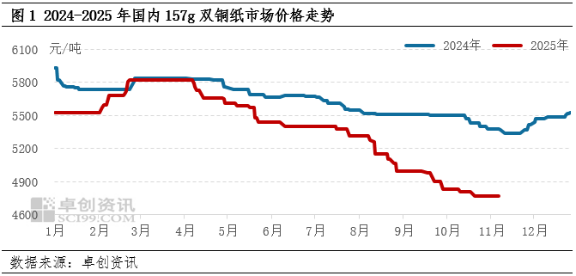
Core Viewpoint - The double copper paper market is expected to stabilize and see a slight rebound in prices in November due to improved demand and reduced supply pressures, despite ongoing cost challenges [1][8]. Supply and Demand - November is anticipated to see a decrease in double copper paper production, with a projected decline of 1.07% month-on-month due to maintenance shutdowns and fewer working days [4][8]. - Demand is showing signs of recovery, driven by new publishing tenders and increased commercial activities towards the end of the year, with a projected consumption increase of 6.72% in November [4][8]. - The issuance of price increase notices by paper mills at the end of October has boosted market confidence, leading to a stabilization of prices [2][4]. Pricing Trends - As of November 7, the market price for 157g double copper paper was reported at 4770 yuan/ton, reflecting a month-on-month decline of 1.24%, although the rate of decline has narrowed compared to the previous month [2]. - Overall, the average price for November is expected to be around 4800 yuan/ton, with a slight increase of 0.20% month-on-month [8]. Cost Factors - The cost of key raw materials for double copper paper production has decreased by 0.24% as of the end of October, while paper prices have dropped by 1.24%, leading to a theoretical gross margin of over -4.00% [6]. - Recent increases in the prices of wood pulp, with needle and broadleaf pulp rising by 0.64% and 0.54% respectively, indicate a potential upward pressure on production costs moving forward [6][8]. - The sentiment in the wood pulp market is improving, suggesting that prices may be more likely to rise than fall, which could further pressure the profitability of paper mills [6][8].

综合晨报-20251111
Guo Tou Qi Huo· 2025-11-11 02:49
Report Industry Investment Ratings No relevant content provided. Core Views of the Report - The crude oil market has short - term support, but there are still supply - demand surplus pressures in Q4 and Q1 of next year. Consider short - side strategies after the oil price rebounds again [2]. - Precious metals may continue to build a high - level shock platform due to the lack of strong drivers [3]. - The upward momentum of the copper market in the short - term is decreasing. Consider buying put at - the - money/one - strike out - of - the - money options and selling call options with an execution price of 90,000 to reduce costs [4]. - The aluminum market is mainly driven by macro sentiment, with limited fundamental resonance. Be vigilant of capital turning [5]. - Other commodities such as zinc, lead, nickel, tin, etc. also have their own market characteristics and investment suggestions based on supply - demand, inventory, and other factors [8][9][10]. Summary by Catalog Energy Commodities - **Crude Oil**: OPEC+ suspending production increase in Q1 of next year boosts market confidence. US government shutdown negotiation progress and geopolitical factors also affect the market. There is short - term support, but supply - demand surplus pressure remains [2]. - **Fuel Oil & Low - Sulfur Fuel Oil**: High - sulfur fuel oil supply tends to be loose, while low - sulfur fuel oil has short - term positive sentiment but weak medium - term upward support [22]. - **Asphalt**: Demand is weaker than expected, and social inventory has turned from lower to higher year - on - year. The market is bearish, and the price continues to decline [23]. - **Liquefied Petroleum Gas (LPG)**: Fundamental conditions have improved marginally, providing support for the LPG price [24]. Metal Commodities - **Precious Metals**: Temporarily lack strong drivers and may continue high - level shock [3]. - **Base Metals**: - **Copper**: The upward momentum is decreasing, and inventory has decreased. Consider short - term trading strategies [4]. - **Aluminum**: Narrow - range fluctuation, with macro - led strong sentiment and limited fundamental resonance [5]. - **Zinc**: The export window is open, and low inventory supports the external market. The domestic market is expected to follow the external market to rise [8]. - **Lead**: High - level shock, with the far - month contract's center of gravity expected to move up [9]. - **Nickel & Stainless Steel**: The nickel market is weak, and the stainless - steel market is sluggish [10]. - **Tin**: Supply is constrained, but demand is weak. Consider short - selling in the medium - to - long - term [11]. - **Alumina**: Supply surplus persists, and the price is weak with limited rebound space [7]. - **Cast Aluminum Alloy**: Follows the aluminum price and has no independent market for now [6]. Chemical Commodities - **Carbonate Lithium**: The price has risen significantly, and the market sentiment has improved. It is expected to be strong in the short - term [12]. - **Industrial Silicon**: The supply is expected to shrink more than demand, and the inventory may decrease. The futures price is expected to be strong in the short - term [13]. - **Polysilicon**: The price will continue to fluctuate due to the synchronous contraction of supply and demand [14]. - **Urea**: The upward momentum is insufficient, and the market will continue to fluctuate within a range with a slightly upward price center [25]. - **Methanol**: It may continue to be weak in the short - term, but is easily affected by positive news due to low valuation [26]. - **Pure Benzene**: The price is in a narrow - range shock at a low level. Pay attention to the port inventory build - up rhythm [27]. - **Styrene**: The supply - demand balance is tight, but the market is worried about the long - term situation, and the price is under pressure [28]. - **Polypropylene, Plastic & Propylene**: The demand has improved temporarily, but the overall supply is loose, and the price is under pressure [29]. - **PVC & Caustic Soda**: PVC has high supply and weak demand, and may run at a low level. Caustic soda is in a weak operation [30]. - **PX & PTA**: PX supply has recovered, and PTA has improved slightly. There is uncertainty in the short - to - medium - term, so it is advisable to wait and see [31]. - **Ethylene Glycol**: The supply growth pressure is large, and the demand is expected to weaken in the medium - term. Adopt a bearish view [32]. - **Short - Fiber & Bottle - Chip**: Short - fiber has a good spot pattern but is affected by raw material price increases. Bottle - chip demand is weakening [33]. Building Materials Commodities - **Glass**: The price is falling, and the cost has increased. The profit has narrowed, and the daily melting has decreased. Pay attention to the end - of - year rush - work situation [34]. - **Soda Ash**: The price is in a strong shock in the short - term, but a short - selling strategy is recommended in the long - term due to high supply pressure [36]. Agricultural Commodities - **Soybean & Soybean Meal**: Soybean supply is basically sufficient in Q4, and there may be inventory reduction in Q1 of next year. Pay attention to long - buying opportunities after Sino - US trade eases [37]. - **Soybean Oil & Palm Oil**: Soybean oil is stronger than palm oil. Palm oil has high - inventory pressure in the short - term [38]. - **Rapeseed Meal & Rapeseed Oil**: The demand for rapeseed meal is expected to be poor. Adopt a wait - and - see strategy for domestic rapeseed products [39]. - **Soybean No.1**: The price is in a high - level shock. Pay attention to domestic soybean policies and market sentiment [40]. - **Corn**: The futures price is rebounding at the bottom, but the supply is still loose in the future [41]. - **Pork**: The price may have a seasonal rebound in the short - term, but there is a high probability of a second bottom - probing in H1 of next year [42]. - **Egg**: Try short - selling at high prices and observe the spot market [43]. - **Cotton**: The US cotton price has risen. The Zhengzhou cotton price is in a shock. Pay attention to the US cotton export data [44]. - **Sugar**: The international sugar supply is sufficient, and pay attention to the sugar production forecast in Guangxi for the new season [45]. - **Apple**: The price is in a wide - range shock. Adopt a bearish strategy due to inventory concerns [46]. - **Timber**: The price is in a weak operation. Low inventory provides support, and adopt a wait - and - see strategy [47]. - **Pulp**: The price has risen. The inventory has decreased, and the valuation is low. Consider buying at low prices [48]. Financial Futures - **Stock Index**: A - share indexes are differentiated, and futures contracts have all risen. Pay attention to the RMB exchange rate and domestic policies [49]. - **Treasury Bond**: The futures price is rising in a shock. The yield curve steepening may come to an end [50].
品种区间震荡格局不变
Zhong Xin Qi Huo· 2025-11-11 02:34
Report Industry Investment Rating - The report provides a mid - term outlook for each variety, with most being "oscillating", and some like iron ore having an outlook of "oscillating on the stronger side" [7][9][10][15][19]. Core Viewpoints - In the off - season, industry contradictions are limited. With no new disturbances from the macro and policy fronts, the prices of black building materials sector varieties are expected to maintain an oscillating trend. If there are still positive macro and policy releases later, the possibility of a phased upward movement can be considered [1][5]. Summaries by Relevant Catalogs 1. Iron Element - **Iron Ore**: Overseas mine shipments decreased month - on - month, and arrivals also declined. Southeast Asian hurricanes may disrupt arrival schedules. Demand is weakening seasonally, but the negative feedback transmission is not smooth. After the peak arrival period ends, the supply - demand pattern may return to a tight balance, and prices are expected to oscillate on the stronger side in the short term after a rapid decline [1][7]. - **Scrap Steel**: Supply has increased while demand has decreased, and the fundamentals have weakened marginally. Recently, the price of finished products has been under pressure, and leading steel enterprises in East China lowered the price by 30 yuan/ton over the weekend. It is expected that the spot price of scrap steel will follow the decline in the short term [1][8]. 2. Carbon Element - **Coke**: After three rounds of price increases, steel mills are resistant to further increases, but coke has strong cost support and steel mills still have procurement demand. The game between coke producers and steel mills will continue, and the price is expected to oscillate [2]. - **Coking Coal**: Supply is difficult to improve, and import supplements are limited. Although the procurement of mid - and downstream enterprises is expected to slow down, coal mine inventories are at a low level in recent years, and there is little possibility of significant inventory accumulation. The fundamentals are expected to remain healthy until the end of the year, and the spot price is strongly supported, but the futures price is still suppressed by finished products. The price is expected to oscillate [2]. 3. Alloys - **Manganese Silicon**: Short - term costs strongly support the price, but the market supply - demand is loose, and there is insufficient driving force for price increases. It is expected to operate at a low level around the cost [2][17]. - **Silicon Iron**: Short - term cost trends strongly support the price, but the market supply - demand relationship is relatively loose, and the upward driving force for prices is insufficient. It is expected to operate at a low level around the cost [2][18]. 4. Glass and Soda Ash - **Glass**: Supply may still be disturbed, but the inventory of mid - and downstream is moderately high. Currently, supply exceeds demand. If there is no more cold - repair by the end of the year, the price may oscillate weakly; otherwise, it may rise. In the long term, market - oriented capacity reduction is needed, and the price is expected to oscillate downward [2][14]. - **Soda Ash**: Recently, cost increases and factory shutdowns have led to a rebound in prices. However, the supply - demand pattern has not changed, and prices above the industry's high - cost line may face pressure again. In the long term, the supply - surplus pattern will intensify, and the price center will decline [2][14][16]. 5. Commodity Index - On November 10, 2025, the comprehensive index of CITIC Futures commodities showed that the CITIC Futures Commodity Index was 2254.65, up 0.65%; the Commodity 20 Index was 2552.65, up 0.71%; the Industrial Products Index was 2226.35, up 0.48%; and the PPI Commodity Index was 1346.01, up 0.37%. The steel industry chain index rose 0.26% on that day, with a decline of 0.12% in the past 5 days, an increase of 0.18% in the past month, and a decline of 5.37% since the beginning of the year [99][100].
成本支撑偏强 烧碱跌势或将放缓
Qi Huo Ri Bao· 2025-11-10 23:31
Core Viewpoint - The domestic caustic soda industry is experiencing significant capacity expansion, with total production capacity expected to exceed 49 million tons by the end of 2024, continuing into 2025 despite a slowdown in new capacity additions in the second half of the year [1] Group 1: Supply Dynamics - The overall capacity utilization rate for domestic caustic soda plants has increased to 84.8%, up 0.5 percentage points from the previous week and 3.1 percentage points year-on-year, driven by new capacity stabilizing and strong production profits [1] - In early November, eight plants are expected to restart operations, significantly outpacing the four plants scheduled for maintenance, which may lead to increased supply pressure [2] - The execution of maintenance plans will be a key variable affecting supply elasticity, as some companies may delay maintenance to maintain high operational loads [2] Group 2: Downstream Demand - The downstream demand for caustic soda is diversified, with alumina being the primary consumer, accounting for over 30% of consumption, but alumina prices have been declining since mid-July 2025 due to increased supply [3] - The overall operating rate in the caustic soda industry has been significantly lower than the same period in 2024, as companies have reduced production in response to weak demand and profit expectations [3] - Non-alumina sectors are currently in a traditional off-season, with limited demand for caustic soda, primarily driven by essential small orders [4] Group 3: Cost Factors - The price of coal, a key component in caustic soda production, has increased by 15.59% since the long holiday, raising production costs and providing support against price declines [5] - Seasonal demand for electricity is expected to rise due to cold weather, which will further increase coal consumption [5] - Coal supply constraints and low inventory levels at northern ports are expected to maintain upward pressure on coal prices, providing cost support for caustic soda [6] Group 4: Market Outlook - The caustic soda market is facing a core contradiction of increasing supply and weak demand, leading to overall pressure on the fundamentals [6] - Despite the supply increase, the lack of marginal demand drivers is expected to limit the downward price movement of caustic soda, resulting in a predominantly weak oscillation in prices [6]
PVC周报:供应压力不变成本支撑走强-20251110
Zhe Shang Qi Huo· 2025-11-10 08:12
Report Industry Investment Rating - Not provided in the content Core Viewpoints - PVC is prone to decline but has limited downside space in the short term, with support at the 4600 price level. The v2601 contract is the focus. The supply and demand of PVC continue to weaken, with high production, weak domestic and export demand, and high social inventory. However, the current cost support is strengthening, and the profit compression is obvious, which restricts the downward space [3]. - Different market participants are given corresponding operation suggestions, such as traders and terminal customers with inventory are recommended to do short - futures hedging, and those in need of procurement are recommended to buy out - of - the - money call options to prevent price increases [3]. - Attention should be paid to data such as the PVC powder overall operating load rate on November 7, the total inventory of sample warehouses in East and South China, the PVC weekly operating rate on November 14, and the total inventory of sample warehouses in East and South China on November 14 [3]. Summary According to the Directory 1. Fundamental Supply and Demand Situation - **Supply**: As of October 2025, the newly put - into - operation capacity in the year was 1.9 million tons, and the withdrawn capacity was 200,000 tons, with a capacity growth rate of 6.08%. It is estimated that the total new capacity in 2025 will be 2 million tons, with a capacity growth rate of 7.15%. The overall operating load rate of PVC powder this week was 79.28%, a 2.19% increase from last week, and the annual cumulative output is expected to have a year - on - year growth rate of 4.04% [9]. - **Demand**: The downstream operation of hard products has improved, and most of the time, they purchase on demand, only increasing the replenishment volume appropriately at low prices and resisting high - price raw materials. The operation of soft product films is okay. The suspension of the 24% "reciprocal tariff" on Chinese goods by the United States for another year is beneficial to glove exports to some extent. The trading pick - up enthusiasm is average, and most maintain normal procurement [7]. - **Cost**: The increase in coal prices intensifies the loss pressure of semi - coke manufacturers, driving up the semi - coke price and strengthening the cost support for calcium carbide. The ex - factory price of calcium carbide may remain stable, and there is a possibility of an increase if the short - term cost pressure continues to increase, but the increase is restricted by the weak PVC market [8]. - **Caustic Soda**: Most chlor - alkali enterprises have sufficient supply, while the demand is weak, and the export market lacks substantial support. Some chlor - alkali enterprises still face shipment pressure, and the price may remain weak. Some high - concentration liquid alkalis may stabilize their prices under the support of inventory and orders [8]. 2. Disk Data - **Price Trend**: This week, the PVC price fluctuated weakly. The supply was at a high level, the demand was mainly rigid, and the export had no bright performance. The social inventory remained at the highest level in the same period of history. The price trend was weak, but it was supported by cost to some extent. The upward movement of coal brought stronger cost support, and the weakness of caustic soda price weakened the "subsidy of alkali for chlorine", resulting in the comprehensive profit of northwest integrated enterprises approaching the break - even point [17]. - **Data Performance**: The basis was at a discount to the disk. The East China 01 basis strengthened to around - 130 this week; the 1 - 5 spread was weakly running at - 304. The position of the 01 contract was around 1.3389 million lots, and the number of warehouse receipts increased to around 121,500 lots (exceeding the level of the same period last year) [18]. 3. Regional and Quality Spreads - **Regional Spread**: The East - South China calcium carbide method spread fluctuated around - 139, and the East - North China calcium carbide method spread strengthened to 21. The ethylene - calcium carbide price spread narrowed to around 219 [29]. 4. Profit Performance - Different production processes have different profit situations. For the calcium carbide method, the comprehensive profit of northwest integrated chlor - alkali enterprises was - 345 yuan/ton; for the ethylene method, the comprehensive profit of enterprises purchasing ethylene externally in East China was 766 yuan/ton [41]. 5. Raw Material Situation - **Semi - coke**: The operating rate of semi - coke sample enterprises on November 7 was 64.5%, remaining the same as the previous period. Some semi - coke plants in Shaanxi have plans to resume production, but the operating rate is expected to decline due to intensified losses. The semi - coke price may still have the possibility of stabilizing and improving under cost support [65]. - **Calcium Carbide**: The ex - factory price of calcium carbide may remain stable, and there is a possibility of an increase if the cost pressure continues to increase, but the increase is restricted by the weak PVC market. The average operating load rate of the calcium carbide industry increased slightly to 75.23% this week, a 0.22% increase from last week [73][77]. - **Caustic Soda**: The liquid caustic soda market continued to operate weakly this week. The 32% ion - exchange membrane caustic soda locally decreased by 10 - 200 yuan/ton. The weekly operating rate of liquid caustic soda samples was 84.8%, a 0.5% increase from last week, and the weekly inventory was 414,800 tons, a 6.28% decrease from last week. In the future, the price may remain weak, and some high - concentration liquid alkalis may stabilize their prices [86]. 6. Supply - **Capacity Expansion**: As of October 2025, the newly put - into - operation capacity in the year was 1.9 million tons, and the withdrawn capacity was 200,000 tons, with a capacity growth rate of 6.08%. It is estimated that the total new capacity in 2025 will be 2 million tons, with a capacity growth rate of 7.15% [92][93]. - **Operation and Maintenance**: The overall operating load rate of PVC powder this week was 79.28%, a 2.1% increase from last week. The theoretical loss due to shutdown and maintenance this week was 53,490 tons, a 17,310 - ton decrease from last week. It is expected that the maintenance loss next week will increase slightly compared with this week [94][95]. 7. Import and Export - **Import**: In September 2025, the PVC import volume was 14,100 tons, and the cumulative import from January to September was 175,600 tons. The monthly import increased by 16.08% month - on - month and 7.73% year - on - year. The cumulative year - on - year increase was 0.76%. The imports mainly came from the United States and Northeast Asia, and the import dependence was about 1% [129]. - **Export**: In September 2025, the PVC export volume was 346,400 tons, and the cumulative export from January to September was 2.9216 million tons. The monthly export increased by 21.945% month - on - month and 24.53% year - on - year. The cumulative year - on - year increase was 50.63%. The main destinations were still India, followed by Southeast Asia, Central Asia, the Middle East, and Africa [129]. - **Export Outlook**: This week, the sample export order volume of PVC production enterprises decreased by 3.58% compared with last week and increased by 6.58% year - on - year. The volume to be delivered decreased by 8.76% compared with last week. It is estimated that the export will slow down in the fourth quarter, but the slowdown amplitude is limited, mainly due to India's anti - dumping tax policy and BIS certification [139]. 8. Demand - **Downstream Operating Load**: The downstream operation of hard products has improved, and most of the time, they purchase on demand, only increasing the replenishment volume appropriately at low prices and resisting high - price raw materials. The operation of soft product films is okay. The suspension of the 24% "reciprocal tariff" on Chinese goods by the United States for another year is beneficial to glove exports to some extent [153]. - **Terminal Situation**: From January to September, real estate investment decreased by 13.9% year - on - year, new construction area decreased by 18.9% year - on - year, construction area decreased by 9.4% year - on - year, completion area decreased by 15.3% year - on - year, and sales area decreased by 5.5% year - on - year. The real estate market is still in a downturn, and the demand for PVC may continue to shrink [172][174]. 9. Inventory - The inventory of PVC sample production enterprises' salable products increased this week, with an increase of 57,500 tons compared with the previous period. The factory inventory of sample production enterprises decreased by 2,500 tons compared with the previous period. The total inventory of sample warehouses in East and South China increased. The total inventory of the original sample warehouses in East and South China was 520,700 tons, a 0.04% increase from the previous period and an 18.15% increase year - on - year. The total inventory of the expanded sample warehouses in East and South China was 942,900 tons, a 1.07% increase from the previous period and a 19.55% increase year - on - year [188].