逆全球化

Search documents
【广发资产研究】风险偏好承压,避险资产走强——全球大类资产追踪双周报(9月第一期)
戴康的策略世界· 2025-09-04 07:16
Global Macro Trends - Global risk assets are under pressure due to economic slowdown and geopolitical trade uncertainties, while safe-haven assets like bonds and gold perform well [3][10] - The U.S. manufacturing activity in August shows increased contraction, raising recession concerns, alongside trade policy uncertainties impacting market volatility [3][10] - The market maintains high expectations for a Federal Reserve rate cut in September, despite rising concerns over fiscal deficits and Fed independence pushing up U.S. Treasury yields [3][10] - Domestic manufacturing PMI in China has contracted for five consecutive months, indicating weak economic momentum, yet A-shares and Hong Kong stocks show resilience [3][10] Asset Allocation Strategy - The "Global Barbell Strategy" is recommended as the optimal response to the evolving investment paradigm, emphasizing a mix of long-term and tactical asset allocations [4][16] - Strategic allocations include Chinese government bonds, U.S. short-term Treasuries, convertible bonds, and equities from Southeast Asia, particularly India, alongside high-dividend and AI-related assets [4][16] - Tactical allocations suggest a shift towards growth stocks aligned with high-quality development, reducing high-dividend stock proportions in favor of more elastic investments [5][16] Key Economic Indicators - The SOFR-OIS spread has widened, indicating tightening liquidity in the dollar funding market [4][18] - The U.S. financial conditions index has improved, reflecting a slight easing in overall financial conditions [4][20] - The Citigroup U.S. Economic Surprise Index remains positive but shows signs of weakening, indicating that economic data is marginally underperforming market expectations [4][24] Upcoming Economic Events - Key economic data releases include China's foreign exchange reserves, trade balance, and CPI, as well as U.S. PPI and retail sales figures [17]


上半年商品期货公募基金业绩“三正一负”
Qi Huo Ri Bao Wang· 2025-09-03 17:03
Core Insights - In the first half of 2025, domestic commodity futures public funds showed a performance pattern of "three positives and one negative," with only the Jianxin Yisheng Zhengshang Energy Chemical Futures ETF reporting negative returns [1] - The Guotou Ruijin Silver Futures LOF fund performed exceptionally well, achieving net value growth rates of 14.73% and 14.51% for its A and C shares respectively, driven by the dual attributes of silver as a safe-haven and industrial metal [1] - The Dachen Nonferrous Metals Futures ETF and the Huaxia Feed Soybean Meal Futures ETF reported net value growth rates of 4.38% and 5.01% respectively, while the Jianxin Yisheng Zhengshang Energy Chemical Futures ETF saw a decline of 6.87% [1] Commodity Market Overview - The performance of the Guotou Ruijin Silver Futures LOF fund is attributed to various factors including persistent inflation, economic resilience, tariff uncertainties, and geopolitical risks, with London gold prices reaching historical highs [1][2] - The Dachen Nonferrous Metals Futures ETF's underlying index showed a volatile trend influenced by macroeconomic factors, with copper prices rising due to U.S. tariff policies affecting global resource distribution [2] - The Huaxia Feed Soybean Meal Futures ETF's performance was impacted by drought conditions in South America and adjustments in U.S. soybean yield forecasts, leading to a rebound in market prices [3] Future Market Outlook - Guotou Ruijin anticipates a significant probability of interest rate cuts by the Federal Reserve, with a continued loose monetary policy from major central banks, suggesting a favorable global liquidity environment for silver investments [2] - The Dachen Fund highlights ongoing geopolitical tensions that may lead to significant volatility in commodity markets, including oil, gold, and copper [2] - The Jianxin Yisheng Zhengshang Energy Chemical Futures ETF expects a primarily strong oscillating trend in the second half of the year, despite uncertainties in the Middle East and domestic policies [3] Fund Operations - The Dachen Nonferrous Metals Futures ETF capitalized on the forward discount structure of copper and aluminum to gain additional returns in the second quarter [4] - The Huaxia Feed Soybean Meal Futures ETF faced extra costs due to the forward premium structure during the same period [4]
白银暴涨三问:为何涨?谁在买?还涨吗?
Zhong Guo Jing Ying Bao· 2025-09-03 13:59
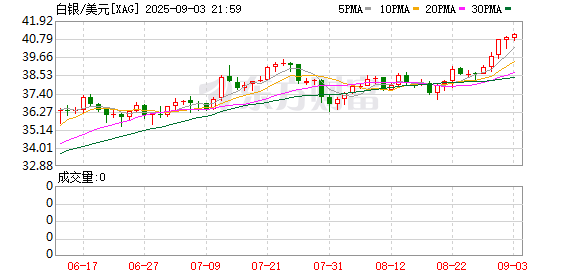
Core Viewpoint - The recent surge in silver prices is driven by multiple factors including the correction of the gold-silver ratio, increased industrial demand, and expectations of interest rate cuts by the Federal Reserve [2][3][4]. Group 1: Price Movement and Market Dynamics - As of September 3, spot silver prices reached a high of $40.973 per ounce, marking a significant increase of over 40% year-to-date [2][3]. - The gold-silver ratio, which peaked at 106 in April 2025, is currently around 87, indicating potential for further price correction in silver [3][4][7]. - The supply of silver is constrained, with a projected decline of 1.3% in global mine supply in 2024, contributing to upward price pressure [4]. Group 2: Investment Trends - Silver ETP holdings have increased by nearly 4,000 tons since February 7, translating to an inflow of approximately $1.3 billion at an average price of $34 per ounce [5]. - There has been a structural shift in the silver market, with sovereign wealth funds and large institutions beginning to invest in silver assets, breaking the long-standing trend of favoring gold [6]. Group 3: Future Outlook - The investment demand for silver is expected to grow, with potential price increases projected based on the gold-silver ratio and economic conditions [7]. - If the gold price reaches $3,700 per ounce, silver could rise to $49.3 per ounce, and if gold hits $4,000 per ounce, silver could reach $53.3 per ounce, indicating significant upside potential [7].
果然,台积电也没逃过
Guan Cha Zhe Wang· 2025-09-03 00:03
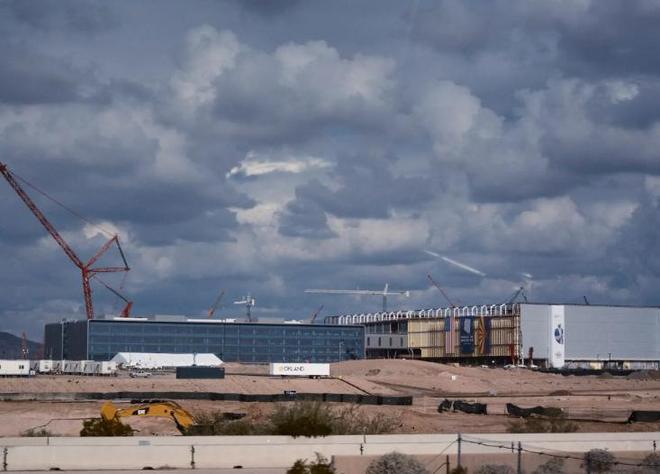
Core Viewpoint - The U.S. government will revoke TSMC's exemption for shipping critical equipment to its factories in China starting next year, which may weaken TSMC's production capacity and lead to delivery delays [1][3]. Group 1: Impact on TSMC - TSMC announced that it received notification from the U.S. government regarding the revocation of its "Verified End User" (VEU) status for its Nanjing factory, effective December 31, 2025 [1]. - Following the revocation, TSMC will need to apply for export licenses to ship U.S. chip manufacturing tools to its factories in China, which could complicate operations [1][3]. - TSMC is committed to ensuring uninterrupted operations at its Nanjing factory while evaluating the situation and communicating with the U.S. government [1]. Group 2: Broader Industry Implications - The policy change poses risks to the operations of semiconductor giants in China, with potential delays in delivery due to uncertainties surrounding the speed of license approvals [3]. - TSMC's U.S.-listed American Depositary Receipts (ADRs) fell by up to 2.3% following the announcement, indicating market concern [3]. - Major suppliers to TSMC, including Applied Materials, ASML, Tokyo Electron, and KLA, also experienced stock price declines, reflecting broader market impacts from the export restrictions [3]. Group 3: U.S. Export Control Context - The U.S. government previously banned the sale of advanced process chips and manufacturing equipment to China, with exemptions granted to South Korean companies Samsung and SK Hynix, which are now also facing revoked exemptions [4]. - The U.S. Commerce Department plans to issue licenses to allow companies to continue operating existing facilities in China but will not permit capacity expansion or technology upgrades [4]. - The U.S. government's actions are seen as detrimental to the global semiconductor supply chain, with China expressing strong opposition and warning of necessary measures to protect its companies [4]. Group 4: Challenges in U.S. Export Licensing - The U.S. is facing a significant backlog of license requests, with thousands of applications from U.S. companies for global exports, including to China, currently stalled [5]. - Industry leaders are concerned that prolonged delays in license approvals will result in lost market share to competitors, as Chinese clients seek alternative suppliers [5]. - The lack of progress in the licensing process is causing frustration within the industry, with no clear timeline for when licenses will be issued [5].

关税再脱钩与再通胀
2025-09-02 14:41
Summary of Key Points from Conference Call Industry and Company Involved - The discussion primarily revolves around the **U.S. tariff policy** and its implications for **China's export performance** and the broader **global economic environment**. Core Insights and Arguments 1. **Tariff Enforcement Issues**: The actual tariff collection in the U.S. is significantly lower than expected due to ineffective enforcement and transshipment practices, which may lead to unexpected economic impacts if enforcement is strengthened [2][4][13]. 2. **Resilience of Chinese Exports**: Despite challenges, Chinese exports have shown resilience, driven by price and quality advantages in non-transshipment regions like Europe and Africa. The export growth rate has increased by 2.5 percentage points, with 1.2 points from the U.S. and transshipment areas, and 1.3 points from other regions [5][14]. 3. **Impact of Globalization Trends**: The trend of de-globalization has negatively affected consumer goods exports from China, but capital goods exports remain strong. This positions China as a potential "factory of the world" in the long term [6]. 4. **Third Quarter Economic Performance**: China's economic performance in Q3 was below expectations, with declines in investment and consumption, while imports increased, leading to a GDP growth slowdown [8]. 5. **Market Dynamics**: The current equity market is influenced by policy expectations and liquidity conditions, with a strong RMB supported by various factors including international capital arbitrage and central bank interventions [10][16]. 6. **U.S. Interest Rate Cuts**: Potential U.S. interest rate cuts could exacerbate service inflation and shift tariff costs from businesses to consumers, leading to an overall increase in inflation [11][12][17]. Other Important but Potentially Overlooked Content 1. **Long-term Export Outlook**: The forecast for China's export growth in 2025 is estimated at 3% to 4%, primarily due to strong performance in capital goods and changes in global demand [6]. 2. **Import-Export Dynamics**: The alignment of imports with exports is driven by exporters' optimism about future performance, leading to a decrease in trade surplus without significantly impacting the overall economy [9][15]. 3. **Tariff Impact on U.S. Economy**: Tariffs are a critical variable in U.S. economic policy, influencing inflation and other domestic decisions, making them a key factor in macroeconomic analysis for the coming years [3].
长城汽车35年:生态出海能否成为突围样本?
Tai Mei Ti A P P· 2025-08-29 00:49
Core Viewpoint - GWM (Great Wall Motors) has evolved from a small factory focused on pickup trucks to a comprehensive automotive manufacturer with a global presence, emphasizing self-research and development, and a shift towards an "ecological overseas" strategy [3][4][6][14]. Group 1: Company Evolution - GWM was founded in 1984 as a small factory with fewer than 100 employees, initially relying on pickup trucks in a market dominated by joint ventures and foreign brands [3]. - Over 35 years, GWM has focused on self-research, developing its own engines and components, and now supplies parts to major international automakers like BMW and Mercedes [4]. - The company has established a complete technical loop, showcasing its ability to manufacture vehicles and supply components to others [4][5]. Group 2: Global Expansion Strategy - GWM's "ecological overseas" strategy involves not just exporting vehicles but also establishing local R&D centers, factories, and service channels in foreign markets [6][8]. - The company has expanded its overseas sales channels to over 1,400 locations across Europe, South America, the Middle East, and Australia, with cumulative overseas sales exceeding 2 million vehicles [8]. - GWM's investment in local production, such as the planned factory in Brazil with an annual capacity of 100,000 vehicles, aims to mitigate risks associated with tariffs and trade barriers [9]. Group 3: Challenges and Competitiveness - GWM faces challenges in scaling its operations, particularly in the competitive electric vehicle market, where it lags behind rivals like BYD and Geely [11]. - The company has strengths in traditional manufacturing but needs to enhance its capabilities in software and intelligent vehicle technology to remain competitive [12]. - GWM's multi-brand strategy, while extensive, risks resource dilution and strategic conflicts among its various product lines [13]. Group 4: Future Outlook - GWM's ability to convert its reliability and long-term approach into competitive advantages in the rapidly evolving automotive landscape will be crucial for its future success [16]. - The company must balance speed and stability in its global expansion efforts to avoid potential pitfalls associated with heavy asset investments [13].


紫金矿业(601899):2025年半年报业绩点评:增量项目稳步推进,单季度业绩再创新高
Western Securities· 2025-08-28 09:03
Investment Rating - The report maintains a "Buy" rating for Zijin Mining [5] Core Views - Zijin Mining's revenue for H1 2025 reached 167.71 billion yuan, a year-on-year increase of 11.5%, with net profit attributable to shareholders at 23.29 billion yuan, up 54.4% year-on-year [1] - In Q2 2025, the company achieved revenue of 88.78 billion yuan, reflecting a year-on-year growth of 17.4% and a quarter-on-quarter increase of 12.5% [1] - The net profit for Q2 was 13.13 billion yuan, which is a 48.8% increase year-on-year and a 29.1% increase quarter-on-quarter [1] Summary by Sections Financial Performance - H1 2025 saw Zijin Mining produce 567,000 tons of copper and 41.2 tons of gold, representing year-on-year growth of 9% and 16% respectively [2] - Q2 gold production significantly increased to 22.1 tons, a quarter-on-quarter rise of approximately 16% [2] Strategic Developments - The company is actively acquiring quality mines and accelerating the progress of ongoing projects, which is a key driver for production growth [2] - In 2025, Zijin Mining completed the acquisition of the Akim gold mine in Ghana and signed an agreement for the Raygorodok gold mine in Kazakhstan, enhancing its strategic presence in West Africa and Central Asia [2] Market Outlook - The average spot price of copper in Q2 2025 was $9,524 per ton, a 2.0% increase quarter-on-quarter, while the average gold price was $3,282 per ounce, up 14.4% [3] - Expectations of interest rate cuts in September are anticipated to drive copper and gold prices upward [3] Earnings Forecast - EPS for 2025-2027 is projected to be 1.76, 1.89, and 2.08 yuan respectively, with corresponding PE ratios of 13, 12, and 11 [3][4]

中加基金配置周报|DeepSeek发布V3.1模型,鲍威尔暗示政策转向
Xin Lang Ji Jin· 2025-08-28 08:00
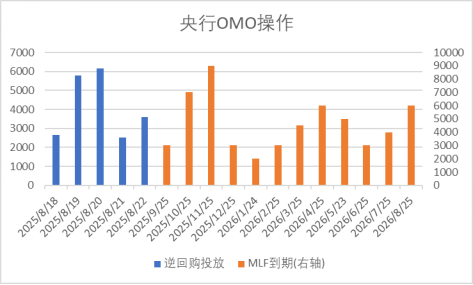
Group 1 - The latest LPR in China remains unchanged at 3.0% for 1-year and 3.5% for 5-year, consistent for three consecutive months, aligning with market expectations [1] - The U.S. manufacturing PMI for August reached 53.3, the highest since May 2022, significantly exceeding the expected 49.5, indicating strong manufacturing recovery [2] - The People's Bank of China announced a 600 billion MLF operation on August 25, with a net injection of 300 billion, marking the sixth consecutive month of increased liquidity [1][6] Group 2 - DeepSeek-V3.1 has been officially released, featuring enhanced agent capabilities and higher efficiency, with an increase in API call prices [2] - The U.S. and EU have reached a new trade agreement, with the U.S. imposing a 15% tariff on most EU goods, while the EU will eliminate tariffs on U.S. industrial products [4] - The U.S. is investigating tariffs on imported furniture, with a decision expected in 50 days [4] Group 3 - The U.S. Federal Reserve's July meeting minutes revealed a consensus against interest rate cuts, with most officials concerned about inflation risks [3] - The U.S. President indicated potential military involvement in Ukraine peacekeeping, while Ukraine plans to purchase $100 billion in military equipment from the U.S. [2][3] Group 4 - Recent data shows a decline in land transaction area and a decrease in housing transaction volume, indicating a weak performance in the real estate sector [9] - The automotive sector maintains high sales levels, with wholesale and retail sales growth rates of 12.08% and 6.10% respectively in July [10] Group 5 - The agricultural product prices have shown a slight increase, with vegetable prices rising while fruit prices have decreased [14] - The industrial product index has decreased, with coal, oil, aluminum, and cement prices rising, while copper and steel prices have fallen [16] Group 6 - The bond market has seen an increase in credit bond rates, with the 3Y AA+ rate rising by 11 basis points, indicating pressure on the bond market due to increased risk appetite [33][39] - The issuance of government bonds remains high, with a net issuance of 378.74 billion [35]

秋季策略会开幕 广发证券:后市布局看好四大方向
Zhong Guo Zheng Quan Bao· 2025-08-27 21:47
Group 1 - The core viewpoint of the forum is that the current market exhibits a "high growth narrative," where industries with high growth potential are performing exceptionally well [2][3] - The macroeconomic factors driving the recent recovery in equity assets include narrow liquidity easing and the appreciation of the RMB against the USD, with the central bank having implemented two reserve requirement ratio cuts since September 2024 [2][3] - The market has shown a significant increase, with the Wind Micro Index rising over 56% year-to-date, outperforming major indices such as the Shanghai Composite Index and Shenzhen Component Index [4] Group 2 - The market trend continues to favor small-cap stocks, reflecting a diverse industrial landscape [5] - The outlook for the A-share market is optimistic, with limited downside risks due to central bank support and increasing insurance fund allocations [5] - Investment opportunities are concentrated in four key areas: non-bank financials, A-share and Hong Kong real estate chains, overseas computing power chains and innovative pharmaceuticals, as well as domestic AI infrastructure and applications [5]

美国为何如此急于“混改”英特尔?
芯世相· 2025-08-27 05:52
Core Viewpoint - The article discusses the U.S. government's efforts to revitalize its manufacturing sector, particularly focusing on Intel, as part of a broader strategy to bring manufacturing back to the U.S. and reduce reliance on foreign supply chains [4][5]. Group 1: Historical Context and Policy Initiatives - The U.S. manufacturing sector's vulnerability was highlighted in 2007, with supply chain weaknesses exceeding 10%, leading to a collective realization post-2008 financial crisis about the risks of deindustrialization [5][6]. - Bipartisan consensus has emerged around the need to "bring manufacturing home," especially in light of global events like the Russia-Ukraine conflict and the COVID-19 pandemic [7][8]. - Key initiatives include the Obama administration's infrastructure investments, the Biden administration's CHIPS Act, and Trump's "Make America Great Again" agenda, all aimed at revitalizing manufacturing [8][9]. Group 2: Manufacturing Metrics and Performance - From 2010 to 2023, U.S. manufacturing employment increased by over 1.3 million, but the share of employment in the secondary sector continues to decline [11]. - Fixed asset investment in manufacturing exceeded $740 billion in 2023, more than doubling since 2010, particularly in electronics and transportation equipment [11]. - Despite a 5.9% increase in manufacturing value added, its share of GDP has decreased from 11.9% in 2010 to 10.2% in 2023, indicating ongoing challenges [15]. Group 3: Supply Chain Diversification - The share of imports from China has decreased from 22% at its peak to below 15%, with significant increases in imports from Canada, Mexico, and Southeast Asia, particularly Vietnam [12]. - However, the overall effectiveness of these policies remains questionable, as the U.S. trade deficit reached a record $1.1 trillion in 2023, doubling compared to 20 years ago [15]. Group 4: Sector-Specific Insights - Certain sectors, like chemicals and high-tech manufacturing (medical devices, aerospace), have shown resilience and growth, while the semiconductor industry continues to struggle despite substantial government support [18][24]. - The U.S. chemical industry is projected to capture about 15% of the global market by 2025, benefiting from energy cost advantages and a focus on high-end materials [22]. - The automotive sector faces significant challenges, with production dropping below 1.5 million vehicles, and reliance on Mexican components increasing for electric vehicles [25]. Group 5: Challenges to Manufacturing Return - High labor costs in the U.S., averaging $34 per hour, significantly hinder the competitiveness of mid-range manufacturing compared to East Asia [28]. - Despite some advantages in energy and land costs, the overall cost structure makes it difficult for many manufacturing sectors to return to the U.S. [29][30]. - High-end manufacturing sectors may have a better chance of returning due to their reliance on technology and brand value, which can offset higher labor costs [31][32]. Group 6: Future Outlook - The U.S. strategy of using subsidies and tariffs to protect high-end manufacturing may not diminish China's competitive edge in mid-range manufacturing, as China's supply chain remains robust [34]. - The future of U.S. manufacturing will depend on its ability to maintain high-value production while navigating the challenges posed by global competition and domestic cost structures [34].