
价格走势

Search documents
煤焦:本周供增需减,盘面震荡运行
Hua Bao Qi Huo· 2025-10-17 04:55
Report Investment Rating - No investment rating information is provided in the content [1][2][3][4] Core Viewpoint - The supply and demand of coking coal and coke remain relatively stable, with no prominent fundamental contradictions. Market sentiment is easily influenced by macro - factor changes, so prices should be treated with cautious optimism [4] Summary by Related Content Market Performance - Yesterday, the futures prices of coking coal and coke rebounded fluctuately, with coking coal leading the gains, and the night - session continued the strong trend. The spot market is generally stable with a slight upward trend, and some coke enterprises in certain regions plan to raise coke prices [3] Supply - side Situation - The output of clean coal is in a continuous recovery process. This week, the daily average output of clean coal is 77.9 thousand tons, an increase of 2.7 thousand tons compared with the previous week. Mines have a slight increase in inventory, and the current inventory level at the mine end is low due to pre - holiday downstream restocking. The monthly import volume of coal is rising. In September, about 46 million tons of coal were imported, setting a new high for the monthly import volume this year. From January to September, the cumulative import was 346 million tons, a year - on - year decrease of 11.7% with the decline continuously narrowing. The import volume of coking coal is also rising month by month. After the holiday, the customs clearance volume of Mongolian coal has steadily recovered, with a current daily average of 15.5 thousand tons. The change in Mongolian coal imports needs continuous attention [3] Demand - side Situation - This week, the profitability of coke enterprises has shrunk, which supports their confidence in price - holding. Most coke enterprises maintain a normal production rhythm with a capacity utilization rate of about 74%. Downstream steel still has inventory pressure, especially the inventory of plates is constantly rising. Some steel enterprises in certain regions announced that due to the rise in raw material prices and the decline in finished product prices, steel mill profits are in the red. This week, the daily average pig iron output dropped to 2.4095 million tons, a decrease of 0.59 thousand tons compared with the previous week, and the overall profitability rate is about 55% [3]
【库存解读·LPG】9月供需博弈加剧 炼厂库存与港口库存背离
Sou Hu Cai Jing· 2025-10-16 03:49
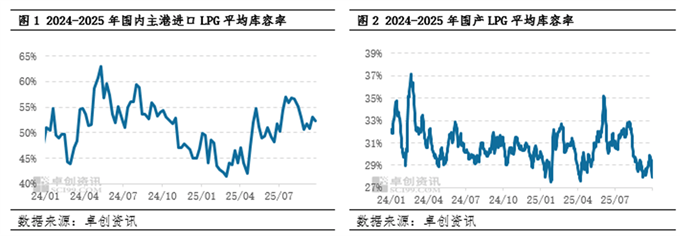
Core Viewpoint - In September, the domestic liquefied petroleum gas (LPG) market experienced a dual weakness in supply and demand, with refinery inventory decreasing while port inventory increased, indicating a lack of strong expectations for market improvement in the near future [1][2][3]. Group 1: Inventory Analysis - As of September 30, the LPG refinery inventory rate was 27.91%, down 1.52 percentage points from the previous month [2]. - The estimated domestic LPG commodity volume for September was 1.6221 million tons, a decrease of 5.65% month-on-month, with an average daily commodity volume of 54,070 tons, down 0.14% [2]. - The average port inventory rate for domestic main ports was 52.36%, an increase of 1.69 percentage points from the previous month [3]. Group 2: Demand and Supply Dynamics - Domestic PDH (propane dehydrogenation) plant operating rates showed a decline followed by a slight recovery, with a weekly operating rate of 72.03% as of September 25, down 0.55 percentage points from the end of the previous month [3]. - Despite a traditional peak season for propane consumption, terminal demand growth was below expectations due to ongoing policy impacts [3]. Group 3: Price Trends - The LPG market in September showed a divergence in price trends, with residential gas prices initially rising but later declining due to increased port resources and weak terminal demand [6]. - The ether C4 market remained weak, influenced by poor downstream demand and rising upstream inventory pressures, leading to accelerated price declines [6]. Group 4: Future Outlook - The LPG market is expected to exhibit weak and fluctuating trends in October, with passive consumption of refinery and port inventories [7]. - Residential gas prices are anticipated to be weak due to abundant domestic supply and declining import costs, despite a potential increase in burning demand as temperatures drop [7].

国泰君安期货商品研究晨报:黑色系列-20251016
Guo Tai Jun An Qi Huo· 2025-10-16 02:03
1. Report Industry Investment Rating No relevant content provided. 2. Core Views of the Report - Iron ore is expected to experience wide - range fluctuations [2][7] - Rebar and hot - rolled coil are likely to see a slight price correction due to weak current situations and weakening expectations [2][8] - Ferrosilicon and silicomanganese are expected to have wide - range fluctuations with cost as the bottom support [2][13] - Coke and coking coal are expected to have wide - range fluctuations due to repeated expectations [2][16][17] - Logs are expected to have repeated fluctuations [2][19] 3. Summaries Based on Relevant Catalogs Iron Ore - **Fundamental Data**: The closing price of I2601 was 776.5 yuan/ton, down 5.5 yuan/ton (-0.70%). The trading volume was 508,365 hands, up 8,566 hands. Imported and domestic ore prices mostly declined slightly, and some basis and spread values changed slightly [5] - **Macro and Industry News**: In September 2025, the national industrial producer price index decreased by 2.3% year - on - year, with a narrowing decline [6] - **Trend Intensity**: The trend intensity of iron ore is 0, indicating a neutral view [6] Rebar and Hot - Rolled Coil - **Fundamental Data**: The closing price of RB2601 was 3,034 yuan/ton, down 26 yuan/ton (-0.85%), and HC2601 was 3,212 yuan/ton, down 28 yuan/ton (-0.86%). Spot prices in various regions decreased, and some basis and spread values changed [8] - **Macro and Industry News**: In early October 2025, the average daily output of key steel enterprises' crude steel increased by 7.5% month - on - month, pig iron increased by 3.2%, and steel decreased by 8.5%. Steel inventories increased. In August 2025, steel exports decreased slightly, and imports increased [8][10] - **Trend Intensity**: The trend intensity of rebar and hot - rolled coil is 0, indicating a neutral view [11] Ferrosilicon and Silicomanganese - **Fundamental Data**: Futures and spot prices of ferrosilicon and silicomanganese changed, and some basis, near - far month spread, and cross - variety spread values also changed [13] - **Macro and Industry News**: There were price quotes for ferrosilicon and silicomanganese in the market, and a large steel mill's inquiry prices for ferrosilicon and silicomanganese in October changed compared to September [13] - **Trend Intensity**: The trend intensity of ferrosilicon and silicomanganese is 0, indicating a neutral view [15] Coke and Coking Coal - **Fundamental Data**: The closing price of JM2601 was 1,151 yuan/ton, down 2.5 yuan/ton (-0.2%), and J2601 was 1,642 yuan/ton, down 12.5 yuan/ton (-0.8%). Spot prices were mostly stable, and some basis and spread values changed [17] - **Macro and Industry News**: In September 2025, the national industrial producer price index decreased by 2.3% year - on - year, with a narrowing decline [18] - **Trend Intensity**: The trend intensity of coke is 0 (neutral), and that of coking coal is 1 (slightly bullish) [18] Logs - **Fundamental Data**: Futures contract prices, trading volumes, and open interests of logs changed, and spot prices in different regions were mostly stable [20] - **Macro and Industry News**: In September 2025, the national industrial producer price index decreased by 2.3% year - on - year, with a narrowing decline [22] - **Trend Intensity**: The trend intensity of logs is 0, indicating a neutral view [22]
有色金属周度观点-20251014
Guo Tou Qi Huo· 2025-10-14 11:22
Report Industry Investment Rating No relevant information provided. Core Viewpoints - The report analyzes various non - ferrous metals, including copper, aluminum, zinc, lead, nickel, tin, lithium carbonate, industrial silicon, polysilicon, and silver, providing insights on their supply, demand, price trends, and investment strategies [1]. Summary by Metal Copper - **Emotions**: The market has digested the supply loss of Grasberg copper mine, with overseas banks raising long - term copper price expectations. The US government shutdown and Sino - US trade issues add to market uncertainty [1]. - **Domestic Supply**: Imported copper concentrate TC is at $80. September domestic copper output decreased by 50,600 tons month - on - month, and is expected to drop by 38,500 tons in October. September copper imports reached 485,000 tons, and consumption is under pressure from high prices [1]. - **Overseas**: ICSC lowered the 2025 copper concentrate supply growth from 2.86% to 1.4% (supply increment from nearly 500,000 tons to 300,000 tons) and next year's growth from 2.55% to 2.3% (supply increment from 800,000 - ton level to 500,000 - ton level). 2025 demand growth is expected at 3.3%, and 2026 at 2.1% [1]. - **Trend**: The copper price is likely to enter a high - level oscillation state after reaching near - record positions last week [1]. Aluminum and Alumina - **Supply**: Domestic alumina operating capacity is at a historical high of 80 million tons, with a significant surplus. Domestic electrolytic aluminum operating capacity is stable at around 44 million tons [1]. - **Demand**: The开工 rate of domestic aluminum processing leading enterprises decreased by 6.5% to 62.5%. September aluminum and aluminum product exports decreased [1]. - **Inventory**: During the National Day, aluminum ingot social inventory increased by 57,000 tons to 649,000 tons, and aluminum rod inventory increased by 24,000 tons to 139,000 tons [1]. - **Trend**: The aluminum market is oscillating to test previous highs, and the upside space is cautiously viewed [1]. Zinc - **Spot and Futures**: LME inventory is less than 38,000 tons, with a high 0 - 3 months premium. Domestic smelters prefer domestic ore procurement, and import ore TC has rebounded [1]. - **Demand**: Affected by multiple factors, domestic demand is not strong, and social inventory has reached a five - year high of 163,100 tons [1]. - **Trend**: Shanghai zinc is expected to oscillate between 21,500 - 23,000 yuan/ton [1]. Lead - **Market**: The external market's rising lead price was reversed by policy changes and domestic factory resumptions. LME lead inventory is at a high level of 237,000 tons [1]. - **Supply**: Both primary and secondary lead production are expected to increase in October. The supply of lead concentrate is still tight [1]. - **Demand**: Battery consumption is good, but the sustainability of consumption is in doubt [1]. - **Trend**: Shanghai lead is expected to oscillate between 16,500 - 17,300 yuan/ton [1]. Nickel and Stainless Steel - **Spot and Supply**: There are premiums for different forms of nickel. Nickel and nickel - iron inventories have increased, and stainless - steel inventory has decreased [1]. - **Trend**: The nickel price is weakly operating, with a downward - moving center of gravity [1]. Tin - **Supply**: There is no new news on tin ore resupply, and domestic production is expected to increase in October [1]. - **Demand**: High tin prices affect downstream purchases, and the export of related products has slowed [1]. - **Trend**: Shanghai tin has significant two - way price movements. Short positions can be held near 290,000 yuan or sell put options with an execution price of 300,000 yuan for the 25LL contract [1]. Lithium Carbonate - **Futures**: The lithium carbonate futures market is oscillating with light trading [1]. - **Spot**: The price is reported at 23,100 yuan, and the total output has growth potential [1]. - **Demand**: The demand for lithium iron phosphate materials is good, with expected growth in October [1]. - **Inventory**: The total market inventory has decreased, and downstream inventory is at a relatively high level [1]. - **Trend**: The lithium price is supported at a low level, but there is downward pressure [1]. Industrial Silicon - **Supply**: Xinjiang enterprises plan to increase production in October, and southwest production areas may cut production in November [1]. - **Demand**: The production of polysilicon in October is less than expected, and the operating load of organic silicon enterprises remains stable [1]. - **Inventory**: Social inventory has increased by 200 tons to 545,000 tons [1]. - **Trend**: There is a high risk of inventory accumulation in October, and the price is expected to oscillate [1]. Polysilicon - **Price**: The price has recovered and stabilized between 50,100 - 55,000 yuan/ton [1]. - **Supply and Demand**: Supply contraction is limited in October, and silicon wafer production cuts are frequent in Q4. Demand has decreased [1]. - **Inventory**: Factory inventory has increased by 1.4 million tons to 24 million tons [1]. - **Trend**: The effectiveness of the 40,000 - yuan/ton support level is being tested, and industry meeting news should be followed [1]. Silver - **Strategy**: Hold long positions in the silver 2512 contract and raise the target price to 10,500 - 12,000, with a stop - loss at 9,100 [1].
聚酯月报:乙二醇累库逐渐兑现,PX持续受下游压制-20251010
Wu Kuang Qi Huo· 2025-10-10 14:35
Group 1: Report Title and Basic Information - Report title: Polyester Monthly Report - Ethylene Glycol Inventory Accumulation Gradually Realized, PX Continuously Suppressed by Downstream [1] - Report date: October 10, 2025 [1] Group 2: Investment Rating - There is no information about the industry investment rating in the report. Group 3: Core Views - PX: Last month, the overall industry contradiction was not obvious. PTA's processing fee was continuously restricted under weak expectations. High maintenance volume and weak terminal expectations led to the difficulty of PXN expansion, and it followed the weak oscillation of crude oil. Currently, PX load remains high, while downstream PTA has many short - term unexpected maintenance, with a low overall load center. The expected postponement of PTA new device production and PX maintenance is expected to continue the PX inventory accumulation cycle. PXN is under pressure, but the valuation is currently at a neutral - low level, and the downward space is also limited. Short - term observation is recommended [11]. - PTA: Last month, its own processing fee improved under continuous large - scale maintenance. However, due to the suppression of PXN by its maintenance and the still pessimistic expectation of the terminal, it mainly followed the downward oscillation of crude oil. In the future, the supply - side maintenance volume is still high, and the inventory reduction pattern continues. But due to the weak long - term pattern, the processing fee space is limited. The demand - side polyester chemical fiber has low inventory and profit pressure, and the load is expected to remain high, while the terminal shows signs of weakness. In terms of valuation, PXN is continuously affected by the weak terminal performance, and PTA is continuously suppressed by unexpected maintenance under low processing fees. The upward valuation needs to be driven by continuous improvement of the terminal to further repair the PTA processing fee or the improvement of the PX supply - demand pattern. Short - term observation is recommended [12]. - MEG: Last month, after the news of new device production, with the expectation of subsequent import increase and port inventory accumulation, the valuation was compressed, and the disk oscillated weakly. In terms of industrial fundamentals, the load of domestic and overseas devices is at a high level, the domestic supply is high, the import volume is increasing, and the port inventory is turning to accumulation. In the medium term, with the concentrated arrival of imports and the expected continuous high domestic load, coupled with the gradual production of new devices, it is expected to continue inventory accumulation in the fourth quarter. The current valuation is still relatively high compared to the same period, and there is pressure for continuous compression under the weak pattern. It is recommended to short - allocate on rallies [13]. Group 4: Summary by Directory 4.1 Monthly Assessment and Strategy Recommendation - PX: The price oscillated downward last month. As of October 9, the closing price of the 11 - contract was 6,586 yuan, a year - on - year decrease of 224 yuan; the PX CFR price was 809 US dollars, a year - on - year decrease of 29 US dollars. The end - of - month load in China was 87.4%, a year - on - year increase of 3.7%; the Asian load was 79.9%, a year - on - year increase of 3.4%. The PTA load at the end of the month was 74.4%, a month - on - month increase of 2.2%. The social inventory at the end of August was 3.918 million tons, a year - on - year inventory accumulation of 19,000 tons. It is expected to continue the inventory accumulation pattern in October. The PXN decreased by 11 US dollars last month [11]. - PTA: The price oscillated downward last month. As of October 9, the closing price of the 01 - contract was 4,584 yuan, a year - on - year decrease of 148 yuan; the East China spot price was 4,500 yuan, a year - on - year decrease of 120 yuan. The end - of - month load was 74.4%, a month - on - month increase of 2.2%. The polyester load at the end of the month was 91.5%, a year - on - year increase of 0.2%. As of September 26, the overall social inventory of PTA (excluding credit warehouse receipts) was 2.107 million tons, a year - on - year inventory reduction of 13,000 tons. It is expected to continue inventory reduction in October. The spot processing fee increased by 32 yuan year - on - year [12]. - MEG: The price oscillated downward last month. As of October 9, the closing price of the 01 - contract was 4,158 yuan, a year - on - year decrease of 173 yuan; the East China spot price was 4,224 yuan, a year - on - year decrease of 190 yuan. The EG load at the end of the month was 75.1%, a year - on - year increase of 1.4%. The polyester load at the end of the month was 91.5%, a year - on - year increase of 0.2%. As of October 9, the port inventory was 507,000 tons, a year - on - year inventory accumulation of 48,000 tons. It is expected that the port inventory will enter the inventory accumulation cycle in October. The naphtha - based profit decreased by 66 yuan to - 645 yuan/ton [13]. 4.2 Futures and Spot Market - PX: The basis oscillated weakly, and the spread was weak. The position declined, and the trading volume was low [32][35]. - PTA: The basis was weak, and the spread weakened [44]. - MEG: The basis stabilized after a decline, and the spread oscillated weakly. The position was at a low level, and the trading volume decreased [59][66]. 4.3 PX Fundamentals - Capacity: In 2025, Yantai Yulongdao in China is expected to add 3 million tons of new capacity in the second half of the year [79]. - Supply: The end - of - month load in China was 87.4%, a year - on - year increase of 3.7%; the Asian load was 79.9%, a year - on - year increase of 3.4%. In September, South Korea's PX exports to China were 379,000 tons, a month - on - month increase of 3,000 tons [11]. - Demand: The PTA load at the end of the month was 74.4%, a month - on - month increase of 2.2%. It is expected to maintain a relatively high maintenance volume in October, and the load will be relatively stable [11]. - Inventory: The social inventory at the end of August was 3.918 million tons, a year - on - year inventory accumulation of 19,000 tons. It is expected to continue inventory accumulation in October [11]. - Cost - profit: PXN oscillated weakly, and the short - process profit declined. The gasoline performance in aromatics blending was neutral, the octane value showed certain characteristics, the US - South Korea aromatics spread strengthened, and the South Korea aromatics inventory and trade had corresponding changes [97][104]. 4.4 PTA Fundamentals - Capacity: In 2025, Honggang Petrochemical (Phase III), Hailun Petrochemical 3, and Dushan Energy 4 are expected to add new capacities [128]. - Supply: The end - of - month load was 74.4%, a month - on - month increase of 2.2%. It is expected to maintain a relatively high maintenance volume in October, and the load will be relatively stable [12]. - Demand: The polyester load at the end of the month was 91.5%, a year - on - year increase of 0.2%. The terminal showed signs of weakness [12]. - Inventory: As of September 26, the overall social inventory of PTA (excluding credit warehouse receipts) was 2.107 million tons, a year - on - year inventory reduction of 13,000 tons. It is expected to continue inventory reduction in October [12]. - Profit - valuation: The processing fee improved slightly [138]. 4.5 MEG Fundamentals - Capacity: In 2025, Yulong Petrochemical 1 and Yichang (Kunpeng Phase I) are expected to add new capacities [142]. - Supply: The EG load at the end of the month was 75.1%, a year - on - year increase of 1.4%. The import volume in September was expected to be 600,000 tons, with the same year - on - year expectation. The short - term arrival volume increased, and the import volume in October was expected to increase [13]. - Demand: The polyester load at the end of the month was 91.5%, a year - on - year increase of 0.2%. The terminal showed signs of weakness [13]. - Inventory: As of October 9, the port inventory was 507,000 tons, a year - on - year inventory accumulation of 48,000 tons. It is expected that the port inventory will enter the inventory accumulation cycle in October [13]. - Cost - profit: Coal prices rebounded slightly, ethylene prices declined, and the valuation was neutral - high [167][170]. 4.6 Polyester and Terminal - Polyester: New polyester filament devices were put into production. The basis of short fibers and bottle chips oscillated. The start - up rate remained high. The export data in August increased both year - on - year and month - on - month. The filament inventory pressure was small, the short - fiber inventory declined, and the bottle - chip inventory pressure was relieved. The filament profit was low, while the bottle - chip and short - fiber profits improved [186][190][192]. - Terminal: The start - up rate was continuously weak year - on - year. Textile enterprise orders declined, inventory increased, and raw material inventory preparation was weak. The domestic demand growth rate of textile and clothing rebounded, while exports were weak. The US clothing wholesale inventory was lower than the pre - pandemic high, and the inventory increased marginally [213][220][225].
银河期货有色金属衍生品日报-20251010
Yin He Qi Huo· 2025-10-10 11:53
Group 1: Report Industry Investment Rating - Not provided in the content Group 2: Core Views of the Report - The copper market is affected by supply disruptions and consumption trends, with short - term price pressure at $11,000 per ton and a need for consolidation [2][4][5]. - The alumina market is in an oversupply situation, and prices are expected to be in a low - level oscillating bottom - grinding pattern before large - scale production cuts [9][12]. - The aluminum market shows some resilience, with domestic prices mainly driven by overseas monetary policy expectations, and short - term seasonal inventory accumulation having a relatively low impact on prices [15][17][19]. - The casting aluminum alloy market's ADC12 spot price is expected to be supported by cost, and prices are expected to be positive after a pull - back [23][24][25]. - The zinc market is supported by overseas inventory reduction, but there is a risk of price decline if there is large - scale warehousing in LME after the export window opens [29][30][31]. - The lead market has a tight balance in lead concentrate supply, and prices may rise and then fall due to supply increases and lackluster consumption growth [34][36][37]. - The nickel market is expected to fluctuate widely within the range formed by oversupply and cost support [40][42][43]. - The stainless steel market is expected to fluctuate widely, with overseas policy relaxation potentially boosting exports and domestic demand remaining stable [47][49][50]. - The tin market is in a short - term high - level oscillation, and future trends depend on the resumption of production in Myanmar and the recovery of electronic consumption [53][58][59]. - The industrial silicon market is expected to oscillate within a range, with a possible slight oversupply in November [61][65][66]. - The polysilicon market has a complex situation, with supply - demand factors and warehouse receipt cancellation affecting prices, and it is recommended to pay attention to warehouse receipt cancellation before participating [67][69][70]. - The lithium carbonate market is expected to fluctuate widely, with limited upward and downward drivers in the near term [73][76][79]. Group 3: Summary by Relevant Catalogs Copper - **Market Review**: The Shanghai Copper 2511 contract closed at 85,910 yuan/ton, unchanged from the previous settlement price, and the spot premium stabilized. The LME copper price premium was $315 [2]. - **Important Information**: Fed officials have different views on interest rate cuts, and Zambia is expected to set a new record for copper production [2]. - **Logic Analysis**: Supply disruptions from mines increase, and consumption shows a "peak season without peak" situation [2][4]. - **Trading Strategy**: Short - term prices may need to consolidate at the $11,000/ton resistance level. Consider long positions on dips and be cautious about chasing high prices. Hold cross - market positive spreads and arrange cross - period positive spreads after domestic inventory starts to decline. Keep options on hold [5][6][7]. Alumina - **Market Review**: The alumina 2601 contract fell by 15 yuan to 2,856 yuan/ton, and spot prices in different regions showed varying degrees of decline [8]. - **Important Information**: Inventory increased, supply was in excess, and the industry's average profit decreased [9][10]. - **Logic Analysis**: The supply increase leads to an oversupply pattern, and prices are expected to oscillate at a low level before large - scale production cuts [12]. - **Trading Strategy**: The price is expected to be weak and oscillating. Keep options and spreads on hold [13][14]. Aluminum - **Market Review**: The Shanghai Aluminum 2511 contract fell by 25 yuan to 20,980 yuan/ton, and spot prices in different regions changed slightly [15]. - **Important Information**: The US government shutdown and Fed officials' differences in interest rate cuts affected the market. Production costs decreased, and inventory increased slightly [15][16]. - **Logic Analysis**: The London aluminum price is under pressure at the upper edge of the wide - range oscillation range. Domestic prices are mainly driven by overseas monetary policy expectations [17][19]. - **Trading Strategy**: Be bullish after a pull - back. Keep options and spreads on hold [20][21]. Casting Aluminum Alloy - **Market Review**: The casting aluminum alloy 2511 contract fell by 20 yuan to 20,465 yuan/ton, and spot prices in different regions changed slightly [23]. - **Important Information**: After the National Day holiday, many enterprises increased inventory, and the warehouse receipt of the Shanghai Futures Exchange increased [23]. - **Logic Analysis**: The high price of scrap aluminum and cost support are expected to support the ADC12 spot price [24]. - **Trading Strategy**: Be bullish after a pull - back. Keep options and spreads on hold [25][26]. Zinc - **Market Review**: The Shanghai Zinc 2511 rose 0.32% to 22,270 yuan/ton, and the spot price in Shanghai increased due to supply shortages [29]. - **Important Information**: Domestic zinc concentrate processing fees continued to decline, and the Kipushi concentrator set a new production record [30]. - **Logic Analysis**: Overseas inventory reduction supports prices, but there is a risk of price decline if there is large - scale warehousing in LME after the export window opens [31]. - **Trading Strategy**: Short - term prices are supported by the external market. Consider short positions on rallies. Keep options and spreads on hold [32]. Lead - **Market Review**: The Shanghai Lead 2511 rose 0.59% to 17,140 yuan/ton, and the spot price increased, but downstream buying willingness declined [34]. - **Important Information**: Some lead smelters in Anhui resumed production or were about to resume production [36]. - **Logic Analysis**: The supply of lead concentrate is in a tight balance, and the production of secondary lead may increase, while consumption in the peak season is not as expected [37]. - **Trading Strategy**: Prices may rise and then fall. Keep options and spreads on hold [38]. Nickel - **Market Review**: The main contract of Shanghai Nickel NI2511 fell by 940 to 122,180 yuan/ton, and the premium of Jinchuan nickel decreased [40]. - **Important Information**: Indonesian nickel - mining policies and export controls on some products affected the market [42]. - **Logic Analysis**: LME inventory increased, and the impact of export controls was small. Prices are expected to fluctuate widely [42][43]. - **Trading Strategy**: Prices are expected to fluctuate widely. Keep options and spreads on hold [43][44][45]. Stainless Steel - **Market Review**: The main contract of stainless steel SS2511 fell by 20 to 12,780 yuan/ton, and spot prices remained stable [47]. - **Important Information**: Overseas policies are expected to boost exports, and the WTO ruled that the EU's anti - dumping measures against Indonesian stainless steel products were illegal [48][49]. - **Logic Analysis**: Overseas policy relaxation may boost exports, and domestic demand is stable. Prices are expected to fluctuate widely [49][50]. - **Trading Strategy**: Prices are expected to fluctuate widely. Keep spreads on hold [50][51]. Tin - **Market Review**: The main contract of Shanghai Tin 2511 rose by 1,280 to 286,350 yuan/ton, and the spot price increased. The market expected a short - term weak situation to continue [53]. - **Important Information**: The US may release CPI data, and Indonesia adjusted the tin procurement price and strengthened industry governance [54][57]. - **Logic Analysis**: The supply of tin concentrate is still tight, and demand is sluggish. Pay attention to the resumption of production in Myanmar and the recovery of electronic consumption [58]. - **Trading Strategy**: Short - term high - level oscillation. Keep options on hold and pay attention to the resumption of production in Myanmar [59][60]. Industrial Silicon - **Market Review**: The main contract of industrial silicon futures rose 0.46% to 8,685 yuan/ton, and the spot price was stable [61][62]. - **Important Information**: The National Development and Reform Commission issued a notice on price governance [63]. - **Logic Analysis**: Supply and demand may lead to a slight oversupply in November, and prices are expected to oscillate within a range [65]. - **Trading Strategy**: Operate within the range of (8,200, 9,300) for the near - month contract. Keep options and spreads on hold [66]. Polysilicon - **Market Review**: The main contract of polysilicon futures fell 2.43% to 48,965 yuan/ton, and the spot price was stable [67]. - **Important Information**: The National Development and Reform Commission issued a notice on price governance [68]. - **Logic Analysis**: Supply - demand factors are bearish on prices in October, and warehouse receipt cancellation will be the main logic in November. The market is in a state of high - level game [69]. - **Trading Strategy**: Pay attention to warehouse receipt cancellation before participating. Hold reverse spreads for the 2511 and 2512 contracts, and buy both out - of - the - money call and put options [69][70][72]. Lithium Carbonate - **Market Review**: The lithium carbonate 2511 contract fell by 960 to 72,740 yuan/ton, and the spot price remained unchanged [73]. - **Important Information**: Zangge Mining obtained mining rights, and export controls on some products were implemented [74]. - **Logic Analysis**: Inventory decreased during the holiday, and the impact of export controls was limited. Prices are expected to fluctuate widely [76]. - **Trading Strategy**: Prices are expected to fluctuate widely. Keep options and spreads on hold [79].
广发期货《能源化工》日报-20250930
Guang Fa Qi Huo· 2025-09-30 03:23
1. Report Industry Investment Ratings No relevant content provided. 2. Core Views of the Report Pure Benzene and Styrene - Pure benzene supply is expected to remain high, with demand support limited, and price drivers are weak. BZ2603 should follow styrene and oil prices in a volatile manner [1]. - Styrene supply is expected to increase, and demand support may be limited. Prices are expected to remain under pressure. EB11 should be treated as a short - term short opportunity on price rebounds, and the EB11 - BZ11 spread can be widened at low levels, but the driving force is limited [1]. PX, PTA, MEG, Short - fiber, and Bottle - chip - PX supply is expected to be weak in the fourth quarter, and prices are under pressure [6]. - PTA new device commissioning is postponed, and there is short - term support for the basis due to downstream restocking demand [7]. - MEG is expected to enter a inventory - building phase in the fourth quarter, with high supply in October [6]. - Short - fiber has a weak short - term supply - demand pattern, and prices fluctuate with limited up - and - down drivers [8]. - Bottle - chip may enter a downward phase in the fourth quarter, and processing fees are expected to fluctuate between 350 - 450 yuan/ton [8]. Polyolefins (LLDPE and PP) - PE's current maintenance is at a high point, and the start - up rate is gradually increasing. The 01 contract has high inventory pressure. PP has high production losses, and inventory is decreasing. Overall, the demand is lackluster [10][11]. Urea - The urea market has a loose supply - demand pattern, with high production, weak demand, and a downward - trending price [15]. Methanol - The core contradiction in the methanol market is the game between high current supply and the expected supply tightening due to potential Iranian gas restrictions. The near - term contract's downside is limited, and it is necessary to closely monitor Iranian device dynamics [17]. Crude Oil - Overnight oil prices fell due to supply - side concerns. The market's view on supply has shifted, and the price is expected to fluctuate in a range. Band - trading is recommended [20]. Chlor - alkali (Caustic Soda and PVC) - Caustic soda has a short - term supply - demand imbalance, and the price is under pressure. In the long - term, there may be a change in the supply - demand pattern due to downstream capacity expansion [28]. - PVC's domestic demand is weak, but exports relieve some pressure. The price has limited downside during the peak season, and cost support is at the bottom [28]. 3. Summary by Relevant Catalogs Pure Benzene and Styrene - **Upstream Prices and Spreads**: Brent and WTI crude oil prices decreased, and most pure benzene and styrene - related prices and spreads also changed slightly [1]. - **Downstream Cash Flows**: Cash flows of most pure benzene and styrene downstream products increased [1]. - **Inventory**: Pure benzene inventory in Jiangsu ports decreased slightly, while styrene inventory increased [1]. - **Industry Start - up Rates**: The start - up rates of most products in the pure benzene and styrene industry chain changed to varying degrees, with some increasing and some decreasing [1]. PX, PTA, MEG, Short - fiber, and Bottle - chip - **PX**: PX basis, spreads, and processing fees changed, and the fourth - quarter supply - demand outlook is weak [4][6]. - **PTA**: PTA prices were stable, and processing fees decreased slightly. New device commissioning was postponed [5][7]. - **MEG**: MEG prices changed slightly, and it is expected to enter a inventory - building phase in the fourth quarter [6]. - **Short - fiber**: Short - term supply - demand is weak, and prices fluctuate [8]. - **Bottle - chip**: There is a potential new device commissioning in the fourth quarter, and demand support is insufficient [8]. Polyolefins (LLDPE and PP) - **Prices and Spreads**: Futures and spot prices of LLDPE and PP changed slightly, and spreads also changed [10]. - **Inventory**: PE and PP enterprise and social inventories decreased [11]. - **Start - up Rates**: PE and PP device start - up rates increased, and downstream weighted start - up rates also increased [10][11]. Urea - **Prices and Spreads**: Urea prices decreased slightly, and basis and spreads changed [15]. - **Supply and Demand**: Supply is high, demand is weak, and inventory is accumulating [15]. Methanol - **Prices and Spreads**: Methanol futures and spot prices changed slightly, and spreads and basis also changed [17]. - **Inventory**: Methanol enterprise, port, and social inventories decreased [17]. - **Start - up Rates**: Upstream and downstream start - up rates of methanol changed, with some increasing and some decreasing [17]. Crude Oil - **Prices and Spreads**: Crude oil and refined product prices decreased, and spreads and cracking spreads also changed [20]. Chlor - alkali (Caustic Soda and PVC) - **Supply**: Caustic soda and PVC start - up rates and industry profits changed [24]. - **Demand**: Downstream start - up rates of caustic soda and PVC changed [25][26]. - **Inventory**: Liquid caustic soda and PVC inventories changed [27].
《能源化工》日报-20250930
Guang Fa Qi Huo· 2025-09-30 02:22
1. Report Industry Investment Ratings No information about industry investment ratings is provided in the documents. 2. Report Core Views Pure Benzene - Styrene - Pure benzene supply is expected to remain high due to upcoming restarts and new capacity, while demand is weak as most downstream products are in the red and some downstream plants plan to cut production. The price driver is weak, and BZ2603 is expected to fluctuate with styrene and oil prices [1]. - Styrene supply is expected to increase with new plant startups and restarts, but demand support may be limited as some downstream profits are under pressure and inventories are high. The price is expected to face pressure, and EB11 should be shorted on rebounds [1]. Polyester Industry Chain - PX supply is expected to increase significantly in Q4, while demand is weak due to low PTA processing fees and potential PTA plant maintenance. PXN is expected to compress, and PX11 can be shorted or observed before the holiday [5]. - PTA supply is expected to contract due to low processing fees, postponed new plant startups, and potential maintenance. However, the rebound space is limited. TA can be shorted or observed before the holiday, and TA1 - 5 can be rolled in reverse [5]. - Ethylene glycol is expected to enter a destocking phase in Q4 as supply remains high and demand enters the off - season. It is recommended to observe before the holiday [5]. - Short - fiber support is strong in the short term but the rebound driver is limited during the holiday. It should follow raw material fluctuations, and the processing fee is expected to oscillate between 800 - 100 [5]. - Bottle - chip is likely to enter a seasonal destocking phase in Q4 as demand support is insufficient. PR should follow the cost end, and the processing fee can be shorted when it is high [5]. Polyolefin Industry - PE is at the peak of maintenance and production is gradually recovering. Inventory has decreased this week, but future supply and imports need attention. PP has seen an increase in unplanned maintenance due to losses, and inventory has decreased. However, there is significant inventory pressure after the holiday, and new capacity will limit the upside [10]. Urea Industry - Urea prices are oscillating downward due to a loose supply - demand pattern. Domestic production remains high, factory inventory is accumulating, and demand is weak. Export policies and Indian tenders have not yet boosted market confidence [18]. Methanol Industry - The core contradiction in the methanol market is the game between the current high supply pressure and the expected supply tightening due to potential gas restrictions in Iran. Supply pressure persists, but the expected supply cut in the future limits the downside of near - month contracts. Attention should be paid to Iranian plant dynamics in October [21]. Crude Oil Industry - Oil prices fell overnight due to expectations of increased supply, including potential OPEC+ production increases and the resumption of Iraqi Kurdish exports. The market focus has shifted from geopolitical risks to supply concerns, and prices are expected to move in a range. Band trading is recommended, and options can be considered after volatility increases [26]. Chlor - Alkali Industry - Caustic soda demand has short - term support, but the long - term outlook depends on downstream restocking. PVC supply is in excess, and demand is weak, but exports and cost support limit the downside. Attention should be paid to cost support and downstream demand in Q4 [31]. 3. Summary According to Relevant Catalogs Pure Benzene - Styrene Upstream Prices and Spreads - Brent crude (Nov) decreased by $0.16 to $70.13/barrel, a 0.2% decline; WTI crude (Oct) decreased by $2.27 to $63.45/barrel, a 3.5% decline [1]. - CFR Japan naphtha decreased by $1 to $608/ton, a 0.2% decline; CFR Northeast Asia ethylene decreased by $5 to $810/ton, a 0.6% decline [1]. - CFR China pure benzene decreased by $1 to $724/ton, a 0.1% decline [1]. Styrene - Related Prices and Spreads - Styrene East China spot price decreased by $30 to $6910/ton, a 0.4% decline; EB futures 2510 decreased by $28 to $6878/ton, a 0.4% decline [1]. Pure Benzene and Styrene Downstream Cash Flows - Phenol cash flow decreased by $28 to - $408/ton, a 7.4% decline; Caprolactam cash flow (single product) decreased by $40 to - $2010/ton, a 2.0% decline [1]. Pure Benzene and Styrene Inventory - Pure benzene Jiangsu port inventory decreased by 0.10 million tons to 10.60 million tons, a 0.9% decline; Styrene Jiangsu port inventory increased by 1.10 million tons to 19.75 million tons, a 5.9% increase [1]. Pure Benzene and Styrene Industry Chain Operating Rates - Asian pure benzene operating rate remained unchanged at 79.0%; Domestic pure benzene operating rate increased by 0.9% to 79.3% [1]. Polyester Industry Chain Upstream Prices - Brent crude (Nov) decreased by $2.16 to $67.97/barrel, a 3.1% decline; CFR Japan naphtha decreased by $1 to $607/ton, a 0.2% decline [5]. Polyester Product Prices and Cash Flows - POY150/48 price increased by $45 to $6650/ton, a 0.7% increase; DTY150/48 price remained unchanged at $7840/ton [5]. PX - Related Prices and Spreads - CFR China PX increased by $3 to $817/ton; PX spot price (RMB) decreased by $61 to $6694/ton [5]. PTA - Related Prices and Spreads - PTA East China spot price remained unchanged at $4590/ton; TA futures 2601 increased by $6 to $4652/ton [5]. MEG Port Inventory and Arrival Forecast - MEG port inventory decreased by 5.8 million tons to 40.9 million tons, a 12.4% decline; MEG arrival forecast increased by 7.3 million tons to 23.4 million tons [5]. Polyester Industry Chain Operating Rate Changes - Asian PX operating rate decreased by 0.2% to 78.2%; China PX operating rate increased by 0.4% to 86.3% [5]. Polyolefin Industry Futures Closing Prices - L2601 closed at $7181, up $22 or 0.31%; PP2601 closed at $6903, up $10 or 0.15% [10]. Spot Prices - East China PP raffia spot price increased by $20 to $6750/ton; North China LLDPE film material spot price increased by $10 to $7100/ton [10]. Inventory and Operating Rates - PE enterprise inventory decreased by 3.20 million tons to 45.8 million tons, a 6.53% decline; PP enterprise inventory decreased by 3.03 million tons to 52.0 million tons, a 5.50% decline [10]. Urea Industry Futures Closing Prices - 01 contract closed at $1664, down $5 or 0.30%; Methanol main contract closed at $2359, up $4 or 0.17% [13]. Spot Prices - Shandong (small particles) spot price remained unchanged at $1600/ton; Shanxi (small particles) spot price remained unchanged at $1490/ton [17]. Supply and Demand - Domestic urea daily production decreased by 0.10 million tons to 19.94 million tons, a 0.50% decline; Coal - based urea daily production decreased by 0.10 million tons to 15.75 million tons, a 0.63% decline [18]. Methanol Industry Methanol Prices and Spreads - MA2601 closed at $2359, up $4 or 0.17%; Inner Mongolia North Line spot price increased by $5 to $2090/ton [21]. Methanol Inventory - Methanol enterprise inventory decreased by 2.05% to 31.994%; Methanol port inventory decreased by 6.56 million tons to 149.2 million tons [21]. Methanol Upstream and Downstream Operating Rates - Upstream - domestic enterprise operating rate increased by 1.61% to 74.27%; Downstream - externally - sourced MTO plant operating rate increased by 7.38% to 82.46% [21]. Crude Oil Industry Crude Oil Prices and Spreads - Brent closed at $67.97/barrel, down $2.16 or 3.08%; WTI closed at $63.14/barrel, down $0.31 or 0.49% [26]. Refined Oil Prices and Spreads - NYM RBOB decreased by 1.03 cents to 198.48 cents/gallon; NYM ULSD decreased by 1.60 cents to 234.06 cents/gallon [26]. Refined Oil Crack Spreads - US gasoline crack spread decreased by $0.15 to $20.22/barrel; European gasoline crack spread increased by $0.21 to $18.86/barrel [26]. Chlor - Alkali Industry PVC, Caustic Soda Spot & Futures - Shandong 32% liquid caustic soda converted to 100% price remained unchanged at $2500/ton; East China calcium carbide - based PVC market price decreased by $10 to $4730/ton [31]. Caustic Soda Overseas Quotes & Export Profits - FOB East China port remained unchanged at $400/ton; Export profit decreased by $58.7 to $164.7/ton [31]. PVC Overseas Quotes & Export Profits - CFR Southeast Asia remained unchanged at $650/ton; Export profit increased by $22.4 to $72.6/ton [31]. Supply: Chlor - Alkali Operating Rates & Industry Profits - PVC total operating rate increased by 0.7% to 76.1%; Externally - sourced calcium carbide - based PVC profit decreased by $90 to - $896/ton [31]. Demand: Caustic Soda Downstream Operating Rates - Alumina industry operating rate remained unchanged at 83.7%; Viscose staple fiber industry operating rate increased by 0.3% to 89.8% [31]. Demand: PVC Downstream Product Operating Rates - Longzhong sample pipe operating rate increased by 1.3% to 39.1%; Longzhong sample profile operating rate decreased by 0.5% to 38.0% [31]. Chlor - Alkali Inventory: Social & Factory Inventories - Liquid caustic soda East China factory inventory increased by 2.4 million tons to 19.7 million tons, a 14.2% increase; PVC upstream factory inventory increased by 1.2 million tons to 31.8 million tons [31].
橡胶:八年轮回,起伏机遇
2025-09-28 14:57
Summary of Key Points from Conference Call on Natural Rubber Industry Industry Overview - The natural rubber industry is experiencing a cyclical phase with increased supply expectations due to the new rubber tapping season in Yunnan and Hainan, alongside full-scale tapping in Thailand and Vietnam, which is putting pressure on rubber prices [1][2] Supply and Demand Dynamics - Domestic natural rubber supply is heavily reliant on imports, with a self-sufficiency rate of only 14%, importing over 5 million tons annually from countries like Thailand, Côte d'Ivoire, Vietnam, and Myanmar, which account for over 80% of total imports [4][5] - The supply situation has shifted from contraction to expected growth in 2023, with favorable weather conditions and increased tapping activities contributing to this change [2] Global Supply Changes - The global supply landscape is changing, with traditional Southeast Asian production areas contracting due to aging trees and competition from high-value crops, while emerging African regions like Côte d'Ivoire are growing but face risks from cocoa price increases [8][12] - Thailand's rubber planting area has been declining since its peak in 2016, with production rates nearing saturation, making significant output increases unlikely [10] Price Characteristics - Natural rubber prices exhibit characteristics of both agricultural and industrial commodities, with a planting cycle of 6-8 years leading to rigid short-term supply and potential for long-term price increases due to tightening supply from major producing countries [7][15] Industry Structure - The natural rubber supply chain consists of three main segments: rubber tree planting and raw material trade, rubber processing, and downstream consumption, with the tire industry accounting for over 70% of consumption [3] Demand from Tire Industry - The tire industry shows steady demand for natural rubber, although the full-steel tire segment is currently in a surplus phase. Leading companies are adopting new collaborative models to drive growth, which may increase overall natural rubber consumption [13] Future Market Outlook - In the second half of 2025, the global natural rubber market may face amplified supply-demand contradictions, with total inventory potentially shifting from a depletion phase to an accumulation trend due to seasonal demand declines and macroeconomic uncertainties [14] - Despite short-term challenges, the long-term outlook remains positive due to tightening supply from major producing countries and rigid demand [15]
专家分享:有机硅行业现状与展望
2025-09-28 14:57
Summary of Organic Silicon Industry Conference Call Industry Overview - The organic silicon industry is experiencing a significant shift in global production capacity towards China, with projections indicating that by 2025, China's organic silicon monomer capacity will account for 77.33% of the global total, an increase of 10.39% from 2021 [1][2][3] - China's dependency on imports of polysiloxane has decreased to below 5%, primarily importing high-end and specialty products [1][2] - The industry is facing a slowdown in capacity growth, with no new capacity expected to be released in 2025 [2][3] Supply and Demand Dynamics - The operating rate in the organic silicon industry has declined, with a reported rate of 76.15% in the first three quarters of the year [1][3] - DMC prices have reached a near ten-year low due to rapid supply growth and limited demand increase, with prices dropping to 10,200 RMB/ton [1][4][10] - The consumption structure of downstream products is changing, with the demand for silicone rubber decreasing to 59% by 2024, while silicone oil demand is increasing to 38.77% [1][7] Export Trends - China's polysiloxane exports have shown a slowdown, with a 1.47% year-on-year increase in the first eight months of 2025, maintaining a high export dependency of 21.23% [1][9] - The global economic slowdown and geopolitical tensions are impacting export growth rates [9] Price and Profitability - DMC prices have fluctuated significantly, with a notable drop in profitability across the industry. The average loss for DMC products reached 1,204 RMB/ton by September 2025, an increase in loss compared to the previous year [12] - Major companies in the organic silicon sector have reported a decline in net profits, with some companies like Hesheng Silicon experiencing losses for the first time [12] Future Outlook - The organic silicon industry is expected to see a compound annual growth rate (CAGR) of 2.17% over the next five years, with new capacity primarily located in Inner Mongolia and Xinjiang [2][13] - The demand for organic silicon in sectors such as electric vehicles, medical applications, and electronics is projected to grow significantly, driven by technological advancements and increasing market penetration [14][21] - The overall market for organic silicon is anticipated to maintain growth, despite challenges in traditional sectors like construction [22][23] Key Challenges - The industry faces challenges such as overcapacity, fluctuating prices, and competition, which may lead to further market volatility [15][18] - The potential for new projects to restart could impact supply-demand balance, leading to cyclical fluctuations in the market [15] Conclusion - The organic silicon industry is at a critical juncture, with significant shifts in production capacity, changing demand dynamics, and evolving market conditions. The focus on high-end applications and the integration of new technologies will be crucial for future growth and stability in the sector [18][19]