春季躁动

Search documents
铝&氧化铝产业链周度报告-20260208
Guo Tai Jun An Qi Huo· 2026-02-08 10:04
2 ◆ 本周初贵金属有色大板块的系统性跌势,主要源自市场对海外AI泡沫的"焦虑"再起(类似此前2025年11月中下旬一波回调行情), 叠加美联储换届人选意外调整——沃什的货币政策风格被称之为鹰派底色的实用主义,后续可能出现"缩表对冲降息"的货币政策导 向,以白银领衔的贵金属创出历史性跌幅,传统有色铜铝等亦跟随大跌,周一多金属主力合约触及跌停。不过因后续COMEX白银走 势企稳回升,传统有色品种如期未触及连板。 ◆ 近期现货淡季中,微观供需持续羸弱,但有色的主导线条仍依托于资金风偏及海外宏观叙事。诚然因美国科技股财报披露,短时风偏 承压,预计春节前资金面再蓄势推涨传统大有色板块的动能遭遇挑战,但毕竟在AI产业投资及发展趋势,以及包括金银铜等在内的资 源品地缘溢价层面,尚未看到定价逻辑的全面转向,因此尽管短时重新回到前高的可能性不大,行情需要一段修复平整期,但当下不 应持对铝价全面转空的思路。 ◆ 节前我们倾向偏轻仓对待,节后不排除仍有二次"春季躁动"的潜在驱动,尤其是铝价在较有安全性的低点位置依然仍有买点机会。 只不过,后续需要关注的一个核心问题在于:如若3月元宵节后,铝锭去库不及预期,伴随微观矛盾持续累积,且 ...
高位题材回撤,股市切向低位
Dong Zheng Qi Huo· 2026-02-08 09:15
★下周观点:持仓过节 周度报告——股指期货 高位题材回撤,股市切向低位 [★Ta一bl周e_复Su盘mm:a贵ry]金属与科技齐跌 股 指 期 货 本周(02/02-02/06)以美元计价的全球股市收跌。MSCI 全球指 数跌 0.14%,其中发达市场(+0.03%)>新兴市场(-1.42%)> 前沿市场(-1.77%)。印度股市涨 3.08%跑赢全球,韩国股市跌 5.06%全球表现最差。中国权益下跌,分市场看,中概股>A 股> 港股。A 股沪深京三市日均成交额 24069 亿元,环比上周(30636 亿元)缩量 6567 亿元。A 股宽基指数多数下跌,其中微盘股指数 涨 2.35%表现最好,科创 50 指数跌 5.76%表现较弱。本周 A 股 中信一级行业中共 15 个上涨(上周 10 个),15 个下跌(上周 20 个)。涨幅最大的行业为食品饮料(+4.44%),跌幅最大的 行业为有色金属(-8.46%)。利率方面,本周 10Y 国债收益率下 行,1Y 上行,利差缩小。ETF 资金流向方面,跟踪沪深 300 指 数的 ETF 份额本周减少 11 亿份,跟踪中证 500 的 ETF 份额减 少 16 亿份。 ...
广发策略:A股后续或迎来新一轮上涨周期
智通财经网· 2026-02-08 09:14
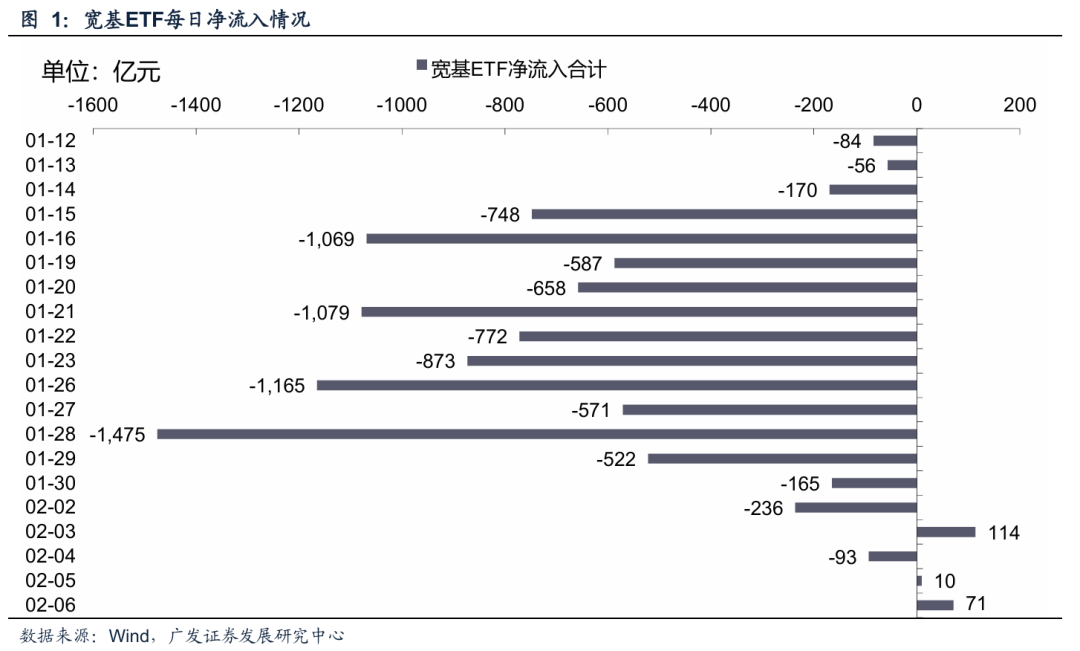
智通财经APP获悉,广发证券发布研究报告称,虽然近期市场的回调,让部分投资人开始对市场的情况有所担忧,但是目前4000点左右的位置,建议大家 重拾信心、重整旗鼓,备战马年的第一波上涨周期。展望后续1-2个月,A股很可能迎来一段"天时地利人和"的上涨机会。配置方向上,广发证券认为, 类比去年机器人,今年可能类似的方向包括字节产业链(春晚投流,对应AI应用和国产算力)、太空光伏等。 在今年元旦后的报告中,广发证券曾经提到: "岁末年初的路演中,我们观察到有不少绝对收益的资金,在新的一年都有权益资产配置的需求,无非是时点选择的问题。交流下来,大家普遍认为,虽 然1月行情如何存在分歧,但是开年上证指数4000点左右的位置,大概率不是2026年指数的高点,于是,很多资金抱着"晚买不如早买"的心态,在元旦后 马上就加仓A股" 指数随即开启一波快速上涨。 如今,经历了1月份的潮起潮落,上证指数再次回到了4000点附近的位置,那么上述逻辑是否会再次演绎? 首先,过去一个月中影响市场的一个重要变量——各类宽基ETF持续大幅度流出,目前来看已经基本告一段落。如下图所示,1.15日至1.29日期间,宽基 ETF经历了连续两周的大幅 ...


周末五分钟全知道(2月第2期):天时地利人和:新一轮上涨周期
GF SECURITIES· 2026-02-08 06:09
——周末五分钟全知道(2 月第 2 期) [Table_Summary] 报告摘要: [分析师: Table_Author]刘晨明 SAC 执证号:S0260524020001 SFC CE No. BVH021 010-59136616 liuchenming@gf.com.cn [Table_ 相关研究: DocReport] | 创业板 50 指数:龙头出海, | 2026-02-04 | | --- | --- | | 链动全球:指数研选系列报告 | | | "沃什预期"与美元潮落: | 2026-02-01 | | 全球股市定价锚的切换与重 | | | 构:——港股&海外周聚焦(2 | | | 月第 1 期) | | | 中美最新财报中的行业配置 | 2026-02-01 | | 线索 | | [联系人: Table_Contacts] 毕露露 18600442697 bilulu@gf.com.cn [Table_Page] 投资策略|专题报告 2026 年 2 月 8 日 证券研究报告 [Table_Title] 天时地利人和:新一轮上涨周期 识别风险,发现价值 请务必阅读末页的免责声明 1 / ...
2025 年年度业绩预告,盈利景气修复可期:“春季躁动”的景气线索
Changjiang Securities· 2026-02-07 08:00
Group 1 - The core viewpoint of the report indicates that the overall A-share pre-announcement rate has improved, suggesting a potential recovery in profitability for 2025 [2][5][15] - As of February 3, 2026, approximately 3,000 out of 5,478 A-share listed companies have disclosed their performance forecasts, resulting in a disclosure rate of 54.0% and a pre-announcement rate of 37.0%, an increase from 33.7% in 2024 [5][15] - The number of companies expecting profit increases in 2025 is 623, while 378 companies anticipate profit decreases [5][15] Group 2 - In terms of market style, large-cap companies are expected to show better profitability than small-cap companies, with the ChiNext board having a higher pre-announcement rate [6][18] - The net profit maximum fluctuation for major indices in 2025 is projected to be 55.2% for CSI 300, 82.8% for SSE 50, 54.7% for CSI 500, and 50.8% for CSI 1000 [6][18] - The pre-announcement rates for these indices are 63.2% for CSI 300, 83.3% for SSE 50, 59.0% for CSI 500, and 49.4% for CSI 1000 [6][18] Group 3 - Industry-wise, the defense and electronics sectors have shown a high level of disclosure and pre-announcement rates, indicating a strong possibility of improved performance [7][21] - As of February 3, 2026, the highest disclosure rates among primary industries are coal (81%), real estate (78%), agriculture, forestry, animal husbandry, and fishery (74%), and computer (72%) [7][21] - The highest pre-announcement rates are seen in non-bank financials (96.2%), non-ferrous metals (67.6%), automotive (52.7%), and steel (50.0%) [7][21] Group 4 - The report anticipates a gradual bull market in 2026, driven by a recovery in profitability and favorable liquidity conditions [8] - The valuation of stocks is expected to remain near historical averages, with low interest rates continuing to provide upward momentum for valuations [8] - The report suggests focusing on technology, domestic circulation, strategic security, and opening up as key investment directions [8]
天风证券:全球risk off后的修复主线
Xin Lang Cai Jing· 2026-02-05 23:40
Core Viewpoint - The global financial markets are expected to show varied trends following recent adjustments, with U.S. stocks likely to maintain a volatile upward trajectory ahead of the midterm elections, supported by easing geopolitical tensions, improved economic expectations, and interest rate cut anticipations [1] Group 1: U.S. Stock Market - U.S. stocks are projected to experience a period of volatile growth before the midterm elections [1] - Factors supporting this trend include a reduction in geopolitical conflicts and a positive shift in economic forecasts [1] - Anticipation of interest rate cuts is also contributing to the expected upward movement in the stock market [1] Group 2: U.S. Treasury Bonds - U.S. Treasury bond yields are expected to decline in the short term due to a dovish stance from the Federal Reserve [1] - However, uncertainties related to fiscal policies, tariffs, and geopolitical factors may lead to an increase in term and inflation premiums [1] Group 3: Currency and Commodities - The U.S. dollar is anticipated to rise initially before experiencing a decline in the short term, while the Chinese yuan may exhibit narrow fluctuations [1] - Gold prices are expected to experience wide fluctuations in the short term but are likely to return to an upward trend within the year [1] - Oil prices may see short-term upward volatility influenced by U.S.-Iran relations [1] Group 4: Domestic Stock Market - The domestic stock market is expected to experience volatility before the Spring Festival, with a potential "spring rally" following the holiday [1]

热门赛道速递|A股市场“春节效应”大数据观察,这些赛道值得关注!
Sou Hu Cai Jing· 2026-02-05 10:37
Core Insights - The "Spring Festival Effect" in the A-share market is not merely about whether the market rises or falls, but rather indicates a shift in market rhythm and style during this time window [2][3]. Group 1: Market Trends - Before the Spring Festival, market sentiment is generally stable, with the Shanghai Composite Index and CSI 300 Index showing average gains of approximately 0.62% and 0.77% respectively in the last five trading days before the festival, and an upward probability of about 63.6% [4][10]. - After the Spring Festival, the market typically enters a sustained upward phase, with the average gains of the three major indices turning positive within the first ten trading days post-festival. The Shanghai Composite Index and CSI 1000 Index have shown post-festival upward probabilities of 72.7% and 81.8% respectively over the past 11 years [9][14]. Group 2: Style Rotation - There is a clear rotation in market style before and after the Spring Festival. Before the festival, larger-cap stocks tend to outperform smaller-cap stocks due to heightened uncertainty and risk aversion, with the CSI 300 Index showing better performance and upward probability compared to the CSI 1000 Index [11][13]. - Post-festival, the market sees a significant shift, with the CSI 1000 Index achieving an average gain of 2.47% and an upward probability of 81.8% in the first five trading days, indicating a preference for smaller-cap growth stocks as liquidity returns and risk appetite increases [14][18]. Group 3: Historical Context - Extreme years such as 2020 and 2016 illustrate how external risks can impact market sentiment. In 2020, the market experienced significant declines due to the COVID-19 pandemic, while in 2016, the aftermath of the "circuit breaker" crisis led to a volatile pre-festival market [15]. Group 4: Future Market Predictions - For the 2026 Spring Festival, there is a high probability of a phase of market recovery post-festival, driven by valuation levels, policy expectations, and capital inflows. However, the market may not simply replicate historical averages due to potential "front-running" behavior by investors [16][17]. - The rotation logic of "defensive large-cap stocks before the festival and active small-cap stocks after" remains relevant, with a focus on sectors that align with current policy support and industry trends, particularly in technology and growth-oriented segments [18][19].

热门赛道速递|A股市场“春节效应”大数据观察,这些赛道值得关注!
和讯· 2026-02-05 09:59
Core Viewpoint - The article discusses the "Spring Festival Effect" in the A-share market, emphasizing that it is not merely about price increases or decreases, but rather about market rhythm and style shifts during this period [3][4]. Group 1: Market Trends - Historical data from 2015 to 2025 indicates that the A-share market exhibits systematic and quantifiable characteristics around the Spring Festival, particularly in overall trends and style rotations [5]. - Pre-festival, market sentiment is generally stable, with the average increase of the Shanghai Composite Index and CSI 300 Index being approximately 0.62% and 0.77% respectively in the last five trading days before the festival, and an upward probability of about 63.6% [6][11]. - Post-festival, the market often enters a sustained upward phase, with the average increase of major indices turning positive within the first ten trading days after the festival, showing an upward probability of 72.7% for the Shanghai Composite Index and 81.8% for the CSI 1000 Index [11][12]. Group 2: Style Rotation - There is a clear rotation in market style before and after the Spring Festival. Before the festival, larger-cap stocks tend to outperform due to lower trading activity and higher certainty in earnings, as indicated by the better performance of the CSI 300 Index compared to the CSI 1000 Index [13][15]. - After the festival, the market sees a significant reversal in style, with the CSI 1000 Index showing an average increase of 2.47% in the first five trading days post-festival, outperforming the CSI 300 Index, which only saw a marginal increase of 0.01% [15][16]. - This shift indicates a return of funds and an increase in risk appetite, with investors favoring smaller-cap growth stocks that are more sensitive to liquidity [15][20]. Group 3: Future Market Predictions - For the 2026 Spring Festival, the report suggests a high probability of a phase of market recovery post-festival, driven by valuation levels, policy expectations, and capital inflows, although the path may be more complex than in previous years [18][19]. - The rotation logic of preferring defensive large-cap stocks before the festival and more elastic assets afterward remains relevant, with a focus on sectors that align with current policy support for technological innovation and new production capabilities [20][21]. - Key sectors to watch post-festival include artificial intelligence, high-end manufacturing, and renewable energy, which are expected to benefit from strong policy drivers and high industry growth [21][22].

A股开盘速递 | A股集体低开 贵金属、光伏设备等板块领跌
智通财经网· 2026-02-05 01:53
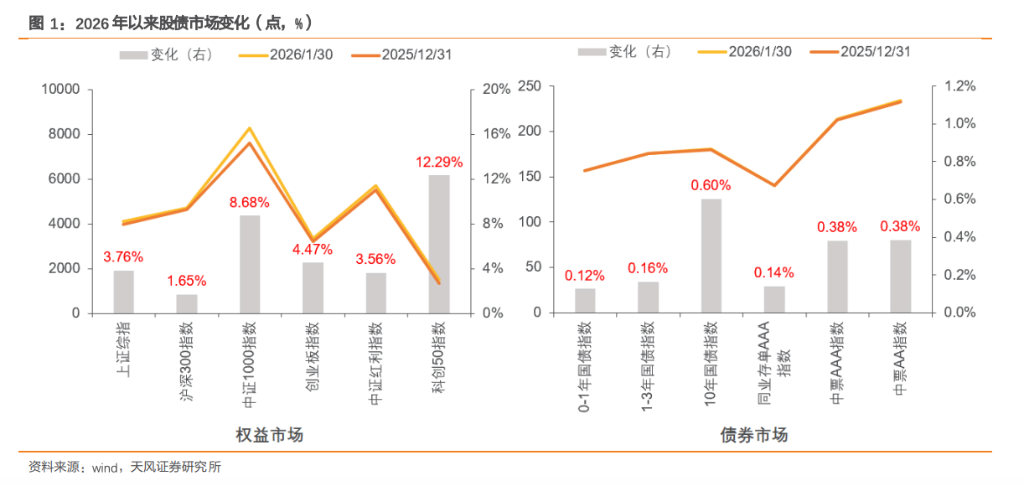
Market Overview - The A-share market opened lower with the Shanghai Composite Index down 0.66% and the ChiNext Index down 1.02% [1] - The banking sector showed strong performance, with Qilu Bank rising over 2%, while sectors such as precious metals, photovoltaic equipment, and storage chips experienced significant declines [1] Institutional Insights - Tianfeng Securities suggests that the "spring market" may be more sustained this year, with potential trends including a stronger foundation for the spring rally, enhanced consumer and travel market activity, and a possible range-bound bond market [1] - The firm also notes that traditional patterns such as "bonds strong, stocks weak" before the holiday may be weakened this year, with expectations for a more balanced support for both stocks and bonds [1] - The anticipated market style post-holiday may involve a combination of growth and dividend strategies rather than a complete switch [1] Sector Analysis - Shangyin Fund indicates that recent fluctuations in the A-share market are primarily due to trading dynamics rather than fundamental changes, suggesting that the current adjustment may present attractive buying opportunities [2] - Dongfang Securities highlights that the rebound following the recent decline has been significant, indicating a stronger expectation for market stability moving forward, with a focus on technology sectors as potential areas of interest [3]

节前债稳,节后股暖?
Hua Er Jie Jian Wen· 2026-02-03 13:27
Core Viewpoint - The market performance at the beginning of 2026 is breaking traditional historical patterns, with significant divergence between stocks and bonds observed in the Chinese capital market [1]. Market Environment - The A-share market is expected to experience a "spring rally" after the Spring Festival, with a shift from a defensive large-cap style to a growth-oriented small-cap style [1][5]. - The bond market has shown a "V-shaped" recovery after initial pressure, with a structural interest rate cut of 0.25% by the central bank in January, leading to a stabilization in market sentiment [3][12]. Historical Patterns - Historical data from 2015 to 2025 indicates a clear seasonal pattern in the A-share market, with a 63.64% probability of the CSI 300 index rising in the 30 days before the Spring Festival, while the probability for the CSI 1000 index is only 27.27% [5][6]. - Post-Spring Festival, the CSI 300 index has a 72.73% probability of rising, with an average increase of 3.15%, while the CSI 1000 index shows an 81.82% probability and an average increase of 8.71% [5][6]. Bond Market Dynamics - The bond market typically shows strength in the 30 days before the Spring Festival due to increased liquidity and strong demand from institutional investors, with a historical average decline of 5.73 basis points in the 1-year bond yield [7][11]. - After the Spring Festival, the bond market may face upward pressure on yields due to changes in policy expectations and increased supply, with an average increase of 1.03 basis points in the 10-year bond yield [7][11]. 2026 Outlook - The foundation for the "spring rally" is expected to be stronger this year due to favorable policy expectations, global liquidity conditions, and a trend of residents allocating more assets to equity markets [12]. - Consumer demand is anticipated to be released earlier than in previous years due to an extended holiday, with expectations for increased spending on travel and consumption [12]. - The bond market is likely to experience a range-bound trading pattern, with reduced necessity for further rate cuts following the January reduction [12]. Potential Changes in Patterns - The traditional "strong bonds, weak stocks" model before the Spring Festival may be disrupted this year, with both markets potentially showing support and increased competition [13]. - The typical post-Spring Festival shift to small-cap growth may be weakened, as large-cap growth could perform well alongside high-dividend assets, leading to a mixed market style rather than a clear transition [13][14].