
输入型通胀

Search documents
PPI上行如何影响AH权益?
HTSC· 2026-03-02 05:50
Group 1: Core Insights - The report predicts that China's PPI is expected to turn positive in May-June 2026 for the first time since October 2022, with an average PPI for the year projected to rise from -2.6% to +0.1% [1] - Historical data shows that there have been seven periods of PPI increases since 2000, with the correlation between AH market performance and PPI being slightly higher in Hong Kong than in A-shares [2][7] - The report identifies five main drivers of PPI increases: input-driven inflation, demand-pull inflation, cost-push inflation, monetary-driven inflation, and mixed inflation, with historical trends indicating a shift from demand-driven to cost-push factors post-2012 [3][25] Group 2: Industry Performance During PPI Increases - During periods of PPI increases, industries such as energy metals, non-metallic materials, and steel raw materials are expected to benefit, while sectors like consumer electronics and food processing may suffer [3][31] - The report highlights that during PPI uptrends, cyclical goods, midstream manufacturing in A-shares, and certain essential consumer sectors in Hong Kong typically benefit from the rise in PPI [8][7] - The analysis indicates that the market tends to react to PPI changes approximately two quarters in advance, aligning with the timing of PPI bottoming out [7][19] Group 3: Sector-Specific Insights - The report provides a scoring model to identify industries that benefit from different types of inflation, emphasizing that sectors like photovoltaic equipment and construction materials are likely to perform well under cost-push inflation conditions [4][30] - For demand-pull inflation, industries such as passenger vehicles and other power equipment are expected to gain, while sectors like general retail and kitchen appliances may face challenges [3][31] - The report also notes that large-cap stocks tend to show higher elasticity compared to small-cap stocks during PPI increases, with value stocks outperforming growth stocks [2][7]
石油板块景气上行,石油ETF(561360)涨超2%,近20日资金净流入超20亿元
Sou Hu Cai Jing· 2026-02-12 03:45
Group 1 - The oil sector is experiencing an upward trend, with the oil ETF (561360) rising over 2% and a net capital inflow exceeding 2 billion yuan in the past 20 days [1] - Western Securities highlights that the trading PPI (large refining) is benefiting from the Federal Reserve's interest rate cuts, the appreciation of the yuan, and the return of cross-border capital, which are improving the cash flow statements of the real economy [1] - The correlation between PPI trading and the export-oriented manufacturing sector is low, suggesting that stock prices and valuations could see systematic recovery before the People's Bank of China resumes quantitative easing and revitalizes the real estate market [1] Group 2 - The oil ETF (561360) tracks the oil and gas industry index (H30198), which includes companies involved in exploration, extraction, refining, and sales of oil and gas, primarily focusing on large enterprises in the energy sector [1] - The index emphasizes upstream resource development and midstream processing while also considering downstream product distribution [1] - The combination of supply contraction and the return of foreign capital is expected to drive input inflation, with PPI likely to recover ahead of CPI [1]
日股再创新高,软银大涨超10%,全球掀起日债日元抛售潮
21世纪经济报道· 2026-02-10 01:56
Group 1 - Japanese stock market shows strong performance with Nikkei 225 index rising over 2%, reaching a historical high, while SoftBank Group surged over 10% [1] - The ruling coalition of the Liberal Democratic Party and Japan Innovation Party secured a majority in the recent elections, leading to expectations of continued fiscal expansion and delayed interest rate hikes [2][4] - Following the election results, the Japanese yen and government bonds faced selling pressure, with the yen trading at 155.9 against the US dollar and 5-year government bond yields reaching a record high of 1.725% [1][2] Group 2 - The market anticipates that the government's fiscal expansion will require more bond issuance, leading to increased supply and downward pressure on bond prices [2][4] - Japan's government approved a supplementary budget for fiscal year 2025, which is over 30% larger than the previous year's budget, raising concerns about the sustainability of Japan's fiscal situation [4] - The latest economic outlook report indicates a projected deficit of approximately 800 billion yen (about 5.1 billion USD) for the upcoming fiscal year, despite being the smallest deficit since 2001 [4] Group 3 - Analysts express concerns that the current fiscal policies may worsen Japan's already high debt burden and weaken the creditworthiness of Japanese government bonds [7] - The ongoing depreciation of the yen is expected to continue, with potential intervention from authorities if the yen approaches 160 against the dollar [5][7] - The likelihood of an interest rate hike by the Bank of Japan in April is increasing, but economic challenges such as declining GDP and real wages complicate the decision [6][9] Group 4 - Japan's economy is facing structural challenges, including input-driven inflation and weak domestic demand, which are limiting consumer spending and overall economic growth [8] - The upcoming spring labor negotiations will be crucial for determining wage growth, which could influence the Bank of Japan's ability to normalize interest rates [9]



地缘政治催化,石油板块上扬,石油ETF(561360)收涨超1.5%
Sou Hu Cai Jing· 2026-02-09 11:05
Group 1 - The oil sector is experiencing an upward trend, with the oil ETF (561360) rising over 1.5% on February 9 due to geopolitical factors [1] - Western Securities indicates that PPI will recover ahead of CPI driven by supply contraction and foreign capital inflow, suggesting a positive outlook for the oil and gas industry [1] - The oil ETF tracks the oil and gas industry index (H30198), which focuses on companies involved in exploration, extraction, refining, and sales, reflecting the overall performance of the oil and gas sector [1] Group 2 - The index components are primarily from the energy sector, characterized by strong cyclicality and significant impact from international oil price fluctuations, making it suitable for investors interested in energy allocation [1]
万腾外汇:日美货币政策分化 日本通胀与增长难平衡
Sou Hu Cai Jing· 2026-02-02 03:51
Group 1 - The Bank of Japan (BOJ) expresses a cautious stance regarding the risks of being "behind the curve," indicating that while these risks have not significantly increased, timely policy implementation is necessary [1] - The BOJ members have reached a consensus to continue a gradual tightening path if future economic growth and inflation meet expectations, reflecting the reality of insufficient resilience in Japan's economic recovery [1] - Japan's negative real interest rates remain a core background for policy adjustments, with the inertia from nearly three decades of ultra-loose policies contributing to weak domestic consumption and fragile corporate confidence [1] Group 2 - The depreciation of the yen aligns with the BOJ's policy direction, as Prime Minister Suga Yoshihide states that a weaker yen could create opportunities for export-oriented industries, particularly in mitigating the impact of U.S. tariffs on the automotive sector [3] - A weaker yen enhances the price competitiveness of Japan's export categories, such as automobiles and machinery, while also increasing foreign exchange earnings for companies [3] - However, yen depreciation raises import costs, exacerbating imported inflation, which poses a potential conflict with the BOJ's goal of controlling inflation through interest rate hikes [3] Group 3 - The divergence in monetary policies between Japan and the U.S. is based on their respective economic fundamentals and policy objectives, influencing exchange rates and creating a feedback loop affecting trade and inflation [5] - The BOJ focuses on balancing inflation and economic recovery through gradual rate hikes, while the U.S. Federal Reserve prioritizes inflation control with a steady tightening approach [5] - The evolving global trade landscape will continue to impact the policy dynamics between Japan and the U.S., affecting global financial markets and supply chain adjustments [5]
2026年1月PMI点评:节前景气回落,结构分化加剧
Orient Securities· 2026-01-31 23:30
Economic Indicators - The Manufacturing PMI for January 2026 is at 49.3%, falling below the expansion threshold of 50.1%[7] - The Production and New Orders PMI are recorded at 50.6% and 49.2% respectively, both showing significant declines from previous levels[7] Sector Performance - High-tech manufacturing PMI stands at 52%, slightly down from 52.5%, but remains near the second-highest level since the implementation of equal tariff policies in April 2025[7] - The construction sector's activity has slowed significantly, with the PMI dropping below 40% due to adverse weather and the upcoming holiday[7] Demand Dynamics - New Orders PMI has seen a year-on-year decline, marking the second-lowest drop for this period, indicating insufficient domestic demand[7] - New Export Orders PMI decreased by 1.2 percentage points to 47.8%, influenced by prior export surges and trade policy adjustments from key partners[7] Price Trends - Major raw material purchase price index and factory price index have risen to 56.1% and 50.6% respectively, indicating a return to expansion after 20 months[7] - Prices in the non-ferrous metal sector are driving overall price increases, while sectors with weak internal demand, like wood processing, show price contraction[7] Future Outlook - The report suggests that geopolitical changes and investment demand in technology will continue to drive global capital expenditure and commodity prices, particularly in non-energy commodities[7] - The ongoing contradiction of strong supply versus weak demand in the domestic market remains a critical issue, with the ability of upstream prices to transmit to downstream still uncertain[7]
日元汇率与日本国债动荡交织 高市早苗政府在大选前面临市场考验
Xin Lang Cai Jing· 2026-01-27 01:55
Core Viewpoint - Japanese Prime Minister Sanna Takashi has launched her election campaign with the primary goal of ensuring a smooth voting process on February 8, while avoiding significant fluctuations in the financial markets [1][2][3] Group 1: Election Campaign and Market Stability - The campaign officially commenced on Tuesday, with Takashi aiming to solidify the ruling coalition's majority in the House of Representatives [3] - Recent polls indicate a slight decline in her approval ratings, yet they remain at a relatively high level overall [3] - A Japanese Finance Ministry official noted that any measures to lower bond yields could lead to further depreciation of the yen, increasing imported inflation and raising interest rate pressures [1][2] Group 2: Market Reactions and Government Strategies - Speculation arose last week regarding potential coordinated actions between the U.S. and Japan in the foreign exchange market, which temporarily boosted the yen's exchange rate [3] - There are currently no signs that authorities have engaged in actual intervention, although Japanese Finance Minister Katsunobu Kato and U.S. Treasury Secretary Janet Yellen have called for calm in the Japanese bond market, which has alleviated upward pressure on yields [3] - Lombard Odier's senior macro strategist Homin Lee stated that once the new cabinet is formed post-election and the annual budget is passed, it will become easier to achieve a balance between managing the yen's exchange rate and Japanese bond yields [4]
生产者物价指数(PPI)对汇率有什么影响
Jin Tou Wang· 2026-01-05 04:09
Core Viewpoint - The Producer Price Index (PPI) serves as a leading indicator for the Consumer Price Index (CPI), influencing currency exchange rates through its impact on inflation and monetary policy [1]. Group 1: Transmission Mechanisms - Positive Transmission: Rising PPI indicates increased production costs, leading to higher CPI, prompting potential interest rate hikes by the central bank, which can strengthen the domestic currency [1]. - Blocked Transmission: If PPI rises but CPI remains stable due to competitive market pressures, the central bank may not need to raise rates, resulting in a lack of significant currency movement [2]. - Negative Transmission: Continuous negative PPI growth suggests economic contraction, leading to potential interest rate cuts and depreciation of the domestic currency [3]. Group 2: PPI Structure Analysis - Input-driven PPI Increase: If PPI rises due to higher import prices of commodities, it may worsen trade balances and not lead to currency appreciation, potentially causing depreciation [4]. - Demand-driven PPI Increase: A rise in PPI due to strong domestic demand can lead to higher CPI, increasing the likelihood of interest rate hikes and strengthening the domestic currency [5]. Group 3: Key Influencing Variables - Market Reaction to PPI: The foreign exchange market's response to PPI data is primarily based on the deviation of actual values from market expectations rather than the data's absolute changes [6]. - Significant Positive Deviation: A much higher-than-expected PPI can heighten inflation and interest rate hike expectations, leading to a rapid appreciation of the domestic currency [6]. - Significant Negative Deviation: A much lower-than-expected PPI can alleviate inflation concerns, potentially leading to interest rate cuts and a weakening of the domestic currency [7]. Group 4: Long-term Implications of PPI and CPI Divergence - Persistent PPI above CPI: This scenario can squeeze corporate profits, suppressing investment and income growth, which may hinder long-term economic growth [10]. - Persistent PPI below CPI: This situation can expand corporate profits but may create inflationary pressures, requiring the central bank to balance growth and inflation [10]. Group 5: Summary of PPI's Impact on Currency - Short-term Impact: The effect of PPI on currency is influenced by the deviation from expectations, with unexpected increases in demand-driven PPI likely to strengthen the currency, while input-driven increases or lower-than-expected PPI may suppress it [11]. - Long-term Impact: The transmission of PPI to CPI is crucial; smooth transmission leading to policy adjustments can result in currency fluctuations, while blocked transmission diminishes PPI's influence on currency [11].
韩元走弱“偏离基本面”!韩国央行行长誓言捍卫汇率稳定
Zhi Tong Cai Jing· 2026-01-02 03:41
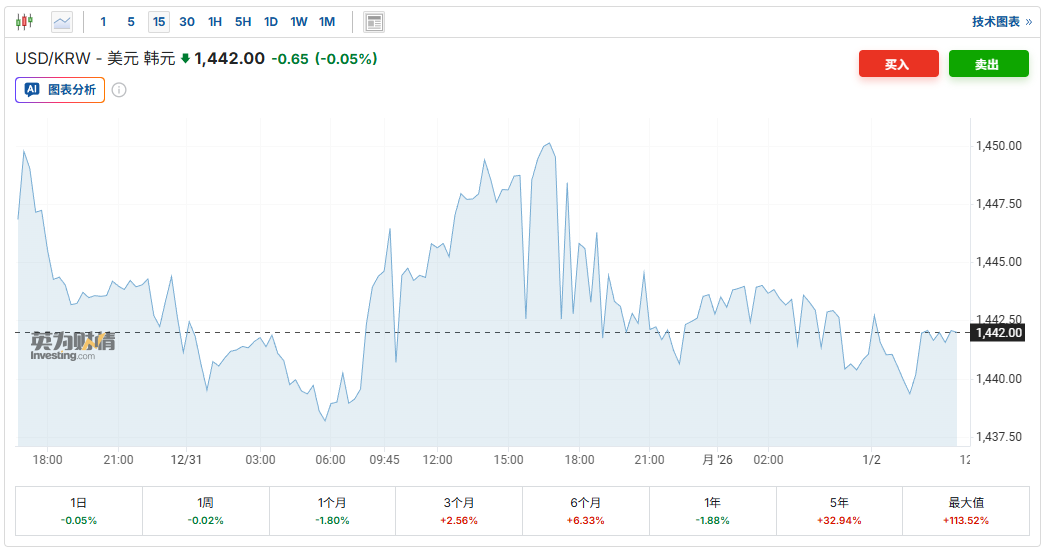
Group 1 - The Bank of Korea Governor Lee Chang-yong stated that the recent depreciation of the Korean won does not reflect the true strength of the South Korean economy and vowed to oppose any investment decisions that may threaten the stability of the foreign exchange market [1] - Concerns over foreign capital outflows and additional U.S. investments as part of tariff negotiations are exacerbating pressure on the won, with the USD/KRW exchange rate recently exceeding 1400 [1] - The South Korean authorities have implemented measures to support the won, including tax incentives and easing foreign exchange controls to increase dollar liquidity domestically [3] Group 2 - The South Korean government announced a new tax incentive plan for repatriated investment accounts to encourage overseas investment capital to return to the domestic market, including a temporary tax exemption on capital gains from selling overseas stocks [4] - The government plans to support major brokerages in launching forward sales products for individual investors to manage foreign exchange risk better [4] - The Bank of Korea maintained the benchmark interest rate at 2.5% and slightly raised economic growth and inflation forecasts, indicating a stable inflation outlook for the new year, although a weaker won could increase inflationary pressures [4]
财联社2025年十大海外新闻
财联社· 2025-12-25 06:47
Group 1: Political and Economic Developments - Trump's return to the presidency has led to increased global uncertainty due to aggressive tariff policies aimed at reshaping the manufacturing landscape in the U.S. [2][3] - The U.S. stock and bond markets experienced significant volatility as a result of these tariff policies, prompting a shift in global capital strategies towards high-friction and high-inflation environments [3] - The U.S. Federal Reserve's three interest rate cuts in 2025 did not lead to a decrease in long-term interest rates, which remained high due to expansive fiscal policies and rising national debt [10][11] Group 2: Commodity and Asset Market Trends - Gold prices surged to over $4500 per ounce, surpassing the euro to become the second-largest reserve asset globally, indicating a shift in the traditional currency reserve system [4][5] - The MSCI global index reached historical highs, reflecting strong performance across various markets, particularly in technology and emerging markets [6][7] - Industrial metals like copper and aluminum saw significant demand due to global energy transitions and infrastructure developments, highlighting a robust physical economy [6][7] Group 3: Technology Sector Dynamics - Nvidia's market capitalization exceeded $5 trillion, marking a pivotal moment in the AI infrastructure race, although concerns about the sustainability of its growth model emerged [8][9] - The tech sector faced volatility as investors shifted focus from speculative investments to evaluating actual profit growth, raising concerns about potential bubbles in AI investments [9] Group 4: Geopolitical Tensions - The ongoing conflict in the Middle East saw a temporary ceasefire in Gaza, but underlying tensions remained, affecting global investment confidence in the region [14][15] - Military confrontations between India and Pakistan escalated, leading to significant disruptions in regional markets and highlighting the risks associated with geopolitical instability [16] Group 5: Market Sentiment and Investment Strategies - The retirement of Warren Buffett from Berkshire Hathaway prompted a reevaluation of value investing principles in a rapidly changing market landscape dominated by technology [17][18] - The cryptocurrency market experienced a dramatic downturn after a period of growth, emphasizing the volatility and risks associated with emerging digital assets [19]
