
人民币升值

Search documents
重要会议临近,市场高预期能兑现吗?
Hu Xiu· 2025-11-30 12:19
Group 1 - The market is anticipating significant policy announcements from the upcoming Political Bureau meeting and the Central Economic Work Conference, which are expected to set directions and tasks for the economy, but will not reveal the GDP target for next year until March [3][4] - There is a discrepancy in expectations as the market hopes for strong stimulus measures, but recent macroeconomic data has been weak, with the November manufacturing PMI only slightly increasing by 0.2 and remaining below 50, indicating overall contraction [4] - The service sector's business activity index saw a significant decline of 0.6, also remaining in the contraction zone, highlighting the need for potential stimulus [4] Group 2 - Recent credit data from mid-November indicates weak financing demand in the real economy, further supporting the need for policy intervention [5]
陈果:关注人民币升值预期下的机会
Sou Hu Cai Jing· 2025-11-30 11:08
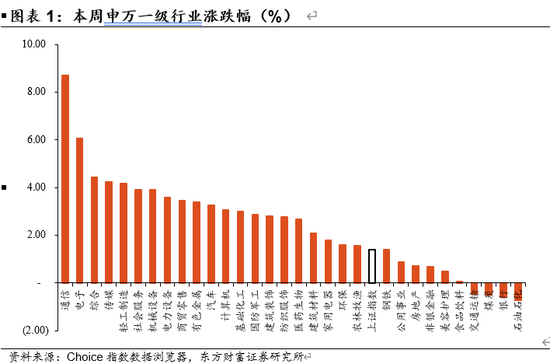
Core Viewpoint - The market is currently experiencing a recovery phase, led by technology growth sectors, but with low trading volumes indicating high investor caution. Key macro events in December, including the Federal Reserve's interest rate decision and the Central Economic Work Conference, are expected to be the main focus for the market [1][3][5]. Market Performance and Trends - The market has shown a rapid rotation among sectors in November, with technology and defensive sectors alternating in performance. The leading sectors for the month included banking, light industry, telecommunications, and media, while computing, automotive, electronics, non-banking financials, and pharmaceuticals lagged [5][6]. - Historical patterns suggest that accelerated sector rotation does not necessarily lead to systemic market adjustments, as market performance is more influenced by valuation levels and the ability of leading sectors to maintain momentum [6][8]. Currency and Foreign Investment - The Chinese yuan has shown a stable and slightly strong trend against the US dollar since November, driven by expectations of a Federal Reserve rate cut, stable China-US relations, and increased demand for currency settlement from export companies. This appreciation is expected to lower costs for import-dependent industries and improve conditions for companies with dollar-denominated debt [2][16]. - The appreciation of the yuan enhances the relative attractiveness of RMB-denominated assets, potentially accelerating foreign capital inflows into the A-share market. Recent data indicates a significant increase in foreign investment in technology growth sectors, reflecting a growing recognition of China's technological capabilities [2][18]. Policy and Economic Outlook - The upcoming Central Economic Work Conference in December is anticipated to provide critical guidance for the market, particularly if it introduces new policy directions related to specific industries. The last five years of cross-year market trends indicate that macro policy is a key driver of market movements, often leading to a shift from value to growth styles [3][15]. - The market is currently positioned for a potential cross-year/spring rally, with expectations of policy support for economic growth. However, the timing of this rally may be delayed due to the need for consensus building among investors [12][15]. Sector Focus - Key sectors to watch include semiconductors, energy storage, robotics, AI applications, and pharmaceuticals, as these areas are likely to benefit from policy support and market interest [3][15].

21社论丨内外部因素共振支撑人民币走强
Sou Hu Cai Jing· 2025-11-28 22:11
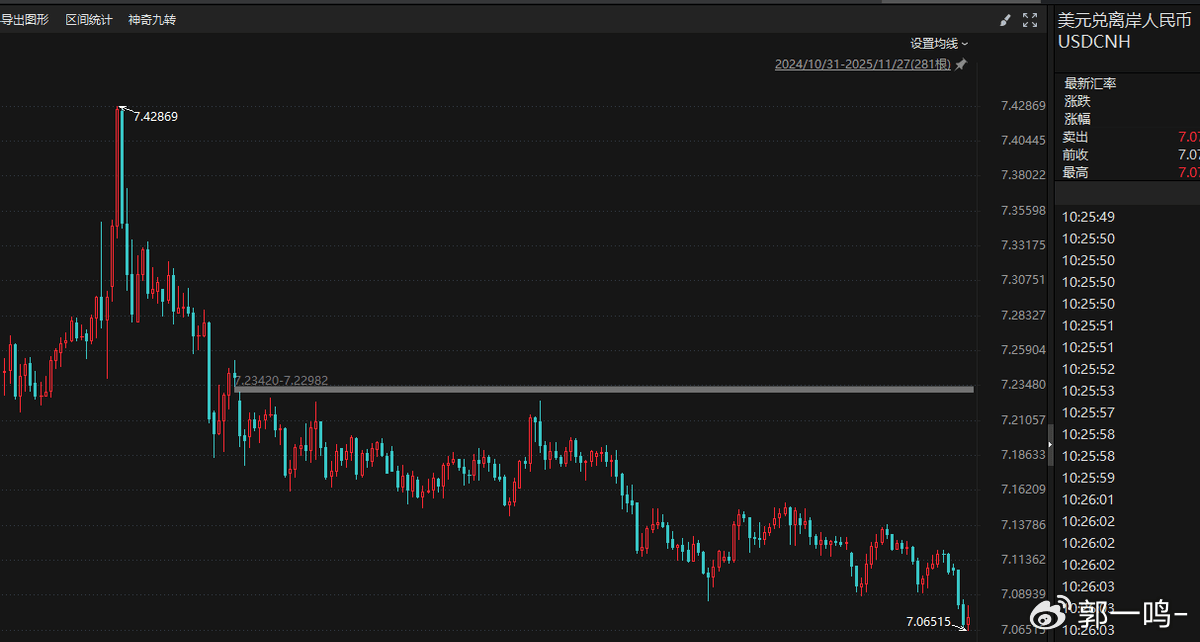
Group 1 - The recent strengthening of the RMB against the USD has drawn significant market attention, with the exchange rate rising to around 7.07, a nearly 5% appreciation from the April low of 7.43, marking the highest level since October 14 of last year [1] - The primary driver for the RMB's appreciation is the market's increasing expectation of a rate cut by the Federal Reserve in December, with the probability of a 25 basis point cut rising to approximately 80% following dovish signals from the Fed [1][2] - The RMB's strength is also supported by positive signals in global trade, particularly a thaw in US-China trade relations, which has reduced external uncertainties facing the Chinese economy [1][2] Group 2 - The RMB's appreciation is further bolstered by the robust and resilient fundamentals of the Chinese economy, with exports maintaining high growth despite US tariffs, and a GDP growth target of 5% appearing more certain [2] - Recent policies aimed at curbing disorderly competition in China have begun to show results, stabilizing key indicators like core inflation and producer prices, which has boosted market confidence and supported the RMB's long-term appreciation trajectory [2] - The internationalization of the RMB is progressing steadily, with an increase in overseas investments by Chinese enterprises, which helps mitigate exchange rate risks and supports the RMB's broader use in cross-border trade and investment [2][3] Group 3 - The questioning of USD credit due to high debt levels and protectionist tendencies has led global investors to seek asset diversification, presenting significant opportunities for RMB internationalization [3] - The global trading volume of the RMB has surged to $817 billion daily, accounting for 8.5% of global forex trading volume, indicating a growing acceptance of the currency [3] - As of the end of October, the scale of offshore RMB loans by financial institutions reached approximately 2.5 trillion yuan, reflecting a 37.5% year-on-year increase, showcasing the acceleration of RMB credit "going abroad" [3][4]
2026年宏观十问:货币:还有多少降息空间?
CAITONG SECURITIES· 2025-11-28 12:52
Core Insights - The Federal Reserve is expected to remain in a rate-cutting cycle in 2026, with moderate inflation not posing a significant constraint on rate cuts. Price data indicates that inflation in the U.S. has not shown an abnormal rebound, supporting the Fed's potential rate cuts [4][7] - In China, monetary easing remains necessary, but banks need to prioritize "anti-involution" measures first. High debt pressures in real estate and local government sectors necessitate monetary easing to mitigate risks, but the current space for easing is limited due to low net interest margins [4][8] - Limited monetary easing is anticipated at the beginning of next year to stimulate the economy and align with fiscal debt issuance. A significant amount of local government debt is expected to be issued in early 2026, necessitating potential reserve requirement ratio cuts to stabilize liquidity [4][15][16] - The misalignment of monetary policies between China and the U.S. is expected to support the appreciation of the Renminbi, with trade surpluses providing long-term support for the currency. Since February 2020, China has maintained a positive trade balance, indicating strong foreign exchange accumulation [4][18] Summary by Sections Section 1: Monetary Policy in the U.S. - The U.S. is likely to enter a new round of rate cuts in 2026, with inflation rising moderately and not significantly constraining the Fed's decisions. The CPI in September increased by 3.0%, slightly above August's 2.9% but below market expectations [7] - The influence of Trump's tariff policies has resulted in lower-than-expected price increases for goods, indicating weak terminal demand and limited price pass-through to consumers [7] Section 2: Monetary Policy in China - China's monetary easing is deemed necessary due to high debt pressures in real estate and local government sectors, but the current easing space is limited. As of Q3 2025, the net interest margin for commercial banks fell to 1.42%, a historical low [8][10] - The need for banks to adopt "anti-involution" strategies is emphasized, focusing on maintaining reasonable interest rate relationships rather than merely adjusting deposit rates [13][14] Section 3: Economic Stimulus and Debt Issuance - Short-term monetary easing is expected at the start of the year to stimulate economic growth and support fiscal debt issuance. The issuance of local government debt is anticipated to be significant in early 2026 [15][16] - The potential need for reserve requirement ratio cuts is highlighted to release long-term liquidity and stabilize interbank liquidity fluctuations [16] Section 4: Currency Dynamics - The divergence in monetary policies between China and the U.S. is expected to create a foundation for the Renminbi's appreciation, supported by ongoing trade surpluses. Since February 2020, China has consistently recorded positive trade balances, indicating strong foreign exchange demand [18][19]
收评:A股11月收官!沪指低开高走涨0.34% 逾4100只股飘红
Xin Hua Cai Jing· 2025-11-28 07:39
Market Overview - The A-share market closed with all three major indices rising, with the Shanghai Composite Index at 3888.60 points, up 0.34%, and a trading volume of 645.8 billion yuan [1] - The Shenzhen Component Index rose 0.85% to 12984.08 points, with a trading volume of 940 billion yuan, while the ChiNext Index increased by 0.70% to 3052.54 points, with a trading volume of 460.6 billion yuan [1] - The total trading volume for the Shanghai and Shenzhen markets was 1585.8 billion yuan, a decrease of 124 billion yuan from the previous day [1] - The Shanghai Composite Index fell 1.67% for the month, ending a six-month streak of gains, while the Shenzhen Component Index and ChiNext Index fell 2.95% and 4.23% respectively [1] Sector Performance - The market showed a broad-based increase across various sectors, with notable gains in energy metals, shipbuilding, fertilizer, cement, mining, retail, automotive, engineering construction, and optical electronics [1] - Conversely, sectors such as traditional Chinese medicine, banking, insurance, chemical pharmaceuticals, and gaming experienced declines [1] Stock Highlights - The titanium dioxide sector saw significant strength, with companies like Jinpu Titanium Industry and Annada hitting the daily limit [2] - The dairy sector also performed well, with Yantang Dairy and Sunshine Dairy reaching the daily limit [2] - The commercial aerospace sector continued to strengthen in the afternoon, with stocks like Qianzhao Optoelectronics and Aerospace Huanyu hitting the daily limit [2] - Over 4100 stocks rose, with more than 80 stocks hitting the daily limit [3] Institutional Insights - According to Jifeng Investment Advisors, despite market fluctuations, the appreciation of the RMB and structural optimization of foreign capital present a significant opportunity for the revaluation of RMB assets [4] - Zhongtai Securities suggests that the A-share technology sector has improved in terms of crowding, and recommends focusing on less crowded areas within technology, such as gaming and media [4] - CITIC Securities notes that the domestic embodied intelligence sector has surpassed a total market value of 3 trillion yuan, with expectations for continued expansion [5] Policy Developments - Beijing has released an action plan to promote the high-quality development of the "AI + audiovisual" industry, focusing on new intelligent terminal products and services [6] Foreign Investment Sentiment - UBS has expressed optimism about Chinese technology stocks despite potential global market volatility, setting a target for the Hang Seng Technology Index at 7100 points by the end of 2026, representing a nearly 27% increase from the recent closing price [7][8] - Fidelity International's CIO also highlighted that the valuations of Chinese technology companies remain low [8]
金融期货早评-20251128
Nan Hua Qi Huo· 2025-11-28 05:23
1. Report Industry Investment Ratings - Not provided in the content 2. Core Views of the Report - **Overall Economic Situation**: Overseas, the US employment data shows significant differentiation, and the Fed officials' recent statements strengthen the expectation of a December interest rate cut. Domestically, the economic fundamentals are cooling marginally, and the market's expectation of policy intensification is rising [2]. - **Renminbi Exchange Rate**: The on - shore RMB against the US dollar is expected to show a "sideways bottoming, slowly declining central tendency" trend. In the short term, the appreciation rhythm may slow down, but the overall appreciation trend remains unchanged [3]. - **Stock Index**: The stock index is expected to have a narrow - range sideways movement in the short term due to weak fundamentals and lack of new positive factors [4]. - **Treasury Bonds**: The medium - term view is to hold long positions, and new long positions can be gradually established at low prices [5]. - **Container Shipping to Europe**: The container shipping to Europe futures is expected to be sideways and weak in the short term, with geopolitical expectations dominating the market sentiment [7]. - **Precious Metals**: In the medium - to - long term, the price of precious metals will continue to rise. In the short term, pay attention to the December Fed interest rate cut expectation and the 60 - day moving average. Dips are considered opportunities to increase long positions [10]. - **Copper**: The futures price is expected to move upwards if it breaks through 87,000. Downstream enterprises in need can buy futures for hedging [12]. - **Aluminum Industry Chain**: Aluminum is expected to have a high - level sideways movement; alumina is expected to be weak; cast aluminum alloy is expected to have a high - level sideways movement [13]. - **Zinc**: Zinc is expected to have a strong sideways movement in the short term due to stalemate fundamentals [14]. - **Nickel and Stainless Steel**: They are expected to continue their wide - range sideways movement, with limited improvement in fundamentals [15]. - **Tin**: Tin is expected to have a high - level sideways movement. It is not recommended to short in the short term [17]. - **Lithium Carbonate**: In the short term, be cautious about chasing high prices near 100,000 yuan/ton. In the medium - to - long term, seize the opportunity to build long positions after dips [19]. - **Industrial Silicon and Polysilicon**: Industrial silicon is expected to have a sideways movement in the short term and has long - term value for position building at low prices. Polysilicon should pay attention to position risks [21]. - **Lead**: Lead is expected to move sideways between 16,800 - 17,100 yuan/ton [24]. - **Rebar and Hot - Rolled Coil**: They are expected to move within a range, with rebar between 2,900 - 3,200 yuan/ton and hot - rolled coil between 3,100 - 3,400 yuan/ton [26]. - **Iron Ore**: Iron ore is currently strong, but it is recommended to wait for the basis to repair and then consider shorting at high prices [28]. - **Coking Coal and Coke**: Coking coal has limited downward space and has long - term multi - allocation potential for the far - month contract. For coke, it is not recommended to blindly short [29]. - **Silicon Iron and Silicon Manganese**: They are expected to be sideways and weak due to high inventory and weak demand [31]. - **LPG**: The domestic LPG is relatively strong, and the short - term arrival is expected to remain low [32]. - **PTA - PX**: The PX - PTA may decline after the previous speculation funds leave. The TA01 contract has a large pressure above 4,800 yuan, and the processing fee should be operated within the 200 - 290 range [35]. - **MEG - Bottle Chip**: Maintain the idea of shorting at high prices. Consider shorting or selling call options above 3,900 yuan for the 01 contract [37]. - **PP**: PP is expected to maintain a low - level sideways movement due to weak spot prices and lack of upward drivers [39]. - **PE**: PE is expected to continue its supply - strong and demand - weak situation, and a put - option strategy can be considered [42]. - **Pure Benzene and Styrene**: Pay attention to the actual transaction of US - South Korea pure benzene and the domestic large - factory maintenance plan [44]. - **Fuel Oil**: The high - sulfur fuel oil cracking is expected to decline in the future, while the low - sulfur fuel oil cracking has an upward drive [45][47]. - **Asphalt**: Asphalt is expected to move sideways in the short term. Pay attention to the winter storage policy [49]. - **Rubber and 20 - Rubber**: The rubber system is expected to maintain a wide - range sideways movement, with light - colored rubber relatively stronger [51]. - **Glass, Soda Ash, and Caustic Soda**: Soda ash is expected to be weak; glass 01 contract will follow the reality, and pay attention to the cold - repair situation; caustic soda has weak supply - demand fundamentals [52][53][54]. - **Pulp and Offset Paper**: They are expected to maintain a sideways or sideways - weak movement in the short term [56]. - **Log**: The log market is expected to be sideways and weak. Consider shorting at high prices and 01 - 03 reverse - spread opportunities [57]. - **Propylene**: Propylene is under the weak pressure of PP, and the domestic supply remains loose [59]. 3. Summaries by Relevant Catalogs Financial Futures - **Macro**: The profit of domestic industrial enterprises is declining marginally. The US employment data is differentiated, and the Fed's December interest rate cut expectation is strengthened [1][2]. - **Renminbi Exchange Rate**: The on - shore RMB against the US dollar closed at 7.0806, down 4 points. The mid - price appreciated to the highest level since October 14, 2024. It is expected to show a "sideways bottoming, slowly declining central tendency" trend [3]. - **Stock Index**: The stock index rose and then fell, with shrinking trading volume. It is expected to have a narrow - range sideways movement in the short term [4]. - **Treasury Bonds**: The treasury bonds were sideways on Thursday. It is recommended to hold long positions in the medium term and gradually build new long positions at low prices [4][5]. - **Container Shipping to Europe**: The container shipping to Europe futures was narrowly sideways. It is expected to be sideways and weak in the short term, with geopolitical expectations dominating the market sentiment [5][7]. Commodities Non - Ferrous Metals - **Precious Metals**: Platinum and palladium rose and then fell, while gold and silver maintained a sideways movement. The Fed's December interest rate cut expectation is high. It is expected that the price of precious metals will rise in the medium - to - long term [8][10]. - **Copper**: The INE copper price rose sharply. The global copper market is expected to be in short supply in 2026. The futures price is expected to move upwards if it breaks through 87,000 [11][12]. - **Aluminum Industry Chain**: Aluminum is expected to have a high - level sideways movement; alumina is expected to be weak; cast aluminum alloy is expected to have a high - level sideways movement [13][14]. - **Zinc**: Zinc is expected to have a strong sideways movement in the short term due to stalemate fundamentals [14]. - **Nickel and Stainless Steel**: They are expected to continue their wide - range sideways movement, with limited improvement in fundamentals [15][16]. - **Tin**: Tin is expected to have a high - level sideways movement. It is not recommended to short in the short term [17]. - **Lithium Carbonate**: The futures price fell. It is recommended to be cautious about chasing high prices near 100,000 yuan/ton in the short term and seize the opportunity to build long positions after dips in the medium - to - long term [18][19]. - **Industrial Silicon and Polysilicon**: Industrial silicon is expected to have a sideways movement in the short term and has long - term value for position building at low prices. Polysilicon should pay attention to position risks [19][21]. - **Lead**: Lead is expected to move sideways between 16,800 - 17,100 yuan/ton [24]. Ferrous Metals - **Rebar and Hot - Rolled Coil**: They are expected to move within a range, with rebar between 2,900 - 3,200 yuan/ton and hot - rolled coil between 3,100 - 3,400 yuan/ton [25][26]. - **Iron Ore**: Iron ore is currently strong, but it is recommended to wait for the basis to repair and then consider shorting at high prices [28]. - **Coking Coal and Coke**: Coking coal has limited downward space and has long - term multi - allocation potential for the far - month contract. For coke, it is not recommended to blindly short [29][30]. - **Silicon Iron and Silicon Manganese**: They are expected to be sideways and weak due to high inventory and weak demand [31]. Energy and Chemicals - **LPG**: The domestic LPG is relatively strong, and the short - term arrival is expected to remain low [32]. - **PTA - PX**: The PX - PTA may decline after the previous speculation funds leave. The TA01 contract has a large pressure above 4,800 yuan, and the processing fee should be operated within the 200 - 290 range [35]. - **MEG - Bottle Chip**: Maintain the idea of shorting at high prices. Consider shorting or selling call options above 3,900 yuan for the 01 contract [37]. - **PP**: PP is expected to maintain a low - level sideways movement due to weak spot prices and lack of upward drivers [39]. - **PE**: PE is expected to continue its supply - strong and demand - weak situation, and a put - option strategy can be considered [42]. - **Pure Benzene and Styrene**: Pay attention to the actual transaction of US - South Korea pure benzene and the domestic large - factory maintenance plan [44]. - **Fuel Oil**: The high - sulfur fuel oil cracking is expected to decline in the future, while the low - sulfur fuel oil cracking has an upward drive [45][47]. - **Asphalt**: Asphalt is expected to move sideways in the short term. Pay attention to the winter storage policy [49]. - **Rubber and 20 - Rubber**: The rubber system is expected to maintain a wide - range sideways movement, with light - colored rubber relatively stronger [51]. - **Glass, Soda Ash, and Caustic Soda**: Soda ash is expected to be weak; glass 01 contract will follow the reality, and pay attention to the cold - repair situation; caustic soda has weak supply - demand fundamentals [52][53][54]. - **Pulp and Offset Paper**: They are expected to maintain a sideways or sideways - weak movement in the short term [56]. - **Log**: The log market is expected to be sideways and weak. Consider shorting at high prices and 01 - 03 reverse - spread opportunities [57]. - **Propylene**: Propylene is under the weak pressure of PP, and the domestic supply remains loose [59].
加速升值!人民币资产重估下 A股牛市稳了?
Sou Hu Cai Jing· 2025-11-28 03:27
Group 1 - The recent appreciation of the Renminbi (RMB) against the US dollar has reached new highs, with the offshore RMB surpassing 7.08 and the onshore RMB exceeding 7.09, marking the highest levels in over a year [1][3] - The RMB's middle exchange rate against the US dollar has increased by approximately 1000 basis points this year, while the CFETS RMB exchange rate index has risen to 98.22, indicating a strong performance against a basket of currencies [1][3][4] Group 2 - The appreciation of the RMB is attributed to multiple factors, including a decline in the US dollar index, which has dropped over 8% since the beginning of the year, and expectations of further interest rate cuts by the Federal Reserve [4][6] - Domestically, the resilience of the Chinese economy, particularly strong export performance, has provided support for the RMB, with a surplus of 80.9 billion USD in foreign exchange settlements in the first ten months of the year [6] Group 3 - The appreciation of the RMB is expected to positively impact the stock market through three main channels: capital flow, corporate profitability, and policy space, with historical data showing a correlation between RMB appreciation and stock market performance [7][8] - Specific sectors such as aviation, paper manufacturing, and non-ferrous metals are likely to benefit significantly from the RMB's appreciation due to reduced import costs [10] Group 4 - Looking ahead, the RMB is expected to maintain a strong performance, supported by a stable monetary policy environment and ongoing structural adjustments in the economy [11] - The current environment presents a significant opportunity for the revaluation of RMB assets, particularly in sectors like new energy vehicles and semiconductors, which are enhancing their international competitiveness [13]
兴业证券:人民币升值期间A股如何表现?
智通财经网· 2025-11-27 23:14
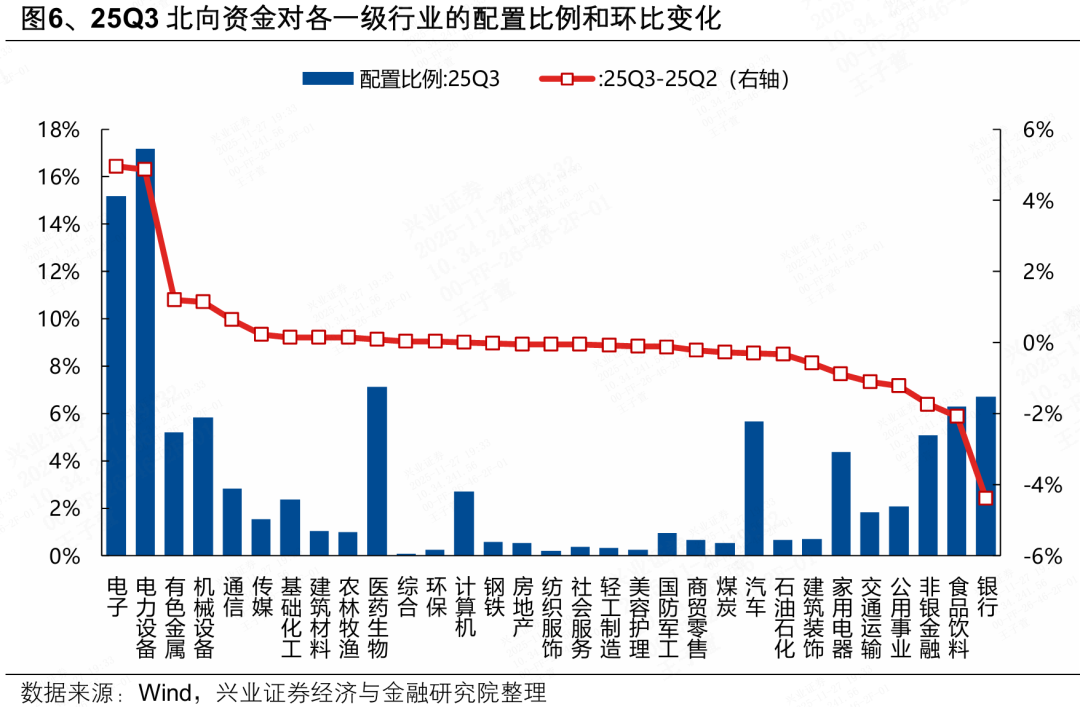
Core Viewpoint - The offshore RMB exchange rate has surpassed 7.08 against the US dollar as of November 26, marking a new high since October 14 of the previous year, with an appreciation of nearly 5% from the low of 7.43 during the "reciprocal tariffs" period in April [1][3] Exchange Rate Dynamics - The recent strengthening of the RMB is driven by several factors, including a weak US dollar, resilient domestic fundamentals, enhanced competitiveness of major economies, and the central bank's commitment to stabilizing the exchange rate [3] - The outlook for RMB appreciation remains solid through 2026, supported by a "loose US, stable China" monetary policy environment [3] Historical Context and Market Correlation - Since the 2015 "exchange rate reform," there has been a significant positive correlation between RMB exchange rates and A-share market performance, influenced by economic fundamentals, monetary policy, market risk appetite, and liquidity [3] - During the RMB appreciation cycles of 2017-2018 Q1 and 2020 Q2-2021, the A-share market experienced bullish trends, with foreign capital playing a crucial role in driving market performance [3][6][9] Sector Allocation Insights - In Q3 2025, the main sectors attracting northbound capital include power equipment, electronics, pharmaceuticals, banking, food and beverage, and machinery, with notable increases in allocation for electronics, power equipment, non-ferrous metals, machinery, and communications [1]

三季度公募港股基金规模与持仓齐升
Zheng Quan Ri Bao· 2025-11-27 16:16
Group 1 - The Hong Kong stock market has shown strong performance this year, with active market sentiment and continuous capital inflow driving significant growth in public Hong Kong stock funds, which reached a total scale of 10,330.08 billion yuan by the end of Q3, a substantial increase of approximately 68% from Q2 [1] - The total number of fund shares for public Hong Kong stock funds reached 8,810.67 million, reflecting a quarter-on-quarter growth of 42%. The stock position of these funds increased to 92.71%, up 0.75 percentage points from the end of Q2, with nearly 80% maintaining stock positions above 90% [1] - The technology sector remains the top choice for public Hong Kong stock funds, although its proportion slightly decreased to 37%. The consumer sector holds the second position with a 25.16% holding ratio. The pharmaceutical sector saw the largest increase in holdings, growing by 3.09% quarter-on-quarter [1] Group 2 - As of November 27, 364 out of 381 public funds with "Hong Kong" in their names achieved net value growth this year, with 58 funds exceeding a 50% growth rate. Notably, two funds, Bank of China Hong Kong Stock Connect Pharmaceutical Mixed A and Huitianfu Hong Kong Advantage Selection Mixed (QDII) A, both surpassed a 100% net value growth rate [2] - Institutions generally hold an optimistic outlook for the market, with expectations of continued inflow of southbound funds driven by public funds and insurance capital, which may further boost the Hong Kong stock market [2] - The market is expected to benefit from the liquidity spillover from domestic and foreign markets and the ongoing narrative around AI, as more quality A-share companies list in Hong Kong [2] Group 3 - Predictions indicate that the Hong Kong stock market may experience a second round of valuation recovery and further earnings revival in 2026, supported by a rebound in fundamentals and attractive valuation discounts. Key focus areas include technology, healthcare, resources benefiting from inflation expectations, essential consumer sectors, and industries benefiting from RMB appreciation [3] - The research team suggests a left-side layout of "true value" stocks, selecting targets based on low valuation, large market capitalization, strong profitability, and cyclical recovery [3]
图说金融:人民币升破7.08
Zhong Xin Qi Huo· 2025-11-27 06:45
Report Summary 1) Report Industry Investment Rating - Not mentioned in the provided content 2) Core View of the Report - Recently, the RMB has experienced a continuous appreciation trend, with the USD/Offshore RMB exchange rate breaking through the 7.08 and 7.07 levels, reaching a low near 7.06. There are three main reasons behind this: the weak Q3 employment data in the US and the deteriorating private - sector job growth in the latest ADP data have increased concerns about a non - linear rise in unemployment rates in October and November, leading to a higher expectation of a Fed rate cut in December, a decline in US Treasury yields, and a narrowing of the China - US interest rate spread, which promotes RMB appreciation; the central parity rate of the RMB against the US dollar has been continuously adjusted in a stronger direction, reaching 7.0796 on November 26, a one - year high, and the positive signal from the China - US high - level call on November 24 has alleviated short - term concerns about tariff escalation; the good performance of the equity market and the continuous net inflow of northbound funds throughout the year have boosted RMB appreciation, and the expected increase in seasonal corporate settlement demand at the end of the year may further consolidate the RMB's appreciation momentum [2] 3) Summary by Related Content - **RMB Appreciation Trend**: The USD/Offshore RMB exchange rate has broken through 7.08 and 7.07, reaching around 7.06 [2] - **Reasons for RMB Appreciation**: - **US Economic Data and Fed Expectations**: Weak US Q3 employment data and deteriorating ADP data on private - sector jobs have increased concerns about unemployment rate hikes in October and November, leading to a higher expectation of a December Fed rate cut, a decline in US Treasury yields, and a narrowing of the China - US interest rate spread [2] - **Central Parity Rate and Diplomatic Signals**: The RMB central parity rate against the US dollar has been adjusted strongly, reaching 7.0796 on November 26, a one - year high. The November 24 China - US high - level call sent positive signals, alleviating short - term tariff concerns [2] - **Equity Market and Capital Flows**: The good performance of the equity market and the continuous net inflow of northbound funds throughout the year have promoted RMB appreciation, and the expected increase in year - end corporate settlement demand may further strengthen the appreciation momentum [2]