
牛市

Search documents
分析人士:本轮“牛市”受政策驱动
Qi Huo Ri Bao· 2025-08-27 02:32
Group 1 - The A-share and futures market have shown strong performance, with the Shanghai Composite Index surpassing the 3800-point mark as of August 25, and trading volume exceeding 2 trillion yuan for 10 consecutive days, reaching a record high of 3.14 trillion yuan on August 25, the second highest in history [1][4] - Analysts attribute the continuous rise in A-shares and futures to policy support and liquidity, with a significant accumulation of policy benefits since September last year, which has boosted market confidence and attracted new capital [1][2] - The improvement in corporate earnings is characterized as structural, with sectors like semiconductors and AI showing strong performance, although overall corporate profitability has not fully recovered, as indicated by a manufacturing PMI drop to 49.3% in July [1][2] Group 2 - The current market rally is supported by monetary policy and corporate earnings, with total policy support being a core factor. The earnings improvement is particularly notable in manufacturing and technology sectors [2][5] - The market's risk appetite is recovering, influenced by state-owned enterprises entering the market, which has reduced downside risks and altered investor expectations, driving capital inflow [2][6] - The trading volume and price movements indicate a significant increase in market activity, with the average stock price rising from 12.65 yuan at the beginning of the year to 16.45 yuan, a 30% increase [3] Group 3 - The current leverage in the market is primarily through on-market financing, with the financing balance exceeding 2.1 trillion yuan, representing 4.2% of the A-share market's circulating value, approaching historical highs [4][3] - Analysts caution about the potential for market corrections due to high trading volumes and elevated valuations, particularly in the STAR Market, where the price-to-earnings ratio has reached 180.78, indicating a risk of overvaluation [4][1] - The upcoming monetary policy decisions from the Federal Reserve, particularly a potential rate cut in September, could further enhance foreign investment interest in A-shares, providing additional support for the index [6][5]
突破3800点!A股逻辑已经彻底改变
Sou Hu Cai Jing· 2025-08-27 02:05
Market Overview - The A-share market has rapidly risen, reaching a 10-year high, with the index stabilizing above 3800 points and approaching 3900 and 4000 points, indicating strong market participation and a healthy "volume-price rise" pattern [1] - The current bull market is considered to be in the nurturing phase, driven by valuation recovery, with the potential for further upward movement being limited as the market approaches historical highs [1] Valuation Metrics - The current price-to-earnings (P/E) ratio of the Shanghai Composite Index is 16.57, which is at the 100% historical percentile for the past 3 years, and the price-to-book (P/B) ratio is 1.51, also at high historical percentiles [1] - The asymmetry in upward and downward momentum suggests a higher risk of correction as valuations continue to recover [1] Economic Drivers - The core of the long-term upward trend in the A-share market relies on substantial improvements in corporate profitability, which is currently under pressure due to weak macroeconomic demand and ongoing adjustments in the real estate sector [9] - Domestic economic stimulus policies and the recovery of overseas demand are crucial for driving demand-side improvements, while supply-side efforts must focus on optimizing industrial structures and eliminating excess capacity [9] Policy Impact - Recent macroeconomic policies have shown effectiveness, with GDP growth reaching 5.3% year-on-year, surpassing the annual target of 5% [11] - Policy measures include adjustments in real estate regulations and direct subsidies to households, aimed at transitioning the economy towards consumption and service-driven growth [11] Global Economic Context - The Federal Reserve's dovish stance and anticipated interest rate cuts in major economies are expected to support a recovery in manufacturing, which is sensitive to financing costs [12] - The potential for increased export demand from overseas markets could provide significant support for the profitability of A-share listed companies [12] Supply-Side Developments - The implementation of anti-involution policies is expected to improve profit margins for companies by reducing excessive competition and promoting healthier market dynamics [15] - Historical precedents suggest that supply-side reforms can lead to significant improvements in profitability for key industries [15] Profitability Trends - Recent data indicates signs of improving corporate profitability, with industrial profits showing a narrowing decline and expectations for positive growth in A-share earnings after four years of decline [16] - Non-financial listed companies are projected to see revenue and net profit growth of approximately 1.6% and 8.3%, respectively [16] Investment Strategy - The overall bullish outlook remains, but the market may experience a "three steps forward, one step back" pattern during the nurturing phase of the bull market [19] - Focus on high-growth sectors such as robotics, innovative pharmaceuticals, and artificial intelligence, while also considering cyclical sectors like food and beverage, power equipment, and non-ferrous metals for potential investment opportunities [19]

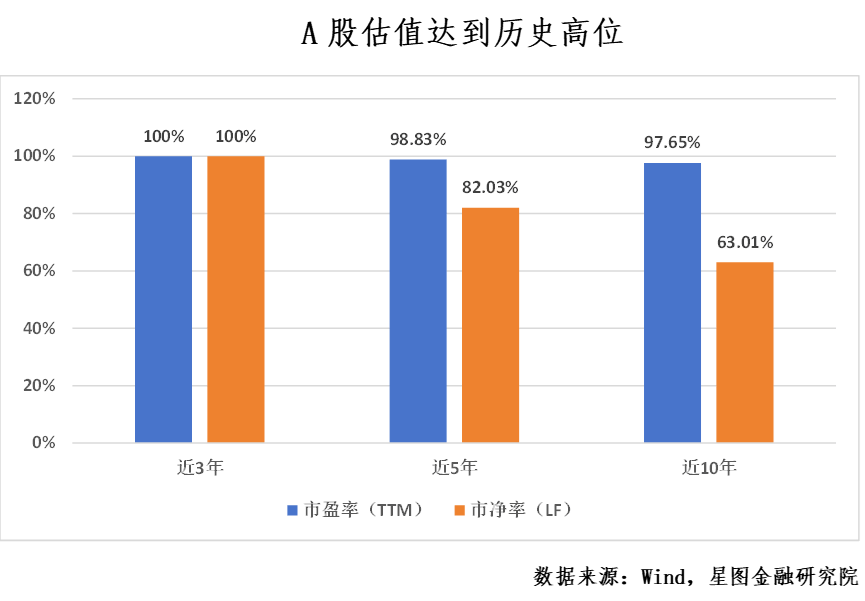
中信证券发文:不要被市场抽走灵魂
Ge Long Hui· 2025-08-27 01:54
Group 1 - The market has been experiencing a smooth bull trend since April, with recent acceleration and increasing confidence among investors [1] - Investment should enhance life choices rather than define them, emphasizing the importance of a rational investment plan and framework to cope with market fluctuations [1] - Key points to remember about bull markets include: 1) Bull markets change the probability of making money but do not enhance individual investment abilities [1] 2) Ordinary investors benefit from beta returns rather than alpha, making index investing more practical than stock picking [1] 3) Bull markets validate correct investment philosophies rather than disrupt them, highlighting the importance of maintaining diversified asset allocation [1] 4) It is unnecessary to dwell on missed opportunities; focus on future changes instead [1]

杨德龙:市场赚钱效应明显增强 吸引场外资金逐渐入场
Xin Lang Ji Jin· 2025-08-27 01:21
Group 1: Economic Recovery and Policy Measures - The macroeconomic environment is showing signs of recovery, with GDP growth at 5.3% in the first half of the year, exceeding the initial target of around 5% [1] - CPI for the first half of the year was -0.1%, indicating a need for continued policy support to stabilize growth [1] - Trade tensions, particularly with the US, have had limited impact on China's economy, with exports to the US decreasing from a peak of 19% to around 24% [1] Group 2: Capital Market Dynamics - The capital market is seen as a key driver for consumer confidence and investment, with recent market performance showing significant upward movement, surpassing the 3800-point mark and approaching 3900 points [2] - Record trading volumes exceeding 3 trillion yuan indicate increasing investor confidence and market optimism [2] Group 3: Sources of Market Upward Movement - Five main sources of capital inflow are identified: institutional investors increasing equity positions, funds moving from the bond market to equities, household savings seeking better returns, capital exiting overcapacity industries, and accelerated foreign investment [3] - Foreign investment in Chinese assets reached 10.1 billion USD in the first half of the year, with expectations for further acceleration in the second half [3] Group 4: Market Characteristics and Trends - The current bull market is characterized as a slow and steady bull market lasting 2-3 years, rather than a rapid surge [4] - The technology innovation sector is leading the market, benefiting from economic transformation and advancements in areas such as AI and smart driving [4] - The market is displaying a "barbell" pattern, with both low-valuation high-dividend sectors and technology sectors experiencing significant gains [4] Group 5: Investor Sentiment and Fundraising - Investor confidence is increasing, as evidenced by the recovery in equity fund issuance, with many new funds exceeding 1.1 billion yuan in initial offerings [5] - The current market conditions are viewed as favorable for investing in quality stocks and funds, presenting opportunities for wealth growth [5]
如何监控“水牛”?这是8个关键指标
Hua Er Jie Jian Wen· 2025-08-27 00:36
Core Insights - The A-share market has reached a historic moment with trading volume surpassing 3 trillion yuan, leading to increased discussions about a bull market [1] - Bank of America analysts have provided an analysis framework with eight key indicators to objectively assess the current market conditions and identify potential overheating signals [1] Group 1: Primary Indicators - Turnover rate, market leverage, and financing transaction ratio are identified as the most important primary indicators for assessing market sentiment and risk levels [2] - The annualized turnover rate has increased from 467% in July to 560% in August, approaching historical highs [3] - The current market leverage ratio stands at 6.8%, up from 6.5% at the end of July, but still below the 7.0%-9.8% range observed from December 2014 to June 2015 [6][9] - The financing transaction ratio has reached 12%, similar to levels seen at the beginning of the bull market in July-August 2014, indicating a potential risk of market correction [10] Group 2: Secondary Indicators - The average daily trading volume in the A-share market has reached 2.7 trillion yuan, significantly higher than 1.6 trillion yuan in July and 1.4 trillion yuan in the first half of the year [13] - The current financing balance is 2.17 trillion yuan, nearing the historical peak of 2.27 trillion yuan in February 2015 [17] - Over 80% of financing loans are utilized by individual investors, making this a crucial indicator for observing retail investor participation [19] Group 3: Tertiary and Quaternary Indicators - New fund issuance and the number of new accounts opened are considered lagging indicators that provide insights into long-term capital inflow trends [20] - The average weekly fundraising scale for equity and mixed public funds in August has been 11 billion yuan, consistent with the average of 10 billion yuan this year, but stronger than the levels seen in 2022-2024 [21] - The number of new accounts opened on the Shanghai Stock Exchange in July was 1.96 million, consistent with the monthly average for the year but significantly lower than historical peaks [25] - Recent data from the People's Bank of China indicates a slowdown in the growth of household deposits, while deposits in non-bank financial institutions are increasing, suggesting a trend of funds moving from banks to the stock market [28][31]
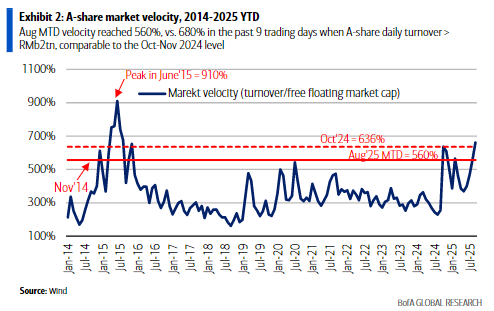
华西证券:市场放量大涨是资金情绪正盛的表现
Mei Ri Jing Ji Xin Wen· 2025-08-27 00:11
Core Viewpoint - The market's significant increase in volume indicates a strong positive sentiment among investors, while the sharp rise in implied volatility signals a quick escalation in speculative activity [1] Market Dynamics - If the market and implied volatility continue to rise rapidly, a short-term adjustment may occur as the market returns to rationality [1] - Conversely, if the market maintains a "slow bull" trend with stable or significantly declining implied volatility, the timing of market fluctuations may be delayed compared to the previous scenario [1] Long-term Logic - The three key long-term drivers of the bull market remain robust: stable market policies, a focus on technology, and the narrative against internal competition [1] - This suggests that as long as these long-term drivers remain unchanged, any market adjustments should be viewed as opportunities, and the bullish mindset should be maintained [1]

当牛市的“幸福”来敲门,我们该如何迎接?
Hu Xiu· 2025-08-26 23:47
Group 1 - The A-share market is currently experiencing a bull market, with continuous daily increases and widespread discussions about stock profits [1] - Historical patterns indicate that past bull markets in A-shares have often ended in significant downturns, suggesting caution despite current optimism [2][3] - The market's tendency towards short-lived bull markets and prolonged bear markets is attributed to its inherent mechanisms, which have reverted to speculative behaviors reminiscent of past trends [4][5] Group 2 - Investors are often lured into a false sense of security during bull markets, leading to a loss of self-awareness and rational decision-making [7] - Three major illusions can mislead investors: attributing short-term gains to personal skill, ignoring fundamental valuation principles, and succumbing to herd mentality [8] Group 3 - Historical examples of major bull markets, such as Japan's in the 1980s and the U.S. during the internet bubble, illustrate the potential for severe market corrections following periods of rapid growth [10][12][15] - The A-share market has seen significant volatility, with past bull markets leading to dramatic declines, highlighting the risks associated with high valuations [16][18] Group 4 - Current market trends show a significant overvaluation in sectors like AI and technology, with companies like Cambricon facing scrutiny over their financial health and competitive positioning compared to global leaders like NVIDIA [20][25] - Cambricon's reliance on future expectations and government support raises concerns about its sustainability and ability to compete effectively in the market [26][28] Group 5 - The investment landscape is characterized by a "barbell" structure, with low-valuation, high-dividend stocks on one end and high-valuation, story-driven stocks on the other, suggesting a need for careful asset allocation [30]

十年一遇的牛市“冲锋号”已吹响,深陷房贷危机,又该如何破局?
Sou Hu Cai Jing· 2025-08-26 18:30
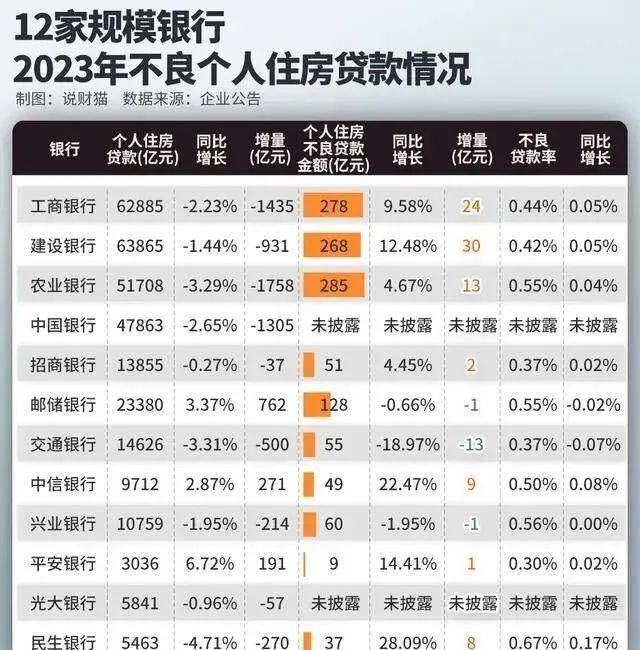
Group 1 - The stock market is experiencing significant activity, with trading volume surpassing 30 trillion, marking the second occurrence in A-share history, indicating a bullish sentiment among investors [1] - Recent news of Trump's planned visit to China suggests a potential easing of US-China relations, which could positively impact the A-share market [1] - The company "Hanwujing" reported a remarkable revenue of 2.881 billion, showing a year-on-year increase of 4300%, highlighting its status as a new market star [2] Group 2 - There is a growing concern regarding the housing loan delinquency rate, which is projected to reach 2.8% by the end of 2024, potentially affecting around 18.2 million households [6] - The economic downturn is exacerbating the housing loan crisis, with a significant increase in the number of households unable to meet their mortgage obligations [10] - The government is implementing measures to stimulate the economy, including lowering housing loan interest rates and promoting consumer spending initiatives [12]
为什么大家都认定现在是牛市?
集思录· 2025-08-26 14:24
Core Viewpoint - The article discusses the complexities and risks associated with investing during a bull market, emphasizing that historical patterns do not guarantee future outcomes and cautioning against excessive leverage [1][4][5]. Group 1: Market Phases and Investor Behavior - The current market phase is debated, with opinions varying on whether it is in the early, middle, or late stages of a bull market [6][7][8]. - Investors are advised to be cautious, as the market can experience significant downturns despite the prevailing bullish sentiment [1][5]. - There is a sentiment that many investors are heavily leveraged, which could lead to substantial losses if the market turns [10][15]. Group 2: Regulatory Environment and Market Sentiment - There are negative signals from the government, such as certain funds reducing their holdings and regulatory scrutiny on speculative trading [4]. - Despite the current bullish market, there is a concern that the absence of cheap stocks and ineffective negative news could indicate a market nearing its peak [6][14]. - The article highlights a strong profit-making effect in the market, suggesting that skepticism about the bull market may stem from inadequate information or flawed reasoning [14][15].

洪灏:牛势继续
2025-08-26 13:23
Summary of Key Points from the Conference Call Industry Overview - The discussion revolves around the Chinese stock market, particularly the Shanghai Composite Index, which recently broke through the significant level of 3,800 points, marking its best weekly gain since October 2024 [1][3]. Core Insights and Arguments - **Market Sentiment and Performance**: Despite the recent rally, there is skepticism about whether the current market trend represents a genuine bull market or merely a technical rebound. The number of declining stocks outnumbered rising ones at the close of the last trading session, indicating mixed sentiment among investors [1][3]. - **Valuation Concerns**: There are concerns that certain sectors, particularly the STAR50 and some SciTech indices, appear overvalued, reminiscent of the 2015 bubble when many companies surged without earnings support [5][7]. - **GDP Cap Rate Recovery**: The GDP capitalization rate in China is recovering to its long-term average after being significantly impacted by regulatory tightening in 2021. This suggests potential for further improvement in market valuations [6][7]. - **Market Dynamics**: The consensus is that the rise in stock prices is partly due to funds being rotated from deposits into equities. However, new account openings and brokerage surveys indicate a more cautious approach compared to previous surges [8][10]. - **Margin Trading Trends**: Margin trading activities are increasing, which typically leads market movements by about three months, suggesting potential for further gains in the near future [9][11]. - **Comparison with US Markets**: The weakening property market in China is contrasted with the US housing market, which, despite its own weaknesses, has not hindered the performance of US stocks. This indicates that external factors may not necessarily dictate market trends [13][14][26]. - **Government Focus on Recovery**: Recent State Council meetings emphasized the importance of investment-driven growth and infrastructure projects, indicating that the government is closely monitoring asset prices and may take measures to stabilize the property market [17][19]. - **Sentiment Indicators**: Current market sentiment is at a 15-year high, which typically suggests a potential correction. However, during the early stages of a bull market, such optimism can persist for an extended period [22][23]. Additional Important Insights - **Potential for Shallow Corrections**: If a correction occurs, it is expected to be shallow and brief due to the presence of investors ready to buy on dips, driven by fear of missing out (FOMO) [24][27]. - **Outlook for Continued Bull Market**: The overall outlook remains optimistic, with the belief that the bull market could continue as the market is not yet considered expensive, and liquidity conditions are improving [25][29].