
新消费

Search documents
“出圈” 求生!消费主题基金“跨界”寻超额收益
券商中国· 2025-10-13 10:12
Group 1 - The core viewpoint of the article highlights the disparity in performance among consumer-themed funds, with some achieving significant returns while others lag behind, particularly in the context of a strong technology sector [1][3][10] - In the third quarter, both traditional and new consumer sectors showed poor performance, with many stocks experiencing limited gains or slight declines, while certain thematic funds managed to outperform, achieving returns comparable to technology stocks [1][7][11] - The article emphasizes the importance of how "consumption" is defined, which influences the investment strategies of various funds, with some adopting a broad view that includes multiple sectors beyond traditional consumer goods [9][10] Group 2 - The article provides specific performance data for consumer-themed funds, noting that the Hai Fu Tong Consumer Preferred Fund led with a return of 82.25%, while others like Yongying New Consumption Smart Selection also performed well with over 55% returns [3][4][8] - The performance of traditional consumer stocks, such as liquor brands, has been lackluster, with the China Securities Liquor Index down approximately 8% year-to-date, indicating ongoing challenges in this sector [5][6][10] - The article discusses the potential for new consumption sectors, which focus on meeting the needs of younger consumers, to continue thriving due to favorable macroeconomic conditions, including policy support and liquidity [11][12]


浦银国际策略观点:新一轮贸易摩擦升级是否会中断港股行情?-20251013
SPDB International· 2025-10-13 09:22
Core Insights - The report discusses the recent escalation of trade tensions between the US and China, particularly focusing on issues such as antitrust, maritime logistics, port service fees, and rare earth export controls. A significant threat from the US to impose 100% tariffs on all Chinese products is highlighted, which could lead to a situation similar to the trade standstill experienced in April-May of this year [2] - Despite the short-term uncertainties caused by the trade tensions, the report suggests that the overall medium-term outlook for the Hong Kong stock market remains positive, driven by improved market expectations, liquidity, and stabilizing earnings forecasts [2][2] - The report recommends investors to consider buying core assets in the Hong Kong stock market during dips, particularly in sectors such as AI, innovative pharmaceuticals, and new consumption [1][2] Market Conditions - The report notes that market participants are now more familiar with the negotiation tactics of the US administration, which has led to a more measured response compared to the panic selling seen in April. This familiarity has resulted in a more stable market environment despite the trade tensions [2] - The liquidity situation has improved significantly due to the Federal Reserve's recent interest rate cuts, which are expected to benefit the Hong Kong stock market. There has been strong net inflow from foreign and southbound funds, and the IPO market remains robust [2] - Earnings expectations for major Chinese indices are stabilizing after previous downward adjustments, with projected earnings growth for major indices expected to reach double digits next year [2] Investment Strategy - The report emphasizes the importance of timing and sector rotation in investment strategies, suggesting that AI and overseas expansion will be key investment themes for the coming years. Companies with strong AI attributes and competitive advantages are primarily listed in the Hong Kong market [2] - The report indicates that despite the uncertainties in the international economic environment, sectors such as innovative pharmaceuticals and new consumption are still experiencing revenue growth due to overseas expansion [2]
兴证全球基金程剑:以合理价格买入优质标的力争低回撤高回报
Shang Hai Zheng Quan Bao· 2025-10-12 15:11
Group 1 - The investment philosophy emphasizes buying high-quality growth assets at reasonable prices, aiming for moderate risk and above-average returns [1] - As of September 30, the managed fund has achieved a one-year return of 38.14% and a two-year return of 46.75% [1] Group 2 - The market environment has improved, leading to a revaluation of assets as macroeconomic fundamentals become more optimistic [2] - A steady improvement in the fundamentals of A-share listed companies, along with supportive industrial policies, is expected to enhance operational stability and sustainability [2] Group 3 - Growth assets, particularly in sectors like AI, innovative pharmaceuticals, new consumption, and new energy, are anticipated to perform well [3] - Traditional industries that have reached cyclical lows may benefit from policies aimed at optimizing supply, potentially leading to new upward trends [3] - The demand for robots, as an application of AI, is expected to significantly impact manufacturing and related sectors, while solid-state batteries represent a crucial development in the lithium battery industry [3]
财信证券宏观策略周报(10.13-10.17):冷静应对海外冲击,A股市场具备较强韧性-20251012
Caixin Securities· 2025-10-12 09:49
Group 1 - The report emphasizes the resilience of the A-share market in response to overseas shocks, suggesting that the market will maintain a "slow bull" trend in the medium to long term despite short-term volatility [4][7][13] - It highlights the ongoing challenges and complexities of the US-China tariff negotiations, indicating that the market's reaction to these negotiations is expected to weaken over time [4][7][13] - The report suggests that investors should remain calm during market fluctuations and consider accumulating high-quality leading stocks during adjustments, particularly in sectors such as rare earths, military industry, domestic semiconductors, and agriculture [4][7][13] Group 2 - The A-share market's performance is reviewed, noting that the Shanghai Composite Index rose by 0.37% to close at 3,897.03 points, while the Shenzhen Component Index fell by 1.26% [16][17] - The report indicates that resource sectors, such as non-ferrous metals and coal, performed well, while high-risk technology sectors lagged behind [16][17] - It mentions that the average daily trading volume in the A-share market increased by 19.02% compared to the previous week, indicating heightened market activity [16][17] Group 3 - The report discusses the adjustment mechanism for margin financing and securities lending, stating that it will not significantly impact the long-term positive trend of technology stocks [8][12] - It notes that the recent adjustments in margin financing ratios for certain high-valuation technology stocks are aimed at mitigating leverage risks [8][12] - The report also highlights the ongoing efforts by regulatory bodies to address price competition issues in various industries, which may lead to improved pricing strategies for affected sectors [10][12] Group 4 - The report identifies structural highlights in consumer behavior during the recent National Day and Mid-Autumn Festival holiday, with a significant increase in domestic travel and spending [11] - It points out that while core cities like Beijing and Shanghai saw a rise in new home sales, the overall real estate market remains under pressure, indicating a need for continued policy support [11] - The report emphasizes the importance of monitoring the implementation of policies aimed at expanding domestic demand in light of ongoing external risks [11]
惊曝“叔侄对决”?宗馥莉叔叔推出新品牌“娃小智” 对战“娃小宗”!
Zhong Guo Ji Jin Bao· 2025-10-12 00:09
Core Points - The article discusses the rivalry between two brands, "娃小智" launched by宗泽后 and "娃小宗" launched by宗馥莉, following宗馥莉's resignation from her positions at娃哈哈 [1][2] - The launch of "娃小智" is positioned as a direct competition to "娃小宗," with both brands emerging from the宗 family legacy in the beverage industry [1][2] Brand Launch and Strategy - "娃小智" was introduced as a new brand, following the earlier launch of "益品宗师傅" by宗庆后 and his team [2] - The national launch event for "娃小智" took place in Hangzhou, attracting over 200 distributors and showcasing a diverse product lineup including AD calcium milk, mineral water, coconut water, and eight-treasure porridge [2][3] - The brand aims to innovate beyond traditional food and beverage offerings, focusing on new consumer trends and a comprehensive restructuring of brand identity and market strategy [2] Market Positioning - "娃小智" products are designed to be healthier and priced slightly lower than those of娃哈哈, with an emphasis on a "big health" concept [3] - The brand's marketing strategy includes offering exclusive distribution rights for purchases over 100,000 yuan [3] Company Structure and Ownership - "娃小智" is registered under娃小智食品(杭州)有限公司, with a registered capital of 5 million yuan and宗泽后 as the actual controller through his holdings in贵州娃茅酒业集团有限公司 [4] - The company is part of a broader portfolio that includes multiple brands under大理宗盛智能科技有限公司, which was co-founded by宗泽后 and宗庆后 [5] Leadership Changes - Following宗馥莉's resignation from娃哈哈, she has launched "娃小宗," which has already introduced its first product, a no-sugar oolong tea priced at 4 yuan [6][7] - The transition to "娃小宗" is part of娃哈哈's strategy to address historical issues and legal risks associated with the brand's legacy [7]
惊曝“叔侄对决”?宗馥莉叔叔推出新品牌“娃小智”,对战“娃小宗”!
中国基金报· 2025-10-11 14:42
Core Viewpoint - The article discusses the ongoing family rivalry within the Zong family, particularly between Zong Fuli and her uncle Zong Zehou, following Zong Fuli's resignation from Wahaha. Zong Fuli is launching her own brand "Wawa Xiaozong," while Zong Zehou has introduced a competing brand "Wawa Xiaozhi" [1][3][15]. Group 1: Brand Developments - Zong Fuli has resigned from her positions at Wahaha and is now independently managing the "Wawa Xiaozong" brand, which has already launched its first product, a sugar-free tea priced at 4 yuan [18][20]. - Zong Zehou has launched a new brand "Wawa Xiaozhi," which aims to compete directly with Zong Fuli's offerings. The brand was introduced during a national招商会 (investment promotion meeting) held on October 10, showcasing a diverse product lineup including AD calcium milk, mineral water, coconut water, and eight-treasure porridge [4][11][12]. Group 2: Historical Context and Family Dynamics - The Zong family's business legacy began when Zong Zehou led the Baoling Company, providing resources that helped his brother Zong Qinghou establish Wahaha. This partnership laid the foundation for the Wahaha empire [3][4]. - Following the death of Zong Qinghou, the management structure of Wahaha underwent changes, with Zong Fuli taking full control and implementing reforms that led to disagreements with some family members and distributors, pushing them towards Zong Zehou [4][15]. Group 3: Market Strategy and Positioning - "Wawa Xiaozhi" is positioned as a brand that innovates beyond traditional food and beverage offerings, focusing on new consumer trends and a comprehensive restructuring of brand identity, product innovation, and market promotion [6][11]. - The招商会 for "Wawa Xiaozhi" attracted over 200 distributors, indicating strong interest and potential for rapid market penetration. The brand offers exclusive distribution rights for purchases exceeding 100,000 yuan [7][11]. Group 4: Legal and Compliance Issues - Wahaha has decided to transition to the "Wawa Xiaozong" brand due to unresolved historical legal issues related to the use of the Wahaha trademark, which requires unanimous consent from all shareholders for its continued use [20].

新消费周报 | 宗馥莉辞去娃哈哈董事长等职务;电商平台相继公布双十一活动节奏;泡泡玛特玩具收入跃居全球第二
Sou Hu Cai Jing· 2025-10-11 12:18
Group 1: TOP TOY IPO - TOP TOY has submitted an application for listing on the Hong Kong Stock Exchange, with JPMorgan, UBS, and CITIC Securities as joint sponsors [1] - In 2024, TOP TOY achieved a GMV of 2.4 billion yuan in mainland China, with nearly 50% of revenue coming from self-developed products [1] - The company's GMV has a compound annual growth rate of over 50% from 2022 to 2024, and successful IPO funding will support its IP matrix expansion and global layout [1] Group 2: Pinduoduo's Fast Group - Pinduoduo's Fast Group is testing a "pre-order/takeaway" service for restaurants and hotels, initially recruiting merchants in Jiangsu and Hunan [2] - Users can pre-order cooked food items on the platform and either pick them up or have them delivered by the merchants [2] Group 3: JD Logistics Acquisition - JD Logistics announced it will acquire its wholly-owned subsidiary engaged in local instant delivery from JD Group for $270 million [3] - This acquisition aims to enhance JD Logistics' last-mile delivery capabilities and expand its integrated supply chain solutions [3] Group 4: Wahaha Leadership Change - Zong Fuli has resigned from her positions as legal representative, director, and chairman of Wahaha Group, effective September 12 [5] - The resignation is reportedly due to trademark compliance issues, leading to the decision to rebrand to "Wawa Xiaozong" starting from the 2026 sales year [5] Group 5: New Consumption Trends - CBNData's New Consumption Weekly highlights the latest trends in the new consumption sector, including a new module focusing on technological innovations [6] Group 6: Natural堂 IPO and Investment - Natural堂, a domestic beauty giant, is preparing for an IPO in Hong Kong after securing 300 million yuan in investment from Guohua Capital for a 4.20% stake [10] - The company has a valuation exceeding 7.1 billion yuan following this round of financing [10] Group 7: Dongpeng Beverage IPO - Dongpeng Beverage has re-submitted its IPO application to the Hong Kong Stock Exchange, with joint sponsors including Huatai International and Morgan Stanley [10] - The company reported a revenue CAGR of 36.5% and a net profit growth rate of 52% over the past three years [10] Group 8: Starbucks Restructuring - Starbucks has initiated a second round of layoffs, planning to close hundreds of stores in North America and Europe, affecting approximately 900 employees [11] - The company has faced a decline in sales in North America for six consecutive quarters, with a 2% year-on-year drop reported for Q3 of fiscal 2025 [11] Group 9: International Gold Prices - International gold prices reached a historic high of $4,061.2 per ounce during the recent holiday period, driven by increased market risk aversion [15][16] - The surge in gold prices is attributed to factors such as the U.S. government shutdown and the suspension of economic data releases [16] Group 10: Didi Autonomous Driving Funding - Didi Autonomous Driving has secured 2 billion yuan in Series D funding, aimed at enhancing AI research and promoting L4 autonomous driving applications [18] - The company has commenced full-scene, fully driverless testing in Beijing and Guangzhou, with plans for new autonomous vehicles to be delivered by the end of the year [18] Group 11: Chiikawa Flagship Store - The first offline flagship store for the popular Japanese IP "Chiikawa" has opened in Shanghai, covering over 500 square meters [23] - The store features exclusive products for the Chinese market and is seen as a key move for localizing operations [23]


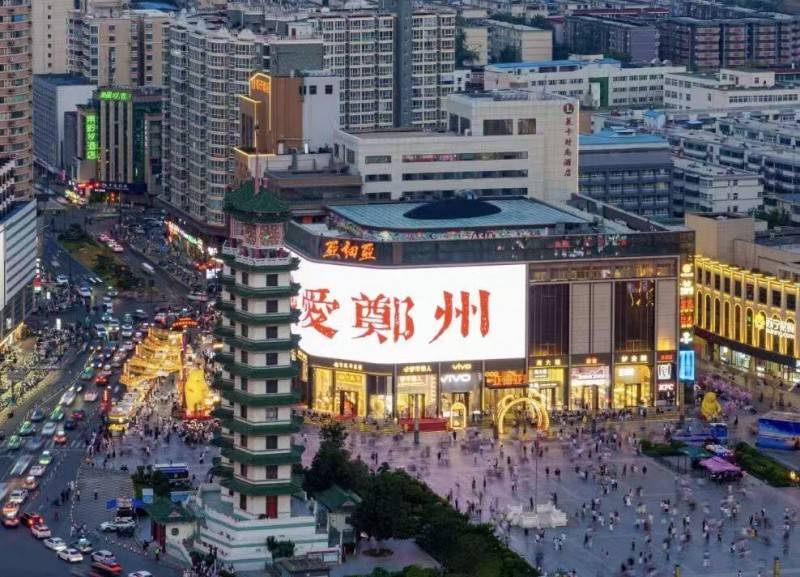
从“郭丽芳”到千万销量:果立方如何用河南法则改写新消费剧本
Sou Hu Cai Jing· 2025-10-11 09:13
Core Viewpoint - The article highlights the transformation of Henan from a traditional agricultural province to a new consumption hub, emphasizing that brands can now validate their market presence in Henan rather than just in first-tier cities like Beijing, Shanghai, Guangzhou, and Shenzhen [2][4][5]. Group 1: New Consumption Landscape - Henan has emerged as a fertile ground for new consumer brands, with successful examples including Mixue Ice City, Weilong, and Guoquan [2][5]. - The province's large population and numerous educational institutions provide a significant labor pool and a youthful consumer base, making it an ideal testing ground for brands [5][10]. - The local supply chain, including food processing and logistics, supports the growth of these brands by ensuring low costs and high quality [7][8]. Group 2: Brand Success Stories - Mixue Ice City sources its ingredients locally, allowing it to keep production costs low, exemplifying the advantages of Henan's supply chain [7]. - Guoquan, a brand that has successfully integrated "mixing drinks" into its offerings, has seen significant sales growth in Zhengzhou, indicating the city's role as a critical market for brand validation [13][15]. - The success of Guoquan in Zhengzhou has led to a broader acceptance of its products across China, demonstrating the city's importance as a "MVP battlefield" for consumer brands [20][21]. Group 3: Market Dynamics - The article notes that brands that succeed in Zhengzhou can quickly adapt and thrive in other regions of China, as the city reflects the broader consumer market dynamics [11][20]. - The "Central Plains Law" has become a key strategy for brands to grow from zero to one, emphasizing the importance of understanding local consumer needs [21][22]. - The new consumption wave in Henan is characterized by a deep response to real consumer demands, showcasing the agility of brands in capturing market opportunities [21][24].
港股收盘(10.10) | 恒指收跌1.73% 科技、有色、医药股等下挫 部分新消费逆市走高
智通财经网· 2025-10-10 08:48
Market Overview - The Hong Kong stock market experienced a collective decline, with the Hang Seng Index dropping 1.73% to 26,290.32 points, marking five consecutive days of losses [1] - The Hang Seng Tech Index fell 3.27%, while the Hang Seng China Enterprises Index decreased by 1.8% [1] - For the week, the Hang Seng Index declined by 3.13%, the China Enterprises Index by 3.11%, and the Tech Index by 5.48% [1] Blue-Chip Performance - Hang Lung Properties (00101) rose 2.05% to HKD 8.98, contributing 0.49 points to the Hang Seng Index, driven by a 15% year-on-year increase in tenant sales during the National Day holiday [2] - China Overseas Development (00688) and China Telecom (00728) also saw gains of 2.46% and 2.41%, respectively [2] - Semiconductor company SMIC (00981) fell 7.13%, negatively impacting the index by 42.13 points [2] Sector Performance - Major technology stocks declined, with Alibaba down 4.56% and Tencent down 3.55% [3][6] - The AI sector faced pressure, with warnings from the IMF and the Bank of England regarding potential market corrections similar to the 2000 internet bubble [6] - New consumption concepts saw some stocks rise, such as Gu Ming up 12.21% and Buluco up 8.78%, attributed to increased sales during the recent holiday [3] Commodity and Chip Stocks - The metals sector saw a broad decline, with Ganfeng Lithium (01772) down 10.75% and Shandong Gold (01787) down 7.04%, influenced by a significant rise in the US dollar and a drop in international gold prices [4] - Chip stocks also fell, with SMIC down 7.13% and Shanghai Fudan (01385) down 5.98% [4][5] Notable Stock Movements - Poly Property Group (00119) surged 19.51% following news of a share transfer within its parent company, indicating potential consolidation [7] - Dazhong Public Utilities (01635) rose 8.67%, benefiting from its dual business model in public utilities and financial investments [8] - ZTE Corporation (00763) increased by 4.01%, supported by its position in the AI and telecommunications sectors [10] New Listings - Jinye International Group (08549) saw a remarkable 330% increase on its first trading day, reflecting strong investor interest with an oversubscription rate of 11,464 times [11] - Zhida Technology (02650) rose 192.14%, focusing on electric vehicle charging solutions [12]

1009港股日评:三大指数走势分化,资源股逆势走强-20251010
Changjiang Securities· 2025-10-10 03:22
Core Insights - The Hong Kong stock market experienced a mixed performance on October 9, 2025, with the Hang Seng Index declining by 0.29% to 26,752.59, while the Hang Seng China Enterprises Index rose by 0.07% to 9,530.13, indicating a divergence in index movements [2][7][11] - The overall market turnover reached HKD 386.82 billion, with net inflows from southbound funds amounting to HKD 3.043 billion, reflecting continued interest from mainland investors [2][11] - Sector performance showed a rotation, with the Wind Hong Kong non-ferrous metals sector gaining strength due to rising overseas risk aversion and domestic policy support, while previously high-performing sectors like pharmaceuticals and semiconductors faced profit-taking and declined [2][11] Market Performance - The Hang Seng Technology Index fell by 0.66% to 6,471.34, contributing to the overall market's downward pressure [7][11] - In the A-share market, the Shanghai Composite Index increased by 1.32%, and the CSI 300 rose by 1.48%, indicating a stronger performance compared to the Hong Kong market [7][11] - Among the major sectors, the composite sector (+4.01%), non-ferrous metals (+3.77%), and coal (+2.81%) led the gains, while pharmaceuticals (-5.23%), light industry manufacturing (-5.00%), and electronics (-2.30%) lagged [7][11] Sector Analysis - The non-ferrous metals sector's rise was attributed to increased gold reserves in China and export controls on rare earth technologies, which positively influenced market expectations for supply and demand dynamics [11] - The construction sector saw increased interest due to expectations of accelerated infrastructure investment, leading to a shift in capital from previously high-flying sectors like semiconductors [11] - The report highlights three potential directions for future growth in the Hong Kong market: AI technology and new consumption, sustained inflows from southbound funds, and the impact of monetary policy changes in the U.S. and China [11]