康波周期

Search documents
2026年沪铜年报:警惕反V
An Liang Qi Huo· 2026-01-07 01:49
1. Report's Investment Rating for the Industry - No investment rating information is provided in the report. 2. Core Views of the Report - In 2026, the global macro - expectation may be slightly better than 2025, but still mainly feature structured fluctuations [2][54] - Supply disturbances may continue, with the mismatch between mining and smelting reaching an extreme, and the demand side may face real - world tests after the hype. The supply side remains one of the main factors driving copper price fluctuations [2][54] - Global copper inventories will continue to accumulate, which may define the high - price copper market as a bubble [2][54] - Copper prices are in the Conjuncture bubble stage, at the end of the strategic long - position and the beginning of the strategic short - position [2][54] 3. Summaries Based on Relevant Catalogs 3.1行情简顾 - From 2020 - 2025, copper prices showed different trends. In 2025, copper prices broke through the Conjuncture high, with Shanghai copper rising 31.11% and LME copper rising 42.3%, mainly driven by a sharp increase in the fourth quarter [6] 3.2 2026年分析逻辑 - **Supply side**: The TC long - term price dropped to 0 in 2026, indicating extreme raw material disturbances. The "bullwhip effect" in the mining raw material sector reached its peak in 2025, and 2026 may see a turn [8] - **Demand side**: The global inventory cycle is at the bottom, and it is a weak cycle. Although overseas policies and new demands such as new energy and AI provide some support, the demand side is difficult to become the dominant factor [8] - **Conclusion**: 2026 may be a turning point year. Copper prices are still in the bubble stage, and investors should be vigilant against reverse - V fluctuations [8] 3.3全球经济与资本展望 - **China**: In 2026, as the start of the 15th Five - Year Plan, China is expected to improve. However, due to factors such as the real estate market, the new cycle is a weak one, and the year will still feature structured fluctuations [9][10] - **US**: 2026 is expected to be the end of the Fed's interest - rate cut cycle. There may be potential changes in monetary and fiscal policies, which could bring significant fluctuations to the global market and copper prices [11][12] 3.4基本面分析 3.4.1供应端 - **Upstream mining**: Capital expenditure has been increasing since 2021. 2025 - 2026 may be a turning point for output. Although raw material supply may not improve significantly, the degree of tightness may not exceed 2025 [17][18][20] - **Mid - stream smelting**: The imbalance between raw materials and smelting capacity has led to heavy losses in the smelting sector. In 2026, there is a strong expectation of anti - involution, and TC may turn around [23][24] - **Global inventory**: Global copper inventories have been accumulating since 2024, and this trend is expected to continue in 2026 [28][29] 3.4.2消费端 - **Power sector**: Traditional power consumption remains stable, but the rapid growth in the green - power field has slowed down. New industries will provide long - term demand growth, but currently cannot replace traditional demand [36][37] - **Real estate and auto sectors**: In 2025, the auto industry was booming, while the real estate market continued to be weak. The real - estate market is in the downward phase of its cycle, providing limited support for copper demand [38][39][40] 3.4.3小结 - Supply disturbances are a core feature, and the contradiction between raw material supply and smelting capacity expansion will not change fundamentally in 2026. Demand is insufficient, and new demand cannot become the dominant factor in the short term [49] 3.5技术分析研究 - From the monthly K - line of LME copper, the bull market during the period of global prosperity - recession ended in 2011. The current bull market during the period of global recession - depression may end, and the nominal high may appear in the current upward cycle. The market in the depression period features extreme and volatile price movements [51] 3.6结论和建议 - **Research conclusion**: Similar to the core views of the report, including better global macro - expectations in 2026, continued supply disturbances, inventory accumulation, and copper prices in the bubble stage [54] - **Operation suggestions**: The high point in 2021 is the end of the strategic long - position. In the bubble stage, investors should focus on defense during the upward phase and seize opportunities during the downward phase, with key price levels of around $10,000/ton for LME copper and 80,000 yuan/ton for Shanghai copper [55]
汇丰晋信基金2026年投资展望:用长期主义服务大众理财
Xin Lang Cai Jing· 2026-01-06 09:21
Group 1 - The article discusses the investment strategies and performance outlook of top fund managers for the year 2026, emphasizing the importance of understanding market dynamics and adapting investment approaches accordingly [1][15] - The company highlights its consistent performance over the past decade, successfully beating benchmarks across various product styles, including growth, low valuation, and high ROE strategies [3][17] - The article notes that the fund manager, Wu Peiwen, has been managing multiple products since September 30, 2015, with a track record of outperforming benchmarks in most years [4][17] Group 2 - The performance data of various funds managed by Wu Peiwen is presented, showing significant fluctuations in returns over the years, with notable highs and lows [4][5][19] - The company emphasizes the importance of a structured and transparent investment process, which has proven effective over a decade, allowing for repeatable investment capabilities [8][22] - The article discusses the changing landscape of the Chinese economy, highlighting the need for investors to adapt their strategies to align with emerging trends and technological advancements [9][24] Group 3 - The company expresses a cautious outlook on the current market, likening it to a pendulum that swings between optimism and pessimism, suggesting that investors should remain vigilant [10][25] - The article outlines the company's approach to serving retail investors, comparing it to operating a bus service, which requires a different strategy than high-risk investments [11][26] - The company focuses on risk management, aiming to minimize the probability of significant losses and ensuring that clients can see returns within a reasonable timeframe [12][27]


黄金短期波动风险上升 但长牛趋势不改
Sou Hu Cai Jing· 2026-01-05 02:53
此外,中金公司研究部大类资产配置研究员李昭表示,财政与货币因素持续叠加,让投资者对美元体系 与美元资产的信心下降,导致美元进入贬值周期,今年美元指数已经下跌10%左右。另外,近期委内瑞 拉局势升级叠加俄乌冲突陷入谈判僵局,全球地缘风险升级,也使得具有避险属性的黄金相对受益。 宏源期货分析师王文虎指出,本轮黄金牛市除了短期看涨情绪的释放外,也有中长期宏观经济周期的支 撑。从经济学来看,当前全球经济处于康波周期萧条阶段,在这个阶段,全球主要国家债务膨胀的预期 增强,引导信用货币本位向金属货币本位回归。 来源:滚动播报 (来源:邯郸晚报) 2025年12月29日伦敦现货黄金在创下历史新高后跳水,收盘报4331.96美元/盎司,较上日跌4.4%。分析 师表示,短期金市可能仍会获利回吐,但支撑本轮黄金牛市的中长期因素仍在,预计2026年黄金价格可 能突破5000美元/盎司。 分析人士认为,金价的回调并不意味着本轮黄金牛市结束,本轮黄金牛市背后的三重支撑因素——美联 储重启宽松周期、美元信誉下降以及全球地缘政治风险升级依然存在。 市场对美联储货币政策的宽松预期是近期金价大涨的主要驱动因素。2025年9月以来,美联储已经连 ...
策略周末谈(0104):策马乘风:2026十大研判
Western Securities· 2026-01-04 08:56
Core Conclusions - The report suggests that 2025 may be just the "prelude" to a bull market, with the Federal Reserve likely to restart interest rate cuts, leading to a rapid return of cross-border capital to China, which will help various price indices (PPI + CPI) emerge from "deflation" [1] - The report anticipates that in 2026, China will experience a period of prosperity similar to Japan in 1978, driven by the appreciation of the RMB, which will enhance cash flow statements and balance sheets in the real economy [1] Group 1: China’s Economic Outlook - China entered the current Kondratiev wave downturn in 2019, but the external constraints are gradually being lifted, allowing for a return to prosperity [1] - The report indicates that the Federal Reserve's interest rate cuts in 2025 will facilitate the recovery of cash flow statements for enterprises and households in China [1] - The anticipated quantitative easing (QE) by the Federal Reserve in 2026 will open up policy space for the People's Bank of China to implement similar measures, further aiding the recovery of balance sheets [1] Group 2: U.S. Economic Conditions - The report highlights that the U.S. is currently in a Kondratiev wave downturn, with the stock market and economy on the brink of crisis due to over-reliance on AI investment narratives [2] - It notes that the U.S. stock market is at a "crisis edge," and the potential for liquidity shocks is high as cross-border capital begins to flow out of the U.S. [2] - The report warns that if AI investment expectations fall short, it could lead to a negative narrative impacting U.S. consumption and economic stability [2] Group 3: Global Liquidity Trends - The report predicts that the Federal Reserve is likely to shift towards QE, resulting in an increase in global liquidity [3] - It emphasizes that the primary goal of the Federal Reserve is to prevent liquidity shocks in the U.S. market, which will influence global capital flows [3] - The report suggests that the current tight liquidity in the U.S. is pressuring the Federal Reserve to adopt "quasi-QE" measures [6] Group 4: Currency and Capital Flows - Following the Federal Reserve's interest rate cuts, cross-border capital is expected to accelerate its return to China, shifting the A-share market from a tech-focused trend to a cyclical recovery [7] - The report anticipates that the RMB exchange rate will likely break previous highs of 6.8 and 6.3, entering a long-term appreciation cycle [7] - It highlights that the RMB's appreciation will create a positive feedback loop, encouraging further capital inflows into China [7] Group 5: Commodity Supercycle - The report discusses a potential supercycle in commodities driven by de-globalization and a dollar crisis, with supply constraints likely to emerge as resource-rich countries tighten supply [9][10] - It suggests that the demand for commodities will remain resilient due to strategic stockpiling and supply chain improvements in various countries [10] - The report indicates that this supercycle could last for several years, with precious metals leading the way in revaluation [11] Group 6: Sectoral Opportunities - The report identifies key sectors for investment, including non-ferrous metals, consumer goods, and high-end manufacturing, which are expected to benefit from the recovery of cash flow and balance sheets [13] - It emphasizes the importance of focusing on sectors that are likely to achieve new highs, particularly in the context of the anticipated economic recovery [13] - The report suggests that the manufacturing sector will see a systematic recovery in valuations as cash flow statements improve [11]

宁静于内,从容于外:25年投资总结及26年展望
雪球· 2026-01-03 03:46
Core Viewpoint - The article reflects on the investment strategies and market outlook for 2026, emphasizing a balanced approach between offense and defense, and the importance of fundamental analysis in stock selection [2][3][14]. Investment Performance - In 2025, the overall account achieved a 51% return, with A-shares contributing 55%-60% and Hong Kong stocks 40%-45% of total assets. The A-share portfolio rose by 72%, while the Hong Kong portfolio increased by 28% [2]. Market Outlook for 2026 - The market is expected to experience both opportunities and risks, with significant stock price volatility anticipated. Companies with sustained performance and validated growth logic may face less volatility, while those failing to meet expectations could see larger fluctuations [3]. - The article suggests that sectors like real estate and consumer goods, which underperformed in 2025, may not present significant opportunities in 2026 due to the slow nature of economic cycles [3]. Investment Strategy - The investment strategy should focus on fundamental analysis, considering long-term operational barriers, cash flow, growth potential, and dividend policies. Economic cycles will influence company performance and valuation [3]. - The article highlights the importance of asset allocation during economic cycles, recommending inflationary assets while avoiding deflationary ones during the current Kondratiev wave downturn [3]. Sector-Specific Insights - The article discusses successful investments in copper-related companies, with a focus on specific stocks like藏格矿业, which became a major profit source. The outlook for this sector remains positive, though growth may not match the previous year's performance [4]. - Alibaba is noted as a significant holding, with expectations for stable growth in its core business and potential in AI-related sectors. Tencent's position was reduced due to concerns over its growth potential [5]. - Long-term utility stocks like长江电力 and华能水电 are viewed as stabilizers in the portfolio, despite their limited short-term profitability [6]. - The article mentions the potential for recovery in companies like北京首都机场, with expectations for profitability in 2026 [9]. Cash Position and Risk Management - The article suggests increasing cash positions in 2026 to manage potential market volatility, contrasting with the full investment strategy of 2025 [15].

西部证券晨会纪要-20251231
Western Securities· 2025-12-31 01:33
Group 1: Strategy and Economic Outlook - The report emphasizes that the appreciation of the RMB is a significant opportunity for prosperity in 2026, driven by strong industrial capabilities and export competitiveness [1][6][11] - It predicts that the RMB exchange rate will break previous highs of 6.8 and 6.3, marking a return to a long-term appreciation cycle [6][7] - The report highlights a positive feedback loop where RMB appreciation will lead to increased capital inflows and improved cash flow for businesses, setting the stage for economic recovery [8][10] Group 2: Digital Currency Development - The People's Bank of China has announced a new digital RMB system set to launch on January 1, 2026, which will transition from M0 to M1, allowing banks to pay interest on digital RMB wallet balances [2][13][14] - The dual-layer operational framework aims for a unified management system across the country, enhancing the efficiency of the financial system [15] - The digital RMB initiative is expected to impact the banking and fintech sectors positively, with potential increases in demand for deposits and more precise loan disbursement [16] Group 3: Company-Specific Updates - HeYue-B (2256.HK) has received approval for the commercial launch of its product, which is expected to generate significant revenue growth from 2025 to 2027, with projected revenues of 612.1 million, 678.8 million, and 627.2 million respectively [3][18] - DiA Co., Ltd. (301177.SZ) is focusing on enhancing its brand and expanding its product categories, with expected EPS growth from 0.34 to 0.55 yuan from 2025 to 2027, despite facing industry challenges [4][21][22]
西部研究月度金股报告系列(2026年1月):迎接繁荣的起点,1月如何布局?-20251230
Western Securities· 2025-12-30 13:05
Group 1 - The report indicates that China is entering a period of prosperity similar to Japan in 1978, driven by high industrial value added and export ratios, along with continued trade surpluses and wage growth [1][11] - The cash flow statements of the real economy in China have been damaged from 2022 to 2024 due to the Fed's interest rate hikes and a decline in real estate prices, leading to capital outflows and reduced cash flow [2][12] - The resumption of the Fed's interest rate cuts is expected to reverse the outflow of cross-border capital, thereby repairing the cash flow statements of enterprises and households [3][13] Group 2 - The report emphasizes the necessity of debt restructuring in China, drawing parallels with Japan's experience in the 1990s, where failure to act led to prolonged economic stagnation [4][14] - The potential for the Fed's quantitative easing (QE) to provide the necessary liquidity for China's central bank to undertake debt restructuring is highlighted, which could alleviate external constraints on the yuan [4][14] - The year 2026 is projected to mark the beginning of a new prosperity phase for China's economy, with a cyclical shift expected in manufacturing and consumption sectors [6][15] Group 3 - The report recommends a selection of stocks for January 2026, including Huafeng Aluminum, Zijin Mining, and TCL Technology, among others, indicating a focus on sectors poised for growth [9][10] - The automotive sector is highlighted, with Great Wall Motors and Leap Motor being noted for their strategic positioning in high-end and global markets [32][38] - In the chemical sector, Dongfang Tower is recognized for its growth potential driven by increasing potassium and phosphorus production [41][43]






黄金短期波动风险上升,但长牛趋势不改
Sou Hu Cai Jing· 2025-12-30 01:05
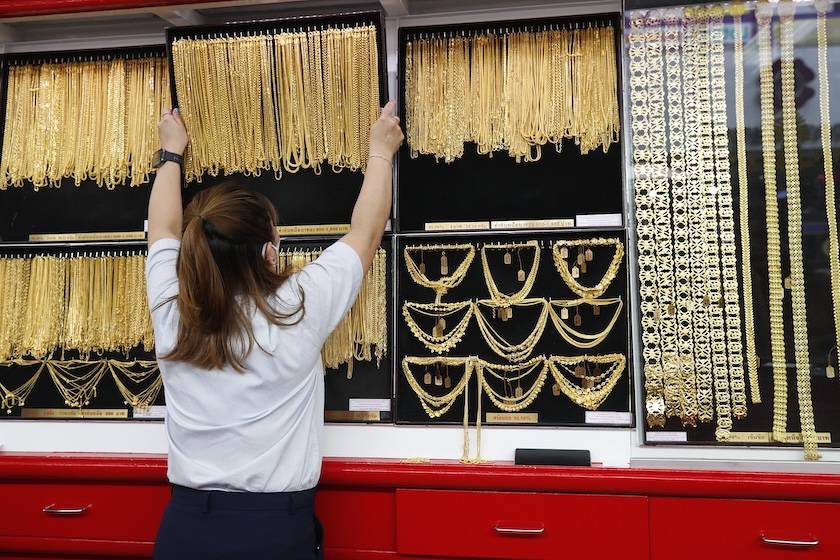
Core Viewpoint - The recent drop in gold prices follows a record high, but long-term bullish factors remain, with expectations that gold prices may exceed $5,000 per ounce by 2026 [1][6]. Group 1: Market Performance - On Monday, London spot gold closed at $4,331.96 per ounce, down 4.4% from the previous day, and peaked at $4,550.52 per ounce during the session, marking a 4.8% decline [1]. - As of Tuesday at 8:00 AM Beijing time, gold was priced at $4,346.26, reflecting a slight increase of 0.3% [1]. - Since the beginning of 2025, London spot gold has risen by 65.6%, making it one of the best-performing asset classes globally [1]. Group 2: Influencing Factors - The drop in gold prices was influenced by three main factors: an increase in margin requirements for gold futures by the Chicago Mercantile Exchange, positive communication between the U.S. and Russia regarding conflict resolution, and a warning from Morgan Stanley about upcoming adjustments to the Bloomberg Commodity Index [2]. - Analysts believe that the recent pullback does not signify the end of the current gold bull market, as three supporting factors remain: the Federal Reserve's resumption of easing policies, declining confidence in the U.S. dollar, and escalating global geopolitical risks [2]. Group 3: Economic Context - The market's expectations for the Federal Reserve's monetary easing have been a primary driver of recent gold price increases, with a cumulative rate cut of 75 basis points since September and expectations for two additional cuts in 2026 [3]. - The U.S. dollar has depreciated by approximately 10% this year, contributing to a favorable environment for gold as a safe-haven asset amid rising geopolitical tensions, including the situation in Venezuela and the ongoing Russia-Ukraine conflict [5]. - The current global economic environment is characterized by a Kondratiev wave downturn, with expectations of increased debt levels leading to a shift from fiat currency to metal-backed currency [5]. Group 4: Future Projections - Analysts project that gold prices could reach $4,900 per ounce by 2026, with some suggesting that prices may even exceed $5,000 per ounce [6]. - Peter Grant, a senior metal strategist, anticipates that gold prices could hit $5,000 per ounce as early as the first half of next year [6].
康波的轮回:2026繁荣的起点
Western Securities· 2025-12-28 13:20
Group 1 - The report highlights the cyclical nature of the Kondratiev wave, indicating that during the Kondratiev downturn, countries that are catching up often experience periods of prosperity. China is currently in a similar position to Japan in the late 1970s, with strong industrial output and export capabilities contributing to national wealth and domestic consumption recovery [1][10]. - The report notes that from 2022 to 2024, China's real sector has faced significant challenges, including cash flow and balance sheet deterioration due to aggressive interest rate hikes by the Federal Reserve, leading to capital outflows and a decline in real estate prices, which have negatively impacted both corporate and household balance sheets [2][17]. - The report suggests that the resumption of interest rate cuts by the Federal Reserve will facilitate the return of cross-border capital to China, thereby improving the cash flow situation for both enterprises and households [3][26]. Group 2 - The report emphasizes the necessity of debt restructuring in China, drawing parallels with Japan's experience in the 1990s, where failure to act decisively led to prolonged economic stagnation. In contrast, China's rapid debt restructuring in the late 1990s laid the groundwork for future economic growth [4][35]. - It is indicated that the upcoming quantitative easing (QE) by the Federal Reserve could provide the necessary liquidity for China's central bank to implement debt restructuring policies without risking currency depreciation or further capital outflows [4][44]. - The report anticipates that by 2026, China will enter a new phase of prosperity, with a cyclical shift in manufacturing and consumption, suggesting a favorable environment for investments in sectors such as non-ferrous metals, consumer goods, and high-end manufacturing [5][48]. Group 3 - The report provides a detailed industry allocation strategy for 2026, recommending a focus on sectors that are expected to benefit from the recovery of national wealth and improved consumer sentiment, including non-ferrous metals, consumer goods, and high-end manufacturing [5][48]. - It highlights that the return of cross-border capital and the anticipated recovery in consumer spending will drive demand in sectors such as food and beverage, tourism, and export-oriented industries [5][48]. - The report also notes that the current economic environment presents a unique opportunity for investors to capitalize on the cyclical recovery in various industries, particularly those with competitive advantages in exports and domestic consumption [5][48].
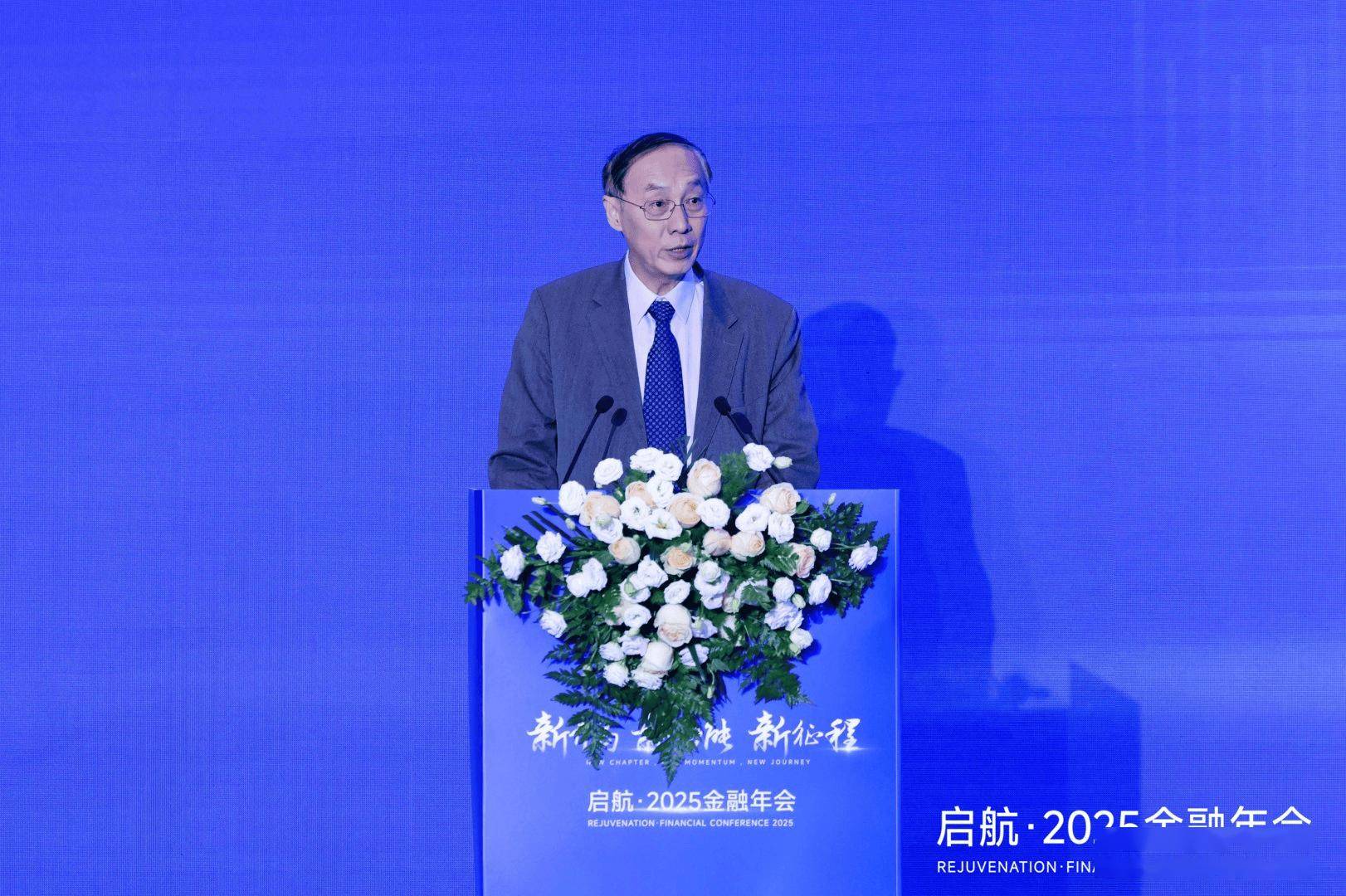
金融界集团董事长张斌:把握复苏周期机遇,在时代的β中奔跑出自己的α
Sou Hu Cai Jing· 2025-12-26 02:12
Core Viewpoint - The 2025 financial conference emphasizes the need for China’s economy, capital markets, and industries to "run hard" in response to significant internal and external changes, aiming to achieve their own alpha in the new era [1]. Economic Outlook - In 2025, China's GDP is projected to grow around 5%, surpassing 140 trillion yuan, maintaining a leading position among major economies [3]. - The capital market is expected to see a "quantitative and qualitative improvement," with A-share total market value exceeding 100 trillion yuan and the Shanghai Composite Index returning to 4000 points after ten years, indicating a significant improvement in market confidence [3]. - The rise of new productive forces, particularly in AI and biomedicine, is driving structural transformation, while reforms are being implemented to reshape supply and manage local debt [3]. Capital Market Insights - The "15th Five-Year Plan" suggests enhancing the inclusiveness and adaptability of capital market systems, with a focus on improving the coordination of investment and financing functions [4]. - The capital market is set to play a more crucial role in national economic growth, industrial upgrades, and wealth management for residents, emphasizing the need for proactive measures to break through existing trends [4]. Industry Dynamics - As the economy transitions and the real estate sector stabilizes, new productive forces like AI and high-end manufacturing are becoming key growth drivers, necessitating industries to "run" to lead trends [5]. - The financial sector is leveraging AI technology to reshape financial information services, significantly increasing the daily output of financial information and reaching over 60 billion cumulative views on platforms like Toutiao [5]. Future Projections - The year 2026 is viewed as a pivotal year for the "15th Five-Year Plan," marking a transition away from low inflation and establishing a new equilibrium [3]. - The call for all sectors to embrace the recovery cycle and seize opportunities is highlighted, with a reference to the "Kondratiev wave" theory suggesting that 2025 may mark the end of a downturn phase [5].