
地缘风险

Search documents
玻璃:低位震荡延续,关注旺季需求,纯碱:供应压力仍存,反弹做空思路
Zheng Xin Qi Huo· 2025-09-22 07:29
Report Title - Glass: Low-level Volatility Continues, Focus on Peak-season Demand; Soda Ash: Supply Pressure Remains, Adopt Rebound Shorting Strategy [1] Report Core Views - For soda ash, the production remains at a high level, downstream low-price replenishment occurs but overall consumption fluctuates little, and the absolute inventory is high with limited fundamental drivers. In the short term, affected by market sentiment changes, the soda ash futures price rebounds and then falls. Overall, with a supply-demand imbalance, the strategy is to sell on rebounds. For glass, there is a slight inventory reduction in the short term, but demand has not significantly improved. Attention should be paid to the intensity of the next round of restocking [4][38]. Summary by Industry Soda Ash Price - This week, the spot price remained stable, and the price difference between heavy and light soda ash remained stable. The mainstream trade areas had North China heavy soda ash at 1325 (unchanged) and East China heavy soda ash at 1250 (unchanged). Last week, the prices of heavy and light soda ash slightly decreased, with the national heavy soda ash market price at 1285 and the light soda ash market price at 1245, and the heavy-light soda ash price difference at +40 (unchanged). The futures price rebounded slightly. The closing price of the main SA2501 contract was 1318 (+28), the 1-5 spread was -89 (-11), and the basis of the main 01 contract was -32 (-23) (using the national heavy soda ash average price) [5][10]. Supply - Last week, the soda ash production was 74.57 tons (-1.54, -2.02%), including 32.80 tons of light soda ash (-1.14) and 41.77 tons of heavy soda ash (-0.40). The operating rate was 85.53% (-1.76%), with the ammonia-soda method at 88.87% (-1.97%) and the combined soda method at 75.53% (-1.87%) [4][14]. Demand - Last week, the soda ash enterprise shipment volume was 78.76 tons, a week-on-week increase of +0.24%; the overall production-sales ratio was 105.62%, a week-on-week increase of +2.39%. Last week, the soda ash demand remained stable, and downstream enterprises mainly purchased based on rigid demand. Next week, the float glass is expected to increase slightly, while the photovoltaic glass is expected to decrease. In August, the soda ash imports were 0.03 tons, a month-on-month decrease of -0.29 tons; exports were 21.54 tons, a month-on-month increase of +5.41 tons, resulting in an increase in net exports [4][23]. Inventory - Last week, the soda ash enterprise inventory was 175.56 tons (-4.19, -2.33%), including 74.95 tons of light soda ash (-1.35) and 100.61 tons of heavy soda ash (-2.48). Both light and heavy soda ash inventories decreased [4][30]. Cost and Profit - Last week, the profit of the combined soda method (double tons) was -70.5 yuan/ton (-16); the profit of the ammonia-soda method was -36.75 yuan/ton (-0.45), showing overall stability [4][35]. Strategy - Given the high soda ash production, low-price downstream replenishment with little overall consumption fluctuation, and high absolute inventory, the fundamental drivers are limited. Considering the supply-demand imbalance, the strategy is to sell on rebounds [4]. Glass Price - Last week, the glass spot price remained stable with a slight increase. The ex-factory price of Wuhan Changli 5mm glass was 1160 (+40), and the ex-factory price of Shahe Anquan 5mm glass was 1088 (+12). The price difference between Changli and Shahe was +72 (+28). The futures price also rose. The closing price of the main 2601 contract was 1216 (+36), the 1-5 spread was -127 (-23), and using the Wuhan Changli ex-factory price as the spot benchmark, the basis of the main 01 contract was -56 (+4) [39][44]. Supply - Last week, the daily output of float glass in production was 16.02 tons, a week-on-week increase of +0.0%. The float glass production was 112.12 tons, a week-on-week increase of +0.0%. The operating rate of float glass was 76.01%, a week-on-week increase of +0.0%, and the capacity utilization rate was 80.08%, a week-on-week increase of +0.0%. Last week, there were 296 domestic glass production lines after excluding zombie lines, with 225 in production and 71 cold-repaired and shut down [38][50]. Demand - As of early September, the order days of deep-processing enterprises were 10.4 days, an increase of +0.75 compared to the previous period. The downstream demand recovery was slow. The real estate end-recovery situation was still weak, with the cumulative year-on-year decline of the completion end from January to August at -17%, and the front-end new construction willingness still low, with the cumulative year-on-year decline from January to July at -19.5%. According to CAAM data, in August, the automobile production and sales were 281.5 million and 285.7 million respectively, with month-on-month increases of +8.65% and +10.18% and year-on-year increases of +12.96% and +16.14%, respectively, which were at relatively high levels in recent years [38][59]. Inventory - Last week, the total inventory of the national float glass sample enterprises was 60.908 million weight cases, a week-on-week decrease of -1.10%. Different regions had different inventory changes, with North China increasing by 3.34%, East China decreasing by -1.35%, Central China decreasing by -5.41%, South China decreasing by -1.44%, Southwest increasing by 0.45%, Northeast decreasing by -2.27%, and Northwest decreasing by -6.25% [38][65]. Cost and Profit - Last week, the profit of coal-gas-fired float glass was +94.03 yuan/ton (-6.37); the profit of natural-gas-fired float glass was -164.84 yuan/ton (+9.29); the profit of petroleum-coke-fired float glass was 41.37 yuan/ton (+11.43). The industry profit remained stable in the short term [38][79]. Strategy - There is a slight inventory reduction in the short term, but demand has not significantly improved. Attention should be paid to the intensity of the next round of restocking [38].
中美元首通电话
Dong Zheng Qi Huo· 2025-09-22 00:44
1. Industry Investment Ratings No relevant content provided. 2. Core Views - The international gold price rose more than 1% on Friday to a new high, driven by the dovish speech of Fed Governor Milan, which strengthened the market's expectation of consecutive interest rate cuts in future Fed meetings. The gold ETF holdings increased significantly, but the domestic gold market was affected by factors such as stock market performance and RMB exchange rate, and the report suggested short - term high - level operation of gold prices and pre - festival position reduction [1][15]. - The simultaneous official statements by the UK, Canada, and Australia to recognize the State of Palestine increased the political pressure on Israel, and the geopolitical risk was uncertain. The US dollar was expected to maintain short - term volatility [19]. - After the interest rate cut, small - cap stocks and real estate sectors had profit - taking, but technology companies' capital expenditure plans were expected to drive the US stock index to fluctuate strongly. The market risk appetite remained high, and a long - biased approach was recommended [22]. - The recent stock market was volatile, with a divergence between technology stocks and traditional heavy - weight stocks. It was recommended to moderately take profits in the short term to cope with high volatility [26]. - Negative factors led to a sharp decline in Treasury bond futures. The bond market was expected to fluctuate at the end of the month and return to fundamental trading in the middle and late October. It was recommended to be cautious in the short term and consider mid - line long - position strategies later [30]. - The price of thermal coal was expected to remain strong in the short term due to supply - side regulation, but downstream resistance might increase as the price rose [33]. - The iron ore price was in high - level oscillation, with short - term support. After the festival, the market was cautious, and the impact of year - end long - term agreements was uncertain [34]. - The supply of Brazilian sugar was strong in the second half of August, but the peak of the crushing season was approaching. The domestic sugar market was under short - term pressure, but the downside space of Zhengzhou sugar was limited, and there might be a weak rebound in the fourth quarter [39]. - The overall export signing progress of US cotton was behind the same period in recent years. The external cotton faced seasonal supply pressure, and the Zhengzhou cotton was expected to maintain an oscillatory pattern, with a bearish view in the fourth quarter [44]. - The oil and fat market lacked a driving force and maintained an oscillatory trend. Palm oil was recommended for range - bound operations, and for international and domestic soybean oil, different strategies such as long - short spreads were suggested [47]. - The soybean meal was likely to remain range - bound, and the development of Sino - US relations should be continuously monitored [50]. - The steel price was expected to have a small - scale rebound in the short term before the National Day, but the upward space was limited [53]. - The fundamentals of red dates were bearish, but the impact of capital and weather speculation should be vigilant, and it was recommended to wait and see [57]. - The medium - term view on corn was bearish, and it was recommended to hold short positions [58]. - The long - term fundamentals of corn starch were bearish [60]. - The price of alumina was under downward pressure due to oversupply, and it was recommended to short at high levels [61]. - The copper price was expected to oscillate at a high level in the short term, and it was recommended to lay out mid - line long positions at low levels [65]. - The price of lithium carbonate was expected to fall in the fourth quarter, and a short - biased approach was recommended [66]. - The polysilicon market was expected to oscillate widely in the short term, and option - selling and spread - trading strategies were suggested [71]. - The industrial silicon price was recommended to be bought at low levels, but chasing high prices should be cautious [74]. - For nickel, it was recommended to look for long - position opportunities after sentiment release and consider positive spreads [77]. - The lead price was expected to oscillate upward, and it was recommended to lay out mid - line long positions and consider positive spreads [79]. - For zinc, it was recommended to wait and see in the short term and consider positive spreads [80]. - The EU carbon price was expected to oscillate strongly [82]. - The oil price was expected to maintain an interval oscillatory trend in the short term [84]. - The price of caustic soda was expected to have limited downward space [88]. - The pulp market was expected to oscillate weakly [90]. - The PVC market was fundamentally weak, but further decline was difficult. Policy support should be monitored [91]. - The bottle chip market's supply - demand pattern was not substantially improved, and the sustainability of production cuts and new capacity launch should be monitored [95]. - The benzene and styrene markets were expected to oscillate weakly, and the resolution of inventory contradictions after the peak season and oil price fluctuations should be monitored [97]. - The PX price was expected to oscillate weakly in the short term [101]. - The PTA price was expected to oscillate weakly and adjust in the short term [103]. - For soda ash, a short - at - high approach was recommended, and supply - side disturbances should be monitored [106]. - For float glass, an arbitrage strategy of long glass 2601 and short soda ash 2601 was recommended [108]. - For container shipping rates, different strategies were recommended for different contracts, such as taking profits at low levels for the 10 - contract and looking for low - long opportunities for the 12 - contract [110]. 3. Summaries by Directory 3.1 Financial News and Comments 3.1.1 Macro Strategy (Gold) - The call between Chinese and US leaders, the increase in gold ETF holdings, and Milan's dovish speech drove the international gold price up. The domestic gold market was affected by multiple factors, and short - term high - level operation with pre - festival position reduction was recommended [13][14][15]. 3.1.2 Macro Strategy (Foreign Exchange Futures - US Dollar Index) - Venezuela clarified drug - related issues, Trump communicated with Musk, and the UK, Canada, and Australia recognized Palestine. The US dollar was expected to maintain short - term volatility [16][17][19]. 3.1.3 Macro Strategy (US Stock Index Futures) - Milan emphasized independent decision - making on interest rate cuts. Oracle negotiated a large - scale AI cloud - computing agreement. The US stock index was expected to fluctuate strongly, and a long - biased approach was recommended [21][22]. 3.1.4 Macro Strategy (Stock Index Futures) - The call between Chinese and US leaders and the collective appearance of financial regulators. The stock market was volatile, and it was recommended to moderately take profits [24][26]. 3.1.5 Macro Strategy (Treasury Bond Futures) - The call between Chinese and US leaders, Shanghai's housing property tax policy adjustment, and the central bank's reverse - repurchase operation. Treasury bond futures fell, and the bond market was expected to oscillate at the end of the month. A cautious short - term approach and mid - line long - position consideration later were recommended [28][29][30]. 3.2 Commodity News and Comments 3.2.1 Black Metal (Thermal Coal) - The price of thermal coal in the northern port market was strong on September 19. Supply - side regulation might drive the price to remain strong in the short term, but downstream resistance could increase [32][33]. 3.2.2 Black Metal (Iron Ore) - National fixed - asset investment data showed a slowdown in some sectors. The iron ore price was in high - level oscillation, and the market was cautious after the festival [34]. 3.2.3 Agricultural Product (Sugar) - China's sugar import data and Brazil's sugar production data in the second half of August. The domestic sugar market was under short - term pressure, but the downside space was limited [35][39]. 3.2.4 Agricultural Product (Cotton) - EU's clothing import data, India's cotton sales, and US cotton export data. The external cotton faced supply pressure, and the Zhengzhou cotton was expected to oscillate [41][42][44]. 3.2.5 Agricultural Product (Soybean Oil/Rapeseed Oil/Palm Oil) - Malaysia's palm oil reference price adjustment. The oil and fat market lacked a driving force, and different strategies were recommended for different oils [46][47]. 3.2.6 Agricultural Product (Soybean Meal) - The high - level operation of oil - mill开机率. The soybean meal was likely to remain range - bound, and Sino - US relations should be monitored [49][50]. 3.2.7 Black Metal (Rebar/Hot - Rolled Coil) - Indonesian steel enterprises' decarbonization plan and steel - mill production data. The steel price was expected to have a short - term small - scale rebound, but the upward space was limited [51][53]. 3.2.8 Agricultural Product (Red Dates) - The price change of red dates in the market. The fundamentals of red dates were bearish, and it was recommended to wait and see [56][57]. 3.2.9 Agricultural Product (Corn) - Corn price regional differentiation. The medium - term view on corn was bearish, and it was recommended to hold short positions [58]. 3.2.10 Agricultural Product (Corn Starch) - The increase in starch开机率 and the decrease in inventory. The long - term fundamentals of corn starch were bearish [59][60]. 3.2.11 Non - ferrous Metal (Alumina) - Alumina inventory data. The alumina price was under downward pressure, and it was recommended to short at high levels [61][62]. 3.2.12 Non - ferrous Metal (Copper) - China's subsidy cut for copper and nickel imports and a mining project financing agreement. The copper price was expected to oscillate at a high level in the short term, and mid - line long positions were recommended [63][65]. 3.2.13 Non - ferrous Metal (Lithium Carbonate) - Argentina's lithium carbonate export data. The lithium carbonate price was expected to fall in the fourth quarter, and a short - biased approach was recommended [66]. 3.2.14 Non - ferrous Metal (Polysilicon) - The "Three - North" project plan. The polysilicon market was expected to oscillate widely in the short term, and option and spread strategies were suggested [67][71]. 3.2.15 Non - ferrous Metal (Industrial Silicon) - Industrial silicon production data. The industrial silicon price was recommended to be bought at low levels, but chasing high prices should be cautious [72][74]. 3.2.16 Non - ferrous Metal (Nickel) - The confirmation of nickel oxide's high - temperature superconductivity. The nickel price was recommended to look for long - position opportunities after sentiment release and consider positive spreads [75][77]. 3.2.17 Non - ferrous Metal (Lead) - LME lead data and new battery certification. The lead price was expected to oscillate upward, and mid - line long positions and positive spreads were recommended [78][79]. 3.2.18 Non - ferrous Metal (Zinc) - LME zinc data. For zinc, it was recommended to wait and see in the short term and consider positive spreads [80]. 3.2.19 Energy Chemical (Carbon Emission) - EUA contract data. The EU carbon price was expected to oscillate strongly [81][82]. 3.2.20 Energy Chemical (Crude Oil) - The increase in US oil rigs. The oil price was expected to maintain an interval oscillatory trend in the short term [83][84]. 3.2.21 Energy Chemical (Caustic Soda) - The price change of caustic soda. The price of caustic soda was expected to have limited downward space [85][88]. 3.2.22 Energy Chemical (Pulp) - The price change of pulp. The pulp market was expected to oscillate weakly [89][90]. 3.2.23 Energy Chemical (PVC) - The price change of PVC. The PVC market was fundamentally weak, but further decline was difficult. Policy support should be monitored [91]. 3.2.24 Energy Chemical (Bottle Chips) - The price and order data of bottle chips. The bottle chip market's supply - demand pattern was not substantially improved, and the sustainability of production cuts and new capacity launch should be monitored [92][95]. 3.2.25 Energy Chemical (Benzene and Styrene) - The consumption data of benzene and styrene downstream. The benzene and styrene markets were expected to oscillate weakly, and the resolution of inventory contradictions after the peak season and oil price fluctuations should be monitored [96][97]. 3.2.26 Energy Chemical (PX) - PX supply - demand data. The PX price was expected to oscillate weakly in the short term [99][101]. 3.2.27 Energy Chemical (PTA) - PTA spot and futures data. The PTA price was expected to oscillate weakly and adjust in the short term [102][103]. 3.2.28 Energy Chemical (Soda Ash) - Soda ash price data. For soda ash, a short - at - high approach was recommended, and supply - side disturbances should be monitored [104][106]. 3.2.29 Energy Chemical (Float Glass) - Float glass price data. For float glass, an arbitrage strategy of long glass 2601 and short soda ash 2601 was recommended [107][108]. 3.2.30 Shipping Index (Container Freight Rate) - Container ship order data. Different strategies were recommended for different contracts, such as taking profits at low levels for the 10 - contract and looking for low - long opportunities for the 12 - contract [109][110].
能源化策略:原油VLCC运费升?两年?点,甲醇港?内地市场分化
Zhong Xin Qi Huo· 2025-09-19 05:16
1. Report Industry Investment Rating No industry investment rating is provided in the report. 2. Core Viewpoints of the Report - The energy and chemical futures market as a whole continues to consolidate in a volatile pattern. The supply pressure in the crude oil market persists, and attention should be paid to geopolitical risks. The prices of various energy and chemical products show different trends, with some being volatile, some weakly volatile, and some expected to experience short - term fluctuations [2][3][4]. 3. Summary According to Relevant Catalogs 3.1 Market Situation and Logic of Energy and Chemical Products - **Crude Oil**: Supply pressure persists, and geopolitical risks are the focus. The freight rate of VLCC from the Middle East to Asia has reached a two - and - a - half - year high. The持仓 of Brent crude oil has reached a record high, indicating a large divergence between long and short positions. The disruption of Ukraine to Russia's oil product exports remains unresolved [2][10]. - **Asphalt**: The futures price fluctuates below 3500 yuan/ton. Saudi Arabia promotes OPEC+ to continue increasing production, and the geopolitical situation in the Middle East escalates. The supply tension problem has been significantly alleviated, and the pricing power of asphalt futures prices is expected to return to Shandong. The hidden inventory in South China is a concern [11]. - **High - Sulfur Fuel Oil**: The price shows a weak and volatile trend. Saudi Arabia promotes OPEC+ to continue increasing production, and the geopolitical situation in the Middle East escalates. The export of Russian fuel oil reaches a record high, and the demand expectation deteriorates [11]. - **Low - Sulfur Fuel Oil**: It fluctuates following crude oil. It is affected by factors such as the decline in shipping demand, green energy substitution, and high - sulfur substitution. The supply is expected to increase, and the demand is expected to decline [13]. - **PX**: The cost support is insufficient, and the processing fee is under pressure. The supply is expected to increase, and the demand from downstream PTA is expected to weaken [14]. - **PTA**: New device commissioning is postponed, and maintenance is implemented, but the market boost effect is limited. The processing fee is expected to be repaired, and attention should be paid to the support around 4600 yuan/ton [14]. - **Pure Benzene**: The price falls intraday due to the realization of macro - benefits and the decline in commodity sentiment. The price is expected to fluctuate narrowly in the short term, and attention should be paid to the change in crude oil prices and the subsequent import volume of pure benzene [14][15][16]. - **Styrene**: The price resumes falling due to the decline in commodity sentiment. The inventory pressure is large in September - October, and the cost - end pure benzene inventory accumulation pressure may drag down the valuation. There may be a small rebound in the short term, but the amplitude is limited by inventory [16][17]. - **Ethylene Glycol (MEG)**: The market sentiment is under pressure due to the expectation of weakening supply and demand. The price is expected to fluctuate in a low - level range, and attention should be paid to the support around 4200 yuan/ton [17][18][19]. - **Polyester Staple Fiber**: The inventory is slightly reduced, and the processing fee is firm. The supply and demand pattern is relatively healthy, and the absolute value follows the raw material fluctuations and fluctuates in the short term [20][21][22]. - **Polyester Bottle Chips**: The driving force is limited, and it follows passively. The price follows the upstream fluctuations, and the absolute value follows the raw material fluctuations and fluctuates [22][24]. - **Methanol**: The port trading volume increases slightly, and the futures price fluctuates and declines. The port inventory pressure is large, and the inland inventory pressure is limited. There may be low - buying opportunities from September to October [25]. - **Urea**: Under the condition of loose supply and demand, the downstream conducts price negotiations, and the futures price fluctuates and consolidates in the short term [25]. - **LLDPE (Plastic)**: The maintenance rate declines, and there is still restocking demand before the festival. The price fluctuates. The macro - support weakens, the oil price fluctuates weakly, and the demand may have certain support [28]. - **PP**: The spot price is at a low level, and there is still restocking demand before the festival. The price fluctuates and declines. The supply side still has an increasing trend, and the inventory pressure in the upper and middle reaches exists [29][30]. - **PL**: It fluctuates following PP, and the price fluctuates and declines in the short term [30]. - **PVC**: It operates in a volatile manner with weak reality and strong expectation. The macro - sentiment is warm, but the fundamental pressure is large, and the cost moves up slightly [33]. - **Caustic Soda**: The spot price decline space is limited, and the futures price fluctuates. The fundamental pressure gradually appears, but the restocking before the National Day may provide certain support [33]. 3.2 Monitoring of Energy and Chemical Indicators - **Inter - period Spread**: Different energy and chemical products show different inter - period spread values and changes. For example, the M1 - M2 spread of Brent is 0.5 yuan/ton with a change of 0.01 yuan/ton, and the 1 - 5 - month spread of PX is 0 yuan with a change of - 8 yuan/ton [36]. - **Basis and Warehouse Receipts**: The basis and warehouse receipt quantities of various products also vary. For example, the basis of asphalt is 93 yuan/ton with a change of 18 yuan/ton, and the warehouse receipt is 65010 [37]. - **Inter - product Spread**: The inter - product spreads of different energy and chemical products have different values and changes. For example, the 1 - month PP - 3MA spread is - 112 yuan/ton with a change of 34 yuan/ton [39]. 3.3 Commodity Index - On September 18, 2025, the comprehensive index of commodities is 2224.80, down 0.94%; the commodity 20 index is 2489.53, down 1.04%; the industrial products index is 2246.67, down 1.06%. The energy index on September 18, 2025, has a daily decline of 1.27%, a 5 - day increase of 2.98%, a 1 - month increase of 0.64%, and a year - to - date decline of 0.86% [281][283].
金价飙到 3674 美元还能冲?3大推力托底,但这2个坑踩了必亏!
Sou Hu Cai Jing· 2025-09-18 13:27
Core Viewpoint - The price of gold has surged to nearly $3,700 per ounce, marking an increase of almost 40% from last year, driven by several key factors including expectations of interest rate cuts by the Federal Reserve, weakening confidence in the US dollar, and ongoing geopolitical risks [1][3][21]. Group 1: Factors Driving Gold Prices - The primary driver of rising gold prices is the expectation of interest rate cuts by the Federal Reserve, which reduces the opportunity cost of holding non-yielding assets like gold [5][7]. - Weak US employment data has led to a consensus that a rate cut is imminent, causing the US dollar index to weaken and the yield on 10-year Treasury bonds to drop to a five-month low of below 4.1% [7][9]. - The declining confidence in the US dollar is evident, with its share in global foreign exchange reserves dropping from 71% in 2000 to 58% currently, prompting investors to seek alternatives like gold [9]. - Geopolitical risks, particularly in the Middle East and Europe, have increased demand for gold as a safe-haven asset during times of uncertainty [9][11]. - Central banks globally have been significant buyers of gold, purchasing 1,045 tons in 2024 and 483 tons in the first half of 2025, indicating strong institutional support for gold [11]. Group 2: Risks and Considerations - Despite the bullish outlook from institutions like UBS and Goldman Sachs, potential risks include a resurgence of inflation, which could lead to unexpected interest rate hikes by the Federal Reserve, negatively impacting gold prices [11][13]. - High gold prices may deter consumer demand for gold jewelry, which accounts for approximately 40% of total gold demand, potentially affecting overall market dynamics [13][15]. - The strength of the US dollar remains a variable; if the US economy improves, the dollar may strengthen, putting downward pressure on gold prices [15]. Group 3: Investment Strategies - Investors are advised to view gold as a long-term asset for risk hedging rather than a quick profit tool, suggesting a holding period of at least 3-5 years [17][19]. - It is recommended to invest in physical gold (like bars or coins) or gold ETFs, which track the spot price of gold and offer liquidity without the high costs associated with gold jewelry [19][21]. - A strategy of dollar-cost averaging is suggested, where investments are made in increments to mitigate the impact of price volatility [19][21].

柴油裂解价差??原油延续震荡,TA的估值偏低有修复预期
Zhong Xin Qi Huo· 2025-09-18 07:22
Group 1: Report Industry Investment Rating - Not mentioned in the report Group 2: Core Views of the Report - Oil prices rose for three consecutive days and then slightly declined. The market is assessing the impact of Ukraine's attacks on Russian energy facilities and the Federal Reserve's interest rate decision. The weekly export volume of Russian crude oil has significantly decreased, and the crack spread of diesel in Europe and the United States has reached a new high since July. The volatile pattern of crude oil may continue [2]. - In the context of a reasonable valuation pattern for chemical products, they fluctuate following crude oil and coal. Currently, attention should be paid to whether low - valued chemical products will experience a significant rebound. For example, the processing fee of PTA is likely to be repaired, and the increase in futures may be slightly weaker than that in the spot market [3]. - The overall chemical product prices are boosted by macro - sentiment in the short term, but they remain volatile in general [4]. Group 3: Summary by Related Catalogs 1. Market Views - **Crude Oil**: Supply pressure persists, and geopolitical risks should be monitored. US commercial crude oil inventories decreased in the week of September 12, mainly due to a significant increase in net crude oil exports. The single - week import dropped to the lowest level in the same period in five years, and the export increased to the highest level in the same period in five years. The supply - demand pattern shows a weak reality, and the oil price is expected to be volatile and weak, with risks concentrated on the geopolitical side [6]. - **Asphalt**: The option positions are concentrated at 3500, and the asphalt futures price fluctuates. The absolute price of asphalt is over - valued, and the monthly spread of asphalt is expected to decline as the warehouse receipts increase [7]. - **High - Sulfur Fuel Oil**: The fuel oil futures price fluctuates weakly. The crack spread of fuel oil weakens due to the expected increase in production and the high export volume of Russian fuel oil. The demand for high - sulfur fuel oil is expected to deteriorate, and it is necessary to pay attention to the changes in the Russia - Ukraine situation [8]. - **Low - Sulfur Fuel Oil**: It fluctuates following crude oil. It is affected by factors such as the decline in shipping demand, green energy substitution, and high - sulfur substitution. The supply is expected to increase, and the demand is expected to decline, and it is likely to maintain a low - valuation operation [9]. - **Methanol**: The inventory accumulation at ports slows down, and the methanol futures price fluctuates. The inland inventory pressure is limited, but the near - month port inventory pressure is still large, and there is a contradiction between the near - and far - month contracts [17]. - **Urea**: The actual transaction is limited, and it fluctuates and consolidates in the short term. The supply has increased significantly, but the demand support is limited, and the market is expected to be volatile [19]. - **Ethylene Glycol**: The downstream demand fails to meet expectations, and the market sentiment is under pressure. The cost has certain support, but the supply - side pressure is expected to increase significantly, and the price is expected to fluctuate within a range [13]. - **PX**: The new PTA production is postponed, the demand expectation weakens, and the processing fee is under pressure. The short - term price fluctuates following the cost, but the profit is expected to be under pressure due to the poor demand expectation [10]. - **PTA**: The new device production is postponed, and the maintenance is implemented, but the market boosting effect is limited. The supply - demand pattern has slightly improved, but the structure is difficult to change, and there is a possibility of a slight repair of PTA profit [10]. - **Short - Fiber**: It fluctuates following the cost, and the demand is average. The fundamental variables are limited, the upstream cost rises slightly, but the demand is still weak, and it is expected to fluctuate and sort out in the short term [14]. - **Bottle Chip**: The driving force is limited, and it follows passively. The price fluctuates and stabilizes, and the processing fee fluctuates within a range. It follows the upstream cost [15]. - **PP**: The maintenance slightly increases, and there is still restocking demand before the festival. The futures price fluctuates. The absolute price is at a low level, and there is some support from demand, but the supply side still has certain pressure [23]. - **Propylene**: It fluctuates following PP in the short term and is volatile in the short term [24]. - **Plastic**: There is still restocking demand before the festival, and it fluctuates. The previous low provides support, and there is some restocking demand from downstream manufacturers, but the supply side is under pressure [22]. - **Pure Benzene**: Affected by benzene - ethylene devices and macro - factors, pure benzene rises during the day. The prices of benzene - ethylene and pure benzene are in a neutral range, and the price compression drive is insufficient. It is necessary to pay attention to the changes in crude oil prices and the subsequent import volume of pure benzene [11]. - **Benzene - Ethylene**: Affected by macro and device factors, benzene - ethylene rebounds. It rebounds after a decline, but it is still bearish in the medium term, and the inventory pressure is large. In the short term, it fluctuates, and there may be a small rebound [12]. - **PVC**: It operates in a volatile manner with a weak reality and strong expectation. The macro - sentiment is warm, but the PVC fundamentals are under pressure, and the cost slightly increases [26]. - **Caustic Soda**: The spot decline space is limited, and the market is volatile. The macro - sentiment is warm, but the fundamentals of caustic soda are under pressure, and the spot price is accelerating to decline. However, restocking before the National Day may provide certain support [27]. 2. Variety Data Monitoring - **Energy Chemical Daily Index Monitoring**: - **Inter - period Spread**: Data on the inter - period spreads of various varieties such as Brent, Dubai, PX, etc. are provided, showing the latest values and changes [28]. - **Basis and Warehouse Receipts**: Data on the basis and warehouse receipts of various varieties such as asphalt, high - sulfur fuel oil, etc. are provided, showing the latest values, changes, and warehouse receipt quantities [29]. - **Inter - variety Spread**: Data on the inter - variety spreads of various combinations such as 1 - month PP - 3MA, 1 - month TA - EG, etc. are provided, showing the latest values and changes [30]. - **Chemical Basis and Spread Monitoring**: Specific monitoring content for various varieties such as methanol, urea, etc. is mentioned, but detailed data is not fully presented [31][44][56]. 3. Investment Rating Standard Explanation - The investment rating includes "strong", "volatile and strong", "volatile", "volatile and weak", "weak", and the time period is the next 2 - 12 weeks. One - time standard deviation is calculated as the 500 - trading - day rolling standard deviation divided by the current price [271]. 4. Commodity Index - **Comprehensive Index**: The comprehensive index of CITIC Futures commodities on September 17, 2025, is mentioned, including the special index and the sector index. The special index includes the commodity 20 index and the industrial product index, with corresponding values and changes. The sector index includes the energy index, with information on the latest value, historical price changes, and daily and recent price changes [272][273][275].
PTA:新装置投产推迟,化工品整体震荡运行
Sou Hu Cai Jing· 2025-09-18 05:25
Group 1 - The chemical sector is experiencing price fluctuations that follow the trends of crude oil and coal, with a focus on whether undervalued chemical products will rebound significantly [1] - For PTA, the current spot processing fee is consistently below 150 RMB/ton, while the breakeven point exceeds 250-300 RMB/ton, indicating a potential for processing fee recovery due to the negative basis [1] - New production facilities have been delayed, impacting the processing fees for the PTA industry, which has a capacity of over 80 million tons, suggesting that the current processing fees are unsustainable [1] Group 2 - The supply pressure from crude oil continues, with geopolitical risks needing attention [1] - Various chemical products are experiencing different market dynamics, such as methanol port inventory accumulation slowing down and urea transactions being limited [1] - The overall sentiment in the market remains cautious, with macroeconomic factors providing only temporary boosts to chemical prices, leading to an overall oscillating trend [1]
欧盟考虑加?对俄罗斯制裁,化?延续震荡整理
Zhong Xin Qi Huo· 2025-09-17 08:23
1. Report Industry Investment Rating The report does not explicitly provide an overall industry investment rating. However, for individual products, the ratings include "oscillating", "oscillating weakly", etc., based on the "Investment Rating Standard Explanation" [264]. 2. Core Viewpoints of the Report - The EU is considering increasing sanctions on Russia, and the chemical industry continues to oscillate and consolidate. International crude oil futures have risen for three consecutive days. The EU's consideration of sanctioning oil companies importing Russian crude has raised concerns about supply - side disruptions. OPEC+ representatives will discuss production capacity this week, which may affect future production increases. Macro - level positive sentiment has provided some support for oil prices [2]. - The chemical market currently lacks a clear mainline. China's weak retail sales data has led to expectations of consumption - stimulating policies. Chemical products have generally risen following the rebound of crude oil and coal, but the rebound is hesitant, and the basis of many varieties has weakened. During the refinery maintenance season, there are not many unexpected over - maintenance situations, and the reduction in chemical supply is insufficient to support a large - scale rebound [3]. - Overall, the short - term boost from macro - sentiment on chemical product prices is temporary, and the overall situation remains one of oscillation [4]. 3. Summary by Related Catalogs 3.1 Market Outlook - **Crude Oil**: Supply pressure persists, and attention should be paid to geopolitical risks. The market is affected by factors such as API data on US inventories, the situation in the Russia - Ukraine conflict, and OPEC+ production policies. The oil price is expected to oscillate weakly, with geopolitical factors as the main risk [4][8]. - **Asphalt**: Option positions are concentrated at 3500. The asphalt futures price rebounds following crude oil. However, the high - level valuation of asphalt has contradictions in inventory and production scheduling, and the price is expected to oscillate [4][9]. - **High - Sulfur Fuel Oil**: Driven by geopolitical factors, fuel oil weakly rebounds following crude oil. The three main drivers of high - sulfur fuel oil are weakening, and the price is expected to oscillate weakly [4][9]. - **Low - Sulfur Fuel Oil**: Low - sulfur fuel oil oscillates following crude oil. It faces negative factors such as a decline in shipping demand, green energy substitution, and high - sulfur substitution, and is expected to maintain low - valuation fluctuations [4][11]. - **Methanol**: There are still contradictions between the near - term and far - term markets, and the methanol futures price oscillates. The price is affected by factors such as regional market prices, device maintenance, and port inventories [4][22]. - **Urea**: With the overall rebound of the chemical industry, urea's growth is under pressure and is expected to oscillate and consolidate in the short term [4][23]. - **Ethylene Glycol**: The expectation of a loose supply - demand situation in the long - term suppresses price elasticity, and the price is expected to oscillate within a range [4][17]. - **PX**: The fundamental outlook is poor, and the processing fee is further compressed. The price is expected to oscillate, with attention paid to the support level around 6600 [4][12]. - **PTA**: Polyester demand is average, and the spot market has sufficient supply, putting pressure on the basis. The price is expected to oscillate, with attention paid to the support around 4600 [4][12]. - **Short - Fiber**: It fluctuates with costs, and demand is average. The price is expected to oscillate and sort out in the short term [4][19]. - **Bottle Chips**: There is limited driving force, and it passively follows the market. The price is expected to oscillate, with the absolute value following raw materials [4][20]. - **PP**: Slight increase in maintenance and support from the coal end lead to oscillations. The price is affected by factors such as device maintenance, cost support, and supply - demand relationships [4][25]. - **Propylene**: PDH maintenance still provides support, and it oscillates in the short term [4]. - **Plastic**: Slight increase in maintenance leads to oscillations. The price is affected by factors such as oil prices, technical support, downstream demand, and supply - side pressure [4][24]. - **Pure Benzene**: Affected by benzene - ethylene devices and macro - disturbances, pure benzene rises intraday. The price is expected to fluctuate narrowly in the short term, waiting for new drivers [4][14]. - **Benzene - Ethylene**: Affected by macro and device disturbances, benzene - ethylene rebounds. The price is expected to oscillate in the short term, with limited upward space due to inventory pressure [4][15]. - **PVC**: With a weak current situation and strong expectations, PVC oscillates. The price is affected by macro - policies, cost changes, and supply - demand relationships [4][28]. - **Caustic Soda**: The spot price is under pressure to decline, and the futures market is cautiously weak. The price is affected by factors such as downstream demand, device maintenance, and cost [4][28]. 3.2 Variety Data Monitoring - **Inter - Period Spread**: The report provides inter - period spread data for various products such as Brent, Dubai, PX, PTA, etc., showing the changes in these spreads [30]. - **Basis and Warehouse Receipts**: Data on the basis and warehouse receipts of products like asphalt, high - sulfur fuel oil, low - sulfur fuel oil, etc., are presented, along with their changes [31]. - **Inter - Variety Spread**: The report shows the inter - variety spread data for combinations such as 1 - month PP - 3MA, 1 - month TA - EG, etc., and their changes [33].
帮主郑重:大宗商品异动!油价黄金齐涨,铜价回落释放何种信号?
Sou Hu Cai Jing· 2025-09-16 22:34
Group 1: Oil Market - Oil prices are rising due to supply-side "black swan" events, including reports of Transneft limiting pipeline storage and ongoing attacks on Russian refineries and Baltic oil terminals, leading to decreased refinery operating rates and global supply disruptions [3] - Geopolitical tensions in the Middle East, particularly Israeli airstrikes on Yemen's Hodeidah port, are further increasing risk premiums in the oil market [3] - The expectation of a Federal Reserve interest rate cut is boosting demand for oil, with WTI crude rising 1.9% to $64.52 per barrel and Brent crude at $68.47 [3] Group 2: Gold Market - Gold has reached a historic high of $3700 per ounce, driven primarily by expectations of Federal Reserve interest rate cuts and a weakening dollar [4] - The dollar index has fallen to a 10-week low, making gold, as a non-yielding asset, more attractive in a low-interest-rate environment [4] - Despite a slight pullback to $3688.72, the breakthrough above $3700 is a significant signal for long-term investors [4] Group 3: Copper Market - Copper prices fell 0.59% to $10126.5 per ton after reaching a 15-month high, attributed to cautious trading ahead of the Federal Reserve's decision [5] - The anticipated interest rate cut is expected to benefit copper prices by stimulating demand and weakening the dollar, but traders opted to take profits before the announcement [5] - Other metals like aluminum and zinc showed stable performance, indicating that overall demand has not deteriorated [5] Group 4: Market Overview - The fluctuations in commodity prices are influenced by multiple factors, including geopolitical risks (oil), monetary policy (gold), and short-term sentiment (copper) [6] - The current market is pricing in expectations for Federal Reserve interest rate cuts, with three key factors to monitor: the Fed's interest rate path, potential escalation of geopolitical conflicts, and the sustainability of demand recovery [6]

金价“起飞”!直逼3700美元/盎司
Guo Ji Jin Rong Bao· 2025-09-16 15:51
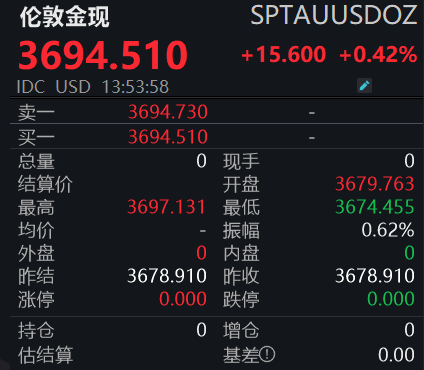
Core Viewpoint - Gold prices have reached new historical highs, with London gold touching $3697.131 per ounce and COMEX gold hitting $3734.8 per ounce, driven by various factors including monetary policy shifts, geopolitical risks, and central bank purchases [1][3][9]. Price Movements - As of September 10, London gold was reported at $3694.51 per ounce, up 0.42%, with a year-to-date increase of over $1000 per ounce [3][4]. - COMEX gold also saw an increase, reported at $3733.2 per ounce, up 0.38%, with a peak of $3734.8 per ounce [5][9]. - In the domestic market, Shanghai Gold Exchange's gold T+D rose by 1.14% to 838.1 yuan per gram, while the main futures contract increased by 1.16% to 844.58 yuan per gram, both reaching new highs [6]. Factors Driving Gold Prices - The primary factors contributing to the surge in gold prices include: - A shift in monetary policy, with a 100% probability of a Federal Reserve rate cut due to weak U.S. economic data, leading to lower opportunity costs for holding gold [8][9]. - Escalating geopolitical risks, including tensions in the Middle East and the ongoing Russia-Ukraine conflict, which have increased the geopolitical risk index [8][9]. - Continuous net purchases of gold by global central banks, supporting strategic demand for gold amid a trend of de-dollarization [9]. Market Outlook - Analysts suggest that while gold prices are currently high and may experience short-term fluctuations, the long-term outlook remains bullish due to persistent demand driven by risk aversion, policy uncertainty, and central bank support [10]. - Investment strategies should focus on monitoring Federal Reserve policies, inflation data, and geopolitical developments to adjust positions accordingly [10].
国投期货能源日报-20250916
Guo Tou Qi Huo· 2025-09-16 11:39
Report Industry Investment Ratings - Crude oil: The trend is bearish in the medium term, with a short - term potential for supply fluctuations due to geopolitical factors, but the upside space is limited. The strategy of combining high - level short positions and call options can be continued [2]. - Fuel oil & Low - sulfur fuel oil: FU and LU are expected to follow the crude oil trend, with short - term rebound risks and medium - term downward pressure. It is recommended to focus on the strategy of buying the spread between high - sulfur and low - sulfur fuel oil when the spread is low [3]. - Asphalt: The overall inventory level has decreased, and the futures price has bottom - support [4]. - Liquefied petroleum gas (LPG): The overseas market is strong, and the short - term price - to - oil ratio is expected to be strong. Pay attention to the peak - season stocking market, and the near - month contract on the futures market is relatively strong [5]. Core Viewpoints - With the end of the gasoline consumption peak season, global refined oil inventory accumulation has accelerated. Considering the return of OPEC+ supply and the end of the summer peak season for oil demand, the market is expected to face greater loosening pressure in the fourth quarter, with the most oversupplied period in the first quarter of next year. The oversupply may reach 1.64 million barrels per day this year and 2.67 million barrels per day next year [2]. - Since Russian refineries have been frequently attacked, the weekly loading volume of Russian fuel oil has continued to decline. The increase in bunker fuel consumption in the Singapore market is concentrated in high - sulfur bunker fuel. The low - sulfur supply pressure has eased marginally, and the spread between high - sulfur and low - sulfur fuel oil is difficult to compress further [3]. - The latest data shows that asphalt plant inventory has decreased slightly, and social inventory has decreased by 50,000 tons weekly. The increase and subsequent decrease of warehouse receipts in East China are conducive to alleviating the downward pressure on spot prices in East China [4]. - The overseas LPG market remains strong. Affected by typhoons in South China, imported goods have decreased, and high - level refinery operating rates can be maintained due to good chemical profit margins [5]. Summary by Related Catalogs Crude Oil - Since the end of the gasoline consumption peak season, global refined oil inventory has increased by 4.7% and crude oil inventory has decreased by 0.9% since the second half of the year, with an overall increase of 1.2% in total oil inventory, continuing the inventory - building speed in the second quarter [2]. - Considering the supply return of OPEC+ and the end of the oil demand peak season, the market's loosening pressure will increase marginally in the fourth quarter, and the most oversupplied period will be in the first quarter of next year, with oversupply of 1.64 million barrels per day this year and 2.67 million barrels per day next year [2]. - The medium - term bearish trend of crude oil prices remains unchanged. Although short - term geopolitical factors may cause temporary supply fluctuations, the upside space for price rebounds is limited [2]. Fuel Oil & Low - sulfur Fuel Oil - Since Russian refineries have been frequently attacked, the weekly loading volume of Russian fuel oil has continued to decline. The increase in domestic local refinery operating rates is beneficial to fuel oil feedstock demand [3]. - The increase in bunker fuel consumption in the Singapore market is concentrated in high - sulfur bunker fuel, with an 11.6% year - on - year increase in high - sulfur bunker fuel loading volume in August and a 6% year - on - year increase in cumulative loading volume [3]. - FU and LU are expected to follow the crude oil trend, with short - term rebound risks and medium - term downward pressure. The low - sulfur supply pressure has eased marginally, and the spread between high - sulfur and low - sulfur fuel oil is difficult to compress further [3]. Asphalt - The latest data shows that asphalt plant inventory has decreased slightly, and social inventory has decreased by 50,000 tons weekly, with the overall inventory level decreasing month - on - month [4]. - Warehouse receipts in East China increased by 4,000 tons last Friday and decreased by 2,700 tons in the first two trading days of this week, which is conducive to alleviating the downward pressure on spot prices in East China [4]. - The asphalt futures price has bottom - support [4]. LPG - The overseas LPG market remains strong, and the overall sentiment is positive due to strong import demand and rising geopolitical risks [5]. - Affected by typhoons in South China, imported LPG has decreased. Good chemical profit margins allow high - level refinery operating rates to be maintained [5]. - The short - term price - to - oil ratio is expected to be strong. Pay attention to the peak - season stocking market, and the near - month contract on the futures market is relatively strong [5].