
贸易战

Search documents
中国拒购美国大豆,美农焦虑,美国土安全部:哪怕政府停摆,关税也要继续收
Sou Hu Cai Jing· 2025-09-29 22:57
更让农民们担心的是就算现在和中国谈成了协议,也赶不上今年的大豆收获季了。 2025年第二季度中国从巴西、阿根廷等南美国家买的大豆总量超过了3000万吨,创下了新纪录,对美国大豆的需求降到了20年来最低,而特朗普政府却还在 坚持关税政策,认为虽然短期内会有影响,但最终美国农民会赚得更多,这种盲目乐观让农民们越来越焦虑。 这么一看墨西哥这次妥协,好像是"没办法才这样做",但仔细琢磨其实他们根本没算清楚自己多依赖中国商品。 中国不买美国大豆了,美国农民急得提醒特朗普赶紧想办法,但美国国土安全部却坚持关税不能停,这到底说明了什么? 根据最新报道美国新一季的大豆已经开始出口了,但卖给中国的订单却是零,和去年同期的情况完全不一样,同时美国国土安全部还明确表示,就算9月30 日后美国政府停摆,关税征收这些事也不会停。 一边是美国农民卖不出去大豆,生活压力越来越大,另一边是政府还在死撑关税政策,特朗普的贸易决策让美国陷入了两难境地,美国大豆协会主席拉格兰 甚至说这对美国农民来说简直是"五级火警",非常紧急。 比如墨西哥最重要的汽车产业,出口到美国的整车里,有35%的零部件都是从中国买的,如果对中国零部件加税,汽车生产成本至少 ...

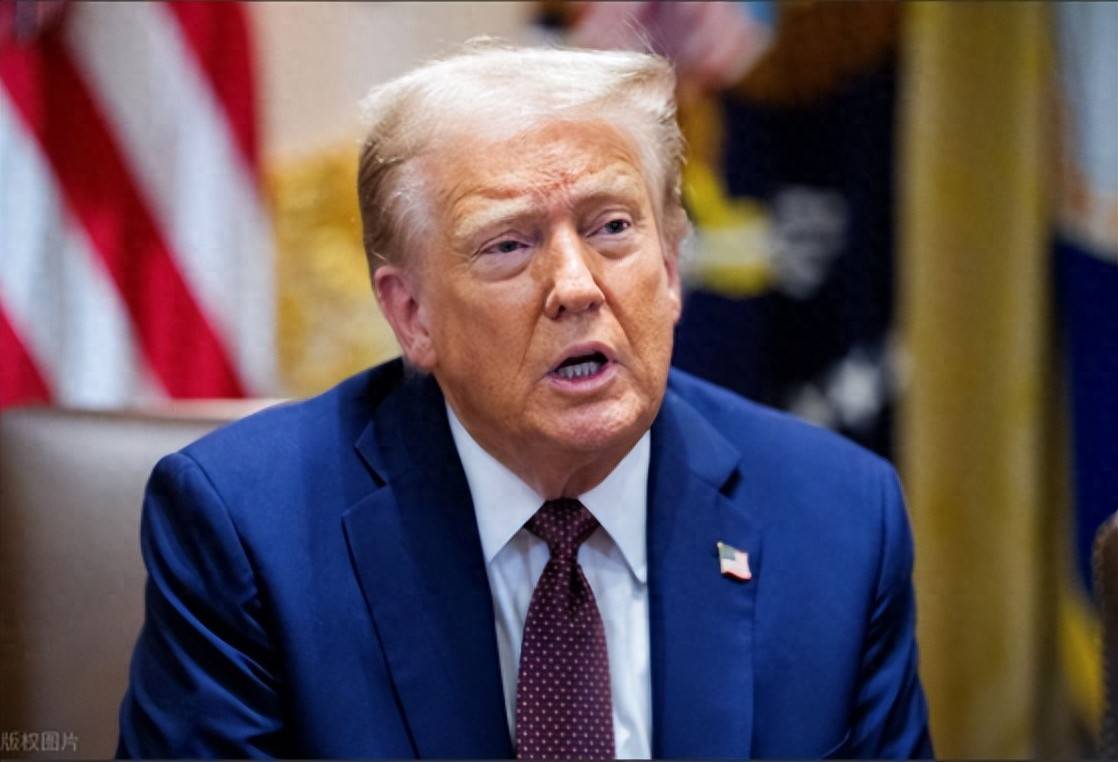
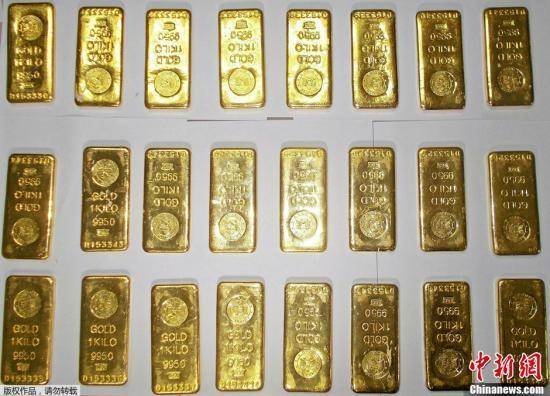
金价创历史新高后 美国黄金储备总价值突破1万亿美元
Sou Hu Cai Jing· 2025-09-29 16:45
Core Insights - Gold prices have reached a historic high of $3,824.5 per ounce, leading to the total value of U.S. Treasury's gold reserves exceeding $1 trillion [1][3] - The official book value of these gold reserves, based on a price set in 1973, is just over $11 billion, indicating a significant disparity with the current market value [3] - Factors such as anticipated interest rate cuts by the Federal Reserve, geopolitical conflicts, and trade wars have contributed to the rising gold prices, which have increased by 45% this year [3] Group 1 - The U.S. Treasury's gold reserves total approximately 261.5 million ounces [3] - The current market value of gold reserves is over 90 times the official book value [3] - Analysts from institutions like Goldman Sachs and Deutsche Bank expect the upward trend in gold prices to continue [3] Group 2 - Gold prices are projected to achieve a third consecutive quarter of increases [3] - The recent surge in gold prices is attributed to various economic and geopolitical factors [3] - The speculation regarding the revaluation of gold reserves by the U.S. government has been denied by Treasury Secretary [3]
山金期货贵金属策略报告-20250929
Shan Jin Qi Huo· 2025-09-29 09:51
1. Report Industry Investment Rating No information provided in the text. 2. Core Views of the Report - Today, precious metals fluctuated upwards, with the main Shanghai gold contract closing up 1.35% and the main Shanghai silver contract closing up 3.92%. The short - term investment strategy for both gold and silver suggests that conservative investors should wait and see, while aggressive investors can buy on dips. It is recommended to manage positions well and set strict stop - losses and take - profits [1][2][6]. - The short - term core logic for gold includes increased trade - war concerns, ongoing worries about the Fed's independence, rising risks of U.S. economic stagflation, weakening employment, and moderate inflation, leading to the realization of the Fed's interest - rate cut expectations. Trump's new tariffs from the national to the industry level have broken the relatively calm trade situation, and there are still geopolitical disturbances in regions such as Russia - Ukraine and the Middle East. The Fed has cut interest rates by 25 basis points and hinted at further cuts. The market expects a 90% probability of a 25 - basis - point rate cut in October and about 2 more cuts this year. The dollar index and U.S. Treasury yields have fallen under pressure. The CRB commodity index's rebound is under pressure, and the appreciation of the RMB is negative for domestic prices. Precious metals are expected to fluctuate upwards in the short term and rise in a step - like manner in the long term [1]. - The gold price trend is the anchor for the silver price. In terms of capital, CFTC silver net longs and iShare silver ETF have slightly increased their positions. In terms of inventory, the recent visible inventory of silver has slightly decreased [5]. 3. Summary by Related Catalogs Gold - **Price Data**: International prices (Comex gold and London gold) and domestic prices (Shanghai gold and gold T + D) have all increased compared to the previous day and week. For example, the Comex gold主力 contract's closing price increased by 0.25% compared to the previous day and 1.89% compared to the previous week [2]. - **Position and Inventory Data**: Comex gold positions increased by 3.76% compared to the previous week, while Shanghai gold主力 positions decreased by 0.87% compared to the previous day but increased by 10.05% compared to the previous week. LBMA gold inventory remained unchanged, and Comex gold inventory decreased by 1.08% compared to the previous week [2]. - **Futures Company Member Net Position Ranking**: The top 20 long - position members' net long positions totaled 183,220, an increase of 3,550 (41.27% daily increase). The top 20 short - position members' net short positions totaled 23,066, a decrease of 251 (5.20% daily increase) [3]. Silver - **Price Data**: International prices (Comex silver and London silver) and domestic prices (Shanghai silver and silver T + D) have all increased compared to the previous day and week. For example, the Comex silver主力 contract's closing price increased by 3.07% compared to the previous day and 8.00% compared to the previous week [6]. - **Position and Inventory Data**: CFTC silver net longs and iShare silver ETF slightly increased their positions. The recent visible inventory of silver slightly decreased. For example, the total visible inventory decreased by 0.45% compared to the previous week [5][6]. - **Futures Company Member Net Position Ranking**: The top 20 long - position members' net long positions totaled 188,609, a decrease of 18,061 (22.28% daily increase). The top 20 short - position members' net short positions totaled 95,783, a decrease of 1,179 (11.31% daily increase) [7]. Fundamental Key Data - **Monetary Attribute Data**: The federal funds target rate upper limit and the discount rate decreased by 0.25%. The Fed's total assets decreased by 0.00%. M2 increased by 0.23% year - on - year. The 10 - year U.S. Treasury real yield increased by 0.83% compared to the previous day [8]. - **Inflation Data**: CPI increased by 0.20% year - on - year, and core CPI increased by 0.10% year - on - year. The PCE price index increased by 0.14% year - on - year, and the core PCE price index increased by 0.05% year - on - year [10]. - **Economic Growth Data**: GDP decreased by 0.30% year - on - year in annualized terms but increased by 4.40% quarter - on - quarter in annualized terms. The unemployment rate increased by 0.10% [10]. - **Other Data**: Geopolitical risk index remained unchanged, VIX index increased by 3.14% compared to the previous day, CRB commodity index increased by 0.55% compared to the previous day, and the offshore RMB increased by 0.39% compared to the previous day [11]. - **Fed Interest - Rate Expectations**: According to the CME FedWatch tool, the probability of a 25 - basis - point rate cut in October 2025 is 89.3%, and the probability changes over different meeting dates in the future [12].
瑞达期货集运指数(欧线)期货日报-20250929
Rui Da Qi Huo· 2025-09-29 08:39
1. Report Industry Investment Rating - Not mentioned in the provided content 2. Core Viewpoints of the Report - Trade war uncertainties persist, demand for the Container Shipping Index (European Line) futures is weakly expected, and the futures price fluctuates significantly. Investors are advised to be cautious, pay attention to the operation rhythm and risk control, and track geopolitical, shipping capacity, and cargo volume data in a timely manner [1] 3. Summary according to Relevant Catalogs Market Data - EC main contract closing price is 1115.000, down 35.8; EC second - main contract closing price is 1756.3, down 24.30. The spread between EC2510 - EC2512 is - 641.30, down 3.30; the spread between EC2510 - EC2602 is - 552.00, down 6.00. The EC contract basis is 5.49, and the main contract position is 29314, down 3117 [1] - SCFIS (European Line) (weekly) is 1120.49, down 134.43; SCFIS (US West Line) (weekly) is 921.25, down 272.39. SCFI (composite index) (weekly) is 1114.52, down 83.69. Container ship capacity is 1227.97 (ten thousand TEUs), up 0.04 [1] - CCFI (composite index) (weekly) is 1087.41, down 32.82; CCFI (European Line) (weekly) is 1401.91, down 69.06. The Baltic Dry Index (daily) is 2259.00, up 7.00; the Panamax Freight Index (daily) is 1832.00, up 3.00 [1] - The average charter price of Panamax ships is 14769.00, unchanged; the average charter price of Capesize ships is 30090.00, down 400.00 [1] Industry News - US President Trump announced that from October 1st, a new round of high - tariffs will be imposed on multiple imported products, but for trade partners such as the EU and Japan with which the US has reached trade agreements, the 15% tariff cap in the agreements will be adhered to [1] - Five major German economic research institutions predict that the German economy will only grow slightly by 0.2% in 2025. Due to structural weaknesses and the impact of US tariff hikes, its foreign trade growth momentum is gradually disappearing, and the growth prospects of the German economy will continue to deteriorate [1] - Goldman Sachs analysts said that the risk of the US economy re - accelerating is rising, which will have an important impact on the Fed's monetary policy path, especially under the background of the Fed selecting a new chairman [1] Market Trends - On Monday, the prices of the Container Shipping Index (European Line) futures fell collectively. The main contract EC2510 rose 3.11%, and the far - month contracts fell between 1 - 2%. The latest SCFIS European Line settlement freight rate index is 1254.92, down 134.43 points from last week, a 10.7% decline. Spot indicators continue to decline, and the futures price lacks support [1] - Maersk's spot cabin quotes for the European Line in mid - October stopped falling and rebounded significantly, followed by a small rebound in MSC's quotes in the next two weeks, leading to an increase in the futures price valuation. Geopolitical conflicts support the futures price, but before the National Day holiday, liner companies lowered freight rates to increase cargo collection, and the supply - demand pattern remains unchanged, with significant freight rate pressure [1] - Eurozone economic data has fluctuated recently. The September manufacturing PMI was slightly worse than last month, but the service PMI exceeded expectations. The ECB stated that it will slow down the pace of interest rate cuts [1] Key Data to Watch - China's official manufacturing PMI for September, UK's Q2 GDP annual rate final value, France's September CPI monthly rate preliminary value, Germany's September seasonally adjusted unemployment rate, Germany's September CPI monthly rate preliminary value, US July S&P/CS20 - city unadjusted house price index annual rate, and US September Chicago PMI on September 30th [1]
美参议员:美国农民受贸易战影响 需要政府补贴
Zhong Guo Xin Wen Wang· 2025-09-29 07:53
Group 1 - The U.S. Senate Majority Leader, a Republican, indicated that U.S. agricultural exports are struggling due to the trade war, and a significant portion of tariff revenue may be used to provide assistance to farmers [1] - The U.S. Soybean Association reported that China has not purchased any U.S. soybeans since May, opting instead for suppliers from Brazil and Argentina, causing distress among U.S. soybean farmers [1] - The dramatic shift in soybean trade mirrors the situation during Trump's first term, where U.S. soybean exports to China plummeted from $14 billion in 2016 to $3.1 billion in 2018 [1] Group 2 - U.S. Agriculture Secretary expressed that soybean, corn, wheat, sorghum, and cotton growers are facing very difficult times, and discussions are ongoing regarding a farmer assistance plan [1] - President Trump has indicated a desire to allocate part of the tariff revenue to support farmers, although the USDA has not yet released specific plans [1] - The Chinese Ministry of Commerce spokesperson urged the U.S. to take positive actions to remove unreasonable tariffs to create conditions for expanding bilateral trade [2]
被中国反制打到七寸,美国人悔不当初:怎么就把特朗普选上去了?
Sou Hu Cai Jing· 2025-09-29 04:56
Core Viewpoint - The ongoing trade conflict between China and the U.S. has severely impacted the American soybean industry, with U.S. farmers facing unprecedented challenges as China shifts its purchases to South American suppliers [1][3]. Group 1: Impact on U.S. Soybean Farmers - U.S. soybean farmers are experiencing a crisis as they have missed the optimal sales window for this year's harvest, even if a trade agreement is reached soon [1][3]. - China has not placed orders for U.S. soybeans for the new harvest season, marking the first time in 30 years that this has occurred [3]. - Soybeans are the largest agricultural export from the U.S., accounting for 14% of total agricultural exports, with China being the largest buyer [3]. Group 2: Economic Consequences - Many U.S. farmers are facing significant losses, with some forced to file for bankruptcy due to the lack of Chinese orders [3][4]. - The cost of growing soybeans is approximately $600 per acre, while the income is only about $500 per acre, leading to substantial financial losses for farmers [4]. Group 3: Political Ramifications - The trade crisis is directly linked to the tariffs imposed by the Trump administration, which were intended to protect U.S. interests but have backfired on the farming community [3][4]. - Farmers who supported Trump are now calling for an end to the trade war, highlighting the disconnect between political promises and economic realities [4]. Group 4: Market Dynamics - Competitors like Brazil and Argentina are capitalizing on the situation, having captured nearly 20% of the U.S. soybean market share that has not been regained [4][5]. - The shift in China's purchasing strategy is altering the global soybean trade landscape, with long-term implications for U.S. agricultural exports [5].
特朗普让美国豆农崩溃,下周加关税,美联储大消息,10月再降息
Sou Hu Cai Jing· 2025-09-27 21:02
Group 1: Agricultural Impact - U.S. soybean production reached a historical high in 2025, but prices have plummeted by 40% compared to 2022, leading to significant distress among farmers [1] - The trade war has caused U.S. soybean market share in China to drop from 40% in 2016 to 20% in 2024, with farmers expressing frustration over the government's handling of the situation [2] - The number of farm bankruptcies increased by 55% in 2024, indicating a severe crisis in the agricultural sector [2] Group 2: Economic Consequences - The Trump administration's tariffs were expected to generate over $300 billion in revenue, but actual revenue was only $100 billion by July 2025, highlighting a significant shortfall [3] - Tariffs have led to a drastic reduction in U.S. soybean exports to China, from 22 million tons in 2024 to just 3 million tons, resulting in a complete loss of related tariff revenue [3] - The U.S. economy is facing a potential slowdown, with a 65% probability of recession as consumer prices for everyday goods have risen by 30% due to tariffs [5] Group 3: Federal Reserve Actions - The Federal Reserve lowered interest rates by 25 basis points to 4.00-4.25% in response to rising unemployment and low job growth, with expectations of further cuts [4] - Despite potential cumulative rate cuts of 75 basis points, the structural issues caused by tariffs may negate the positive effects of lower interest rates on consumer spending [4] Group 4: Business Challenges - Companies are facing a dilemma as tariffs increase production costs while incentivizing domestic manufacturing, creating a challenging environment for supply chains [6] - Retailers and importers are struggling with reduced product lines and legal challenges against the government due to the financial strain caused by tariffs [3]
关键信号传出!特朗普踢到铁板,中方一锤定音,美国再无退路
Sou Hu Cai Jing· 2025-09-27 18:52
Group 1 - The core issue is the significant decline in U.S. soybean exports to China, which has dropped to zero, severely impacting American farmers and the agricultural economy [3][5][7] - The U.S. soybean industry, previously reliant on China for over 60% of its exports, is now facing a crisis as orders have shifted to South American suppliers, particularly Brazil [5][7] - The seasonal nature of soybean sales means that missing the sales window could result in a total loss of income for farmers, leading to increased bankruptcy rates and a potential historical peak in soybean inventory [5][7] Group 2 - The crisis in the soybean market is causing ripple effects across related industries, including transportation and processing, resulting in job losses and reduced operational capacity [7] - The political implications are significant, as agricultural states, traditionally Republican strongholds, are experiencing farmer discontent, which could affect political support for the Trump administration [7][9] - China's strategic response to U.S. tariffs highlights the risks of unilateral trade actions, emphasizing the need for equal negotiation and multilateral cooperation to stabilize the global economy [9]
趁美国大豆卖不出去,阿根廷取消出口税,一夜间向中国卖出10船大豆
Sou Hu Cai Jing· 2025-09-27 09:58
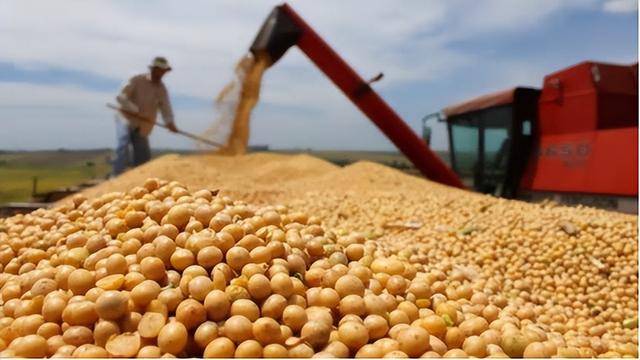
这对于美国大豆农户来说,无异于是又一次"晴天霹雳"。我们都知道大豆是美国农产品出口的重中之 重,此前美国每年种植的大豆超过40亿蒲式耳,其中将近25%要出口到中国。去年一年,美国大豆商从 中国赚了130亿美元。可以说,中国市场成了美国豆农的"救命稻草"。 但特朗普上台后,对中国产品大规模加征关税,中国不得不调整采购方向。结果,美国大豆农户的订单 一下子"蒸发"了。 有美国农业公司测算,如果11月之前还没有中国订单,美国损失可能高达1400万至1600万吨,金额至少 也有数十亿美元。 在美国豆农发愁大豆卖不出去之际,阿根廷趁机大发美国"国难财"。据报道,当地时间9月22日,阿根 廷政府突然宣布一个重大决定:暂时取消谷物等农产品的出口税。 【阿根廷和中国达成数十船大豆交易】 阿根廷是全球大豆的主要生产国之一,但过去一直对大豆征收高达26%的出口税,导致不少买家对其望 而却步,如今突然取消出口税,等于主动放水,对于大豆需求量非常高的中方来说,这无疑是一个交易 的好机会。 据路透社报道,这一政策实施后,中国买家就迅速拍下了10船阿根廷大豆。两名熟悉情况的交易员称, 每船大豆大约为6.5万吨,计划11月装运,成本加运费 ...
All bark, no bite: Trump’s latest trade war turns into another TACO salad for Wall Street
Yahoo Finance· 2025-09-26 20:40
When President Donald Trump made his “Liberation Day” speech on April 2, announcing sweeping tariffs across a range of sectors, markets reacted sharply. Investors feared a replay of the disruptive trade battles of his first term, and stocks dropped as they tried to assess how new levies might ripple through global supply chains. But six months on, the story looks different. Much of the initial panic has faded, replaced by recognition that the real economic impact of Trump’s tariffs has been softened by ca ...