Workflow
供给侧改革
icon
Search documents
新闻解读20250709
2025-07-16 06:13
Summary of Conference Call Notes Industry or Company Involved - The discussion primarily revolves around the Chinese capital market and its macroeconomic environment Core Points and Arguments 1. **Market Sentiment and Performance** The market experienced a slight consolidation after a significant rise, indicating a temporary fatigue but overall positive sentiment remains intact with trading volume around 1.5 trillion yuan, showing a gradual recovery [1] 2. **Inflation Data Impact** The release of June inflation data showed a decline in consumer prices, which alleviated some concerns for consumer sectors, but the drop in sales prices (0.4% month-over-month and 3.6% year-over-year) indicates ongoing pressure on corporate profits [2] 3. **Policy Response to Economic Challenges** There is speculation that the decision-makers are aware of macroeconomic data and may implement policies to address persistent deflation, suggesting a more aggressive approach to supply-side reforms [3][4] 4. **International Trade Relations** Recent positive statements from U.S. President Trump regarding trade agreements with China may provide stability to the capital market, with upcoming negotiations potentially affecting tariffs [5][6] 5. **Domestic Policy Developments** Upcoming economic policy meetings and the formulation of the 14th Five-Year Plan may focus on new energy systems, which could support related sectors such as electricity and renewable energy [7] 6. **Capital Flow Considerations** There are discussions about relaxing restrictions on domestic funds investing in Hong Kong's bond market, which could enhance liquidity and attract more capital to Hong Kong [8] 7. **Outlook on Overcapacity Issues** Until the end of July, sectors related to overcapacity may not see favorable developments, but there are potential benefits for new energy and grid construction sectors based on recent policy directions [9] Other Important but Possibly Overlooked Content - The ongoing discussions about deflation and its implications for corporate profitability highlight the need for strategic adjustments in business operations and pricing strategies [2] - The potential for increased capital flow into Hong Kong could significantly alter market dynamics, emphasizing the importance of monitoring regulatory changes [8]
新世纪期货交易提示(2025-7-16)-20250716
Xin Shi Ji Qi Huo· 2025-07-16 05:15
Report Industry Investment Ratings - Iron ore: Upward [2] - Coking coal and coke: Upward [2] - Rolled steel and rebar: Sideways [2] - Glass: Upward [2] - Soda ash: Sideways [2] - SSE 50 Index: Rebound [2] - CSI 300 Index: Sideways [2] - CSI 500 Index: Upward [4] - CSI 1000 Index: Upward [4] - 2-year Treasury bond: Sideways [4] - 5-year Treasury bond: Sideways [4] - 10-year Treasury bond: Rebound [4] - Gold: High-level sideways [4] - Silver: Bullish [4] - Pulp: Sideways [5] - Logs: Sideways [5] - Edible oils: Bullish [5] - Meal products: Wide-range sideways [5] - Live pigs: Rebound [8] - Rubber: Sideways [10] - PX: Wait-and-see [10] - PTA: Short on rallies [10] - MEG: Short on rallies [10] - PR: Wait-and-see [10] - PF: Wait-and-see [10] Core Viewpoints - The report analyzes the market trends of various commodities and financial products, including black commodities, financial futures, precious metals, light industrial products, agricultural products, and chemical products. It provides investment ratings and key factors affecting each product's price movement, suggesting corresponding investment strategies based on the current market situation and future expectations [2][4][5][8][10] Summary by Categories Black Industry - **Iron ore**: Short-term sentiment drives prices up, but in the long run, supply will increase, demand will remain low, and port inventories will accumulate [2] - **Coking coal and coke**: Supply may increase as mines resume production, and attention should be paid to the trends of hot metal and coal-coke supply [2] - **Rolled steel and rebar**: "Anti-involution" policies boost supply-side sentiment, but overall demand is weak, and prices will fluctuate [2] - **Glass**: Supply may contract in the short term, but demand will decline seasonally, and prices will be high and volatile [2] - **Soda ash**: Short-term valuation is low, and prices are driven up by sentiment. Attention should be paid to the recovery of downstream demand [2] Financial Products - **Stock index futures/options**: The economy shows resilience, and it is recommended to hold long positions in stock indices [4] - **Treasury bonds**: Market interest rates are consolidating, and it is recommended to hold long positions in Treasury bonds lightly [4] - **Gold**: The pricing mechanism is shifting, and multiple factors support high-level sideways movement [4] - **Silver**: Bullish due to various factors, including supply and demand and market sentiment [4] Light Industrial Products - **Pulp**: Supply and demand are both weak, and prices will fluctuate [5] - **Logs**: Supply pressure eases, and prices will be stable with a sideways trend [5] Agricultural Products - **Edible oils**: Supply is abundant, but biofuel policies may boost prices, and they will be bullish with a sideways trend [5] - **Meal products**: USDA reports are bearish, but biofuel policies support prices, and they will fluctuate widely [5] - **Live pigs**: Supply is increasing, and demand is restricted by high temperatures, and prices may decline [8] - **Rubber**: Supply is affected by weather, demand is recovering structurally, and prices will fluctuate widely [10] Chemical Products - **PX**: Prices will follow oil prices due to tight supply in the short term [10] - **PTA**: Supply is increasing, demand is weakening, and prices will follow costs [10] - **MEG**: Supply pressure may increase, and prices will be under pressure in the medium term [10] - **PR**: International oil prices are falling due to sanctions and production increases [10] - **PF**: Terminal demand is weak, and prices will continue to be weak [10]
煤企业绩承压,煤炭ETF(515220)回调,连续5日吸金超14亿元
Mei Ri Jing Ji Xin Wen· 2025-07-16 03:15
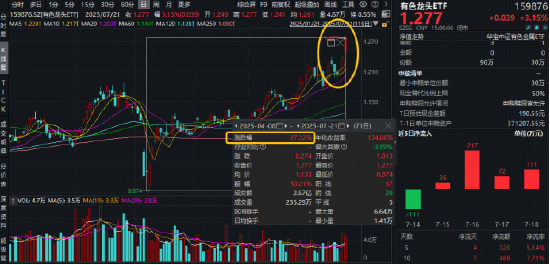
每经编辑|彭水萍 近期,半年报业绩预告持续披露,受市场环境影响,煤炭、焦炭价格整体下行,煤炭企业利润承压。受利润下探影响,煤炭板块回调,煤炭 ETF(515220)年初至今跌超10%。"反内卷"背景下,煤炭板块预期向好,煤炭ETF(515220)持续吸金,连续5日净流入额超14亿元,当前规 模近60亿元。 1、"反内卷"预期升温,煤炭供需或改善 近日,中国煤炭运销协会召开上半年煤炭经济运行分析座谈会。会议强调,加强行业自律,整治内卷式竞争,促进煤炭市场供需平衡。 国家发改委2024年提出"反内卷"指导方针,要求传统行业避免低价倾销、重复建设。煤炭行业作为能源安全"压舱石",2025年将重点整治合同 违约、供给过剩等乱象。 机构分析指出,行业自律将减少市场煤价波动,5500大卡动力煤长协价有望维持在700元-750元/吨区间;同时,淘汰落后产能可提升头部企业 市占率,前5大煤企利润占比或从2024年的42%升至2025年的48%。 2、历史供给侧改革期,煤炭行情占优 (1)2016年"供给侧改革":煤炭较沪深300超额近10% 2016年2月,国务院发布《关于煤炭行业化解过剩产能实现脱困发展的意见》,煤炭行业供 ...
山金期货黑色板块日报-20250716
Shan Jin Qi Huo· 2025-07-16 02:48
Report Summary 1. Report Industry Investment Rating No investment rating information is provided in the report. 2. Core Viewpoints - **Steel Products**: The steel market is currently trading on weak reality and strong expectations. The real - estate data is still weak, and the industry is in the process of bottom - building. The steel market is in a state of weak supply and demand, and with the arrival of high - temperature weather, demand is expected to weaken further, and inventory may rise slightly. Strong expectations mainly come from potential supply - side reforms. Technically, the futures prices face resistance after a pulsed rise [2]. - **Iron Ore**: The short - term iron ore market is expected to maintain a volatile and slightly stronger trend under the boost of news. However, in the long - term, the futures price is in a downward cycle. With the end of the downstream consumption peak and steel mill production restrictions, iron ore demand is expected to decline, and the relatively high port inventory and trade ore inventory ratio put pressure on the price [4]. 3. Summary by Directory **I. Threaded Bars and Hot - Rolled Coils** - **Market Background**: The economic data for the second quarter and the first half of 2025 shows that the real - estate industry is still weak. The Central Urban Work Conference did not bring the expected major positive news. The supply - demand data from My Steel shows a state of weak supply and demand [2]. - **Technical Analysis**: After a pulsed rise, the futures prices encounter resistance, with the previous gap and the annual line as resistance levels [2]. - **Operation Suggestion**: Maintain a wait - and - see attitude [2]. - **Data Summary**: - **Prices**: The closing prices of threaded bar and hot - rolled coil futures and spot prices show certain fluctuations. For example, the closing price of the threaded bar futures main contract is 3114 yuan/ton, down 0.76% from the previous day [2]. - **Production**: The production of threaded bars and hot - rolled coils decreased last week. The national building materials steel mill threaded bar production was 216.66 million tons, down 2.00% from the previous week [2]. - **Inventory**: The total inventory of five major steel products decreased, with the social inventory of threaded bars decreasing and the factory inventory increasing slightly [2]. - **Trading Volume**: The trading volume in the spot market decreased, such as the 7 - day moving average of the national building steel trading volume being 18.67 million tons, down 13.38% from the previous day [2]. **II. Iron Ore** - **Supply - Demand Situation**: The steel mill profitability is acceptable, but with the end of the consumption peak and production restrictions, iron ore demand is expected to decline. The global iron ore shipment is at a relatively high level and rising seasonally, and the port inventory decline rate is slowing down, which puts pressure on prices [4]. - **Technical Analysis**: The futures price is in a long - term downward cycle, and the recent short - term rise is mainly affected by news, facing resistance from the previous gap and the annual line [4]. - **Data Summary**: - **Prices**: The settlement price of the DCE iron ore futures main contract is 767 yuan/dry ton, up 4.64% from the previous week. Different iron ore powder prices in ports also show various changes [4][5]. - **Supply**: The global iron ore shipment is rising, with Australian shipments at 1569.9 million tons, down 0.97% from the previous week, and Brazilian shipments at 709.9 million tons, up 22.63% from the previous week [5]. - **Inventory**: The port inventory is 13765.89 million tons, down 0.81% from the previous week, and the trade ore inventory ratio is relatively high [5]. **III. Industry News** - The price of coke has been raised, with wet - quenched coke prices in Tangshan and Xingtai rising by 50 yuan/ton and dry - quenched coke prices rising by 55 yuan/ton. Some steel mills in Shandong have also raised their coke purchase prices [7]. - The first round of coke price increases has been fully implemented, and the price of coking coal in some origin auctions has risen significantly. The import Mongolian coal market has high - level quotations with limited transactions. The three major ports have resumed normal customs clearance, and the inventory at the Ganqimaodu Port has dropped to 3 million tons [7]. - From January to June, the national real - estate development investment was 4665.8 billion yuan, a year - on - year decrease of 11.2%, and the housing construction area decreased by 9.1% year - on - year [7].
反内卷专题:煤炭抓手或在于开工率产能过剩,还是产量过剩?
Tianfeng Securities· 2025-07-15 14:11
Investment Rating - The industry rating is "Outperform the Market" (maintained rating) [2] Core Insights - The current environment in the coal industry is characterized by high operating rates leading to "involution" competition, rather than the previous "supply-side" overcapacity scenario. The focus should be on controlling operating rates to mitigate this competition [1][27] - In 2016, national coal production capacity was approximately 5.73 billion tons, with a production of 3.41 billion tons, indicating low capacity utilization. By 2022, production capacity exceeded 4.4 billion tons, with production reaching 4.55 billion tons, and is projected to reach 4.76 billion tons by 2024, suggesting excessively high operating rates [1][19] Summary by Sections 1. Historical Context - The coal supply-side reform initiated in 2015 aimed to eliminate around 500 million tons of capacity over 3 to 5 years, with significant reductions in the number of coal mines and improvements in safety and market pricing mechanisms [8][9][10] 2. Current Industry Dynamics - The coal industry is currently facing a situation where high operating rates are leading to price competition, which is different from the previous overcapacity issues. The focus should be on managing these operating rates to stabilize the market [1][27] 3. Future Outlook - The report suggests that unlike the petrochemical industry, which may focus on eliminating refining capacity, the coal industry should prioritize controlling operating rates to address the current competitive pressures [1][27]
反内卷和供给侧改革有何不同?
HTSC· 2025-07-15 08:44
Group 1: Historical Context and Comparison - The supply-side reform from 2015 to 2017 successfully reduced excess capacity in industries like coal, steel, and aluminum, leading to a significant rebound in PPI from an average of -10.5% in 2015 to a peak of 21.5% in March 2017[2] - During the same period, the profit margin in affected industries improved from a low of 2.4% in 2015 to 6.6% in early 2017, with nominal GDP growth rising from 6.6% in Q4 2015 to 11.8% in Q1 2017[2][11] - The current "anti-involution" initiative targets industries such as photovoltaics, automobiles, cement, and steel, contrasting with the previous focus on upstream traditional sectors like coal and steel[2][4] Group 2: Industry Dynamics and Challenges - The industries involved in the current "anti-involution" have a higher concentration, with leading firms in photovoltaics and automobiles holding a market share of approximately 67%, compared to 34% and 36% for coal and steel during the previous reform[3][57] - The current environment features a lower proportion of state-owned enterprises and a higher presence of private firms (60-90%) compared to the previous reform period (50-70%)[3][4] - The effectiveness of capacity reduction in the current initiative may be hampered by the relatively new capacity in the steel sector and varying profitability across industries[3][4] Group 3: Economic Implications and Future Outlook - The "anti-involution" is expected to have a milder impact on PPI compared to the supply-side reform due to differences in demand-side policies and macroeconomic conditions, with current policies primarily aimed at stabilizing the economy[4][5] - Industries with high concentration and poor profitability, such as the upstream segment of photovoltaics, may see stronger capacity reduction incentives, while more profitable sectors could face resistance[4][5] - Historical data suggests that aligning "anti-involution" policies with demand-boosting measures could enhance effectiveness, as seen in the previous reform period[5][6]
年底可能出现拉尼娜,推升蛋白粕做多情绪
Zhong Xin Qi Huo· 2025-07-15 08:34
1. Report Industry Investment Ratings - The report does not explicitly mention an overall industry investment rating. However, for individual commodities, the ratings are as follows: - Oils and Fats: Oscillating [6] - Protein Meal: Oscillating in the short - term, bullish in the long - term [7] - Corn and Starch: Oscillating and declining [8] - Live Pigs: Oscillating [10] - Natural Rubber: Oscillating [11] - Synthetic Rubber: Oscillating [15] - Cotton: Oscillating [15] - Sugar: Oscillating in the short - term, oscillating and bearish in the long - term [16] - Pulp: Oscillating [17] - Logs: Oscillating and bearish [18] 2. Core Views of the Report - The report analyzes multiple agricultural commodities. It points out that the end of the year may see the emergence of La Nina, which will boost the sentiment for long - positions in protein meal. The prices of different agricultural products are affected by various factors such as international trade policies, weather conditions, supply and demand relationships, and macro - economic environments. Different commodities show different trends in the short and long terms [1][7]. 3. Summary by Commodity Oils and Fats - **View**: Yesterday, the market was oscillating and differentiated, with palm oil leading the rise. It is expected to oscillate in the medium - term [6]. - **Logic**: Tensions in US foreign trade and good weather in US soybean - growing areas led to a decline in US soybeans on Friday, while US soybean oil was oscillating and bullish. Domestically, the three major oils were oscillating and differentiated, with palm oil being bullish. Macro - environment factors include the strengthening of the US dollar and the rise of crude oil prices. The USDA July report was relatively neutral. Overseas biodiesel demand for oils is expected to be optimistic, and domestic soybean oil inventory is rising. Palm oil is in the production - increasing season, with expected increases in both production and exports. Domestic rapeseed oil inventory is high, and the import situation needs attention [6]. Protein Meal - **View**: The end of the year may see the emergence of La Nina, boosting market sentiment for long - positions. It is expected to oscillate in the short - term and be bullish in the long - term [7]. - **Logic**: Internationally, US soybeans are growing well, but Sino - US trade frictions affect exports. Brazilian soybean exports are still high. CFTC net long positions are decreasing. Domestically, changes in tariff exemptions have hindered the import of granular meal. Supply pressure dominates the weak spot market, but concerns about Sino - US trade support the futures price. Soybean arrivals are increasing, and downstream replenishment is insufficient. In the long - run, fourth - quarter purchases are slow, and the inventory of breeding sows is increasing, indicating stable or increasing demand for soybean meal [7]. - **Outlook**: Domestic double - meal futures are stronger than US soybeans, and the domestic futures market is stronger than the spot market. The basis is expected to weaken. Oil mills can sell on rallies, and downstream enterprises can buy basis contracts or fix prices at low levels. Unilateral long - positions can be established at around 2900 [2]. Corn and Starch - **View**: Traders are actively selling, and market sentiment is weak. It is expected to oscillate and decline [8]. - **Logic**: Futures prices rebounded after a sharp decline on Friday night. In the spot market, trading is active, and some deep - processing plants in the Northeast and North China have lowered their purchase prices. The cumulative auction of imported corn has a certain turnover rate. In the annual structure, imports are expected to decline, but the supply is supplemented by wheat and imported corn, and the cost of new - season corn is decreasing, resulting in weak market sentiment [9]. Live Pigs - **View**: Normal slaughtering in the middle of the month, with prices fluctuating slightly. It is expected to oscillate [10]. - **Logic**: In the short - term, large pigs are being slaughtered at an accelerated pace, but the average weight has bottomed out and is rising. The planned slaughter volume in July is decreasing, and the supply pressure is temporarily low. In the medium - term, the number of newborn piglets has been increasing, indicating potential growth in the second half of the year. In the long - term, the production capacity is still high. The ratio of pork to feed is increasing, and the weight - reduction trend is blocked. In the short - term, the market is affected by macro - regulation signals, but the sustainability is questionable. In the medium - and long - term, there is supply pressure from sows and weight [10]. - **Outlook**: The expectation of supply - side reform boosts the sentiment of live - pig futures. The industry has completed a small - scale weight - reduction, and the inventory pressure of large farms has been released, but there is still supply pressure in the medium - and long - term [10]. Natural Rubber - **View**: Macro - sentiment supports rubber prices. It is expected to oscillate [11]. - **Logic**: The trading logic of natural rubber follows macro - sentiment. After a previous rally in some commodities, rubber, with relatively low valuation, was favored by funds. Currently, the market is in a strong - expectation atmosphere, and the fundamentals are stable. Supply is limited due to rain in Asian producing areas, and demand from tire enterprises has recovered [14]. Synthetic Rubber - **View**: The futures market is oscillating. It is expected to oscillate within a range [15]. - **Logic**: After a sharp rally last week, it returned to an oscillating state yesterday, supported by macro - factors and improved trading of butadiene. The fundamentals of butadiene have improved, with increased demand and limited supply, which also boosts the synthetic rubber market [15]. Cotton - **View**: Low inventory versus weak demand, resulting in a stalemate in cotton prices. It is expected to oscillate in the short - term [15]. - **Logic**: The USDA July report was bearish, with an increase in the expected global cotton production in the 25/26 season. Demand is in the off - season, with a decline in textile mill operations and an increase in finished - product inventory. The cotton - yarn price spread is narrowing. Current commercial inventory is low, making cotton prices resistant to decline but difficult to rise. In the medium - term, new - crop production is expected to increase, suppressing the upside of the futures price [15]. - **Outlook**: It is expected to oscillate in the short - term, with a reference range of 13500 - 14300 yuan/ton [15]. Sugar - **View**: Inventory is low, but subsequent imports are expected to increase. It is expected to oscillate in the short - term and be bearish in the long - term [16]. - **Logic**: In the long - term, the global sugar market is expected to have a surplus in the 25/26 season, with production increases expected in major producing countries. In the short - term, Brazil's sugar production and cane crushing are lower than last year, and China's sugar sales rate is high, with low industrial inventory, supporting sugar prices. However, Brazil will enter the peak production and export season, and China's imports will increase [16]. - **Outlook**: In the long - run, sugar prices are expected to decline due to expected supply surplus. In the short - run, there are few bullish factors, and domestic sugar prices are expected to oscillate [16]. Pulp - **View**: Macro - factors dominate the trend, and pulp prices are rising within a range. It is expected to oscillate [17]. - **Logic**: Yesterday, pulp futures rose following the macro - environment. The supply and demand are weak, and the upward drive mainly comes from the macro - environment. The US dollar price is declining, overseas pulp mill inventory is high, and downstream paper is in the off - season. The futures price is relatively low, providing some support. In the medium - term, if there is inventory accumulation, pulp prices may rise in a wave - like pattern, but the increase is limited [17]. - **Outlook**: The 09 contract is expected to fluctuate between 5150 - 5400, and the 01 contract between 5200 - 5500. Bilateral trading within the range is recommended [17]. Logs - **View**: It is difficult to rise or fall, and it is expected to oscillate and be bearish [18]. - **Logic**: The first - month delivery of logs is ongoing, and the inflow of delivery goods into the spot market has put pressure on prices. Both sellers and buyers face increased costs. Although it is the off - season, the overall demand for logs this year is stable, and the inventory - reduction pace is slow. New foreign quotes have increased, but the willingness of domestic traders to buy at the bottom is strong. The supply reduction is expected to weaken, and the spot market is at the bottom - building stage [18].
日度策略参考-20250715
Guo Mao Qi Huo· 2025-07-15 08:31
Report Industry Investment Ratings - **Bullish**: Polysilicon [1] - **Bearish**: Copper, Aluminum, Zinc, Stainless Steel, Tin, Rapeseed Oil, Cotton, Logs [1] - **Neutral (Oscillating)**: Treasury Bonds, Gold, Silver, Alumina, Nickel, Rebar, Hot - Rolled Coil, Iron Ore, Ferrosilicon, Coking Coal, Coke, Palm Oil, Corn, Pulp, Live Pigs, Crude Oil, Fuel Oil, Rubber, BR Rubber, PTA, Ethylene Glycol, Short - Fiber, Styrene, Fertilizer, PE, PVC, Chlor - Alkali, LPG, Container Shipping on the European Route [1] Core Views - In the short term, liquidity and market sentiment are acceptable, but there are few substantial positive factors at home and abroad. With the recent significant reduction in the discount advantage of stock index futures, it is advisable to be cautious about chasing up [1]. - The asset shortage and weak economy are beneficial to bond futures, but the central bank's short - term warning of interest - rate risks suppresses the upward trend [1]. - Market uncertainties remain. Gold prices are expected to fluctuate mainly in the short term, and silver prices should be wary of the risk of a fall after a rise [1]. - The potential implementation of US copper tariffs may lead to a re - flow of copper from non - US regions, posing a risk of compensatory decline in Shanghai and London copper prices [1]. - High aluminum prices suppress downstream demand, while low inventories support aluminum prices, resulting in a weak oscillating trend [1]. - Domestic anti - involution policies boost the expectation of supply - side reform, leading to a stable recovery in alumina prices [1]. - Tariff disturbances are intensifying, and the expectation of inventory accumulation in the fundamentals continues to pressure zinc prices. Attention should be paid to macro uncertainties [1]. - With macro uncertainties remaining, nickel prices are oscillating. It is recommended to short on rallies in the short term, and there is still pressure from the long - term surplus of primary nickel [1]. - For stainless steel futures, it is advisable to focus on short - term trading, sell on rallies for hedging, and seize the opportunity of positive basis trading. Pay attention to raw material changes and steel mill production schedules [1]. - The macro pricing of tin prices has increased, but the short - term fundamentals of supply and demand are weak, with limited driving forces. Attention should be paid to the subsequent meeting of the Manxiang mining area [1]. - For industrial silicon, the supply shows a pattern of decreasing in the north and increasing in the south. The demand for polysilicon has increased marginally, but there are expectations of production cuts later. The market sentiment is high [1]. - For polysilicon, there are expectations of supply - side reform in the photovoltaic market, and the market sentiment is high [1]. - For lithium carbonate, the supply side has not cut production, downstream replenishment is mainly by traders, and factory purchases are not active. There is capital gaming [1]. - For rebar and hot - rolled coil, the strong performance of furnace materials provides valuation support, but the fundamentals of hot - rolled coil are showing marginal weakness [1]. - For iron ore, short - term production has increased, demand is acceptable, supply and demand are relatively loose, and cost support is insufficient, so prices are under pressure [1]. - For ferrosilicon, the market sentiment has improved. In the short term, supply is stable, demand is resilient, and inventory is being depleted, providing price support. However, in the medium term, supply - demand surplus makes it difficult for prices to rise [1]. - For coking coal and coke, the supply is expected to increase, direct and terminal demand is weak, and cost support is weakening. It is advisable to focus on the opportunity of futures premium for selling hedging [1]. - For palm oil and rapeseed oil, relevant reports are neutral to bearish, and short - term oscillations are expected. It is recommended to wait and see for palm oil, and rapeseed oil is bearish due to the expected entry of Australian rapeseed [1]. - For cotton, in the short term, there are disturbances such as trade negotiations and weather premiums for US cotton. In the long term, macro uncertainties are still strong. The domestic cotton - spinning industry has entered the off - season, and downstream inventories are starting to accumulate, so domestic cotton prices are expected to oscillate weakly [1]. - For sugar, Brazil's 2025/26 sugar production is expected to reach a record high. If crude oil continues to be weak, it may affect Brazil's sugar - making ratio in the new crushing season and lead to higher - than - expected sugar production [1]. - For corn, there are many short - term policy disturbances. Attention should be paid to the subsequent auction volume and transaction price of imported corn and whether the aged rice auction will be implemented. The low wheat - corn price difference suppresses the upward space of corn prices [1]. - For soybean meal, the short - term inventory accumulation pressure continues to pressure the spot basis, which is expected to oscillate at a low level. The downside space of the US market is limited, and the Brazilian premium is expected to be firm. It is advisable to buy on dips [1]. - For pulp, after the macro - level positive factors, the price has risen, but the spot price has not followed up significantly, so it is not recommended to chase up [1]. - For live pigs, with the continuous recovery of the pig inventory, the slaughter weight is increasing. The futures market has a clear expectation of sufficient inventory and a large discount to the spot price. The short - term spot price is less affected by slaughter, and the futures price remains stable [1]. - For crude oil and fuel oil, the cooling of the Middle East geopolitical situation has led the market to return to the supply - demand logic. OPEC+ has increased production more than expected, and short - term strong consumption in the peak season in Europe and the US provides support [1]. - For natural rubber, the downstream demand is showing a weakening trend, the supply - side production release expectation is strong, and the inventory has increased slightly [1]. - For BR rubber, OPEC has increased production more than expected, the synthetic rubber fundamentals are under pressure, and some butadiene units are under maintenance with limited ship - cargo supply, providing certain support [1]. - For PTA, the supply has shrunk, but the crude oil price remains strong. The polyester downstream load remains at 90% despite the expectation of load reduction, and the spot market is becoming more abundant. Due to profit compression, the polyester replenishment willingness is low [1]. - For ethylene glycol, the coal price has risen slightly, the future arrival volume is large, but the overseas supply has shrunk, and the market expects a decrease in future arrivals [1]. - For short - fiber, the number of registered warehouse receipts is small, and short - fiber factory maintenance has increased. Under the high basis, the cost is closely correlated [1]. - For styrene, the pure - benzene price has slightly declined, styrene sales are active, the device load has recovered, the styrene inventory is concentrated, and the basis has significantly weakened [1]. - For fertilizer, domestic demand is average, the summer agricultural demand is coming to an end, and the export expectation is improving in the second half of the year [1]. - For PE, the macro - sentiment is good, there are many maintenance activities, and the demand is mainly for rigid needs, so the price oscillates strongly [1]. - For PVC, the price of coking coal has risen, the market sentiment is good, maintenance has decreased compared with the previous period, the downstream has entered the seasonal off - season, and the supply pressure has increased, so the price oscillates strongly [1]. - For chlor - alkali, the maintenance is nearly over, the spot price has fallen to a low level, the liquid - chlorine price has rebounded, the comprehensive profit has been repaired, and the number of current warehouse receipts is small. Attention should be paid to the change in liquid chlorine [1]. - For LPG, the crude - oil support is insufficient, the combustion and chemical demand are in the seasonal off - season, the spot price is oscillating downward, and the PG price is oscillating narrowly [1]. - For container shipping on the European route, there is a pattern of stable reality and weak expectation. It is expected that the freight rate will peak in mid - July and show an arc - top trend in July and August, with the peak time advancing. The subsequent weeks' shipping capacity deployment is relatively sufficient [1]
“反内卷”配合煤炭?业?律话题延续市场乐观预期,需求侧有
Zhong Xin Qi Huo· 2025-07-15 08:29
Report Industry Investment Rating - The short - term outlook for the steel industry is "strong - biased", and the medium - term outlook is "sideways" [1][2][6]. - The short - term outlook for iron ore is "sideways - strong", and the medium - term outlook is "sideways" [2][9][10]. - The short - term outlook for scrap steel is "sideways" [10]. - The short - term outlook for coke is "sideways" [10][12][13]. - The short - term outlook for coking coal is "sideways" [13]. - The short - term outlook for glass is "sideways", and the long - term view is to maintain a "sideways" view [6][14]. - The short - term outlook for soda ash is "sideways", and the long - term outlook is that the price center will decline [6][14][16]. - The short - term outlook for ferrosilicon and silicomanganese is to follow the sector fluctuations, and the medium - to - long - term prices face upward pressure [16][17]. Core View of the Report - The market's optimistic expectations continue due to topics such as "anti - involution" and coal industry self - discipline. The macro - trend dominates the market during the off - season. With frequent macro - level positives and good fundamentals, short - term prices are expected to run strongly. The industry should focus on policy implementation and off - season demand performance [1][2][6]. Summary by Relevant Catalogs Iron Element - Overseas mine shipments decreased slightly, and the arrival volume at 45 ports increased, in line with expectations. Steel mills' profitability improved slightly, and hot metal production decreased but remained at a high level year - on - year. Due to concentrated arrivals, the port inventory decreased slightly, and overall supply - demand contradictions are not prominent. With positive market sentiment and good fundamentals, the futures price is expected to fluctuate strongly [2]. Carbon Element - Some previously shut - down mines in major production areas are gradually resuming production, but there are still mines with production restrictions, and overall supply is slowly recovering. The China - Mongolia border port is closed, and the inventory in the port supervision area continues to decline. Coke producers have initiated the first price increase, but steel mills have objections to the increase, delaying the time. Downstream steel mills have good profits and are actively replenishing stocks. Coke fundamentals are healthy, with strong cost support, and the price increase is expected to be implemented soon. The futures price is expected to fluctuate in the short term [3]. Alloys Manganese - Silicon - The price of manganese ore has remained stable recently, but port inventory has increased slightly, and the cost of high - grade ore arrivals in the future is expected to decline significantly. The supply side has seen an increase in production due to improved profitability. The demand side remains resilient as the output of finished steel products remains at a relatively high level. The tender price of HBIS in July was higher than expected. The current fundamentals of silicomanganese are stable, and the futures price is expected to follow the sector fluctuations in the short term [16]. Ferrosilicon - The cost support for ferrosilicon has weakened, and the profitability in production areas has been continuously restored. The supply side is expected to increase in the future, although the current resumption of production is slow. The demand side remains resilient as steel production remains high. The current supply - demand relationship of ferrosilicon is healthy, and the futures price is expected to follow the sector fluctuations in the short term [6][17]. Glass - Demand is declining during the off - season, and deep - processing demand continues to weaken. Supply is increasing as there are still two production lines waiting to produce glass, and daily melting is on the rise. The upstream inventory has decreased slightly, and there are many market sentiment disturbances. With the "anti - involution" sentiment rising, the market is worried about supply - side production cuts. The futures price is expected to fluctuate [6][14]. Soda Ash - The supply surplus pattern remains unchanged. There are rumors of "anti - involution" in the photovoltaic industry, and the demand for heavy soda ash has flattened, with weak demand expectations. The demand for light soda ash from downstream is weak, and manufacturers are continuously reducing prices. Although sentiment affects the futures price, the long - term surplus pattern is difficult to change. It is recommended that enterprises seize the short - term positive feedback hedging opportunities [6][14].
中金:硅料报价大幅上涨 供给侧改革拐点渐行渐近
Zhi Tong Cai Jing· 2025-07-15 05:51
Core Viewpoint - The recent increase in silicon material prices indicates a potential turning point in the photovoltaic industry's supply-side reform, with a focus on the silicon material segment as the first to reflect changes [1][3]. Group 1: Silicon Material Price Trends - Silicon material prices have shown a continuous upward trend in July, with current average prices rising to 40-50 yuan per kilogram, an increase of 25-35% [1][2]. - The average price of various types of silicon materials in June was approximately 5% lower than in May due to demand front-loading from the current photovoltaic installation surge [2]. Group 2: Supply and Demand Dynamics - The production data for July indicates a silicon material output of 109,000 tons, which is higher than the output of silicon wafers, suggesting that the supply-demand relationship has not yet significantly improved [2]. - The acceptance of rising silicon material prices by downstream sectors remains uncertain, as current price increases are reflected more in quotes than in actual transaction prices [2]. Group 3: Government and Industry Response - The government's increased focus on combating low-price bidding and promoting high-quality development in the photovoltaic sector is expected to reshape the supply structure in the silicon material segment [3]. - The restructuring of the silicon material industry is anticipated to involve a selection process based on financial strength, cost management, and product quality among manufacturers [3].