
基本面

Search documents
【期货热点追踪】政策市or基本面?多晶硅盘中涨超7%再创历史新高,背后的真实驱动力是什么?点击了解。
news flash· 2025-07-22 03:55
Core Insights - The article discusses the recent surge in polysilicon prices, which increased by over 7% during trading, reaching a new historical high. The piece questions whether this price movement is driven by policy changes or fundamental market conditions [1] Group 1: Market Dynamics - Polysilicon prices have shown significant volatility, with the latest increase marking a new record high, indicating strong demand in the market [1] - The article suggests that the driving forces behind this price surge need to be analyzed, focusing on whether it is a result of government policies or underlying market fundamentals [1]

建信期货工业硅日报-20250718
Jian Xin Qi Huo· 2025-07-18 01:14
Report Information - Report Date: July 18, 2025 [2] - Research Team: Energy and Chemical Research Team [3] Report Highlights 1. Market Performance and Outlook - **Market Performance**: The main contract price of industrial silicon futures fluctuated. The closing price of Si2509 was 8,745 yuan/ton, up 0.75%. The trading volume was 1,033,119 lots, and the open interest was 381,048 lots, with a net increase of 1,200 lots [4]. - **Spot Price**: The spot price of industrial silicon remained stable. The price of 553-grade in Inner Mongolia was 8,800 yuan/ton, and in Sichuan was 8,550 yuan/ton. The price of 421-grade in Inner Mongolia was 9,050 yuan/ton, in Xinjiang was 9,000 yuan/ton, and in Sichuan was 9,300 yuan/ton [4]. - **Market Outlook**: After continuous price increases, the spot price stabilized. The strong performance of polysilicon drove industrial silicon to fluctuate strongly. The improvement in fundamentals was limited. In the second week of July, the output of industrial silicon remained at 72,000 tons. The resumption of production in the southwest产区 offset the production cut of large factories in Xinjiang. The output in July is expected to remain at 310,000 tons. Demand improved marginally. The production schedule of polysilicon increased slightly in July, and the demand for organic silicon remained stable. In the short term, the fundamental driving force was limited. The strong rise of polysilicon may drive the current price to continue to increase, but from the perspective of average cost and the cancellation price of previous warehouse receipts, 8,800 - 9,200 yuan/ton is a resistance range to be challenged. The market is expected to fluctuate strongly in the short term [4]. 2. Market News - On July 18, the number of futures warehouse receipts on the Guangzhou Futures Exchange was 50,354 lots, a net increase of 142 lots from the previous trading day [5]. - In the second week of July, the average price of polysilicon N-type re-feeding material was 45,500 yuan, and the average price of N-type dense material was 44,000 yuan [5]. - In the second week of July, the national comprehensive price of industrial silicon was 8,851 yuan/ton, up 108 yuan/ton. Among them, the price of 553-grade was 8,602 yuan/ton, 441-grade was 8,852 yuan/ton, and 421-grade was 9,425 yuan/ton, up 100 yuan/ton, 100 yuan/ton, and 128 yuan/ton respectively. The comprehensive prices in Xinjiang, Yunnan, and Sichuan were 8,749 yuan/ton, 9,734 yuan/ton, and 9,600 yuan/ton respectively. The FOB price remained stable overall [5].
建材策略:宏观情绪暂时降温,???幅回落
Zhong Xin Qi Huo· 2025-07-16 07:21
Report Industry Investment Rating - The mid - term outlook for the industry is "oscillation" [6] Core View - The macro - sentiment has temporarily cooled down, and the black sector has slightly declined. The macro - data in June was decent, weakening the expectation of strong stimulus policies. The statement of the Central Urban Conference did not exceed expectations, leading to a temporary cooling of sentiment. The industrial contradictions are not significant. The rally in the futures market has stimulated the mid - and downstream sectors to replenish stocks, driving up the spot prices. The fundamentals have changed little, and the macro - trend dominates the off - season prices, with the market expected to oscillate at a high level [1][2] Summary by Directory Iron Element - Overseas mine shipments decreased slightly, and the arrival volume at 45 ports increased as expected. On the demand side, steel mills' profitability improved slightly, and the iron - making volume decreased but remained at a high level year - on - year. Due to concentrated arrivals, the congestion at some ports increased, resulting in a slight reduction in port inventories. The overall supply - demand contradiction is not prominent. With positive market sentiment and good fundamentals, the futures prices are oscillating strongly [2] Carbon Element - Some previously - shut - down mines in the main production areas are gradually resuming production, but there are still mines with production restrictions due to maintenance and underground issues, and resources in some regions are still tight, with the overall supply slowly recovering. At the import end, the China - Mongolia border port has been closed and is expected to resume customs clearance on Wednesday, during which the inventory in the port supervision area continued to decline. Coke enterprises have initiated the first price increase, but steel mills have objections to the increase, delaying the price - hike. Downstream steel mills have good profits, high production enthusiasm, and are actively replenishing stocks. The coke fundamentals are healthy, with strong cost support, and the price increase is expected to be implemented soon, with the short - term futures market expected to oscillate [3] Alloy - Recently, the manganese ore price has remained stable, but the port inventory has increased slightly. The cost of high - grade ore arrivals in the future is expected to drop significantly, and the support for ore prices is weak. On the supply side, manufacturers' profitability has improved, driving an increase in production resumption, and the daily output of ferromanganese silicon has increased for 8 consecutive weeks. On the demand side, the output of finished steel products has remained at a relatively high level, and the downstream demand for ferromanganese silicon is still resilient. The cost support for ferrosilicon has weakened, and the regional profits have continued to recover. On the supply side, the pace of manufacturers' production resumption has been slow, but there is still room for an increase in supply. On the demand side, the steel output has remained at a relatively high level, and the downstream steel - making demand is still resilient. The current supply - demand relationship of ferrosilicon is healthy [3] Glass - In the off - season, the demand has declined, and the deep - processing demand has continued to weaken. Although the sales at the beginning of the week were good due to downstream restocking, the sustainability is questionable. After the futures price rally, speculative demand may be stimulated. On the supply side, there are still 2 production lines waiting to produce glass, and the daily melting volume is still on the rise. The upstream inventory has decreased slightly, and the internal contradictions are not prominent, but market sentiment has a significant impact. Recently, the anti - cut - throat competition sentiment has increased, and the market's concern about supply - side production cuts has risen. After the price increase, the mid - and downstream sectors have continued to purchase, and manufacturers have raised prices accordingly. The futures market is expected to oscillate [6] Soda Ash - The oversupply situation of soda ash remains unchanged. There are rumors in the market about anti - cut - throat competition in the photovoltaic industry, with an expected significant reduction in daily melting volume. Currently, the daily melting volume of photovoltaic glass has slightly declined, and the demand for heavy soda ash has flattened, with a weak demand outlook. The downstream demand for light soda ash is weak, and manufacturers have continued to cut prices. Market sentiment affects the futures market, and the long - term oversupply situation is difficult to change. Enterprises are advised to seize the short - term positive - feedback hedging opportunities [6] Specific Varieties Steel - The macro - data shows that the overall economy is still strong. After the Central Urban Work Conference, the expectation of policy stimulus has cooled down. The crude steel output in the first 6 months decreased by 3.0% year - on - year, and the pressure for subsequent production cuts is limited. The futures market is oscillating at a high level. The supply and demand of both rebar and hot - rolled coils have decreased, and the inventory changes are limited, with the absolute inventory at a relatively low level in history. The downstream maintains a normal purchasing rhythm. The market is expected to oscillate at a high level in the short term, and attention should be paid to policy implementation and off - season terminal demand [8] Iron Ore - The spot market quotations fluctuated within 4 yuan/ton, and port transactions increased. Overseas mine shipments decreased slightly, and the arrival volume at 45 ports increased as expected. On the demand side, steel mills' profitability improved slightly, and the iron - making volume decreased but remained at a high level year - on - year. Due to concentrated arrivals, the congestion at some ports increased, resulting in a slight reduction in port inventories. The overall supply - demand contradiction is not prominent. With positive market sentiment and good fundamentals, the futures prices are oscillating strongly. The demand is at a high level, and there is limited downward - driving force in the fundamentals. Before the market sentiment weakens, the price is likely to rise rather than fall, but the upside is also limited, with the price mainly oscillating [8][9] Scrap Steel - The average price of crushed scrap in East China increased slightly. The apparent demand and output of rebar decreased slightly, in line with off - season characteristics, and the total inventory continued to decline, indicating some resilience in off - season demand. The supply of scrap steel has increased slightly on a daily basis but is still low year - on - year, with resources slightly tight. On the demand side, after the increase in steel prices, the profits of electric - arc furnaces in some regions have recovered, and the operating hours have increased, leading to a slight increase in the daily consumption of electric - arc furnaces. The iron - making volume of blast furnaces has decreased slightly, and the daily consumption of scrap steel in long - process production has also decreased. The total daily consumption of scrap steel in both long - and short - process production has decreased. The inventory in steel mills has decreased slightly. The fundamentals of scrap steel are stable, and the spot prices have followed the upward trend of the black sector due to macro - sentiment [9] Coke - In the futures market, coke prices oscillated. On the supply side, most coke enterprises maintained normal production, while a few with profit pressure reduced production, and the coke output decreased slightly. Coke enterprises have initiated the first price increase, but steel mills have objections to the increase, delaying the price - hike. Downstream steel mills have good profits, high production enthusiasm, and are actively replenishing stocks. The coke fundamentals are healthy, with strong cost support, and the price increase is expected to be implemented soon. The futures market is expected to oscillate in the short term [9][12][13] Coking Coal - In the futures market, coking coal prices first declined and then recovered, showing an overall oscillating trend. On the supply side, some previously - shut - down mines in the main production areas are gradually resuming production, but there are still mines with production restrictions, and the overall supply has not returned to the previous high level. At the import end, the China - Mongolia border port has been closed and is expected to resume customs clearance on Wednesday, during which the inventory in the port supervision area continued to decline. On the demand side, the coke output decreased slightly, but there is still a rigid demand for coking coal, and downstream enterprises are actively replenishing stocks, with the mine inventory continuously decreasing. The current supply - demand contradiction is not prominent, and attention should be paid to mine production resumption and Mongolian coal imports. The futures market is expected to oscillate in the short term [13] Glass - The average national price of glass increased slightly. The macro - sentiment has cooled down. In the off - season, the demand has declined, and the deep - processing orders have decreased month - on - month, with the inventory days of raw glass increasing, indicating mainly speculative purchases by the downstream, and the real demand has not improved significantly. On the supply side, there are still 2 production lines waiting to produce glass, and the daily melting volume is still on the rise. The upstream inventory has decreased slightly, and the internal contradictions are not prominent, but market sentiment has a significant impact. Recently, the anti - cut - throat competition sentiment has increased, and the market's concern about supply - side production cuts has risen. After the price increase, the mid - and downstream sectors have continued to purchase, and manufacturers have raised prices accordingly. The futures market is expected to oscillate. In the short term, it is necessary to observe the pace and intensity of policy introduction. If the policies exceed expectations, there may be a wave of restocking and price increases. In the long term, market - based capacity reduction is needed, and the market is expected to oscillate [14][15] Soda Ash - The price of heavy soda ash delivered to Shahe decreased. The supply capacity has not been cleared, and the long - term pressure still exists, with high - level production and supply pressure. Today, the output of Yuanxing decreased, and some soda ash plants are under maintenance, resulting in an overall decrease in output. On the demand side, heavy soda ash is expected to maintain rigid - demand procurement. There are still some ignition production lines that have not produced glass, and the daily melting volume of float glass is expected to increase. There are rumors in the market about anti - cut - throat competition in the photovoltaic industry, with an expected significant reduction in daily melting volume. Currently, the daily melting volume of photovoltaic glass has slightly declined, and the demand for heavy soda ash has flattened, with a weak demand outlook. The downstream demand for light soda ash is weak, and manufacturers have continued to cut prices. Market sentiment affects the futures market, and the long - term oversupply situation is difficult to change. In July, there are planned maintenance activities, and the market is expected to oscillate in the short term. In the long term, the price center will decline to promote capacity reduction [14][16] Ferromanganese Silicon - The futures prices of ferromanganese silicon oscillated. The supply - demand contradiction in the spot market is limited, and the prices are stable. The first price increase of coke has been implemented, strengthening the cost support for ferromanganese silicon. Recently, the manganese ore price has remained stable, but the port inventory has increased slightly, and the cost of high - grade ore arrivals in the future is expected to drop significantly, with weak support for ore prices. On the supply side, manufacturers' profitability has improved, driving an increase in production resumption, and the daily output of ferromanganese silicon has increased for 8 consecutive weeks. On the demand side, the output of finished steel products has remained at a relatively high level, and the downstream demand for ferromanganese silicon is still resilient. The tender price of HBIS in July was higher than expected. In the short term, the futures prices are expected to follow the sector's fluctuations. In the long term, the supply - demand relationship will tend to be looser, and it will be more difficult to reduce inventory, with pressure on prices [16] Ferrosilicon - The futures prices of ferrosilicon oscillated. The fundamentals have limited driving force, and the spot market has remained stable. The price of semi - coke decreased this week, weakening the cost support for ferrosilicon and recovering the regional profits. On the supply side, the pace of manufacturers' production resumption has been slow, and attention should be paid to the future increase in production. On the demand side, the steel output has remained at a relatively high level, and the downstream steel - making demand is still resilient. The tender price of HBIS in July was higher than expected. The supply of magnesium ingots is temporarily tight, but the downstream's acceptance of high - priced products is low, and there is resistance to price increases. The current supply - demand relationship of ferrosilicon is healthy. In the short term, the futures prices are expected to follow the sector's fluctuations. In the long term, the market supply gap will narrow, making it more difficult to reduce inventory, with pressure on prices [17]
行情极限轮换!资金都在冲银行的原因在这
Sou Hu Cai Jing· 2025-07-14 15:57
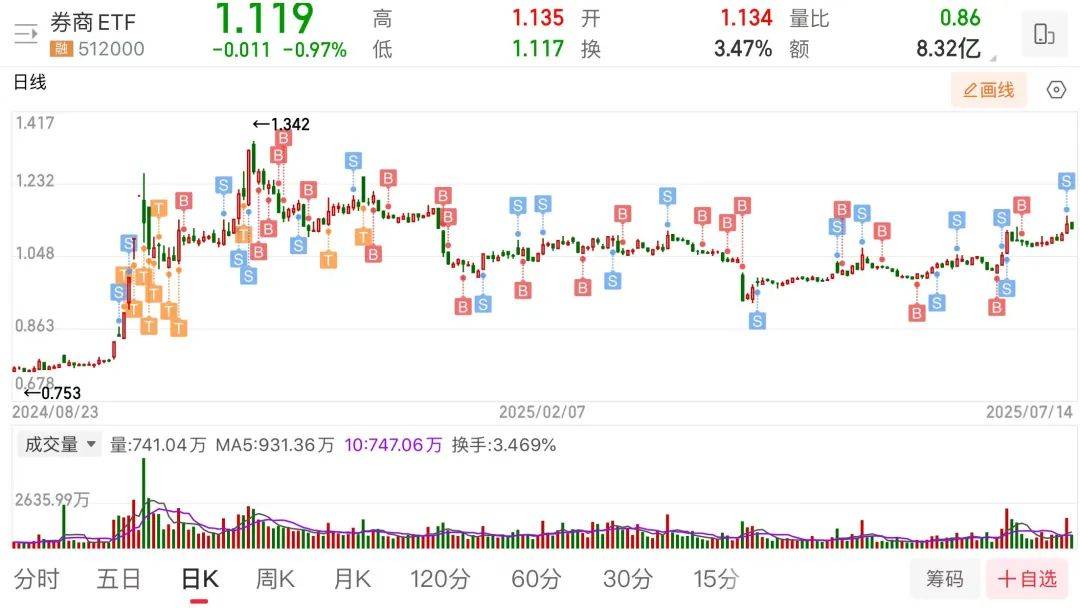
Group 1 - The current market is dominated by bank stocks and micro-cap stocks, with increases of 0.46% and 1.39% respectively, and the latter has reached a new high [1] - Insurance capital is expected to diversify into low PB valuation sectors under the anti-involution expectations, beyond just banks [2][6] - The preference for bank stocks is attributed to their attractive dividend yields and high certainty, which is not solely based on performance predictability [4][6] Group 2 - Bank performance is relatively stable, with manageable declines, as they can utilize provisioning rates to smooth out fluctuations [5] - In comparison, sectors like coal and steel have lower dividend yields and significant performance declines, with major players like China Shenhua expected to see a net profit drop of 8.6%-15.7% year-on-year [5] - The dynamic nature of dividend yields and fundamentals means that as bank stock prices rise, their attractiveness to insurance capital may decrease, while other sectors could become more appealing if they stabilize and offer good yields [6][7] Group 3 - The brokerage index has shown a slowdown, failing to maintain its upward momentum [8] - The recent breakthrough of 3500 points lacks the usual fervor, indicating a subdued market sentiment [9] - Most brokerages reported significant profit growth, with some like Guotai Junan and Haitong seeing increases of 205%-218% and 1183% respectively, driven by a favorable stock market environment [11][13] Group 4 - The second wave of the brokerage market is believed to be ongoing, supported by solid fundamentals [14] - Historical data suggests that significant upward movements in the brokerage sector are infrequent, with only seven instances of over 20% increases since 2010, excluding 2015 [15] Group 5 - Two REITs are available for subscription, with minimum investments of 1000 yuan each, expected to yield annualized returns surpassing reverse repos [17] - The current stock-bond yield spread stands at 5.93%, indicating a higher relative attractiveness of stocks compared to bonds [23]

《特殊商品》日报-20250710
Guang Fa Qi Huo· 2025-07-10 02:57
1. Report Industry Investment Ratings No information about industry investment ratings is provided in the reports. 2. Core Views Natural Rubber - The fundamentals are expected to weaken. Hold short positions above 14,000 and monitor raw material supply in various producing areas and US tariff changes [1]. Polysilicon - Polysilicon is facing inventory accumulation pressure due to oversupply. Although prices are rising under policy expectations, downstream demand remains weak. It is beneficial for polysilicon - industrial silicon arbitrage and buying stocks of photovoltaic industry chain enterprises, but beware of the impact of high - cost transfer on weak demand [3]. Industrial Silicon - The spot price of industrial silicon is stable, and the futures price fluctuates. In the short term, the price is expected to fluctuate strongly supported by production cuts, but in the long term, over - supply pressure may increase. Pay attention to the impact of polysilicon production changes on demand and policy effects [4]. Glass and Soda Ash - Soda ash is in an obvious oversupply situation. Wait for the opportunity to short after the market sentiment fades. Glass has a short - term rebound, but the demand is weak. Wait for more cold - repair actions to bring a real turnaround and currently suggest waiting and seeing [6]. Logs - The log market is entering a period of weak supply and demand. The 09 contract is expected to fluctuate weakly [8]. 3. Summary by Directory Natural Rubber Spot Prices and Basis - The prices of some varieties such as Yunnan state - owned standard rubber and Thai standard mixed rubber remained unchanged on July 9 compared to July 8. The full - latex basis and non - standard price difference decreased significantly [1]. Monthly Spreads - The 9 - 1 spread remained unchanged, the 1 - 5 spread increased by 8.33%, and the 5 - 9 spread decreased by 0.53% [1]. Fundamental Data - In May, the production of Thailand, Indonesia, India, and China increased. The weekly开工率 of semi - steel and full - steel tires decreased, domestic tire production decreased slightly, and tire exports increased. The import of natural rubber decreased [1]. Inventory Changes - Bonded area inventory and factory - warehouse futures inventory of natural rubber on the SHFE increased, while the inbound and outbound rates of dry rubber in Qingdao decreased [1]. Polysilicon Spot Prices and Basis - The average prices of N - type re - feedstock and N - type granular silicon increased on July 9 compared to July 8, with increases of 2.56% and 4.11% respectively [3]. Futures Prices and Monthly Spreads - The PS2506 contract price increased by 2.31%. Some monthly spreads changed significantly, such as the PS2506 - PS2507 spread which decreased by 298.85% [3]. Fundamental Data - Weekly and monthly polysilicon production increased. In May, polysilicon imports decreased, exports decreased, and net exports increased. Silicon wafer production decreased in the short term but increased slightly in May [3]. Inventory Changes - Polysilicon inventory increased by 0.74%, and silicon wafer inventory decreased by 4.43% [3]. Industrial Silicon Spot Prices and Main Contract Basis - The price of Xinjiang 99 - silicon increased by 1.24%, and the basis of some varieties increased [4]. Monthly Spreads - Some monthly spreads changed, such as the 2507 - 2508 spread which decreased by 88.00% [4]. Fundamental Data - In June, the national industrial silicon production increased, with significant increases in Yunnan and Sichuan. Organic silicon DMC production increased, and polysilicon production also increased [4]. Inventory Changes - Xinjiang factory - warehouse inventory decreased, while social inventory increased. The warehouse - receipt inventory decreased slightly, and non - warehouse - receipt inventory increased [4]. Glass and Soda Ash Glass - Related Prices and Spreads - Glass prices in some regions remained unchanged, and the prices of glass futures contracts increased slightly [6]. Soda Ash - Related Prices and Spreads - Soda ash prices in some regions decreased, and the prices of soda ash futures contracts increased [6]. Supply - Soda ash production rate and weekly output decreased slightly, while float glass daily melting volume increased and photovoltaic daily melting volume decreased [6]. Inventory - Glass factory - warehouse inventory decreased slightly, soda ash factory - warehouse inventory increased, and soda ash delivery - warehouse inventory decreased [6]. Real Estate Data - Real estate new - start area, completion area, and sales area showed positive changes compared to the previous period, while the construction area decreased [6]. Logs Futures and Spot Prices - Log futures prices fluctuated slightly, and the prices of some spot varieties decreased [8]. Import Cost - The import theoretical cost increased by 4% [8]. Supply - Port shipping volume increased, and the number of departing ships from New Zealand to China, Japan, and South Korea decreased [8]. Inventory - National log inventory decreased, and inventory in Shandong and Jiangsu also decreased [8]. Demand - The average daily log outbound volume increased [8].
继续压平各类凸点,但关键期限或难以突破关键点位
Changjiang Securities· 2025-07-09 15:23
1. Report Industry Investment Rating No relevant content provided. 2. Core View of the Report - Recent bond market trends are mainly about compressing various convex points. The 10 - year and 30 - year Treasury yields have faced resistance at key levels since June 11. The 10 - year Treasury yield is expected to fluctuate between 1.6% - 1.65%. In July, the bond market may continue to flatten various spreads, and from August to September, it may further open up space with changes in fundamentals and trade information [2][9][41]. - The money supply is unlikely to drive further decline in bond yields. The bond market has fully priced in the loose money supply since the second quarter, and there is a low probability of the money supply further loosening and inverting with the policy rate. Instead, any marginal change in the money supply could challenge the bond market [2][9]. - Whether the 10 - year Treasury can break through key points in the third quarter depends on fundamentals and trade frictions. The bond market is insensitive to small changes in fundamentals but may react to significant ones. Attention should be paid to the "one - time" pricing of trade friction information in the bond market [9]. 3. Summary by Relevant Catalogs 3.1 Different Types of Bond Bull: Bond Market Seeking Convex Point Returns - Since June 11, the 10 - year Treasury yield has faced resistance at 1.6%, and the 30 - year Treasury yield at around 1.8%. In the nearly one - month trading period, neither could break through downward. The bond market trends from June 11 to July 8 focused on compressing convex points [13]. - **Term Convex Point**: The long - end spreads of interest - rate bonds converged, and the spreads of long - duration credit bonds also compressed significantly. For example, the yields of 20Y and 50Y Treasuries decreased by 6.5bp and 7.5bp respectively, and the spreads of 5Y and 10Y AA + medium - and short - term notes narrowed by 6.4bp and 11.1bp [13]. - **Variety Convex Point**: The overall credit spread compressed to a historical low. Longer - duration and lower - grade varieties performed well, especially Tier 2 and perpetual bonds. For instance, the credit spread of AA - rated urban investment bonds compressed by 6.7bp, and for 5Y Tier 2 bonds, the compression order was AA > AA + > AAA - [13]. - **Liquidity Convex Point**: The difference in liquidity premiums between active and non - active bonds weakened, and the spread between new and old bonds compressed significantly. For example, the spread between the active and previous active 10Y China Development Bank bonds compressed from 4.3bp to 1.3bp [14]. 3.2 Money Fails to Drive the Bond Market to Break Through Key Points - Since the second quarter, the money supply has been loose, but the bond market has fully priced it. There is a low probability of the money supply further loosening and inverting with the policy rate. Due to the rising inter - bank leverage ratio and large - scale lending by major banks, any marginal change in the money supply could challenge the bond market [27]. - Only Treasuries with a term of over 5 years have positive carry in the current loose money supply environment. If the money price tightens marginally to around 1.6%, the range of Treasuries with positive carry will be compressed to those over 7 years. The central bank's desired market interest rate is within a range, and currently, the money price is close to the lower limit, so monetary easing is unlikely to drive further decline in interest rates [30]. 3.3 Bond Market Breaking Through Key Points Depends on Fundamentals and Trade Frictions - Whether the 10 - year Treasury can break through key points in the third quarter depends on fundamentals and trade frictions. The bond market is insensitive to small changes in fundamentals but may react to significant ones. Attention should be paid to the "one - time" pricing of trade friction information in the bond market [9]. - **Fundamental Concerns**: - Real estate sales were relatively resilient in the first half of the year, but there is uncertainty about further recovery in the second half. The transaction area of commercial housing in 30 large and medium - sized cities has been under downward pressure since the end of June [9]. - Consumption growth ultimately depends on urban residents' per capita disposable income and marginal propensity to consume. The "trade - in" policy has temporarily boosted consumption growth, but further growth requires an increase in residents' income or marginal propensity to consume, which are more complex and need further observation [9]. - Trade frictions may lead to "one - time" pricing in the bond market. At the beginning of this round of trade frictions, the bond market declined by 15bp in two trading days and rose by 5bp in one trading day after the Sino - US negotiation on May 12. US President Trump announced that "reciprocal tariffs" will take effect on August 1, and as the grace period approaches, attention should be paid to the "one - time" pricing of trade frictions in the bond market [9].
日度策略参考-20250708
Guo Mao Qi Huo· 2025-07-08 08:41
Report Investment Ratings - **Bullish**: Palm oil (long - term) [1] - **Bearish**: Copper, Aluminum, Alumina, Zinc, Iron ore (short - term), Crude oil, Fuel oil, Asphalt, BR rubber, PTA, Ethylene glycol, Logs, Crude oil, Fuel oil, Bitumen, Shanghai stocks, BR rubber, PTA, Ethylene glycol, Short fiber, Styrene, Cotton (domestic, long - term), Corn (near - term), Soybean (far - month C01) [1] - **Neutral (Oscillating)**: Stock index, Treasury bond, Gold, Silver, Nickel, Stainless steel, Steel, Coke, Coking coal, Coke breeze, Rapeseed oil, Cotton (domestic, short - term), Sugar, Pulp, Live pigs, PE, PVC, Caustic soda, LPG, Container shipping secondary line [1] Core Views The report provides trend judgments and logical analyses for various commodities in different sectors. Market conditions are influenced by multiple factors such as macroeconomic data (e.g., US non - farm payrolls), geopolitical situations (e.g., Middle East tensions), supply - demand relationships, and policy changes. Different commodities show different trends, including upward, downward, and oscillating movements, and investors are advised to pay attention to relevant factors for each commodity [1]. Summary by Industry Macroeconomic and Financial - **Stock Index**: In the short term, market trading volume gradually shrinks slightly, and with mediocre domestic and international positive factors, there is resistance to upward breakthrough, and it may show an oscillating pattern. Follow - up attention should be paid to macro - incremental information for direction guidance [1] - **Treasury Bond**: Asset shortage and weak economy are beneficial to bond futures, but the central bank has recently warned of interest - rate risks, suppressing the upward space [1] - **Precious Metals (Gold and Silver)**: Market uncertainties remain. Gold and silver prices are expected to oscillate mainly. Attention should be paid to tariff developments [1] Non - ferrous Metals - **Base Metals**: Due to factors such as the cooling of the Fed's interest - rate cut expectations, high prices suppressing downstream demand, and inventory changes, copper, aluminum, alumina, zinc, etc., have downward risks. Nickel prices oscillate, and attention should be paid to supply and macro - changes [1] - **Stainless Steel**: After an oscillating rebound, the sustainability needs to be observed. Attention should be paid to raw material changes and actual steel - mill production [1] - **Industrial Silicon and Polysilicon**: Industrial silicon has a downward risk, and polysilicon is affected by supply - side reform expectations and market sentiment [1] - **Lithium Hydroxide**: Supply has not been reduced, downstream replenishment is mainly by traders, and there is capital gaming. The price oscillates [1] Ferrous Metals - **Steel and Related Products**: Macro uncertainties remain. With raw material price weakening, social inventory slightly declining, and steel - mill production reduction news boosting confidence, the market situation is complex. The sustainability of stainless - steel rebound needs to be observed [1] Agricultural Products - **Oils and Fats**: OPEC +'s unexpected production increase causes oils to follow the decline of crude oil. In the long term, international oil demand increases, and the far - month contracts of palm oil are bullish [1] - **Cotton**: In the short term, there are disturbances such as trade negotiations and weather premiums. In the long term, macro uncertainties are strong. Domestic cotton prices are expected to oscillate weakly [1] - **Sugar**: Brazil's sugar production is expected to reach a record high. If crude oil continues to be weak, it may affect Brazil's sugar - making ratio and production [1] - **Corn and Soybeans**: Corn is affected by policy - based grain releases and price differences. Soybeans have different trends for near - and far - month contracts, depending on factors such as supply - demand and trade policies [1] - **Pulp and Logs**: Pulp has low valuation and macro - positive factors. Logs are in the off - season, and supply decline is limited [1] - **Live Pigs**: With the continuous repair of pig inventory, the market shows a certain stability [1] Energy and Chemicals - **Crude Oil and Related Products**: Due to the cooling of the Middle East geopolitical situation and OPEC +'s unexpected production increase, crude oil, fuel oil, etc., have downward risks [1] - **Petrochemical Products**: PTA, ethylene glycol, etc., are affected by factors such as cost, supply - demand, and production - reduction expectations [1] - **Synthetic Rubber**: BR rubber is under pressure due to factors such as OPEC's production increase and high basis [1] - **Plastics and Chemicals**: PE, PVC, caustic soda, etc., show different trends due to factors such as maintenance, demand, and market sentiment [1] - **LPG**: Affected by factors such as price cuts, production increases, and seasonal demand, it has downward space [1] Other - **Container Shipping**: It is expected that the freight rate will reach its peak in mid - July and show an arc - top trend from July to August. The subsequent shipping capacity is relatively sufficient [1]
五矿期货文字早评-20250630
Wu Kuang Qi Huo· 2025-06-30 03:47
文字早评 2025/06/30 星期一 宏观金融类 宏观消息面: 1、央行等六部门:创新适应家庭财富管理需求的金融产品,规范居民投资理财业务, 提高居民财产性收入; 2、央行等六部门发布 19 项举措:支持增强居民消费能力、支持提高消费供应 效率、加强基础金融服务; 3、以色列和伊朗已就"全面彻底停火"达成一致,这场为期 12 天的冲突 于北京时间 24 日结束;4、国泰君安国际获批升级牌照,成为香港首家可提供全面虚拟资产服务的中资 券商,支持加密货币交易等业务;5、美联储理事鲍曼:若通胀持续下降或劳动力市场疲软,7 月可能会 降息。美联储将于 7 月 22 日举办关于银行资本的会议;6、商务部:中美 6 月 9 日至 10 日伦敦经贸会 谈后,近日双方进一步确认了框架细节,中方将依法审批符合条件的管制物项出口申请,美方将相应取 消对华采取的一系列限制性措施。7、沪深交易所:拟将主板风险警示股票涨跌幅限制比例调整为 10%。 期指基差比例: IF 当月/下月/当季/隔季:-0.76%/-1.00%/-1.15%/-1.92%; IC 当月/下月/当季/隔季:-0.63%/-1.26%/-2.02%/-3.96 ...
白糖、棉花:巴西甘蔗压榨降食糖或增产,棉价重心上移
Sou Hu Cai Jing· 2025-06-26 02:13
Group 1 - The report from Itaú BBA predicts a 5% decrease in sugarcane crushing volume in Brazil's central-southern region for the 2025/26 season, amounting to 590 million tons, with significant declines in the western and northwestern parts of São Paulo state [1] - Despite the decrease in crushing volume, sugar production is expected to increase by 2.7% to 41.2 million tons, with a sugar-to-cane ratio of 52% and an ATR (Total Recoverable Sugar) of 141 kg/ton [1] - Current spot prices for sugar in China show an increase, with Guangxi Sugar Group reporting prices between 6000 - 6080 yuan/ton, up by 10 - 20 yuan/ton, while Yunnan Sugar Group's prices remain stable at 5790 - 5830 yuan/ton [1] Group 2 - The cotton market is experiencing upward movement, with ICE cotton prices rising by 0.78% to 68.32 cents per pound, and domestic cotton prices in Xinjiang increasing by 65 yuan/ton to 14832 yuan/ton [1] - The overall market sentiment is improving, with the Shanghai Composite Index rising over 1% for two consecutive days, and cotton prices in Zhengzhou breaking through 13600 yuan/ton due to low commercial inventories and weather disturbances in Xinjiang [1] - The macroeconomic environment is showing signs of improvement, with expectations of a rate cut by the Federal Reserve, which has led to a slight strengthening of cotton prices, although the fundamental drivers remain limited [1]
铜周报20250622:宏观、基本面多空交织,铜短期仍震荡-20250622
Guo Lian Qi Huo· 2025-06-22 10:45
Report Title - Copper Weekly Report 20250622: Macro and fundamental factors are intertwined, and copper will remain volatile in the short term [1] Report Industry Investment Rating - Not provided Core View - Macro and fundamental factors are intertwined, and copper will remain volatile in the short term [1] Summary by Directory Price Data - Warehouse receipts are flowing out, and the premium of copper spot is under pressure [10] - This week, the LME copper 0 - 3M premium continued to strengthen week - on - week [11] Fundamental Data - This week, the average price of the copper concentrate TC index decreased by $0.03/ton week - on - week to - $44.78/ton, still negative [15] - According to SMM, the inventory of copper concentrates at nine ports decreased by 100,700 tons week - on - week to 712,100 tons [17] - The week - on - week change of the refined - scrap copper price difference was limited [20] - The domestic electrolytic copper production in June is expected to decrease month - on - month but increase year - on - year [22] - Copper imports still remain in an inverted state [24] - This week, the spot inventory of electrolytic copper and the bonded area inventory increased [25] - The LME copper inventory decreased again, while the COMEX copper inventory continued to accumulate [27] - This week, the operating rate of refined copper rods increased week - on - week but fell short of expectations. Terminal demand was weak, and the finished product inventory of refined copper rods increased [30] - From June 1st to 15th, the retail sales of new energy vehicles in the national passenger car market increased by 38% year - on - year [33] - Domestic photovoltaic module production continued to decline in June [34] - The "trade - in" national subsidy will continue, and 138 billion yuan of central funds will be allocated in the third and fourth quarters [36] Macroeconomic Data - China's social financing in May increased by 2.29 trillion yuan, and the gap between M2 and M1 narrowed [40] - The US CPI in May increased by 2.4% year - on - year, and the core CPI increased by 0.1% month - on - month, falling below expectations for the fourth consecutive month [42] - The Federal Reserve kept interest rates unchanged, expecting two interest rate cuts this year and hinting at an increased risk of stagflation [43]