特朗普关税政策

Search documents
交通运输行业周报:关税对交运影响:内需与供应链重构迎来机遇-2025-04-07
Hua Yuan Zheng Quan· 2025-04-07 01:38
Investment Rating - The investment rating for the transportation industry is "Positive" (maintained) [4] Core Views - The logistics sector is experiencing stable growth, with national freight logistics operating smoothly, showing a slight increase in cargo transport and express delivery volumes [4] - The restructuring of supply chains due to tariff policies presents structural opportunities, particularly in the road transport sector, which is currently in a stable growth phase [4] - The logistics industry may face increased cost pressures due to high tariffs, potentially accelerating the formation of a unified logistics market where scale and technology become core competitive advantages [5] - The aviation sector is expected to benefit from improved domestic demand and lower oil prices, while facing challenges from increased costs due to tariffs on imported aircraft and parts [6][10] - The shipping industry is threatened by the ongoing trade tensions and tariffs, which could lead to a restructuring of global trade routes and supply chains, favoring oil transportation and intra-Asian shipping [10][11] Summary by Sections Logistics - National logistics operations have been orderly, with significant increases in cargo transport and express delivery volumes during the monitored period [4] - The road transport sector saw a year-on-year increase in freight volume and passenger flow, indicating a potential for growth driven by domestic manufacturing [4] Aviation - The aviation sector is expected to see a rebound in demand due to macroeconomic recovery, with a focus on key airlines such as China Southern Airlines and Air China [16] - The supply chain for aircraft manufacturing is under pressure due to tariffs, which could increase costs for airlines [6] Shipping - The shipping industry faces challenges from U.S. tariffs, which have significantly impacted global trade volumes, particularly in long-distance trade between the U.S. and Asia [10] - The oil shipping segment may benefit from increased demand due to geopolitical factors and sanctions affecting oil trade [11] Express Delivery - The express delivery sector is showing resilience, with major players like ZTO Express and SF Express expected to benefit from cyclical recovery and cost reduction efforts [16] - The competitive landscape is stabilizing, providing opportunities for long-term investment in leading companies [17]
特朗普团队为关税政策辩护,否认美国经济衰退论,预示金融市场动荡或持续
Sou Hu Cai Jing· 2025-04-07 01:13
尽管特朗普团队试图通过辩护和预测来稳定市场情绪,但金融市场的动荡似乎难以平息。全球股市的剧 烈波动、大宗商品价格的下跌以及投资者对经济前景的担忧,都表明特朗普的关税政策正在对全球经济 产生深远影响。随着关税政策的逐步实施,市场的不确定性将进一步加剧,金融市场的动荡或将成为常 态。 在这一背景下,特朗普团队的政策辩护和市场预测能否有效缓解经济衰退的担忧,仍有待观察。然而, 当前的市场反应已经表明,特朗普的关税政策不仅对美国经济构成挑战,也对全球金融市场带来了巨大 的不确定性。 来源:金融界 上周最后两个交易日,全球金融市场因美国新关税政策而遭受重创。面对市场的剧烈波动,美国总统特 朗普的政府官员纷纷为关税政策辩护,并否认美国经济将陷入衰退的预测。然而,这一系列举措似乎预 示着,随着美国政府坚持激进的关税政策,金融市场的动荡可能将持续下去。 美国财政部长贝森特在公开场合表示,特朗普的关税政策是必要的,并否认了美国经济衰退的可能性。 他认为,市场不应将经济衰退纳入定价,贸易问题不可能在短期内通过谈判解决。贝森特强调,美国需 要评估贸易伙伴的诚意和承诺,任何谈判都需要时间。然而,在特朗普宣布对等关税后的两天内,全球 ...
30万亿市场,后市这么投!
Sou Hu Cai Jing· 2025-04-06 07:06
Core Viewpoint - The article emphasizes the importance of refined management and diversified asset allocation strategies for wealth management companies in the second quarter, particularly in response to increasing external uncertainties. Companies will focus on high-grade credit bonds, duration management, and credit risk management to stabilize net value and enhance returns [1][2]. Group 1: Investment Strategies - Wealth management companies will implement refined management and diversified asset allocation to balance net value stability and return enhancement [1]. - Companies are expected to prioritize high-grade credit bonds, complemented by interest rate bonds and convertible bonds, while optimizing duration management based on macroeconomic and market changes [2][3]. - The focus will be on managing credit risk by primarily investing in medium to high-grade credit bonds and diversifying across industries and regions to mitigate risks [2][3]. Group 2: Market Conditions and Challenges - The bond market has faced a pullback in the first quarter, leading to net value pressure on bank wealth management products, prompting companies to optimize withdrawal management strategies [2]. - External uncertainties, such as U.S. tariff policies and geopolitical conflicts, may cause significant fluctuations in global asset prices, impacting domestic equity markets negatively [3][5]. - The current low-interest-rate environment necessitates adjustments in investment strategies, with a focus on "fixed income plus" strategies and exploring diverse asset classes to enhance returns [6][7]. Group 3: Asset Allocation and Risk Management - Companies will explore multi-asset and multi-strategy combinations to effectively increase product returns while managing risks associated with market volatility [4][7]. - Emphasis will be placed on liquidity management by allocating a portion of high-liquidity bond assets to meet client redemption needs while seizing market opportunities [2][3]. - The overall asset allocation strategy will align with national strategic directions and industry development trends to improve the quality and efficiency of credit bond investments [7].
A股趋势与风格定量观察:机会与风险并存,观点转为中性谨慎-2025-04-06
CMS· 2025-04-06 06:45
- Model Name: Short-term Quantitative Timing Model; Model Construction Idea: The model uses various market indicators to generate signals for market timing; Model Construction Process: The model integrates valuation, liquidity, fundamental, and sentiment signals to determine market timing. For example, the sentiment signal is derived from the volume sentiment indicator, which is constructed using the 60-day Bollinger Bands of trading volume and turnover rate. The formula for the volume sentiment score is a linear mapping of the 60-day average within the range of -1 to +1, with extreme values capped at -1 or +1. The weekly average of the 5-year percentile is used as one of the timing judgment signals. If the percentile is greater than 60%, it indicates strong sentiment and gives an optimistic signal; if less than 40%, it indicates weak sentiment and gives a cautious signal; if between 40%-60%, it gives a neutral signal. The formula is: $$ \text{Volume Sentiment Score} = \frac{\text{Current Value} - \text{Mean}}{\text{Standard Deviation}} $$ where the mean and standard deviation are calculated over a 60-day period[21][22][23]; Model Evaluation: The model has shown predictive power for the market's performance in the following week[21][22][23] - Model Name: Growth-Value Style Rotation Model; Model Construction Idea: The model suggests overweighting growth or value styles based on economic cycle analysis; Model Construction Process: The model uses the slope of the profit cycle, the level of the interest rate cycle, and the trend of the credit cycle to determine the style allocation. For example, a steep profit cycle slope and low interest rate cycle level favor growth, while a weakening credit cycle favors value. The model also considers valuation differences, such as the 5-year percentile of the PE and PB valuation differences between growth and value. The formula for the PE valuation difference is: $$ \text{PE Valuation Difference} = \frac{\text{PE of Growth} - \text{PE of Value}}{\text{PE of Value}} $$ The model gives signals based on these indicators, suggesting overweighting growth if the indicators favor growth and vice versa[39][40][41]; Model Evaluation: The model has significantly outperformed the benchmark since the end of 2012, with an annualized return of 11.44% compared to the benchmark's 6.59%[40][43] - Model Name: Small-Cap vs. Large-Cap Style Rotation Model; Model Construction Idea: The model suggests balanced allocation between small-cap and large-cap styles based on economic cycle analysis; Model Construction Process: The model uses the slope of the profit cycle, the level of the interest rate cycle, and the trend of the credit cycle to determine the style allocation. For example, a steep profit cycle slope and low interest rate cycle level favor small-cap, while a weakening credit cycle favors large-cap. The model also considers valuation differences, such as the 5-year percentile of the PE and PB valuation differences between small-cap and large-cap. The formula for the PB valuation difference is: $$ \text{PB Valuation Difference} = \frac{\text{PB of Small-Cap} - \text{PB of Large-Cap}}{\text{PB of Large-Cap}} $$ The model gives signals based on these indicators, suggesting balanced allocation if the indicators favor both styles equally[44][45][46]; Model Evaluation: The model has significantly outperformed the benchmark since the end of 2012, with an annualized return of 12.32% compared to the benchmark's 6.74%[45][47] - Model Name: Four-Style Rotation Model; Model Construction Idea: The model combines the conclusions of the growth-value and small-cap vs. large-cap rotation models to recommend allocation among four styles; Model Construction Process: The model integrates the signals from the growth-value and small-cap vs. large-cap models to determine the allocation among small-cap growth, small-cap value, large-cap growth, and large-cap value. The recommended allocation is based on the latest signals from the individual models. For example, if both models favor growth and small-cap, the allocation would be higher for small-cap growth. The formula for the combined allocation is: $$ \text{Allocation} = \text{Weight from Growth-Value Model} \times \text{Weight from Small-Cap vs. Large-Cap Model} $$ The model gives signals based on these combined indicators[48][49][50]; Model Evaluation: The model has significantly outperformed the benchmark since the end of 2012, with an annualized return of 13.10% compared to the benchmark's 7.15%[48][49][50] Model Backtest Results - Short-term Quantitative Timing Model: Annualized Return 16.39%, Annualized Volatility 14.75%, Maximum Drawdown 27.70%, Sharpe Ratio 0.9675, IR 0.5918[28][32][35] - Growth-Value Style Rotation Model: Annualized Return 11.44%, Annualized Volatility 20.87%, Maximum Drawdown 43.07%, Sharpe Ratio 0.5285, IR 0.2657[40][43] - Small-Cap vs. Large-Cap Style Rotation Model: Annualized Return 12.32%, Annualized Volatility 22.72%, Maximum Drawdown 50.65%, Sharpe Ratio 0.5377, IR 0.2432[45][47] - Four-Style Rotation Model: Annualized Return 13.10%, Annualized Volatility 21.59%, Maximum Drawdown 47.91%, Sharpe Ratio 0.5864, IR 0.2735[48][49][50]
美股暴跌,市场对特朗普关税说“不” | 新京报专栏
Xin Jing Bao· 2025-04-05 10:10
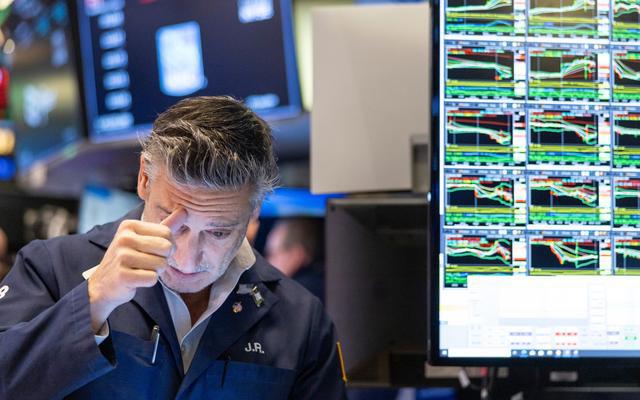
对特朗普关税,市场的恐慌肉眼可见。4月3日,关税政策正式生效后,道指单日暴跌3.98%,纳指跌 5.97%,创2020年3月以来最大跌幅,科技七巨头市值单日蒸发超2万亿美元,苹果、亚马逊跌幅均超 8%。 当地时间2025年4月4日,美国纽约,交易员在纽约证券交易所工作。图/IC photo 特朗普关税的直接后果,已经显现。 据央视新闻报道,美国政府4月2日宣布新的"对等"关税政策后,美国股市剧烈震荡。纽约股市三大股指 继4月3日大幅下跌后,4月4日再次暴跌,纳斯达克综合指数进入熊市。 特朗普关税令市场信心面临崩塌 特朗普宣布的广泛关税政策,引发的不确定性,不仅引起了市场恐慌,更在全球供应链和贸易关系方 面,激起巨大波澜。目前,连锁反应也已经出现,包括盟友反制等。 如欧盟宣布对260亿欧元美国商品加征报复性关税,加拿大对美汽车关税实施反制,英国启动报复性关 税咨询程序。4月4日晚,针对美方"对等关税"的单边霸凌做法,中国接连发布了一系列反制措施。 投资者担心特朗普关税政策可能导致全球贸易紧张局势升级,进而影响经济增长。美国绕过WTO实施 单边关税,被批评为"95年来最大政策失误",而多边规则遭到破坏,可能引发类 ...

关税重创的不只是苹果,大摩:美国科技硬件,无处可躲!
Hua Er Jie Jian Wen· 2025-04-04 07:28
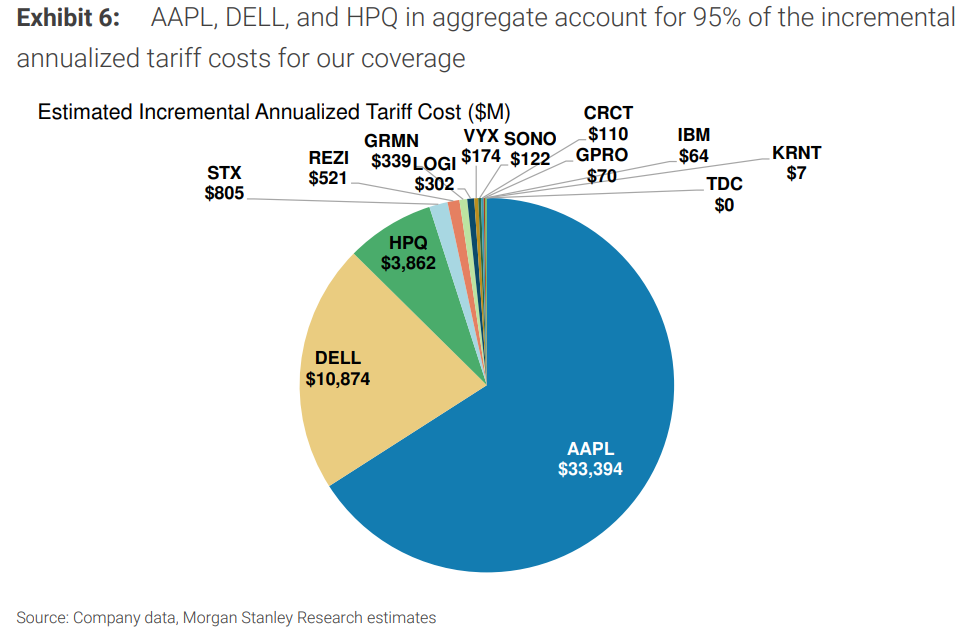
Core Viewpoint - Trump's newly announced tariff policy is expected to have a devastating impact on the U.S. technology hardware industry, with companies having limited means to respond [1] Group 1: Impact on Companies - The "reciprocal tariffs" will impose tariffs ranging from 25% to 54% on technology hardware products sold to the U.S., severely affecting companies reliant on overseas production [1] - Major companies such as Apple, Dell, HP, Logitech, Sonos, Circut, and GoPro will face significant challenges due to their dependence on overseas manufacturing [2] - Apple has shifted approximately 15% of its iPhone production to India, while all MacBooks shipped to the U.S. are currently produced in Vietnam [2] - Dell and HP have moved their notebook production for the U.S. market to Vietnam and Thailand, respectively, while Sonos assembles nearly all its speakers for the U.S. in Malaysia and Vietnam [2] Group 2: Tariff Costs - The tariffs are projected to impose an additional cost of approximately $51 billion on technology hardware companies like Apple, Dell, and HP, which is equivalent to about 30% of their EBIT [2] - For Apple, the additional tariff cost could reach $33.3 billion, representing 26% of its EBIT for the fiscal year 2025 [2] - Dell and HP may face tariff costs that are nearly equal to their expected net profits for 2025 [2] Group 3: Response Strategies - Companies have limited options to mitigate the impact of the tariffs, as pre-production or stockpiling is nearly impossible [5] - Diversifying supply chains would take too long, and shifting production to countries with more favorable tariffs is contingent on available infrastructure [5] - Consequently, raising prices is seen as the most realistic option, although this could negatively affect demand, with price increases potentially needing to be between 12% and 19% to offset tariff costs [6]


“如果有一天道琼斯指数单日下跌超1000点,美国总统,应该被装进加大炮里射向太阳,不容借口!”
雪球· 2025-04-04 03:16
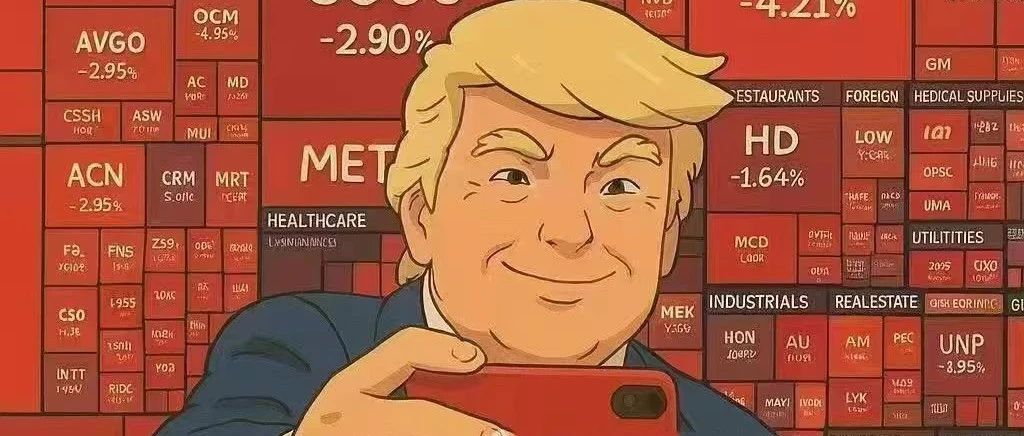
长按即可参与 美股暴跌,特朗普当年损总统那句超狠的话,被挖出来了! 如果有一天,道琼斯指数单日下跌超过1000点,那么美国现任总统就应该被装进大炮,以极快的速度射向太阳,不允许有任何借口。 美东时间4月3日,美股迎来了2020年疫情熔断以来最惨烈的一天。三大指数全线跳水,毫无反抗之力,被市场的恐慌情绪彻底吞没。截至收盘: ——唐纳德·特朗普,2015年 这已经不知道是多少次,特朗普被自己的回旋镖射中。 回望2016年11月,他首次当选总统时,道指一度恐慌暴跌;2020年,更是以一句"喝消毒水能治新冠"助推史诗级 美股 熔断。 在2025年美东时间4月3日,道指暴跌超1600点,跌幅达3.98%。这一天也是2020美股熔断以来最难熬的一天,华尔街遭受血洗,美股、汇市进入至 暗时刻。 01 纳斯达克指数暴跌5.97% ,创下2020年3月以来最大单日跌幅; 美股暴跌,历史性大崩盘! 此外,小盘股指罗素2000收跌约6.6%,较2024年11月末所创的最高纪录跌去20%以上,成为首个跌入熊市的美股主要股指。 半导体指数大跌9.88%,创2020年3月以来最大单日跌幅。AMD跌8.90%,台积电ADR跌7.64%。 ...
避险资产领跑Q1,黄金美债日元"齐飞"
2 1 Shi Ji Jing Ji Bao Dao· 2025-04-01 13:11
21世纪经济报道记者叶麦穗 广州报道美国总统特朗普推动的全面关税政策正造成巨大的不确定性,使 全球资产在今年一季度加速震荡:资金加速撤离美股市场,导致美股大幅下滑,纳斯达克指数重挫逾 10%。与之形成鲜明对比的是,港股明显上涨,恒生科技指数"冠绝"全球,涨幅达到20.74%。 此外,一季度避险资产集体走强:美债表现强势,价格一路飙升;黄金价格突破历史高位;日元结束连 续下跌走势,一季度反弹4.6%,传统避险货币重获市场青睐。 美股遭遇"大失血" 一季度,美股出现大幅回调。纳斯达克综合指数累计下跌10.4%,为2022年二季度以来最大单季跌幅。 标普500指数累计跌幅为4.6%,为2022年三季度以来表现最差的一个季度。 尽管标普500指数在2月19日创下6144.15点的历史新高,但该指数随后快速下跌,并于3月13日出现超过 10%的累计跌幅,进入技术上的回调区间。纳斯达克综合指数则在3月6日就已正式跌入回调区间。 纳斯达克综合指数和标普500指数3月分别累计下跌8.2%和5.8%,均为2022年12月以来最大月度跌幅。 截至3月31日收盘时,道琼斯工业平均指数、标普500指数和纳斯达克综合指数分别收于420 ...
全球风险偏好,正在急剧下降
格隆汇APP· 2025-04-01 11:01
作者 | 深鹏 数据支持 | 勾股大 数 据(www.gogudata.com) 4 月 2 日,即明天,懂王说是美国的解放日。 然而,对于全球投资者来说,有可能是 "受难日"。 因为他的关税政策,已经在全球资本市场掀起了巨浪,逼得全球股市都进入了下跌模式,美股自己还是最惨的 一个,反之,避险之王的黄金价格,则节节攀升。 不管你信不信,反正市场走势已经说明一切。 避险,依然是当下的市场整体风格。 而且,即便已经下跌了不少,然而站在这个时点,市场神经依然高度紧绷。 因为懂王最终的全球关税政策如何,依然迷雾重重,但它也是影响市场涨跌最重要也是最关键的因素,没有之 一。 01 底牌到底如何? 说实话,这个问题真的无法提前判断。 相信大家对于懂王各种烟雾弹的作风已经很清楚了,今天说东,明天说西,后天再来一个南,最后结果是北。 如果你没有定力,一定会被他绕晕,然后很容易糊里糊涂地做了一些不知所谓的交易,运气好可以获得一些盈 利,但更多的时候,应该是亏损的概率高一点。 就像昨晚,美股大跌,但最后因为特朗普说的 "友好"言论,又硬生生地拉了回来,但盘后、夜盘,又继续开 启下跌模式。 很明显,涨跌全靠特朗普,真不是一句虚话。 ...

特朗普的“解放日” 美国衰退“倒计时”?
Xin Hua She· 2025-04-01 09:44
Group 1 - The core viewpoint of the articles highlights concerns over President Trump's proposed tariffs, which are seen as potential triggers for a new economic recession in the U.S. [2][3][4] - The S&P 500 and Nasdaq indices experienced their worst quarterly performance in over two years, with Nasdaq down 10.4% and S&P 500 down 4.6% in Q1 2023 [3] - Moody's chief economist Mark Zandi increased the probability of a U.S. recession occurring this year to 40%, up from an earlier prediction of 15% [4] Group 2 - Goldman Sachs raised the probability of a U.S. recession in the next 12 months to 35%, up from 20%, and revised its forecast for U.S. economic growth in 2025 down to 1.5% from 2.0% [4] - Trump's tariffs on imported cars and the upcoming "reciprocal tariffs" are expected to exacerbate economic conditions, leading to higher inflation and reduced consumer confidence [5][8] - The average tariff rate in the U.S. is projected to increase by 15 percentage points this year, significantly higher than previous estimates [5]