中美经贸谈判

Search documents
安粮期货投资早参-20250623
An Liang Qi Huo· 2025-06-23 02:26
Report Industry Investment Ratings No relevant content provided. Core Views - The stock index market is in a "weak reality and strong expectation" situation, with a "range - bound" strategy recommended, and attention should be paid to the key support levels of Shanghai Composite 50 and CSI 300 [2]. - For crude oil, high attention should be paid to the development of the Israel - Iran conflict, and the WTI main contract should focus on the pressure around $78 per barrel [3]. - Gold is in a sensitive intersection area of fundamentals and technicals, and without major geopolitical events, it is expected to be in high - level oscillations, with attention on US CPI data from July to August and the Israel - Iran conflict [4][5]. - Silver is in a correction range, with high volatility. Attention should be paid to the weekly support around $35.5 per ounce of the COMEX silver main contract [6]. - PTA may fluctuate in the short - term following the cost side [7]. - Ethylene glycol may have a range - bound operation in the short - term [8]. - PVC has a weak fundamental situation, and the risk of sentiment decline should be vigilant [10]. - PP has no improvement in fundamentals, and the risk of sentiment decline should be vigilant [12]. - Plastic has a weak fundamental situation, and the risk of sentiment decline should be vigilant [13]. - Soda ash should be treated with a bottom - oscillation mindset in the short - term [15]. - Glass can be treated with a strong - oscillation mindset in the short - term [16]. - Rubber's rebound height is limited, and attention should be paid to the downstream starting rate and the rebound height of the energy - chemical sector [17][18]. - Methanol's futures price may be in a strong - oscillation state in the short - term, and attention should be paid to the port inventory reduction rhythm and downstream demand recovery [19]. - Corn's main contract is in an upward channel and may be in a strong - oscillation state in the short - term [20]. - Peanut's main contract price is difficult to have a trending market in the short - term and should be treated as a range - bound operation [21]. - Cotton's price may be in a strong - oscillation state in the short - term, and attention should be paid to whether it can fill the previous gap [22]. - For live pigs, attention should be paid to whether the 2509 contract can break through the upper pressure level, and continuous attention should be paid to the slaughter situation [24]. - Eggs may still face pressure after a short - term rebound, and it is recommended to wait and see [25]. - Bean No. 2 may be in a strong - oscillation state in the short - term [26]. - Bean meal may be in a range - bound state in the short - term [27]. - Bean oil may be in a strong - oscillation state in the short - term [28]. - For copper, it is recommended to hold, using the lower neckline of the copper price island as the defense line [29][30]. - For aluminum, aggressive investors can hold moderately, while conservative investors should wait and see [30][31]. - Alumina's 2509 contract shows a weak adjustment trend [32]. - Cast aluminum alloy's 2511 contract may maintain a range - bound operation [33]. - For lithium carbonate, conservative investors should wait and see, while aggressive investors can operate within the range [35]. - Industrial silicon's 2509 contract is in bottom - level oscillations [36]. - Polysilicon's 2507 contract may be in a weak - oscillation state, and short - selling on rallies is advisable [37]. - Stainless steel is in a low - level wide - range oscillation, and it is recommended to wait and see [38]. - Rebar has a low overall valuation, and a light - position long - on - dips strategy is recommended in the short - term [39]. - Hot - rolled coil has a low overall valuation, and a light - position long - on - dips strategy is recommended in the short - term [41]. - Iron ore's main contract may maintain an oscillation pattern in the short - term, and attention should be paid to the port inventory reduction speed and steel mill restart rhythm [42]. - Coking coal and coke's main contracts may oscillate in the near future, and attention should be paid to steel mill inventory reduction and policy implementation [43]. Summary by Category Stock Index - Macro environment: The current situation shows a "weak reality and strong expectation" differentiation, with external disturbances suppressing market risk appetite and domestic economic data showing "weak recovery" characteristics [2]. - Market analysis: The margin trading balance - to - floating market capitalization ratio remains low, with funds flowing to small - and medium - cap stocks [2]. - Reference view: Adopt a "range - bound" strategy and pay attention to key support levels [2]. Crude Oil - Macro and geopolitics: The Israel - Iran conflict is the key factor affecting oil prices, and the price is fluctuating at a high level [3]. - Market analysis: The approaching summer peak season and declining US inventories support price increases, and the risk premium will change with the development of the conflict [3]. - Reference view: Focus on the pressure around $78 per barrel of the WTI main contract [3]. Gold - Macro and geopolitics: High - interest rate expectations suppress gold, while the Israel - Iran conflict and potential tariff increases drive up safe - haven demand [4]. - Market analysis: Gold prices have fallen under pressure this week, with the game between bulls and bears intensifying [4][5]. - Reference view: Treat it as high - level oscillations, and pay attention to US CPI data and the Israel - Iran conflict [5]. Silver - Market price: Spot silver has fallen into a correction range [6]. - Market analysis: Hawkish Fed statements and changes in geopolitical risk appetite affect silver, and industrial demand and inventory are also important factors [6]. - Reference view: Pay attention to the support level and be vigilant against price fluctuations [6]. Chemicals PTA - Spot information: The spot price in East China has increased, and the basis is positive [7]. - Market analysis: The cost side is strong, but the supply - demand contradiction is prominent, and demand is in the off - season [7]. - Reference view: Fluctuate following the cost side in the short - term [7]. Ethylene Glycol - Spot information: The spot price in East China has increased, and the basis is positive [8]. - Market analysis: The supply side shows an "internal increase and external decrease" pattern, and demand is in the off - season [8]. - Reference view: Range - bound operation in the short - term [8]. PVC - Spot information: The spot price in East China has increased, and the price difference between ethylene and electricity has decreased [10]. - Market analysis: Supply capacity utilization has decreased, demand is mainly for rigid needs, and inventory has decreased [10]. - Reference view: Weak fundamentals, be vigilant against sentiment decline [10]. PP - Spot market: Spot prices in different regions have increased [11]. - Market analysis: Supply capacity utilization has increased, demand has decreased, and inventory has increased [12]. - Reference view: No improvement in fundamentals, be vigilant against sentiment decline [12]. Plastic - Spot market: Spot prices in different regions show different trends [13]. - Market analysis: Supply capacity utilization has decreased slightly, demand has a mixed performance, and inventory has decreased [13]. - Reference view: Weak fundamentals, be vigilant against sentiment decline [13]. Soda Ash - Spot information: Spot prices in different regions are stable [14]. - Market analysis: Supply has increased, inventory has increased, and demand is average [14]. - Reference view: Bottom - level oscillations in the short - term [15]. Glass - Spot information: Spot prices in different regions are stable [16]. - Market analysis: Supply is relatively stable, inventory has increased, and demand is weak [16]. - Reference view: Strong - oscillation mindset in the short - term [16]. Rubber - Market price: Different types of rubber have different prices [17]. - Market analysis: Affected by market sentiment and fundamentals, supply is loose, and demand is affected by trade policies [17]. - Reference view: Pay attention to downstream starting rates and the rebound height of the energy - chemical sector [18]. Methanol - Spot information: Different regions have different spot prices [19]. - Market analysis: Futures prices have increased, port inventory has decreased, supply is at a high level, and demand has recovered unevenly [19]. - Reference view: Oscillate strongly in the short - term, pay attention to inventory and demand [19]. Agricultural Products Corn - Spot information: There are different purchase prices in different regions [20]. - Market analysis: The USDA report is slightly positive, domestic supply pressure has decreased, and demand is weak [20]. - Reference view: Strong - oscillation in the short - term [20]. Peanut - Spot price: Spot prices vary in different regions [21]. - Market analysis: The bio - fuel policy affects the market, and the supply - demand situation is weak in the short - term [21]. - Reference view: Range - bound operation in the short - term [21]. Cotton - Spot information: Spot prices are at a certain level [22]. - Market analysis: The USDA report is positive, domestic supply is expected to be loose, and demand is in the off - season [22]. - Reference view: Range - bound and strong operation in the short - term, pay attention to the gap [22]. Live Pigs - Spot market: The average price is stable [23]. - Market analysis: Supply is sufficient, demand is low, and farmers have a strong price - holding sentiment [23][24]. - Reference view: Pay attention to whether the contract can break through the upper pressure level and the slaughter situation [24]. Eggs - Spot market: The average price is stable [25]. - Market analysis: Supply is sufficient, demand is in the off - season, and there is a short - term rebound demand [25]. - Reference view: Pressure after a short - term rebound, wait and see [25]. Bean No. 2 - Spot information: There are different import costs for soybeans from different countries [26]. - Market analysis: The bio - fuel breakthrough and weather affect the market [26]. - Reference view: Strong - oscillation in the short - term [26]. Bean Meal - Spot information: Spot prices vary in different regions [27]. - Market analysis: Macro, international, and domestic supply - demand factors affect the market, with supply pressure and strong demand [27]. - Reference view: Range - bound in the short - term [27]. Soybean Oil - Spot information: Spot prices vary in different regions [28]. - Market analysis: International factors and domestic supply - demand affect the market, and inventory pressure is increasing [28]. - Reference view: Strong - oscillation in the short - term [28]. Metals Copper - Spot information: The price of electrolytic copper has decreased, and the import copper ore index has fallen [29]. - Market analysis: Fed policies, geopolitics, and domestic policies affect the market, and the copper market is in a resonance state [29][30]. - Reference view: Hold and use the support line for defense [30]. Aluminum - Spot information: The spot price of aluminum has decreased [30]. - Market analysis: Fed policies, geopolitics, sufficient supply, and off - season demand affect the market [30]. - Reference view: Aggressive investors can hold moderately, conservative investors wait and see [31]. Alumina - Spot information: The average price has decreased [32]. - Market analysis: Supply is excessive, demand is mainly for rigid needs, and inventory is high [32]. - Reference view: Weak adjustment trend [32]. Cast Aluminum Alloy - Spot information: The spot price has decreased [33]. - Market analysis: Cost support and off - season inventory accumulation are contradictory factors [33]. - Reference view: Range - bound operation [33]. Lithium Carbonate - Spot information: The prices of battery - grade and industrial - grade lithium carbonate have decreased [34]. - Market analysis: Cost, supply, and demand factors affect the market, and the fundamentals have not improved significantly [34][35]. - Reference view: Conservative investors wait and see, aggressive investors operate within the range [35]. Industrial Silicon - Spot information: Market prices are stable [36]. - Market analysis: Supply is increasing, demand is in the off - season, and the price is under pressure [36]. - Reference view: Bottom - level oscillations [36]. Polysilicon - Spot information: Prices are stable [36]. - Market analysis: Supply has increased, demand is weak, and the supply - demand contradiction is still prominent [36]. - Reference view: Weak - oscillation, short - selling on rallies [37]. Black Metals Stainless Steel - Spot information: The spot price is stable [38]. - Market analysis: The technical trend is changing, and fundamentals are weak with supply pressure and poor demand [38]. - Reference view: Low - level wide - range oscillation, wait and see [38]. Rebar - Spot information: The spot price has increased [39]. - Market analysis: The market is changing from a resistive decline to an oscillation, with low inventory and a low valuation [39]. - Reference view: Low valuation, long - on - dips in the short - term [39]. Hot - Rolled Coil - Spot information: The spot price has increased [40][41]. - Market analysis: The technical trend is stabilizing, with low inventory and a low valuation [41]. - Reference view: Low valuation, long - on - dips in the short - term [41]. Iron Ore - Spot information: Indexes and prices are at a certain level [42]. - Market analysis: Supply is affected by hurricanes and domestic production reduction, demand is weak, and inventory and policies affect the price [42]. - Reference view: Oscillation pattern in the short - term, pay attention to inventory and steel mill restart [42]. Coal - Spot information: Spot prices have decreased [43]. - Market analysis: For coking coal, supply has decreased, demand is weak, and the price is under pressure; for coke, supply and demand are both weak [43]. - Reference view: Oscillation in the near future, pay attention to inventory and policies [43].
转债周周谈|估值蓄力,坚守主线
2025-06-18 00:54
Summary of Conference Call Records Industry Overview - The A-share market experienced a slight pullback after a rebound in April, influenced by accelerated theme rotation, the realization of expectations from China-US trade negotiations, and concerns over tariff uncertainties [1][2] - The Middle East conflict has a minimal substantive impact on the Chinese stock market, primarily causing emotional shocks, as China's diversified energy supply reduces reliance on Middle Eastern oil [1][4] Key Points on Market Dynamics - The current equity market lacks a clear main line, with innovative pharmaceuticals and new consumption sectors performing well, while technology sectors are experiencing frequent rotations [1][5] - The valuation levels are above the median of the past decade, indicating a need for market adjustments due to the crowded trades in previously high-performing stocks [1][5] - The convertible bond market has seen a slight decline in prices and valuations since early April, improving cost-effectiveness for investors [1][6] Future Market Outlook - The medium to long-term outlook for the equity market in 2025 remains positive, supported by capital market policies and monetary easing, which are expected to attract incremental funds [1][7] - Short-term adjustments are anticipated due to limited marginal benefits and the cautious sentiment of investors entering the earnings forecast window [1][7] Sector-Specific Insights - The recovery of military orders in 2025 is expected to significantly boost industry demand, with the banking sector showing strategic allocation value due to its high dividend and low volatility characteristics [3][8] - The banking convertible bond market is undergoing a large-scale exit, with a focus on short-term bonds with high yields as replacements [3][9] Investment Recommendations - In the new consumption sector, attention is drawn to relatively low-priced stocks with potential for price adjustments, such as Pop Mart and related trends [10] - Other sectors worth considering for stable cash flow and profitability include public utilities and agriculture, with specific recommendations for companies like Xinao and Sanxia Energy [11] - In the military sector, companies like Guokong and Ziguang Guomi are highlighted as having high investment potential due to the rapid growth of orders [12][14] Risk Considerations - The downgrade of Hengtai's credit rating is attributed to reduced asset scale and revenue, along with significant losses in the previous year, although no substantial risks are identified from a bond perspective [15]
东吴证券晨会纪要-20250612
Soochow Securities· 2025-06-12 01:04
Macro Strategy - The report highlights that the merger and acquisition (M&A) market is entering a "fast lane," driven by favorable macroeconomic conditions and supportive policies, which are expected to enhance the valuations of technology companies [1][14][15] - Historical parallels are drawn to the M&A boom from 2013 to 2015, suggesting that current conditions, including a recovering economy and increased market liquidity, are conducive to a similar surge in M&A activity [1][14] - The report emphasizes the importance of M&A as a means to optimize resource allocation, improve production efficiency, and create new market demands, particularly in the technology sector [1][14][15] Industry Insights - The report indicates that the current M&A policies are focused on high-value industries, particularly in technology and advanced manufacturing, with 50% of major restructuring events since 2024 occurring in the TMT sector [1][14] - It notes that state-owned enterprises (SOEs) are leading the current wave of M&A, accounting for 50% of completed projects and 68% of the total value, which is expected to further concentrate resources in strategic industries [1][14][15] - The report also discusses the ongoing technological advancements in AI, robotics, and smart driving, which are driving the need for M&A to acquire critical technologies and enhance competitive advantages [1][14][15] Financing and Economic Indicators - The report anticipates a rebound in financing demand, with social financing growth expected to rise in May, supported by seasonal loan increases and government bond financing [2][16][17] - It highlights that the People's Bank of China has implemented a series of financial policies, including a 0.5% reserve requirement cut and interest rate reductions, to stimulate economic activity and improve liquidity [2][16][17] - The report also notes that the economic environment remains stable, with construction investment showing signs of recovery, although real estate sales are experiencing a downturn [16][17] Company Recommendations - The report recommends investing in companies like Conch Venture (海螺创业), which is expected to see significant cash flow improvements and asset value reassessment, projecting net profits of 2.182 billion, 2.304 billion, and 2.438 billion yuan for 2025-2027 [13] - Another recommended company is Boqian New Materials (博迁新材), which is positioned as a leader in electronic powder with strong growth potential in the new energy sector, forecasting net profits of 250 million, 370 million, and 500 million yuan for the same period [13]
金价重新上涨!2025年6月11日各大金店黄金价格多少钱一克?
Sou Hu Cai Jing· 2025-06-11 07:56
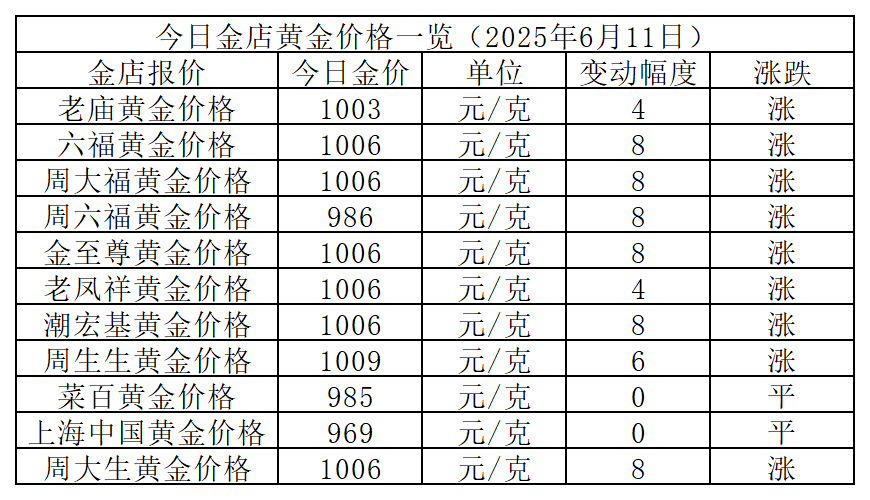
6月11日国内金价快报:国内品牌金店金价又出现上涨,大部分金店都涨至了1006元/克。其中,周生生黄金上涨6元/克,报 1009元/克,还是最高价金店。上海中国黄金价格价格不变,报价969元/克,仍是最低价金店。今日金店黄金价差40元/克, 价差还在扩大。 昨日现货黄金盘中不断震荡,先是走低至3301.54美元/盎司,后又冲高至3348.89美元/盎司,最后回落至3323.31美元/盎司, 跌幅0.04%。今日金价暂有上涨趋势,截至发稿,现货黄金暂报3337.26美元/盎司,涨幅0.42%。 昨日金价回落,主要是美国商务部长卢特尼克和财长贝森特对中美经贸谈判的积极表态,强化了市场对中美可能达成阶段 性协议的预期。市场避险情绪有所削减。 需注意的是,在美国关税问题上,位于华盛顿特区的联邦上诉法院周二允许美国总统特朗普的全面关税措施继续生效。此 次裁定强化了市场对贸易摩擦长期化的担忧,这也是昨日金价盘中出现回升的重要原因。 此外,地缘政治局势仍是支撑金价上涨的重要动力,美国洛杉矶冲突还在继续。伊朗称若遭以色列袭击,将打击以秘密核 设施。俄罗斯昨晚对乌克兰发动大规模无人机袭击,乌克兰全境拉响防空警报。 具体各大品牌 ...

中美谈判后特朗普突然提“统一”,台当局紧急发声
Zhong Guo Xin Wen Wang· 2025-05-14 00:50
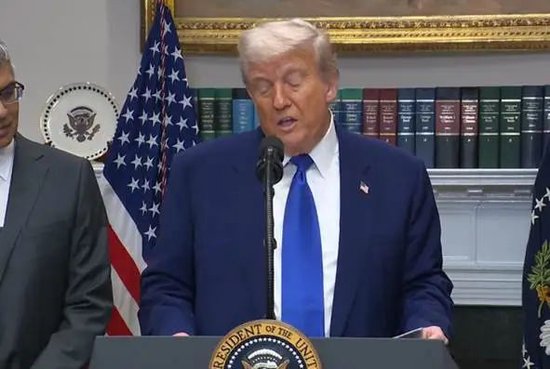
Group 1 - The core viewpoint of the article revolves around the speculation that U.S.-China trade negotiations may involve Taiwan issues, particularly after President Trump's comments about "unification and peace" [1][3] - Trump's remarks during a press conference suggested that the outcomes of the trade talks would be beneficial for both China and the U.S., as well as for "unification and peace," raising concerns in Taiwan [3][4] - Taiwan's government officials, including spokespersons from the office of Taiwan's leader Lai Ching-te, stated that they currently have no information indicating that Taiwan-related issues are part of the U.S.-China trade discussions [3][4] Group 2 - Following the trade talks, China announced a significant adjustment to tariffs on U.S. imports, reducing the additional tariff rate from 34% to 10%, effective from May 14, 2025 [5] - The adjustment includes a temporary suspension of a 24% additional tariff on U.S. goods for 90 days, indicating a potential easing of trade tensions [5][6]
周末股民要知道的一些事。
Sou Hu Cai Jing· 2025-05-12 11:27
Group 1: India-Pakistan Conflict and Military Implications - Pakistan and India have agreed to a ceasefire, which is seen as a positive development given the nuclear capabilities of both nations [1] - The recent military engagement resulted in Pakistan claiming to have shot down six Indian aircraft without any losses, showcasing the effectiveness of Chinese-made J-10 fighter jets [1] - The military conflict has led to a surge in the defense sector, with expectations of increased orders for military equipment, potentially boosting stock prices in the defense industry [1] Group 2: US-UK Trade Agreement and Its Impact - The US and UK have reached a trade agreement that reduces UK auto tariffs from 27.5% to 10%, while maintaining a minimum tax rate announced by Trump [1][2] - The agreement includes the cancellation of a 25% steel and aluminum tariff by the US, in exchange for the UK removing tariffs on $700 million worth of US ethanol products [1] - Analysts suggest that the new 10% tariff on global imports may set a precedent for other countries, indicating a challenging environment for international trade negotiations [3] Group 3: China’s Trade Strategy and Economic Resilience - China has signed a non-binding agreement with Argentine exporters to purchase approximately $900 million worth of soybeans, corn, and vegetable oil, aiming to reduce reliance on US agricultural imports [5] - Recent trade data shows that China's goods trade increased by 5.6% in April, with exports growing by 9.3% and imports by 0.8%, indicating economic resilience despite trade tensions with the US [5] - The ongoing trade negotiations with the US are expected to yield favorable outcomes for China, reinforcing its position in the global market [5] Group 4: Market Outlook - The stock market is anticipated to open positively next week, driven by a potential surge in technology stocks, which could catalyze a broader market rally [6]

五矿期货文字早评-20250512
Wu Kuang Qi Huo· 2025-05-12 06:06
Report Investment Ratings No investment ratings for the industries are provided in the report. Core Views - The overall market situation is complex, affected by macro - policies, international trade (especially tariff policies), and supply - demand relationships in different industries. Different asset classes show different trends and investment opportunities. For example, in the stock index market, it is recommended to buy certain index futures on dips; in the bond market, a cautious strategy is suggested for long - term bonds, while short - term bonds may have better performance; in the commodity market, various commodities have different price trends and investment suggestions based on their own supply - demand fundamentals [2][3][6]. Summary by Categories Macro - Financial - **Stock Index**: The previous trading day saw mixed performance in major indices, with a decrease in trading volume. Macro news includes CPI and PPI data, and trade data. The liquidity is relatively loose. Due to the weakening of the emotional impact of tariff policies and the potential for domestic policy adjustment, it is recommended to buy long positions in IH or IF index futures related to the economy on dips, or buy IC or IM futures related to "new - quality productivity" opportunistically. The unilateral strategy is to buy IF index futures on dips [2][3][4]. - **Treasury Bonds**: After the implementation of reserve requirement ratio cuts and interest rate cuts, and the policy exceeding expectations at the press conference, the long - term interest rate has already priced in the interest rate cut expectation, so a cautious strategy is recommended in the short term. The short - term bonds are expected to be more cost - effective. The long - term trend depends on the fundamental situation, and attention should be paid to the tariff negotiation process and economic data [5][6]. - **Precious Metals**: In the short term, precious metal prices are driven to be weak by the macro - environment and capital positions. However, considering the potential for the Fed to cut interest rates in the second half of the year and the expansion of the US fiscal deficit, gold prices are expected to rise in the medium term after a short - term correction, and silver prices may show a strong performance when the Fed's easing expectations are concentrated. It is recommended to wait for a significant correction in gold prices and then buy long positions, and to wait and see or short on rallies for silver [7][8][9]. Non - Ferrous Metals - **Copper**: The copper price is expected to face greater pressure for shock adjustment due to the uncertain result of Sino - US trade negotiations, the tight supply of copper ore and recycled copper, and the marginal weakening of consumption [11]. - **Aluminum**: The aluminum price is expected to fluctuate. Although the domestic policy exceeds expectations, the bearish atmosphere in the commodity market continues, and the consumption is marginally weakening. However, the improvement in downstream demand after the short - term price correction provides strong support [12]. - **Zinc**: In the short term, the near - end is relatively strong, but in the medium term, due to the limited downstream purchasing sustainability and the pressure of imported zinc ingots, the zinc price may decline [13][14]. - **Lead**: The Shanghai lead index is expected to fluctuate in a box in the medium term, and the short - term price shows a weak shock [15]. - **Nickel**: The continuous weakness of the nickel - iron price is the main driver for the decline of the nickel price. It is recommended to hold short positions. The short - term price of the Shanghai nickel main contract is expected to range from 115,000 to 130,000 yuan/ton [16]. - **Tin**: The supply of tin is expected to loosen, and with the impact of tariffs on demand, the tin price may decline. The domestic main contract is expected to run in the range of 250,000 - 270,000 yuan [17]. - **Lithium Carbonate**: The short - term fundamentals lack positive drivers, and the price may continue to decline. Attention should be paid to the operating disturbances of mines and salt factories, the price trend of lithium concentrate, and demand performance [18]. - **Alumina**: In the short term, it is recommended to wait and see. In the long - term, the supply surplus trend is difficult to change, and attention can be paid to the 7 - 9 positive spread opportunity [19]. - **Stainless Steel**: The supply is at a high level, the market has large inventory pressure, and the supply - demand imbalance brings downward pressure on the price [20]. Black Building Materials - **Steel**: The traditional peak season is over, the demand for finished steel products has shifted downward, and the price may maintain a weak shock. Attention should be paid to tariff policy changes, terminal demand trends, and cost support [22][23]. - **Iron Ore**: The supply of iron ore has a slight decline in shipping volume, and the demand is expected to peak and decline. The price of the main 09 contract may still be weak [24]. - **Glass and Soda Ash**: The glass price is weak, with inventory accumulation. The soda ash supply is at a high level with a slight decline, and the price is expected to be weak [25][26]. - **Manganese Silicon and Ferrosilicon**: For manganese silicon, the price may stop falling and enter a shock stage, and it is recommended to wait and see. For ferrosilicon, the price may continue to decline, and short - term trading or waiting and seeing is recommended [27][28]. - **Industrial Silicon**: The supply of industrial silicon is in surplus, and the demand is insufficient. The price is under pressure, and it is recommended to wait and see or follow the short - term trend [33]. Energy and Chemicals - **Rubber**: The rubber price returns to range - bound. The implementation of Thailand's policy to postpone rubber tapping is the focus of the market. There are different views on the rise and fall of the price. It is recommended to adopt a neutral and short - term trading strategy [36][37][39]. - **Crude Oil**: In the short term, OPEC's production increase has been realized as expected. In the context of low inventory, buying on dips and short - term positive spread is a good position [40]. - **Methanol**: The supply of methanol is increasing, and the demand is weakening. The price is expected to decline. It is recommended to look for short - selling opportunities on rallies [41]. - **Urea**: The price of urea is expected to be relatively strong, but the upward space is limited. It is recommended to take partial profit on previous long positions and wait and see for new positions [42]. - **Styrene**: The price of styrene is under pressure, but the low port inventory may limit the decline. It is recommended to wait and see [43]. - **PVC**: The supply and demand of PVC are both weak. The price is expected to be weakly volatile in the short term [44]. - **Ethylene Glycol**: The industry is in a short - term de - stocking stage, but there is a risk of negative feedback in the medium term. Attention can be paid to the opportunity of buying on dips when the port de - stocking is realized [45]. - **PTA and p - Xylene**: Both are in the maintenance season. There is a risk of negative feedback in the medium term, but the short - term valuation is supported. Attention can be paid to the opportunity of buying on dips and positive spread [46][47]. - **Polyethylene and Polypropylene**: The price of polyethylene is expected to fluctuate. The price of polypropylene is expected to be weakly volatile in May [48][49]. Agricultural Products - **Pig**: The short - term pig price may be adjusted slightly. It is recommended to short on rallies caused by emotions such as hoarding and second - fattening [51]. - **Egg**: The egg price is expected to decline slightly and then stabilize. It is recommended to short on rallies in the medium term [52]. - **Soybean and Rapeseed Meal**: The soybean and soybean meal in China are expected to accumulate inventory in the next three months. The USDA report may have a short - term negative impact, but there may be a chance for a rebound after the negative news is exhausted [53][54]. - **Edible Oils**: The medium - term price of edible oils may decline, but the short - term may be volatile or slightly bullish due to the expected release of the new RVO rule in the United States [55][58]. - **Sugar**: The international raw sugar price may decline in the second and third quarters. The domestic sugar price may weaken in the future as the import profit window may reopen [59][60]. - **Cotton**: The domestic cotton market shows a pattern of weak supply and demand. The short - term cotton price is expected to fluctuate. Attention should be paid to the Sino - US negotiation process and inventory changes [61].
未知机构:谈判核心条款与进展1关税调整美方提案计-20250512
未知机构· 2025-05-12 01:55
Summary of Key Points from Conference Call Industry or Company Involved - The discussion primarily revolves around the trade negotiations between the United States and China, focusing on tariffs, supply chains, and technology controls. Core Points and Arguments 1. **Tariff Adjustments** - The U.S. proposed to reduce the average tariff on Chinese goods from 145% to 50%-60%, with some essential consumer goods (such as electronics and textiles) potentially lowered to 25% - China responded by committing to adjust its 125% retaliatory tariffs but insisted that the U.S. must first correct its unilateral tariff errors, emphasizing that adjustments should be based on the "principle of reciprocity" - The timeline for implementation suggests that the first round of tariff reductions may take effect after May 12, prioritizing consumer electronics and medical supplies [1][1][1] 2. **Supply Chain and Key Product Exemptions** - Both parties discussed providing temporary exemptions for critical products such as medical supplies and rare earth materials to alleviate short-term supply pressures [1][1][1] 3. **Rare Earth Export Restrictions** - The U.S. requested China to ease restrictions on rare earth exports; however, China did not relent and instead intensified efforts to combat rare earth smuggling as a countermeasure [2][2][2] 4. **Technology Controls and Industrial Policy** - The stalemate continues in high-tech sectors like semiconductors and AI, with the U.S. maintaining technology export restrictions while China demands the lifting of sanctions and recognition of the legitimacy of the "Made in China 2025" strategy - No fundamental compromises were reached, but both sides agreed to establish a technical exchange working group to facilitate further negotiations [2][2][2] 5. **Dialogue Mechanism Establishment** - Both parties consented to create a regularized economic and trade consultation mechanism, designating lead representatives and scheduling regular meetings, with plans to release a joint statement detailing these arrangements on May 12 [2][2][2] Other Important but Potentially Overlooked Content - The emphasis on the principle of reciprocity in tariff adjustments indicates a strategic approach by China to ensure balanced negotiations - The establishment of a technical exchange working group may signal a willingness to engage in more collaborative discussions despite existing tensions in technology sectors - The focus on critical product exemptions highlights the urgency of addressing supply chain vulnerabilities amid ongoing trade disputes [1][2][2]
对当前中美债市交易逻辑和货币政策不同点的分析与展望
2025-05-07 15:20
Summary of Key Points from the Conference Call Industry or Company Involved - The analysis focuses on the monetary policies and economic conditions of the United States and China, particularly in relation to their bond markets and inflation dynamics. Core Insights and Arguments - **Divergent Monetary Policy Goals**: Both the US and China have aligned on the timing of monetary easing, but their objectives differ significantly. The US aims to reduce high inflation (with a core CPI reaching 6% in 2023), while China seeks to boost demand and escape negative CPI growth. The core CPI differential has narrowed to 2.3% but remains high, indicating a clear demand disparity [1][2][3]. - **Policy Focus**: The US Federal Reserve prioritizes inflation and employment, making decisions based on economic conditions. In contrast, the People's Bank of China (PBOC) pursues multiple goals, including stable growth, stable exchange rates, and risk prevention, emphasizing cross-cycle adjustments [1][4]. - **Market Expectations vs. Official Predictions**: Market expectations for the Federal Reserve to cut rates by 75 basis points starting in July are more optimistic than the Fed's own forecast of 50 basis points. The impact of tariffs on inflation is anticipated to manifest in the coming months, but the recession effects may take longer to materialize [1][5][8]. - **Inflation vs. Employment Conflict**: Fed Chair Powell indicated that in cases of conflict between inflation and employment targets, controlling inflation takes precedence. This suggests a current focus on the inflationary effects of tariffs rather than immediate recession risks [6][7]. - **Supply and Demand Issues**: The US faces supply shortages and aims to enhance domestic production through manufacturing return and tariff policies. Conversely, China is grappling with insufficient demand and is looking to stabilize expectations and increase consumer income to boost consumption [3][9]. - **Chinese Bond Market Outlook**: The Chinese bond market is expected to experience limited interest rate fluctuations in the short term, with no significant policy changes anticipated following the April Politburo meeting. The impact of US tariffs on Chinese exports is becoming evident, but economic data may not provide further clarity until later in the year [10][13]. - **Liquidity Environment**: The current liquidity environment is relatively tight compared to the previous year, which may hinder a smooth downward trend in bond yields. The market is characterized by high prices and limited debt relief for major banks [11]. - **Potential for Coordinated Rate Cuts**: There is little likelihood of coordinated rate cuts between the US and China in the near term, as the PBOC is not expected to lower rates ahead of the Fed's actions [12]. - **Future Predictions for Bond Markets**: The Chinese bond market is expected to show narrow fluctuations without significant adjustments, even if US-China negotiations progress positively. The pricing of government bonds is not entirely market-driven, which may lead to slower adjustments [13][14]. Other Important but Possibly Overlooked Content - **Economic Data Limitations**: The PMI data and other economic indicators may not fully reflect the underlying economic conditions due to their subjective nature, and significant changes may not be evident until later in the year [10]. - **Market Sentiment**: The current market sentiment is more influenced by confidence factors rather than actual data, indicating a potential disconnect between market expectations and economic realities [8].
为什么我对今天的发布会很乐观
表舅是养基大户· 2025-05-07 13:30
Core Viewpoint - The recent press conference exceeded expectations, primarily because the initial expectations were set low. The focus was on the information and trends presented rather than a comprehensive optimism about the economy or stock market [2][6]. Group 1: Key Messages from the Press Conference - Preparedness for potential failure in US-China negotiations was emphasized, indicating that the government has strategies in place regardless of the outcome [10][12]. - The commitment to support the stock market was highlighted, with significant involvement from state-owned funds to stabilize market expectations [12][14]. - The overall financing costs in society are expected to continue declining, with both expected and unexpected interest rate cuts aimed at reducing the financing costs for the real economy [15][19]. - Coordination among various ministries remains tight, as evidenced by the frequent interactions observed during the press conference [20][24]. - There is a clear indication of incremental capital inflow into the stock market, driven by state support and ongoing reforms in public funds [25][26]. Group 2: Structural Reforms and Trends - A significant reform in public funds was announced, aimed at increasing the probability of individual investors making profits through these funds [27][30]. - The conference discussed the acceleration of A-share companies listing abroad and the repatriation of Chinese concept stocks from US markets, reflecting a long-term trend of globalization [31]. - The focus on technology as a national priority was reiterated, with substantial financial support directed towards tech sectors [32]. - Structured financial tools are being utilized to encourage responsible lending and investment practices, ensuring that funds are directed towards productive uses [34]. - The stock market is encouraged to align with global standards, with a call for learning from mature markets to achieve reasonable asset valuations [35][38]. Group 3: Market Insights and Recommendations - The military industry sector is highlighted as a potential investment opportunity due to geopolitical tensions, particularly between India and Pakistan, which may drive demand for military equipment [43][44]. - The general aviation sector is gaining attention, with a new ETF linked to this industry showing promising performance, indicating a growing interest in low-altitude economic activities [45][48]. - The bond market is experiencing upward pressure despite recent rate cuts, suggesting a complex response to monetary policy changes [50].