美国加征关税

Search documents
行业周报:美国关税超预期致市场趋于避险,重视煤炭攻守兼备
KAIYUAN SECURITIES· 2025-04-06 13:30
Investment Rating - The investment rating for the coal industry is "Positive" (maintained) [1] Core Views - The report emphasizes the importance of coal as a defensive asset amid unexpected U.S. tariffs, highlighting the need for a balanced approach in coal investments [1][4] - The coal market is currently in a bottoming phase, with potential for price stabilization and rebound supported by various factors including long-term contract price ceilings and self-rescue actions by coal companies [3][4] - The report suggests that the coal sector is entering a new phase of investment opportunities, driven by macroeconomic policies and capital market support [4][12] Summary by Sections Investment Logic - The coal sector is viewed as a stable dividend investment due to weak domestic economic performance and external pressures from U.S. tariff policies, with insurance funds starting new allocations in coal [4][12] - The cyclical elasticity of coal stocks is expected to improve as supply-demand fundamentals continue to enhance, particularly after the March Two Sessions and the arrival of the spring construction season [4][12] Key Market Indicators - The coal sector saw a slight increase of 0.6%, outperforming the CSI 300 index by 1.97 percentage points [7][9] - The current PE ratio for the coal sector is 10.6, and the PB ratio is 1.22, indicating relatively low valuations compared to other sectors [9][12] Coal Price Trends - Port coal prices have stabilized, with CCTD Q5500 coal priced at 676 CNY/ton, remaining unchanged week-on-week [3][15] - The inventory at ports has decreased, with the total inventory in the Bohai Rim area at 30.271 million tons, down 3.08% from the previous week [3][15] Supply and Demand Dynamics - The operating rate of coal mines in Shanxi, Shaanxi, and Inner Mongolia remains steady at 82.1% [3][15] - Daily coal consumption by coastal power plants has decreased to 1.844 million tons, a drop of 3.96% [3][15] Company Performance and Recommendations - Selected coal stocks are expected to benefit from the current market conditions, with recommendations for companies such as China Shenhua, Shaanxi Coal, and China Coal Energy based on their dividend potential [4][12][13] - The report highlights the importance of capital inflows from industry players, indicating a recognition of the current value bottom in the coal sector [4][12]






电力设备行业跟踪周报:多管齐下应对美国对等关税,龙头公司保持优势地位-2025-04-06
Soochow Securities· 2025-04-06 11:05
Investment Rating - The report maintains an "Overweight" investment rating for the power equipment industry [1]. Core Views - The leading companies in the power equipment sector are expected to maintain their competitive advantages despite the challenges posed by U.S. tariffs [1]. - The report highlights significant growth opportunities in the robotics, energy storage, electric vehicle, industrial control, photovoltaic, wind power, and grid sectors, driven by technological advancements and market demand [4][10]. Industry Trends - The power equipment sector has shown varied performance, with electric equipment down 3.51%, lithium batteries down 2.37%, and photovoltaic down 5.75% [4]. - The report notes a strong recovery in electric vehicle sales, with major manufacturers reporting significant year-on-year growth [29]. - The energy storage market is experiencing rapid growth, particularly in the U.S., with a projected CAGR of 40-50% from 2023 to 2025 [9][11]. Company Highlights - Companies such as CATL, BYD, and Sungrow are highlighted as key players with strong growth potential in their respective segments [6][7]. - The report emphasizes the importance of technological innovation and market positioning for companies like Tesla and their impact on the robotics sector [10]. - Specific companies are recommended for investment based on their market leadership and growth prospects, including CATL, BYD, and others in the energy storage and electric vehicle sectors [6][7]. Investment Strategy - The report suggests a bullish outlook on the robotics sector, anticipating a significant increase in production and market penetration [10]. - In the energy storage sector, the report expects continued strong demand in the U.S. and emerging markets, with a focus on leading companies in storage inverters and battery technology [9]. - The electric vehicle market is projected to grow by 25% in 2025, driven by new models and consumer incentives [29].




从牙膏到肥皂,美国人开始疯狂囤货
华尔街见闻· 2025-04-06 07:08
美国经济学家和商界人士警告说,加征关税将推高价格, 并最终转嫁到消费者身上。 由于担忧物价飙升,美国一些消费者已开始囤货模式。 每个家庭每年平均损失 3800美元的购买力 特朗普希望通过征收"对等关税"来施压其他国家,这可能会令美国消费者付出尤其高昂的代价。 来源:央视网 根据特朗普本月2日签署的关于所谓"对等关税"的行政令,美国定于5日开始对所有贸易伙伴加征10%的"最低基准关税"。对某些贸易伙伴征收更高的"对等关 税",这些措施将于9日生效。 | PERCENT CHANGE TO PRICE LEVEL | | | | | --- | --- | --- | --- | | Leather products | | | | | Gloves, handbags, etc. | | | 18.3% | | Wearing apparel | | | 16.9% | | clothing, shoes, etc. | | | | | Crops | | 13.3% | | | Primarly industrial crops like hemp | | | | | Metals | | 12.3% | | ...


关注下游轮胎需求的阶段性示弱
Hua Tai Qi Huo· 2025-04-06 06:03
Report Industry Investment Rating - No specific industry investment rating provided in the report Core Viewpoints - In April, the global natural rubber production is still in the seasonal off - peak, with low supply pressure. China's Yunnan and Hainan are starting to harvest, but attention should be paid to the climate in these areas. The production of butadiene rubber is still at a loss, and the production profit improvement space is limited. The downstream tire demand is in the seasonal peak, but may decline month - on - month, especially with the US tariff increase suppressing China's tire exports. The domestic all - steel tire production profit is being compressed, and the probability of a decline in the all - steel tire operating rate increases [2]. - The current valuation of RU is neutral, NR is moderately overvalued, and BR is moderately undervalued [13]. Summary by Directory 3 - month Rubber Market Review - In March, the price of natural rubber decreased significantly. The main RU contract dropped by 6.49% and the main NR contract dropped by 6.65%. The inventory in Qingdao port increased slightly. The price of butadiene rubber was weak, affected by the decline of upstream butadiene prices and natural rubber prices. The production profit of butadiene rubber recovered slowly and was near the break - even point. The supply and demand of butadiene rubber were both weak [12]. Current Valuation Judgment - RU is neutral. The absolute value of the non - standard price difference of RU is at a low level, and the standard product basis is strengthening year - on - year. The domestic price is relatively undervalued, but there is an expectation of price decline due to the start of production in the main domestic producing areas. NR is moderately overvalued, with a weak basis and shrinking import profit. BR is moderately undervalued, and the loss situation may be reversed with the decline of butadiene prices [13]. April Rubber Supply and Demand Analysis Global Still in Seasonal Off - peak, China Enters the Initial Harvest Stage - In April, the global natural rubber production is in the seasonal off - peak. China's Yunnan has started harvesting, and Hainan will start in April. Attention should be paid to the climate in Yunnan and Hainan. According to historical data, the global production in April is at a low level, and this year's production is expected to increase month - on - month. The production of butadiene rubber is at a loss, and the production profit improvement space is limited. There are still two sets of equipment for maintenance in April and May, reducing the overall supply pressure [23][37][62]. - China's imports in April are affected by downstream demand, trader arbitrage demand, and alternative planting import rhythm. Although downstream demand is in the peak season and alternative planting imports are expected to increase seasonally, due to the low non - standard price difference of RU, the overall import may not increase. Seasonally, Thailand's exports to China usually decline in April, and this year's domestic imports are also expected to decline month - on - month. The imports from Vietnam, Cote d'Ivoire, and Indonesia are also difficult to increase [40][48][62]. - In 2024, China's butadiene rubber exports performed well, with a cumulative year - on - year increase of 31.78% by December. It is expected that the exports will increase month - on - month in April [60]. Domestic Demand is Still in the Seasonal Peak, Pay Attention to the Impact of Tariff Increases - Overseas demand may decline seasonally in April. The automobile sales in various countries show a seasonal decline in April. The US truck sales improved, while the European passenger car sales were still sluggish. China's automobile sales maintained a high growth rate, driven by domestic stimulus policies [63]. - Domestically, the macro data improved. The excavator sales in February increased year - on - year, and the social financing in January - February also improved. The real estate data improved, and the investment in the automobile manufacturing industry increased, which is beneficial to the automobile production and sales. The tire demand is divided into supporting, replacement, and export. Although April is the traditional peak season, the tire factory's production may be restricted by the increasing inventory pressure and global tariff increases [74][78][81]. - The domestic tire exports are expected to increase seasonally, but the US tariff increase may suppress the all - steel tire exports. The industrial demand in April is in the peak season, which is beneficial to the replacement market. However, the tire inventory is increasing, and the operating rate may decline. The overall downstream demand may decline month - on - month in April, especially if the tariff policy does not ease [91][97][104]. Weak Supply and Demand, Domestic Inventory Accumulation Pressure Remains - In April, China's natural rubber imports may remain stable, and the supply mainly comes from domestic production. The production in Yunnan and Hainan is expected to increase, but the downstream demand is weak, and the inventory will face pressure again [105]. - For butadiene rubber, the supply is expected to decline due to equipment maintenance, and the demand is also weak. The price will fluctuate with the upstream butadiene raw materials, and the inventory may remain unchanged [109]. Views and Strategies - For RU and NR, cautious short - selling hedging is recommended. In April, the domestic natural rubber supply is expected to increase, while the demand is weak, and there is inventory accumulation pressure. For BR, a neutral strategy is recommended. In April, the supply of butadiene rubber is expected to decline, and the demand is also weak. The price will fluctuate with the upstream butadiene raw materials [3][111].
刚刚!美国财长,突爆猛料!
券商中国· 2025-04-05 12:56
实际上,由于贝森特与华尔街的关系密切,有分析人士指出,贝森特始终不支持"激进地加征关税",并认 为他有可能阻拦特朗普征收过高的关税。 另外,一则关于"美国超市中国商品被民众抢购"的话题冲上热搜榜第一,引发关注与热议。有视频显示, 在美国超市,中国商品被抢购一空。美国经济学家和商界人士警告说,加征关税将推高价格,并最终转嫁 到美国消费者身上。由于担忧物价飙升,美国一些消费者已开始囤货模式。 "美国财长想离职" 4月5日,新华社消息,美国微软—全国广播公司主持人斯蒂芬妮·吕勒4日说,美国财政部长斯科特·贝森特 无法忍受特朗普政府"荒谬的(对等)关税算法",已打算辞职不干。 特朗普政府内部疑似出现裂痕。 据美媒最新爆料,美国总统特朗普宣布"灾难性"关税政策后,美国财长贝森特可能正计划离职。美国微软 —全国广播公司主持人斯蒂芬妮·吕勒认为,贝森特无法忍受特朗普政府"荒谬的关税算法"。 吕勒在微软—全国广播公司《早安,乔》电视节目中说:"我的消息来源说,斯科特·贝森特(在特朗普政 府中)行为另类。就特朗普的核心圈子而言,特朗普根本不亲近贝森特,也不听他的。" 吕勒说:"有人对我说,他正在寻找退路,找机会去美联储。因为在 ...

美股连续暴跌 关税令华尔街损失逾5万亿美元
Zhong Guo Xin Wen Wang· 2025-04-05 00:04
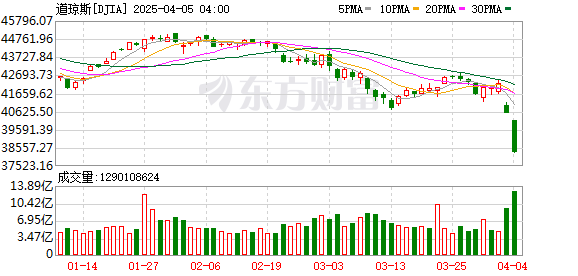
Group 1 - The US stock market experienced its worst week since March 2020, with major indices dropping over 5.5% [2] - The Nasdaq entered a technical bear market, closing down over 20% from its historical peak, while the S&P 500 recorded its largest weekly decline since March 2020 [3] - The market capitalization of US stocks evaporated by over $5 trillion in two days, with a total loss of nearly $8 trillion since January 2017 [3] Group 2 - President Trump announced a tariff increase on April 2, leading to market turmoil and concerns about a global economic recession, with potential for further volatility before the April 9 deadline for reciprocal tariffs [3] - Federal Reserve Chairman Jerome Powell indicated that the impact of tariffs on the economy could be greater than expected, emphasizing the need to maintain stable inflation expectations [7] - Morgan Stanley's chief US economist projected a contraction in real GDP due to the pressure from tariffs, revising the growth forecast for the year to -0.3% from a previous estimate of 1.3% [8]
关税“大棒”如何影响市场?从宏观到个股,最全大行解读来了!(附行业&标的)
Sou Hu Cai Jing· 2025-04-04 00:42
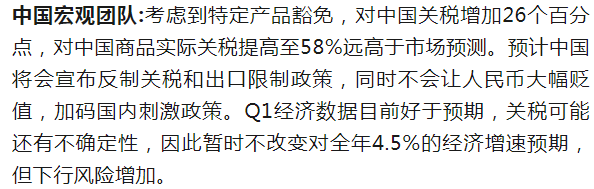
Global Macro - Goldman Sachs reports that the announced tariff rate has a weighted average of 18.3%, with an actual increase of 12.6 percentage points after specific exemptions are deducted, indicating that the overall tariff increase may exceed the previously expected 15 percentage points due to subsequent countermeasures [1] Focus on China - Morgan Stanley highlights that China is one of the countries most impacted by the tariff increases, with effective tariffs rising to 65% following a 34% increase in U.S. tariffs [3][5] - The impact of tariffs on China's economy is expected to be greater than in 2018-2019, with the difficulty of reaching an agreement to lower tariffs being significant [4][5] - The U.S. comprehensive tariffs will also negatively affect global trade, indirectly impacting China [4][5] Industry Impact - JPMorgan assesses that the direct impact of tariffs on Asian companies is relatively small, but certain industries may face indirect effects due to economic slowdown and currency fluctuations [8] - Approximately 14.4% of the Asian region is considered directly affected by U.S. tariffs, primarily driven by the industrial sector, especially export-oriented companies from Taiwan and South Korea [8] - The financial sector, which constitutes 39% of the investment-grade emerging market bond index in Asia, is expected to be less affected by tariffs, providing a buffer for the region [9] Individual Stock Impact - UBS indicates that the recent 34% tariffs on China will likely pressure stock prices until clear stimulus policies are announced, estimating a 3% revenue reduction for MSCI China constituents and a potential 1-2% profit decrease due to tariffs [11][15] - The sectors most at risk from potential profit impacts include machinery, petrochemicals, sportswear OEM, biotech, and tech hardware [15] - A list of companies with significant U.S. revenue exposure has been compiled, with many facing earnings impacts due to the tariffs [12][13]
买爆了!大资金,抄底!
券商中国· 2025-04-03 23:27
Core Viewpoint - Southbound capital significantly increased its net buying in Hong Kong stocks, reaching a historical second-highest net purchase of 287.9 billion HKD on April 3, indicating strong investor confidence despite market volatility [1][2][4]. Market Performance - On April 3, the Hong Kong stock market opened lower, with the Hang Seng Index down 2.43% and the Hang Seng Tech Index down over 3%. However, both indices showed recovery during the day, with the Hang Seng Index closing down 1.52% and the Hang Seng Tech Index down 2.09% [2][5]. - The total market turnover reached 2894.92 billion HKD, an increase of over 700 billion HKD compared to April 2 [1]. Southbound Capital Activity - Southbound capital's net buying included significant purchases in major stocks: 60.72 billion HKD in the Tracker Fund, 48.33 billion HKD in the Hang Seng China Enterprises Index, and 34.87 billion HKD in Alibaba [2][4]. - Since the beginning of the year, southbound capital has accumulated nearly 500 billion HKD in net purchases, compared to 807.9 billion HKD for the entire previous year [4]. Sector Performance - Among the Hang Seng Index constituents, Shenzhou International and Techtronic Industries led the declines, with drops exceeding 14% and 12%, respectively. Conversely, Tingyi Holdings saw a rise of 3.5% [5]. - In the Hang Seng Tech Index, JD.com and Alibaba both fell over 5%, while Xiaomi Group managed a gain of 3.03% [6]. Corporate Actions - Tencent Holdings repurchased 1.011 million shares for 500 million HKD on April 3, with a price range between 492 HKD and 498.8 HKD. Year-to-date, Tencent has repurchased over 18.6 billion HKD worth of shares [7]. Economic and Policy Context - The U.S. announced a 10% "minimum baseline tariff" on trade partners, effective April 5, with additional tariffs on countries with significant trade deficits to follow on April 9 [8][9]. - Analysts suggest that while the tariffs are substantial, the market may have already priced in these risks, indicating potential for marginal improvement in the financial markets [9][10]. Investment Strategy - Analysts recommend focusing on sectors that are relatively resilient and benefit from policy support, such as automotive, electronics, home appliances, and technology. They also highlight the importance of low-valuation state-owned enterprises and local Hong Kong dividend stocks [11].

2025年4月资产配置报告:关税进入拉锯阶段,关注政策后手应对
HWABAO SECURITIES· 2025-04-03 13:43
Group 1 - The report highlights the uncertainty surrounding tariff policies, particularly the recent announcements from the US that exceeded market expectations, which may lead to increased market risk aversion [5][20][23] - The economic performance in Q1 was strong, but there are concerns about a potential slowdown in Q2 due to external tariff disturbances and weak domestic demand [6][7][33] - The report emphasizes the need for policy measures to support domestic consumption and counteract external pressures, suggesting that the government may implement strategies to boost consumer demand [7][8][41] Group 2 - The A-share market is currently in a phase of adjustment following a revaluation, with external tariff pressures impacting global risk appetite and leading to a cautious outlook [8][10] - The report indicates that the market is transitioning from a focus on valuation to an emphasis on earnings performance as the earnings season approaches [8][10] - Defensive strategies are recommended, with a focus on large-cap value and dividend stocks, as market volatility increases due to external uncertainties [8][10] Group 3 - The report notes a mixed performance in major asset classes, with A-shares experiencing slight declines while gold prices surged significantly due to heightened uncertainty in international trade [13][14] - The performance of various sectors in March showed a divergence, with defensive sectors like coal, non-ferrous metals, and banking performing well, while growth sectors faced declines [15][16] - The report suggests that the technology sector remains a key focus for the year, despite facing short-term adjustments due to reduced market sentiment [8][10][16]
券商火速解读美国加征关税!
券商中国· 2025-04-03 06:26
当地时间4月2日,特朗普援引《国际紧急经济权力法》(IEEPA),宣布对全球进口商品加征10%的基准关税, 并对部分经济体征收更高的税率。由于对等关税加征幅度远超市场预期,消息一出,全球资产价格剧烈动荡,美 股期货下跌,美元指数下跌,黄金价格上涨。 与此同时,多家券商研究所火线分析认为,特朗普在超预期加征关税的同时,设定了缓和生效时间,谈判意图明 显。尤其加征关税不仅影响全球经济增长,还将给美国经济本身带来伤害,预计最终政策执行力度还有减免空间。 短期市场避险情绪突显,建议可寻找黄金避险、政策对冲等方向的投资机会。 金晓雯也提到,不同寻常的高关税税率或许不会长期执行。"对等关税"一定程度上是特朗普和其他国家进行政治和 经济谈判的筹码,考虑到对美国经济本身的伤害,特朗普有可能在和重要贸易伙伴进行双边磋商之后暂缓或者降低 某些国家的"对等关税",不过10%的"最低基准关税"或将对大多数国家保留。 加征幅度远超预期 从政策细节来看,美国将对所有国家设立10%的"最低基准关税",同时对美国贸易逆差最大的国家征收个性化的更 高"对等关税"。包括对越南、泰国分别加征46%、36%,以及对印度、日本和欧盟分别加征26%、2 ...