
电信广播电视及卫星传输服务

Search documents
4月份国民经济顶住压力稳定增长 延续向新向好发展态势
Yang Shi Wang· 2025-05-19 08:26
央视网消息:中国国家统计局5月19日发布2025年4月份中国国民经济运行数据。数据显示4月份,面对外部冲击影响加大、内 部困难挑战叠加的复杂局面,国民经济顶住压力稳定增长,延续向新向好发展态势。 4月份,货物进出口总额38391亿元,同比增长5.6%。全国城镇调查失业率为5.1%,比上月下降0.1个百分点。此外,全国居民 消费价格(CPI)同比下降0.1%,环比上涨0.1%。 国家统计局新闻发言人、国民经济综合统计司司长 付凌晖:总的来看,4月份,外部冲击影响加大,但宏观政策协同发力, 主要指标平稳较快增长,国民经济延续向新向好态势。也要看到,外部不稳定不确定因素仍然较多,国民经济持续回升向好基础 还需进一步稳固。 总台央视记者 梁爽:国家统计局相关负责人表示,下阶段,将坚定不移扩大高水平对外开放,着力稳就业、稳企业、稳市 场、稳预期,扎实推进高质量发展,推动经济持续回升向好。 4月份,中国规模以上工业增加值同比增长6.1%。装备制造业增加值同比增长9.8%,高技术制造业增加值增长10.0%,分别快 于全部规模以上工业增加值3.7和3.9个百分点。 国家统计局新闻发言人、国民经济综合统计司司长 付凌晖:4月份 ...

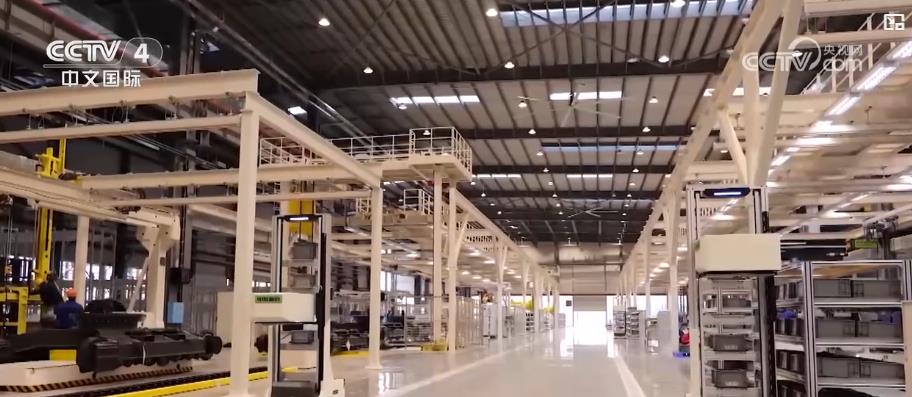
国家统计局:服务业平稳增长,现代服务业发展较好
news flash· 2025-05-19 02:13
4月份,全国服务业生产指数同比增长6.0%。分行业看,信息传输、软件和信息技术服务业,租赁和商 务服务业,批发和零售业,金融业生产指数同比分别增长10.4%、8.9%、6.8%、6.1%,分别快于服务业 生产指数4.4、2.9、0.8、0.1个百分点。1-4月份,全国服务业生产指数同比增长5.9%。1-3月份,规模以 上服务业企业营业收入同比增长7.0%。4月份,服务业商务活动指数为50.1%,服务业业务活动预期指 数为56.4%。其中,航空运输、电信广播电视及卫星传输服务、互联网软件及信息技术服务、保险等行 业商务活动指数位于55.0%以上较高景气区间。(中国网) ...
【宏观经济】一周要闻回顾(2025年4月30日-5月6日)
乘联分会· 2025-05-07 08:42
Group 1: Service Trade Performance - In Q1 2025, China's service trade totalled 19,741.8 billion yuan, a year-on-year increase of 8.7% [3] - Service exports reached 8,351.5 billion yuan, growing by 12.2%, while imports were 11,390.3 billion yuan, increasing by 6.2% [3] - The service trade deficit was 3,038.8 billion yuan, a decrease of 244.6 billion yuan compared to the same period last year [3] - Knowledge-intensive service trade grew to 7,524.9 billion yuan, up 2.6%, with significant contributions from business services and telecommunications [3] - Travel services saw the highest growth, with total imports and exports reaching 5,849 billion yuan, a 21.8% increase, and exports surged by 97.5% [3] Group 2: Manufacturing PMI Analysis - In April 2025, the manufacturing PMI was 49.0%, down 1.5 percentage points from the previous month, indicating a decline in manufacturing activity [5] - The production index was at 49.8%, reflecting a slight slowdown in manufacturing production [6] - The new orders index fell to 49.2%, suggesting a decrease in market demand for manufactured goods [7] - The raw materials inventory index dropped to 47.0%, indicating a reduction in the inventory levels of key raw materials [8] - The employment index was at 47.9%, showing a decline in employment levels within the manufacturing sector [9] Group 3: Non-Manufacturing PMI Insights - The non-manufacturing business activity index was 50.4% in April 2025, down 0.4 percentage points but still indicating expansion [10] - The construction sector's business activity index was 51.9%, while the services sector's index was 50.1%, both showing a decline from the previous month [10] - The new orders index for non-manufacturing fell to 44.9%, indicating a drop in market demand [10] - The input prices index was at 47.8%, suggesting a decrease in the overall price level of inputs used in non-manufacturing activities [11] - The business activity expectations index remained optimistic at 56.0%, despite a slight decline [11] Group 4: Comprehensive PMI Overview - The comprehensive PMI output index was 50.2% in April 2025, down 1.2 percentage points but still above the critical point, indicating continued expansion in production activities [13]

2025年4月PMI数据点评:4月官方制造业PMI指数较大幅度下行,后期扩内需将成为主要支撑点
Dong Fang Jin Cheng· 2025-05-06 07:21
Manufacturing PMI Insights - In April 2025, China's manufacturing PMI dropped to 49.0%, a decrease of 1.5 percentage points from March, marking the largest decline in nearly two years[2][3] - The decline is attributed to two main factors: a significant change in the external environment due to increased tariffs from the U.S. and seasonal factors, as April typically sees a decrease in manufacturing activity compared to March[3] - New export orders index fell sharply by 4.3 percentage points to 44.7%, the lowest level in 28 months, primarily due to high tariffs impacting orders from the U.S.[4] Economic Indicators - The production index for April was 49.8%, down 2.8 percentage points from the previous month, reflecting weakened market demand[4] - The main raw materials purchasing price index decreased by 2.8 percentage points to 47.0%, while the factory price index fell by 3.1 percentage points to 44.3%, indicating significant contraction in both indices[4] - High-tech manufacturing PMI remained in the expansion zone at 51.5%, despite a 0.8 percentage point decline, showcasing resilience amid market challenges[5][6] Future Outlook - The construction PMI for April was 51.9%, down 1.5 percentage points, influenced by a slowdown in real estate investment; however, civil engineering activity index rose to 60.9%, indicating potential for increased infrastructure investment[6] - The central government's recent policy directives emphasize stronger counter-cyclical measures and proactive macroeconomic policies, suggesting a focus on boosting domestic demand and infrastructure investment[7] - It is anticipated that the manufacturing PMI may remain in contraction territory in May but could rebound to around 49.5% due to the implementation of growth-stimulating policies[7]
生产需求均回落 4月制造业PMI降至49%
Mei Ri Jing Ji Xin Wen· 2025-05-05 14:12
Core Viewpoint - The April PMI data indicates a decline in manufacturing while the service sector remains in expansion, suggesting potential policy adjustments in response to economic conditions [1][4]. Manufacturing Sector - The manufacturing PMI for April is reported at 49.0%, a decrease of 1.5 percentage points from the previous month, falling below the critical threshold [1][2]. - Production and new orders indices are at 49.8% and 49.2%, respectively, both showing declines of 2.8 and 2.6 percentage points, indicating a slowdown in manufacturing production and market demand [2]. - High-tech manufacturing PMI remains in the expansion zone at 51.5%, despite a 0.8 percentage point drop, demonstrating resilience and strong support from market demand and policy [3]. - The decline in manufacturing PMI is attributed to external economic changes, particularly the impact of increased tariffs from the U.S., and seasonal factors, as April typically sees a decrease following the peak in March [2][3]. Service Sector - The non-manufacturing business activity index stands at 50.4%, down 0.4 percentage points from the previous month, but still indicates expansion [4]. - The service sector PMI is at 50.1%, a slight decrease of 0.2 percentage points, with seasonal factors contributing to this change [5]. - The construction PMI is reported at 51.9%, down 1.5 percentage points, primarily due to a decline in real estate investment, although civil engineering activity shows a significant increase, indicating potential for future growth [5]. Economic Outlook - The expectation is that domestic demand will counterbalance the slowdown in external demand, becoming a key support for manufacturing sector performance [6]. - There is a prediction that the manufacturing PMI may remain in the contraction zone in May but could rebound to around 49.5% due to increased policy support [7]. - The likelihood of policy rate cuts is increasing as the manufacturing PMI remains in contraction for two consecutive months, with expectations for timely adjustments in monetary policy [1][7].
中采PMI|外贸压力进入验证期(2025年4月)
中信证券研究· 2025-05-05 07:59
Core Viewpoint - The manufacturing PMI in April 2025 has declined compared to the previous month and the past five-year average, indicating a weakening manufacturing sector under external pressures, particularly from trade tensions with the US [1][3][4] Manufacturing PMI Analysis - The manufacturing PMI for April 2025 is reported at 49.0%, down 1.5 percentage points from the previous month and 1.3 percentage points lower than the five-year average, reflecting a decrease in manufacturing activity due to external trade pressures [2][3] - The production index within the manufacturing PMI is at 49.8%, which is 2.4 percentage points lower than the five-year average, indicating a decline in production levels [4] - The new export orders index is at 44.7%, significantly lower than the five-year average by 4.8 percentage points, primarily due to reduced exports to the US [4][5] Sector Performance - Among 15 major manufacturing sectors, only 5 have PMIs above the threshold, with 4 sectors showing a month-on-month increase, including non-ferrous metal smelting and processing, which rose by 9.1 percentage points [5] - The gap between PMIs of large, medium, and small enterprises is narrowing, with large enterprises experiencing a more significant decline [5] Non-Manufacturing PMI Insights - The non-manufacturing PMI for April 2025 is at 50.4%, which is 3.6 percentage points lower than the five-year average, indicating weaker domestic demand [6] - The service sector PMI is at 50.1%, and the construction sector PMI is at 51.9%, both reflecting a decline compared to historical averages [6] Policy Response - The Central Political Bureau meeting in April outlined measures to stabilize the economy, including accelerating existing policy implementation, introducing new policies, and preparing contingency plans [7] - Specific actions include expediting the issuance of local government bonds and establishing new financial tools to support infrastructure and industrial investments [7] Market Outlook - Economic fundamentals are expected to support the bond market, with anticipated monetary easing leading to a potential decline in interest rates for medium and long-term bonds [8]
4月全国PMI数据解读:PMI虽有回落,政策积极发力
Haitong Securities International· 2025-05-02 08:12
Group 1: Manufacturing PMI Insights - The manufacturing PMI for April 2025 is 49.0%, a decrease of 1.5 percentage points from the previous month, indicating a contraction in the sector[5] - The decline in manufacturing PMI is primarily attributed to external shocks from trade friction, although domestic demand remains relatively stable[5] - New export orders index fell to 44.7%, down 4.3 percentage points, reflecting increased pressure on export-oriented industries due to trade uncertainties[15] Group 2: Non-Manufacturing Sector Performance - The services business activity index is at 50.1%, a slight decrease of 0.2 percentage points, indicating stability in the sector[22] - The construction business activity index is 51.9%, down 1.5 percentage points, with civil engineering showing improvement at 60.9%[26] - Seasonal factors, such as the upcoming "May Day" holiday, may lead to a rebound in the travel sector's activity[22] Group 3: Policy and Economic Outlook - The central government is accelerating the implementation of existing policies to boost domestic demand in response to external uncertainties[30] - Over 160 billion yuan has been allocated for consumption incentives, with an additional 140 billion yuan planned for future investments[30] - The focus on enhancing domestic consumption and effective investment is expected to support economic recovery in the second quarter[30]
兼评4月PMI数据:关税扰动的2个阶段
KAIYUAN SECURITIES· 2025-04-30 14:18
Group 1: Manufacturing Sector Insights - April official manufacturing PMI decreased to 49.0%, down 1.5 percentage points from the previous month, indicating a contraction in the sector[3] - New export orders fell by 4.3 percentage points to 44.7%, reflecting significant external demand weakness[4] - Industrial raw material purchase prices dropped to 47.0%, a decline of 2.8 percentage points, suggesting ongoing price pressures[21] Group 2: Non-Manufacturing Sector Insights - April construction PMI decreased by 1.5 percentage points to 51.9%, with new orders showing mixed trends[22] - Special bond issuance progress reached approximately 27.1% by April 30, outperforming the 18.0% of the same period in 2024, indicating strong infrastructure momentum[22] - Service sector PMI remained relatively stable at 50.1%, with new orders declining by 1.2 percentage points to 45.9%[32] Group 3: Tariff Disturbance Phases - The first phase (May-June) is characterized by a slight recovery in exports, projected at +0.9% year-on-year, despite increasing downward pressure[6] - The second phase (July-August) may see reduced production schedules and workforce optimization among export firms if tariff conditions do not improve[6] - The current period is critical for policy decisions, with expectations for more flexible responses to economic pressures from both China and the U.S.[6] Group 4: Risks and Considerations - Potential risks include unexpected policy changes and a sharper-than-expected recession in the U.S. economy[7]
哪些行业更抗冲击?——4月PMI数据解读【陈兴团队 • 财通宏观】
陈兴宏观研究· 2025-04-30 11:03
报 告 正 文 4 月制造业 PMI 回落至线下,供需两端均有走弱。服务业和建筑业商务活动指数均线上回落。 PMI 表现如何? 4 月 全国制造业 PMI 录得 49.0% ,较上月下降 1.5 个百分点。各分项均较上月下降,其中 需求相对供给继续增强,内需相对外需大幅增强,大中小企业均落至线下运行,原材料价格和产成品价格双双 回落。 为何本月制造业 PMI 大幅下降? 主要原因有三: 一是 前期"抢出口"影响下,制造业较快增长,导致 前期基数较高; 二是 外部环境急剧变化, 4 月 2 日美国对全球贸易伙伴强加关税压制抢出口; 三是 季节转 淡,存在一定的季节性影响。当前主要经济体制造业景气度普遍位于收缩区间, 3 月份美国制造业 PMI 为 49.0% , 4 月份欧元区、英国、日本制造业 PMI 初值均低于临界点。 此外,有三点值得关注 : 一是外部环境变化影响下,行业表现分化。 高技术制造业和部分内销为主的行业表 现相对稳定, 4 月高技术制造业 PMI 为 51.5% ,明显高于制造业总体水平;农副食品、酒饮料茶、医药等行 业的生产和新订单指数均位于 53.0% 及以上;服务业和建筑业商务活动预期指 ...
4月PMI数据超预期回落,经济景气有所下降
Dong Hai Qi Huo· 2025-04-30 06:09
Report Industry Investment Rating - Not provided in the given content Core Viewpoints - In April, due to the US tariff policy, business production and operation activities slowed down significantly. Although the three major indices (manufacturing PMI, non - manufacturing business activity index, and composite PMI output index) slowed down, China's economy generally remained in an expansionary phase [3]. - On the demand side, external demand slowed down rapidly in the short term, while domestic demand rebounded. Policy support increased, but overall demand was still slowing. In production, industrial production decreased due to the slowdown in domestic and foreign demand, but it was expected to continue growing at a relatively high speed with the support of domestic demand policies. In terms of prices, domestic - demand - type commodity prices were weak, and external - demand - type commodity prices fluctuated [3]. Summary by Relevant Content Overall Economic Situation - In April, the manufacturing PMI was 49% (expected 49.8%, previous value 50.5%), the non - manufacturing business activity index was 50.4% (expected 50.6%, previous value 50.8%), and the composite PMI was 50.2% (previous value 51.4%). All three indices decreased compared to the previous month, but the economy remained in an expansionary range [1][3][4]. - In domestic investment, real - estate sales improved, but investment recovery was slow; infrastructure investment accelerated due to the rapid issuance of special bonds; manufacturing investment maintained high - speed growth, but short - term restocking motivation weakened [3]. - Consumption growth accelerated significantly, strongly driving the economy. Exports decreased significantly due to tariff impacts on overseas demand, and future export growth was expected to slow further [3]. Manufacturing Sector - The manufacturing PMI fell to the contraction range and was lower than market expectations. The new order index was 49.2%, down 2.6 percentage points from the previous month, indicating a decline in market demand. The production index was 49.8%, down 2.8 percentage points, showing a slight slowdown in production [3]. - The new export order index and import index were 44.7% and 43.4% respectively, down 4.3% and 4.1% from the previous month, indicating a significant decline in external demand due to tariffs and a decrease in import demand due to external shocks [3]. - The price index continued to decline. The main raw material purchase price index and the ex - factory price index were 47% and 44.8% respectively, down 2.8 and 3.1 percentage points from the previous month, mainly due to the US tariff policy and global economic uncertainties [3][4]. - Both the finished - product inventory index and the raw - material inventory index decreased. The finished - product inventory index dropped 0.7 percentage points to 47.3%, and the raw - material inventory index decreased 0.2 percentage points to 47% [4]. Non - manufacturing Sector - The non - manufacturing business activity index was 50.4%, down 0.4 percentage points from the previous month, remaining above the critical point. The service industry business activity index was 50.1%, down 0.2 percentage points, and the construction industry business activity index was 51.9%, down 1.5 percentage points [4]. - In the service industry, sectors such as air transportation, telecommunications, and IT services were in a high - prosperity range, while sectors like water transportation and capital market services were below the critical point. In the construction industry, the civil engineering construction business activity index was 60.9%, up 6.4 percentage points [4]. - The service industry business activity expectation index was 56.4%, and the construction industry business activity expectation index was 53.8%, indicating that most enterprises in these two industries were confident about market development [4]. Composite PMI - The composite PMI output index was 50.2%, down 1.2 percentage points from the previous month, remaining above the critical point, indicating that overall business production and operation activities remained in an expansionary phase, although at a slower pace [4].