纺织

Search documents
“价格战没有意义”!“关税风暴”之下,外贸企业亲述应对策略
21世纪经济报道· 2025-04-11 15:35
Core Viewpoint - The article discusses the impact of the recent increase in tariffs imposed by the U.S. on Chinese exports, highlighting the adjustments and strategies that Chinese companies are adopting in response to these challenges [1][4][16]. Group 1: Impact of Tariffs on Exporting Industries - The increase in tariffs from 8.4% to 12.5% has significantly raised export costs for Chinese companies, leading to some orders being paused [1][4]. - Industries heavily reliant on exports to the U.S., such as machinery, textiles, and appliances, are expected to face substantial impacts due to their high dependency on the U.S. market [5][6]. - In 2024, the total export value of Chinese machinery and electrical equipment to the U.S. is projected to be 155.27 billion RMB, accounting for approximately 42% of its exports to the U.S. [5]. Group 2: Company Responses and Strategies - Companies are exploring various strategies to mitigate the impact of tariffs, including shifting focus to domestic markets and other international markets such as Europe and Southeast Asia [1][8]. - Some companies, like Ningbo Ruiyi, are considering establishing manufacturing facilities in Southeast Asia to reduce reliance on the U.S. market [7][8]. - The trend of diversifying markets is evident, with companies reducing their dependence on the U.S. market from over 20% to below 20% as they expand into new regions [8][9]. Group 3: Domestic Market Opportunities - There are positive signals from the domestic market, with government discussions on potential support measures for industries heavily affected by tariffs [2][15]. - Companies are increasingly focusing on the domestic market, with some expanding their reach into regions like Sichuan and Chongqing [9][10]. - The emphasis on enhancing product competitiveness and innovation is crucial for companies to adapt to the changing international landscape [11][12]. Group 4: Long-term Strategic Outlook - Despite the current challenges, companies recognize that international expansion remains a key strategy, with a focus on differentiated layouts and value enhancement [12][13]. - The need for companies to transition from being mere manufacturers to service providers is highlighted as a way to build resilience against market fluctuations [10][11]. - Experts suggest that China's established global supply chain advantages will continue to support its international trade efforts, despite the pressures from U.S. tariffs [14][15].


申银万国期货首席点评:关税反转,全面反弹
Shen Yin Wan Guo Qi Huo· 2025-04-10 06:29
Report Industry Investment Rating No relevant content provided. Core View of the Report The report analyzes the impact of Trump's tariff suspension announcement on various sectors including energy, precious metals, and stock indices. It suggests short - term trends and future concerns for each sector, with a focus on how the tariff policy, market sentiment, and economic fundamentals interact to influence prices and investment opportunities [2][3][4]. Summary by Directory I.当日主要新闻关注 - **International News**: The US government will suspend the collection of reciprocal tariffs on dozens of countries for 90 days, with a minimum tariff rate of 10% [6]. - **Domestic News**: The Central Peripheral Work Conference emphasized building a community with a shared future with neighboring countries through strategic trust, development integration, stability maintenance, and increased exchanges [7]. - **Industry News**: In March, the retail sales of passenger cars reached 1.94 million, a year - on - year increase of 14.4% and a month - on - month increase of 40.2%. New energy passenger vehicle retail sales were 991,000, a year - on - year increase of 38% and a month - on - month increase of 45% [8]. II.外盘每日收益情况 - Various international market indices and commodities showed different trends. For example, the S&P 500 rose 9.52%, the European STOXX 50 fell 3.80%, and ICE Brent crude oil rose 6.65% [8]. III.主要品种早盘评论 1) Financial - **Stock Indices**: Trump's 90 - day tariff suspension on non - retaliatory countries led to a surge in US stocks and A50 futures. Chinese stock indices rebounded strongly, with policies from multiple departments boosting market confidence. It is recommended to be cautiously bullish [4][11]. - **Treasury Bonds**: Treasury bonds generally rose, with the yield of the 10 - year active bond falling to 1.65%. It is recommended to go long while controlling risks, considering factors like the US tariff suspension and China's economic policies [12]. 2) Energy and Chemicals - **Crude Oil**: Trump's tariff suspension led to a late - session rebound in international oil prices. Short - term oil prices are expected to decline, but attention should be paid to the impact on US sanctions [2][13]. - **Methanol**: Methanol prices rose at night. The short - term trend is bullish, considering factors such as production load and inventory [14]. - **Rubber**: The price of rubber continued to decline. The long - term trend is expected to be weak, affected by factors like tariffs and supply - demand [15]. - **Polyolefins**: Polyolefins showed a weak and volatile trend. The short - term market will be affected by shocks, and attention should be paid to cost and demand [16]. - **Glass and Soda Ash**: Glass and soda ash futures showed a bottom - hitting and rebounding trend. The future trend depends on domestic demand [17]. - **PTA**: PTA prices are expected to remain weak due to insufficient cost support and demand [18]. - **Ethylene Glycol**: Ethylene glycol is under pressure due to factors like inventory and demand [19]. 3) Metals - **Precious Metals**: Gold and silver rebounded. Gold is expected to remain strong, with future trends depending on multiple factors [3][20]. - **Copper**: The price of copper may fluctuate widely in the short term, affected by factors such as tariffs and demand [21]. - **Zinc**: Zinc prices may also have wide - range short - term fluctuations, with attention on tariffs and other factors [22]. - **Aluminum**: Aluminum prices may be weak and volatile in the short term, considering supply and demand [23]. - **Nickel**: Nickel prices may fluctuate in the short term, affected by multiple factors [24]. - **Lithium Carbonate**: In March, there was an oversupply of lithium carbonate. The price may decline further if production expectations are not revised [25][26]. 4) Black Metals - **Iron Ore**: The impact of tariffs on iron ore is limited. The short - term trend is expected to be weak and volatile, with attention on steel mill复产 progress [27]. - **Steel**: The impact of tariffs on steel is not direct. The short - term trend is expected to be weak and volatile, with attention on steel mill复产 and demand [28]. - **Coking Coal and Coke**: The valuation of coking coal and coke may be repaired upwards, with attention on upstream inventory digestion [29]. - **Ferroalloys**: The support for ferroalloys may strengthen, with attention on steel procurement and inventory [30]. 5) Agricultural Products - **Oils and Fats**: Oils and fats were weak at night. The short - term trend is affected by factors such as inventory and oil prices [32]. - **Protein Meals**: The price of far - month soybean meal has support, considering factors such as trade disputes and planting area [33]. 6) Shipping Index - **Container Shipping to Europe**: The short - term trend of the container shipping index to Europe is expected to be weak, with attention on shipping company capacity control and price increases [34].
中泰期货晨会纪要-2025-04-08
Zhong Tai Qi Huo· 2025-04-08 01:48
Report Industry Investment Rating No relevant content provided. Core View of the Report - The market is affected by tariff conflicts, with high uncertainty. The global recession model remains the baseline expectation. The weakening of equity expectations is the main short - term logic, and there are many uncertainties in the medium - term. It is recommended to be cautious, considering short - selling or hedging [4][5]. - For the bond market, the trading logic has shifted from concerns about the capital side to the fundamentals. With the high uncertainty of tariff conflicts, monetary easing may be on the way. It is recommended to consider simple and effective unilateral strategies and also consider steepening the yield curve [6]. Summary by Related Catalogs Macro Information - A - shares adjusted on Monday due to overseas tariff shocks. Central Huijin, China Chengtong, and China Guoxin increased their holdings of ETFs and stocks to maintain the stability of the capital market. China has sufficient room for policy adjustment in monetary and fiscal policies and will take measures to boost domestic consumption and stabilize the capital market. China Guoxin's subsidiary will increase its holdings of stocks and ETFs with an initial amount of 80 billion yuan [4]. - The land markets in hot cities are hot, and the real estate trading volume in first - tier and core second - tier cities continues to recover. The "Silver April" is an important node for the property market [4]. - The White House denied the news of a 90 - day tariff suspension. The EU proposed to impose a 25% tariff on a series of US imports starting from May 16 and removed US bourbon whiskey from the counter - tariff list [4]. - The Fed held a closed - door meeting to review and determine interest rates. Goldman Sachs raised the probability of a US recession in the next 12 months to 45% and lowered the GDP growth forecast for Q4 2025 to 0.5% [4]. - Trump threatened to impose an additional 50% tariff on China if China does not withdraw the 34% tariff retaliation by April 8 [4]. - Eurozone's February retail sales increased by 0.3% month - on - month, and the April Sentix investor confidence index was - 19.5 [4]. Stock Index Futures - The market declined significantly due to tariff conflicts. The uncertainty of tariff conflicts remains, and the global recession model is the baseline expectation. It is recommended to consider short - selling or hedging, being cautious [4][5]. Treasury Bond Futures - The recession expectation pushed the bond market to open higher, but capital net withdrawal and exchange - rate depreciation pressure restricted the bond market. The trading logic has shifted to the fundamentals, and monetary easing may be coming. It is recommended to consider simple unilateral strategies and steepening the yield curve [6]. Container Shipping on European Routes - If the tariff policy is implemented, the shipping volume on the US routes will face pressure, and the overflow of capacity to European routes may suppress freight rates. In the short - term, the improvement of supply - demand is difficult to achieve, and the market's expectation of the peak season may be restricted. It is recommended to do an EC2506/EC2510 reverse spread [7]. Cotton - The price of US cotton was affected by Trump's "reciprocal tariff" order. The domestic cotton price is expected to be weak due to concerns about external demand, high inventory, and the contradiction between domestic demand expansion and weak external demand [8]. Sugar - The sugar price was under pressure due to the US tariff policy and higher - than - expected domestic production. In the future, factors such as India's production cut, Brazil's new harvest season, and Thailand's production increase will affect the price. The sugar price is expected to fluctuate and be resistant to decline [8][9][10]. Oilseeds and Oils - Palm oil may face a decline in the far - month contracts due to the drop in international crude oil prices and the weakening of the driving force for the rise in domestic oils. The price of soybean meal rose due to China's tariff on US imports. In the short - term, it may be strong, but there is also hedging pressure. It is recommended to go long on the far - month soybean meal contracts [10][11]. Eggs - The egg futures rebounded due to factors such as faster spot sales and feed price increase expectations but then fell back due to the overall loose supply - demand situation. In the future, the supply is expected to increase, and the demand has unfavorable factors. Feed price increase may support the far - month contracts and strengthen the pattern of near - weak and far - strong. It is recommended to short - sell on the 05 - 07 rebound and consider a short - 7 long - 9 reverse spread [11][12][13]. Apples - The apple price was supported by factors such as strong spot prices, fast inventory clearance, and high delivery costs. It is recommended to buy on dips with a light position [14]. Red Dates - The red date market was less affected by the external environment due to its self - sufficient nature. With the increase in seasonal fresh fruits, the demand for red dates decreased, and the inventory was high. It is recommended to hold short positions and pay attention to roll - over risks [14]. Pigs - The pig price rebounded due to the reduction in supply by leading enterprises. In the future, the supply pressure will continue to be realized, and the consumption is in the off - season. It is recommended to wait and see in the short - term and look for short - selling opportunities on rallies in the medium - term [15]. Crude Oil - The international oil price fell due to the US tariff policy. In the long - term, the supply will increase, and the demand is weak. The oil price is in a panic - selling stage, and there is no sign of stabilization [15][16]. Fuel Oil - The fuel oil price was affected by the trade war. The impact on import - export shipping demand is significant, and the price has not bottomed out, depending on the market's interpretation of the trade war [17][18]. Plastics - In the long - term, tariffs will suppress export demand. In the short - term, factors such as reduced imports and potential production cuts in PP may have a greater impact. It is recommended to be bearish on L and wait and see for PP [19]. Methanol - The demand for methanol is expected to weaken due to the US - China tariff war and the increase in import supply. The market has different views on methanol pricing. It is recommended to have a bearish view [20]. Caustic Soda - The spot price of caustic soda in Shandong declined. The Trump tariff policy has a negative impact on the demand for caustic soda. It is recommended to have a bearish view on caustic soda futures [20][21]. Soda Ash and Glass - The price of soda ash opened low and rebounded. The supply is at a high level, and there is a risk of inventory accumulation. The glass price opened low and then strengthened, with good short - term sales and inventory reduction. It is recommended to wait and see and consider a long - glass and short - soda - ash spread [22][23]. Liquefied Petroleum Gas (LPG) - The LPG price was affected by the counter - tariff and the drop in crude oil prices. The import cost has increased, and the demand is affected by the global recession expectation. The price increase is restricted [23]. Pulp - The pulp price fell due to the macro - economic situation. The demand is weak, and the inventory is high. In the medium - term, the supply of coniferous pulp may be tight due to the tariff on US imports [23]. Logs - The log market is in a stable and oscillating state. The demand has improved, and the inventory is decreasing. Attention should be paid to the impact of Sino - US trade friction [23]. Urea - The spot price of urea is weak, and the futures price has no obvious upward momentum in the short - term. There is a demand for bargain - hunting in the future. It is recommended to change from a bearish to a bullish view when the market improves [23][24]. Synthetic Rubber - The synthetic rubber market was affected by the macro - environment and stopped trading at the daily limit. It is recommended to wait and see [25]. Aluminum and Alumina - The price of aluminum was affected by the Trump tariff, with a short - term emotional impact. It is recommended to go short on rallies. The alumina market has an oversupply problem, and it is also recommended to go short on rallies in the short - term [25][26]. Lithium Carbonate - The lithium carbonate price was affected by the US tariff policy. The direct impact on the lithium salt end is limited, and the demand on the finished - product end may be restricted. The short - term price is mainly affected by its own supply - demand [27][28]. Steel and Iron Ore - The prices of steel and iron ore declined due to the US tariff policy. The current price decline may have reflected the negative impact, and it is difficult to rebound significantly in the short - term. The supply - demand is neutral, and it is recommended to wait and see or go short on rallies [29][30]. Coking Coal and Coke - The prices of coking coal and coke were weak due to the tariff policy. The production enthusiasm of coking coal mines is affected, but large - scale production cuts are unlikely in the short - term. The demand may improve, but it needs to be observed. It is recommended not to go long until there are signs of large - scale production cuts or a decline in Mongolian coal imports [31]. Ferroalloys - The prices of ferrosilicon and silicomanganese opened lower and then rebounded. The supply - demand contradiction is not significant, and the cost is under downward pressure. It is recommended to go short on rallies [32].
国海证券晨会纪要-2025-03-31
Guohai Securities· 2025-03-31 01:39
Group 1: Key Insights from Reports - The report highlights that overseas growth remains strong, driven by both IP and product categories, with Pop Mart achieving a revenue of 13.04 billion RMB in 2024, a year-on-year increase of 106.9% [4][5] - The adjusted net profit for Pop Mart reached 3.4 billion RMB in 2024, reflecting a year-on-year growth of 185.9% [5][6] - The company plans to distribute a final dividend of 0.8146 RMB per share, totaling 1.094 billion RMB, which represents 35% of the net profit [6] Group 2: Company Performance and Growth - Xingtong Co. reported a revenue of 1.515 billion RMB in 2024, up 22% year-on-year, with a net profit of 350 million RMB, marking a 39% increase [12][13] - China Foreign Transport achieved a revenue of 105.621 billion RMB in 2024, a 3.9% increase, although net profit decreased by 7.2% to 3.918 billion RMB [16][17] - The company’s logistics and agency business volumes grew steadily, with contract logistics volume increasing by 4% and sea freight agency volume by 13% [17][18] Group 3: Industry Trends and Developments - The distributed energy storage demand is accelerating, with a focus on sodium battery solutions and new product iterations [21][24] - The report indicates that the global industrial storage market is entering a new growth phase, driven by economic viability and increasing backup power demands [24] - The wind power sector is experiencing a surge in component production, with significant increases in offshore wind projects expected in 2025 [25][26] Group 4: Investment Outlook - The report maintains a "buy" rating for Pop Mart, projecting revenues of 21.749 billion RMB, 30.671 billion RMB, and 38.205 billion RMB for 2025-2027, with adjusted net profits of 5.516 billion RMB, 8.026 billion RMB, and 9.974 billion RMB respectively [11] - Xingtong Co. is also rated as a "buy," with projected revenues of 1.943 billion RMB, 2.495 billion RMB, and 2.991 billion RMB for 2025-2027, alongside net profits of 417 million RMB, 494 million RMB, and 576 million RMB [15] - China Foreign Transport is expected to see revenues of 113.848 billion RMB, 118.386 billion RMB, and 122.636 billion RMB for 2025-2027, with net profits of 4.154 billion RMB, 4.300 billion RMB, and 4.429 billion RMB [20]




华升股份龙虎榜数据(3月26日)
Zheng Quan Shi Bao Wang· 2025-03-26 09:44
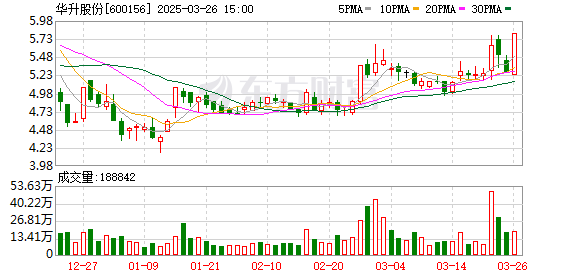
华升股份龙虎榜数据(3月26日) 华升股份(600156)今日涨停,全天换手率4.70%,成交额1.06亿元,振幅10.90%。龙虎榜数据显 示,营业部席位合计净买入3406.08万元。 | 买五 | 国泰君安证券股份有限公司深圳金田路证券营业部 | 349.16 | | | --- | --- | --- | --- | | 卖一 | 海通证券股份有限公司南京广州路证券营业部 | | 491.60 | | 卖二 | 东方证券股份有限公司上海普陀区云岭东路证券营业 | | 130.06 | | | 部 | | | | 卖三 | 中信证券股份有限公司启东公园南路证券营业部 | | 124.18 | | 卖四 | 国泰君安证券股份有限公司总部 | | 123.61 | | 卖五 | 国金证券股份有限公司上海静安区南京西路证券营业 | | 121.02 | | | 部 | | | (文章来源:证券时报网) 资金流向方面,今日该股主力资金净流入4702.85万元,其中,特大单净流入4675.13万元,大单资 金净流入27.72万元。近5日主力资金净流入7573.43万元。 2024年10月29日公司发布的三季报数据显 ...

聚杰微纤(300819) - 300819聚杰微纤投资者关系管理信息20250319
2025-03-19 08:56
Group 1: Business Outlook - The company anticipates growth in automotive fabrics in 2025, contingent on automotive sales performance [2] - The electronic fabrics segment is also expected to see some incremental growth [2] Group 2: Research and Development - Suzhou Jidong Technology Co., Ltd. operates as an independent R&D team [2] Group 3: Product Plans - The company plans to launch new products in 2025, including bio-based waterproof breathable membranes and bio-based leather [2] Group 4: Strategic Partnerships - Decathlon has been a reliable strategic partner, with timely payments since the start of their collaboration [2] Group 5: Capacity Utilization - The decrease in capacity utilization is primarily due to the commissioning of fundraising projects [2] Group 6: Financing Plans - The company is considering refinancing, which will depend on the progress of ongoing projects [3]

中国银河证券:1-2月服装社零迎开门红 全年服装内需消费或逐季环比改善
Zhi Tong Cai Jing· 2025-03-18 01:48
中国银河证券:1-2月服装社零迎开门红 全年服装 内需消费或逐季环比改善 中国银河(601881)证券发布研报称,2025年1-2月全国社零总额83731亿元,同比增长4.0%。该行 认为2025全年服装内需消费将会呈现逐季度环比改善趋势。政府大力提振内需的政策方向上有望受益。 户外场景渗透,国产体育龙头在丰富品类,精细化管理上具有竞争优势。家纺消费场景修复,消费补贴 加持需求提振。聚焦拥有优质客户、国际化产能布局的优质纺织龙头企业。 中国银河证券主要观点如下: 2025年1-2月服装社零开门红,看好政策加持下消费稳复苏 2025年1-2月全国社零总额83731亿元,同比增长4.0%。其中服装零售总额2624亿元,同比增长 3.3%,在年初以来天气偏暖以及春节时点提前、服装消费高基数的背景下,取得了稳健增长。对比 2024年Q4来看,服装零售在2024年11/12月份同比增速分别为-4.5%/-0.3%,冬季旺季销售偏弱,但在政 策加持下内需提振效果在25年1-2月已经有所显现。该行认为2025全年服装内需消费将会呈现逐季度环 比改善趋势,一方面消费政策持续发力,另一方面24年消费低基数和暖冬影响将会在202 ...

深度:科技消费,攻守兼备 ——2025政府工作报告解读|聚焦两会
清华金融评论· 2025-03-07 10:40
Core Viewpoint - The Chinese government's strategy in response to external uncertainties is to stabilize consumption in the short term while focusing on technological innovation for future growth [2][4]. Economic Growth and Inflation Targets - The GDP growth target for 2025 is set at around 5%, aligning with the need to maintain employment and stabilize the economy amid external changes [4][10]. - The inflation target has been adjusted down to around 2%, reflecting a more pragmatic approach to managing price levels and addressing low inflation concerns [5][10]. Employment and Agricultural Goals - The urban unemployment rate target remains at around 5.5%, with a goal of creating 12 million new urban jobs, indicating a focus on employment stability [6]. - The grain production target has been raised to 1.4 trillion jin, emphasizing the importance of food security in the face of external challenges [7]. Fiscal Policy and Government Investment - The fiscal deficit rate for 2025 is set at 4%, with a new deficit scale of 566 billion yuan, indicating a more proactive fiscal stance [10][11]. - Government investment will focus on major strategic projects, aiming to leverage public investment to stimulate social investment and improve overall investment efficiency [34][36]. Monetary Policy - The monetary policy remains moderately accommodative, with potential interest rate cuts and reserve requirement ratio reductions anticipated to support economic growth [18][20]. - The focus will be on balancing liquidity and maintaining stable financing costs, with an emphasis on supporting technology, consumption, and the real estate market [19][21]. Consumption and Consumer Confidence - The government aims to boost consumption through various measures, including subsidies for upgrading consumer goods and enhancing service consumption [24][25]. - Policies will focus on increasing disposable income and reducing household burdens to enhance consumer confidence and spending [26][27]. Technological Innovation and Industrial Development - The government emphasizes the importance of technological innovation in driving new productive forces and modernizing the industrial system [38]. - There will be a push for the integration of technology and industry, fostering the development of advanced manufacturing and modern service sectors [38].

高频跟踪 | 地产成交热度攀升
申万宏源宏观· 2025-03-03 15:19
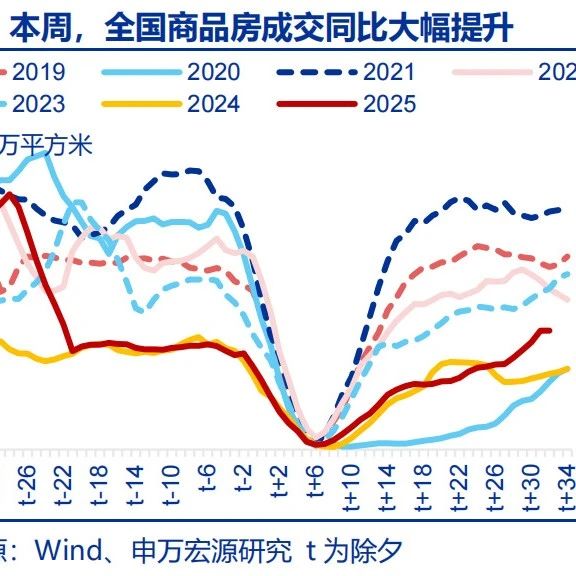
Industrial Production - Industrial production is showing signs of divergence, with downstream operations recovering while midstream and upstream sectors are experiencing slight declines. The operating rate of blast furnaces has decreased by 0.8 percentage points year-on-year to 2%, while the operating rate of PTA has dropped by 3.5% year-on-year [1][3][4] - In the automotive sector, the operating rate of semi-steel tires has significantly increased, up 3% year-on-year, indicating strong performance in this area [1][4] Construction Industry - The construction sector is facing weak performance, with asphalt operating rates falling by 5.8 percentage points year-on-year to -2.8%. Additionally, the national grinding operating rate and cement shipment rates are also below last year's levels, down 8.5 percentage points to 10.3% and 6% to 11.5% respectively [1][5][6] Demand Trends - There has been a substantial increase in new housing transactions, with a year-on-year rise of 50.8%. All tiers of cities are performing well, with first, second, and third-tier cities seeing increases of 64.9%, 41.7%, and 55.6% respectively [1][7] - Movie consumption remains high, with the number of viewers and box office revenue increasing by 132.8% and 149.6% year-on-year respectively. However, the intensity of human mobility is declining, with the national migration scale index down 7.6 percentage points to 6 [1][8][9] Price Trends - Agricultural product prices are generally declining, with vegetable prices dropping by 2.1% week-on-week. The prices of pork, eggs, and fruits have also decreased, albeit at a smaller rate [2][12] - The industrial product price index has continued to decline, with a week-on-week drop of 1.5%. Metal prices fell by 0.6%, while energy and chemical prices saw a more significant decrease of 2% [2][13]
关税翻倍:政策如何对冲?(民生宏观陶川团队)
川阅全球宏观· 2025-03-02 14:56
Core Viewpoint - The article discusses the potential impact of the U.S. increasing tariffs on China to 20%, particularly focusing on the economic implications and China's response strategies [1][3]. Group 1: Economic Impact of Tariffs - A 20% tariff could reduce China's nominal GDP by approximately 0.69 percentage points, translating to a potential real GDP growth reduction of about 0.49 percentage points, assuming no other variables change [1][5]. - The estimated impact on total export growth could range from -2.61% to -4.70%, depending on the elasticity of export prices [2]. - Key industries such as chemicals, textiles, and machinery, which have a higher export share to the U.S. (10-15%), are expected to face significant challenges due to the tariffs [2][3]. Group 2: China's Response Strategies - China has adopted a principle of rapid response and precise countermeasures against U.S. tariffs, including retaliatory tariffs on U.S. coal and fuel [3][4]. - Measures include anti-monopoly investigations targeting major U.S. tech companies and export controls on critical minerals needed for U.S. military and high-tech manufacturing [3][4]. Group 3: Future Macro Policy Considerations - The Chinese government is currently in a wait-and-see mode regarding macroeconomic policies, with no immediate need for intervention as the economy shows signs of stabilization [5]. - If the tariffs are fully implemented, it is estimated that fiscal measures would need to be between 0.62 trillion to 1.33 trillion yuan to offset the economic impact, with a median estimate of 0.98 trillion yuan being a suitable scale for counteraction [5].