
银行业

Search documents
一周观点:美元体系裂痕出现或将难以修复,美股易跌难涨-20260208
Huafu Securities· 2026-02-08 11:49
Key Insights - The global macro pricing logic is shifting from "demand-driven" to "supply-constrained pricing," with China's supply order strengthening and entering a phase of validating profit and price data, leading to a gradual concentration of asset pricing power on the supply side [2][3][9] - The narrative of long-term pressure on dollar credit remains unchanged, as the path for the U.S. to maintain demand through the household sector is weakening, posing structural risks to global demand expansion mechanisms [2][3][9] - Global capital allocation logic continues to evolve into a "short-term shield and long-term spear," with commodities and gold still supported by safe-haven funds, but their upward logic is more about credit risk aversion than demand expansion, indicating potential mid-term limitations [3][9] - The rise of U.S. assets increasingly relies on AI investments and fiscal drivers rather than household sector leverage, with a long-term downward trend in the return on equity (ROE) central tendency [3][9] - Chinese pricing assets are expected to become the main style line for the year, focusing on the strengthening of supply constraints and the trend of ROE recovery, with cyclical heavy asset industries beginning to release profit elasticity [3][9] - Mid-term investment opportunities are favored around the recovery of China's Producer Price Index (PPI), particularly in cyclical industries such as coal, steel, chemicals, construction materials, and agriculture, with a positive outlook on leading heavy asset companies in China [3][9] - Long-term preferences include insurance, central state-owned enterprises, anti-involution strategies, and Chinese concept internet companies [3][9] Group 1 - The U.S. labor market data shows weakness, reinforcing the supply pricing logic, with January's non-farm payrolls adding only 22k jobs, down from 37k, indicating a slowdown in labor market momentum [8] - The manufacturing sector continues to drag down overall employment, with only 1k jobs added in January and a reduction of 8k in manufacturing jobs, reflecting low manufacturing sentiment [8] - The service sector remains a core support for employment, adding 21k jobs in January, but the growth rate has significantly slowed from 42k [8] Group 2 - The report highlights a significant decline in the Hong Kong stock market, with the Hang Seng Index dropping by 3.02% and the Hang Seng Technology Index falling by 6.51% [10] - In the A-share market, the broad index experienced a decline of 1.27%, with the technology sector and cyclical stocks seeing substantial losses, while consumer sectors led the gains [18][25] - The report notes a divergence in foreign capital index futures positions, with a contraction in net short positions for IC, while IF and IM remained stable, and IH saw a slight expansion in net short positions [36]
全国首单!数字人民币智能合约农民工工资发放业务落地
Bei Jing Shang Bao· 2026-02-08 10:35
北京商报讯(记者 刘四红)2月8日,北京商报记者获悉,2月6日,在中国人民银行指导下,数字人民 币运营管理中心协调数字人民币业务运营机构,在成都落地全国首单数字人民币智能合约农民工工资发 放业务。 该业务依托数字人民币运营管理中心提供的数字人民币智能合约生态服务平台,实现工资发放自动执 行,为服务保障农民工工资支付这项民生工程探索出了数字金融和普惠金融新模式。 数字人民币智能合约通过一套基础设施、规则标准和产品体系实现合同的数字化、自动化和强制执行, 杜绝人为干预,并支持跨机构的互通调用。 据介绍,在中国人民银行指导下,数字人民币运营管理中心负责提供智能合约生态服务平台,并制定相 应的智能合约应用标准,支持开源生态体系建设。金融机构可在此基础上与自有业务系统融合,为不同 应用场景灵活打造产品解决方案。截至2026年1月末,数字人民币智能合约在预付资金管理、供应链金 融、企业集团财务管理、补贴发放等领域试点应用,累计签约合约数48.64万个,累计交易金额3.16亿 元。 ...

凯文·沃什的政策主张与落地难度|国际
清华金融评论· 2026-02-08 10:33
Core Viewpoint - The nomination of Kevin Warsh as the next Federal Reserve Chairman by President Trump raises concerns about the potential for a tightening policy that may conflict with Trump's desire for lower interest rates, creating uncertainty in the market [1][3]. Group 1: Warsh's Policy Stance and Challenges - Warsh advocates for balance sheet reduction to curb inflation and create room for interest rate cuts, suggesting the cessation of purchases of mortgage-backed securities (MBS) to address liquidity excess [3]. - The potential for a tightening policy under Warsh could lead to a liquidity crisis in the market, as historical precedents indicate that previous balance sheet reductions have caused significant market disruptions [3][4]. - If Warsh is appointed, the Federal Reserve's short-term policy may lean dovish due to political pressures from the upcoming midterm elections, possibly prioritizing interest rate cuts over balance sheet reduction [3]. Group 2: Implications of Balance Sheet Reduction - A significant balance sheet reduction could lead to a sharp decline in asset prices, which is contrary to the interests of the Trump administration [4]. - The question arises regarding who would absorb the increasing debt of the U.S. government if the Federal Reserve proceeds with balance sheet reduction, given its current focus on purchasing U.S. Treasury securities [4]. Group 3: Employment Data and Economic Indicators - The non-farm payroll data was not released due to a government shutdown, with the ADP data indicating only 22,000 jobs added in January 2026, significantly below the expected 45,000, marking the worst January performance in nearly five years [5]. Group 4: Central Bank Policies in Europe - Both the European Central Bank (ECB) and the Bank of England (BoE) maintained their benchmark interest rates in February 2026, but their policy outlooks differ significantly [6][7]. - The BoE's decision to keep the rate at 3.75% was narrowly passed with a 5-4 vote, indicating potential for future rate cuts if inflation continues to decline [7]. - The ECB has kept its key rates unchanged for the fifth consecutive time, focusing on data-driven decisions to ensure medium-term inflation stability at 2% [8][9].


周观:债市震荡格局如何打破?(2026年第6期)
Soochow Securities· 2026-02-08 10:16
Report Industry Investment Rating No information provided in the content. Core Views of the Report - This week (2026.2.2 - 2026.2.6), the yield of the 10 - year Treasury active bond 250016 dropped from 1.81% last Friday to 1.802% this Friday, a decrease of 0.8bp. The bond market oscillated within a very narrow range, with 1.8% becoming the invisible lower limit of the 10 - year Treasury yield. It is recommended to add duration cautiously to avoid the disturbances brought by the recovery of production demand after the Spring Festival and the goals of the Two Sessions in March [1][9][14]. - The significant fluctuations of overseas assets in the early stage have been repaired this week. The market's divergence is significantly increasing, and the previous structured market is undergoing "destructuring". It is expected that at least in the first half of 2026, the technology growth will maintain its momentum. The subsequent interest rate path is still dominated by fundamental data [15]. - The number of initial jobless claims in the US fluctuates in the short - term, and the number of continued claims declines. The unemployment rate steadily rises, and the labor participation rate fluctuates weakly, indicating the structural pressure in the employment market. The year - on - year increases of the US CPI and core CPI continue to narrow, and the inflation pressure is further alleviated. The Fed has pressed the "pause button" on interest rate cuts, and the global monetary policy shows significant "diversification" characteristics [16][18][19]. Summary According to the Directory 1. One - Week Views - **Analysis of the Bond Market's Narrow - Range Oscillation**: This week, the yield of the 10 - year Treasury active bond 250016 decreased. The bond market oscillated in a narrow range. The central bank's net purchase of Treasury bonds in the open - market in January 2026 was 100 billion yuan, the highest since the resumption of Treasury bond trading last October, but more restrained compared with 2024. The reasons are that it can supplement the liquidity gap at the beginning of the year and reduce the bank's liability cost, and the central bank tends to maintain a reasonable and sufficient liquidity [1][9][14]. - **Analysis of the Future Trend of US Treasury Yields**: Overseas asset fluctuations have been repaired. The technology growth is expected to maintain its momentum in the first half of 2026. The Fed's policy signal has turned dovish this week, and the expectation of interest rate cuts has increased. The subsequent interest rate path depends on fundamental data [15]. - **Analysis of US Economic Data**: The US labor market has a "low - hiring, low - firing" pattern, and the employment market has structural pressure. The inflation pressure in the US is further alleviated, and the manufacturing shipment volume and inventory total expand synchronously. The Fed has paused interest rate cuts, and the global monetary policy shows "diversification" [16][18][19]. 2. Domestic and Overseas Data Summary 2.1 Liquidity Tracking - **Open - Market Operations**: From 2026/2/2 to 2026/2/6, the total net investment in the open - market was - 756 billion yuan, indicating a net withdrawal of funds [29]. - **Interest Rate Comparison**: The money - market interest rates, including R, DR, and SHIBOR, showed different degrees of decline this week compared with last week [34]. 2.2 Domestic and Overseas Macroeconomic Data Tracking - **Commodity Price Changes**: Steel prices and LME non - ferrous metal futures official prices have all declined. The prices of coking coal and thermal coal, vegetable price indices, RJ/CRB commodity price indices, and South China industrial product price indices have shown different trends [52]. - **Stock and Bond Market Performance**: The VIX panic index led the increase, while the Shanghai Composite Index and the Shanghai Stock Index led the decline. The short - end and long - end of the US Treasury yield curve have both risen [62][68][71]. 3. One - Week Review of Local Government Bonds 3.1 Primary Market Issuance Overview - **Issuance Scale**: This week, 90 local government bonds were issued in the primary market, with a total issuance amount of 579.673 billion yuan, a repayment amount of 300 million yuan, and a net financing amount of 579.373 billion yuan, mainly invested in the comprehensive field [81]. - **Regional Issuance**: 15 provinces and cities issued local government bonds, and the top five in terms of total issuance amount were Jiangxi, Guangdong, Henan, Jiangsu, and the Guangxi Zhuang Autonomous Region. 11 provinces and cities issued local special refinancing special bonds for replacing hidden debts, and the top five in terms of total issuance amount were Jiangsu, Henan, Jiangxi, the Guangxi Zhuang Autonomous Region, and Chongqing [85][89]. - **Early Redemption of Urban Investment Bonds**: The total early redemption scale of urban investment bonds this week was 3.6 billion yuan, all from Anhui Province. Since November 15, 2024, the total early redemption scale of national urban investment bonds has been 121.007 billion yuan, with Chongqing having the highest redemption scale [91][95]. 3.2 Secondary Market Overview - **Trading Volume and Turnover Rate**: The stock of local government bonds this week was 55.89 trillion yuan, the trading volume was 437.52 billion yuan, and the turnover rate was 0.78%. The top three provinces with active local government bond trading were Guangdong, Zhejiang, and Shandong. The top three trading - active terms were 30Y, 10Y, and 20Y [99]. - **Yield Changes**: The maturity yields of local government bonds showed a differentiated trend this week [102]. 3.3 Local Government Bond Issuance Plan for This Month The issuance plans of local government bonds in some provinces and cities such as Zhejiang, Yunnan, Shaanxi, Shanxi, Hunan, Hebei, Guangdong, and Beijing from February 9 to February 11, 2026, are presented [106]. 4. One - Week Review of the Credit Bond Market 4.1 Primary Market Issuance Overview - **Overall Issuance**: This week, 440 credit bonds were issued in the primary market, with a total issuance amount of 358.206 billion yuan, a total repayment amount of 102.182 billion yuan, and a net financing amount of 256.024 billion yuan, an increase of 100.335 billion yuan compared with last week [107]. - **By Bond Type**: Urban investment bonds had a net financing amount of 57.856 billion yuan, and industrial bonds had a net financing amount of 198.167 billion yuan. By bond type, short - term financing bonds had a net financing amount of 35.325 billion yuan, medium - term notes had a net financing amount of 88.497 billion yuan, enterprise bonds had a net financing amount of - 2.186 billion yuan, corporate bonds had a net financing amount of 124.115 billion yuan, and private placement notes had a net financing amount of 10.273 billion yuan [108][114]. 4.2 Issuance Interest Rates The issuance interest rates of short - term financing bonds increased by 6.61bp, medium - term notes decreased by 14.33bp, and corporate bonds increased by 3.54bp [124]. 4.3 Secondary Market Trading Overview The total trading volume of credit bonds this week was 561.09 billion yuan, with different trading volumes for each bond type [125]. 4.4 Maturity Yields The maturity yields of national development bonds declined across the board this week. The yields of short - term financing bonds and medium - term notes showed a differentiated trend, the yields of enterprise bonds generally declined, and the yields of urban investment bonds showed a differentiated trend [124][126][127][128]. 4.5 Credit Spreads The credit spreads of short - term financing bonds and medium - term notes increased across the board, the credit spreads of enterprise bonds generally increased, and the credit spreads of urban investment bonds generally increased [130][132][134]. 4.6 Grade Spreads The grade spreads of short - term financing bonds, medium - term notes, enterprise bonds, and urban investment bonds showed a differentiated trend [137][141][145]. 4.7 Trading Activity The top five most actively traded bonds in each bond type are listed, and the industrial sector had the largest weekly trading volume of bonds, followed by public utilities, finance, materials, optional consumption, and daily consumption [149][151]. 4.8 Changes in Subject Ratings There were no bonds with upgraded ratings or outlooks this week [152].
【广发宏观团队】2026年投资的相对弹性最大
郭磊宏观茶座· 2026-02-08 10:04
Investment Outlook - The relative elasticity of investment is expected to be highest in 2026, with a projected rebound from a low base of -3.8% in 2025 to around 3% growth in 2026, potentially yielding an elasticity of 6-7 percentage points [3][4] - The Chinese government is focusing on effective investment to stabilize economic growth, emphasizing the importance of infrastructure, urban renewal, public services, and emerging industries [28][29] - Guangdong province plans to increase its annual investment in key projects to 1.05 trillion yuan in 2026, up from 1 trillion yuan in 2025 and 2024 [2][3] Global Market Trends - Global stock markets are shifting towards "non-growth" assets, with a risk-off sentiment dominating pricing, leading to a focus on traditional economic sectors [5][6] - The U.S. stock market has shown significant differentiation, with defensive sectors like consumer staples and industrials leading, while technology stocks face pressure [5][6] - Commodity markets are experiencing high volatility, with gold and silver prices fluctuating significantly, while oil prices have also shown wide swings due to geopolitical factors [7][8] Economic Indicators - The U.S. labor market is showing signs of cooling, with job openings dropping significantly, indicating a potential slowdown in economic momentum [14][15] - Consumer confidence in the U.S. is mixed, with current conditions improving slightly but future expectations declining due to concerns over inflation and job security [15][16] - The European Central Bank (ECB) is maintaining its policy stance, indicating a period of observation without immediate changes to interest rates [12][13] Domestic Economic Policies - The Chinese government is implementing measures to promote effective investment, including the use of central budget investments, special bonds, and policy financial tools [28][29] - Local governments are also adjusting their economic growth targets, with Guangdong aiming for a growth range of 4.5%-5% for 2026 [21][22] - Various provinces are introducing policies to stabilize the housing market, including purchasing second-hand homes for rental purposes and providing subsidies for homebuyers [23][24]

2026年数字人民币在提速,可算利息,能理财,跨境支付更方便?
Sou Hu Cai Jing· 2026-02-08 08:57
Core Viewpoint - The digital RMB is set to undergo significant upgrades and widespread adoption starting in 2026, transitioning into a new era of digital currency that will increasingly replace physical cash [4]. Group 1: Digital RMB Development - The digital RMB was first introduced to the public in 2019, with the official app launched in 2022, leading to 225 million personal wallets and a total transaction amount of 14.2 trillion yuan by September 2025 [1]. - The digital RMB has been used for cross-border payments, with the first transaction occurring in Laos in December 2022 [1]. Group 2: User Experience and Features - Users can now access digital RMB without internet connectivity, and it can be linked to traditional bank accounts, allowing for interest accrual and deposit insurance [8][10]. - The digital RMB will be included in deposit insurance coverage, ensuring user protection in case of bank issues, and allowing for flexible management of funds, including the option for term deposits and investments [10]. Group 3: Cross-Border Payment Enhancements - The digital RMB will facilitate easier cross-border payments for individuals and businesses, with the establishment of a digital RMB international operation center to streamline transactions [10][11]. - The clear tracking of funds in the digital RMB system will simplify the process for legitimate cross-border payments, reducing the need for complex application procedures [10].
DLSM外汇:美联储独立性,人事变动与司法调查的双重考验
Sou Hu Cai Jing· 2026-02-08 08:29
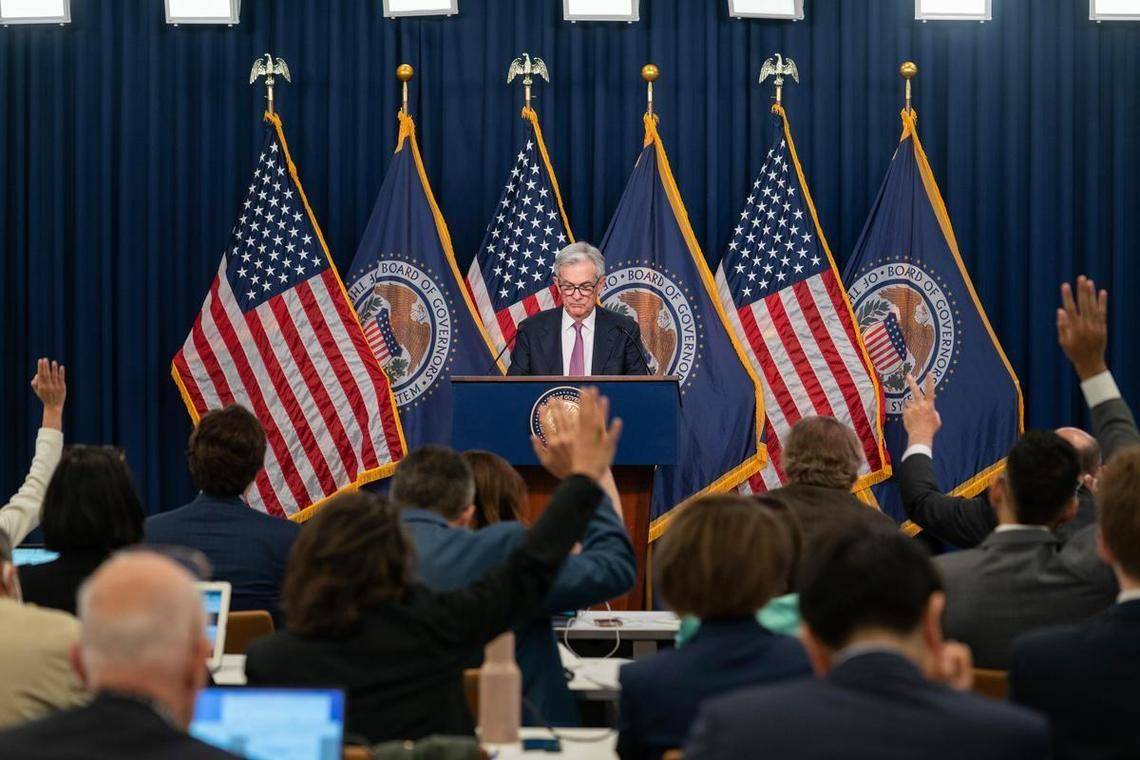
2月初,美国政坛围绕下一届美联储主席人选的博弈进入白热化阶段。特朗普政府提名美联储前理事凯文·沃什接替鲍威尔,这一决定迅速在金融市场与政界 引发连锁反应。 从程序层面看,提名确认面临显著阻力。参议院银行委员会11名民主党成员联名致信,要求推迟审议直至针对现任美联储官员的司法调查终止。值得注意的 是,共和党内部也出现分歧,北卡罗来纳州参议员汤姆·蒂利斯明确表示将因司法调查问题阻止提名推进。尽管共和党在委员会中占据13比11的席位优势, 但党内异议使得提名前景充满变数。 市场参与者正在评估人事变动可能带来的政策转向。沃什过往言论显示出对货币政策正常化的支持态度,包括推进资产负债表缩减的立场。这与当前市场普 遍预期的宽松路径形成一定反差。掉期市场数据显示,交易员对美联储6月前降息的预期从月初的35基点下降至20基点,反映出对政策前景的重新定价。 更深层的关注点在于美联储独立性能否得到维系。针对现任主席鲍威尔及理事库克的刑事调查仍在进行,民主党议员将此描述为"通过司法手段夺取央行控 制权的危险尝试"。若调查与提名程序交织推进,可能对美国货币政策的公信力产生长期影响。 从市场反应观察,美元指数在提名消息公布后呈现震荡走 ...
重磅发声!美联储,降息大消息!
券商中国· 2026-02-08 08:19
Core Viewpoint - The Federal Reserve may need to implement one or two more interest rate cuts to address the weakness in the U.S. labor market, as indicated by San Francisco Fed President Mary Daly [1][2]. Group 1: Federal Reserve Officials' Statements - Mary Daly expressed concerns about the current state of American workers, highlighting that rising prices are eroding wage income and that new job opportunities are scarce [3]. - Daly supports the decision to pause interest rate cuts but believes there are valid reasons for further cuts, contingent on the gradual fading of tariff policy impacts and a confirmed downward trend in inflation [4]. - The labor market outlook is perceived to be more severe than current data suggests, with potential increases in layoffs if businesses fail to meet expected demand [4][5]. Group 2: Upcoming Economic Data - Key macroeconomic data, including January non-farm employment figures and the core Consumer Price Index (CPI), will be released next week, which are crucial for assessing the Fed's policy direction [7]. - Analysts expect January non-farm employment growth to be between 60,000 and 80,000; a figure below this range could heighten expectations for rate cuts [7]. - The January core CPI is anticipated to show a year-on-year increase of 2.6%, with the overall CPI expected to decrease from 2.7% to 2.5% [8]. Group 3: Market Expectations - The market has fully priced in a 25 basis point rate cut by the Fed in July, with probabilities for rate cuts in March and April also being assessed [9]. - As of now, the probability of a 25 basis point cut by March stands at 23.2%, while the likelihood of maintaining the current rate is 76.8% [9].

新任美联储主席凯文·沃什希望利用人工智能对抗通货膨胀,这是如何实现的?
Sou Hu Cai Jing· 2026-02-08 07:31
他的理论能否实现还有待观察。人工智能对经济的影响仍在讨论之中。许多经济学家预计,大规模投资实际上会在短期内推高物价。毕竟,它们会增加对 产品和服务的需求,不仅是芯片,还包括建筑材料、原材料和劳动力。 上周二的事件为这场讨论增添了新的维度。由于一款新的人工智能工具的出现,软件公司的股价遭受重创。因此,人工智能并非只有赢家,也有输家。正 如投资者所担心的那样,软件公司的商业模式真的会面临压力吗?这些发展究竟会以多快的速度展开?诺贝尔奖得主达龙·阿西莫格鲁在激烈的辩论中保 持着冷静客观的态度。他认为,未来几年,95%的经济领域将基本不受人工智能的影响,因为创造附加值是一个复杂的过程,需要人为的互动。他认为, 人工智能带来的并非成本节约,而是新的产品和服务。 我们内部有一张图表来佐证阿西莫格鲁的论点。DS en Français项目如果没有人工智能是不可能实现的。也正是因为人工智能,我们的团队才得以扩充, 增添了几位双语编辑。因为人工智能目前还不知道瓦隆尼亚的市长不是maire,而是bourgmestre。 上周,投资者和分析师们忙得不可开交:仔细研读凯文·沃什过去的采访。这位未来美联储主席的理念对你我未来的投资回报 ...

流动性与机构行为周度跟踪260207:DR001时隔1月重回1.3下方存单年内首现净融资-20260208
Huafu Securities· 2026-02-08 07:30
Report Industry Investment Rating No relevant content provided. Core View of the Report - The central bank's over - renewal of repurchase and large - scale 14 - day reverse repurchase reflect its intention to maintain liquidity stability before the Spring Festival. As long as the central bank's attitude remains unchanged, the capital market around the Spring Festival is expected to remain loose. The net financing of certificates of deposit this week may be due to banks' need to maintain stable liabilities before the festival, and it's hard to infer a significant increase in banks' liability pressure. The government bond net payment scale may rise next week, but considering the central bank's measures, the capital market is still expected to be relatively loose [5][38][60]. Summary According to the Table of Contents 1. Money Market 1.1 This Week's Capital Market Review - The central bank carried out a net withdrawal of 756 billion yuan through 7 - day and 14 - day reverse repurchases this week. On Wednesday, it conducted an 800 - billion - yuan 3 - month term repurchase, with an over - renewal of 10 billion yuan. After the month - end, the OMO shifted to net withdrawal, but the capital demand at the beginning of the month was limited. Despite the increasing pressure of government bond payments in the second half of the week, the over - renewal of the 3 - month repurchase and the subsequent 14 - day OMO operations made the capital market looser, and DR001 fell below 1.3% on Friday [3][17]. - After the month - end, the trading volume of pledged repurchase continued to rise, with the average daily trading volume increasing by 0.95 trillion yuan to 8.75 trillion yuan. The overall scale of pledged repurchase rose rapidly at the beginning of the month and then fluctuated, remaining above 13 trillion yuan on Friday. The net lending of large - scale banks continued to rise, while that of small and medium - sized banks decreased slightly. The net lending of non - bank institutions showed different trends, and the capital gap index generally declined [4][24]. - The progress of cross - Spring Festival financing in the inter - bank and exchange markets was at the lowest level in recent years, and the gap compared with previous years in the inter - bank market continued to widen. The overall cross - Spring Festival progress in the whole market was 13.1%, 8.1 percentage points lower than the average of the same period from 2020 - 2025 [29]. 1.2 Next Week's Capital Outlook - This week, the net payment of government bonds was 46.04 billion yuan. Next week, the issuance of 7 - year treasury bonds is about 20 billion yuan, and 8 regions will issue local bonds worth 32.21 billion yuan. Due to the low maturity scale of government bonds next week, the net payment scale of government bonds may rise to 71.41 billion yuan [39][41]. - The central bank's use of 14 - day reverse repurchase operations shows its clear attitude of protecting liquidity. The 6 - month repurchase due next week is expected to be over - renewed, so the capital market is expected to remain relatively loose [60]. 2. Inter - bank Certificates of Deposit - The 1 - year Shibor rate decreased by 1.11 BP to 1.6169% compared with January 30th. The secondary rate of 1 - year AAA - rated inter - bank certificates of deposit decreased by 1 BP to 1.585% compared with last week [61]. - This week, the issuance scale of inter - bank certificates of deposit increased while the maturity scale decreased, resulting in a net financing of 37.27 billion yuan, an increase of 46.29 billion yuan compared with last week. The net financing scales of state - owned banks, joint - stock banks, city commercial banks, and rural commercial banks were 9.46 billion yuan, 8.82 billion yuan, 13.69 billion yuan, and 2.59 billion yuan respectively. The issuance proportion of 9 - month certificates of deposit was the largest, and the issuance proportion of 1 - year certificates of deposit decreased by 17 percentage points to 13% compared with last week. Next week, the maturity scale of certificates of deposit is about 97.82 billion yuan, an increase of 84.43 billion yuan compared with this week [67]. - The issuance success rates of state - owned banks, joint - stock banks, city commercial banks, and rural commercial banks all increased compared with last week, and were around the average level in recent years. The issuance spread of 1 - year certificates of deposit between city commercial banks and joint - stock banks widened [68]. - The willingness of money market funds to increase the holding of certificates of deposit in the primary market recovered, and the willingness of fund companies to reduce the holding in the secondary market weakened. The relative strength index of certificates of deposit rebounded counter - seasonally in the second half of the week, rising by 3.9 percentage points to 19.6% compared with last week. Except for the 9 - month supply - demand index, the supply - demand indexes of other terms increased [75]. 3. Bill Market - This week, bill interest rates first decreased and then increased, with a large decline on Monday. As of February 6th, the 3 - month and 6 - month bill interest rates of state - owned and joint - stock banks decreased by 44 BP and 16 BP respectively compared with January 30th, to 1.01% and 0.95% [82]. 4. Bond Trading Sentiment Tracking - This week, the yields of interest - rate bonds fluctuated downward, and the credit and perpetual bond spreads generally widened passively. Large - scale banks generally tended to reduce their bond holdings, with an increased willingness to reduce local bonds and a decreased willingness to increase inter - bank certificates of deposit, 5 - year policy - financial bonds, 5 - year and 10 - year treasury bonds. Trading - type institutions generally tended to increase their bond holdings, with different trends among different institutions. Allocation - type institutions generally tended to increase their bond holdings, with different trends among different institutions [85].