
轻工

Search documents
中国银河证券:提振消费是系统工程 增强消费品供需适配性
智通财经网· 2025-11-27 03:57
Core Viewpoint - The consumption industry in China needs to focus on the medium- and long-term goals outlined in the "14th Five-Year Plan," with short-term attention on policies related to consumption by 2026. The outlook for overseas business development in the consumption sector by 2026 is optimistic [1][2]. Group 1: Background and Policy Initiatives - On November 26, six departments issued a notice regarding the "Implementation Plan for Enhancing the Adaptability of Supply and Demand for Consumer Goods," aiming for a significant optimization of the supply structure by 2027, creating three trillion-level consumption fields and ten hundred-billion-level consumption hotspots [2]. - By 2030, a high-quality development pattern characterized by positive interaction between supply and consumption is expected to be established, with a steady increase in the contribution of consumption to economic growth [2]. Group 2: Consumption Stimulus Measures - National subsidies are the fastest way to stimulate short-term demand, with significant policy support since July 2024, including a special bond fund of 150 billion yuan allocated for supporting the replacement of consumer goods. An additional 300 billion yuan is planned for 2025 [3]. - The Central Economic Work Conference in December 2024 prioritized boosting consumption as the main task for 2025, leading to various policies aimed at enhancing consumption [4]. Group 3: Implementation Plan Measures - The "Implementation Plan" outlines five major areas with nineteen initiatives, including accelerating the application of new technologies and models, expanding the supply of unique and new products, and accurately matching the needs of different consumer groups [5]. - It also emphasizes cultivating new consumption scenarios and business formats, as well as creating a favorable development environment through financial support and market order maintenance [5]. Group 4: Investment Recommendations - Investment focus includes high-dividend quality companies during market style shifts, with specific recommendations in various sectors such as new consumption in the social service sector (e.g., Gu Ming, Da Mai Entertainment, Mi Xue Group) and food and beverage (e.g., Dongpeng Beverage, Lihigh Food) [6]. - Other sectors of interest include agriculture (e.g., Zhongchong Co.), sportswear (e.g., Anta Sports, Xtep International), and technology consumption (e.g., TCL Electronics, Hisense Home Appliances) [6].

“亚宝”“奇强”入选首批山西消费名品名单
Sou Hu Cai Jing· 2025-11-25 16:46
Core Points - The Shanxi Provincial Department of Industry and Information Technology officially announced the first batch of Shanxi Consumer Brands, which includes both regional and enterprise brands [1][4] - A total of 17 brands were selected across four core consumer sectors: food, pharmaceuticals, light industry, and textiles [4] - The selection process adhered to the "2025 Shanxi Consumer Brand Formation Implementation Plan," involving multiple stages such as self-declaration by companies, recommendations from counties, and initial reviews at the city level [4] Company Highlights - Yabao Pharmaceutical Group Co., Ltd. with its brand "Yabao" was selected [4] - Shanxi Coking Coal Yuncheng Salt Chemical Group Co., Ltd. with its brand "Qiqiang" was also included in the list [4] - The selection process ensured that the chosen brands possess both quality strength and market recognition through consultations with various departments, including the Provincial Department of Ecological Environment and the Provincial Department of Commerce [4]



稳增长方案出炉,顺周期持续收益
2025-11-25 01:19
Summary of Key Points from Conference Call Records Industry Overview Automotive Industry - The automotive industry is projected to achieve sales of 32 million units in 2025, representing a year-on-year growth of approximately 3% [1] - New energy vehicle (NEV) sales are expected to reach 15.5 million units, with a penetration rate of 50% [1][3] - Concerns include the sustainability of sales post-subsidy reduction and China's global competitiveness in NEVs [1][4] Steel Industry - The steel industry will focus on supply-demand balance, industrial structure optimization, green low-carbon initiatives, and digital transformation [1][5] - Despite a long-term downturn in the real estate sector, steel companies are transitioning towards low-carbon metallurgy and new materials [5] - Demand for steel used in NEVs, stainless steel, special steel, and oriented silicon steel for the power industry is increasing [5] - The commencement of iron ore shipments from Guinea is expected to improve profitability in the steel sector due to falling iron ore prices [5] Building Materials and Light Industry - The building materials sector aims to develop green building materials, targeting revenues exceeding 300 billion yuan, focusing on steel structures and integrated forming [1][6] - The light industry is concentrating on smart home products, elderly and infant goods, fashion items, and sports products, driving consumer upgrades [1][6] Power Equipment Industry - The power equipment sector is a key focus for the upcoming year, with a growth target of around 6% and a goal to increase the localization rate to 7% [1][7] - Leading companies are expected to achieve annual revenues of 10% [7] - The sector is poised for growth due to increased market entry of new energy, heightened demand for grid safety, and rising overseas computing power needs [7] Electronic Information Industry - Investment opportunities in the electronic information sector for 2026 include large-scale AI application deployments and significant investments in national supercomputing centers [3][9] - The focus will shift from AI computing power to specific applications in media and gaming, indicating robust growth potential [9] Nonferrous Metals Industry - The nonferrous metals sector is expected to see significant development, with prices rebounding and potential capacity shortages anticipated in 2026 and beyond, which may drive prices higher [10] - The Federal Reserve's interest rate cuts are favorable for gold prices, making the gold sector worth monitoring [10] Machinery and Petrochemical Industries - The machinery sector is expected to experience growth opportunities, particularly in automation investments [11] - The petrochemical industry is shifting towards new materials, including basic chemicals, as part of the new growth strategy [11] Capital Market Insights - The capital market in 2025 has experienced a notable correction, primarily due to skepticism regarding Nvidia's performance, leading to a significant downturn in the global computing industry [12] - A decline in risk appetite has made consumer goods stocks attractive due to their defensive characteristics [12] - It is suggested that now is an opportune time for investors to position themselves for 2026, particularly in cyclical sectors, as price increases are expected to continue [12]
如何看 2025 年 10 月消费数据?
Changjiang Securities· 2025-11-16 12:35
Investment Rating - The report provides a neutral investment rating for the industry, indicating that the performance is expected to be in line with the relevant market indices over the next 12 months [48]. Core Insights - In October, the total retail sales of consumer goods reached 46,291 billion yuan, with a year-on-year growth of 2.9%. Excluding automobiles, retail sales amounted to 42,036 billion yuan, growing by 4.0% [3][6]. - The retail sector shows stable growth, with some categories experiencing a decline due to reduced national subsidies. The food and beverage sector saw a significant rebound in growth, while the automotive sector is optimistic about AI and robotics [6][11][14]. - The report highlights various sectors, including retail, food, automotive, textiles, light industry, and home appliances, each with specific growth trends and investment recommendations [6][19][21][33]. Retail Sector Summary - The overall retail growth remains stable, with offline sales showing resilience and online sales maintaining a steady share. In October, retail sales of goods grew by 2.8% year-on-year, while dining revenue increased by 3.8% [9][10]. - Essential goods continue to show robust growth, with food and daily necessities retail sales increasing by 9.1% and 7.4% respectively [10][29]. Food and Beverage Sector Summary - The food sector continued to improve month-on-month, with retail sales of grain and oil products increasing by 9.1% year-on-year. The beverage sector also saw a rise of 7.1% [27][29]. - The report notes a recovery in the liquor market, with retail sales of liquor increasing by 4.1% year-on-year in October [27][28]. Automotive Sector Summary - The automotive retail sales totaled 4,255 billion yuan in October, reflecting a year-on-year decline of 6.6%. However, wholesale passenger car sales increased by 7.5% [14][15]. - The report emphasizes the importance of AI and robotics in the automotive sector, recommending companies that focus on these technologies [14][15]. Textile and Apparel Sector Summary - In October, retail sales of clothing and textiles increased by 6.3%, indicating a recovery in the sector. The report suggests focusing on high-quality brands and those with strong operational capabilities [19][20]. Light Industry Summary - The report highlights the potential of quality enterprises in the new consumption space, particularly in the home furnishings sector, which is expected to grow steadily [21][22]. Home Appliances Sector Summary - The home appliance sector experienced a year-on-year decline of 14.6% in October, attributed to high base effects and reduced national subsidies. The report suggests focusing on companies with strong growth potential [33][40].
宏观经济专题研究:年度展望之一:“十五五”增长新范式
Guoxin Securities· 2025-11-15 09:19
Economic Growth Framework - The core task for the "14th Five-Year Plan" period is to achieve a per capita GDP of approximately $29,000 by 2035, positioning China among "medium-developed countries" [2] - The bottom-line target for annual real GDP growth is set at 4.2%, while the consensus target suggests a compound GDP growth rate of around 4.4% over the next decade [2] - The expected economic growth rate for the "14th Five-Year Plan" period is projected to be between 4.5% and 4.9%, with a likely internal control target of 4.8% to 5.0% for the upcoming year [2] New Growth Paradigm - The new growth paradigm emphasizes "dynamic iteration + moderate inflation + currency appreciation" as the driving forces for economic growth [1] - This paradigm shift is expected to fundamentally alter asset return characteristics and risk premiums, leading to a systematic outperformance of equity assets over fixed-income assets [1] - The transition in asset allocation is anticipated to move from a real estate-dominated structure to one centered around equity assets [1] Market Implications - The anticipated recovery in corporate profits, particularly in upstream cyclical industries, is expected to create structural opportunities in the stock market [3] - The bond market is likely to experience a rebound in interest rates as inflation indicators improve, with the yield curve expected to steepen [3] - The shift in asset attractiveness is projected to favor equities over real estate and fixed income, driven by improved earnings and valuation dynamics [3] Risks - Potential risks include volatility in overseas markets and uncertainties in domestic policy execution [4]
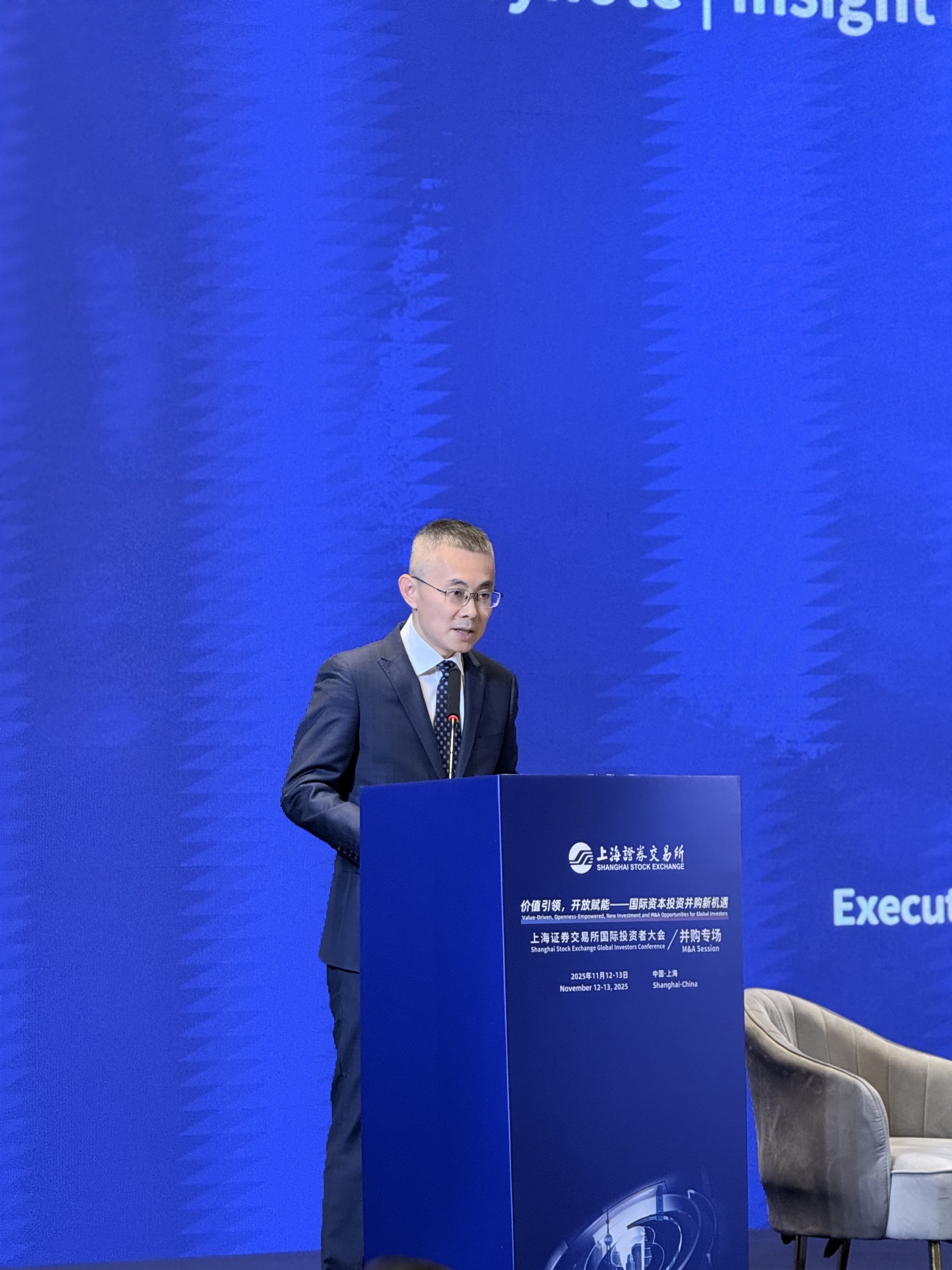
上海证券交易所副总经理王泊:并购市场是发现企业价值的投资蓝海
Zheng Quan Ri Bao Wang· 2025-11-12 07:04
Core Insights - The A-share merger and acquisition (M&A) market has entered a new active cycle since last year, reflecting the overall trend of China's economy towards stability and quality improvement [1] - The M&A market serves as an important window for observing China's economic conditions and corporate vitality [1] Group 1: M&A Market Dynamics - The M&A market is seen as a blue ocean for discovering corporate value, with significant enhancements in the resilience and vitality of China's economy and capital markets due to systematic reforms [6] - Global investors have reached a consensus on investing deeply in China, with M&A being a crucial method for optimizing resource allocation and enhancing the quality and investment value of listed companies [6] Group 2: Sector-Specific Trends - A-share technology companies are accelerating their breakthroughs through M&A to achieve technological upgrades and market expansion, particularly in future industries like AI, quantum information, and biotechnology [6] - Traditional industries such as textiles, light industry, steel, and petrochemicals are facing performance and valuation pressures, prompting them to strengthen their core businesses and accelerate transformation through M&A [6] Group 3: Strategic M&A by Industry Leaders - A-share industry leaders are shifting from simple scale expansion to strategic M&A for industry chain integration and global layout, thereby enhancing their core competitive advantages [7] - For instance, China Shipbuilding's merger with China Shipbuilding Industry Corporation has created the world's largest and most complete shipbuilding enterprise, with a market value steadily increasing to 270 billion yuan [7]
工信部重磅发布,重点发展5大行业100+新材料!
DT新材料· 2025-11-11 16:03
Core Viewpoint - The Ministry of Industry and Information Technology has issued a notice to accelerate the systematic layout and high-level construction of manufacturing pilot platforms, aiming to establish a modern pilot platform system by the end of 2027, with a focus on multi-entity participation and multi-field layout [2]. Group 1: Manufacturing Pilot Platforms - The notice outlines the construction guidelines for manufacturing pilot platforms, which include five major categories: raw materials industry, equipment manufacturing, consumer goods industry, information technology, and emerging and future industries [2]. - By 2027, the goal is to enhance the capabilities of high-level pilot platforms and establish a nationwide manufacturing pilot service network [2]. Group 2: Key Focus Areas - **Petrochemical and Chemical Industry**: Emphasis on low-carbon hydrogen-rich raw material utilization, high-end polymer synthesis, and green low-carbon technologies [4]. - **Non-ferrous Metals**: Focus on green and efficient extraction and smelting processes for metals like copper, aluminum, and rare metals, aiming for high-quality raw material preparation [5]. - **Inorganic Non-metallic Materials**: Development of high-performance ceramics, functional crystals, and green low-carbon materials [6]. - **Frontier Materials**: Concentration on micro-nano processing technologies and advanced materials like graphene and superconductors [7]. - **Light Industry**: Innovations in smart home appliances, battery materials, and green technologies for various consumer products [8]. - **Integrated Circuits**: Addressing reliability issues in complex applications and enhancing the verification capabilities of new technologies [9]. - **Energy Electronics**: Advancements in photovoltaic technologies and new battery systems, focusing on efficiency and reliability [10]. - **New Displays**: Development of next-generation display technologies and materials, enhancing performance and stability [11]. - **Brain-Computer Interfaces**: Focus on key technologies for brain-computer interface components and signal processing [12]. - **Metaverse**: Promotion of VR/AR technologies and related components, enhancing user interaction and content production [13]. - **Humanoid Robots and Embodied Intelligence**: Development of intelligent decision-making technologies and key components for humanoid robots [14]. - **Quantum Technology**: Focus on critical materials and technologies for quantum computing and communication [15]. - **Clean Low-Carbon Hydrogen**: Development of hydrogen production, storage, and application technologies across various industries [16].

线上回放|启航新征程·国泰海通2026年度策略会
国泰海通证券研究· 2025-11-10 15:07
Core Insights - The article summarizes the key discussions from the Guotai Junan Securities 2026 Strategy Conference, focusing on various sectors including technology, consumption, and finance [1][3]. Technology Forum - The forum featured discussions on strategies for communication investments in 2026, addressing the need for AI to fill gaps in the industry chain [6]. - Key presentations included insights from the chief analysts on communication, automotive, and technology sectors, emphasizing future investment opportunities [6]. Consumption Forum - The consumption forum highlighted growth trends in food and beverage, beauty, and home appliances, indicating a shift towards new consumption patterns and recovery in domestic demand [8]. - Analysts discussed the transformation of traditional consumption and the emergence of high-demand new consumption sectors, suggesting a positive outlook for the industry [8]. - The agricultural sector was also addressed, with insights into opportunities in pet-related markets and highlights in breeding and planting [8]. Finance Forum - The finance forum presented annual strategy reports for non-bank financial institutions and banks, focusing on the evolving landscape of the financial sector [10]. - Analysts provided insights into the performance and strategic direction of financial institutions, indicating potential areas for investment [10].

“上海之帆”经贸主题展首次亮相奥地利
Xin Hua She· 2025-11-06 14:22
Core Viewpoint - The "Shanghai Sail" Economic and Cultural Exhibition in Austria showcases Shanghai's advancements in high-end manufacturing, green technology, digital innovation, and brand services, emphasizing the importance of Sino-Austrian cooperation [1] Group 1: Event Overview - The 22nd "Shanghai Sail" exhibition is held for the first time in Austria, with around 150 representatives from political, business, media, and social sectors attending the opening ceremony [1] - The exhibition features 139 companies from six major industrial clusters in Shanghai, covering various fields such as light industry, chemicals, home textiles, energy-saving engineering, medical devices, and certification services [1] Group 2: Diplomatic and Business Significance - The Chinese Embassy in Austria highlights the importance of the exhibition for Chinese enterprises to strengthen ties with Austrian businesses and enhance cooperation with Europe [1] - Austrian business agencies provided insights into the investment environment, key industries, and policies regarding Chinese investments in Austria [1] Group 3: Activities and Engagements - The exhibition includes nearly 10 specialized events, such as the introduction of Austrian investment policies, the launch of "Shanghai Brands Shine in Vienna," and a cooperation exchange meeting for Central and Eastern European chambers of commerce [1]
金融制造行业11月投资观点及金股推荐-20251106
Changjiang Securities· 2025-11-06 13:41
Investment Rating - The report maintains a "Buy" rating for several key stocks in the financial manufacturing industry, including Green City China, China Resources Land, New China Life Insurance, and Qilu Bank, among others [49][50]. Core Insights - The report highlights the ongoing economic recovery and the potential for profit improvement, although it notes that challenges remain, particularly in the real estate sector where sales volume is expected to be under pressure in Q4 [10][13]. - The non-bank financial sector is experiencing high growth, with recommendations to focus on high-performing stocks [18]. - The banking sector shows signs of recovery with attractive valuations, suggesting a continued positive outlook for bank stocks [20]. - The renewable energy sector is identified as having established a bottom, with a focus on new technologies and market dynamics [23]. - The machinery sector is advised to pay attention to AI computing power, which presents investment opportunities in power supply [31]. - The military industry is expected to see an upward trend in prosperity, with a focus on military trade, internal installations, and the transition from military to civilian applications [33]. - The light industry is encouraged to explore opportunities in overseas manufacturing and new consumer products, while also monitoring domestic demand improvements [35]. - The environmental sector is advised to focus on second growth curve changes and market hotspots [43]. Summary by Sections Macro Overview - Industrial profits rose by 21.6% year-on-year in September, driven by the export chain, although October's PMI indicates potential profit improvement challenges [11][12]. Real Estate - Q4 sales volume is expected to face year-on-year pressure, with new home sales likely to decline significantly [13][14]. Non-Bank Financials - The sector's performance remains strong, with a recommendation to focus on high-performing stocks [18][19]. Banking - The banking sector is seeing a recovery in net interest income, with a positive outlook for bank stocks [20][21]. Renewable Energy - The renewable energy sector is highlighted for its ongoing demand and technological advancements [23][24]. Machinery - Investment opportunities are noted in the AI computing power sector, particularly in power supply [31][32]. Military Industry - The military sector is expected to improve, focusing on military trade and technology advancements [33][34]. Light Industry - Opportunities in overseas manufacturing and new consumer products are emphasized, along with monitoring domestic demand [35][36]. Environmental Sector - The environmental sector is advised to focus on growth opportunities and market trends [43][44].