航空

Search documents
交银国际:小鹏汽车-W人形机器人、Robotaxi及低空飞行器有望在2026年实现量产
Zhi Tong Cai Jing· 2025-11-07 03:32
Group 1 - The core viewpoint of the article is that XPeng Motors (09868) has made significant advancements in the electric vehicle sector, showcasing new technologies and products during the recent XPeng Technology Day in Guangzhou [1] - The company has achieved its annual sales target for the year within the first ten months, indicating strong performance in the new energy vehicle market [1] - Breakthroughs in humanoid robots, Robotaxi, and low-altitude flying vehicles are expected to reach mass production by 2026, highlighting potential growth opportunities for the company [1]

交银国际:小鹏汽车-W(09868)人形机器人、Robotaxi及低空飞行器有望在2026年实现量产
智通财经网· 2025-11-07 03:30
Core Viewpoint - The report from CMB International highlights that XPeng Motors (09868) recently held its Technology Day in Guangzhou, showcasing significant advancements in physical AI and four key applications, including the second-generation VLA, Robotaxi, the new generation IRON, and two flight systems from Huitian [1] Group 1: Sales and Production Goals - The company has achieved its annual sales target in the new energy vehicle sector within the first ten months of this year [1] - Breakthrough production for humanoid robots, Robotaxi, and low-altitude aircraft is expected by 2026, indicating substantial future growth potential [1]
【真灼财经】美企业裁员规模大增;特朗普将多项矿产列入关键清单
Sou Hu Cai Jing· 2025-11-07 03:27
Group 1 - The scale of layoffs in the US in October reached the highest level for the same period in over 20 years, indicating significant impacts from the AI transformation on the job market [4] - The US retail sales for the 2025 holiday season are expected to exceed $1 trillion, marking a record high with a projected year-on-year growth of 3.7% to 4.2% [4] - The Trump administration has listed copper, coal, and silver among critical minerals, which may lead to further tariff actions under Section 232 [5] Group 2 - The US stock market indices experienced a decline, with technology stocks facing significant drops due to concerns over overvaluation [2] - The yield on US Treasury bonds decreased as the market reacted to fears of a weakening labor market and potential government shutdown [2] - Oil prices fell as investors considered the possibility of oversupply and weakened demand from the US, the world's largest oil consumer [2] Group 3 - The Federal Reserve officials expressed ongoing concerns about inflation, indicating that efforts are still needed to bring inflation down to target levels [4] - The Bank of England maintained its interest rate at 4%, setting the stage for a potential rate cut in December [5] - The CIA warned that a prolonged government shutdown poses risks to national security, affecting funding for critical tasks [5]

工业5G国际标准公布,关注中游产业升级
Hua Tai Qi Huo· 2025-11-07 03:13
Industry Overview Key Events - China-led industrial 5G international standard officially released, filling the gap in the international standard of industrial 5G [1] - The State Council approved the "Land and Space Plan for the Chengdu-Chongqing Economic Circle (2021 - 2035)", with specific targets for cultivated land, ecological protection, urban development, and water use by 2035 [1] - In the first three quarters, the advertising business revenue of top advertising enterprises and institutions reached 1388.09 billion yuan, a year-on-year increase of 9.6%. Internet advertising maintained rapid growth, with a revenue of 712.88 billion yuan, a year-on-year increase of 22.5%, accounting for 81.2% of the total advertising release revenue [1] Market Conditions - **Upstream**: Prices of iron ore and rebar declined; international oil prices and liquefied natural gas prices dropped slightly [3] - **Midstream**: PX operating rate was at a high level; power plant coal consumption remained stable; asphalt operating rate increased slightly [3] - **Downstream**: Commercial housing sales in first, second, and third-tier cities continued to decline; domestic flight frequencies increased slightly, and the film box office was in the off-season [3] Price Indicators - **Agriculture**: On November 6, the spot price of corn was 2152.9 yuan/ton, up 0.27% year-on-year; the spot price of eggs was 6.2 yuan/kg, up 0.81% year-on-year; the spot price of palm oil was 8760.0 yuan/ton, down 0.66% year-on-year; the spot price of cotton was 14826.2 yuan/ton, down 0.22% year-on-year; the average wholesale price of pork was 18.1 yuan/kg, up 1.46% year-on-year [34] - **Nonferrous Metals**: On November 6, the spot price of copper was 85936.7 yuan/ton, down 2.36% year-on-year; the spot price of zinc was 22476.0 yuan/ton, up 1.08% year-on-year; the spot price of aluminum was 21376.7 yuan/ton, up 0.90% year-on-year; the spot price of nickel was 120750.0 yuan/ton, down 1.21% year-on-year; another spot price of aluminum was 17318.8 yuan/ton, up 0.28% year-on-year [34] - **Black Metals**: On November 6, the spot price of rebar was 3133.0 yuan/ton, down 2.05% year-on-year; the spot price of iron ore was 792.2 yuan/ton, down 3.51% year-on-year; the spot price of wire rod was 3305.0 yuan/ton, down 1.78% year-on-year; the spot price of glass was 14.0 yuan/square meter, up 1.30% year-on-year [34] - **Non-metals**: On November 6, the spot price of natural rubber was 14616.7 yuan/ton, down 0.90% year-on-year; the China Plastic City price index was 776.9, down 0.08% year-on-year [34] - **Energy**: On November 6, the spot price of WTI crude oil was 59.6 US dollars/barrel, down 1.46% year-on-year; the spot price of Brent crude oil was 63.5 US dollars/barrel, down 2.16% year-on-year; the spot price of liquefied natural gas was 4288.0 yuan/ton, down 1.15% year-on-year; the coal price was 824.0 yuan/ton, up 1.85% year-on-year; the spot price of PTA was 4561.1 yuan/ton, up 0.19% year-on-year [34] - **Chemicals**: On November 6, the spot price of polyethylene was 7011.7 yuan/ton, down 1.34% year-on-year; the spot price of urea was 1597.5 yuan/ton, down 1.39% year-on-year; the spot price of soda ash was 1203.6 yuan/ton, down 0.71% year-on-year; the national cement price index was 136.7, down 0.36% year-on-year [34] - **Real Estate**: On November 6, the building materials composite index was 111.8 points, down 1.55% year-on-year; the national concrete price index was 90.9 points, down 0.15% year-on-year [34]
冠通期货资讯早间报-20251107
Guan Tong Qi Huo· 2025-11-07 02:34
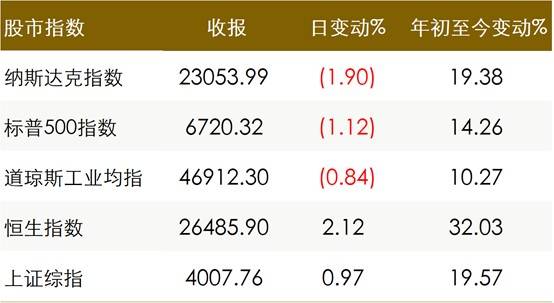
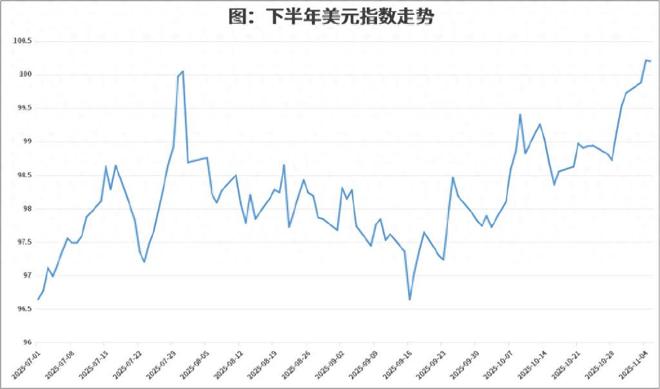
1. Report Industry Investment Rating No information about the report industry investment rating is provided in the content. 2. Core Viewpoints of the Report The report presents a comprehensive overview of the global financial market, including stock markets, commodity markets, bond markets, and foreign exchange markets, as well as important macro - economic and industry - related news. It reflects the current market trends, such as the decline in major global stock indices, fluctuations in commodity prices, and changes in bond yields. Additionally, it covers significant events like corporate mergers, policy announcements, and international cooperation initiatives. 3. Summary by Relevant Catalogs Overnight Night - Market Trends - US major stock indices closed lower, with the Dow down 0.84% at 46912.3 points, the S&P 500 down 1.12% at 6720.32 points, and the Nasdaq down 1.9% at 23053.99 points [5] - European major stock indices also closed lower, with the German DAX down 1.29% at 23740.38 points, the French CAC40 down 1.36% at 7964.77 points, and the UK FTSE 100 down 0.42% at 9735.78 points [6] - US Treasury yields fell across the board, with the 2 - year yield down 7.20 basis points to 3.553%, and others also showing declines [6] - International precious metal futures generally declined, with COMEX gold down 0.20% at $3984.80 per ounce and COMEX silver down 0.37% at $47.85 per ounce [7] - US oil and Brent crude futures declined slightly, with US oil down 0.12% at $59.53 per barrel and Brent crude down 0.08% at $63.47 per barrel [9] - Most London base metals rose, with LME copper down 0.1% at $10687 per ton, and others showing various changes [9] Important News Macro - economic News - Xi Jinping emphasized the strategic goal of building the Hainan Free Trade Port to be an important gateway for China's opening - up in the new era [11] - The Ministry of Commerce reported on the results of China - US economic and trade consultations in Kuala Lumpur, including issues such as fentanyl, tariffs, and agricultural trade [11] - China is actively promoting its accession to the CPTPP [11] - As of November 5, 2025, the annual customs clearance volume of the Ceke Port exceeded 26 million tons, a year - on - year increase of 25.7%, and it is expected to exceed 30 million tons in 2025 [12] Industry News - For the soda ash industry, this week's shipments, production, and overall inventory in China showed certain changes [14] - In Japan, commercial crude oil and gasoline inventories increased, while kerosene inventory decreased, and the refinery's average operating rate rose slightly [14] - In Singapore, fuel oil and light distillate inventories decreased, while middle distillate inventories increased [15] - In the US, the natural gas inventory increased by 33 billion cubic feet in the week ending October 31, 2025 [15] Metal Futures - A polysilicon restructuring "consortium" platform is being planned, with a proposed fund size of about $70 billion [17] - As of this Thursday, the national metallurgical - grade alumina's total production capacity and operating rate showed some changes [19] - Global gold ETFs had five consecutive months of capital inflows, with significant growth in asset management scale and trading volume in October [19] - The mining rights transfer income assessment report of a mine in Jiangxi is being publicly announced [19] Black - series Futures - For rebar, production, apparent demand decreased, and factory and social inventories continued to decline for four weeks [21] - The capacity utilization rate of coking coal mines decreased, and there were changes in coal production and inventory [21] - The average profit per ton of coke in independent coking plants showed different levels in different regions [21] Agricultural Futures - In southern Mato Grosso, Brazil, the soybean and corn yields increased significantly, and the second - season corn output is expected to rise substantially [24] - As of November 5, 2025, the apple cold - storage inventory in China's main producing areas decreased year - on - year [25] - In Malaysia, palm oil production increased in the first five days of November [25] - Brazil's November exports of soybeans, soybean meal, and corn are expected to be higher than last year [25] - India may double its sugar export quota in the new year [26] Financial Market Financial - A - shares rose unilaterally, with the Shanghai Composite Index back above 4000 points, and some sectors and concepts showed different trends [28] - The Hong Kong Hang Seng Index and related indices rose, and there were new stock listings and performance [29] - MSCI announced the November index adjustment results [29] - The China Securities Index Company will launch new indices [30] - The Science and Technology Innovation Board of the Shanghai Stock Exchange accepted the IPO application of Core Medical [30] - Hong Kong is promoting dual - currency trading of some local stocks and related measures [30] - The second - batch of long - term investment pilot insurance funds has made progress [30] - Guizhou Moutai held a performance briefing [31] - DeepWay submitted a prospectus to the Hong Kong Stock Exchange [32] Industry - The polysilicon industry may undergo major integration [33] - The financial regulatory authority is formulating guidelines for the high - quality development of science and technology insurance [33] - China will promote international cooperation in the new - energy storage field [33] - The construction machinery industry's October operating rate showed certain changes [33] - Chongqing issued policies to support the high - quality development of innovative drugs [34] Overseas - US President Trump reached an agreement on GLP - 1 weight - loss drugs, and there are investment and factory - building plans [35] - The US employment situation is severe, increasing the expectation of interest rate cuts [35] - The US government shutdown affects official inflation data and policy - making [35] - Some Fed officials have different views on interest rate cuts due to inflation concerns [36] - The US government shutdown affects the aviation industry, with flight capacity cuts [36] - The Bank of England maintained the interest rate at 4%, and the expectation of a December interest rate cut increased [36] - Japan plans to allocate about $6.5 billion annually to support the local chip and AI industries [38] - Japan's nominal wages increased in September, which may affect the central bank's policy [38] - Germany's industrial output showed a certain recovery in September [39] International Stock Markets - US major stock indices closed lower, with some individual stocks performing poorly, and there were concerns about Trump's tariff policies [40] - European major stock indices closed lower, affected by multiple factors [40] - Multiple valuation indicators of the US stock market are at high levels [41] - Nissan had a net loss in the first half of fiscal year 2025 and plans to sell its headquarters building [42] - Airbnb's third - quarter performance was good, and its after - hours trading price rose [42] Commodities - International precious metal futures declined [43] - Oil prices fell due to concerns about supply and demand [43] - Most London base metals rose [43] - Indonesia stopped approving applications for some nickel ore processing plants [43] - Saudi Aramco lowered the December crude oil price for Asia [45] - The US included copper in the 2025 key minerals list [45] Bonds - The Ministry of Finance issued $4 billion in sovereign bonds in Hong Kong, with high subscription rates [46] - The strength of A - shares put pressure on the bond market, and there were changes in bond yields and prices [46] - The real estate industry's bond financing in October increased year - on - year [46] - US Treasury yields fell [47] - Berkshire Hathaway may issue yen bonds [48] Foreign Exchange - The on - shore RMB against the US dollar rose, and the RMB was added as a settlement currency by the IATA [50] - The US dollar index fell, and most non - US currencies showed different trends [50]
美国消费出现K型分化,4200万人断粮背后,贫富消费鸿沟再拉大
3 6 Ke· 2025-11-07 02:32
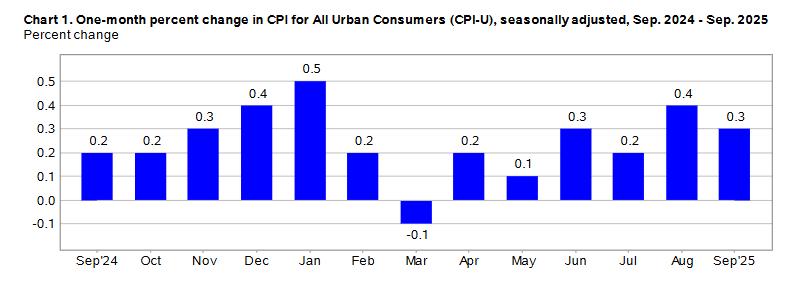
Core Insights - The recent CPI data for September shows a year-on-year inflation increase of 3.0%, slightly below the market expectation of 3.1%, indicating a structural split in consumer spending patterns in the U.S. [1][2] - Consumer confidence has significantly declined, particularly among low- and middle-income groups, with a 12-point drop in the confidence index reported by the University of Michigan, marking the largest single-month decline since 2020 [2][3] - The ongoing federal government shutdown has exacerbated economic losses, estimated at $18 billion, and is projected to reduce fourth-quarter GDP growth by at least 1 percentage point [2][19] Inflation Trends - The CPI data reveals a structural division between high inflation in essential goods and low inflation in discretionary spending, highlighting a "K-shaped" recovery where wealthier consumers thrive while lower-income households struggle [3][11] - Essential goods such as energy and food have seen significant price increases, with energy prices rising by 2.8% year-on-year and food prices increasing by 2.7% [4][15] - In contrast, discretionary items like used cars and clothing have experienced price declines, indicating a weakening demand in non-essential sectors [5][15] Consumer Behavior - The disparity in consumer spending is evident, with high-income households experiencing a "wealth effect" from rising asset prices, while low-income households face increasing costs for essentials [10][12] - The "inflation pain index" for households earning below $30,000 reached 4.2%, compared to just 0.8% for those earning above $150,000, illustrating the uneven impact of inflation [10][12] - The government shutdown has led to the suspension of food assistance programs, affecting millions of low-income individuals and further straining their purchasing power [19][20] Retail and Market Response - Retailers are adapting to the changing consumer landscape by focusing on high-end and low-cost products, while mid-tier brands struggle to maintain market share [20][27] - Sales of high-end organic foods have surged by 18%, while basic food items have seen minimal growth, reflecting a shift in consumer preferences towards premium products [20][27] - The automotive market shows a similar trend, with luxury vehicle sales increasing by 18%, while the volume of lower-priced vehicles has declined [21][27] Economic Outlook - The concentration of wealth among the top 20% of households, who hold 70% of financial assets, continues to widen the gap between income groups, leading to a potential "false prosperity" scenario [12][31] - If the wealth distribution remains imbalanced, there is a risk of a "differentiated recession" occurring by 2027, characterized by a decline in high-end consumption alongside a collapse in lower-income spending [31][32] - The ongoing economic trends highlight the need for policy interventions to address the growing disparities and ensure a more equitable distribution of economic growth [31][32]


南方基金:海外市场波动加剧!投资者如何应对扰动?
Xin Lang Cai Jing· 2025-11-07 02:12
Group 1 - The U.S. government shutdown has entered its 36th day, becoming the longest in history, with negative impacts on the economy and capital market expectations [3] - The Congressional Budget Office estimates that the shutdown could reduce the U.S. GDP growth rate by 1 to 2 percentage points in Q4, resulting in an economic output loss of $7 billion to $14 billion [3] - Market expectations for a Federal Reserve rate cut have significantly shifted, with the probability of a 25 basis point cut in December dropping from 94% to 69% [3][5] Group 2 - A-shares have shown relative stability amid overseas market volatility, with major indices experiencing fluctuations but not panic selling [7] - Domestic policy expectations are clear, with the "14th Five-Year Plan" and growth stabilization policies providing fundamental support for the market [7] - The valuation of A-shares is considered relatively reasonable, and recent market adjustments have provided a safety margin [7] Group 3 - The domestic consumption sector is gaining traction, with sectors like food and beverage and aviation expected to benefit from valuation recovery and profit improvement [7] - The importance of domestic demand is highlighted, especially in the context of ongoing consumption subsidy policies and income distribution reforms [7] - Defensive value in dividend-paying assets is being rediscovered, with sectors like banking and coal showing rotation performance amid increased market volatility [8] Group 4 - A "barbell strategy" is suggested for investors, combining growth-oriented assets with defensive dividend-paying assets to navigate market fluctuations [8]
COMEX金挑战4059关键阻力 突破可望上探4100
Jin Tou Wang· 2025-11-07 02:00
Group 1 - The latest gold futures price for December delivery is reported at $3991.7 per ounce, with a slight decline of $1.2, while COMEX gold futures show a price of 4008.50 yuan per gram, reflecting a 0.59% increase [1][3] - The U.S. government shutdown has created a political deadlock, leading to investor concerns about potential economic consequences, which has negatively impacted gold prices after a period of strong gains [1] - The next upward target for December gold futures is to close above the strong resistance level of $4100.00, while the recent downward target for bears is to push prices below the solid support level of $3800.00 [3] Group 2 - The U.S. is set to reduce flights at high-traffic airports by 10% to alleviate pressure on the aviation system, a necessary measure for maintaining safety [2] - In October, the number of layoffs in the U.S. reached the highest level for the same month in 22 years, primarily driven by the impact of artificial intelligence, with the technology and warehousing sectors being the most affected [2] - Year-to-date, layoffs in the U.S. have exceeded one million, with recruitment plans at their lowest since 2011, and seasonal hiring plans hitting a new low [2]
直击进博会|太古中国区主席蒋意达:进博会既是展示的窗口 更是链接伙伴、共创价值的平台
Zhong Guo Jing Ying Bao· 2025-11-06 23:53
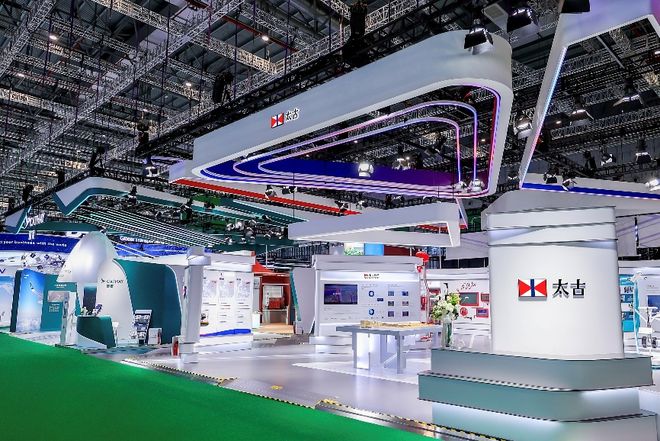
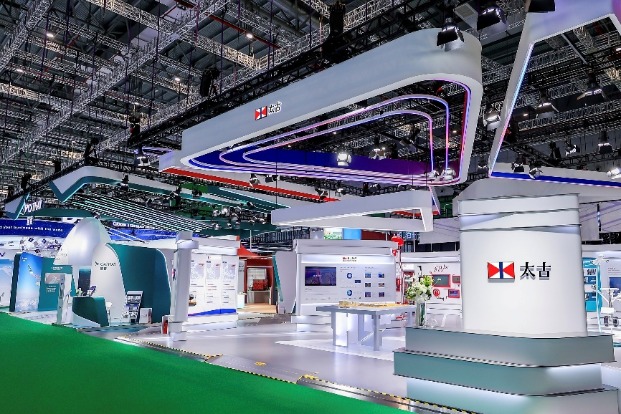
Core Viewpoint - The participation of Swire Group at the China International Import Expo (CIIE) emphasizes its long-term commitment to the Chinese market through innovative practices and contributions to high-quality and sustainable development [1][4]. Group 1: Exhibition Highlights - Swire Group showcased its subsidiaries, including Swire Properties, Swire Coca-Cola, Cathay Pacific, Swire Marine, and the Port Machinery Group, under the theme "Lean and Innovative" [1]. - The exhibition featured a 400-square-meter interactive booth utilizing digital multimedia technology to illustrate the vitality of "new consumption" [3]. - Visitors experienced immersive interactions, such as a VR experience of Cathay Pacific's cabin space and a model of the Xi'an Taikoo Li project, highlighting the integration of historical culture and modern commerce [3]. Group 2: Innovation and Sustainability - The booth demonstrated Swire's exploration in digitalization, intelligence, and green transformation, showcasing applications of robotics and AI in aircraft maintenance [3]. - Swire Marine introduced its low-carbon solutions and logistics capabilities connecting China with Pacific island nations and Belt and Road markets [3]. - The exhibition presented various case studies reflecting Swire's commitment to sustainable development and the green transformation of industries [3]. Group 3: Future Commitment - Swire Group aims to combine its century-old craftsmanship with excellent operational principles, focusing on new opportunities in digitalization, intelligence, and green development [4]. - The company positions itself as a witness, participant, and beneficiary of China's modernization, contributing to high-quality development and sustainable future [4].

直击进博会 太古中国区主席蒋意达:进博会既是展示的窗口 更是链接伙伴、共创价值的平台
Zhong Guo Jing Ying Bao· 2025-11-06 23:40
Core Viewpoint - The eighth China International Import Expo (CIIE) showcases Swire Group's commitment to the Chinese market through innovative practices in various sectors, emphasizing high-quality and sustainable development [1][4]. Group 1: Exhibition Highlights - Swire Group's exhibition theme is "Lean and Innovative," featuring subsidiaries such as Swire Properties, Swire Coca-Cola, Cathay Pacific, Swire Machinery, and Swire Shipping [1]. - The interactive booth spans 400 square meters, utilizing digital multimedia technology to illustrate the vibrancy of "new consumption" [3]. - Visitors can experience the integration of historical culture and modern commerce through the Xi'an Taikoo Li project model and enjoy an immersive experience of Cathay Pacific's cabin space using VR technology [3]. Group 2: Innovation and Sustainability - Swire Group demonstrates its exploration in digitalization, intelligence, and green transformation, showcasing applications of robotics and AI in aircraft maintenance [3]. - The Swire Shipping segment introduces its route layout and low-carbon solutions, highlighting innovative logistics services connecting China with Pacific island nations and Belt and Road markets [3]. - The exhibition presents specific cases that reflect Swire's commitment to sustainable development and long-term planning in promoting industrial green transformation [3]. Group 3: Future Commitment - Swire Group aims to combine its century-old craftsmanship with excellent operational principles, focusing on new opportunities in digital, intelligent, and green industrial development [4]. - The company positions itself as a witness, participant, and beneficiary of China's modernization, continuously injecting sustainable momentum into high-quality development [5].