机械

Search documents
中加基金固收周报|市场面临降温
Xin Lang Cai Jing· 2026-01-22 08:23
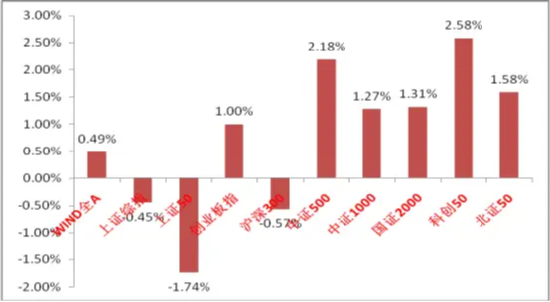
Market Overview - A-shares showed mixed performance last week with major indices fluctuating and trading volume declining from high levels [1][8] Macro Data Analysis - China's exports in December increased by 6.6% year-on-year in USD terms, exceeding market expectations and also showing month-on-month growth [4][13] - For the entire year of 2025, exports are projected to grow by 5.5%, making it the largest contributor to economic growth among the three driving forces [4][13] - The strong export performance in December is attributed to sustained external demand during the global manufacturing cycle and a rush to export due to reduced domestic tax rebates [4][13] - The new export orders index for China's manufacturing PMI rose by 1.4 percentage points to 49.0% in December, while JPMorgan's global manufacturing PMI recorded 50.4%, indicating robust external demand [4][16] - Key export items included computers, integrated circuits, and automobiles, with the latter showing the strongest growth, potentially influenced by the EU's proposed minimum import price policy for Chinese cars [4][16] - ASEAN remains China's largest export destination [4][16] Short-term Market Strategy - The market is experiencing a cooling phase after a period of heightened enthusiasm, with a rapid decline in trading volume and financing levels [8][18] - Factors supporting the market include favorable liquidity conditions, a weak dollar cycle, and a gradual appreciation of the RMB [8][18] - The spring rally is driven by hotspots in commercial aerospace and AI applications, enhancing market risk appetite [8][18] - Regulatory measures have been implemented to cool down the market due to the rapid accumulation of risks from strong momentum [8][18] - The market's trading heat is quickly diminishing, and short-term thematic trends may enter a consolidation phase [8][18] Mid-term Market Outlook - Technology growth remains a favored direction, with expectations of improving economic fundamentals gradually accumulating [9][19] - The current economic fundamentals and technology narratives have not fundamentally changed, and the technology sector remains a priority for allocation [9][19] - Defensive dividend sectors may enter an observation period, with potential for fund allocation if aggressive sectors continue to face pressure [22] Long-term Market Perspective - The long-term dynamics of the US-China struggle are becoming clearer, with increasing skepticism about the US government's governance and institutional credibility [10][20] - Despite uncertainties in the US economic outlook and the Fed's interest rate cuts, the credit of the dollar remains intact [10][20] - The trend of long-term capital inflow into the Chinese equity market is expected to strengthen due to regulatory policies promoting passive investment products [10][20] - The increase in equity market profitability is likely to encourage residents to allocate more of their excess deposits into the stock market [10][20] Industry Insights - For defensive dividend sectors, a short-term observation period is recommended, with attention to potential fund allocation in response to worsening market sentiment [22] - In aggressive sectors, technology remains a key focus, particularly in AI and commercial aerospace, which are expected to continue driving performance [22] - The market should monitor the stabilization of AI applications and aerospace sectors for potential investment opportunities [22]

1月21日重要资讯一览
Zheng Quan Shi Bao Wang· 2026-01-21 14:49
Group 1 - The Ministry of Finance and other departments announced a tax policy extension for innovative enterprises issuing CDRs, exempting individual investors from personal income tax on capital gains from January 1, 2026, to December 31, 2027 [2] - The Guangdong Provincial Government issued policies to enhance the high-quality development of transportation through artificial intelligence, encouraging the application of smart connected vehicles and the establishment of autonomous driving regulatory platforms [3] - Shanghai Xunmeng Information Technology Co., Ltd. (operating under the "Pinduoduo" platform) was fined 100,000 yuan for failing to report tax-related information as required [3] Group 2 - Zhizhi New Materials may apply for a trading suspension if its stock price continues to rise abnormally [5] - Hunan Silver's future market price for silver products remains uncertain [5] - Moore Threads expects revenue of 1.45 billion to 1.52 billion yuan in 2025, with a narrowing net loss [5] - Shanghai Yizhong anticipates a net profit growth of 760.18% to 903.54% in 2025 [5] - Jin'an Guoji expects a net profit increase of 655.53% to 871.4% in 2025 [5] - Limin Co. forecasts a net profit growth of 471.55% to 514.57% in 2025 [5] - Bai'ao Intelligent expects a net profit increase of 228.34% to 337.79% in 2025 [5] - Dajin Heavy Industry anticipates a net profit growth of 121.58% to 153.23% in 2025 [5] - Juhua Co. expects a net profit growth of 80% to 101% for the 2025 fiscal year [5] - Ganli Pharmaceutical anticipates a net profit increase of 78.96% to 95.23% in 2025 [5] Group 3 - Hengxing New Materials expects a net profit increase of 65.28% to 90.05% in 2025 [6] - Xianghe Industrial anticipates a net profit growth of 59.17% to 96.31% in 2025 [6] - Yichang Technology forecasts a net profit increase of 58% to 138% in 2025 [6] - Tongfei Co. expects a net profit growth of 56.43% to 74.68% in 2025 [6] - Jiajia Yue anticipates a net profit increase of 50.06% to 72.79% in 2025 [6] - Shanghai Electric expects a net profit increase of approximately 47% to 76% in 2025 [6] - Tianfu Communication forecasts a net profit growth of 40% to 60% in 2025 [6] - Qianfang Technology expects a profit of 250 million to 320 million yuan, turning a profit in 2025 [6] - Defu Technology anticipates a profit of 97 million to 125 million yuan, turning a profit in 2025 [6] - Roman Co. expects a net profit of 50 million to 60 million yuan, turning a profit in 2025 [6] - Estun anticipates a profit of 35 million to 50 million yuan, turning a profit in 2025 [6] - Shenli Co. expects a net profit of 20.5 million to 30 million yuan, turning a profit in 2025 [6] - Aotai Bio plans to repurchase shares worth 100 million to 200 million yuan [6] - Shareholders of Xueqi Electric, Yong'an Futures, and others plan to reduce their holdings by up to 3% [6]
1.21犀牛财经晚报:ETF总规模回到6万亿元以下
Xi Niu Cai Jing· 2026-01-21 10:30
Group 1: ETF Market - The total market size of ETFs has decreased to 5.93 trillion yuan, down from 6.24 trillion yuan [1] - The scale of the CSI A500 ETF has dropped below 300 billion yuan, currently at 285.98 billion yuan, with 8 out of 40 ETFs having a scale of over 10 billion yuan [1] Group 2: Investment Outlook - Bridgewater Associates remains optimistic about the Chinese stock market, projecting a 45% return for its onshore hedge fund in 2025, marking the best performance in five years [1] - The All Weather Plus fund of Bridgewater saw a 9.1% increase in Q4, with an annual return of 44.5%, compared to an 18% rise in the benchmark CSI 300 index [1] Group 3: Energy Storage Market - GGII forecasts that global household energy storage system shipments will reach approximately 35 GWh in 2025, representing a nearly 50% year-on-year growth [2] - The market concentration for household storage systems is significant, with Germany, the US, Australia, and Japan accounting for 57% of the total global installation [2] Group 4: Film Industry - China's film industry chain is projected to reach a value of 817.26 billion yuan in 2025, with a box office multiplier of approximately 1:15.77, ranking among the top globally [3] Group 5: Commercial Aerospace - In 2025, China's commercial aerospace sector is expected to complete 50 launches, accounting for 54% of the total national space launches, with 311 commercial satellites successfully placed into orbit [3] Group 6: Strategic Partnerships - Lianlong has signed a strategic framework agreement with Runyinglian to enhance the reliability and efficiency of the lubricating oil additive supply chain in China and the Asia-Pacific region [8] Group 7: Financial Performance Forecasts - Limin Co. anticipates a net profit of 465 million to 500 million yuan for 2025, representing a year-on-year increase of 471.55% to 514.57% [11] - Guanghui Energy expects a net profit of 1.32 billion to 1.47 billion yuan for 2025, indicating a decline of 50.03% to 55.13% year-on-year [12] - Jiajiayue forecasts a net profit of 198 million to 228 million yuan for 2025, reflecting a growth of 50.06% to 72.79% year-on-year [13] - Xianghe Industrial projects a net profit of 120 million to 148 million yuan for 2025, showing an increase of 59.17% to 96.31% year-on-year [14] - Baiao Intelligent expects a net profit of 90 million to 120 million yuan for 2025, indicating a growth of 228.34% to 337.79% year-on-year [15] - Hekang New Energy anticipates a net profit of 50 million to 75 million yuan for 2025, representing a year-on-year increase of 385.62% to 628.43% [16]




固定收益周报:双高转债占比达到历史峰值水平-20260121
Huaxin Securities· 2026-01-21 03:33
1. Report Industry Investment Rating The provided content does not mention the industry investment rating. 2. Core View of the Report - The proportion of high - price and high - valuation convertible bonds has reached a historical peak. With the TMT, automotive, chemical, electrical equipment, and machinery industries as representatives, the proportion of convertible bonds with both high prices and high valuations is over 40%. [4][22] - The convertible bond market is performing strongly. The median convertible bond price remains at a historical high, trading sentiment is hot, and certain types of convertible bonds have actively increased their valuations. [2][11] - Last week, the risk preference of funds decreased significantly. Stock ETF shares decreased substantially, while convertible bond ETFs were favored by funds. [3][21] 3. Summary by Related Catalogs Market Performance - Last week, there was policy cooling in the equity market. Broad - based ETF funds flowed out significantly, while convertible bond ETFs flowed in reversely. Bull market expectations were strong, and equity - like convertible bonds and newly - issued bonds drove the convertible bond performance to be stronger than that of equities. [2][11] - The median convertible bond price remained at a historical high, fluctuating around 138 yuan. The average daily trading volume of the entire convertible bond market was 92.2 billion yuan, second only to the "924" level. The 100 - yuan premium rate continued to rise to 33% at a historical high, and the implied volatility fluctuated around the historical extreme point of 45%. The implied volatility difference remained at a historical high of around 13%. [2][11] - The trading sentiment of convertible bonds was hot, and the turnover rates of convertible bonds with extremely low balances and low ratings were relatively high. The valuations of high - price and equity - like convertible bonds actively increased, with a growth rate (1.7%) higher than that of the underlying stocks (1.26%); the valuations of convertible bonds issued by companies with an underlying stock market value of over 20 billion yuan also actively increased, with a growth rate (1.9%) higher than that of the underlying stocks (0.8%); newly - issued bonds and convertible bonds listed within 2 years also significantly and actively increased their valuations. [2][11] Funds Sentiment - From the comparison of the share fluctuations of various broad - based indexes, bond - type, and major commodity (gold) ETFs, the risk preference of funds decreased significantly last week. Stock ETF shares decreased by 12%. In particular, the ChiNext ETF, Science and Technology Innovation 50 ETF, and SSE 50 ETF shrank by 16%, 12%, and 12% respectively last week. In contrast, the CSI 2000 ETF had a relatively large expansion, with its shares increasing by 7% last week. [3][21] - Convertible bond ETFs have been favored by funds recently. On the basis of performing no worse than equities in the previous week, their shares increased by 4.3% last week; the shares of interest - rate bonds continued to show an obvious shrinking trend. [3][21] Investment Strategy - Currently, the proportion of high - price and high - valuation convertible bonds has reached a historical peak. It is recommended to focus on newly - issued convertible bonds. Currently, newly - issued bonds are mainly from the Science and Technology Innovation Board, with high - quality underlying stocks and good performance realization. Against the background of strong expectations for the second stage of the equity bull market, their scarcity has increased. [4][22] - Combining performance, it is recommended to focus on: Maolai Convertible Bond, Qizhong Convertible Bond, Weidao Convertible Bond, Yongxi Convertible Bond, Luwei Convertible Bond, Weice Convertible Bond, Anji Convertible Bond, and Dinglong Convertible Bond in the electronics industry; Ruike Convertible Bond in the field of robotics and industrial automation; Jin 05 Convertible Bond, Funeng Convertible Bond, Jinlang Convertible Bond 02, and Yingliu Convertible Bond in the fields of energy power and gas turbines; Bo 25 Convertible Bond in the automotive industry; and Jin 25 Convertible Bond. [4][22]
中金-机械:核聚变之光04:聚焦2026核聚变能科技与产业大会-25011
中金· 2026-01-21 02:57
Investment Rating - The report suggests focusing on core equipment companies within the industry [5]. Core Insights - Strong policy certainty and strategic benefits are continuously being released, with fusion energy identified as a new economic growth point in the national "14th Five-Year Plan" [4][8]. - The approach towards commercialization is heating up, with significant technological milestones expected to be reached by 2027, particularly with the BEST project, which aims to validate the steady-state operation of burning plasma and the entire power generation process [4][10]. - Global capital is increasingly flowing into the fusion sector, with investment in the private fusion industry nearing €13 billion by November 2025, reflecting a 50% increase in just five months [9]. - The domestic industry is gaining a significant position in global fusion commercialization, supported by both national and local policies [8][9]. Industry Dynamics - The "2026 Fusion Energy Technology and Industry Conference" held in Hefei highlighted key technological breakthroughs in core materials and equipment for projects like BEST and CRAFT [3][8]. - The BEST project aims to complete the world's first compact fusion energy experimental device by 2027, focusing on reducing risks associated with commercial reactor construction [10][11]. - The CRAFT project has achieved significant milestones, nearing 95% completion, and is expected to provide critical support for the development of fusion materials and technologies [18][19]. Global and Domestic Development Trends - The global fusion industry is entering a rapid development phase, with over 50 commercial fusion companies emerging and major tech firms like Microsoft and Google entering the market [9]. - The U.S. and China are becoming the core driving forces in the global fusion industry, with the U.S. relying on private capital and scientific breakthroughs, while China utilizes a state-driven model with broad social capital participation [9]. Project Progress - The BEST project has completed 35% of its overall progress, with 47 out of 119 milestones achieved by the end of 2025 [11]. - The CRAFT project has successfully passed initial performance tests and is advancing towards national acceptance, with significant contributions to the localization of key equipment [19].
未知机构:华创策略姚佩基于公开调研的超额收益挖掘两大功能及时了解同业-20260121
未知机构· 2026-01-21 02:10
Summary of Conference Call Notes Industry and Company Involved - The report focuses on the investment strategies and performance of various sectors, particularly in the machinery, electronics, and renewable energy industries. - Key companies mentioned include 博盈特焊 (Boyi Welding), 天华新能 (Tianhua New Energy), 广联航空 (Guanglian Aviation), 京东方A (BOE Technology Group), 三峡旅游 (Three Gorges Tourism), 超捷股份 (Chaojie Co.), 福元医药 (Fuyuan Pharmaceutical), and 宁波银行 (Ningbo Bank) [1][1][1]. Core Insights and Arguments - The report highlights two main functions: timely understanding of industry trends and significant excess returns from researched stocks [1]. - Recent fund manager research trends indicate a focus on the following sectors and companies: - **Growth**: Machinery, Electronics, Renewable Energy; top companies include 博盈特焊, 天华新能, 广联航空 [1]. - **Balanced**: Machinery, Renewable Energy, Non-ferrous Metals; top companies include 天华新能, 博盈特焊, 三峡旅游 [1]. - **Value**: Machinery, Electronics, Military Industry; top companies include 京东方A, 博盈特焊, 广联航空 [1]. - **TMT (Technology, Media, Telecommunications)**: Machinery, Electronics, Renewable Energy; top companies include 博盈特焊, 天华新能, 广联航空 [1]. - **Manufacturing**: Machinery, Renewable Energy, Automotive; top companies include 天华新能, 广联航空, 超捷股份 [1]. - **Consumer**: Pharmaceuticals, Electronics, Food and Beverage; top companies include 三峡旅游, 福元医药, 奥浦迈 [1]. - **Cyclical**: Non-ferrous Metals, Chemicals, Renewable Energy; top companies include 盛达资源, 天华新能, 亚太科技 [1]. - **Financials and Real Estate**: Automotive, Banking; top companies include 超捷股份, 宁波银行, 光庭信息 [1]. Additional Important Insights - An equal-weight index constructed from the stocks researched over the past six months shows a cumulative increase of 21% in H2 2025, significantly outperforming the Shanghai Composite Index's 15% increase [1]. - All types of fund research stock indices exhibit excess returns, particularly in the balanced, value, consumer, and financial real estate sectors compared to their respective fund averages [1].



零碳工厂建设目标出台 激发工业企业节能降碳动力
Zheng Quan Ri Bao· 2026-01-20 16:25
Core Viewpoint - The joint release of the "Guiding Opinions on the Construction of Zero Carbon Factories" aims to drive carbon reduction and green transformation in key industrial sectors, injecting strong momentum into energy conservation and carbon reduction in China's industrial field [1][2]. Group 1: Zero Carbon Factory Development - The "Guiding Opinions" propose a phased approach to cultivate zero carbon factories, prioritizing industries with urgent decarbonization needs and primarily electric energy consumption [1][2]. - By 2026, a selection of zero carbon factories will be established as benchmarks, with a focus on sectors such as automotive, lithium batteries, photovoltaics, electronics, light industry, machinery, and computing facilities [2]. - By 2030, the initiative will expand to include high-energy industries like steel, non-ferrous metals, petrochemicals, building materials, and textiles, exploring new decarbonization pathways [2]. Group 2: Technological and Operational Implications - The construction of zero carbon factories is a comprehensive and systematic project that involves energy structure, process technology, funding, and management services, with varying implementation paths across regions and industries [2][3]. - The initiative is expected to stimulate industrial enterprises to increase investment in energy-saving and emission-reduction technology research and application, promoting production technology transformation [3]. - Zero carbon factory construction will encourage the optimization of production methods, leading to intelligent, green, and integrated development, enhancing energy resource output efficiency and reducing production costs [3]. Group 3: Digital Technology Integration - The demand for digital technology in zero carbon factory construction presents unprecedented business growth opportunities for the digital industry [4]. - Digital industry companies can leverage their expertise in 3D modeling and simulation analysis to create high-precision digital twin models for manufacturing enterprises, optimizing factory layout and energy consumption [4]. - The complexity and high standards of zero carbon factory construction will drive innovation in digital technologies, fostering deep integration and collaborative development between the digital industry and manufacturing sectors [4].
如何从一二级市场联动寻找产业债交易信号?(行业篇)
Soochow Securities· 2026-01-20 09:28
Report Industry Investment Rating No information provided in the content. Core Viewpoints - The secondary - market trends of industrial bond sub - industries show a divergence in the correlation between primary and secondary markets. This divergence may be due to differences in supply among industries and differences in bond liquidity and trading popularity within each industry. If an industry has many issuing entities with strong willingness and ability to issue bonds and is in a good development trend, the probability of a synchronous resonance relationship between primary - market supply and secondary - market demand is relatively high, which can improve the accuracy of judging trading signals of narrowing spreads from daily net financing [1][14]. - Most industries have trading signals transmitted from primary - market supply to secondary - market demand, including comprehensive, non - ferrous metals, and others. Some industries show a stronger negative correlation between primary - market supply and secondary - market demand, such as comprehensive and non - ferrous metals. Some industries have a weak correlation between daily net financing and daily spreads, including communication and food and beverage [2][4]. Summary by Directory 1. Industrial Bond Sub - industries Show Divergence in Primary - Secondary Market Trend Correlation - **Research Method**: Classify industrial bond issuers by Shenwan primary industries, calculate the daily net financing and daily credit spreads of each sub - industry from January 1, 2025, to December 19, 2025, to observe the correlation between primary - market supply and secondary - market demand [12]. - **Divergence Performance**: Most industries have trading signals transmitted from primary - market supply to secondary - market demand, while some do not show this feature significantly [13]. - **Reasons for Divergence**: Differences in supply among industries are related to the number, size, and life - cycle stage of issuing entities. Differences in bond liquidity and trading popularity within industries are related to the scale of outstanding bonds, valuation levels, and event catalysts [14]. 1.1. Industries with Obvious Correlation - **Comprehensive Industry**: From January to March 2025, daily net financing decreased and daily spreads increased; from March to June, daily net financing increased and daily spreads decreased; from June to December, both were in a low - level oscillation [21]. - **Non - ferrous Metals Industry**: From January to July 2025, daily net financing increased and daily spreads decreased; from July to September, daily net financing decreased and daily spreads increased; from October to December, both were in a low - level oscillation [25]. - **Other Industries**: Similar analysis is conducted for industries such as pharmaceutical biology, social services, and others, with different trends in different time intervals [27][30][32]. - **Common Features**: These industries generally have a large scale of outstanding bonds and high institutional investor attention, which is conducive to the transmission of primary - market supply changes to secondary - market spread changes [3][87]. 1.2. Industries with General Correlation - **Industries Included**: Communication, food and beverage, and other industries have a weak correlation between daily net financing and daily spreads, and the linkage and transmission between primary - and secondary - market indicators are relatively weak [4][13]. - **Reasons**: These industries have low participation in the bond market, and their secondary - market trading demand is more affected by overall bond - market trends, industry risk premiums, and liquidity premiums. Different types of industries have specific reasons for the weak correlation [4][90][91].
中国明确三个阶段梯度培养零碳工厂
Chang Jiang Shang Bao· 2026-01-20 06:47
Core Viewpoint - The construction of zero-carbon factories is receiving policy support, aimed at enhancing energy efficiency and promoting green low-carbon transformation in key industries [1][2]. Group 1: Policy Guidance - The Ministry of Industry and Information Technology and four other departments issued the "Guiding Opinions on Zero-Carbon Factory Construction," focusing on energy-saving and carbon reduction potential in the industrial sector [1]. - The guidance outlines a three-phase approach to cultivate zero-carbon factories, prioritizing industries with urgent decarbonization needs and lower difficulty in achieving carbon reduction [2]. Group 2: Goals and Timeline - By 2026, a selection of zero-carbon factories will be established as benchmarks, with a focus on sectors such as automotive, lithium batteries, photovoltaics, electronics, light industry, machinery, and computing facilities [2]. - By 2030, the initiative will expand to include high-energy-consuming industries like steel, non-ferrous metals, petrochemicals, building materials, and textiles, exploring new decarbonization pathways [2]. Group 3: Construction Pathways - The construction of zero-carbon factories involves improving carbon emission accounting, transitioning to green energy structures, enhancing energy efficiency, analyzing carbon footprints, and increasing digital intelligence for carbon control [3]. - The Ministry emphasizes that building zero-carbon factories is a complex and systematic project, requiring unified evaluation standards and verification of key technologies [3]. Group 4: Implementation Support - The Ministry will coordinate with relevant departments to implement the guiding opinions, ensuring high-quality advancement of zero-carbon factory construction and supporting industrial green low-carbon transformation [3].
特朗普抡起关税大棒,打跑德国13兵,默茨敲定2月来华搬救兵?
Sou Hu Cai Jing· 2026-01-20 05:19
Core Viewpoint - The article discusses the escalating trade tensions between the U.S. and Europe, particularly focusing on Germany's response to U.S. tariffs and its strategic pivot towards China for economic relief [1][3][5]. Group 1: U.S. Tariffs and European Response - Trump announced a 10% tariff on goods from eight European countries starting February 1, increasing to 25% by June 1, which forced European nations to reconsider their strategies [1]. - Germany's immediate reaction included recalling 13 soldiers from Greenland, indicating a lack of commitment to the U.S. and a desire to avoid confrontation [1]. - European countries are planning to impose tariffs on €93 billion worth of U.S. goods, but this response lacks substantial backing compared to previous agreements [3]. Group 2: Germany's Economic Situation - Germany's GDP growth forecast for 2025 is only 0.2%, following two years of economic contraction, with exports declining by 0.3% last year [5]. - The automotive and industrial sectors are particularly affected, with a 13.9% drop in exports of cars and parts to the U.S. [3][5]. - The number of corporate bankruptcies in Germany has reached the highest level since 2005, highlighting the economic strain [5]. Group 3: Shift Towards China - Germany is seeking to strengthen economic ties with China, with Chancellor Merz planning a visit to China with a high-level economic delegation [3][5]. - The bilateral trade between Germany and China reached $173.69 billion, with a 3.5% year-on-year increase, making China a crucial market for German exports [5]. - Merz's diplomatic shift includes a call for reconciliation with Russia, signaling a potential realignment of Germany's foreign policy to prioritize national interests over U.S. alignment [7][8]. Group 4: Implications for Future Relations - The article suggests that the current tensions reflect a growing rift in the U.S.-Europe alliance, with many European countries, including Germany, seeking more independent partnerships [8]. - The outcome of Merz's visit to China could significantly impact Germany's economic recovery and the future dynamics of EU-China relations [8].