
服务业

Search documents
重磅利好,财政部等多部门连发政策
21世纪经济报道· 2026-01-20 05:13
Group 1 - The core viewpoint of the article emphasizes the optimization of loan interest subsidy policies to stimulate consumption and support small and micro enterprises, with extended implementation periods and increased loan limits [1][2]. Group 2 - The service industry loan interest subsidy policy has been extended to the end of 2026, with new focus areas including digital, green, and retail sectors. The maximum loan amount eligible for interest subsidies has increased from 1 million to 10 million yuan, and the subsidy cap has been raised to 100,000 yuan [1]. - The personal consumption loan interest subsidy policy now includes credit card installment payments, with an annual subsidy rate of 1% [1]. - A new interest subsidy policy for small and micro enterprises has been introduced, offering a subsidy of 1.5% per year for up to 2 years, with a maximum loan amount of 50 million yuan and a maximum subsidy of 150,000 yuan per enterprise [2]. - The equipment update loan interest subsidy policy has been expanded to include fixed asset loans related to equipment updates and new technology innovation loans starting from 2026 [2]. - A special guarantee plan for private investment has been established with a scale of 500 billion yuan, aimed at providing guarantees for eligible small and micro enterprises' loans for various operational activities [2].


财政部连发5个重要文件
财联社· 2026-01-20 05:08
Core Viewpoint - The Ministry of Finance and other departments have released multiple documents aimed at enhancing consumer loans, private investment, and support for small and micro enterprises, with a focus on stimulating domestic demand and consumption [1]. Group 1: Support for Small and Micro Enterprises - A loan interest subsidy policy for small and micro enterprises has been implemented, with a maximum loan amount of 50 million yuan and a subsidy rate of 1.5% for loans issued from January 1, 2026, for a maximum period of 2 years [33][34]. - The policy aims to support investments in key industries such as new energy vehicles, medical equipment, and artificial intelligence, among others [33]. - The government will cover 90% of the subsidy costs, while local governments will cover the remaining 10% [34]. Group 2: Consumer Loan Subsidy Policy - The personal consumption loan subsidy policy has been extended until December 31, 2026, allowing for a 1% subsidy on eligible loans [25][26]. - The policy now includes credit card installment payments and removes previous limits on subsidy amounts, enhancing accessibility for consumers [27]. - The Ministry of Finance will collaborate with various financial institutions to ensure effective implementation and monitoring of the subsidy program [28]. Group 3: Equipment Upgrade Loan Subsidy Policy - The equipment upgrade loan subsidy policy has been expanded to include a wider range of industries, with a subsidy rate of 1.5% for loans issued for equipment upgrades [19][20]. - The policy will support sectors such as construction, aviation, and digital technology, promoting high-end and green equipment upgrades [20]. - The implementation period for this policy is set until December 31, 2026, with potential extensions based on effectiveness [19]. Group 4: Private Investment Guarantee Plan - A special guarantee plan for private investment has been established with a total quota of 500 billion yuan, aimed at enhancing financing support for small and micro enterprises [11][13]. - The plan will cover loans for various activities, including equipment purchases and business renovations, with a risk-sharing mechanism where banks bear at least 20% of the loan risk [14]. - The government will reduce guarantee fees and increase the guarantee limits for eligible projects, encouraging more private sector investment [15][16].

12月宏观数据分析:2025年预期目标圆满实现,但复苏动能仍不强
Xi Nan Qi Huo· 2026-01-20 02:02
1. Report Industry Investment Rating No relevant content provided. 2. Core Viewpoints of the Report - The GDP growth target of 5% in 2025 was successfully achieved, but the growth rate declined quarter - by - quarter. The macro - economic data in December continued to fall, and the recovery momentum remained weak. Consumption, fixed - asset investment, and the real estate market were sluggish, while exports showed resilience and inflation data improved [3]. - A rational and objective view of the current macro - economy is needed. The transformation, adjustment, and bottoming - out of the real estate market require time, and the domestic economic recovery cannot be achieved overnight. More active macro - policies should be implemented to expand domestic demand and optimize supply [4]. - In the future, "expanding domestic demand and combating cut - throat competition" will remain important long - term policy measures. The financial market is in a state of "weak reality, strong expectation", and the market sentiment is continuously improving. In 2026, the macro - economy and asset prices are expected to continue the upward repair trend, but patience is required [4]. 3. Summary by Directory 3.1 Manufacturing PMI: A Slight Rebound but Still Weak - In December, the manufacturing PMI was 50.1%, up 0.9 percentage points from the previous month, entering the expansion range. Large - scale enterprises' PMI was 50.8%, up 1.5 percentage points; medium - sized enterprises' PMI was 49.8%, up 0.9 percentage points; small - sized enterprises' PMI was 48.6%, down 0.5 percentage points [6]. - Among the five sub - indices of the manufacturing PMI, the production index, new order index, and supplier delivery time index were above the critical point, while the raw material inventory index and employment index were below it. The production and new order indices increased, indicating accelerated production and improved market demand, but the employment index declined slightly [6]. - Overall, although the manufacturing PMI rebounded in December, the manufacturing sector was still weak, and the economic recovery momentum was insufficient [9]. 3.2 CPI and PPI: Inflation Continued to Improve - In December 2025, the national CPI rose 0.8% year - on - year and 0.2% month - on - month. Food and non - food prices both increased, and among the eight major categories of prices, five increased and two decreased year - on - year [10]. - The PPI decreased 1.9% year - on - year in December, with the decline narrowing by 0.3 percentage points, and increased 0.2% month - on - month, with the growth rate expanding by 0.1 percentage points. The anti - cut - throat competition policy has achieved continuous results, and the PPI year - on - year growth rate is expected to turn positive in 2026 [12][15]. 3.3 Import and Export: Maintaining Resilience - In December, China's imports denominated in US dollars increased 5.7% year - on - year, and exports increased 6.6% year - on - year, both exceeding expectations. The trade surplus was 1,141.4 billion US dollars [16]. - Since the second quarter, exports have been stronger than expected, showing strong resilience. The real risk for China's foreign trade lies in the potential economic recession in the US and the slowdown of global economic growth [18]. - In December, China's exports to regions other than the US maintained steady growth, and exports to ASEAN countries continued to replace those to the US [19]. 3.4 Credit: Weak Resident Credit Demand and Declining M1 Growth - At the end of 2025, the stock of social financing scale was 442.12 trillion yuan, a year - on - year increase of 8.3%. The annual increment of social financing scale was 35.6 trillion yuan, 3.34 trillion yuan more than the previous year [20][21]. - In December, resident short - term and long - term loans both decreased significantly, indicating weak resident consumption and housing credit demand. Government bond issuance slowed down, M1 growth declined, but enterprise credit improved and M2 growth rebounded [24][25]. - Overall, the credit demand of the real economy was still weak, and the upward trend of M1 and M2 growth faced resistance [26]. 3.5 Industrial Production, Consumption, and Investment: Industrial Production Rebounded, while Consumption and Investment Growth Continued to Decline - In December 2025, the added value of large - scale industrial enterprises increased 5.2% year - on - year and 0.49% month - on - month. For the whole year of 2025, it increased 5.9% compared with the previous year [27]. - In December, the total retail sales of consumer goods increased 0.9% year - on - year. After excluding the impact of national subsidies, consumption in 2025 was weak, indicating insufficient domestic demand. Further consumption - promotion policies may be introduced in 2026 [27][28]. - In 2025, the national fixed - asset investment (excluding rural households) decreased 3.8% year - on - year. The growth rates of manufacturing investment, infrastructure investment, and real estate development investment all continued to decline [32]. 3.6 Real Estate Market: Continued Downtrend - In 2025, the sales area and sales volume of newly built commercial housing decreased by 8.7% and 12.6% respectively year - on - year. The real estate development investment decreased 17.2% year - on - year [31][32]. - The new construction, construction, and completion of real estate all declined further. The real estate development climate index continued to fall in December [35][36]. - The real estate market is currently at the bottom stage. With the decline of the base, the year - on - year decline of sales area and sales volume is gradually narrowing. The first half of 2026 is expected to be a critical period for the real estate market to stop falling and stabilize [38]. 3.7 Summary and Outlook - In December, the macro - economy was weak, with consumption, fixed - asset investment, and the real estate market remaining sluggish, while exports were resilient and inflation data improved [40]. - The main constraints on macro - economic recovery and asset price repair are insufficient domestic effective demand represented by real estate and consumption, and over - capacity in multiple industries. More policy support is needed [40]. - The financial market is in a state of "weak reality, strong expectation". In 2026, the macro - economy and asset prices are expected to continue the upward repair trend, but one should track policy implementation details and wait for positive macro - economic signals [40].
顶压前行、向新向优!透过7组重磅数据读懂2025年国民经济亮眼“成绩单”
Yang Shi Wang· 2026-01-20 01:44
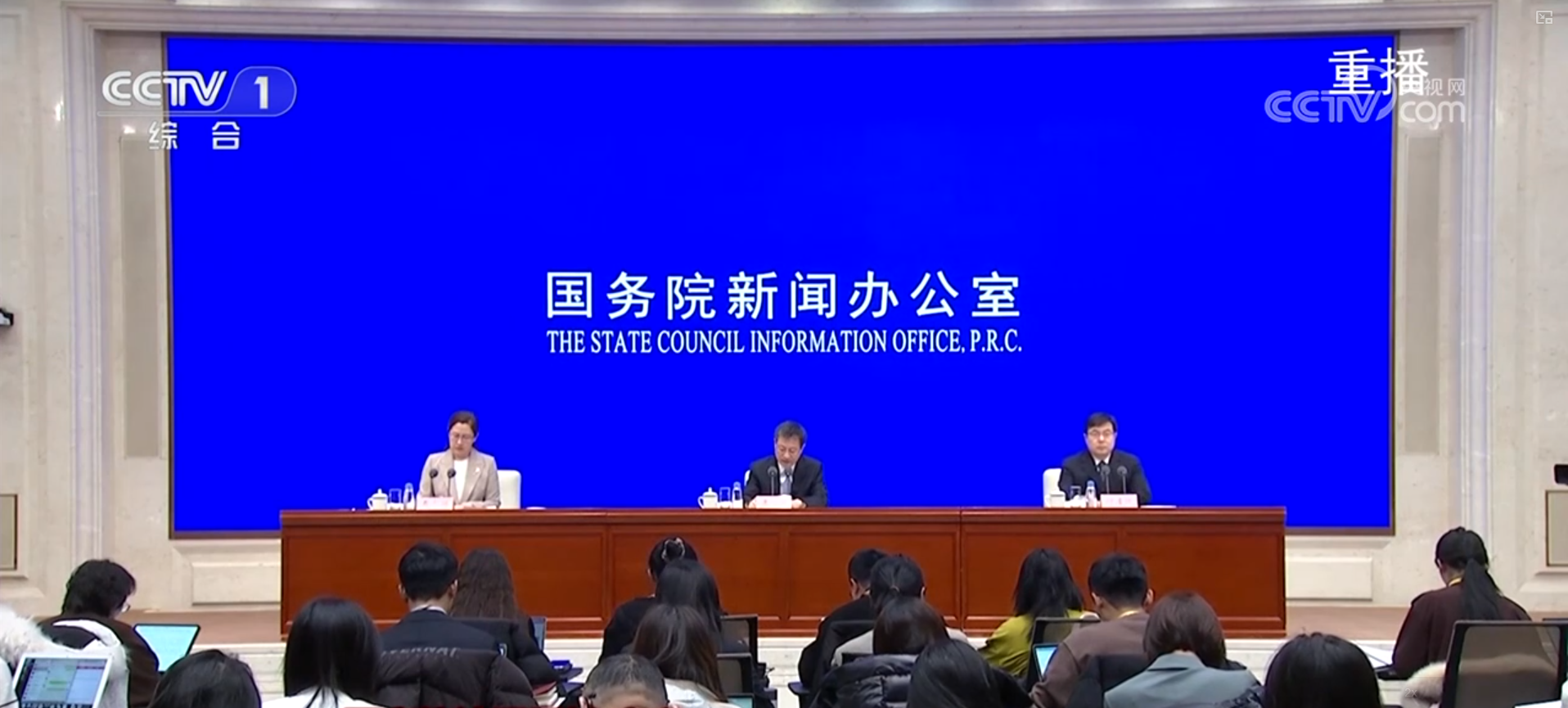
央视网消息:国务院新闻办公室1月19日举行新闻发布会,国家统计局发布2025年全年经济数据。2025年全年,国内生产总值突破140万亿元,国民经济 运行顶压前行、向新向优,高质量发展取得新成效。 我国GDP同比增5%预期目标完成 粮食产量连续两年站稳在1.4万亿斤以上 粮食增产丰收,畜牧业稳定增长。2025年,粮食产量达到1.43万亿斤,连续两年站稳在1.4万亿斤以上。 我国制造业规模继续保持全球第一 工业生产较快增长。2025年全国规模以上工业增加值比上年增长5.9%,制造业增加值比上年增长6.1%,占GDP的比重稳定在25%左右,制造业规模继 续保持全球第一。 服务业增加值比上年增长5.4% 服务业平稳增长。2025年全年服务业增加值比上年增长5.4%。占国内生产总值的比重提高到57.7%。 初步核算,全年国内生产总值1401879亿元,按不变价格计算,比上年增长5.0%;人均国内生产总值达到13953美元,已经连续3年超过1.3万美元。"这 一年,我国发展历程很不平凡,取得的成绩令人鼓舞,经济顶压前行、向新向优发展,主要预期目标圆满实现。"国家统计局局长康义称。 国家统计局局长 康义:下阶段,坚持稳中求 ...
去年旅游咨询租赁服务等零售额增长两位数以上
Xin Lang Cai Jing· 2026-01-19 23:20
据介绍,2025年居民消费价格(CPI)与上年持平,月度同比变化小幅波动。当前,推动CPI温和回升 的有利因素在累积。今年元旦假期食品消费增加,外出就餐、走亲访友、旅游等服务消费较为活跃,9 天春节假期也在临近,有助于推动CPI季节性回升。1月份以来,飞机票、旅游等商品和服务价格总体 稳中有涨。 据介绍,随着人民生活水平提升,居民消费正从商品消费为主向商品和服务消费并重转变,服务消费潜 力不断释放。从企业销售看,2025年服务零售额比上年增长5.5%,快于商品零售额1.7个百分点。服务 零售额占整体零售额的比重在上升。从居民消费看,2025年服务性消费支出占居民人均消费支出的比重 是46.1%。各地也在持续创新消费场景,优化消费环境,文化、旅游、娱乐、赛事等细分领域多点开 花。 据介绍,2025年,国民经济运行顶压前行、向新向优,高质量发展取得新成效,经济社会发展主要目标 任务圆满实现,"十四五"胜利收官。其中,服务业平稳增长,现代服务业发展良好,全年服务业增加值 比上年增长5.4%,全年服务零售额比上年增长5.5%。 (来源:中国旅游报) 转自:中国旅游报 本报讯(记者 范朝慧)国务院新闻办公室于1月19日 ...
中国经济“稳进新韧” 2025年GDP首超140万亿元
Xin Lang Cai Jing· 2026-01-19 18:12
Economic Growth - In 2025, China's GDP reached 140,187.9 billion yuan, growing by 5% year-on-year, meeting the initial target set at the beginning of the year [1][2] - The GDP growth rate for the fourth quarter was 4.5%, a slowdown of 0.3 percentage points compared to the third quarter [1] Economic Contributions - In 2025, the contribution rates to economic growth from final consumption expenditure, capital formation, and net exports were 52.0%, 15.3%, and 32.7% respectively [4] - The total retail sales of consumer goods exceeded 50 trillion yuan, growing by 3.7% year-on-year, with service retail sales increasing by 5.5% [5] Industrial Production - The industrial added value reached 41.7 trillion yuan in 2025, growing by 5.8% year-on-year, contributing 35% to economic growth [6][7] - The manufacturing sector's added value was 34.7 trillion yuan, with a growth rate of 6.1%, maintaining a stable share of around 25% of GDP [6] Consumer Behavior - The share of service consumption in per capita consumption expenditure was 46.1% in 2025, indicating a shift towards service-oriented consumption [5] - The growth in service retail sales outpaced that of goods retail sales, reflecting changing consumer preferences towards personalized and high-quality services [5] Future Outlook - Despite challenges, the economic foundation remains strong, with opportunities expected to outweigh challenges in 2026 [1][3] - The focus for 2026 will be on enhancing industrial development and technological innovation, with expectations for industrial added value growth to reach approximately 4.9% [8][9]
世界见证中国经济“顶压前行”的韧性
Xin Lang Cai Jing· 2026-01-19 15:07
Core Insights - China's GDP exceeded 140 trillion yuan in 2025, achieving a year-on-year growth of 5.0%, demonstrating the resilience of the Chinese economy amid complex global conditions [1][2] - The successful attainment of China's economic growth target reflects high-level policy formulation and strong execution capabilities [1] - The "14th Five-Year Plan" has seen a remarkable achievement with GDP reaching new milestones of 110 trillion, 120 trillion, 130 trillion, and 140 trillion yuan [1] Economic Performance - The past year was marked by significant challenges, including intensified global trade frictions and geopolitical conflicts, yet China managed to achieve both "quantitative leaps" and "qualitative improvements" in its economy [1][3] - The resilience of the Chinese economy is rooted in a solid industrial system and scientific macroeconomic policies [3] - The primary industry grew by 3.9%, the secondary industry by 4.5%, and the tertiary industry led with a growth rate of 5.4%, contributing significantly to GDP [3] Innovation and Global Contribution - China's economic innovation and practical efforts are becoming a rare certainty in the uncertain global economic landscape [4] - Major innovations, such as the Tianwen-1 probe and advancements in high-speed trains and aircraft, highlight China's commitment to technological self-reliance [4] - The data indicates that by the end of 2025, the number of cars per hundred households in China reached 52.9, reflecting a growing consumer market [4] Future Outlook - As China enters the "15th Five-Year Plan," the economy is expected to continue demonstrating resilience and vitality, providing a stable direction for the global economy [5] - The unique resilience and vitality of the Chinese economy send a clear signal of "using its own certainty to counter global uncertainties" [5]
2025年12月经济数据点评:新旧动能持续转换
CMS· 2026-01-19 14:04
Industrial Production - In December 2025, the industrial added value above designated size increased by 5.2% year-on-year, slightly up from 4.8% in November[1] - The annual growth rate for industrial added value was 5.9%, indicating resilience in industrial production[1] - High-tech manufacturing saw a significant increase of 11.0% year-on-year in December, with a cumulative growth of 9.4% for the year, outperforming overall industrial growth by 3.5 percentage points[1] Fixed Asset Investment - Total fixed asset investment for 2025 decreased by 3.8% year-on-year, widening from a decline of 2.6% in the previous month[1] - Infrastructure investment (excluding utilities) fell by 2.2% year-on-year, marking a shift from previous positive growth to negative[1] - Real estate development investment plummeted by 17.2% year-on-year, with new housing sales area down by 8.7% and sales revenue down by 12.6%[1] Consumer Spending - Retail sales in December grew by only 0.9% year-on-year, the lowest growth rate since 2023, down 0.4 percentage points from the previous month[1] - The total retail sales for the year surpassed 50 trillion yuan, with a year-on-year growth of 3.7%[5] - Service consumption showed relative strength, while goods consumption remained weak, particularly in durable goods like home appliances, which saw a decline of approximately 18%[5]
中国经济“稳进新韧”
第一财经· 2026-01-19 13:57
Core Viewpoint - In 2025, China's GDP reached 140 trillion yuan, achieving a growth rate of 5%, meeting the initial target set at the beginning of the year, and maintaining stability in economic performance amidst various challenges [2][3]. Economic Growth and Structure - The GDP growth for 2025 was consistent across quarters: Q1 at 5.4%, Q2 at 5.2%, Q3 at 4.8%, and Q4 at 4.5% [4]. - The contribution rates to economic growth from final consumption expenditure, capital formation, and net exports were 52.0%, 15.3%, and 32.7% respectively for the year [5][6]. Consumer Behavior and Retail - The total retail sales of consumer goods surpassed 50 trillion yuan, growing by 3.7% year-on-year, with service retail sales increasing by 5.5%, indicating a shift towards service consumption [5][6]. - Service consumption accounted for 46.1% of per capita consumption expenditure, reflecting a growing trend towards diverse and quality consumption preferences [6][7]. Industrial Performance - Industrial production value reached 41.7 trillion yuan, growing by 5.8%, with manufacturing value added at 34.7 trillion yuan, increasing by 6.1% [8][9]. - The high-tech manufacturing sector showed significant growth, with increases of 9.4% in high-tech manufacturing and 9.2% in equipment manufacturing, indicating a shift towards advanced industrial capabilities [8][9]. Future Outlook - Despite challenges in 2026, the economic foundation remains strong, with expectations for continued growth driven by domestic demand and policy support [5][10]. - The focus for 2026 will be on stabilizing key industries, expanding effective demand, and fostering innovation to enhance industrial growth [10].

中国经济“稳进新韧”,2025年GDP首超140万亿元
Di Yi Cai Jing· 2026-01-19 13:25
Economic Growth - China's GDP reached 140 trillion yuan in 2025, growing by 5% year-on-year, maintaining the same growth rate as the previous year [2][3] - The contribution rates to economic growth from final consumption expenditure, capital formation, and net exports were 52.0%, 15.3%, and 32.7% respectively in 2025 [5] Industrial Production - The industrial added value in 2025 was 41.7 trillion yuan, increasing by 5.8% year-on-year, contributing 35% to economic growth [8][9] - Manufacturing output reached 34.7 trillion yuan, with a growth rate of 6.1%, maintaining a stable share of around 25% of GDP [8] Consumer Behavior - Service consumption accounted for 46.1% of per capita consumption expenditure in 2025, indicating a shift towards service-oriented spending [6] - Retail sales of consumer goods exceeded 50 trillion yuan, growing by 3.7% year-on-year, with service retail sales increasing by 5.5% [5][6] Economic Outlook - The economic growth rate is expected to remain stable in 2026, with a focus on enhancing industrial development and technological innovation [10][11] - Despite challenges, the long-term positive trend of the economy is expected to continue, supported by a large middle-income population and ongoing consumption upgrades [6][10]