证券业

Search documents
2026年货币政策将灵活高效精准发力
Zhong Guo Zheng Quan Bao· 2025-12-16 20:19
Core Viewpoint - The central theme of monetary policy remains "supportive," with a focus on enhancing financial support for the real economy and maintaining financial market stability in 2025 and beyond [1][3]. Group 1: Monetary Policy Implementation - The central bank has implemented a moderately loose monetary policy, utilizing various tools such as reserve requirement ratio cuts and open market operations to ensure ample liquidity in the financial system [1][2]. - In May, the central bank reduced the reserve requirement ratio by 50 basis points, releasing approximately 1 trillion yuan in long-term liquidity, which has effectively supported the real economy [2]. - The average interest rate for newly issued corporate loans was about 3.1% in November, down approximately 30 basis points year-on-year, indicating a historical low in financing costs [2]. Group 2: Future Monetary Policy Outlook - The supportive monetary policy stance is expected to continue into 2026, with an emphasis on flexible and precise implementation of tools like rate cuts and reserve requirement adjustments [3][4]. - Experts suggest that the central bank will focus on stabilizing economic growth and promoting reasonable price recovery, with rate cuts remaining a key option in the monetary policy toolkit [3][5]. Group 3: Structural Monetary Policy Tools - The central bank aims to enhance the effectiveness of structural monetary policy tools to direct financial resources towards key sectors and vulnerable areas of the economy [4][5]. - By increasing the quotas for loans supporting agriculture and small enterprises, as well as for technological innovation, the central bank is targeting specific areas to boost financial support [4]. Group 4: Financial Market Stability - The central bank has prioritized maintaining stable financial markets amid increasing global uncertainties, implementing measures to support stock market stability and enhance investor confidence [6][7]. - The yuan has shown a stable appreciation against the dollar, with a year-to-date increase of approximately 3.51% in the onshore market, reflecting a solid foundation for long-term currency stability [6][7]. - The restoration of government bond trading operations has improved market conditions, with the 10-year government bond yield stabilizing around 1.8%, facilitating financing for the real economy [6][7].
跌出票息价值了吗?
SINOLINK SECURITIES· 2025-12-16 14:53
Group 1: Report Industry Investment Rating - Not provided in the report Group 2: Core Views of the Report - As of December 15, 2025, private enterprise real estate bonds and industrial bonds in the outstanding credit bonds have higher overall valuation yields and spreads compared to other varieties. The yields of most non - financial and non - real estate industrial bonds have increased, and real estate bond yields have generally risen. In the financial bond sector, the yields of financial bonds have declined slightly more than those of general credit bonds, but there is differentiation among bond types [2][3][8]. Group 3: Summary by Relevant Catalogs 3.1 Overall Outstanding Credit Bonds - **Valuation Yields and Spreads**: Private enterprise real estate bonds and industrial bonds have higher overall valuation yields and spreads. Non - financial non - real estate industrial bonds have more than half of their yields increasing, with most real estate bond yields rising. In financial bonds, the yields of urban and rural commercial bank capital supplementary tools and leasing company bonds have higher valuation yields and spreads [2][3][8]. - **Yield Changes Compared to Last Week**: Non - financial non - real estate industrial bonds have more than half of their yields increasing, except for private enterprise private - placement bonds within one year, with the yield adjustment of other varieties being less than 4BP. Real estate bond yields have generally increased, with the yields of non - perpetual bonds within one year rising by more than 5BP, and 3 - 5 - year private enterprise public non - perpetual bonds also having a significant adjustment. Financial bond yields have a slightly higher proportion of decline than general credit bonds, with differentiation among bond types. For example, the 1 - 2 - year public perpetual bonds of leasing bonds have a 5.5BP increase in yield [3][4][8]. 3.2 Urban Investment Bonds 3.2.1 Public Urban Investment Bonds - **Valuation Yields and Spreads**: The weighted average valuation yields of Jiangsu and Zhejiang provinces are below 2.6%. Bonds with yields exceeding 4.5% are in Guizhou's county - level areas, and regions such as Guangxi, Yunnan, and Gansu also have higher spreads [2][17]. - **Yield Changes Compared to Last Week**: Most yields have declined. The average decline of 2 - 3 - year varieties is 1.4BP, but most varieties within one year have continued to adjust. The varieties with a large decline in yield include 3 - 5 - year non - perpetual bonds of Guizhou prefecture - level cities, 1 - 2 - year non - perpetual bonds of Yunnan county - level areas, etc. [2][17]. 3.2.2 Private Urban Investment Bonds - **Valuation Yields and Spreads**: The weighted average valuation yields of coastal provinces such as Shanghai, Zhejiang, Guangdong, and Fujian are below 2.95%. Bonds with yields higher than 4% are in Guizhou's prefecture - level cities, and regions such as Yunnan, Gansu, and Liaoning also have higher spreads [27]. - **Yield Changes Compared to Last Week**: More than half of the bond varieties have yield adjustments, with the average yield of varieties within one year increasing by 2BP. The varieties with a large decline in yield include 2 - 3 - year non - perpetual bonds of Guizhou county - level areas, 1 - 2 - year non - perpetual bonds of Yunnan county - level areas, etc. [27]. 3.3 Industrial Bonds - **Valuation Yields and Spreads**: Private enterprise real estate bonds and industrial bonds have higher overall valuation yields and spreads compared to other varieties [2][3][8]. - **Yield Changes Compared to Last Week**: More than half of the yields of non - financial non - real estate industrial bonds have increased. Except for private enterprise private - placement bonds within one year, the yield adjustment of other varieties is less than 4BP. Real estate bond yields have generally increased, with the yields of non - perpetual bonds within one year rising by more than 5BP, and 3 - 5 - year private enterprise public non - perpetual bonds also having a significant adjustment [3][8]. 3.4 Financial Bonds - **Valuation Yields and Spreads**: The valuation yields and spreads of urban and rural commercial bank capital supplementary tools and leasing company bonds are relatively high [4][8]. - **Yield Changes Compared to Last Week**: The proportion of yield decline is slightly higher than that of general credit bonds, but there is differentiation among bond types. Leasing bonds have the largest adjustment, with the 1 - 2 - year public perpetual bond yield increasing by 5.5BP. The yields of commercial financial bonds within 3 years are mainly increasing, with an increase of generally less than 2BP, and the adjustment of varieties within one year is greater than that of 1 - 3 - year varieties. The valuation of bank sub - bonds has generally recovered, with the yields of 3 - 5 - year secondary capital bonds and 2 - 5 - year perpetual bonds of different banks generally decreasing. The performance of securities company sub - bonds is better than that of ordinary bonds, with the yields of 1 - 2 - year public perpetual and private non - perpetual bonds of the same period decreasing by about 3BP [4][8].
中美关税大调整!美联储降息175基点,2026亚太货币要集体升值
Sou Hu Cai Jing· 2025-12-16 12:50
Core Viewpoint - The recent appreciation of the Renminbi (RMB) against the US dollar has sparked discussions about the possibility of the RMB breaking the 7.0 mark by 2026, driven by three main factors and two significant concerns [1]. Group 1: External Monetary Policy - The direct driver of the RMB's recent appreciation is the global shift in monetary policy, highlighted by the Federal Reserve's decision to cut interest rates by 25 basis points on December 11, bringing the federal funds rate to 3.50%-3.75%, with a total reduction of 175 basis points in this cycle [4]. - The Fed's indication of further rate cuts in early 2026 has led to a weakening of the US dollar, with the dollar index recently falling below 100, marking a year-to-date low [4]. - UBS's Chief Investment Officer for Greater China noted that the continued rate cuts by the Fed will result in the US dollar underperforming against G10 currencies, with an expected 2%-3% appreciation for Asia-Pacific currencies [6]. Group 2: Internal Policy Support - The core support for the RMB's appreciation comes from ongoing domestic policy efforts and improvements in economic fundamentals, with the Central Economic Work Conference emphasizing the need to maintain stability in the RMB exchange rate [10]. - The People's Bank of China (PBOC) has injected liquidity into the market through a 600 billion yuan reverse repurchase operation on December 15, marking the seventh consecutive month of such actions [12]. - Economic indicators show a recovery, with the manufacturing PMI returning to expansion at 50.7 and retail sales growing by 4.8% year-on-year, indicating a clear recovery in domestic demand [10]. Group 3: Market Dynamics and Predictions - The expectation of RMB appreciation has led to increased overseas investment in RMB assets, with northbound capital ETF transactions reaching 3.271 billion yuan on December 15, despite a slight decrease from the previous period [14]. - The concentration of corporate demand for currency exchange at year-end has further strengthened the RMB, with a 12% increase in foreign exchange transaction volume on December 8 [16]. - Market experts generally hold optimistic views on the RMB breaking the 7.0 mark by 2026, with predictions ranging from 6.9 to 6.5 by the end of 2026, although some analysts remain cautious about the pace of appreciation [17][20].

每日机构分析:12月16日
Xin Hua Cai Jing· 2025-12-16 11:31
Group 1 - Nomura Securities predicts that the Bank of Korea has ended its current rate-cutting cycle, with a shift in policy risk towards rate hikes by 2026, supported by economic recovery in consumption, construction, and the semiconductor industry [1] - Standard & Poor's Global reports that the UK's PMI has stabilized, with business confidence recovering, although growth remains weak, as the composite PMI rose to 52.1 in December [2] - The Australian Federal Bank expects the Reserve Bank of Australia to raise interest rates to 3.85% by February 2026, with a tightening cycle potentially beginning due to core inflation remaining above 3% for five consecutive quarters [3] Group 2 - The OECD Secretary-General states that the AI investment boom will continue, significantly boosting productivity and economic growth in the medium to long term, despite a projected slowdown in global growth from 3.2% in 2025 to 2.9% in 2026 due to increasing trade headwinds [2] - The economic outlook for the Eurozone is uncertain, with a decline in Germany's industrial performance dragging down overall results, as the composite PMI fell to 51.9 in December, indicating a contraction in manufacturing for two consecutive months [2] - Morningstar DBRS has a negative outlook on the global private credit industry, warning that declining borrower profit margins may increase default rates in 2026, although the industry remains resilient despite regulatory tightening in the US and UK [3]
11月份经济数据解读:经济维持稳态,结构性改善明显
Caixin Securities· 2025-12-16 09:17
Report Industry Investment Rating No specific industry investment rating is provided in the report. Core Viewpoints of the Report - The economy maintained a stable state in November 2025, with obvious structural improvements, but the endogenous momentum needs to be consolidated, and the recovery trend remains to be observed. The report maintains the judgment that the economic growth rate in 2026 will still be positive, with a possible pattern of being lower in the first half and higher in the second half [4]. - In the equity market, market sentiment may continue to improve, and the market may show a volatile upward trend. In the bond market, volatility may increase, and it is not recommended to buy at the bottom in the short term. In the commodity market, the differentiation intensifies, and attention should be paid to gold, copper, and aluminum priced internationally [4]. Summary by Relevant Catalogs 1. Overview of the November 2025 Economy - The economy maintained a stable state with obvious structural improvements, including the continuous recovery of CPI, prominent economic kinetic energy switching, strengthened export competitiveness, high - level production, steady growth of industrial enterprise profits, and highlights in service consumption [5]. - The endogenous momentum needs to be consolidated, and the recovery trend remains to be observed. The "subsidy withdrawal" effect has a significant impact, economic data still needs trend improvement, the endogenous growth momentum needs to be strengthened, and real estate still has a certain drag on the economy [6]. 2. Interpretation of November 2025 Economic Sub - item Data - Manufacturing PMI increased slightly, and service PMI declined. The new order index was the main contributor to the increase in PMI. The PMI of high - tech manufacturing was above the boom - bust line. The service business activity index was below the boom - bust line for the first time since September 2024. The construction industry PMI improved [7][8]. - Fixed - asset investment continued to decline under the drag of real estate. Real estate development investment dragged down the growth rate of fixed - asset investment by 3.4 percentage points. In the future, the drag of real estate on fixed - asset investment is expected to shrink, and infrastructure investment may stabilize, while manufacturing investment should focus on emerging directions [9]. - Service consumption had highlights, while commodity consumption was highly differentiated. The total retail sales of consumer goods increased slightly. Service consumption, such as catering, maintained growth, while commodity consumption, such as automobiles and home appliances, declined due to the "subsidy withdrawal" effect [10]. - Exports showed strong resilience, with prominent structural highlights and a steady expansion of the surplus. In November, the export growth rate rebounded. The exports to Africa performed outstandingly, and the product structure was optimized. Exports are expected to be a major bright spot in the economy in 2026 [11][12]. - Real estate sales continued to bottom out. The sales area and sales volume of new commercial housing decreased year - on - year, and the market was still in the process of destocking. The prices of commercial residential buildings in large and medium - sized cities declined both month - on - month and year - on - year [13]. - The production end remained stable. In November, the added value of large - scale industrial enterprises increased year - on - year and month - on - month. The added value of the equipment manufacturing and high - tech manufacturing industries grew faster than the overall level [14]. - At the price end, CPI continued to rise, and PPI was stable and waiting to rise. In November, CPI increased year - on - year, and PPI increased month - on - month. Consumption - end prices showed a recovery trend, and production - end prices were characterized by differentiation [14]. - In November, the overall social financing was stable, and credit increased less year - on - year. Government bond financing supported the growth of social financing, while the demand of the resident sector was weak, and the demand of the enterprise sector improved marginally [18]. - The profits of industrial enterprises increased steadily. From January to October 2025, the cumulative profit growth rate of large - scale industrial enterprises increased for three consecutive months. In the future, policies are expected to promote the growth of industrial enterprise profits [19][20]. 3. Future Economic Outlook - Overseas, the main narrative is the soft landing of the economy, but there are still uncertainties in the structure. The US economy is expected to maintain a positive trend, but there are risks such as the differentiation between the real and virtual economies, the widening wealth gap, and the differentiation between AI and non - AI investments [21]. - At the domestic policy level, in 2026, the macro - policy will be more proactive. Fiscal policy will be more positive and pay attention to robustness and sustainability, and monetary policy will be moderately loose, with possible reserve requirement ratio and interest rate cuts [21]. - In terms of the economy, the economic growth rate in 2026 is expected to be lower in the first half and higher in the second half. The endogenous recovery momentum of domestic demand needs to be consolidated, and exports are expected to perform well [22]. 4. Investment Suggestions - Equity market: In the short term, the market may show a volatile upward trend. Investors should focus on sectors with positive event catalysts, sectors benefiting from the recovery of the equity market, sectors benefiting from the Fed's interest rate cuts, and the supplementary rise of the large - consumption sector [24]. - Bond market: The volatility of ultra - long bonds may increase, and it is not recommended to buy at the bottom in the short term. Attention should be paid to the expected term of fiscal bond issuance and the adjustment of the risk assessment indicators of large banks [25]. - Commodity market: The differentiation intensifies. For precious metals, the long - bull foundation of gold remains. For crude oil, the price trend may continue to be weak. For internationally priced non - ferrous metals, the price is in a medium - term upward channel. For commodities priced by the domestic fundamentals, the prices of relevant "anti - involution" varieties will enter a wide - range volatile trend [26].
2026超长债之供需格局
HUAXI Securities· 2025-12-16 08:12
Supply and Demand Dynamics - The total supply of long-term government bonds in 2026 is projected to be between 6.5 trillion and 7.2 trillion yuan, slightly higher than the 6.4 trillion yuan in 2025[2][4]. - The issuance of long-term government bonds has increased significantly since 2019, with the proportion of bonds with a maturity of over 10 years rising from less than 5% before 2019 to around 25% in recent years[2]. Market Behavior and Trends - From November 20 to December 15, 2025, net sales of bonds with maturities over 10 years totaled 659 billion yuan by brokerages, with funds also selling 458 billion yuan during the same period due to relative ranking pressures[1]. - The yield on 10-year government bonds rose from 1.81% to 1.87%, while the yield on 30-year bonds increased from 2.14% to 2.28%, leading to a widening yield spread of 43 basis points[1]. Issuance Patterns - In 2025, the issuance of special government bonds accounted for 1.3 trillion yuan, while ordinary long-term bonds totaled 211 billion yuan, indicating a shift towards longer maturities[3]. - The issuance of long-term local government bonds peaked in the first quarter of 2025, with significant amounts issued in subsequent months, reflecting a balanced issuance rhythm throughout the year[5][6]. Institutional Demand and Capacity - Major banks have been net sellers of long-term government bonds, with cumulative net sales of 3.58 trillion yuan for large banks and 2.79 trillion yuan for joint-stock banks in 2025[8]. - Insurance companies have emerged as significant buyers of long-term bonds, with net purchases of 2.36 trillion yuan in long-term government bonds and 1.88 trillion yuan in local bonds in 2025[9]. Future Outlook - The demand for long-term government bonds in 2026 may be constrained by potential declines in insurance premium growth and regulatory pressures on asset management products, which could limit their capacity to absorb new issuances[10][11]. - The market's ability to improve the supply-demand structure will be crucial for the performance of long-term bonds, with potential adjustments in bank capacity and central bank interventions being key factors to watch[12].
亚太股市,全线下跌!发生了什么
Zhong Guo Zheng Quan Bao· 2025-12-16 04:33
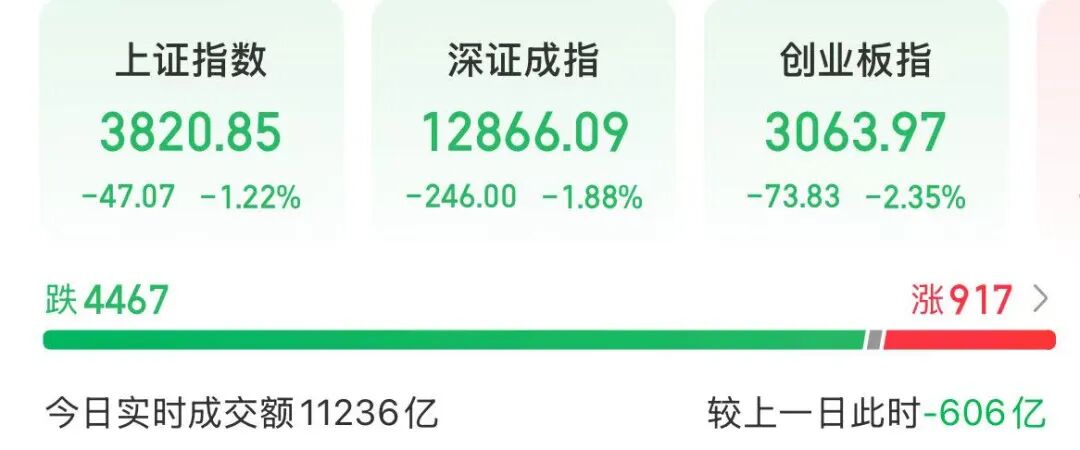
三大原因引发调整 亚太股市今天上午普跌,日本和韩国股市双双下跌,A股和港股也随之下挫。 今天上午,A股三大股指齐跌,逾4400只个股下跌。截至上午收盘,上证指数下跌1.22%,深证成指下跌1.88%,创业板指下跌2.35%。大消费表现活跃, 国防军工、有色金属、新能源、半导体、算力等板块下跌。 港股方面,恒生指数下跌1.91%,恒生国企指数跌2.11%,恒生科技指数跌2.41%。 截至北京时间12:04,日经225指数下跌1.24%,韩国综合指数下跌1.82%。 贵金属方面,国际金银价格跳水。截至北京时间12:10,COMEX黄金期货价格下跌0.42%,COMEX白银期货价格下跌1.41%;伦敦金现货价格跌破4300美 元/盎司关口,报4287.81美元/盎司,下跌0.39%;伦敦银现货价格下跌2.11%。 | 贵金属 △ | | | | --- | --- | --- | | 伦敦金现 | 伦敦银现 | COMEX黄金 | | 4287.810 | 62.681 | 4316.8 | | -16.950 -0.39% | -1.353 -2.11% | -18.4 -0.42% | | COMEX白银 | ...
美联储2026年或放缓降息步伐
Qi Huo Ri Bao Wang· 2025-12-16 02:09
Core Viewpoint - The Federal Reserve's recent decision to lower the benchmark interest rate by 25 basis points aligns with market expectations, indicating a potential slowdown in future rate cuts compared to this year [1][2][5] Group 1: Federal Reserve's Actions - The Federal Reserve has cut the benchmark interest rate to a range of 3.50% to 3.75%, marking a total reduction of 75 basis points this year [2] - The decision faced internal dissent, with three officials voting against the rate cut, indicating a higher level of disagreement within the Fed than previously anticipated [2][3] - The Fed has also announced the end of its balance sheet reduction and the initiation of asset purchases to maintain adequate reserves, reflecting liquidity pressures in the banking system [5][6] Group 2: Economic Indicators - The Fed's economic outlook has been adjusted, with GDP growth forecasts for 2025 and 2026 raised to 1.7% and 2.3% respectively, while inflation expectations have been slightly lowered [6] - The unemployment rate has risen to 4.4%, the highest in four years, indicating a cooling labor market, which may increase the necessity for further rate cuts [8][10] - Core service inflation has decreased from 4.3% to 3.5%, suggesting that overall inflation levels may remain subdued [9] Group 3: Market Implications - The market is currently pricing in a cautious approach from the Fed, with expectations of potential rate cuts in early 2026, but also a possibility of pausing cuts depending on economic data [7][10] - The global monetary policy landscape is diverging, with the Fed in a rate-cutting cycle while other major central banks are on hold, reflecting varying economic conditions [12] - Risk assets, particularly equities, are expected to perform well due to improved market sentiment and liquidity conditions, despite concerns over potential bubbles in sectors like AI [14][15]

国海证券晨会纪要-20251216
Guohai Securities· 2025-12-16 01:46
Core Insights - The report highlights the rising prices of phosphate fertilizers and polyurethane, indicating a focus on the chemical industry amidst internal competition and chromium salt demand [3][5][29] - The report suggests that the ongoing tensions in Sino-Japanese relations may accelerate the domestic substitution of semiconductor materials, particularly in the context of high market share held by Japanese suppliers [4][29] - The chemical industry is expected to experience a significant transformation, with a shift from being a "cash-consuming" sector to a "cash-generating" one, driven by changes in supply dynamics and potential increases in dividend yields [5][29] Industry Summaries Phosphate and Chromium Salt - The chemical industry index shows a slight decline, with the current index at 91.63, down 0.18 from the previous week [3] - The chromium salt sector is experiencing a value reassessment due to increased demand from AI data centers and commercial aircraft engines, with a projected supply-demand gap of 340,900 tons by 2028 [5][6] Chemical Industry Opportunities - Key opportunities identified include low-cost expansion in companies like Wanhua Chemical and Hualu Hengsheng, and sectors such as oil and coal chemicals, organic silicon, and glyphosate [6][7] - The report emphasizes the importance of high dividend yields in state-owned enterprises within the chemical sector, recommending investments in companies like China Petroleum and China National Chemical [8] New Materials Sector - The new materials sector is highlighted as a critical growth area, with a focus on electronic chemicals, aerospace materials, and biodegradable plastics, driven by rapid demand growth and policy support [35][41][46] - The establishment of a national-level platform for polysilicon capacity integration is expected to reshape the competitive landscape of the silicon material industry [42][43] Automotive Industry - The automotive sector is projected to continue its growth trajectory, with a focus on new energy vehicles and high-end models, supported by favorable policies and market conditions [49][50] - The report notes that the automotive industry index outperformed the broader market, with significant growth in electric vehicle sales [52] Bond Market Insights - The report discusses the decline in trading volume for 10-year government bonds, suggesting a shift in investor preference towards longer-duration bonds, influenced by the current low-interest-rate environment [30][31][32]

关于嘉实3个月理财债券型证券投资 基金第十九期运作期投资组合构建情况说明的公告
Sou Hu Cai Jing· 2025-12-15 23:11
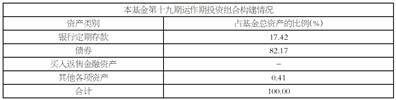
Group 1 - The fund's nineteenth operational period commenced on December 3, 2025, and will last for 91 days until March 3, 2026 [1] - The asset allocation of the fund as of December 12, 2025, is as follows: 17.42% in bank deposits, 82.17% in bonds, and 0.41% in other assets, totaling 100% [1] - The fund management has completed the investment portfolio construction for this period [1] Group 2 - A communication-based meeting for the fund's shareholders will be held to discuss the proposal for the continuous operation of the fund [5][6] - The voting period for the meeting will be from December 17, 2025, to January 16, 2026, with the counting of votes scheduled for January 20, 2026 [6][7] - The meeting will require a minimum of 50% of the fund's total shares to be represented for the proposal to be valid [36] Group 3 - The fund has experienced a situation where its net asset value has been below 50 million yuan for 60 consecutive working days, prompting the need for a proposal to continue its operation [39][40] - The management has submitted a solution to the China Securities Regulatory Commission regarding the continuous operation of the fund [40] - The proposal includes authorizing the fund management to handle specific matters related to the continuous operation based on market conditions [40]