人形机器人

Search documents
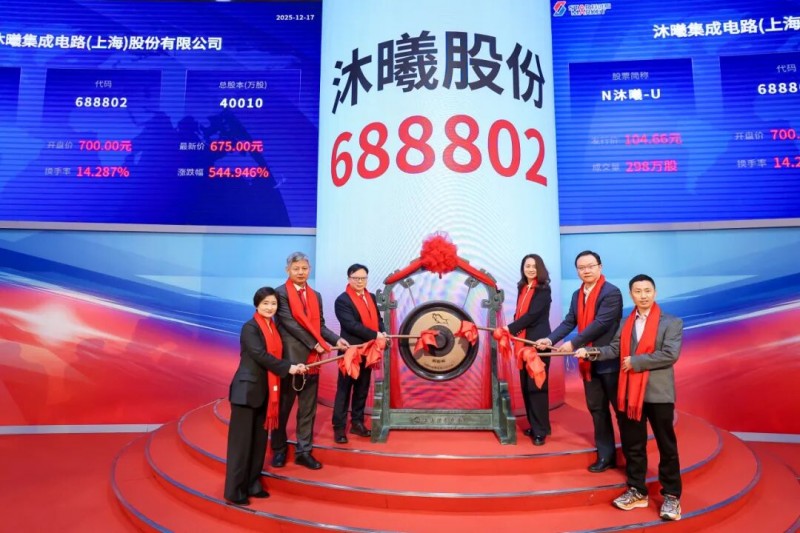
坤元资产FOF生态伙伴再启“芯”潮 收获科创板最赚钱新股沐曦股份
Cai Fu Zai Xian· 2025-12-17 09:15
Group 1 - The core event is the successful listing of Muxi Co., Ltd. on the Shanghai Stock Exchange's Sci-Tech Innovation Board, marking it as the second domestic GPU leader to go public in A-shares, with a first-day opening price of 700 RMB, a surge of 568.83%, and a closing increase of 692.95%, leading to a market capitalization exceeding 332 billion RMB [1][4] - The listing reflects a significant demand in the secondary market for "fully functional high-end GPUs," indicating a shift in the market's focus towards domestic technology and innovation [1][2] - The Central Economic Work Conference has emphasized the dual-track deployment of "deepening and expanding 'Artificial Intelligence +'" and "improving AI governance," signaling a strategic shift towards systemic industrial empowerment [2] Group 2 - The emergence of domestic GPU companies like Muxi and Moer Thread represents a critical move towards achieving "computing power sovereignty" in China, breaking the long-standing monopoly held by global giants like NVIDIA [3] - Muxi Co., Ltd. has committed to independent research and development, aiming for a fully controllable process from instruction set architecture to software ecosystem, which has gained increasing support from national policies [3] - The funds raised from the IPO will be allocated to three major projects: the development and industrialization of new high-performance general-purpose GPUs, AI inference GPUs, and high-performance GPU technology for emerging applications, aiming to enhance the company's product line and technological reserves [5] Group 3 - The AI landscape in China is evolving, with companies like Zhipu AI emerging as strong contenders in the large model sector, boasting a valuation exceeding 40 billion RMB and significant commercial success [6][7] - Zhipu AI's annual recurring revenue has surpassed 140 million RMB, with a tenfold increase in subscription service users within two months of launching its flagship model, indicating a successful transition from technology to commercial value [7] - The company is expanding its revenue sources beyond traditional government clients to a broader developer community and enterprise customers, showcasing its potential in the post-ChatGPT era [7] Group 4 - The concept of "embodied intelligence" is gaining traction, with companies like Yushu Technology on the verge of becoming the first A-share listed company in this field, focusing on humanoid robots and aiming for mass production [8][9] - Yushu Technology plans to raise 3 billion RMB to expand its humanoid robot production line, with its G1 robot priced at 99,000 RMB, significantly lower than competitors like Tesla's Optimus, thus accelerating the commercial viability of humanoid robots [9] - The increasing demand for humanoid robots is driven by demographic changes and labor market shifts, positioning them as strategic resources rather than mere toys [9] Group 5 - The narrative of the Chinese AI industry is being shaped by companies like Muxi, Zhipu AI, and Yushu Technology, which are seen as the builders of China's future competitiveness in the global tech landscape [10] - The investment strategies of firms like Kun Yuan Asset emphasize long-term commitment to hard technology and alignment with national strategies, reflecting a broader vision for the future of AI and technology in China [10]

资金涌入,持续加仓!
Zhong Guo Zheng Quan Bao· 2025-12-16 14:08
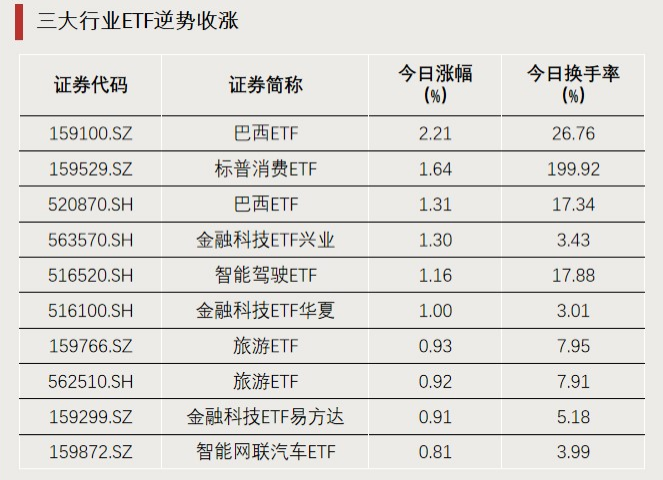
Market Overview - On December 16, A-shares and Hong Kong stocks experienced a pullback, with only about 50 out of over 1300 ETFs closing higher, and 6 of these ETFs rising by 1% or more. Financial technology, tourism, and automotive sector ETFs showed relative resilience [1] - In the cross-border ETF segment, two Brazilian ETFs and one S&P Consumer ETF led the market in terms of gains [1] ETF Performance - Notably, several ETFs that rose against the market trend saw significant increases in trading volume. The S&P Consumer ETF (159529) had a turnover rate of 199.92%, with a trading volume nearing 2 billion yuan, four times that of the previous day. The Smart Driving ETF (516520) also saw its trading volume increase to approximately seven times that of the previous day [2] - On December 16, financial technology, tourism, and automotive sector ETFs performed well, with multiple products ranking among the top gainers. The financial technology ETFs linked to the CSI Financial Technology Index saw over half of their constituent stocks close in the green, with notable gains from companies like Chuangshi Technology (300941) and Cuiwei Co. (603123) [4] Fund Flows - On December 15, despite the market pullback, ETFs experienced a net inflow of approximately 6.7 billion yuan, with broad-based ETFs attracting significant capital. Several ETFs linked to the CSI A500 Index ranked among the top for net inflows, with three A500 ETFs collectively receiving over 13.5 billion yuan in net inflows over the past five trading days [3][9] - The A500 ETF from Southern Fund (159352) led with a net inflow of 3.915 billion yuan on December 15, significantly outpacing other products [11] Sector-Specific Insights - The gold stock ETFs faced a sharp decline on December 16, with the largest drop exceeding 4%. Six out of the top ten ETFs with the largest declines were gold-related, reflecting a cautious market sentiment ahead of key economic data releases [7] - The CSI A500 Index has over 280 public funds linked to it, with more than 80 asset management firms involved, totaling over 240 billion yuan in assets. Over 80% of this is held in ETF products, with 40 ETFs exceeding 210 billion yuan in total assets [10] Upcoming Products - On December 19, Huatai-PB Fund will launch the Sci-Tech Entrepreneurship Artificial Intelligence ETF, adding to the growing list of innovative ETF products in the market [13]
国内政策细则出台助推太空算力发展,再提能源强国指引核聚
GUOTAI HAITONG SECURITIES· 2025-12-16 13:49
Investment Rating - The report assigns an "Accumulate" rating for the industry [2]. Core Insights - Recent domestic policy details have been released to promote the development of space computing capabilities, with a focus on satellite data security and efficient utilization [2][3]. - The Central Economic Work Conference has reiterated the goal of building an "Energy Power," providing strategic guidance for the development of nuclear power and controlled nuclear fusion [2][3]. - The semiconductor equipment sales have shown steady growth, with a reported 11% year-on-year increase in global semiconductor equipment shipments in Q3 2025 [2][3]. Summary by Sections Investment Highlights - The mechanical equipment index increased by 1.80% from December 8 to December 12, outperforming the CSI 300 index, which decreased by 0.08% [6]. - The report recommends several companies across different sectors, including humanoid robots, engineering machinery, and liquid cooling systems [2][3]. Policy Developments - The National Space Administration has issued a plan to promote high-quality and safe development in commercial aerospace from 2025 to 2027, emphasizing the importance of satellite data security and application [2][3]. - The "Energy Power" strategy aims to accelerate the construction of a new energy system and expand the application of green electricity, providing a clear roadmap for nuclear energy development [2][3]. Semiconductor Equipment Market - The global semiconductor equipment shipment value reached $33.66 billion in Q3 2025, marking an 11% increase year-on-year and a 2% increase quarter-on-quarter [2][3]. - China remains the largest market for semiconductor equipment, with a shipment value of $14.56 billion in Q3 2025, reflecting a 13% year-on-year growth [2][3]. Industry Performance - The mechanical industry index has shown a year-to-date increase of 39.36%, significantly outperforming the CSI 300 index, which has increased by 19.91% [9].
路博迈集团温演道:关注港股科技市场的三条AI投资主线
Zhong Zheng Wang· 2025-12-16 13:22
Core Viewpoint - The key to uncovering AI investment opportunities in the Hong Kong stock market lies in connecting different markets while maintaining a global industrial chain perspective. The unique value of the Hong Kong market is its combination of global giants and hidden champions serving the global market [1]. Group 1: Main Investment Lines - The first line focuses on Hong Kong internet giants restructuring through AI, which are compared to US tech giants. These companies possess vast data, mature ecosystems, and strong cash flows, and their AI commercialization progress is often underestimated but is rapidly materializing [1]. - The second line highlights hidden champions benefiting from global AI demand. Hong Kong hosts companies that align with global trends and are often overlooked by investors, such as a global GaN chip supplier and a leading AI advertising platform [2]. - The third line emphasizes the acceleration of China's AI ecosystem, with Hong Kong gathering leading companies in humanoid robots and autonomous driving. These companies' technological routes are highly aligned with domestic market demands, and a global perspective remains crucial [2].
杨德龙:2026年我国经济形势与股市行情前瞻性分析
Xin Lang Cai Jing· 2025-12-16 11:06
Group 1: Economic Outlook and Market Trends - The macroeconomic environment is expected to improve gradually, supporting a slow bull market through stable growth policies and economic transformation [1][6] - Emerging industries highlighted in the "14th Five-Year Plan," such as semiconductor chips, artificial intelligence, and biotechnology, are projected to show significant growth, contributing to long-term investment opportunities [1][3] - The market in 2026 is likely to exhibit accelerated sector rotation and broader participation, potentially resembling a comprehensive bull market [1][7] Group 2: Capital Market Dynamics - A noticeable trend of residents shifting savings to capital markets began in 2025, with public fund issuance exceeding 1 trillion yuan, indicating a growing preference for equity funds over bond funds [2][7] - The end-of-year market typically experiences increased volatility, with profit-taking leading to short-term adjustments, which is considered normal [2][8] - Historical patterns suggest a "spring offensive" in the A-share market, driven by significant credit expansion and the return of profit-taking funds post-holiday [2][8] Group 3: Technology Sector Insights - The artificial intelligence sector has shown remarkable performance, with government initiatives promoting "AI+" to enhance productivity across traditional industries [3][9] - A comparison with international markets indicates that A-share and Hong Kong tech stocks are still in the early stages of growth, with significant room for development [3][9] - The valuation of tech stocks should focus on long-term growth potential rather than short-term metrics, as many companies are still in high-investment phases [4][10] Group 4: Precious Metals and Asset Allocation - Gold and silver prices have seen substantial increases, with gold reaching a peak of 4,400 USD per ounce in 2025, and are expected to continue rising in 2026 [4][10] - The U.S. government's high debt levels and interest payments have led to a shift in investor preference towards precious metals as a hedge against dollar depreciation [5][11] - A recommended allocation of approximately 20% in gold assets for investment portfolios in 2026 is suggested to enhance risk-return profiles [5][11] Group 5: Dividend Stocks and Investment Strategies - Dividend-paying stocks, particularly in the banking sector, have performed well in 2025 and are expected to remain attractive in 2026 due to declining deposit rates [12] - Investors are likely to favor stable dividend stocks as they enter the capital market, driven by a low-risk appetite [12] - The overall market logic of a slow bull and long bull remains intact, with sectors like technology innovation, new energy, and consumer upgrades expected to support market performance [6][12]
机械行业2026年策略:聚焦新市场、新场景、新周期
Dongxing Securities· 2025-12-16 06:17
Group 1 - The mechanical sector has shown strong performance in 2025, with the Shenwan Mechanical Equipment Index rising by 36.11%, outperforming the Shanghai Composite Index by 19.74 percentage points and the Shenzhen Component Index by 8.78 percentage points [4][16][19] - In the first three quarters of 2025, the mechanical industry reported revenues of 15,135.34 billion yuan, a year-on-year increase of 7.35%, and a net profit attributable to shareholders of 1,080.76 billion yuan, up 16.80% year-on-year [4][22][27] - The public fund allocation ratio for the mechanical equipment sector increased by 0.25 percentage points in Q3 2025 compared to Q3 2024, indicating improved fundamentals and positive policy impacts [29] Group 2 - The equipment manufacturing industry has maintained export resilience, with significant growth in new overseas markets. From January to October 2025, the export delivery value of general equipment, specialized equipment, and transportation equipment reached 6,173.20 billion yuan, 5,319.30 billion yuan, and 4,124 billion yuan respectively, with year-on-year growth rates of 5.5%, 9.3%, and 24.20% [5][33][36] - The overseas sales of engineering machinery continued to grow, with a year-on-year increase of 11.84% in export value from January to October 2025, driven by technological innovation and diversified market strategies [37][41] - The motorcycle industry has established a strong competitive advantage in overseas markets, with exports reaching 1,101.85 million units and 7.278 billion USD in value from January to October 2025, reflecting a year-on-year increase of 22.28% and 28.2% respectively [42][43] Group 3 - The emergence of new manufacturing scenarios signifies a profound transformation from "single technology upgrades" to "systematic ecological restructuring," enhancing production efficiency, product quality, and innovation capabilities [5][46] - Human-shaped robots are expected to address customization challenges in traditional manufacturing, with a market space projected to expand significantly as they transition from industrial applications to household use [47][54] - The intelligent logistics equipment market in China is expected to grow rapidly, with a projected market size of 1,261 billion yuan in 2025, driven by advancements in IoT and AI technologies [64][72]




关注核聚变、AI基建、高端机床等板块投资机会 | 投研报告
Zhong Guo Neng Yuan Wang· 2025-12-16 04:02
Group 1: Mechanical Equipment Industry Overview - The mechanical equipment industry rose by 1.79% during the week of December 8-12, 2025, ranking 5th among 31 primary industries [1][2] - Sub-industries performance: specialized equipment (+3.34%), general equipment (+2.72%), rail transit equipment (+0.37%), engineering machinery (+0.19%), and automation equipment (-0.12%) [1][2] Group 2: Investment Recommendations - The market risk appetite is expected to improve following the completion of the third-quarter report disclosures, suggesting a focus on technology growth and cyclical recovery [2] - Recommended sectors include technology areas such as PCB equipment, controllable nuclear fusion, humanoid robots, and semiconductor equipment, as well as cyclical sectors like engineering machinery and general equipment recovery [2] Group 3: Semiconductor Industry Developments - The global competition in computing power is intensifying, accelerating the process of self-sufficiency in the semiconductor industry chain [3] - Domestic GPU companies like Moore Threads and Muxi are advancing towards IPOs, while international cloud computing giants like Amazon are iterating advanced self-developed AI chips [3] - The listing of Naxin Micro indicates a rapid push towards domestic replacement across the entire semiconductor industry chain [3] Group 4: Humanoid Robot Industry Progress - The humanoid robot industry is maturing, with clearer commercialization paths as evidenced by competitions and conferences [4] - Companies like Zhiyuan Robot and Galaxy General Robot are completing shareholding reforms, indicating increased industry maturity and the initiation of capital cycles [4] - The industry is entering a critical phase focused on genuine advancements, with 2026 seen as a potential starting point for mass production [4] Group 5: Machine Tool Industry Insights - Japan's machine tool orders have seen continuous growth for five months, with overseas orders increasing by 23.2% year-on-year, driven by capital expenditures in markets like North America, China, and India [5] - Domestic policies are supporting the high-end machine tool sector, with a focus on core component self-research capabilities [5] Group 6: Controlled Nuclear Fusion Developments - The industrialization of controllable nuclear fusion is advancing from research to engineering validation, with significant projects underway [6] - Companies like Hangyang Co. have successfully entered the core systems of fusion devices, indicating structural opportunities in the industry [6] Group 7: Excavator Sales Performance - Excavator sales in November 2025 reached 20,027 units, a year-on-year increase of 13.9%, with domestic sales at 9,842 units (+9.11%) and exports at 10,185 units (+18.8%) [7] - The industry is benefiting from a new round of concentrated replacement cycles and large project initiations, with strong growth potential for leading companies [7] Group 8: Industrial Robot Production Trends - In October 2025, industrial robot production increased by 17.9% year-on-year, driven by government policies encouraging equipment upgrades [8] - The industry may see a reversal of difficulties, with opportunities arising from structural adjustments and diversification of application scenarios [8] Group 9: Forklift Industry Outlook - The Asia International Logistics Technology and Transportation Systems Exhibition showcased advancements in smart equipment and low-carbon technologies, which are expected to positively impact the forklift sector [9] - The forklift industry is experiencing significant sales growth, with ongoing upgrades towards automation and intelligence [9]
A股开盘:沪指跌0.17%、创业板指跌0.23%,智能驾驶概念股集体走高,贵金属及白酒概念股走低
Jin Rong Jie· 2025-12-16 01:30
Market Overview - On December 16, A-shares opened slightly lower, with the Shanghai Composite Index down 0.17% at 3861.51 points, the Shenzhen Component Index down 0.21% at 13084.88 points, and the ChiNext Index down 0.23% at 3130.43 points [1] - The market saw declines in sectors such as precious metals, liquor, and electronic chemicals, while the smart driving concept experienced significant gains with stocks like Beiqi Blue Valley and Zhejiang Sebao hitting the daily limit [1] Company News - Cambrian Technology plans to use 2.778 billion yuan from its capital reserve to offset cumulative losses, aiming to bring its retained earnings to zero by the end of 2024 [2] - Jingjia Microelectronics' subsidiary successfully completed key stages for its CH37 series AISoC chip, marking a significant project milestone [2] - TCL Technology's subsidiary TCL Huaxing intends to purchase a 10.7656% stake in Shenzhen Huaxing Semiconductor Display Technology for 6.045 billion yuan, increasing its control from 84.2105% to 94.9761% [2] - Aerospace Electronics plans to invest 728 million yuan in its subsidiary, maintaining the current shareholding structure [2] - Zhongtung High-tech's subsidiary plans to invest 175.5 million yuan in a new production line for precision micro-tools, targeting a financial internal rate of return of 21.92% [3] - Yipin Hong intends to sell a 13.45% stake in Arthrosi Therapeutics for up to 1.5 billion USD, with a significant upfront payment [3] - SpaceX's procurement of calibration testing products from Konst is noted to have a limited impact on the company's performance [3] - Starry New Materials signed a strategic cooperation agreement with Guangdong Guoteng Quantum Technology for long-term collaboration in quantum technology [3] Investment and Industry Trends - Pengding Holdings plans to invest 4.297 billion yuan in a Thai park for production facilities and capacity expansion in high-end HDI and related products to cater to the growing AI application market [4] - The commercial aerospace sector is highlighted by SpaceX's valuation reaching 800 billion USD, potentially leading to the largest IPO in history [5] - The nuclear fusion industry is experiencing a surge in bidding activity, with over 2.4 billion yuan in projects announced in December [6] - The semiconductor sector sees STMicroelectronics delivering over 5 billion RF antenna chips to SpaceX, with expectations for doubled deliveries by 2027 [6] - The real estate market shows ongoing adjustments, with new home prices rising in only 8 cities while 59 cities saw declines [8] - The photovoltaic industry is witnessing the establishment of a multi-crystalline silicon capacity integration acquisition platform, signaling positive market signals [9] - China Mobile released a white paper on 6G transmission technology, indicating advancements in the telecommunications sector [10] - Brain-computer interface technology made a significant breakthrough with the successful clinical trial of a new product by Shanghai Brain Tiger Technology [11]

特斯拉股价创历史新高,人形机器人或迎来商业化元年
Xuan Gu Bao· 2025-12-16 00:15
Group 1 - Tesla's stock price reached a historical high, driven by advancements in the humanoid robot Optimus and favorable industry policies [1] - The company plans to deploy thousands of Optimus robots by the end of 2025 and aims for an annual production capacity of one million units within four to five years [1] - The Fremont factory has officially revealed its pilot production line, marking a shift from technology demonstration to mass production preparation [1] Group 2 - The U.S. may enhance policy support for the humanoid robot industry, with Tesla's progress in mass production expected to accelerate the entire supply chain [1] - The core components supply chain is entering a critical phase, with significant value increase in incremental segments [1] - The release of the Optimus running video validates the maturity of core technologies, transitioning humanoid robots from laboratory settings to practical applications [1] Group 3 - The cost structure of humanoid robots is heavily reliant on upstream core components, with 70% of costs concentrated there [1] - Key incremental segments include actuators, precision motors, reducers, and sensors, with Tesla's Optimus requiring 26 actuators for one hand and over 50 micro-screws for both hands [1] - Related component suppliers are expected to benefit directly from the mass production rollout [1] Group 4 - Hengli Hydraulic is a leader in the hydraulic core components sector, specifically in planetary roller screw technology, which is crucial for the joints of Tesla's Optimus [2] - Daying Electronics focuses on automotive electronics and sensor business, leveraging its technological expertise to enter Tesla's supply chain for the "electronic glove" (integrated electronic skin sensors) [2]


2025年第49周:数码家电行业周度市场观察
艾瑞咨询· 2025-12-16 00:05
Group 1 - The education industry is undergoing transformation driven by generative AI technology, with companies like Fenbi exploring AI products to enhance personalized services in public examination training, although facing competition and the need for continuous investment [2] - New retail is not merely about digital transformation but involves a shift from supply-driven to demand-driven management through AI, addressing issues like inventory backlog and customer loyalty [3] - The "human-vehicle-home" ecosystem is being reshaped by 5G, AI, and IoT technologies, enhancing user experience and creating new business models, while traditional companies face challenges in standardization and data security [4] Group 2 - AI video technology has made significant advancements, allowing for longer and more complex narratives, thus democratizing content creation in the film industry [5] - The domestic AI terminal market is rapidly evolving, with significant growth in AI smartphones and smart wearables, driven by breakthroughs in domestic computing chips [6] - Humanoid robots are seeing increased commercial viability, with market projections indicating substantial growth, although challenges such as high costs and reliance on imported components remain [7] Group 3 - The AI entrepreneurship landscape is shifting towards scenario-based applications, as showcased by the "Six Little Dragons" at the World Internet Conference, indicating a transition in AI from data to cognitive construction [8] - In the AI era, traditional five-year strategic planning is becoming obsolete, necessitating a shift towards strategic agility to adapt to rapid market changes [9][10] - The Chinese home appliance market is transitioning from quantity to quality, with significant sales fluctuations in white and black goods, indicating a competitive shift towards high-end products [11] Group 4 - The smart glasses industry is facing challenges in user experience and technology, with high return rates and a lack of killer applications hindering widespread adoption [12] - The home coffee machine market is experiencing significant growth driven by consumer demand for higher quality coffee experiences, reflecting a trend towards premiumization [13][14] - The recent "Double 11" shopping festival saw a surge in smart home appliance sales, with AI technology playing a crucial role in reshaping consumer decision-making and product functionality [15] Group 5 - The AI sector is witnessing a surge in IPOs, with a focus on practical applications in healthcare, logistics, and autonomous driving, as capital flows towards areas with clear commercialization potential [16] - AI in healthcare is advancing towards a stage of efficiency revolution and commercialization, with significant applications in medical imaging and drug development [17][18] - Soul App is preparing for an IPO, leveraging its unique position as a virtual identity AI social platform, with strong user engagement metrics and revenue growth [19] Group 6 - Alibaba is actively developing AI products for the consumer market, aiming to create a cohesive ecosystem despite internal challenges related to resource allocation and talent retention [20] - Yushutech is on the verge of going public, having established itself as a leader in the humanoid robot sector with a focus on low-cost, high-performance technology [21][22] - Haier Robotics is collaborating with INDEMIND to advance the development of home robots, integrating AI technology with household applications [23] Group 7 - Rokid is gaining traction in the smart glasses market, successfully integrating fashion and technology while expanding its user base across various professional fields [24] - Zoom's upcoming financial report is expected to highlight the impact of AI on its growth, with a focus on enhancing user experience through AI tools [25][26] - Kuaishou's third-quarter results show significant revenue growth driven by AI technology, indicating a successful commercialization strategy [27] Group 8 - Black Sesame Intelligence is addressing the challenges of robot mass production with its new intelligent computing platform, aiming to enhance reliability and performance in the robotics sector [28] - Investment in AI glasses is characterized by high uncertainty, with a focus on long-term technological breakthroughs rather than short-term speculation [29] - Xiaopeng Motors is aggressively pursuing the humanoid robot market, projecting significant sales growth despite industry skepticism regarding market potential [31] Group 9 - Apple is preparing for a leadership transition, with a focus on hardware-driven AI strategies, amidst challenges in the saturated smartphone market and increasing regulatory pressures [32] - Baidu is developing its own AI chips to address the unsustainable value distribution in the AI industry, aiming to enhance computational efficiency and scalability [33][34]