
原油

Search documents
伊朗局势突变,黄金再创新高,白银涨近3%,油价延续涨势
Hua Er Jie Jian Wen· 2026-01-12 00:25
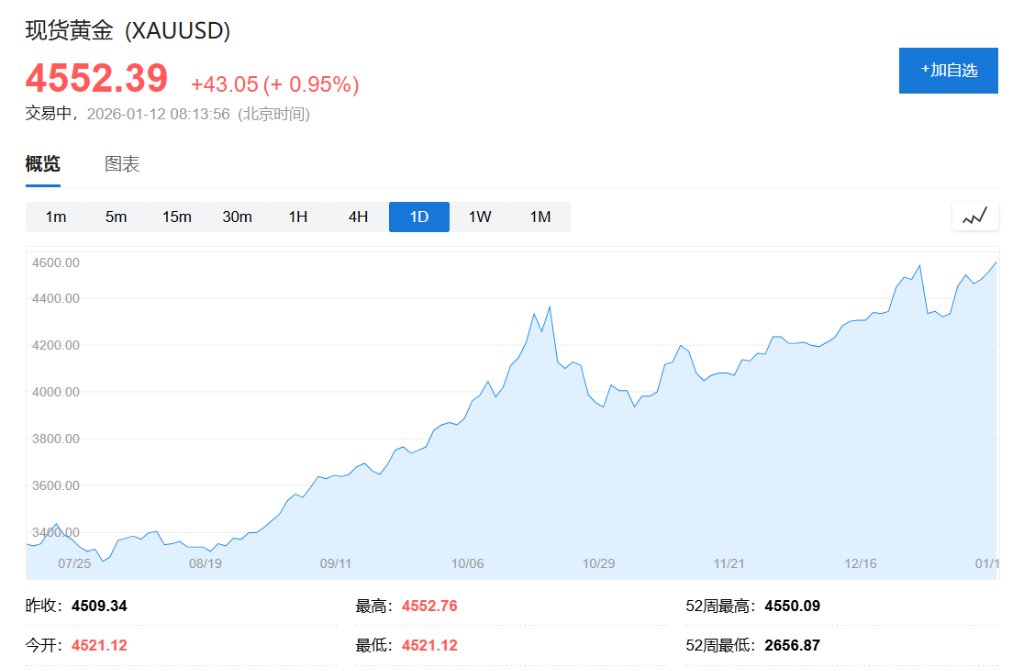
Group 1 - The latest developments in Iran are becoming a new logic dominating the global commodity markets, with significant increases in gold and oil prices due to heightened risk aversion [1][10] - Gold prices rose nearly 1% to reach a new historical high of $4,550, while silver prices increased by 2.7%, maintaining a historical high level of $82 [1][4] - The oil market reacted strongly, with Brent and WTI crude oil prices both rising over 1%, with Brent nearing $64 per barrel, marking the largest two-day increase since October [5][10] Group 2 - Market anxiety is primarily driven by the sudden changes in the Iranian situation, with U.S. President Trump considering various intervention options, including deploying a carrier strike group and potential military actions [10][12] - The geopolitical risks associated with Iran have overshadowed previous market concerns about global supply surplus, as Iran's nearly 2 million barrels per day of oil exports face interruption risks [10][11] - The turmoil in Iran has led to a significant influx of capital into the commodity markets, with oil prices rising for three consecutive days and a notable shift in risk preferences reflected in the options market [11][12] Group 3 - The Iranian government is facing severe internal challenges, with reports of hundreds of casualties during recent unrest, and officials blaming external forces for the turmoil [13] - Iranian leaders have issued warnings of retaliation against U.S. military actions, stating that U.S. and Israeli military bases in the region would be considered legitimate targets if attacked [13]

行业比较周跟踪:A股估值及行业中观景气跟踪周报-20260111
Shenwan Hongyuan Securities· 2026-01-11 15:24
Investment Rating - The report does not explicitly provide an investment rating for the industry as a whole, but it highlights various sectors with their respective valuation metrics, indicating potential investment opportunities based on historical percentiles [1][2]. Core Insights - The report tracks the valuation of A-shares as of January 9, 2026, with the overall market PE at 22.4 times and PB at 1.9 times, indicating a historical percentile of 83% and 49% respectively [1][2]. - Key sectors with PE valuations above the historical 85th percentile include Real Estate, Automation Equipment, Retail, Chemical Pharmaceuticals, Electronics, and IT Services [1][2]. - The semiconductor market is projected to reach nearly $1 trillion in sales by 2026, with a year-on-year growth of 22.5% [3]. Valuation Summary A-Share Valuation - The overall market PE is 22.4x, with a historical percentile of 83% [1][2]. - The Shanghai Composite Index PE is 12x, with a historical percentile of 65% [1][2]. - The ChiNext Index PE is 42.6x, with a historical percentile of 41% [1][2]. Industry Valuation Comparison - Industries with PE valuations above the 85th percentile include: - Real Estate - Automation Equipment - Retail - Chemical Pharmaceuticals - Electronics - IT Services [1][2]. - Industries with PB valuations above the 85th percentile include: - Defense and Military - Electronics (Semiconductors) - Telecommunications [1][2]. Sector-Specific Insights New Energy - The photovoltaic industry sees a mixed trend with upstream silicon prices down by 9.4% while downstream battery prices increased by 1.3% [1][2]. - Lithium carbonate prices increased by 17.9% due to supply disruptions [1][2]. Technology (TMT) - The semiconductor index rose by 3.7%, with global sales increasing by 29.8% year-on-year [3]. - DRAM prices increased by 10.9%, indicating strong demand in the cloud services sector [3]. Real Estate Chain - Steel prices increased slightly, while cement prices remained stable [3]. - The glass market is expected to reach a weak balance due to production adjustments [3]. Consumer Goods - Pork prices decreased by 1.0%, while wholesale prices for liquor increased by 2.2% [3]. - Agricultural products showed mixed price movements, with corn prices stable and soybean prices up by 0.8% [3]. Midstream Manufacturing - Excavator sales increased by 19.2% year-on-year, driven by equipment upgrades and demand from mining sectors [3]. Cyclical Industries - Industrial metals saw price increases, with copper up by 4.1% [3]. - Brent crude oil prices rose by 3.7% due to geopolitical tensions [3].
中信建投:有色行情仍未结束
Xin Lang Cai Jing· 2026-01-11 11:50
Group 1: Market Overview - Recent focus in the Chinese capital market is on the RMB exchange rate and non-ferrous metal trends [1][22] - The A-share market opened strong, with the Shanghai Composite Index surpassing 4100 points, marking a 10-year high, while the H-share market experienced slight adjustments [8][24] - The strong performance in the equity market is contrasted by a pullback in the bond market, with the 10-year government bond yield reaching 1.9% [10][26] Group 2: Non-Ferrous Metals - The non-ferrous metal market, particularly copper and aluminum, is expected to maintain strong performance, driven by strategic resource pricing and unexpected monetary easing in the U.S. [2][22] - Copper prices are projected to continue rising, with a target of $13,000 not being the peak for this cycle, and a favorable outlook for 2026 [2][22] - The essence of the non-ferrous market is seen as a reflection of the global shift in pricing and order, with copper expected to take over from gold [2][22] Group 3: Currency Outlook - There is a bullish outlook on the appreciation of the RMB, driven by the return of funds to China and a revaluation of RMB assets [2][22] - The short-term stability of the RMB exchange rate is anticipated, with discussions on appreciation likely to coincide with peaks in foreign exchange settlements [2][22] Group 4: Economic Policies and Data - The People's Bank of China is expected to continue implementing a moderately loose monetary policy, focusing on high-quality economic development and reasonable price recovery [18][37] - Recent economic data shows a positive trend, with December CPI and PPI both increasing by 0.2%, indicating improvements in various sectors [19][38] - The government is taking measures to combat "involution" in sectors like photovoltaics, batteries, and food delivery platforms [36][37] Group 5: Commodity Performance - Geopolitical risks have led to a resurgence in gold and oil markets, with gold prices breaking through $4,500 per ounce and copper prices exceeding $13,000 [16][32] - The oil market is experiencing a rebound driven by geopolitical premiums rather than fundamental improvements, with global oversupply limiting long-term price increases [35][32]


2026最大的交易主题:输不起的特朗普 国际秩序的终结
智通财经网· 2026-01-11 11:21
Group 1 - The core narrative for 2026 is shaped by the midterm elections, with the Trump administration under pressure to improve its approval ratings, currently around 40%, to avoid losing congressional control [3][4] - The administration's strategy will focus on achieving "affordability" by implementing aggressive deflationary measures, particularly through controlling energy resources to lower oil prices significantly [1][5] - The goal is to reduce gasoline prices to approximately $2.25 per gallon before the elections, which could lead to oil prices dropping to the $40-$50 range [5][6] Group 2 - The abandonment of the U.S. as a traditional guarantor of the international system will increase global geopolitical insecurity, providing strong support for gold and benefiting the defense industry [2][10] - Emerging market stocks may face valuation re-evaluation risks as the security premium for smaller economies diminishes in a return to power politics [2][10] - The anticipated fiscal stimulus, potentially involving $2,000 checks for low-income Americans funded by tariff revenues, could create upward pressure on long-term U.S. Treasury yields and alter the macro liquidity environment [4][7][8] Group 3 - The aggressive geopolitical actions taken by the U.S. to control oil prices signal the end of the rules-based international order, impacting asset allocation strategies [9][10] - The defense sector is expected to benefit from increased spending due to heightened security concerns, while gold is projected to have over 10% upside potential as a hedge against a disorderly world [10] - The current high valuations in the stock market, particularly in relation to AI, pose significant risks, with potential declines threatening economic stability and fiscal deficits [11]
中国资产大涨,国际原油飙升,美联储重大消息,特朗普表态显态度
Sou Hu Cai Jing· 2026-01-10 16:31
Market Overview - The U.S. stock market showed mixed performance with the Dow Jones rising, the Nasdaq declining, and the S&P 500 remaining stable, indicating a shift in market sentiment towards "safety and risk" [1] - Energy stocks surged while military stocks experienced significant gains, contrasting with Nvidia's substantial market value loss of nearly 690 billion RMB [1] Military Sector Insights - Military stocks are rising due to changing military budget forecasts, with Trump suggesting an increase from $1 trillion to $1.5 trillion by 2027, emphasizing national interests [3] - Defense contractors and military manufacturers, such as Lockheed Martin and Northrop Grumman, are expected to benefit from increased military spending, highlighting a transfer of financial commitments from taxpayers to current generations [3] Nvidia Performance - Nvidia's stock closed at $189.11, down 2.17%, with a market capitalization of $4.5 trillion, reflecting a broader trend of tech stocks facing pressure [4] Oil Market Impact - International crude oil prices rose significantly, with WTI and Brent increasing by approximately 3% and 5%, respectively, amplifying geopolitical sensitivities and affecting market risk preferences [4] Interest Rate Expectations - There are mixed expectations regarding potential interest rate cuts by the Federal Reserve, with some officials advocating for significant reductions to stimulate the economy, while others believe inflation is under control [5][8] - If the Fed does cut rates, asset prices, including stocks and commodities, may continue to rise; conversely, a denial of such cuts could lead to market corrections, particularly for high-valuation assets [8] Chinese Market Outlook - Goldman Sachs maintains a bullish outlook on the Chinese stock market, predicting a 20% increase for MSCI China and a 12% rise for the CSI 300 by 2026, indicating confidence in Chinese tech and consumer sectors [10] - The performance of popular Chinese stocks reflects a recognition of their fundamentals and a search for value amidst global capital flows [10] Investment Strategy Recommendations - Investors are advised to diversify their portfolios and not rely solely on short-term political and news-driven strategies, as long-term returns are tied to fundamentals and competitiveness [11] - Regulatory bodies should communicate expectations more transparently to mitigate market overreactions, while investors should enhance risk awareness to avoid being swayed by short-term volatility [11]


金价,涨近4%!全球资本市场,一周复盘解析
Sou Hu Cai Jing· 2026-01-10 03:12
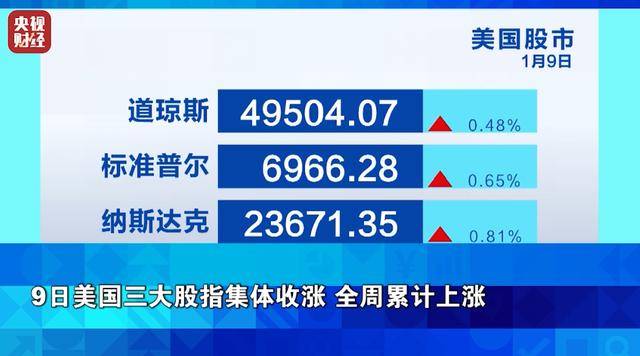
Group 1: Market Overview - Precious metal prices rose throughout the week, driven by ongoing market risk aversion, with COMEX gold futures increasing by 3.96% and silver futures rising by 11.72% [1][15] - On December 9, the three major U.S. stock indices collectively rose, with the Dow Jones up by 0.48%, S&P 500 increasing by 0.65%, and Nasdaq gaining 0.81% [3][6] - European stock indices also saw collective gains, with the FTSE 100 up by 0.80%, CAC 40 rising by 1.44%, and DAX increasing by 0.53% [9][7] Group 2: Employment Data - The U.S. non-farm payroll report for December showed an increase of 50,000 jobs, which was below expectations, while the unemployment rate fell to 4.4% [4][6] - The employment data was mixed, with significant downward revisions of 76,000 jobs in the previous two months, leading to the weakest annual job growth since 2020 [6][4] - Despite the disappointing employment figures, market expectations for the Federal Reserve's monetary policy remained unchanged, with predictions of at least two rate cuts in 2026 [6] Group 3: Commodity Prices - International oil prices continued to rise due to geopolitical tensions and supply risks, with WTI crude oil futures up by 3.14% and Brent crude oil futures increasing by 4.26% over the week [12][10] - The precious metals market saw support from expectations of a loose monetary policy from the Federal Reserve, contributing to the rise in gold and silver prices [15]
今夜,白银又暴涨,金价拉升!周生生一款项链一夜涨了15200元
Mei Ri Jing Ji Xin Wen· 2026-01-09 17:00
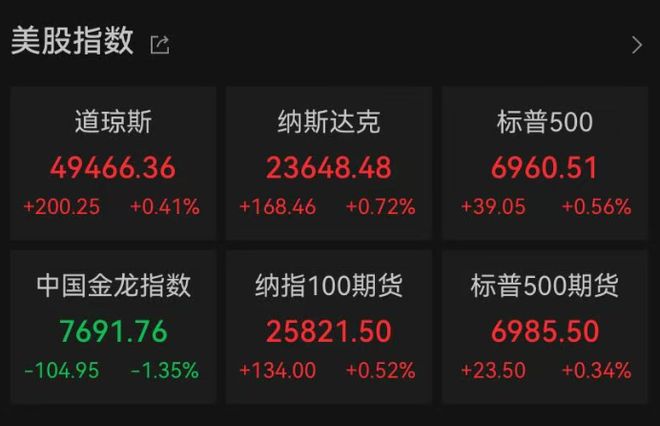
Market Performance - US stock indices opened higher on January 9, with the Dow Jones up 0.41%, S&P 500 up 0.56%, and Nasdaq up 0.72% [1] - As of January 10, the Dow Jones index was at 49,466.36, Nasdaq at 23,648.48, and S&P 500 at 6,960.51 [2] Technology Sector - Major tech stocks showed mixed performance, with Intel rising over 8%, reaching a new high since April 2024 [2] - The Philadelphia Semiconductor Index increased by over 2%, with notable gains from ASML (up over 5%) and Micron Technology (up over 3%) [2] Chinese Stocks - The Nasdaq Golden Dragon China Index fell nearly 1.4%, with Alibaba, Manbang Group, and Xpeng Motors dropping over 3% [3] Commodity Prices - International gold prices rose by 0.6%, reaching $4,504.76 per ounce, while silver prices surged by 3.88% to $79.88 per ounce [4][10] - The price of gold jewelry from Chow Sang Sang increased significantly, with a specific necklace rising from ¥120,800 to ¥136,000 overnight, a jump of ¥15,200 [4][6] Precious Metals - The price of gold jewelry per gram reached ¥1,392, up from ¥1,376 per gram on January 5, indicating a rise of ¥16 per gram [9] - COMEX silver futures saw a significant increase of 6.66% [10] Energy Prices - International oil prices also saw an increase, with WTI crude oil rising by 2.94% to $59.46 per barrel and Brent crude oil up by 2.56% to $63.58 per barrel [10]

橡胶甲醇原油:偏多因素提振,能化震荡偏强
Bao Cheng Qi Huo· 2026-01-09 12:27
投资咨询业务资格:证监许可【2011】1778 号 期货研究报告 宝城期货金融研究所 姓名:陈栋 宝城期货投资咨询部 从业资格证号:F0251793 投资咨询证号:Z0001617 电话:0571-87006873 邮箱:chendong@bcqhgs.com 作者声明 本人具有中国期货业协会授 予的期货从业资格证书,期货 投资咨询资格证书,本人承诺 以勤勉的职业态度,独立、客 观地出具本报告。本报告清晰 准确地反映了本人的研究观 点。本人不会因本报告中的具 体推荐意见或观点而直接或 间接接收到任何形式的报酬。 投资咨询业务资格:证监许可【2011】1778 号 11615 2026 年 1 月 9 日 橡胶甲醇原油 专业研究·创造价值 偏多因素提振 能化震荡偏强 核心观点 橡胶:本周五国内沪胶期货 2605 合约呈现缩量增仓,震荡偏弱, 小幅收低的走势,盘中期价重心小幅下移至 16030 元/吨一线运行。收 盘时期价小幅收低 0.96%至 16030 元/吨。5-9 月差贴水幅度升阔至 25 元/吨。目前国内胶市由供需基本面所主导,胶价摆脱三角形区间震荡, 维持震荡偏强格局。 甲醇:本周五国内甲醇期货 26 ...
12月物价数据解读:工业品涨价支撑通胀回升
Yin He Zheng Quan· 2026-01-09 08:48
CPI Insights - In December, the CPI increased by 0.2% month-on-month (previous value: -0.1%) and rose by 0.8% year-on-year (previous value: 0.7%) [1] - Core CPI also rose by 0.2% month-on-month (previous value: -0.1%) and maintained a year-on-year growth of 1.2% for four consecutive months [1] - The main driver for the food CPI was the seasonal increase in fresh fruit prices, while fresh vegetable prices saw a significant decrease in growth [5] PPI Insights - The PPI increased by 0.2% month-on-month (previous value: 0.1%) but showed a year-on-year decline of -1.9% (previous value: -2.2%) [13] - The structural characteristics of PPI indicate an improvement in overall economic conditions, with the PMI at 50.1% [13] - Rising prices in industrial goods are influenced by geopolitical risks and increased demand in sectors like new energy and AI [2] Market Outlook - The outlook for CPI in 2025 is cautiously optimistic, driven by the upward trend in consumer goods prices due to rising raw material costs [2] - The long-term forecast suggests that pig prices may gradually enter an upward trend in the second half of the year, impacting food CPI [5] - The overall improvement in industrial product prices reflects a recovery in market conditions, supported by various economic policies [13]
日度策略参考-20260109
Guo Mao Qi Huo· 2026-01-09 05:51
Report Industry Investment Rating No relevant content provided. Core View of the Report - The market sentiment cooled slightly yesterday, with the commodity market weakening significantly and the stock index showing a volatile trend. The trading volume also contracted. After a rapid rise, the stock index has entered a stage of shock consolidation. There are no obvious macro-level negatives at present, and the short-term outlook for the stock index remains bullish. The bond futures are favored by the asset shortage and weak economy, but the central bank has recently warned of interest rate risks. Attention should be paid to the Bank of Japan's interest rate decision. [1] - The prices of various commodities are affected by different factors, such as supply and demand, policy changes, and macro sentiment. The report provides trend judgments and trading suggestions for each commodity, including metals, energy, chemicals, and agricultural products. [1] Summary by Related Catalogs Macro Finance - Stock Index: After a rapid rise, the stock index has entered a stage of shock consolidation. There are no obvious macro-level negatives at present, and the short-term outlook for the stock index remains bullish. Attention should be paid to capital flows and market sentiment changes. [1] - Treasury Bonds: The bond futures are favored by the asset shortage and weak economy, but the central bank has recently warned of interest rate risks. Attention should be paid to the Bank of Japan's interest rate decision. [1] Non-Ferrous Metals - Copper: The copper price has fallen from its recent high, but there are still disruptions in the mining end. The downside space for the copper price is expected to be limited. [1] - Aluminum: There has been an accumulation of domestic electrolytic aluminum stocks recently, and the industrial driving force is limited. The macro anti-involution sentiment has ebbed, and the aluminum price has fallen from its high. [1] - Alumina: The supply side of alumina still has a large release space, and the industrial side exerts downward pressure on the price. However, the current price is basically near the cost line, and the price is expected to fluctuate. [1] - Zinc: The fundamentals of zinc have improved, and the cost center has shifted upward. The recent macro sentiment has been good, and the zinc price has risen. However, considering the still existing pressure on the fundamentals, caution is advised regarding the upside space. [1] - Nickel: The market's concerns about nickel supply have significantly cooled, and the LME nickel inventory has increased significantly recently. The nickel price has corrected from its high. Since Indonesia has not disclosed the specific amount and said that it is still in the process of accounting, there is still uncertainty about the implementation of the subsequent policy. The short-term volatility risk of the nickel price has increased. Attention should be paid to the implementation of Indonesia's policy, changes in macro sentiment, and changes in futures positions, and risk control should be done well. [1] Precious Metals and New Energy - Gold and Silver: The annual weight adjustment of the BCOM index has officially started, and the exchange has introduced multiple risk control measures for silver to suppress speculative enthusiasm. The prices of precious metals have fallen across the board, with a significant decline in silver. In the short term, gold and silver are expected to continue to be weak and volatile. In the medium and long term, attention can be paid to the opportunity to buy on dips after this round of risk release. [1] - Platinum and Palladium: Platinum and palladium have followed the weakening of precious metals. In the short term, they are expected to be in a wide-range volatile pattern. In the medium and long term, with the still existing supply-demand gap for platinum and the tendency of palladium to have a loose supply, platinum can still be bought on dips or a [long platinum, short palladium] arbitrage strategy can be adopted. [1] Industrial Products - Industrial Silicon: There is an increase in production in the northwest and a decrease in production in the southwest. The production schedules for polysilicon and organic silicon in December have decreased. [1] - Polysilicon: It is the traditional peak season for new energy vehicles. The demand for energy storage is strong. The supply side has increased production resumption. There is a short-term rapid increase. [1] - Rebar and Hot Rolled Coil: In the short term, sentiment and capital have a greater influence than industrial contradictions. One can try to follow long positions with a stop-loss; for futures-spot trading, participate in positive spread positions. [1] - Iron Ore: There is sector rotation, but the upside pressure on iron ore is obvious. It is not recommended to chase long positions at this level. [1] - Non-Ferrous Metals: There is a combination of weak reality and strong expectations. The current supply and demand situation remains weak, but in terms of expectations, energy consumption double control and anti-involution may have an impact on supply. [1] - Soda Ash: Soda ash follows the trend of glass. In the medium term, the supply and demand situation will be more relaxed, and the price will be under pressure. [1] - Coking Coal and Coke: If the "capacity reduction" expectation continues to ferment and there is pre-holiday restocking of spot goods, coking coal may still have room to rise. However, since the current market's "capacity reduction" expectation mainly comes from online rumors, it is difficult to judge the actual upside space. After a significant increase, the volatility will intensify, and caution should be exercised. The logic for coke is the same as that for coking coal. [1] Agricultural Products - Palm Oil: The MPOB December data is expected to be bearish for palm oil, but palm oil will reverse under the themes of seasonal production reduction, the B50 policy, and US biodiesel in the future. Short-term rebounds due to macro sentiment should be watched out for. [1] - Soybean Oil: The fundamentals of soybean oil are relatively strong. It is recommended to allocate more in the oil sector and consider a long Y, short P spread. Wait for the January USDA report. [1] - Rapeseed Oil: The trade relationship between China and Canada may improve, and Australian rapeseed will be imported smoothly. After the rapeseed trade flow is opened up, the trading logic of rapeseed oil will gradually shift from the domestic tight supply situation to the global rapeseed production increase expectation. There is still room for the price to fall. Short-term rebounds due to macro sentiment should be watched out for. [1] - Cotton: There is a strong expectation of a good harvest for domestic new crops, and the purchase price of seed cotton supports the cost of lint cotton. The downstream operating rate remains low, but the inventory of yarn mills is not high, and there is a rigid demand for restocking. Considering the growth of spinning capacity, the demand for cotton in the new crop market year is relatively resilient. Currently, the cotton market is in a situation of "having support but no driving force." Future attention should be paid to the tone of the No. 1 Central Document in the first quarter of next year regarding the direct subsidy price and cotton planting area, the intention of cotton planting area next year, the weather during the planting period, and the demand during the "Golden Three and Silver Four" peak season. [1] - Sugar: Currently, there is a global surplus of sugar, and the supply of domestic new crops has increased. The short-selling consensus is relatively strong. If the futures price continues to fall, there will be strong cost support below. However, there is a lack of continuous driving force in the short-term fundamentals. Attention should be paid to changes in the capital side. [1] - Corn: The fundamentals of corn have not changed significantly. The spot price remains firm, and the progress of grain sales at the grassroots level is relatively fast. Most traders have not yet strategically built inventories, and feed enterprises maintain a safe inventory. There is a certain restocking demand before the holiday. The short-term outlook for CO3 is expected to be oscillating and slightly bullish. Attention should be paid to the dynamics of policy grain auctions. [1] - Soybean Meal: The domestic market may restart the auction of imported soybeans; the relationship between China and Canada is expected to ease, and China is expected to suspend the tax on Canadian rapeseed meal; the macro sentiment has cooled, and the domestic market has returned to the fundamentals and shown a significant decline. Recently, it has been greatly affected by policy news. The soybean meal futures price is expected to be mainly oscillating in the short term. Attention should be paid to the adjustment of the January USDA supply and demand report and the trend of the Brazilian premium. [1] - Pulp: Pulp has fallen today due to the decline in the commodity macro market. The overall price has not broken through the oscillating range. The short-term commodity sentiment fluctuates greatly, and it is recommended to observe cautiously. [1] - Logs: The spot price of logs has shown a certain sign of bottoming out and rebounding recently. The further downside space for the futures price is expected to be limited. However, the January overseas quotation has still slightly declined, and the log futures and spot markets lack upward driving factors. It is expected to oscillate in the range of 760 - 790 yuan/m³. [1] - Hogs: Recently, the spot price has gradually stabilized. Supported by demand and with the出栏体重 not yet fully cleared, the production capacity still needs to be further released. [1] Energy and Chemicals - Crude Oil: OPEC+ has suspended production increases until the end of 2026. There is uncertainty about the Russia-Ukraine peace agreement. The United States has imposed sanctions on Venezuela's crude oil exports. [1] - Fuel Oil: In the short term, the supply-demand contradiction is not prominent, and it follows the trend of crude oil. The probability of the 14th Five-Year Plan's rush demand being falsified is high, and the supply of Ma Rui crude oil is not short. The profit of asphalt is relatively high. [1] - BR Rubber: The futures position has declined, and the number of new warehouse receipts has increased. The increase in BR has slowed down temporarily. The spot price has led the rise to repair the basis, and BR continues to focus on the upward momentum above the 12,000 yuan line. The listed prices of BD/BR have been continuously raised, and the processing profit of butadiene rubber has narrowed. The overseas cracking device capacity has been cleared, which is beneficial to the long-term export expectation of domestic butadiene. The tax on naphtha also has a positive impact on the butadiene price. Fundamentally, butadiene rubber maintains high production and high inventory operation, and the trading center is generally average. Styrene-butadiene rubber is relatively better than butadiene rubber. [1] - PX and PTA: The PX market has experienced a rapid rise, but this round of rise is not due to a fundamental change. The fundamentals of PX do have support, and the market is expected to continue to tighten in 2026, driven by the new PTA production capacity in India and the organic growth of demand. Domestic PTA maintains high production. The gasoline spread is still at a high level, which supports aromatics. [1] - Ethylene Glycol: There is news that two sets of MEG plants in Taiwan, China, with a total annual capacity of 720,000 tons, plan to stop production next month due to efficiency reasons. Ethylene glycol has rebounded rapidly during the continuous decline, stimulated by supply-side news. The current operating rate of the polyester downstream remains above 90%, and the demand performance is slightly better than expected. [1] - Short Fiber: The PX market has experienced a rapid rise, but this round of rise is not due to a fundamental change. Domestic PTA maintains high production, and the domestic polyester load has declined. The short fiber price continues to closely follow the cost fluctuations. [1] - Styrene: The Asian styrene market is generally stable. Suppliers are reluctant to lower prices due to continuous losses, while buyers insist on pressing prices due to weak downstream polymer demand and compressed profits. Although the downstream demand is weak, the domestic market has a strong bullish sentiment due to export support. The market is in a weak balance state, and the short-term upward momentum needs to be driven by the overseas market. [1] - Urea: The export sentiment has slightly eased, and there is limited upside space due to insufficient domestic demand. There is support from anti-involution and the cost side below. [1] - PF: Geopolitical conflicts have intensified, and there is a risk of an increase in crude oil prices. There are fewer maintenance activities, the operating load is at a high level, and there are overseas arrivals, so the supply has increased. The downstream demand operating rate has weakened. In 2026, there will be more new production capacity, and the supply-demand surplus will further intensify, and the market expectation is weak. [1] - Propylene: There are fewer maintenance activities, the operating load is relatively high, and the supply pressure is relatively large. The improvement in the downstream is less than expected. The propylene monomer price is at a high level, the crude oil price has risen, and the cost support is strong. Geopolitical conflicts have intensified, and there is a risk of an increase in crude oil prices. [1] - PVC: In 2026, there will be less global new production capacity, and the future expectation is relatively optimistic. Currently, there are fewer maintenance activities, new production capacity is being released, and the supply pressure is increasing. The demand has weakened, and the orders are not good. The differential electricity price in the northwest region is expected to be implemented, which will force the clearance of PVC production capacity. [1] - LPG: The January CP has risen more than expected, and the cost support for imported gas is relatively strong. The geopolitical conflicts between the United States, Venezuela, and the Middle East have escalated, and the short-term risk premium has increased. The trend of inventory accumulation in the EIA weekly C3 inventory has slowed down, and it is expected to gradually turn to inventory reduction. The domestic port inventory has also decreased. Domestic PDH maintains high production and deep losses. There is a rigid demand for global civil combustion, and the demand for MTBE from overseas olefin blending for gasoline has declined temporarily. Since January 1, 2026, naphtha has been re-taxed, and the long-term demand expectation for light cracking raw materials such as LPG has increased, and the performance of downstream olefin products is relatively strong. [1] Shipping - Container Shipping - European Line: It is expected to peak in mid-January. Airlines are still relatively cautious in their trial reflights. The pre-holiday restocking demand still exists. [1]