
债券

Search documents
2026年一季度信用债市场展望:中短端套息无虞,博弈3-5年机会可期
Shenwan Hongyuan Securities· 2026-01-07 07:41
Group 1 - The credit bond market environment in Q1 2026 is expected to remain favorable for investment, with supply-demand imbalance pressures likely to ease and a moderate recovery in fundamentals, leading to a potential decline in bond rates [3][4] - The credit bond ETF surge at the end of 2025 may not continue into Q1 2026 due to redemption impacts from some banks, which could lead to liquidity and valuation pressures on component bonds [3][4] - The scale of open-ended bond funds entering the market in Q1 2026 is significant, exceeding 260 billion, with a focus on 2-5 year bonds, indicating potential demand support for mid-term credit bonds [3][4] Group 2 - The credit bond carry strategy involves using repurchase agreements for financing to invest in higher-yielding, longer-term credit bonds, aiming to profit from the interest rate spread [4] - Current market conditions, characterized by stable monetary policy and high carry space, suggest that mid-term high-grade credit bonds are suitable for leveraged carry strategies [4] - The performance of various credit bonds in Q4 2025 showed a strong recovery in the credit market, with significant increases in net financing for industrial bonds and a slight decrease for urban investment bonds [10][14] Group 3 - In Q4 2025, the issuance and net financing of traditional credit bonds were 35,336 billion and 8,053 billion respectively, with a notable increase in industrial bonds compared to urban investment bonds [10][14] - The yield on credit bonds across various ratings and maturities showed a downward trend in Q4 2025, with significant performance differences observed between different types of bonds [19][20] - The holding period yield for 5-year AAA/AAA- rated bonds was reported at 1.66%, outperforming other categories, indicating a favorable investment environment for mid-term bonds [29]
利率|继续跌吗?一个神奇的历史规律
CAITONG SECURITIES· 2026-01-07 06:41
Report Industry Investment Rating No relevant content provided. Core Viewpoints - The bond market has been continuously adjusting at the beginning of the year, with the 10-year and 30-year Treasury bond yields breaking through key levels. Historically, bond market yields usually choose a direction around mid-January. The probability of a unilateral upward movement in yields at the turn of the year is extremely low. Over the past 10 years, yields have shown a V-shaped pattern in 5 years, an inverted V-shaped pattern in 2 years, a unilateral downward movement in 2 years, and a unilateral upward movement in 1 year [2]. - The direction of yields after mid-January depends on the verification of expectations after the end of the information vacuum period. If the verification falls short of expectations, yields usually return to pre-expectation levels. Currently, market concerns focus on factors such as ultra-long bond supply, the spring rally in equities, and less-than-expected monetary easing. However, since the third quarter of last year, the bond market has already priced in these negative factors, and the likelihood of these factors further exceeding expectations seems low [2]. - The effective upper limits for the 10-year and 30-year Treasury bond yields are 1.85% and 2.3% respectively. Short-term deviations do not represent a sustained breakthrough. The bond market requires patience, and investors should wait for opportunities around mid-January [2]. Summary by Directory How to Evaluate the Indicators at the Beginning of the Year? How to View the Market Expectations and Actual Trends Since the Beginning of 2022? - In early 2022, the expectation gap was between the verification of loose monetary policy and strong credit growth. Interest rates first declined due to expectations of monetary easing after a mid-January interest rate cut, but then rebounded as the strong start of the year became more apparent [10]. - In early 2023, the expectation gap was the actual strength of the post-pandemic economic recovery. Despite a tightening of the money supply, bond yields declined as the economic recovery fell short of expectations and the government set a relatively modest economic growth target [11]. - In early 2024, the expectation gap was the disappointment in incremental policies and the strong start of the year. After initial expectations for further growth-stabilizing policies faded, bond yields entered a second phase of decline as property and fiscal policies underperformed and government bond issuance was slow [12]. - In early 2025, the expectation gap was a significant reversal in expectations of monetary easing. Rooted in factors such as the strong start of the year, Sino-US relations, and technological narratives, risk appetite increased, leading to a tightening of funds by the central bank [13]. How Much Impact Do the Quality of the Strong Start and Supply Have? - The final verification of the strong start will come in March or April. In the short term, the market focuses on financial data and the PMI. Over the past 4 years, the net financing increment of government bonds from January to February has been most correlated with yield changes. If the year-on-year increase exceeds 50 billion yuan, the bond market may face pressure. Credit, PMI, and yield changes have a weak correlation, and the relationship between social financing and yields depends on market expectations [18]. Does the Stock-Bond跷跷板 Relationship Hold at the Beginning of the Year? - Since 2022, the short-term performance of stocks and bonds has shown some correlation, but the relationship may weaken after mid-January [19]. How to View Sino-US Disturbances? - Sino-US relations are a key factor. The impact on the bond market depends on the comparison between actual situations and market expectations [23][24]. How Much Impact Does the Money Supply Have? - The money supply is affected by various factors such as the economic situation, Sino-US relations, and the stock market. At the beginning of the year, the money supply is crucial. Before the Spring Festival, interest rates tend to rise seasonally, and whether this leads to a tight money supply depends on the central bank's attitude. A tight money supply can impede yield declines [26]. Is There a Final Decline? What Experience Can We Learn from History? - Regarding social financing and government bond supply, it is expected that the social financing growth rate from January to February will remain flat or increase slightly by 0.1 percentage points, and the net financing of government bonds will increase by more than 70 billion yuan compared to the same period last year. However, the central bank's bond purchases may offset the impact of supply [28]. - Regarding the stock-bond relationship, the stock market's spring rally may disrupt the bond market, but the stock market's ability to continuously rise and the potential decoupling of stock and bond trends after mid-January suggest that the stock market may not pose a long-term negative impact on the bond market [29][30]. - Regarding Sino-US relations, the market has been optimistic about Sino-US relations since the third quarter of last year. The likelihood of further unexpected improvement in Sino-US relations is lower than the possibility of negative changes, which is relatively favorable for the bond market [31][32]. - Regarding the money supply, the money supply has been improving since December. With the early issuance of government bonds and the central bank's view that interest rates have returned to a reasonable level, the central bank is likely to maintain a supportive stance, at least avoiding a repeat of last year's first-quarter situation [34]. A Magical Market Rule - Observing bond yields from November of the previous year to March of the following year, a pattern has emerged. Since 2016, a phased reversal has been the most common, with a V-shaped pattern in 5 years, an inverted V-shaped pattern in 2 years, a unilateral downward movement in 2 years, and a unilateral upward movement in 1 year. The probability of a unilateral upward movement is extremely low [35]. How Has the Market Performed in the First Quarter in Recent Years? - In the first quarter of 2022, yields first declined and then rose. Interest rate cuts and the COVID-19 situation initially pushed yields down, but expectations of strong credit growth and local property policies led to an increase in yields [46]. - In the first quarter of 2023, yields first rose and then fell. A tightening of funds and expectations of post-pandemic economic recovery pushed yields up at the beginning of the year, but unmet expectations, a lower economic growth target, the Silicon Valley Bank collapse, and a reserve requirement ratio cut led to a decline in yields [47][49]. - In the first quarter of 2024, yields declined steadily. Weak fundamentals, a poor stock market performance, a reserve requirement ratio cut, disappointing incremental policies, and a reduction in deposit rates contributed to the decline. Regulatory concerns about interest rate risk in March provided some resistance to the downward trend [52]. - In the first quarter of 2025, yields rose steadily. The central bank's suspension of bond purchases, a rise in the stock market driven by Deepseek, a structural stabilization of the economy, and better-than-expected US tariff policies led to an increase in yields [54].
周五决战:非农与关税裁决直接对决,委内瑞拉只是背景噪音
Sou Hu Cai Jing· 2026-01-07 06:08
Group 1 - The U.S. Treasury market is currently more focused on upcoming economic data, particularly the non-farm payroll report, rather than geopolitical events such as U.S. intervention in Venezuela [1][2] - Economists predict that the U.S. economy added 73,000 jobs last month, an increase from 64,000 in November, with the unemployment rate expected to drop from 4.6% to 4.5% [1] - The market's reaction to the situation in Venezuela is muted as it has not significantly altered the inflation narrative, according to market analysts [2][3] Group 2 - The recent sell-off in the U.S. Treasury market is attributed to random fluctuations and a return to normal trading volumes at the beginning of the year [3] - Analysts do not foresee the Venezuelan situation causing significant disruptions akin to Middle Eastern conflicts, as there is no immediate risk of geopolitical instability or oil price spikes [3] - The U.S. Treasury market is nearing a milestone, with the 10-year Treasury yield reaching its highest level relative to the 2-year yield in nearly nine months, indicating expectations of a Fed rate cut in 2026 [3][4] Group 3 - The yield curve has steepened, with the 10-year Treasury yield briefly exceeding the 2-year yield by 72 basis points for the first time since April, driven by expectations of further Fed easing [4] - The increase in corporate bond issuance at the beginning of the year has put upward pressure on long-term yields, exacerbating the steepening of the yield curve [4] - The yield curve is expected to become steeper as economic conditions remain strong, despite a weak labor market, with the Fed continuing to play a significant role [5]
桥水Ray Dalio:美股估值见顶,黄金跑赢一切,全球迈入多边主义向单边主义的危险转型
对冲研投· 2026-01-07 01:36
Group 1 - The core investment narrative for 2025 is not the strong performance of US stocks, but rather the significant changes in currency values and the global shift in asset allocation, with gold emerging as the true winner [1][4][12] - US stocks recorded an 18% return in USD terms, but this is largely attributed to the devaluation of fiat currencies, creating a "valuation illusion" [5][12] - The S&P 500 index, when priced in gold, actually declined by 28%, highlighting the disparity in performance when considering different currencies [5][12] Group 2 - The US stock market significantly underperformed compared to non-US markets, with European, Chinese, and Japanese stocks outperforming US stocks by 23%, 21%, and 10% respectively [18][20] - Emerging markets showed an overall return of 34%, indicating a substantial capital shift away from US assets [19][20] - The interest of foreign investors in USD-denominated assets is waning, as evidenced by the negative returns of US Treasuries when priced in gold, which saw a -34% return [5][6] Group 3 - The valuation of US stocks appears to have peaked, with long-term equity expected returns at 4.7%, which is lower than the 4.9% return on bonds, indicating a low equity risk premium [23][24] - The disparity in profit distribution, where capitalists benefit more than workers, is raising concerns among leftist political forces, potentially impacting future profit margins [7][22][23] Group 4 - The political landscape is shifting towards extreme left and right forces due to affordability crises driven by inflation, which is expected to lead to significant conflicts by 2027-2028 [5][9][35] - The transition from multilateralism to unilateralism is increasing military spending and sanctions, further diminishing the attractiveness of USD assets [9][35][36] Group 5 - Non-liquid markets such as venture capital, private equity, and real estate are under pressure, facing significant debt rollover challenges and a potential rise in liquidity premiums [8][26] - The current low liquidity premium in these markets may lead to a decline in value relative to liquid assets, indicating a potential liquidity trap for investors [8][26]


大类资产早报-20260107
Yong An Qi Huo· 2026-01-07 01:21
1. Report's Industry Investment Rating - No information provided in the content 2. Report's Core View - No clear core view presented in the content 3. Summary According to Relevant Catalogs Global Asset Market Performance - **10 - Year Treasury Bonds**: Yields of 10 - year Treasury bonds in major economies are as follows: US 4.174, UK 4.480, France 3.553, Germany 2.841, Italy 3.533, Spain 3.270, Switzerland 0.246, Greece 3.413, Brazil 6.190, China 1.876, Australia 4.793, New Zealand 4.509 [3] - **2 - Year Treasury Bonds**: Yields of 2 - year Treasury bonds in major economies are: US 3.464, UK 3.693, Germany 2.098, Japan 1.179, Italy 2.204, China (1Y yield) 1.341, Australia 4.084 [3] - **Exchange Rates**: The latest exchange rates of the US dollar against major emerging - economy currencies are: Brazil 5.376, South Africa zar 16.356, South Korean won 1447.500, Thai baht 31.245, Malaysian ringgit 4.047. The latest onshore RMB is 6.984, offshore RMB is 6.981, RMB central parity is 7.017, and RMB 12 - month NDF is 6.864 [3] - **Stock Indices**: The latest values of major economy stock indices are: S&P 500 6944.820, Dow Jones Industrial Average 49462.080, Nasdaq 23547.170, Mexican index 65022.240, UK index 10122.730, France CAC 8237.430, Germany DAX 24892.200, Spanish index 17647.100, Japanese Nikkei 52518.080, Hong Kong Hang Seng Index 26710.450, Shanghai Composite Index 4083.667, Taiwan index 30576.300, South Korean index 4525.480, Indian index 8933.609, Thai index 1274.750, Malaysian index 1672.350, Australian index 8996.918, emerging - economy index 1467.160 [3] - **Credit Bond Indices**: The latest values of credit bond indices are: US investment - grade credit bond index 3545.480, euro - zone investment - grade credit bond index 266.170, emerging - economy investment - grade credit bond index 290.480, US high - yield credit bond index 2921.870, euro - zone high - yield credit bond index 411.440, emerging - economy high - yield credit bond index 1827.901 [3] Stock Index Futures Trading Data - **Index Performance**: The closing prices of A - shares, CSI 300, SSE 50, ChiNext, and CSI 500 are 4083.67, 4790.69, 3158.76, 3319.29, and 7814.14 respectively, with daily percentage changes of 1.50%, 1.55%, 1.90%, 0.75%, and 2.13% [4] - **Valuation**: The PE (TTM) of CSI 300, SSE 50, CSI 500, S&P 500, and Germany DAX are 14.52, 12.13, 35.38, 27.74, and 19.26 respectively, with环比 changes of 0.19, 0.15, 0.71, 0.17, and 0.01 [4] - **Risk Premium**: The risk premium for S&P 500 (1/PE - 10 - year rate) is - 0.57 with a环比 change of - 0.04, and for Germany DAX is 2.35 with a环比 change of 0.02 [4] - **Fund Flows**: The latest fund flow values for A - shares, main board, ChiNext, and CSI 300 are 631.23, 552.00, 78.91, and 396.75 respectively. The 5 - day average values are - 65.98, - 129.00, 41.00, and 104.37 respectively [4] Other Trading Data - **Transaction Amount**: The latest transaction amounts of Shanghai and Shenzhen stock exchanges, CSI 300, SSE 50, small - and medium - sized board, and ChiNext are 28065.07, 7254.15, 1800.48, 5735.57, and 7565.29 respectively, with环比 changes of 2602.36, 948.38, 104.86, 498.64, and 603.11 [5] - **Main Contract Basis and Spread**: The basis of IF, IH, and IC are - 12.69, 3.04, and - 27.74 respectively, with spreads of - 0.26%, 0.10%, and - 0.35% [5] - **Treasury Bond Futures**: The closing prices of T2303, TF2303, T2306, and TF2306 are 107.70, 105.57, 107.66, and 105.57 respectively, with daily percentage changes of - 0.14%, - 0.13%, - 0.18%, and - 0.14% [5] - **Funding Rates**: The funding rates of R001, R007, and SHIBOR - 3M are 1.3302%, 1.4930%, and 1.5960% respectively, with daily changes of - 16.00 BP, 0.00 BP, and 0.00 BP [5]
职投第十年接受命运对我的安排,年化20%
集思录· 2026-01-06 13:20
Core Viewpoint - The article reflects on the investment performance over the past decade, highlighting that 2025 is expected to yield high average returns for investors, with a personal return of 18.39% for the year [1][3]. Investment Performance Summary - The annual returns from 2014 to 2025 show fluctuations, with 2025 achieving an 18.39% return, while the average annualized return over the years is 20.79% [2]. - Monthly performance in 2025 indicates a cumulative return of 18.39% by December, with notable monthly variations [2]. Investment Strategy Insights - The investment strategy has been conservative, focusing on low-risk investments, which has limited the ability to capture higher returns during bullish market conditions [3][4]. - The article emphasizes the importance of understanding risk and the need to balance between conservative and aggressive strategies, suggesting that maintaining a high equity position is crucial for better performance [5][7]. Future Investment Directions - The author contemplates future investment strategies, suggesting a focus on non-linear investments such as convertible bonds, which provide a safety net and align with a conservative investment style [5][8]. - There is a recognition that traditional low-risk strategies are becoming less effective, prompting a need for adaptation and exploration of new opportunities [4][6]. Market Trends and Considerations - The article discusses the challenges in the convertible bond market, particularly regarding the effectiveness of the downshift strategy, indicating that market conditions are evolving and require patience and strategic positioning [8][9]. - The potential for gold as a negative correlation asset is highlighted, suggesting it could be a valuable addition to a diversified investment portfolio [9].

转债市场放量突破,指数十年来首破500点,资金回流或支撑行情
Xin Lang Cai Jing· 2026-01-06 10:48
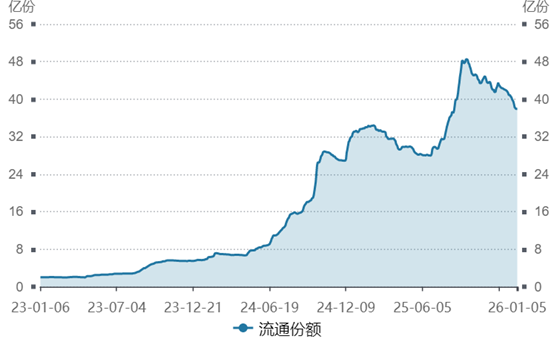
Core Viewpoint - The convertible bond market is experiencing a significant breakthrough, with the China Securities Convertible Bond Index rising 1.35% to 505.77 points, marking the first time it has surpassed 500 points in a decade, despite ongoing net outflows from convertible bond ETFs [1][3]. Market Performance - The Shanghai Composite Index has achieved a 13-day winning streak, contributing to a strong performance in the convertible bond market [1]. - The trading volume in the market is approaching 100 billion yuan, indicating robust activity [1]. ETF Fund Flows - Despite the rise in the convertible bond market, there has been a continuous net outflow from convertible bond ETFs, with the fund share decreasing from a peak of 4.85 billion shares in early September 2025 to 3.8 billion shares by the end of 2025 [1][3]. - The mid-price of public convertible bonds has reached 133.72 yuan, with 37 convertible bonds priced over 200 yuan [3]. Price Movements - The top-performing convertible bonds since December 2025 include: - Jia Mei Convertible Bond: +175.61% to 293.26 yuan - Mao Cai Convertible Bond: +139.21% to 239.78 yuan - Zai 22 Convertible Bond: +126.68% to 301.90 yuan [4]. Institutional Behavior - Insurance funds have significantly reduced their holdings in the Shanghai Stock Exchange convertible bonds, with a 15.12% decrease in the proportion of convertible bonds held by insurance funds in December 2025 [5]. - Other institutional investors, such as banks and social security funds, have increased their holdings during the same period [5]. Future Outlook - Analysts expect the convertible bond market to maintain its strength in the first quarter of 2026 due to seasonal capital inflows and positive sentiment ahead of the "Two Sessions" [6]. - The median conversion premium rate for public convertible bonds is approximately 33%, indicating high valuations that may persist due to supply-demand imbalances [6]. - The total market size of public convertible bonds is around 527.1 billion yuan, having shrunk by 183.6 billion yuan compared to the end of 2024 [7].
【财经分析】公募基金销售新规落地 债市迎来政策红利下的结构重塑
Xin Hua Cai Jing· 2026-01-06 08:26
Core Viewpoint - The recently released official version of the "Regulations on the Management of Sales Fees for Publicly Raised Securities Investment Funds" has sparked significant discussion in the industry, with notable optimizations compared to the draft version, indicating a policy direction of "precise relaxation and pressure relief" [1][2] Summary by Relevant Sections Changes in Redemption Fee Structure - The official version allows for different redemption fee agreements for individual investors holding for 7 days or more and institutional investors holding for 30 days or more, contrasting with the draft which imposed uniform fees [2][3] - The redemption fee for bond funds has been significantly relaxed, reducing the previously anticipated redemption pressure on bond markets [3] Transition Period and Market Impact - The adjustment period has been extended to 12 months, providing more time for institutional investors and public funds to adapt, thereby alleviating the concentrated redemption pressure faced by bond funds [3][4] - Following the new regulations, the interbank bond market saw a decline in yield rates, indicating a positive market sentiment [3] Short-term, Medium-term, and Long-term Effects - In the short term, the policy relaxation is expected to repair market sentiment, with potential trading opportunities emerging in the bond market [4][5] - Medium-term structural adjustments in the bond market are anticipated, with a shift towards bond ETFs expected to attract institutional funds [5][6] - Long-term, the new regulations aim to foster a healthy market ecosystem focused on long-term investments, potentially saving investors approximately 51 billion annually in fees [6][8] Investment Strategies and Market Outlook - Despite the positive developments, the overall bond market is expected to remain in a volatile state, with a focus on structural opportunities rather than trend-based movements [7][8] - Recommendations include targeting short-term products and high-grade credit bonds, while being cautious with long-term interest rate bonds due to ongoing supply-demand imbalances [7][8]
泓德基金:2025年A股总市值历史性突破100万亿元大关
Xin Lang Cai Jing· 2026-01-06 07:44
Group 1: Market Overview - In 2025, China's capital market demonstrated significant structural prosperity driven by deep reforms and technological innovation, with the total market capitalization of A-shares surpassing 100 trillion yuan and annual trading volume exceeding 400 trillion yuan [1][5] - Major stock indices recorded annual gains of over 10%, with growth styles notably outperforming, particularly the ChiNext Index, North China 50, and Sci-Tech Innovation 50, which saw increases exceeding 30% [1][5] Group 2: Economic Context - Since 2013, China's GDP growth rate has gradually declined, with significant indicators like real estate showing downturns post-2014, leading to multiple rounds of reserve requirement ratio cuts and interest rate reductions by the People's Bank of China [1][6] - In contrast, the real estate sector's deep adjustment has not concluded since the end of the pandemic in 2022, with the central bank continuing its accommodative monetary policy [1][6] Group 3: Industry Trends - The launch of the iPhone 4 marked the beginning of the smartphone era, leading to a rapid establishment of the domestic consumer electronics supply chain and a 382% increase in China's smartphone shipments from 2011 to 2015, facilitated by extensive 3G/4G network construction [2][6] - In 2025, the demand for computing power is expected to surge due to continuous iterations of high-performance GPUs by NVIDIA and breakthroughs in AI represented by ChatGPT, with domestic large models catching up under the influence of DeepSeek [2][6] Group 4: Funding Dynamics - High-net-worth investors began entering the stock market through financing methods from 2013, with the amount rising from less than 100 billion yuan to 2.3 trillion yuan by June 2015; however, ordinary investors significantly increased their market participation only in 2015 [3][7] - As of September 24, 2024, the margin trading balance has shown continuous growth, increasing from approximately 1.3 trillion yuan to over 2.5 trillion yuan by the end of 2025, with a net increase exceeding 1 trillion yuan [3][7] Group 5: Bond Market Insights - In late December 2025, the bond market experienced significant adjustments, with the yield on 30-year government bonds rising sharply, influenced by market reactions to recent policy announcements [4][8] - The People's Bank of China's financial stability report indicated that the decline in loan rates exceeded that of policy rates, while deposit rates fell less than policy rates, leading to speculation about reduced interest rate cuts in 2026 [4][8]
泓德基金:人民币走强有利于中国权益资产定价
Xin Lang Cai Jing· 2026-01-06 07:44
Market Performance - The domestic equity market continued to strengthen last week, with major broad-based indices generally rising around 3%, and both the Wind All A and CSI 2000 indices reached new highs for the year [1][5] - The average daily trading volume increased to a high level of 2.2 trillion yuan, driven primarily by the cyclical sector led by non-ferrous metals [1][5] - In the Hong Kong market, the Hang Seng Index and Hang Seng Technology rose by 0.5% and 0.4%, respectively [1][5] Currency Exchange Rate - The Chinese yuan has significantly appreciated against the US dollar this year, particularly after the Busan talks in late November, which eased bilateral relations [1][6] - The offshore yuan exchange rate even briefly surpassed the 7 yuan mark, attracting significant investor attention [1][6] - As of the end of November, China's official foreign exchange reserves were approximately 3.35 trillion USD, an increase of over 140 billion USD since the beginning of the year [6] Impact on Export and Import Companies - The appreciation of the yuan means that Chinese export goods have become more expensive in the international market, posing challenges for export-oriented companies, especially those in labor-intensive industries that rely on price advantages [2][6] - Export companies receiving payments in USD will find that converting to yuan results in lower amounts, potentially reducing profits, which raises concerns about exchange losses for companies with high export ratios in Q4 [2][6] - Conversely, companies that need to import raw materials, energy, components, and high-end equipment will benefit from a stronger yuan, as it reduces procurement costs and can enhance profit margins [2][6] Trade Balance and Economic Strategy - China's long-term trade surplus has been a source of friction with other economies, particularly the US and Europe [3][7] - The proactive balancing of trade is seen as beneficial for creating a more favorable international economic environment [3][7] - The central government's focus on domestic circulation and expanding domestic demand is a key task for high-quality economic development in the coming year [3][7] Bond Market Outlook - In the bond market, short- to medium-term interest rates declined while long-term rates saw slight increases, with secondary capital bonds showing little change [3][7] - The bond market is expected to remain within a narrow range, supported by stable year-end liquidity and potential new monetary policies from the central bank [3][7] - Despite current economic pressures, there is a possibility of a simultaneous bull market in both stocks and bonds in the near future [3][7]