
有色金属冶炼

Search documents
独立董事辞任未按时完成补选 恒邦股份收行政监管措施决定书
Zheng Quan Shi Bao Wang· 2025-11-25 09:26
Core Viewpoint - The company, Hengbang Co., Ltd., has received administrative regulatory measures from the Shandong Securities Regulatory Bureau due to governance issues related to the resignation of independent directors and failure to timely disclose significant incidents [1][2] Group 1: Regulatory Actions - On November 25, Hengbang Co., Ltd. was ordered to rectify governance issues after two independent directors resigned, leading to a board composition that fell below the required one-third independent director threshold [1] - The company has been instructed to submit a written rectification report within a specified timeframe as part of the regulatory measures [2] Group 2: Previous Incidents - In August 2024, the company faced scrutiny for a safety incident involving a copper spillage that resulted in personnel injuries, with delayed disclosure of the incident and subsequent production suspension [2] - The company had previously received a regulatory letter from the Shenzhen Stock Exchange regarding the same safety incident, highlighting issues with timely information disclosure [2] Group 3: Company Response - Hengbang Co., Ltd. has acknowledged the regulatory decision and expressed commitment to learning from the issues raised, emphasizing the importance of compliance with laws and regulations to prevent future violations [2] - The company asserts that the regulatory measures will not impact its operational or financial status and is focused on maintaining compliance and protecting shareholder interests [2]

日度策略参考-20251125
Guo Mao Qi Huo· 2025-11-25 06:25
Report Summary 1) Report Industry Investment Rating No specific industry investment ratings are provided in the report. 2) Core Viewpoints - The current macro - level is in a relative vacuum period. The A - share market lacks a clear upward main line, and trading volume remains low. Short - term market differences are expected to be gradually digested during the index's shock adjustment, waiting for a new driving main line to push the index higher [1]. - Asset shortage and weak economy are favorable for bond futures, but the central bank has recently warned of interest - rate risks, suppressing the upward space [1]. 3) Summary by Related Catalogs Equity Index - The A - share market lacks a clear upward main line, with low trading volume. Short - term market differences will be digested in the index's shock adjustment, and a new driving main line is awaited for further upward movement [1]. Bonds - Asset shortage and weak economy are good for bond futures, but short - term central bank's interest - rate risk warning restricts the rise [1]. Non - ferrous Metals - Copper: Market sentiment is volatile recently, and copper prices may fluctuate [1]. - Aluminum: With limited industrial drivers and volatile macro sentiment, aluminum prices are oscillating at a high level [1]. - Alumina: Domestic alumina production capacity continues to be released. Production and inventory are both increasing, and the fundamentals are weak. Prices are oscillating around the cost line [1]. - Zinc: The Fed has large internal differences, and the macro sentiment is expected to be volatile. Although there are short - term improvement signs in the domestic fundamentals, the oversupply pattern remains. Zinc prices are expected to fluctuate [1]. - Nickel: The Fed has large internal differences, and the macro sentiment has improved in the short term after the China - US presidential call. Indonesia restricts nickel - related smelting project approvals. With a planned monthly production cut of about 6,000 metric tons in Indonesian intermediate products, nickel prices have a repair expectation if the macro sentiment improves. It is recommended to focus on short - term operations, consider a light - position long - nickel and short - stainless - steel strategy. In the long - term, the primary nickel market remains oversupplied [1]. - Stainless Steel: The Fed has large internal differences, and the macro sentiment has improved in the short term. The price of raw material nickel - iron has weakened again, and the social inventory of stainless steel has increased. Steel mills' production cuts in November are limited. Stainless - steel futures are looking for a bottom in oscillation. It is recommended to focus on short - term operations, consider a light - position long - nickel and short - stainless - steel strategy, and pay attention to short - selling hedging opportunities at high prices [1]. - Tin: The Fed's differences are increasing, and the macro situation is volatile. Indonesia's tin exports have declined significantly. Considering the un - repaired tin - ore supply and terminal demand expectations, tin is still regarded as bullish in the long term [1]. Precious Metals and New Energy - Precious Metals: There are still differences regarding a December interest - rate cut. Precious - metal prices may fluctuate, and attention should be paid to US economic data [1]. - Industrial Silicon: Northwest production capacity is continuously resuming, and the start - up in the southwest is weaker than in previous years. The impact of the dry season is weakening. Polysilicon production in November has decreased, and there is a joint production cut in the organic - silicon industry [1]. - Polysilicon: There is an expectation of production - capacity reduction in the long term. Terminal installations will increase marginally in the fourth quarter. The anti - involution policy has not been implemented for a long time, and market sentiment has faded [1]. - Carbonate Lithium: The traditional peak season for new energy vehicles is approaching, energy - storage demand is strong, and the supply side is resuming production. However, there are concerns about potential weakening of industrial demand in the off - season [1]. Steel and Iron - Rebar: In the off - season, there are concerns about potential weakening of industrial demand. During the short - term macro vacuum period, although the valuation is low, the price increase space is limited. The virtual value accumulation strategy can be appropriately participated in [1]. - Hot - Rolled Coil: The off - season effect is not obvious, but the industrial structure is still loose. During the short - term macro vacuum period, the basis is acceptable. The spot - futures positive arbitrage can be appropriately participated in, or option strategies can be used to optimize costs or sales profits [1]. - Iron Ore: The near - month contracts are restricted by production cuts, but the commodity sentiment is good, and the far - month contracts still have upward opportunities [1]. - Ferroalloy: Short - term production profits are poor, cost support is strengthening, direct demand is acceptable, but supply is high, and the downstream is under pressure. The price rebound is limited [1]. Chemicals - Soda Ash: It follows the glass market, but supply and demand are average, and there is significant upward resistance [1]. - Coke and Coking Coal: From a valuation perspective, the current decline of coke and coking coal is close to the end. From a driving perspective, downstream replenishment is expected to start around mid - December. For now, a short - term trading strategy is recommended for single - side trading, and a wait - and - see attitude is advisable for the long - term [1]. Agricultural Products - Soybean Oil: The rumor that "the US delays the implementation of preferential cuts for imported bio - fuel raw materials" has been refuted, which has a positive impact on US soybeans and soybean oil. Domestic soybean - oil basis may be stable or weak under high - pressure crushing. It is recommended to wait and see [1]. - Rapeseed Oil: The industry is optimistic about the supply of Australian rapeseed and imported crude rapeseed oil. It is recommended to wait and see [1]. - Cotton: There is a strong expectation of a domestic new - crop harvest, and the purchase price of seed cotton supports the cost of lint. Downstream start - up remains low, but spinning mills' inventory is not high, with rigid replenishment demand. The cotton market is currently in a situation of "having support but no driver" [1]. - Sugar: The global sugar supply has shifted from shortage to surplus, and raw - sugar prices are under pressure. The supply pressure of the domestic new crop has increased year - on - year, and Zhengzhou sugar is expected to follow the decline of raw sugar [1]. - Corn: Short - term supply is tight due to farmers' reluctance to sell, logistics tensions in the Northeast, and low downstream inventory. The spot price is firm, and the futures price has rebounded. It is recommended to be cautious about going long before the supply pressure is fully released [1]. - Bean Meal: Short - term attention should be paid to China's purchase of US soybeans, which may support the US soybean market. Without obvious weather problems, the market is expected to shift to trading the abundant supply of South American new crops from December to January. It is recommended to short MO5 on rallies [1]. Pulp and Logs - Pulp: The pulp - futures price has risen above the registration - warehouse - receipt cost of most coniferous - pulp delivery products. After new warehouse - receipt registration, a 1 - 3 reverse arbitrage can be considered [1]. - Logs: The fundamentals of logs have weakened, but this has been priced into the market. After a sharp decline in the futures price, the risk - return ratio of short - selling is low. It is recommended to wait and see [1]. Livestock - Pig: The current spot price is gradually stabilizing. Supported by demand and with the weight of pigs for slaughter not fully reduced, the production capacity still needs to be further released [1]. Energy - Crude Oil: OPEC + plans to continue a small - scale production increase in December, the Russia - Ukraine peace agreement is being promoted, and the US has increased a new round of sanctions against Russia [1]. - Fuel Oil: Short - term supply - demand contradictions are not prominent, and it follows the crude - oil market [1]. - Asphalt: The "14th Five - Year Plan" rush - work demand is likely to be falsified, and the supply of Ma Rui crude oil is sufficient. The asphalt profit is high [1]. - Natural Rubber (HK): The raw - material cost has strong support, the spot - futures price difference is at a low level, and the number of RU盘 - face warehouse receipts is low after the cancellation of old - rubber warehouse receipts [1]. - BR Rubber: The cost support of butadiene is insufficient, the supply of synthetic rubber is abundant, high - start - up and high - inventory have not yet suppressed the price. There are signs of price stabilization, and the subsequent rebound amplitude should be noted [1]. Petrochemicals - PTA: Gasoline profit and low benzene price support PX. Overseas and some domestic device malfunctions have led to a decline in the load of aromatics - production devices. Domestic large - scale PTA devices are under rotational inspection, and domestic PTA production has decreased [1]. - Ethylene Glycol: The decline in crude - oil prices has led to a fall in ethylene - glycol prices. The increase in coal prices has slightly strengthened the cost support of domestic ethylene glycol. The strong expectation of domestic device commissioning suppresses the increase in ethylene - glycol prices [1]. - Short - Fiber: Gasoline profit and low benzene price support PX. The PTA price has rebounded, and the short - fiber basis has strengthened. Short - fiber prices continue to closely follow the cost [1]. - Styrene: The Asian benzene price is still weak, and the operating rates of STDP and reforming units have decreased. The price of pure benzene in the US Gulf has increased by 30 US dollars, and some US devices have reduced their loads. The benzene - blending logic in the US has promoted the price increase of pure benzene [1]. Plastics - PE: Export sentiment has eased, but domestic demand is insufficient. There is support from anti - involution and the cost side [1]. - PP: The supply pressure is large due to high operating rates and relatively low downstream improvement and expectations. The high price of propylene monomers provides strong cost support [1]. - PVC: The futures price is returning to fundamentals. With fewer subsequent overhauls and new - capacity release, supply pressure is increasing, while demand is weakening and orders are poor [1]. Others - Caustic Soda: Some alumina plants' delivery schedules have slowed down. There are fewer subsequent overhauls, and there is inventory - accumulation pressure in Shandong. The price of liquid chlorine is high, and the absolute price is low. There is a risk of short - squeeze in near - month contracts due to limited warehouse receipts [1]. - LPG: The international oil and gas fundamentals are continuously loose, and CP/FEI prices are weakening. The PG price has repaired its valuation, combustion demand is gradually restarting, and the domestic spot fundamentals are stable with chemical - industry rigid demand support [1]. - Shipping: The macro - positive sentiment has been gradually digested, the peak - season price - increase expectation has been priced in advance, and the shipping - capacity supply in November is relatively loose [1].
银河期货每日早盘观察-20251125
Yin He Qi Huo· 2025-11-25 03:39
1. Report Industry Investment Ratings No industry investment ratings are provided in the given report. 2. Core Views of the Report - The overall market shows a mixed trend, with different sectors having their own characteristics and influencing factors. Some sectors are affected by supply - demand relationships, while others are influenced by macro - economic policies, geopolitical factors, and cost - related elements [5][9][11]. - In the financial derivatives market, the stock index futures market is expected to rebound, but the performance is differentiated. The bond market lacks driving forces and is expected to be volatile in the short term [18][21][22]. - In the agricultural products market, most varieties are in a state of supply - demand balance or slight imbalance, with prices showing different trends such as oscillation, strength, or weakness [24][27][31]. - In the black metal market, steel prices are oscillating within a range, and the double - coking market is paying attention to the switching of trading logic. Iron ore is considered from a bearish perspective, and ferroalloys are oscillating at the bottom [57][59][62]. - In the non - ferrous metal market, precious metals are oscillating and waiting for data guidance. Copper prices are supported by the expectation of US interest rate cuts. Other non - ferrous metals also have their own price trends based on supply - demand and cost factors [67][71][79]. 3. Summary by Relevant Catalogs Financial Derivatives Stock Index Futures - Market is expected to rebound, with the strength depending on large - scale technology companies. The performance of different contracts is differentiated, and the trading volume and positions of most contracts have decreased [18][19][20]. - Trading strategies include going long on dips, conducting IM/IC long 2512 + short ETF cash - and - carry arbitrage, and using bull spreads [21]. Bond Futures - The bond market lacks driving forces and is expected to be volatile in the short term. The trading volume of treasury bond futures has increased slightly, and the yield of spot bonds has fluctuated slightly [22][23]. - Trading strategies include going long on dips with a small position in the T contract and being cautious about chasing up, and paying attention to the potential cash - and - carry arbitrage opportunities of the TF contract [23]. Agricultural Products Protein Meal - Supply still has pressure, and prices are oscillating. The international soybean market has a pattern of abundant production, and the domestic supply pressure is relatively large [24][26]. - Trading strategies include short - selling a small amount of far - month rapeseed meal contracts, waiting and seeing for arbitrage, and using the strategy of selling wide - straddle options [27]. Sugar - International sugar prices have risen slightly, and domestic sugar prices are slightly stronger. The global main producing areas are increasing production, but the production in Brazil and India may be lower than expected. The domestic market is affected by factors such as imports and production costs [27][30]. - Trading strategies include going long on dips in the short term, conducting long January and short May arbitrage, and selling put options at low levels [30][31]. Oilseeds and Oils - The market continues to oscillate. The palm oil market has a high inventory and weak exports, but the production is expected to decrease in the future. The soybean oil market follows the overall trend, and the rapeseed oil market is expected to continue to destock [31][34]. - Trading strategies include short - term long - short operations and waiting and seeing for arbitrage and options [34][35]. Corn/Corn Starch - Spot prices are strong, and the futures market is oscillating at a high level. The US corn market is affected by factors such as supply and demand, and the domestic corn market is affected by factors such as production areas and price differentials [35][37]. - Trading strategies include short - term long - short operations, conducting cash - and - carry arbitrage on the spread between January corn and starch, and waiting and seeing for options [38]. Live Pigs - The pressure of live pig slaughter continues to increase, and prices continue to decline. The overall inventory of live pigs is relatively high, and the supply pressure still exists [38][39]. - Trading strategies include waiting and seeing, and using the strategy of selling wide - straddle options [41]. Peanuts - Peanut spot prices are stable, and the short - term market is oscillating at the bottom. The price of imported peanuts is stable, and the price of peanut meal is stable. The oil mill has adjusted the purchase price [41][43]. - Trading strategies include short - selling January peanuts on rallies, waiting and seeing for May peanuts, conducting reverse arbitrage on January - May peanuts, and selling pk601 - P - 7600 options [43]. Eggs - Demand is average, and egg prices are stable with a slight decline. The inventory of laying hens is relatively high, and the supply pressure is gradually easing. The price is expected to oscillate within a range [45][48]. - Trading strategies include going long on the January contract on dips, waiting and seeing for arbitrage, and waiting and seeing for options [49]. Apples - Demand is average, and apple prices are mainly stable. The cold - storage inventory of apples is increasing, and the sales in the consumer market are in the off - season. The market is affected by factors such as imports and exports [50][53]. - Trading strategies include waiting and seeing for single - side trading, arbitrage, and options [53]. Cotton - Cotton Yarn - The fundamental contradiction is not significant, and cotton prices are mainly oscillating. The supply of new cotton is increasing, and the demand is in the off - season. The price is expected to oscillate in the short term [54][56]. - Trading strategies include waiting and seeing for single - side trading, arbitrage, and options [56]. Black Metals Steel - Steel prices are oscillating within a range, and there is still room for reducing hot metal. The supply - demand relationship of steel is improving, and the cost is supported. The hot - rolled coil performs better than the rebar [57][58]. - Trading strategies include maintaining an oscillating and slightly strong trend, conducting long - spread trading on the spread between hot - rolled coil and rebar, and waiting and seeing for options [59]. Double - Coking - The risk of price decline has been released, and attention should be paid to the switching of trading logic. The coking coal market is affected by factors such as supply - demand and policy, and the price is expected to oscillate in the short term [59][61]. - Trading strategies include gradually closing short positions, going long on dips after the market stabilizes, conducting reverse arbitrage on January/May coking coal, and waiting and seeing for options [61][62]. Iron Ore - A bearish approach is recommended. The supply of iron ore is relatively loose in the fourth quarter, and the demand for domestic terminal steel is expected to remain low. The price is expected to be weak at a high level [62][63]. - Trading strategies include short - side trading, waiting and seeing for arbitrage, and waiting and seeing for options [64]. Ferroalloys - Ferroalloys are oscillating at the bottom under the trend of production reduction. The supply and demand of silicon - iron and manganese - silicon are both decreasing, and the cost is supported. The price is expected to oscillate at the bottom [64][65]. - Trading strategies include waiting and seeing for single - side trading, arbitrage, and using the strategy of selling out - of - the - money straddle option combinations [66]. Non - Ferrous Metals Precious Metals - Precious metals are oscillating and waiting for data guidance. The expectation of US interest rate cuts has increased, and the prices of gold and silver have risen slightly. The market is waiting for economic data to provide more clear directions [67][68][69]. - Trading strategies include holding long positions cautiously based on the 20 - day moving average, waiting and seeing for arbitrage, and waiting and seeing for options [70]. Copper - Copper prices are supported by the expectation of US interest rate cuts. The supply of copper is expected to decrease, and the demand is improving. The price is expected to oscillate at a high level [71][73]. - Trading strategies include holding long positions below 86,000 yuan/ton in the short term, maintaining a long - term bullish trend, and waiting and seeing for arbitrage and options [74]. Alumina - Substantial production reduction has not been realized, and attention should be paid to the transfer of warehouse receipts. The supply of alumina is relatively stable, and the market is affected by factors such as long - term contracts and new production capacity [75][77]. - Trading strategies include waiting and seeing for single - side trading and arbitrage [78]. Electrolytic Aluminum - The expectation of US interest rate cuts is strengthening, and the price of Shanghai aluminum is stabilizing and rebounding. The supply - demand relationship of aluminum is relatively balanced, and the cost is supported. The price is expected to be strong in the medium term [79][80]. - Trading strategies include going long on dips in the short term, paying attention to the narrowing of the price difference between East China and Central China in the spot market, and waiting and seeing for options [80]. Cast Aluminum Alloy - The macro - expectation has improved, and the price of aluminum alloy has rebounded with the price of aluminum. The cost of raw materials has decreased, and the supply is tight. The price has certain support [81][84]. - Trading strategies include waiting and seeing for single - side trading, arbitrage, and options [84]. Zinc - Zinc prices are oscillating widely. The processing fee of zinc concentrate is decreasing, and the supply of refined zinc is expected to be lower than expected. The demand is in the off - season. The price is expected to be supported in the short term [84][86]. - Trading strategies include going long on dips with a small position, waiting and seeing for arbitrage, and waiting and seeing for options [87]. Lead - Lead prices are oscillating weakly within a range. The supply of lead ingots is increasing, and the demand for lead - acid batteries is decreasing. The price is expected to be weak [90][91]. - Trading strategies include waiting and seeing for single - side trading, arbitrage, and options [91]. Nickel - Production reduction stimulates the rebound of nickel prices, but inventory suppresses the upward space. The supply of nickel is affected by factors such as production reduction in Indonesia, and the demand is in the off - season. The price is expected to be volatile [91][94]. - Trading strategies include waiting and seeing for single - side trading, arbitrage, and options [94]. Stainless Steel - The supply and demand are both weak, and the price rebounds following the raw materials. The terminal demand is in the off - season, and the cost is decreasing. The price is expected to be weak [95][99]. - Trading strategies include short - term rebound trading, waiting and seeing for arbitrage, and selling out - of - the - money call options [98]. Industrial Silicon - Short - term buying on dips is recommended. The supply of industrial silicon is expected to decrease in the dry season, and the demand is relatively stable. The price is expected to be strong [100][101]. - Trading strategies include holding existing long positions and buying on dips [101]. Polysilicon - Attention should be paid to the establishment of platform companies. The market is affected by factors such as policy and demand. The price is expected to be volatile [100][102]. - Trading strategies include short - side trading and waiting and seeing for arbitrage [103].
20251125申万期货有色金属基差日报-20251125
Shen Yin Wan Guo Qi Huo· 2025-11-25 02:56
Group 1: Investment Ratings - There is no specific investment rating provided for the industry in the report. Group 2: Core Views - The price of copper may be on the strong side, while the price of zinc may fluctuate within a certain range [2]. - For copper, the concentrate supply remains tight, and smelting profits are on the verge of profit and loss, but smelting output continues to grow at a high rate. Power grid investment shows positive growth, power source investment slows down, automobile production and sales grow positively, home appliance production scheduling shows negative growth, and the real - estate market remains weak. The mine accident in Indonesia is likely to lead to a global copper supply - demand gap, which will support copper prices in the long term [2]. - For zinc, the processing fee of zinc concentrate has declined, and the concentrate supply is in a stage of tightness, but smelting output continues to grow. The inventory of galvanized sheets is generally at a high level. The cumulative growth rate of infrastructure investment is slowing down, automobile production and sales grow positively, home appliance production shows negative growth, and the real - estate market remains weak. The overall difference in zinc supply and demand is not obvious, and it may generally fluctuate within a range [2]. Group 3: Data Summaries Copper - Domestic previous - day futures closing price: 86,030 yuan/ton, domestic basis: 65 yuan/ton, previous - day LME 3 - month contract closing price: 10,782 dollars/ton, LME spot premium (CASH - 3M): 24.88 dollars/ton, LME inventory: 155,025 tons, LME inventory daily change: - 2,900 tons [2] Aluminum - Domestic previous - day futures closing price: 21,495 yuan/ton, domestic basis: - 10 yuan/ton, previous - day LME 3 - month contract closing price: 2,813 dollars/ton, LME spot premium (CASH - 3M): - 32.80 dollars/ton, LME inventory: 548,000 tons, LME inventory daily change: 3,925 tons [2] Zinc - Domestic previous - day futures closing price: 22,380 yuan/ton, domestic basis: 25 yuan/ton, previous - day LME 3 - month contract closing price: 3,003 dollars/ton, LME spot premium (CASH - 3M): 140.20 dollars/ton, LME inventory: 47,325 tons, LME inventory daily change: 1,250 tons [2] Nickel - Domestic previous - day futures closing price: 115,250 yuan/ton, domestic basis: - 3,700 yuan/ton, previous - day LME 3 - month contract closing price: 14,730 dollars/ton, LME spot premium (CASH - 3M): - 190.47 dollars/ton, LME inventory: 253,950 tons, LME inventory daily change: - 222 tons [2] Lead - Domestic previous - day futures closing price: 17,200 yuan/ton, domestic basis: - 115 yuan/ton, previous - day LME 3 - month contract closing price: 1,992 dollars/ton, LME spot premium (CASH - 3M): - 28.49 dollars/ton, LME inventory: 262,850 tons, LME inventory daily change: - 1,800 tons [2] Tin - Domestic previous - day futures closing price: 292,030 yuan/ton, domestic basis: 1,250 yuan/ton, previous - day LME 3 - month contract closing price: 37,425 dollars/ton, LME spot premium (CASH - 3M): 113.99 dollars/ton, LME inventory: 3,085 tons, LME inventory daily change: 20 tons [2]
宏观面预期反复但稳定,基本金属震荡整理
Zhong Xin Qi Huo· 2025-11-25 02:25
1. Report Industry Investment Rating No relevant information provided. 2. Core Viewpoints of the Report - The macro - outlook is repetitive yet stable, and base metals are in a state of oscillatory consolidation. In the short - to - medium - term, supply disruptions support base metal prices, but repetitive macro - expectations and average demand limit price increases. Long - term, potential domestic stimulus policies and supply disruptions in copper, aluminum, and tin suggest a positive outlook for their prices [2]. - For specific metals: copper prices are expected to fluctuate strongly; alumina prices will remain under pressure and oscillate; aluminum prices will oscillate strongly in the short - term and may increase in the medium - term; aluminum alloy prices are expected to oscillate strongly in both the short and medium - term; zinc prices will oscillate and may decline in the long - term; lead prices are expected to oscillate strongly; nickel prices will oscillate weakly; stainless steel prices will oscillate within a range; tin prices will oscillate strongly [7][11][13][14][17][19][21][23][24]. 3. Summary by Related Catalogs 3.1行情观点 Copper - Information: The US government ended a 43 - day shutdown. Some Fed officials have a hawkish stance. In October, SMM China's electrolytic copper production decreased by 2.94 million tons month - on - month (a 2.62% decline), and increased by 9.63% year - on - year. As of November 24, copper inventory dropped by 1.39 million tons to 18.06 million tons. There was an accident at a Congolese copper mine [6][7]. - Logic: The macro - situation is uncertain. Copper supply is tightening due to supply disruptions and reduced scrap copper recycling. Demand is weak but the acceptance of copper prices by downstream industries is increasing [7]. - Outlook: Copper prices are expected to oscillate strongly [7]. Alumina - Information: On November 24, alumina prices in different regions showed some changes. An aluminum plant in Xinjiang tendered for 10,000 tons of alumina, and the alumina warehouse receipt increased by 3,606 tons [8]. - Logic: Macro - sentiment amplifies price fluctuations. The supply contraction needs further observation, with strong inventory accumulation. Raw material prices are weak, but more funds are starting to focus on alumina [9]. - Outlook: Alumina prices will remain in an oscillatory state [11]. Aluminum - Information: On November 24, the SMM AOO average price was 21,360 yuan/ton, down 20 yuan/ton. Aluminum rod and ingot inventories decreased. In October, China's net import of primary aluminum increased. New aluminum plants in Indonesia have production plans [12]. - Logic: The Fed is divided, and the domestic economy is weakly stable. The domestic supply capacity is high, and overseas supply may tighten in the long - term. Terminal demand is stable, and inventory is decreasing [13]. - Outlook: Aluminum prices will oscillate strongly in the short - term and may increase in the medium - term [13]. Aluminum Alloy - Information: In October, China's scrap aluminum imports increased by 19% year - on - year. The EU plans to introduce a new rule on restricting scrap aluminum exports in 2026 [14][15]. - Logic: The cost of scrap aluminum is high. Supply is affected by various factors, and demand is improving marginally. Social and warehouse inventories are increasing [14]. - Outlook: Aluminum alloy prices will oscillate strongly in both the short and medium - term [14]. Zinc - Information: On November 24, spot zinc prices in different regions had different premiums. As of November 24, SMM seven - region zinc ingot inventory decreased by 0.17 million tons. A mine in Australia delayed high - grade zinc ore mining [15][16]. - Logic: The macro - situation is repetitive but stable. Short - term zinc ore supply is loose, and domestic zinc ingot exports have opened up. Demand is entering the off - season [17]. - Outlook: Zinc prices will oscillate in the short - term and may decline in the long - term [17]. Lead - Information: On November 24, scrap battery prices and the primary - secondary lead price difference remained unchanged. Lead ingot social inventory decreased. Some lead smelters are under maintenance [18]. - Logic: Spot premiums decreased slightly. Supply is affected by environmental protection, and demand is at the end of the peak season [18]. - Outlook: Lead prices are expected to oscillate strongly [19]. Nickel - Information: On November 24, LME nickel inventory decreased by 468 tons, and Shanghai nickel warehouse receipts increased by 708 tons. The acquisition of Anglo American's Brazilian nickel assets by Minmetals is under review. An Indonesian nickel company cut production [20]. - Logic: The market sentiment dominates. The industrial fundamentals are weakening marginally. The supply of nickel ore is loose, and the inventory is accumulating [21]. - Outlook: Nickel prices will oscillate weakly [21]. Stainless Steel - Information: Stainless steel futures warehouse receipts decreased by 542 tons. Nickel iron prices declined. A steel mill's high - nickel pig iron tender price decreased [22]. - Logic: The cost support for steel prices is weakening. Stainless steel production may decrease in November, and inventory is accumulating [23]. - Outlook: Stainless steel prices will oscillate within a range [23]. Tin - Information: On November 24, LME tin warehouse receipts increased by 20 tons, and Shanghai tin warehouse receipts decreased by 22 tons. The average price of 1 tin ingots decreased by 200 yuan/ton [24]. - Logic: Tin supply is tight due to slow复产 in Myanmar, reduced exports from Indonesia, and unstable production in Africa. Demand is increasing in semiconductor, photovoltaic, and new - energy vehicle industries [24]. - Outlook: Tin prices are expected to oscillate strongly [24]. 3.2行情监测 No relevant information provided other than the section titles. 3.3中信期货商品指数 - On November 24, 2025, the comprehensive index, specialty index (including commodity 20 index, industrial products index, PPI commodity index), and the non - ferrous metals index all showed certain percentage increases. The non - ferrous metals index had a daily increase of 0.43%, a 5 - day increase of 0.08%, a 1 - month decrease of 2.13%, and a year - to - date increase of 6.39% [150][151].
宏观金融类:文字早评2025-11-25-20251125
Wu Kuang Qi Huo· 2025-11-25 02:24
Report Industry Investment Ratings No relevant content provided. Core Views of the Report - After recent continuous declines, the index is expected to stabilize periodically. In the long - term, the policy support for the capital market remains unchanged, and technology growth is still the market's main line. The mid - to - long - term approach for the index is mainly to go long on dips [4]. - In the fourth quarter, the supply - demand pattern of the bond market may improve. The bond market is expected to oscillate and recover under the intertwined background of weak domestic demand recovery and improved inflation expectations, but attention should be paid to the seesaw effect between stocks and bonds and the increasing allocation power [6]. - The expectation of the Fed's loose monetary policy has significantly rebounded, and the overseas interest - rate cut cycle will continue. It is recommended to go long on precious metals on dips [8]. - Various metals and other commodities have different outlooks. For example, copper and aluminum prices have strong support, while zinc and lead prices are expected to be weak in the short term. Different operation suggestions are given for each commodity [11][13][16][17]. Summaries by Related Catalogs Macro - financial Category Stock Index - **Market Information**: The President of China had a phone call with the US President; the central bank conducted 100 billion yuan of MLF operations; the net subscription of Hang Seng Technology ETF exceeded 25 billion shares since November; Industrial Foshan stated it did not lower its Q4 profit target [2]. - **Basis Ratio**: Different basis ratios are provided for IF, IC, IM, and IH contracts [3]. - **Strategy View**: The index is expected to stabilize periodically, and the mid - to - long - term approach is to go long on dips [4]. Treasury Bonds - **Market Information**: On Monday, the prices of TL, T, TF, and TS contracts changed; the central bank conducted 100 billion yuan of MLF operations and issued 45 billion yuan of central bank bills in Hong Kong; the central bank conducted 33.87 billion yuan of 7 - day reverse repurchase operations, with a net injection of 5.57 billion yuan [5]. - **Strategy View**: The supply - demand pattern of the bond market may improve in Q4. The bond market is expected to oscillate and recover, but attention should be paid to the seesaw effect between stocks and bonds and the increasing allocation power [6]. Precious Metals - **Market Information**: Shanghai gold and silver prices rose; COMEX gold and silver prices are provided; the US 10 - year Treasury yield and the US dollar index are given; Fed officials' dovish statements drove the prices of precious metals to stabilize and rebound [7]. - **Strategy View**: The expectation of the Fed's loose monetary policy has rebounded. It is recommended to go long on precious metals on dips [8]. Non - ferrous Metals Category Copper - **Market Information**: After the Sino - US leaders' dialogue, copper prices oscillated slightly higher. LME copper inventory increased, and domestic copper inventory and spot premiums changed [10]. - **Strategy View**: The Fed's possible interest - rate cut and the Sino - US dialogue ease geopolitical risks. The supply of copper raw materials is tight, and domestic downstream demand is strong, so copper prices have strong support [11]. Aluminum - **Market Information**: Aluminum prices oscillated narrowly. Domestic and LME aluminum inventories changed, and the trading sentiment was mainly wait - and - see [12]. - **Strategy View**: The global visible inventory of aluminum ingots is relatively low, and there are supply - disruption expectations. Aluminum prices are expected to strengthen after oscillating [13]. Zinc - **Market Information**: Zinc prices changed slightly. Domestic and LME zinc inventories, basis, and other data are provided [14][15]. - **Strategy View**: Zinc ore supply is tight in the short term but may ease later. The zinc industry is in an over - supply cycle, and zinc prices are expected to be weak in the short term [16]. Lead - **Market Information**: Lead prices fell slightly. Domestic and LME lead inventories, basis, and other data are provided [17]. - **Strategy View**: The supply of lead ingots is relatively loose, and lead prices are expected to be weak in the short term [17]. Nickel - **Market Information**: Nickel prices rebounded significantly. Spot premiums, nickel ore prices, and nickel - iron prices are provided [18]. - **Strategy View**: The short - term pressure on nickel fundamentals is obvious, and prices may continue to be under pressure. It is not recommended to chase short or bottom - fish [19]. Tin - **Market Information**: Tin prices rose. Supply, demand, and inventory data are provided, and there are some risk factors such as the situation in Congo (Kinshasa) [21]. - **Strategy View**: The short - term supply - demand of tin is in a tight balance. Tin prices are expected to oscillate, and it is recommended to wait and see [22]. Lithium Carbonate - **Market Information**: Lithium carbonate prices fell. Spot and futures prices and other data are provided [23]. - **Strategy View**: The contradiction in lithium carbonate positions has eased. Lithium prices are expected to be weak, but the bottom - running range may rise. Attention should be paid to Q1 cell production and market sentiment [24]. Alumina - **Market Information**: Alumina prices rose. Spot prices, basis, and inventory data are provided [25][26]. - **Strategy View**: Overseas ore supply may increase, and the alumina industry has over - capacity. It is recommended to wait and see in the short term [27]. Stainless Steel - **Market Information**: Stainless steel prices rose slightly. Spot prices, raw material prices, and inventory data are provided [28]. - **Strategy View**: The stainless steel market has an over - supply situation, and prices are expected to continue to decline weakly [28]. Cast Aluminum Alloy - **Market Information**: Cast aluminum alloy prices stabilized. Futures prices, inventory, and other data are provided [29]. - **Strategy View**: Cast aluminum alloy prices have support at the cost end, and prices are expected to oscillate in the short term [30]. Black Building Materials Category Steel - **Market Information**: Steel prices rose slightly. Futures prices, spot prices, and inventory data are provided [32]. - **Strategy View**: The supply - demand of rebar is both increasing, and the inventory of hot - rolled coils is still high. Steel prices are expected to oscillate weakly in the short term but may improve later [33]. Iron Ore - **Market Information**: Iron ore prices rose. Futures prices, spot prices, and inventory data are provided [34]. - **Strategy View**: The supply of iron ore is strong, and the demand is stable. Iron ore prices are expected to operate within an oscillating range [35]. Glass and Soda Ash - **Market Information**: Glass prices rose, and soda ash prices also rose. Spot prices, inventory, and position data are provided [36][38]. - **Strategy View**: Glass supply - demand may improve in December, but the current supply - demand is still imbalanced. Soda ash supply pressure is high, but demand has improved marginally. Both are expected to oscillate [37][39]. Manganese Silicon and Ferrosilicon - **Market Information**: Manganese silicon prices rose slightly, and ferrosilicon prices fell slightly. Spot prices, basis, and other data are provided [40]. - **Strategy View**: The price of ferrous alloys has declined due to market sentiment and other factors. It is recommended to pay attention to the inflection point of market sentiment. Manganese silicon may follow the black - sector market, and the operability of ferrosilicon is low [43][45]. Industrial Silicon and Polysilicon - **Market Information**: Industrial silicon prices fell slightly, and polysilicon prices also fell slightly. Spot prices, inventory, and other data are provided [46][48]. - **Strategy View**: Industrial silicon prices are expected to oscillate, and polysilicon prices are expected to oscillate within a wide range. Attention should be paid to relevant information such as platform - company progress [47][49]. Energy and Chemicals Category Rubber - **Market Information**: Rubber prices oscillated and rebounded. There are factors such as heavy rainfall in Thailand and concentrated expiration of Shanghai Exchange's natural - rubber warehouse receipts [51]. - **Strategy View**: It is recommended to have a bullish short - term trading strategy with a stop - loss and partially build a hedging position [56]. Crude Oil - **Market Information**: Crude oil and refined - oil prices fell. European ARA's weekly data on refined - oil inventory is provided [57]. - **Strategy View**: It is not advisable to be overly bearish on oil prices in the short term. It is recommended to wait and see and test OPEC's export - price - support intention [58]. Methanol - **Market Information**: Methanol prices rose. Spot prices, basis, and other data are provided [59]. - **Strategy View**: The positive factors from Iran's plant shutdown are being realized, but the near - term high - inventory situation remains. It is recommended to wait and see [59]. Urea - **Market Information**: Urea prices oscillated and rebounded. Spot prices, basis, and other data are provided [60]. - **Strategy View**: Urea prices are expected to oscillate and build a bottom. It is recommended to go long on dips at low prices [60]. Pure Benzene and Styrene - **Market Information**: Pure - benzene prices were stable, and styrene prices fell. Spot prices, basis, and other data are provided [61]. - **Strategy View**: The supply of styrene is under pressure, but the port inventory is decreasing. Styrene prices may stop falling periodically [62]. PVC - **Market Information**: PVC prices rose. Futures prices, spot prices, basis, and other data are provided [63]. - **Strategy View**: The domestic PVC market has an over - supply situation, and it is recommended to go short on rallies in the medium term [65]. Ethylene Glycol - **Market Information**: Ethylene - glycol prices rose. Futures prices, spot prices, basis, and other data are provided [66]. - **Strategy View**: The supply - demand of ethylene glycol is expected to be weak in the medium term. It is recommended to go short on rallies [67]. PTA - **Market Information**: PTA prices rose. Futures prices, spot prices, basis, and other data are provided [68]. - **Strategy View**: PTA supply may increase, and demand has limited upward space. PXN has the risk of valuation correction [69]. Para - Xylene - **Market Information**: PX prices rose. Futures prices, spot prices, basis, and other data are provided [71]. - **Strategy View**: PX inventory is expected to accumulate slightly in November. PX has the risk of valuation correction [72]. Polyethylene (PE) - **Market Information**: PE prices rose. Futures prices, spot prices, basis, and other data are provided [73]. - **Strategy View**: PE prices are expected to oscillate at a low level [74]. Polypropylene (PP) - **Market Information**: PP prices rose. Futures prices, spot prices, basis, and other data are provided [75]. - **Strategy View**: PP has a supply - demand imbalance, and the inventory pressure is high. It may be supported in Q1 next year [77]. Agricultural Products Category Live Pigs - **Market Information**: Pig prices mainly fell. Supply and demand data are provided, and it is expected that pig prices will continue to decline [79]. - **Strategy View**: The supply of live pigs is large, and the demand is weak. It is recommended to go short on near - month contracts or conduct reverse arbitrage [80]. Eggs - **Market Information**: Egg prices were stable or rose. Supply and demand are in a stalemate, and egg prices are expected to be stable or rise [81]. - **Strategy View**: Egg prices are expected to oscillate in the short term. It is recommended to pay attention to demand support. In the medium term, it is recommended to wait for rallies to go short [82]. Soybean Meal and Rapeseed Meal - **Market Information**: CBOT soybean prices fell. Domestic soybean - meal prices were stable. Supply and demand data of global soybeans are provided [83]. - **Strategy View**: The import cost of soybeans has a bottom support, and domestic soybean - meal inventory is large. Soybean - meal prices are expected to oscillate [84]. Oils and Fats - **Market Information**: Palm - oil export data is weak, and domestic oil inventory data is provided [85]. - **Strategy View**: Palm - oil prices are under pressure due to high production. It is recommended to view it oscillatingly and turn bullish if production decreases [86]. Sugar - **Market Information**: Sugar prices rebounded slightly. Spot prices, production data of different regions are provided [87][88]. - **Strategy View**: The new - season sugar production is expected to increase, and it is recommended to wait for rallies to go short [89]. Cotton - **Market Information**: Cotton prices rose slightly. Spot prices, inventory, and production data are provided [90][91]. - **Strategy View**: Cotton demand is not too bad after the peak season, and prices are expected to oscillate [92].
美联储官员表态转鸽,中美领导人通话
Dong Zheng Qi Huo· 2025-11-25 02:12
Report Industry Investment Ratings No relevant content provided. Core Views of the Report - Fed officials' dovish stance on the labor market has increased market expectations of a December rate cut, boosting risk - asset sentiment [1][2][10][13] - The conversation between Chinese and US leaders is significant for mitigating local risks and resolving ambiguous issues [2][17] - Various commodities have different market conditions, with some in a state of supply - demand imbalance and others affected by policy and external factors [3][4][5] Summary by Directory 1. Financial News and Comments 1.1 Macro Strategy (Gold) - Fed officials Waller and Daly support a December rate cut, increasing market rate - cut expectations and risk appetite [10] - Gold prices are oscillating around $4000, and their trend depends on the Fed's stance. Gold price volatility has increased due to internal Fed differences [10] - Investment advice: Gold prices will continue to oscillate with increased volatility [11] 1.2 Macro Strategy (US Stock Index Futures) - Fed officials Waller and Daly worry about the labor market and support a December rate cut, but official economic data lags, and there is still room for short - term rate - cut expectation games [12][13] - The VIX index remains above 20, and market volatility has not fully subsided, but market sentiment has improved [13] - Investment advice: Adopt a generally bullish approach and wait for market volatility to decrease [14] 1.3 Macro Strategy (Stock Index Futures) - In October, high - tech industry sales revenue increased by 13.6% year - on - year, with high - tech services and manufacturing maintaining double - digit growth [15] - The conversation between Chinese and US leaders and the Fed's dovish signal have boosted global risk assets [17] - Investment advice: Long - position investors can slightly increase their exposure [18] 1.4 Macro Strategy (Treasury Bond Futures) - The central bank conducted a net injection of 557 billion yuan through reverse repurchase operations. The market still expects real - estate stabilization policies, and bond yields rose slightly [19] - The inter - delivery spread of Treasury bond futures is narrowing. As the policy window approaches the end, the bond market may turn bearish [19][20] - Investment advice: The bond market may turn from oscillation to bearish. Consider short - term short - selling strategies [21] 2. Commodity News and Comments 2.1 Agricultural Products (Soybean Meal) - The USDA's weekly export inspection report met expectations, with 799,000 tons of US soybeans inspected for export in the week ending November 20 [22] - Domestic oil - mill soybean meal inventory increased to 1.1515 million tons, and the supply - demand situation remains weak [24][25] - Investment advice: Due to high inventory and cost support, soybean meal futures prices are expected to oscillate [25] 2.2 Black Metals (Rebar/Hot - Rolled Coil) - In October, the national average construction machinery start - up rate was 45.56%, with a 1.4% month - on - month increase [26] - 227 steel enterprises have completed the publicity of ultra - low emission transformation [27] - Steel prices have rebounded slightly, but the fundamentals have limited changes. Steel prices are expected to oscillate in the short term [27] - Investment advice: Adopt an oscillatory approach to steel prices [28] 2.3 Agricultural Products (Soybean Oil/Rapeseed Oil/Palm Oil) - As of November 21, the total commercial inventory of the three major oils increased by 0.10 million tons month - on - month and 253,000 tons year - on - year [29] - Palm oil is under supply pressure, and soybean oil is affected by palm oil and US soybean oil [31] - Investment advice: Palm oil is expected to continue to decline, and the market is waiting for MPOA's production estimate for November 1 - 20 [31] 2.4 Black Metals (Coking Coal/Coke) - The coking coal market in Lvliang is weak, with production increasing and some coal mines reducing prices [32] - Coke market expectations have weakened due to falling coking coal prices, and demand is also weakening [33] - Investment advice: In the short term, pay attention to downstream replenishment in the coking coal market, and coke will follow the coking coal trend [34] 2.5 Non - ferrous Metals (Lead) - As of November 24, the social inventory of lead ingots decreased, and there was a regional supply shortage [34] - LME lead prices stabilized around the MA60, and domestic lead futures funds' attention declined [35] - Investment advice: For single - side trading, short - position holders should look for opportunities to stop losses at low prices; for arbitrage, adopt a wait - and - see approach [35] 2.6 Non - ferrous Metals (Zinc) - As of November 24, domestic zinc inventory decreased, and LME zinc inventory increased slightly [36] - There is a risk of a medium - term squeeze in LME zinc, and domestic demand has not improved significantly [37] - Investment advice: For single - side trading, adopt a wait - and - see approach; for arbitrage, hold long - short position spreads and short - term domestic - foreign spreads [37] 2.7 Non - ferrous Metals (Nickel) - The acquisition of Anglo American's Brazilian nickel business by MMG is subject to EU review, and the review time is uncertain [38] - An Indonesian MHP project is expected to cut production by 6,000 metal tons in December, which will improve the supply - demand balance to some extent [39] - Investment advice: Short - position holders can gradually stop losses, and consider lightly - weighted long - position entry at low prices [39] 2.8 Non - ferrous Metals (Lithium Carbonate) - Zimbabwe's lithium concentrate shipments in Q3 2025 reached a record high, and these shipments will arrive in China in Q4 [40] - The futures exchange has increased handling fees and restricted daily opening positions, and the market is under pressure [41] - Investment advice: In the short term, consider short - selling at high prices, as the supply - demand balance may change at the end of the year and in Q1 next year [42] 2.9 Non - ferrous Metals (Copper) - Ivanhoe Mines and Qatar cooperate in African mineral exploration, and Tibet Yulong Copper's technical transformation project is put into operation [43][44] - The Fed's dovish stance has a wavering impact on copper prices, and domestic inventory accumulation has slowed down [44] - Investment advice: For single - side trading, copper prices will oscillate at a high level in the short term; for arbitrage, adopt a wait - and - see approach [45] 2.10 Energy Chemicals (Crude Oil) - Russia's Tuapse refinery has resumed operation, and there are uncertainties in the Russia - Ukraine negotiation [46] - Oil prices are oscillating, and in the long term, trade flows may recover, but there is a possibility of short - term supply reduction [47] - Investment advice: Oil prices will maintain an oscillatory trend in the short term [48] 2.11 Energy Chemicals (Asphalt) - As of November 24, asphalt factory and social inventories decreased, but supply is expected to increase [49] - The asphalt market fundamentals are difficult to improve substantially, and it will maintain an oscillatory adjustment in the short term [49] - Investment advice: Asphalt will oscillate in the short term [50] 2.12 Energy Chemicals (Methanol) - On November 24, methanol prices in the Taicang market rose sharply due to news of Iranian plant shutdowns [51][52] - The current price increase is a rebound, and the 01 contract fundamentals will not change significantly [52] - Investment advice: Maintain the view of short - selling after the rebound and wait for a better entry opportunity [52] 2.13 Energy Chemicals (Caustic Soda) - On November 24, the price of liquid caustic soda in Shandong decreased, and downstream demand did not improve [53] - Supply is sufficient, and demand is weak, with no positive support in the future [53] - Investment advice: The caustic soda market will remain weak in the short term, and pay attention to supply reduction due to profit compression [54] 2.14 Energy Chemicals (PVC) - On November 24, the PVC powder market price oscillated strongly, but downstream procurement was inactive [55] - PVC supply is expected to increase, and demand is restricted by the real - estate market, but the export potential pressure has dissipated [56] - Investment advice: Adopt a short - selling approach for near - term contracts and consider long - term layout for far - term contracts [56] 2.15 Energy Chemicals (Urea) - In October 2025, urea imports increased by 10.29% month - on - month, and exports decreased by 12.30% month - on - month [58] - Urea prices are oscillating, and inventory is decreasing. Supply may increase in the short term, and demand is slightly accelerating [59] - Investment advice: The 01 contract will operate in the range of 1560 - 1760 yuan/ton, and inventory data is an important reference [60] 2.16 Energy Chemicals (Styrene) - As of November 24, the pure benzene inventory in East China ports increased, and the supply - demand situation has limited marginal changes [61][62] - The styrene market is affected by overseas markets, and the upward space is limited [62] - Investment advice: The market is under pressure due to overseas oil - blending logic weakening and port inventory accumulation [63] 2.17 Energy Chemicals (Soda Ash) - As of November 24, soda ash factory inventory decreased, and the futures price rose slightly [64] - Soda ash supply is expected to increase, and demand is average. The spot price provides some support [64] - Investment advice: In the short term, there is some support, but in the medium term, adopt a bearish approach and short - sell far - term contracts at high prices [64] 2.18 Energy Chemicals (Float Glass) - On November 24, the price of float glass in the Shahe market decreased slightly, but the futures price rose due to production line shutdown news [65] - Glass valuation is low, and the 01 contract is under pressure, but there is a risk of short - covering rebound [65] - Investment advice: Pay attention to the support around 950 yuan/ton for the 01 contract and the risk of short - covering rebound [65]
中金岭南拟7.42亿全资控股中金铜业 创新驱动近三年研发费累超12.6亿
Chang Jiang Shang Bao· 2025-11-25 00:16
Core Viewpoint - Company Zhongjin Lingnan is enhancing its control over the copper smelting sector through a cash acquisition of minority shareholder equity, aiming for 100% ownership of Zhongjin Copper Industry [1][2][3] Group 1: Acquisition Details - The company plans to use its own funds of 742 million yuan to acquire minority shareholder equity, achieving full control over Zhongjin Copper Industry [1][2] - The acquisition is part of a strategic move initiated in 2023 to enter the core copper smelting sector through the bankruptcy reorganization of related enterprises [2] - The acquisition will occur in two phases, with the first phase involving the purchase of 4.2095% and 10.3333% equity from China Cinda and Zhongjin Rongsheng, respectively [2] Group 2: Financial Performance - For the first three quarters of 2025, the company reported revenue of 48.51 billion yuan, an increase of 11.81% year-on-year, and a net profit attributable to shareholders of 841 million yuan, up 5.18% [1][4] - The company has shown steady revenue growth over the past five years, with revenues nearly doubling from 30.25 billion yuan in 2020 to 65.65 billion yuan in 2024 [4] - As of September 30, 2025, total assets reached 50.48 billion yuan, marking a 10.13% increase from the end of 2024 [5] Group 3: Innovation and R&D - The company has significantly increased its R&D investment, with cumulative R&D expenses reaching 1.266 billion yuan over the past three years [1][5] - As of mid-2025, Zhongjin Lingnan holds a total of 527 patents, including 198 invention patents, and has been involved in numerous national and provincial key technology projects [5] Group 4: Market Position and Strategy - Zhongjin Lingnan operates as a comprehensive player in the non-ferrous metal industry, with core businesses in lead, zinc, and copper mining, smelting, and processing [4] - The company’s diversified product matrix, including precious metals and rare metals, helps mitigate risks associated with price fluctuations of individual products [5] - The acquisition aligns with the company's "one body, two wings" development strategy, aimed at enhancing management efficiency and resource allocation [3]

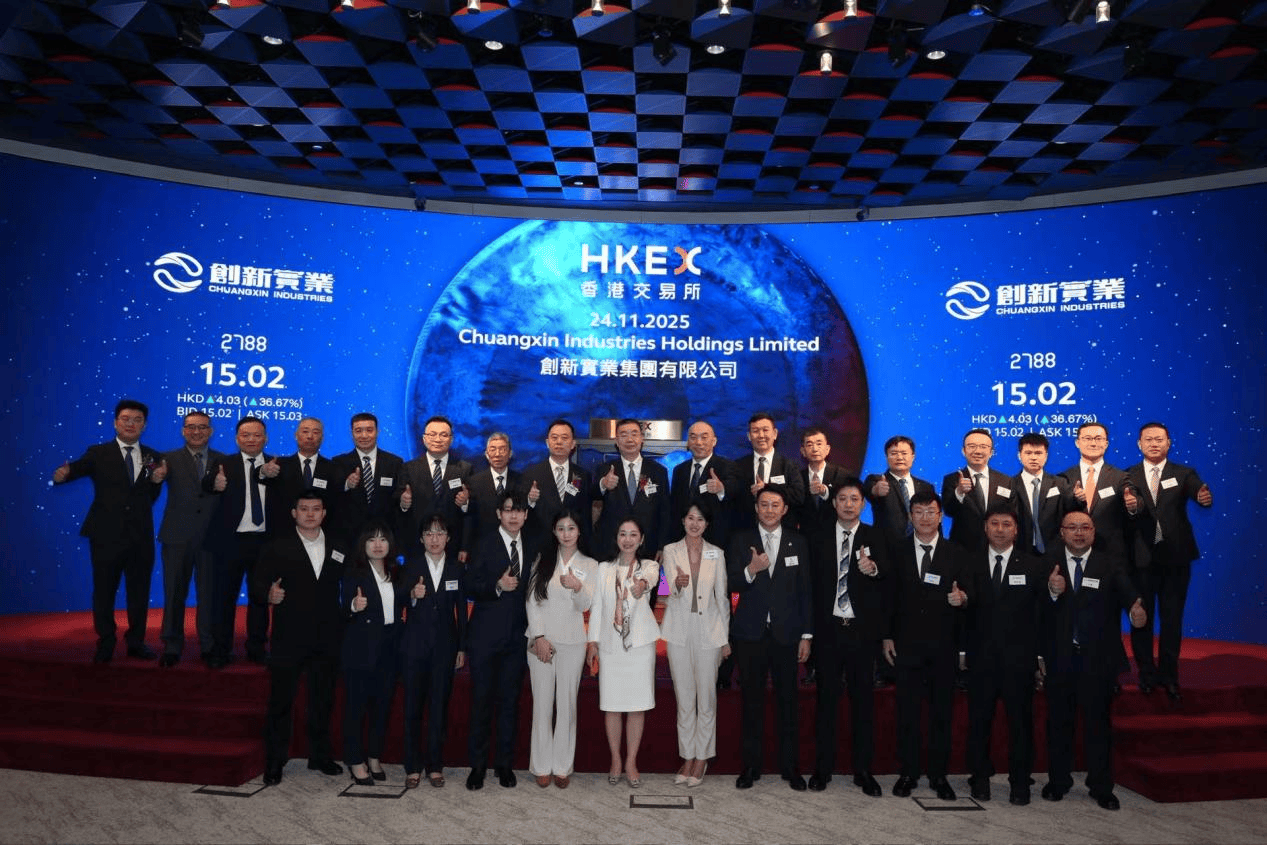
通辽市电解铝龙头企业“创新实业”成功登陆港交所
Sou Hu Cai Jing· 2025-11-24 14:30
Core Viewpoint - Innovation Industry Group Co., Ltd. has successfully listed on the Hong Kong Stock Exchange, marking a significant milestone as the first private enterprise from Tongliao City to go public, filling a gap in local listings for over a decade [1][2]. Company Overview - Innovation Industry is the twelfth largest electrolytic aluminum producer in China and operates the fourth largest electrolytic aluminum smelting plant in North China, located in Hohhot City [2]. - The company's subsidiary, Inner Mongolia Chuangyuan, is set to receive the national-level green factory honor from the Ministry of Industry and Information Technology in 2024 [2]. Market Performance - On its first trading day, Innovation Industry opened at HKD 15.2, a significant increase of 38.31% from the issue price of HKD 10.99, indicating strong market confidence [1]. - Prior to the listing, the company showed robust market interest, with Futu's dark pool data reporting a closing price of HKD 13.85, up 26.02% from the issue price, resulting in a profit of HKD 1,430 per lot [2]. - The public offering phase saw an impressive oversubscription rate of approximately 447.20 times, with nearly 145,000 valid applications [2]. Economic Impact - The successful listing of Innovation Industry is a key achievement for Tongliao City in promoting industrial transformation and upgrading, as well as facilitating local enterprises' access to international capital markets [2]. - This event not only injects new momentum into the company's development but also showcases the strength and potential of Tongliao enterprises to the global capital market, contributing to the city's goal of building a modern industrial system and a multi-tiered capital market [2].

每日报告精选-20251124
GUOTAI HAITONG SECURITIES· 2025-11-24 12:30
Economic Overview - High-frequency data indicates that automotive consumption remains strong, benefiting from tax incentives and subsidies, while textile and film consumption is weak[7] - Real estate sales and land market show signs of fatigue, with infrastructure special bonds fully issued but project progress lagging[7] - Exports to South Korea are recovering, while import demand weakens post shopping festival[7] Market Performance - Major global asset prices have declined, with the Hang Seng Index dropping 5.1%, the largest decline among major indices[9] - The S&P 500 Index fell by 1.9%, while the Shanghai Composite Index decreased by 3.9%[9] - The 10-year U.S. Treasury yield fell by 8 basis points to 4.06%[9] Federal Reserve Insights - The U.S. added 119,000 non-farm jobs in September, significantly exceeding expectations of 51,000[12] - The unemployment rate rose to 4.4%, higher than the expected 4.3%[12] - Federal Reserve officials exhibit significant internal disagreement regarding future monetary policy direction[8] Investment Strategies - ETF inflows have increased significantly to 503 billion, while foreign and financing funds have seen outflows[15] - The market's trading activity has decreased, with average daily turnover dropping to 1.9 trillion[14] - The risk appetite remains low, with the overall market sentiment declining[14] Sector Analysis - The technology sector is expected to benefit from AI advancements, with recommendations for investments in internet and computing sectors[35] - The financial sector is poised for recovery, with a focus on brokerage and insurance stocks[35] - Consumer stocks are seen as undervalued, with potential growth in food and beverage sectors[35]


