建材

Search documents
云南“十五五”规划建议:做强做优做大资源型产业
Xin Hua Cai Jing· 2025-12-29 05:20
Core Viewpoint - The Yunnan Provincial Party Committee has released recommendations for the 15th Five-Year Plan, emphasizing the strengthening and expansion of resource-based industries through technological advancements and deep processing [1] Group 1: Resource-Based Industries - The plan aims to enhance the position of aluminum, silicon, phosphorus, non-ferrous, and rare metals in the national industrial chain and supply chain [1] - There is a focus on promoting green aluminum towards deep processing and terminal manufacturing, with the goal of establishing a "Green Aluminum Valley" [1] - The initiative includes upgrading the silicon photovoltaic industry and creating major production bases for leading enterprises [1] Group 2: Phosphorus and Non-Ferrous Metals - The development of fine phosphorus chemicals is prioritized, aiming to couple phosphorus resources with new energy battery materials and create a national advanced manufacturing cluster for green phosphorus chemicals [1] - The plan emphasizes the deep processing of non-ferrous metals and the extension of rare metals from materials to devices and equipment, with a focus on building a national advanced manufacturing cluster for rare metals in central Yunnan [1] Group 3: Mineral Resource Exploration and Utilization - A new round of strategic actions for mineral exploration is proposed to promote the exploration, development, and increase of important mineral resources [1] - The plan aims to improve the comprehensive utilization of mineral resources and strengthen the coordinated development of strategic and advantageous minerals [1] - There is an emphasis on the comprehensive utilization of recycled resources such as aluminum, copper, and platinum group metals [1] - The initiative includes the transformation and upgrading of industries such as mining, metallurgy, chemicals, building materials, and light industry [1]
量化观市:货币财政双会定调,后续风格该如何配置?
SINOLINK SECURITIES· 2025-12-29 02:58
Quantitative Models and Construction Methods 1. Model Name: Rotation Model - **Model Construction Idea**: The model is based on the relative performance of micro-cap stocks and "Mao Index" (a large-cap index), using rolling slopes and relative net values to determine rotation signals[19][24] - **Model Construction Process**: 1. Calculate the relative net value of micro-cap stocks to the Mao Index. If the relative net value is above its 243-day moving average, the model prefers micro-cap stocks; otherwise, it prefers the Mao Index[19][24] 2. Compute the 20-day closing price slopes for both micro-cap stocks and the Mao Index. If the slopes diverge and one is positive, the model selects the index with the positive slope to adapt to potential style shifts[19][24] 3. Timing indicators include the 10-year government bond yield (threshold: 0.3) and micro-cap stock volatility crowding (threshold: 0.55). If either indicator hits the threshold, a closing signal is triggered[19][24] - **Model Evaluation**: The model effectively captures style rotation signals and provides a systematic approach to manage risk and optimize returns[19][24] 2. Model Name: Macro Timing Model - **Model Construction Idea**: This model integrates macroeconomic growth and monetary liquidity signals to determine equity allocation levels[44][45] - **Model Construction Process**: 1. Assign signal strengths to economic growth and monetary liquidity dimensions. For December, the signal strengths were 50% and 60%, respectively[45] 2. Combine these signals to recommend an equity allocation level. For December, the recommended equity allocation was 55%[45] 3. The model's performance is tracked, with a year-to-date return of 13.57% compared to a 25.65% return for the Wind All-A Index[44] - **Model Evaluation**: The model provides a balanced approach to equity allocation, leveraging macroeconomic indicators to guide investment decisions[44][45] --- Model Backtesting Results 1. Rotation Model - **Relative Net Value**: Micro-cap stocks to Mao Index relative net value was 2.06, above the 243-day moving average of 1.80[19] - **20-Day Slope**: Micro-cap stocks' 20-day slope was -0.15%, while the Mao Index's slope was 0.00%[19] - **Risk Indicators**: Volatility crowding was -17.17%, below the 55% risk threshold; 10-year government bond yield was 7.32%, below the 30% risk threshold[19] 2. Macro Timing Model - **Economic Growth Signal**: 50%[45] - **Monetary Liquidity Signal**: 60%[45] - **Equity Allocation**: 55%[45] - **Year-to-Date Return**: 13.57% (compared to Wind All-A Index's 25.65%)[44] --- Quantitative Factors and Construction Methods 1. Factor Name: Growth Factor - **Factor Construction Idea**: Measures the growth potential of companies based on financial metrics like net income and operating income growth[58][59] - **Factor Construction Process**: 1. Use single-quarter net income year-over-year growth (NetIncome_SQ_Chg1Y) and single-quarter operating income year-over-year growth (OperatingIncome_SQ_Chg1Y) as key metrics[59] 2. Combine these metrics to rank stocks and construct the factor[59] - **Factor Evaluation**: Demonstrated strong performance with an IC mean of 10.62% across all A-shares[48] 2. Factor Name: Consensus Expectation Factor - **Factor Construction Idea**: Captures market sentiment and expectations based on analysts' forecasts[58][59] - **Factor Construction Process**: 1. Use metrics like expected ROE changes over the past three months (ROE_FTTM_Chg3M) and target return over 180 days (TargetReturn_180D)[59] 2. Rank stocks based on these metrics to construct the factor[59] - **Factor Evaluation**: Performed well with an IC mean of 9.57% across all A-shares[48] 3. Factor Name: Volatility Factor - **Factor Construction Idea**: Measures stock price stability and risk using historical price and volume data[58][59] - **Factor Construction Process**: 1. Use metrics like 60-day return volatility (Volatility_60D) and CAPM residual volatility (IV_CAPM)[59] 2. Rank stocks inversely based on these metrics to construct the factor[59] - **Factor Evaluation**: Underperformed with an IC mean of -20.21% across all A-shares[48] --- Factor Backtesting Results 1. Growth Factor - **IC Mean**: 10.62% (all A-shares)[48] - **Multi-Long-Short Portfolio Return**: 20.54% (all A-shares, year-to-date)[49] 2. Consensus Expectation Factor - **IC Mean**: 9.57% (all A-shares)[48] - **Multi-Long-Short Portfolio Return**: 15.95% (all A-shares, year-to-date)[49] 3. Volatility Factor - **IC Mean**: -20.21% (all A-shares)[48] - **Multi-Long-Short Portfolio Return**: -2.96% (all A-shares, year-to-date)[49]
产业大模型,跑出一只“水下独角兽”
3 6 Ke· 2025-12-29 02:03
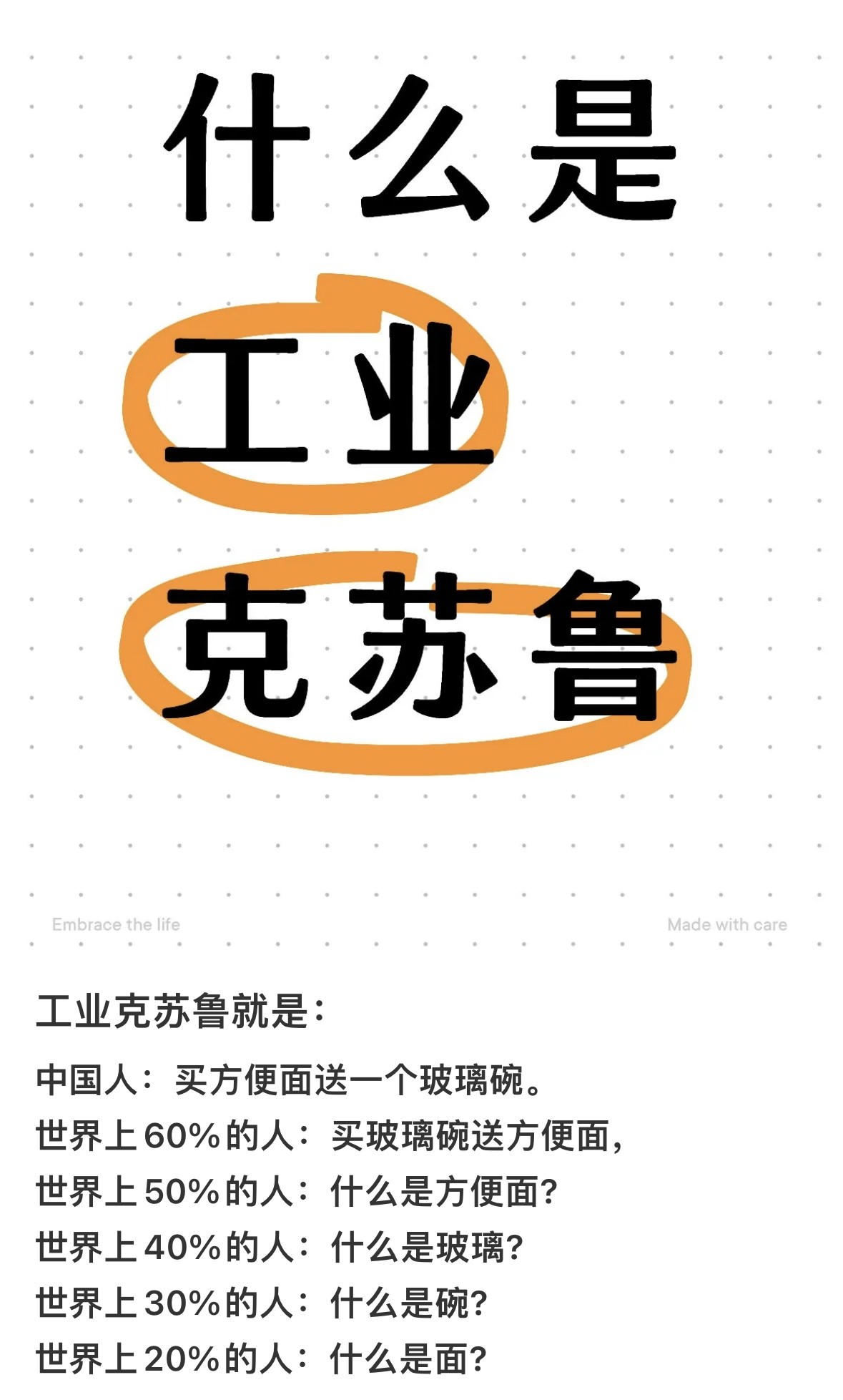
Core Insights - The article discusses the rise of the term "Industrial Cthulhu," reflecting on the significant advancements in industrial value in the U.S. and China, highlighting the latter's dominance in global industrial output [4][5][24] - It emphasizes the challenges and opportunities in integrating artificial intelligence (AI) into industrial processes, particularly through the example of the Smart Institute, a subsidiary of China National Building Material Group [10][25] Group 1: Industrial Value and Global Standing - In 2024, the U.S. industrial value reached a historic high of $374 billion, with manufacturing value at $291 billion, while Germany and Japan's industrial values were $98 billion and $93 billion, respectively, significantly lower than the U.S. [4] - China achieved an industrial value of 40.5 trillion RMB (approximately $5.69 trillion) in 2024, maintaining its position as the world's largest industrial nation, accounting for over 30% of global output [5] - In heavy industries like cement, China produced 1.825 billion tons in 2024, nearly 50% of global production, marking 39 consecutive years at the top [7] Group 2: AI Integration in Industry - The Smart Institute has developed an industrial AI model that optimizes production processes, reducing cement production costs by an average of 2 RMB per ton, generating significant economic benefits for factories [9][10] - The institute has established a standardized implementation plan for AI applications, expanding its services to 66 factories in 2024 and aiming for over 100 by 2025 [11] - The challenges of implementing AI in industrial settings include data handling, understanding complex business logic, and ensuring stability and low error rates in production environments [17][18] Group 3: Future Directions and Innovations - The Smart Institute aims to further develop AI applications to help reduce cement production costs by 3-5 RMB per ton, with a projected payback period of under one year [18] - The integration of AI in industrial processes is seen as essential for enhancing productivity and addressing the pressures of rising costs and environmental regulations [24][25] - The article concludes that AI must be deeply rooted in industrial practices to unlock its full potential and drive a new wave of industrial revolution [25]

周期的进攻与防守
2025-12-29 01:04
Summary of Key Points from Conference Call Records Industry Overview Chinese Companies and Global Demand - Chinese listed companies maintain higher overseas gross margins compared to domestic margins, particularly in capital and technology-intensive industries, indicating a significant competitive advantage [1] - The global demand in 2026 is expected to be favorable for Chinese outbound enterprises, benefiting from the latter half of the Federal Reserve's easing cycle, with an uptrend in global industrial and infrastructure capital expenditure [1][5] Aviation Industry - The aviation sector is viewed as a major investment opportunity, with ticket prices showing positive year-on-year growth, serving as a catalyst for the industry [1][6] - Despite fluctuations in December ticket prices, strong travel demand during the holiday season is anticipated to support price increases post-New Year [6] - Recommended stocks include China National Aviation, Juneyao Airlines, China Eastern Airlines, Southern Airlines, and Spring Airlines [6] Shipping and Oil Transportation - The oil shipping market experienced significant price fluctuations recently, with a notable drop in TCE rates for VLOCs [7] - Long-term outlook remains optimistic due to increased oil production driving demand, with a recommendation to focus on COSCO Shipping Energy, China Merchants Energy Shipping, and China Ship Leasing [8] Chemical Industry - The chemical sector, particularly the spandex segment, is performing well, with Huafeng Chemical showing significant cost advantages and benefiting from demand growth [9] - Other noteworthy areas include coal chemical companies like Hualu Hengsheng and soda ash producers like Boyuan Chemical [9] Metals Sector - The metals sector is experiencing strong performance, with gold reaching new highs and significant increases in silver, copper, aluminum, and lithium carbonate prices [11] - The supply side remains rigid, and the demand recovery driven by liquidity and AI-related factors is expected to keep prices on an upward trend [11][12] Company-Specific Insights Coal Market - Current coal prices are declining, with expectations of stabilizing around 670 RMB/ton as a bottom [3][18] - The outlook for 2026 suggests a rebound in coal demand due to a recovery in thermal power generation [21] Petrochemical Industry - The petrochemical sector is optimistic for 2026, with signs of inventory replenishment and a favorable price index for products [16] - The polyester supply chain is particularly promising, with recommendations for Tongkun Co., New Fengming, and Hengyi Petrochemical [17] New Materials - Focus areas in the new materials sector include lubricant additives, storage materials, and AI-related high-speed technologies, with specific companies recommended for investment [10] Energy Metals - The lithium carbonate market is expected to remain strong due to increasing storage demand, with recommendations for stocks in the energy metals sector [14] Steel Industry - Leading steel companies like Nanjing Steel and Baosteel are seen as good investment opportunities despite recent adjustments, with a projected decline in capital expenditure for 2026 [15] Additional Considerations - The overall sentiment for the Chinese stock market in 2026 is optimistic, driven by economic reforms and increased capital inflows [3] - The impact of monetary policy, geopolitical factors, and supply uncertainties on various sectors should be closely monitored [2]
绿色金融助力节能降碳全面攻坚
Zheng Quan Ri Bao· 2025-12-28 16:13
Group 1: Importance of Energy Conservation and Carbon Reduction - Energy conservation and carbon reduction are crucial measures for achieving carbon peak and carbon neutrality, promoting the construction of a beautiful China, and facilitating a comprehensive green transformation of economic and social development [2][5] - The current stage of energy conservation and carbon reduction is characterized by quick results, high certainty, and low costs, making it the most effective path for emission reduction [2][3] - High-energy-consuming industries such as steel, petrochemicals, non-ferrous metals, and building materials face significant challenges in achieving energy conservation and carbon reduction goals through supply-side constraints [2][3] Group 2: Development of Renewable Energy - The development of renewable energy is a core path for energy conservation and carbon reduction, with companies like TBEA implementing numerous energy-saving projects [3][4] - By 2024, the cumulative installed capacity of renewable energy in China is expected to reach 1.89 billion kilowatts, with non-fossil energy consumption increasing from 15.9% in 2020 to 19.8% [3][4] - Projects like the 700,000-kilowatt "solar thermal storage+" project in Gansu are expected to provide significant clean energy and reduce carbon emissions substantially [4] Group 3: Financial Mechanisms and Challenges - There is a need for innovative financial mechanisms to support energy conservation and carbon reduction, particularly for small and medium-sized enterprises facing financing constraints [6][7] - The green financing demand in the steel industry alone exceeds 100 billion yuan annually, highlighting the need for improved financing sources [7] - The national carbon market is still facing challenges such as insufficient liquidity and limited industry coverage, necessitating further development [7][9] Group 4: Expansion of Green Finance - China's green finance sector is expanding, with green loans and bonds leading the way, and the balance of green loans reaching 43.51 trillion yuan by Q3 2025, a 17.5% increase from the beginning of the year [8][9] - The issuance of green bonds has significantly increased, with 342 new bonds issued in 2025, totaling approximately 270.2 billion yuan, a 46% year-on-year increase [9] - There is a disparity in the development of green financing tools, with traditional tools being more mature compared to emerging fields like green insurance and carbon finance [9][10] Group 5: Future Directions and International Standards - Enhancing the maturity of low-carbon technologies is essential for attracting capital, especially in sectors like renewable energy and electric transportation [10][11] - The capital market is expected to play a key role in promoting energy conservation and carbon reduction through market-driven methods such as mergers and acquisitions [10] - There is a need to optimize green finance standards and enhance China's participation in international rule-making to better capture global market opportunities [11]
行业比较周跟踪:A股估值及行业中观景气跟踪周报-20251228
Shenwan Hongyuan Securities· 2025-12-28 14:06
Valuation Summary - The overall valuation of A-shares as of December 26, 2025, shows the CSI All Share (excluding ST) PE at 21.6x and PB at 1.8x, positioned at the historical 81st and 42nd percentiles respectively [2] - The Shanghai Stock Exchange 50 PE is at 11.8x and PB at 1.3x, at the historical 62nd and 42nd percentiles [2] - The CSI 300 PE is at 14.1x and PB at 1.5x, at the historical 65th and 38th percentiles [2] - The CSI 500 PE is at 33.8x and PB at 2.3x, at the historical 64th and 52nd percentiles [2] - The CSI 1000 PE is at 46.4x and PB at 2.5x, at the historical 66th and 46th percentiles [2] - The National Index 2000 PE is at 57.1x and PB at 2.7x, at the historical 73rd and 67th percentiles [2] - The ChiNext Index PE is at 41.3x and PB at 5.6x, at the historical 36th and 64th percentiles [2] - The Sci-Tech 50 PE is at 160.7x and PB at 6.1x, at the historical 97th and 66th percentiles [2] - The ChiNext Index/CSI 300 PE is at 2.9x and PB at 3.7x, at the historical 22nd and 61st percentiles [2] Industry Valuation Comparison - Industries with PE valuations above the historical 85th percentile include Real Estate, Retail Trade, and IT Services [2] - Industries with PB valuations above the historical 85th percentile include Electronics (Semiconductors) and Telecommunications [2] - The Healthcare Services industry has both PE and PB valuations below the historical 15th percentile [2] Industry Sentiment Tracking New Energy - In the photovoltaic sector, the upstream multi-crystalline silicon futures price fell by 1.9%, while the average price of silicon wafers increased by 3.0% [2] - Battery materials saw cobalt prices rise by 4.3% and nickel prices by 8.4%, while lithium prices fluctuated with hexafluorophosphate lithium down by 1.8% and carbonate lithium up by 14.8% [2] - Wind power installations from January to November 2025 saw a year-on-year increase of 59.4%, while photovoltaic installations increased by 33.3% [2] Technology TMT - The Philadelphia Semiconductor Index rose by 2.0%, and the Taiwan Semiconductor Industry Index increased by 5.0% [3] - The DXI Index (DRAM output value) increased by 8.4%, with NAND Flash prices rising by 0.4% [3] - Domestic smartphone shipments from January to November 2025 saw a year-on-year growth of 0.9% [3] Financial Sector - Insurance companies reported a cumulative year-on-year growth of 7.6% in premium income from January to November 2025 [3] Real Estate Chain - The price of rebar fell by 0.5%, while the price of cement decreased by 0.2% [3] - Domestic sales of air conditioners and refrigerators saw significant declines, with year-on-year drops of 39.8% and 15.6% respectively [3] Consumer Sector - The average price of live pigs increased by 0.4%, while wholesale pork prices decreased by 0.6% [3] - The wholesale price index for liquor remained stable, with a slight increase in the price of Feitian Moutai [3] Midstream Manufacturing - The value of overseas contracted engineering projects increased by 9.3% year-on-year from January to November 2025 [3] Cyclical Industries - The price of Brent crude oil rose by 1.7% to $60.73 per barrel, while coal prices fell by 4.4% [3] - The Baltic Dry Index (BDI) fell by 11.5% due to reduced demand for bulk commodities [3]
非金属建材行业周报:看好Q布提高渗透率-20251228
SINOLINK SECURITIES· 2025-12-28 13:33
Investment Rating - The report highlights a positive outlook for the Q fabric market, suggesting it has the potential to become a mainstream material with increased supply capacity and market confidence [2][12]. Core Insights - The Q fabric market is gaining attention, with companies like Lite-On Optoelectronics investing in the sector to create an integrated advantage in sand mining, rod production, weaving, and more. The M9+Q fabric is identified as the most proactive material solution, while M9+ second-generation and 2.5 generation fabrics represent a more conservative approach. The Q fabric's low expansion and dielectric properties are emphasized as key advantages [2][12]. - The report suggests that the bottleneck for Q fabric lies in downstream processing difficulties, particularly in PCB upgrades, while upstream issues in silk and fabric production are being addressed by companies like Fihua and China National Materials [2][12]. - The report encourages a rational view of new entrants in the Q fabric market, emphasizing the need for upstream and downstream participants to enhance industry connectivity and penetration rates [2][12]. Summary by Sections Weekly Discussion - The Q fabric market is highlighted as a focal point, with significant investments and technological advancements expected to drive its adoption [2][12]. - The report discusses the importance of evaluating companies based on raw material advantages, technological capabilities, customer resources, and equipment strengths [2][12]. Market Performance - The report notes that the cement market is experiencing a decline in average prices, with a national average of 354 RMB/t, down 67 RMB/t year-on-year and 1 RMB/t month-on-month. The average shipment rate is 41.4%, reflecting a slight decrease [4][14]. - The glass market shows a slight decline in prices, with the average price for float glass at 1140.08 RMB/ton, down 11.32 RMB/ton, and an increase in inventory days [4][14]. - The concrete mixing station's capacity utilization is reported at 7.33%, indicating a decrease [4][14]. Price Changes - The report details that the national cement price remains stable, with fluctuations observed in specific regions. The average shipment rate has decreased by approximately 1 percentage point [24][25]. - The float glass market is experiencing a slight downward trend in prices, with increased inventory levels noted [34][35]. - The report indicates that the electronic fabric market is stable, with prices for 2400tex non-alkali yarn remaining steady [56][58].


金属周期品高频数据周报(2025.12.22-12.28):热卷库存处于5年同期最高水平-20251228
EBSCN· 2025-12-28 13:09
Investment Rating - The report maintains an "Overweight" rating for the steel and non-ferrous metals sectors [5] Core Insights - The report highlights that hot-rolled inventory is at its highest level for the same period in five years, indicating potential supply chain pressures [41] - The liquidity environment is characterized by a historical high in gold prices, with the London gold spot price reaching $4,533 per ounce [11] - The report notes a decline in construction activity, with national real estate new starts down 20.50% year-on-year for the first 11 months of 2025 [20] Summary by Relevant Sections Liquidity - The BCI small and medium enterprise financing environment index for December 2025 is at 47.15, down 10.19% month-on-month [11] - The M1 and M2 growth rate difference was -3.1 percentage points in November 2025, a decrease of 1.10 percentage points month-on-month [18] - The current London gold price is $4,533 per ounce, reflecting a 4.41% increase from the previous week [11] Infrastructure and Real Estate Chain - Hot-rolled inventory is at the highest level for the same period in five years, with rebar prices down 1.20% this week [41] - The national high furnace capacity utilization rate is at 85%, unchanged from the previous week [10] - The cement price index has decreased by 0.49% this week, with a national cement utilization rate of 30.14%, down 0.9 percentage points [59] Industrial Chain - The national semi-steel tire operating rate is at 72.05%, up 0.66 percentage points week-on-week [2] - The price of tungsten concentrate has reached a new high since 2012, at 460,500 yuan per ton, up 6.35% from last week [2] - The price of electrolytic aluminum is 22,060 yuan per ton, reflecting a 1.01% increase week-on-week [10] Price Relationships - The price difference between hot-rolled and rebar has turned positive, with the current difference at 10 yuan per ton [3] - The price ratio of rebar to iron ore is 4.02 this week [3] - The price of stainless steel hot-rolled and electrolytic nickel has a ratio of 0.10 [3] Export Chain - The new export orders PMI for China in November is 47.60%, an increase of 1.7 percentage points month-on-month [3] - The CCFI composite index for container shipping rates is at 1,146.67 points, up 1.95% week-on-week [3] - The U.S. crude steel capacity utilization rate is at 75.30%, down 1.20 percentage points from the previous week [3] Valuation Metrics - The CSI 300 index increased by 1.95%, with the chemical sector performing best at +4.23% [4] - The PB ratio for the steel sector relative to the CSI 300 is currently at 0.50, with a historical high of 0.82 [4] - The report suggests that the steel sector's supply may be reasonably constrained, leading to potential recovery in profitability to historical average levels [4]
金岩高岭新材:稳定价格期结束、超额配股权失效
Zhi Tong Cai Jing· 2025-12-28 11:52
Group 1 - The company, Jinyan Gaoling New Materials (02693), announced that the stabilization period related to its global offering ended on December 28, 2025, which is 30 days after the deadline for submitting the Hong Kong public offering application [1] - The overall coordinator, acting on behalf of the international underwriters, did not exercise the over-allotment option during the stabilization period [1] - The over-allotment option will expire on December 28, 2025, and the company has not issued and will not issue any H-shares based on the over-allotment option [1]
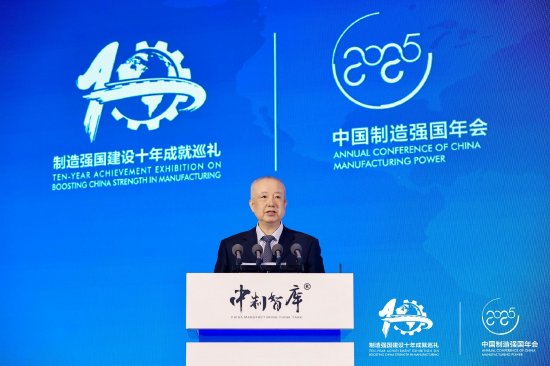
工信部原副部长刘利华:未来五年,推动制造业实现战略性跨越应聚焦四个方面
Xin Lang Cai Jing· 2025-12-28 02:39
Core Viewpoint - The 10th China Manufacturing Power Conference highlighted the significant achievements of China's manufacturing sector during the 14th Five-Year Plan, emphasizing the need for continued innovation and adaptation in a rapidly changing global environment [3][4][9]. Group 1: Achievements in Manufacturing - China's manufacturing value added has maintained a stable global share of around 30%, holding the top position for 15 consecutive years [3][8]. - Key industries such as new energy vehicles, information communication equipment, and advanced rail transit have reached world-leading status, while aerospace, automotive, steel, petrochemicals, and building materials have achieved advanced global levels [3][8]. - In the first 11 months of 2025, China's goods trade surplus exceeded $1.08 trillion, marking a historical high, with contributions shifting from labor-intensive sectors to technology-intensive sectors like electric vehicles and lithium batteries [3][8]. Group 2: Challenges and Strategic Focus - The international environment presents uncertainties, including major power competition and technological rivalry, which pose challenges to the manufacturing sector [4][9]. - The upcoming Five-Year Plan emphasizes the importance of building a modern industrial system, with manufacturing as a key focus, and aims to maintain a reasonable proportion of advanced manufacturing [4][9]. - Future strategies for manufacturing should focus on four areas: solidifying industrial foundations, accelerating technological self-reliance, nurturing new productive forces, and optimizing the development ecosystem [10][11].