原油

Search documents
2025惊涛骇浪:全球市场十大“刺激行情”全复盘
Xin Lang Cai Jing· 2025-12-25 09:28
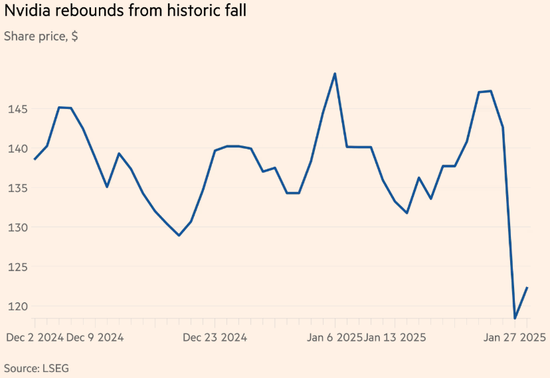
Group 1 - The global market in 2025 experienced significant turbulence due to policy shifts, technological revolutions, and macroeconomic changes, leading to extreme market conditions and a reevaluation of investment narratives [1][36] - The article highlights ten major market events that illustrate the fragility of consensus and the risks associated with widely accepted narratives suddenly changing [1][36] Group 2 - Nvidia's stock plummeted 17% on January 27, resulting in a loss of nearly $600 billion in market value, marking the largest single-day drop in the company's history and a record for any U.S. company [2][37] - This decline triggered a broader sell-off in the tech sector, with the semiconductor index dropping over 9% and major tech stocks like Broadcom and TSMC also experiencing significant losses [2][37] - The market began to question the sustainability of high valuations for tech giants, particularly in light of new AI models that could disrupt existing business models [4][39] Group 3 - In April 2025, a week-long "policy horror show" led to a dramatic market reaction, with the S&P 500 index dropping over 10% in two days due to fears of a trade war initiated by Trump's tariff announcements [5][40] - The market saw a rapid recovery after Trump announced a temporary suspension of tariffs, resulting in a 5.7% rebound in the S&P 500, the largest weekly gain since November 2020 [5][41] - This event highlighted the market's evolving response to Trump's trade policies, indicating a shift towards a more measured reaction to potential tariff threats [7][43] Group 4 - The outbreak of conflict in the Middle East in June 2025 led to a temporary spike in oil prices, with Brent crude rising over 10% before experiencing a subsequent drop of nearly 12% as fears of supply disruptions proved unfounded [8][44] - Analysts noted that geopolitical events are becoming less influential on oil prices, which are now more affected by structural oversupply [10][46] Group 5 - In July 2025, copper futures experienced a dramatic 21% drop due to unexpected tariff announcements, leading to significant losses for traders who had positioned themselves based on prior expectations [11][47] - The market's reaction to the tariff news demonstrated the dangers of crowded trades and the impact of policy changes on commodity prices [13][49] Group 6 - Oracle's signing of a $300 billion deal with OpenAI in September 2025 led to a 40% surge in its stock price, but subsequent earnings reports revealed disappointing growth, resulting in a 45% decline from its peak [5][50][52] - This event raised questions about the sustainability of growth narratives in the tech sector, particularly regarding inter-company transactions that may not create real value [5][52] Group 7 - Gold prices surged to $4000 per ounce in October 2025 amid multiple crises, but subsequently fell by 6.3% in a significant correction, illustrating the volatility of gold as both a safe haven and a speculative asset [5][54][56] - The dynamics of gold trading shifted from simple inflation hedging to a reevaluation of the credibility of the global monetary system [5][56] Group 8 - Silver prices saw a remarkable increase of approximately 150% in 2025, driven by supply shortages and industrial demand, but also faced significant volatility with sharp declines [5][57][60] - The market for silver is characterized by a strong fundamental backdrop, but its high volatility presents opportunities for strategic positioning [5][60] Group 9 - The U.S. dollar faced its worst performance in 52 years, with a 12.5% decline in the dollar index during 2025, raising questions about the sustainability of its status as a global reserve currency [5][61][27] - The dollar's decline was influenced by concerns over U.S. fiscal policy and the Federal Reserve's interest rate decisions, leading to a reevaluation of the dollar's value in the global market [5][27] Group 10 - The A-share market in China reached the symbolic 4000-point mark for the first time in ten years, demonstrating resilience amid external pressures and internal policy support [5][28][30] - This recovery reflects a shift in market dynamics, with a focus on domestic narratives and structural opportunities rather than solely external risks [5][30] Group 11 - The Japanese yen experienced unexpected weakness despite two interest rate hikes, highlighting the complexities of Japan's fiscal and monetary policies [5][31][33] - Investor skepticism regarding Japan's economic recovery strategy has led to continued selling pressure on the yen, despite attempts to stabilize the currency [5][33]

国投期货综合晨报-20251225
Guo Tou Qi Huo· 2025-12-25 05:20
Group 1: Energy and Metals Crude Oil - Geopolitical conflicts such as US tanker seizures, Russian port attacks, and potential supply cuts in Kazakhstan have raised concerns about supply disruptions, but the fundamental supply is still loose, and geopolitical factors may trigger short - term rebounds [2] Precious Metals - The Fed's easing prospects and geopolitical risks have supported the strength of precious metals, but short - term volatility may increase after the Christmas holiday [3] Copper - Domestic spot supply - demand gives more downward pressure on copper prices, but raw material shortages may be transmitted to refined copper, and it is recommended to hold long positions with an adjusted support level and set a stop - profit [4] Aluminum - The fundamentals of the aluminum market have limited contradictions. With the approach of the Christmas holiday, funds are leaving. It is recommended that long positions be held against the 40 - day moving average [5] Cast Aluminum Alloy - The spot price of ADC12 has been raised. When the spread between cast aluminum alloy and Shanghai aluminum expands to over 1,000 yuan, pay attention to the opportunity to shrink the spread [6] Alumina - Alumina has an oversupply situation, and costs may decline. It will be weak until large - scale production cuts occur [7] Zinc - External inventory increases have put short - term pressure on zinc prices. It is expected to fluctuate in the range of 22,800 - 23,800 yuan/ton [8] Lead - Lead is in a low - level consolidation pattern. Pay attention to the resistance at 17,500 yuan/ton [9] Nickel and Stainless Steel - The nickel market is currently dominated by policy sentiment. It is recommended to wait and see for the time being [10] Tin - In the first quarter of 2026, tin supply is expected to turn to recovery, while consumption in traditional fields is weak. It is recommended to pay attention to short - position reduction and use put options [11] Lithium Carbonate - The price of lithium carbonate has broken through 120,000 yuan. The overall fundamentals are strong, and the short side is under pressure [12] Industrial Silicon - The market is mainly driven by the expectation of production cuts at the end of the month, and it is expected to show a strong and volatile trend in the short term [13] Polysilicon - The industry has strong expectations but weak reality. After rule adjustments, the short - term market is expected to fluctuate and decline [14] Group 2: Steel and Related Products Rebar and Hot - Rolled Coil - The demand for rebar has recovered slightly, while the supply and demand of hot - rolled coils have both declined. The overall market is expected to fluctuate slightly stronger in the short term [15] Iron Ore - The supply of iron ore is strong, and the demand is at a low level. The short - term market is expected to fluctuate [16] Coke - The third round of price cuts has been fully implemented. The price is expected to fluctuate [17] Coking Coal - Some coal mines have reduced or stopped production. The price is expected to fluctuate after repairing the discount [18] Manganese Silicon - The spot price of manganese ore has increased. It is recommended to try long positions at low prices [19] Silicon Iron - The supply of silicon iron has decreased significantly. It is recommended to try long positions at low prices [20] Group 3: Shipping Container Shipping Index (European Line) - The market is in a game between "strong expectations" and "weak reality". The near - month contract is expected to continue to fluctuate around the spot price [21] Group 4: Fuel and Chemicals Fuel Oil and Low - Sulfur Fuel Oil - The demand for fuel oil has not been significantly boosted. High - sulfur fuel oil is in a game between geopolitical support and supply surplus, while low - sulfur fuel oil is expected to remain weak [22] Asphalt - The supply - demand of asphalt is marginally loose. Geopolitical factors may bring short - term rebounds, but it will eventually return to a price - pressured situation [23] Urea - The supply - demand of urea has improved marginally, and the market is running strongly [24] Methanol - The port inventory has increased significantly. The short - term market may fluctuate weakly in the range, while there is an upward drive in the long - term [25] Pure Benzene - The port inventory of pure benzene has increased. Consider long - position in the month - spread in the medium - term [26] Styrene - The cost support of styrene is insufficient, and the supply pressure is difficult to reverse [27] Polypropylene, Plastic, and Propylene - The prices of polypropylene and plastic have declined, and the market is under pressure [28] PVC and Caustic Soda - PVC may run at a low level, and the upward range of caustic soda is expected to be limited [29] PX and PTA - The PX market has a strong expectation, and it is recommended to maintain a long - position idea in the medium - term [30] Ethylene Glycol - The short - term pressure of ethylene glycol has eased, but it is still under long - term pressure [31] Short - Fiber and Bottle Chips - The long - term supply - demand of short - fiber is relatively good, while bottle chips are mainly driven by cost [32] Group 5: Building Materials Glass - The industry inventory has increased, and it is recommended to wait and see in the short term [33] 20 - Rubber, Natural Rubber, and Butadiene Rubber - The demand has weakened, and it is recommended to take a bullish strategy [34] Soda Ash - Soda ash is facing long - term supply - demand surplus pressure. It is recommended to short on rebounds and consider a spread strategy [35] Group 6: Agricultural Products Soybeans and Soybean Meal - The trading logic focuses on US soybean exports and South American harvest expectations. Soybean meal prices are expected to follow the fluctuations of US soybeans [36] Soybean Oil and Palm Oil - Both soybean oil and palm oil have continued to rebound. Pay attention to the macro - atmosphere [37] Rapeseed and Rapeseed Oil - The mid - term strategy for rapeseed is to short on rebounds, and the short - term strategy is to wait and see [38] Soybean No.1 - The price of domestic soybeans is oscillating strongly. Pay attention to the auction results [39] Corn - The price of corn is expected to fluctuate weakly in the short term. Pay attention to the selling progress in the Northeast and auctions [40] Live Pigs - The short - term price of live pigs has rebounded slightly, but the main contract is expected to be weak in the medium - term [41] Eggs - The egg market has turned optimistic in the long - term, but beware of rapid price increases [42] Cotton - The domestic cotton market is oscillating strongly. It is recommended for the industry to consider hedging and buy at low prices [43] Sugar - The international sugar market has sufficient supply, and the domestic market focuses on the new - season production [44] Apples - The apple market is bearish, and it is recommended to maintain a short - position idea [45] Wood - The wood price is at a low level. The low inventory provides some support, and it is recommended to wait and see [46] Pulp - The pulp market is oscillating. It is recommended to wait and see or conduct short - term operations [47] Group 7: Financial Products Stock Index - The A - share market has risen, and the stock index futures are affected by the trends of the US dollar and precious metals. Track geopolitical and domestic policy developments [48] Treasury Bonds - In the context of increasing counter - cyclical adjustment policies, the long - term interest rate has risen significantly, and the yield curve may continue to steepen [49]
2026年大宗商品展望:分化时代,2026 大宗商品如何布局?
Sou Hu Cai Jing· 2025-12-25 02:53
Core Insights - The commodity market in 2025 is characterized as a "structural bull market," with significant annual gains in gold and silver, while oil prices face pressure due to supply-demand dynamics [1] - Goldman Sachs' 2026 Commodity Outlook indicates a trend towards "increasing differentiation" in the commodity market, with overall returns expected to moderate but significant disparities among different commodities [1][2] - Key factors influencing the market include the geopolitical tensions between the US and China, the competition in AI, and dual supply shocks in the energy market [1][2] Commodity Performance - Precious metals, particularly gold and silver, are expected to continue their strong performance into 2026, with gold prices projected to reach $4,900 per ounce and silver between $50-$60 per ounce [3][6] - Industrial metals like copper are forecasted to maintain a strong price trajectory, with potential average prices between $11,400 and $12,075 per ton, driven by demand from technology and energy transitions [6][8] - The oil market is anticipated to face downward pressure, with Goldman Sachs predicting Brent and WTI crude oil prices to average $56 and $52 respectively in 2026, reflecting a supply surplus [8] Economic and Policy Context - The shift from "monetary easing + fiscal tightening" to "fiscal expansion + accelerated de-globalization" has highlighted the value of physical assets, creating structural opportunities in commodities [2] - The expected continuation of a loose monetary policy by the Federal Reserve in 2026 is seen as a catalyst for increased investment in commodities, as it lowers the opportunity cost of holding these assets [2] Market Dynamics - The energy market is expected to experience significant changes due to supply shocks in both oil and LNG, impacting pricing and availability [1][8] - The agricultural market's performance in 2026 is uncertain, with potential impacts from climate anomalies and trade policy changes affecting supply and demand dynamics [8] Strategic Focus - The 2026 commodity market will require a nuanced approach, moving away from a one-size-fits-all investment strategy to focus on structural opportunities influenced by geopolitical and technological factors [10]

综合晨报-20251225
Guo Tou Qi Huo· 2025-12-25 02:16
gtaxinstitute@essence.com.cn 综合晨报 2025年12月25日 【原油】 继美国接连扣押油轮后,目前委内瑞拉海域有十余艘满载油轮正等待船东的新指示。俄罗斯黑海塔 口码头遇袭,恶劣天气导致维修进度缓慢,哈萨克斯坦12月CPC混合原油出口将降至14个月最低水 平。美国页岩油行业钻井与压裂活动虽降至数年新低,然而由于产量调整存在时滞,美国原油产量 仍维持在年内高位。她缘冲突多发引发市场对原油供应中断担忧,然基本面宽松主基调未改,地缘 扰动更倾向于提供阶段性反弹动力。 (责金属) 【铜】 隔夜铜价震幅扩大,沪铜加权减仓,海外资金圣诞休市。国内现货背离加大,昨日上海铜贴水扩至 310元,短线国内现货供求给予铜价更大调整压力。但同时需求淡季下,原料紧张可能向国内精铜传 导,且价差利于出口。一季度合约多配需求持续性强,前期多单持有依托位上调到9.4万,同时建议 设置主动止盈位。 【铝】 隔夜沪铝回落。铝市基本面矛盾依然有限,社库窄幅波动,表观需求并无亮眼表现。近期宽松交易 延续,贵金属和有色多品种创新高,沪铝跟涨为主,圣诞节假期来临资金有离场迹象,沪铝在前高 位置仍具备阻力、多头背靠40日线持有 ...
《能源化工》日报-20251225
Guang Fa Qi Huo· 2025-12-25 01:43
1. Report Industry Investment Ratings No information about industry investment ratings is provided in the documents. 2. Core Views of the Reports Natural Rubber - Short - term fundamentals change little. The rubber price rises due to the increasing preference for commodities, but there is a risk of a sharp fall after a rise [1]. Methanol - The port may face inventory accumulation pressure in December, but the supply - demand balance sheet is expected to turn to inventory reduction in the first quarter of the next year. The supply - demand pattern in the inland area is expected to be stable, and the price will fluctuate within a narrow range [4]. Polyolefins - For PP, supply increases while demand decreases, with low marginal device valuation and a slight reduction in inventory. For PE, both supply and demand are weak, with a decrease in the marginal supply of standard products, low valuation, and the futures price rising with reduced positions [8]. Pure Benzene and Styrene - Pure benzene may maintain a volatile trend in the short term, with the BZ2603 contract likely to fluctuate between 5300 - 5600. Styrene's rebound space is limited, and the EB02 contract may fluctuate between 6300 - 6700 [9]. Glass and Soda Ash - Soda ash's supply - demand pattern is bearish, and the price is in a downward - fluctuating pattern. It is recommended to consider short - selling opportunities after the rebound. Glass's market still faces pressure, and the 01 contract will follow the delivery logic in December [10]. PVC and Caustic Soda - Caustic soda's price is expected to be weak in the short term, and its rebound range is limited. PVC is expected to continue to move in a range, and its rebound height is limited [11]. Crude Oil - Crude oil prices are expected to fluctuate between 60 - 65 dollars per barrel, and it is necessary to continue to pay attention to the geopolitical situation after the holiday [12]. Urea - Urea prices may fluctuate between 1700 - 1750. It is necessary to pay attention to the enterprise's replenishment demand and the progress of export policies [14]. LPG - No clear overall view is provided in the LPG - related content. Polyester Industry Chain - PX may continue to be strong in the short term, but caution is needed. PTA's upward movement is limited. MEG is expected to fluctuate and consolidate. Short - fiber's absolute price has limited drivers. Bottle - chip's processing fees are expected to be compressed [18]. 3. Summaries According to Relevant Catalogs Natural Rubber Spot Prices and Basis - The price of Yunnan state - owned whole - latex (SCRWF) in Shanghai rose by 250 yuan/ton to 15100 yuan/ton, with a 1.68% increase. The whole - latex basis decreased by 110 yuan/ton to - 550 yuan/ton, a 25.00% decline [1]. Monthly Spreads - The 9 - 1 spread increased by 70 yuan/ton to 5 yuan/ton, a 107.69% increase. The 1 - 5 spread decreased by 65 yuan/ton to - 30 yuan/ton, a 185.71% decline [1]. Production and Inventory - Thailand's October production decreased by 48.3 thousand tons to 466.2 thousand tons, a 9.39% decline. The bonded - area inventory increased by 16339 tons to 515227 tons, a 3.28% increase [1]. Methanol Prices and Spreads - The MA2601 closing price rose by 4 yuan/ton to 2134 yuan/ton, a 0.19% increase. The MA15 spread decreased by 12 yuan/ton to - 38 yuan/ton, a 46.15% increase [4]. Inventory - Methanol enterprise inventory increased by 1.28 million tons to 40.397 million tons, a 3.28% increase. Methanol port inventory increased by 19.37 million tons to 141.3 million tons, a 15.89% increase [4]. Operating Rates - The upstream domestic enterprise operating rate increased by 0.99 percentage points to 77.63%, a 1.29% increase. The downstream MTO device operating rate increased by 1.51 percentage points to 86%, a 1.79% increase [4]. Polyolefins Prices and Spreads - The L2601 closing price rose by 104 yuan/ton to 6320 yuan/ton, a 1.67% increase. The L15 spread decreased by 8 yuan/ton to - 28 yuan/ton, a 16.00% decline [8]. Inventory - PE enterprise inventory decreased by 2.92 million tons to 45.9 million tons, a 5.99% decline. PP trade - dealer inventory decreased by 2.01 million tons to 18.7 million tons, a 9.70% decline [8]. Operating Rates - The PE device operating rate decreased by 0.25 percentage points to 83.9%, a 0.30% decline. The PP device operating rate increased by 1.08 percentage points to 79.4%, a 1.37% increase [8]. Pure Benzene and Styrene Upstream Prices and Spreads - Brent crude oil (February) decreased by 0.14 dollars per barrel to 62.24 dollars per barrel, a 0.2% decline. The pure benzene - to - naphtha spread increased by 4 dollars per ton to 128 dollars per ton, a 3.2% increase [9]. Styrene - Related Prices and Spreads - Styrene's East - China spot price rose by 90 yuan/ton to 6650 yuan/ton, a 1.4% increase. The EB02 - EB03 spread decreased by 7 yuan/ton to - 64 yuan/ton, a 12.3% increase [9]. Inventory and Operating Rates - Pure benzene's Jiangsu port inventory increased by 1.3 million tons to 27.3 million tons, a 5.0% increase. The domestic pure benzene operating rate decreased by 0.2 percentage points to 74.9%, a 0.2% decline [9]. Glass and Soda Ash Prices and Spreads - The glass 2601 price rose by 3 yuan/ton to 941 yuan/ton, a 0.32% increase. The soda ash 2605 price rose by 9 yuan/ton to 1184 yuan/ton, a 0.81% increase [10]. Production and Inventory - Soda ash's weekly production decreased by 1.4 million tons to 72.14 million tons, a 1.90% decline. Glass factory inventory increased by 33.1 million tons to 5855.8 million tons, a 0.57% increase [10]. PVC and Caustic Soda Prices and Spreads - The East - China calcium - carbide - based PVC market price rose by 60 yuan/ton to 4480 yuan/ton, a 1.4% increase. The SH2601 price rose by 12 yuan/ton to 2150 yuan/ton, a 0.6% increase [11]. Supply and Demand - The caustic - soda industry operating rate decreased by 1.4 percentage points to 88.5%, a 1.5% decline. The PVC total operating rate decreased by 2.3 percentage points to 16.1%, a 2.9% decline [11]. Inventory - The liquid - caustic East - China factory inventory decreased by 1.4 million tons to 22.7 million tons, a 5.7% decline. The PVC upstream factory inventory decreased by 1.6 million tons to 32.9 million tons, a 4.6% decline [11]. Crude Oil Prices and Spreads - Brent crude oil rose by 0.31 dollars per barrel to 62.38 dollars per barrel, a 0.50% increase. The Brent M1 - M3 spread increased by 0.12 dollars per barrel to - 3.16 dollars per barrel, a 3.66% decline [12]. Refined Oil - NYM RBOB rose by 10.75 cents per gallon to 627.25 cents per gallon, a 1.74% increase. The RBOB M1 - M3 spread decreased by 0.34 cents per gallon to - 3.15 cents per gallon, a 12.10% increase [12]. Urea Prices and Spreads - The methanol - main - contract price rose by 16 yuan/ton to 2172 yuan/ton, a 0.74% increase. The 01 - contract - to - 05 - contract spread decreased by 6 yuan/ton to - 62 yuan/ton, a 9.68% decline [14]. Supply and Demand - The domestic urea daily production decreased to 19.5 million tons, a 0.00% change. The urea production factory operating rate remained at 80.62%, a 0.00% change [14]. Inventory - The domestic urea factory inventory decreased by 11.08 million tons to 106.89 million tons, a 9.39% decline. The domestic urea port inventory remained at 13.8 million tons, a 0.00% change [14]. LPG Prices and Spreads - The main PG2601 contract price rose by 36 yuan/ton to 4221 yuan/ton, a 0.86% increase. The PG01 - 02 spread decreased by 15 yuan/ton to 139 yuan/ton, a 9.74% decline [16]. Inventory and Operating Rates - The LPG port inventory decreased by 22.4 million tons to 261 million tons, a 7.89% decline. The downstream PDH operating rate increased by 2.1 percentage points to 75.0%, a 2.92% increase [16]. Polyester Industry Chain Upstream and Downstream Prices - Brent crude oil (February) decreased by 0.14 dollars per barrel to 62.24 dollars per barrel, a 0.2% decline. The POY150/48 price remained at 6395 yuan/ton, a 0.0% change [18]. PX - Related - CFR China PX rose by 5 dollars per ton to 901 dollars per ton, a 0.6% increase. The PX - to - naphtha spread increased by 6 dollars per ton to 447 dollars per ton, a 1.4% increase [18]. PTA and MEG - The PTA East - China spot price rose by 60 yuan/ton to 5015 yuan/ton, a 1.2% increase. The MEG port inventory increased by 3.0 million tons to 71.6 million tons, a 4.4% increase [18].
品种晨会纪要:宝城期货原油早报-2025-12-25-20251225
Bao Cheng Qi Huo· 2025-12-25 01:13
投资咨询业务资格:证监许可【2011】1778 期货研究报告 晨会纪要 宝城期货原油早报-2025-12-25 品种晨会纪要 时间周期说明:短期为一周以内、中期为两周至一月 | 品种 | 短期 | 中期 | 日内 | 观点参考 | 核心逻辑概要 | | --- | --- | --- | --- | --- | --- | | 原油 2602 | 震荡 | 震荡 | 偏强 | 偏强运行 | 地缘风险支撑,原油震荡偏强 | 备注: 1.有夜盘的品种以夜盘收盘价为起始价格,无夜盘的品种以昨日收盘价为起始价格,当日日盘收盘 价为终点价格,计算涨跌幅度。 2.跌幅大于 1%为弱势,跌幅 0~1%为偏弱,涨幅 0~1%为偏强,涨幅大于 1%为强势。 3.偏强/偏弱只针对日内观点,短期和中期不做区分。 ----------------------------------------------------------------------------------------------------- < END > 专业研究·创造价值 1 / 2 请务必阅读文末免责条款 主要品种价格行情驱动逻辑—商品期货能源化工板块 ...
能源化工日报-20251225
Wu Kuang Qi Huo· 2025-12-25 00:52
1. Report Industry Investment Rating No relevant information provided. 2. Core Views of the Report - For crude oil, although the geopolitical premium has disappeared and OPEC's production increase is minimal with supply not yet surging, short - term oil prices should not be overly bearish. A range strategy of buying low and selling high is maintained, but it is recommended to wait and see for now to verify OPEC's export price - support willingness [2]. - For methanol, after the bullish factors are realized, the market will enter a short - term consolidation. The port inventory will continue to decline, but there are still pressures in the future due to high imports and potential port olefin plant overhauls. The methanol fundamentals have some pressure, and it is expected to consolidate at a low level. It is recommended to wait and see for unilateral strategies [3]. - For urea, the market continues to oscillate higher. The demand has improved in the short term, and the supply is expected to decline seasonally. The overall supply - demand situation has improved, and it is expected to build a bottom in an oscillatory manner. It is recommended to consider buying on dips [7]. - For rubber, currently having a neutral - to - bullish view, short - term operations with quick entries and exits are recommended. It is suggested to hold the hedging position of buying RU2601 and shorting RU2609 [12]. - For PVC, the fundamentals are poor with strong domestic supply and weak demand. The short - term sentiment drives a rebound, but in the medium term, a strategy of shorting on rallies is recommended before significant industry production cuts [14]. - For pure benzene and styrene, the non - integrated profit of styrene is neutral to low, and there is a large upward repair space for valuation. It is advisable to go long on the non - integrated profit of styrene before the first quarter of next year [17]. - For polyethylene, OPEC +'s plan to suspend production growth in Q1 2026 may lead to a bottoming of crude oil prices. The valuation of PE has limited downward space. It is recommended to go long on the LL5 - 9 spread on dips [20]. - For polypropylene, in a situation of weak supply and demand with high inventory pressure, there is no prominent contradiction in the short term. It may be supported when the supply - surplus pattern of the cost side changes in Q1 next year [22]. - For PX, the load remains high, and downstream PTA has many overhauls. It is expected to have a slight inventory build - up in December. It is advisable to pay attention to buying on dips [25]. - For PTA, the supply will maintain high - level overhauls in the short term, and the demand will gradually decline due to the off - season. The processing fee has limited upward space. It is recommended to pay attention to buying on dips based on expectations [27]. - For ethylene glycol, the overall load is still high, and the port inventory build - up cycle will continue. The valuation is neutral to low. Attention should be paid to the risk of a balance - sheet reversal caused by increased unexpected overhauls [29]. 3. Summary by Related Catalogs Crude Oil - Market performance: INE's main crude oil futures rose 3.00 yuan/barrel, or 0.68%, to 444.70 yuan/barrel; high - sulfur fuel oil futures fell 2.00 yuan/ton, or 0.08%, to 2,480.00 yuan/ton; low - sulfur fuel oil futures rose 14.00 yuan/ton, or 0.47%, to 3,014.00 yuan/ton [1]. - Inventory data: At the Fujairah port, gasoline inventory decreased by 0.70 million barrels to 6.27 million barrels, a 10.08% decline; diesel inventory decreased by 0.38 million barrels to 2.29 million barrels, a 14.25% decline; fuel oil inventory decreased by 1.02 million barrels to 10.38 million barrels, an 8.95% decline; total refined oil inventory decreased by 2.10 million barrels to 18.94 million barrels, a 10.00% decline [1]. Methanol - Market performance: Regional spot prices in Jiangsu, Lunan, Henan, and Hebei decreased by 5 yuan/ton, 5 yuan/ton, 20 yuan/ton, and 30 yuan/ton respectively, while Inner Mongolia remained unchanged. The main futures contract rose 16 yuan/ton to 2,172 yuan/ton, and the MTO profit was - 24 yuan [2]. - Strategy: After the bullish factors are realized, the market will consolidate. The port inventory will decline, but there are future pressures. The fundamentals have pressure, and it is recommended to wait and see [3]. Urea - Market performance: Regional spot prices in Shandong, Henan, and Jiangsu decreased by 10 yuan/ton, while Hubei increased by 20 yuan/ton, and other regions remained unchanged. The main futures contract rose 14 yuan/ton to 1,735 yuan/ton, and the overall basis was - 55 yuan/ton [5]. - Strategy: The market oscillates higher. The demand has improved, and the supply is expected to decline seasonally. The overall supply - demand has improved, and it is recommended to buy on dips [7]. Rubber - Market performance: Bulls believe in factors such as limited production growth due to weather and rubber forest conditions in Southeast Asia, the seasonal upward trend in the second half of the year, and improved demand expectations in China. Bears are concerned about uncertain macro - expectations, the off - season demand, and the possible under - performance of supply - side benefits. As of December 18, 2025, the operating rate of all - steel tires of Shandong tire enterprises was 64.66%, up 1.08 percentage points from last week and 2.56 percentage points from the same period last year; the operating rate of semi - steel tires of domestic tire enterprises was 72.76%, down 0.24 percentage points from last week and 5.93 percentage points from the same period last year. The inventory of semi - steel tires increased. As of December 14, 2025, the total social inventory of natural rubber in China was 1.152 million tons, a 2.6% increase from the previous month. The total inventory of dark - colored rubber was 748,000 tons, a 2.5% increase; the total inventory of light - colored rubber was 404,000 tons, a 2.8% increase. The total rubber inventory in Qingdao was 494,200 (+94,000) tons [9][10]. - Strategy: A neutral - to - bullish view, short - term operations with quick entries and exits are recommended, and it is suggested to hold the hedging position of buying RU2601 and shorting RU2609 [12]. PVC - Market performance: The PVC05 contract rose 43 yuan to 4,781 yuan, the spot price of Changzhou SG - 5 was 4,480 (+60) yuan/ton, the basis was - 301 (+17) yuan/ton, and the 5 - 9 spread was - 135 (-7) yuan/ton. The overall operating rate of PVC was 77.4%, a 2.1% decline from the previous period. The demand - side downstream operating rate was 45.4%, a 3.5% decline. The factory inventory was 329,000 tons (-16,000), and the social inventory was 1.057 million tons (-3,000) [12]. - Strategy: The fundamentals are poor with strong supply and weak demand. The short - term sentiment drives a rebound, and in the medium term, shorting on rallies is recommended before significant production cuts [14]. Pure Benzene and Styrene - Market performance: The spot price of pure benzene remained unchanged, and the futures price was also unchanged, with the basis widening. The spot price of styrene rose, and the futures price fell, with the basis strengthening. The upstream operating rate was 69.13%, a 1.02% increase; the inventory at Jiangsu ports increased by 0.46 million tons to 13.93 million tons; the weighted operating rate of the three S products on the demand side was 40.60%, a 1.67% decline [16]. - Strategy: The non - integrated profit of styrene is neutral to low, and there is a large upward repair space for valuation. It is advisable to go long on the non - integrated profit of styrene before the first quarter of next year [17]. Polyethylene - Market performance: The main futures contract closed at 6,408 yuan/ton, a 112 - yuan increase. The spot price remained unchanged at 6,250 yuan/ton, and the basis weakened by 112 yuan/ton to - 158 yuan/ton. The upstream operating rate was 82.34%, a 0.76% increase. The production enterprise inventory increased by 17,200 tons to 487,800 tons, and the trader inventory decreased by 20,000 tons to 35,600 tons. The downstream average operating rate was 42.45%, a 0.55% decline [19]. - Strategy: OPEC +'s plan to suspend production growth in Q1 2026 may lead to a bottoming of crude oil prices. The valuation of PE has limited downward space. It is recommended to go long on the LL5 - 9 spread on dips [20]. Polypropylene - Market performance: The main futures contract closed at 6,278 yuan/ton, a 120 - yuan increase. The spot price remained unchanged at 6,250 yuan/ton, and the basis weakened by 120 yuan/ton to - 28 yuan/ton. The upstream operating rate was 78.05%, a 0.31% increase. The production enterprise inventory increased by 7,000 tons to 537,800 tons, the trader inventory decreased by 90,000 tons to 198,300 tons, and the port inventory decreased by 7,000 tons to 67,500 tons. The downstream average operating rate was 53.8%, a 0.19% decline [21]. - Strategy: In a situation of weak supply and demand with high inventory pressure, there is no prominent contradiction in the short term. It may be supported when the supply - surplus pattern of the cost side changes in Q1 next year [22]. PX - Market performance: The PX03 contract fell 8 yuan to 7,294 yuan, and the PX CFR rose 5 dollars to 901 dollars. The basis was 24 yuan (+43), and the 3 - 5 spread was 16 yuan (-4). The Chinese PX load was 88.1%, unchanged from the previous period; the Asian load was 78.9%, a 0.4% decline. Tianjin Petrochemical in China shut down, and some overseas plants restarted. The PTA load was 73.2%, a 0.5% decline. In mid - and early December, South Korea's PX exports to China were 283,000 tons, a year - on - year increase of 8,000 tons. The inventory at the end of October was 4.074 million tons, a month - on - month increase of 48,000 tons [24]. - Strategy: The load remains high, and downstream PTA has many overhauls. It is expected to have a slight inventory build - up in December. It is advisable to pay attention to buying on dips [25]. PTA - Market performance: The PTA05 contract rose 12 yuan to 5,094 yuan, and the East China spot price rose 60 yuan to 5,015 yuan. The basis was - 19 yuan (-2), and the 5 - 9 spread was 78 yuan (-2). The PTA load was 73.2%, a 0.5% decline. The downstream load was 91.2%, unchanged from the previous period. The terminal draw - texturing load decreased by 4% to 79%, and the loom load decreased by 5% to 62%. The social inventory (excluding credit warehouse receipts) on December 12 was 2.15 million tons, a 19,000 - ton decrease. The spot processing fee rose 37 yuan to 214 yuan, and the on - paper processing fee rose 17 yuan to 309 yuan [26]. - Strategy: The supply will maintain high - level overhauls in the short term, and the demand will gradually decline due to the off - season. The processing fee has limited upward space. It is recommended to pay attention to buying on dips based on expectations [27]. Ethylene Glycol - Market performance: The EG05 contract rose 195 yuan to 3,818 yuan, and the East China spot price rose 10 yuan to 3,573 yuan. The basis was - 13 yuan (-8), and the 5 - 9 spread was - 62 yuan (+19). The ethylene glycol load was 72%, a 2% increase. The downstream load was 91.2%, unchanged from the previous period. The import arrival forecast was 118,000 tons, and the East China departure was 12,000 tons on December 23. The port inventory was 716,000 tons, a 30,000 - ton increase. The naphtha - based production profit was - 995 yuan, the domestic ethylene - based production profit was - 1,064 yuan, and the coal - based production profit was 123 yuan [28]. - Strategy: The overall load is still high, and the port inventory build - up cycle will continue. The valuation is neutral to low. Attention should be paid to the risk of a balance - sheet reversal caused by increased unexpected overhauls [29].
绿肥红瘦,涨势暂歇:申万期货早间评论-20251225
申银万国期货研究· 2025-12-25 00:25
Core Viewpoint - The article discusses the current economic environment, highlighting the Chinese central bank's continued implementation of a moderately loose monetary policy and the recent adjustments in the Beijing housing market to support home purchases by non-local families and families with multiple children [1][8]. Group 1: Financial Markets - The U.S. stock indices rose, with the defense and military sector leading gains, while the agriculture sector lagged behind. The market turnover reached 1.90 trillion yuan, and the financing balance increased by 14.859 billion yuan to 25,145.96 billion yuan [2][12]. - The A-share market is expected to maintain a long-term bullish trend supported by policy backing, capital influx, and industrial empowerment, with the upcoming Federal Reserve rate cut likely to enhance global capital flow and risk appetite [2][12]. Group 2: Oil Market - Saudi Arabia's average daily crude oil exports reached 7.1 million barrels in October, the highest level in two and a half years, up from 6.46 million barrels in September [3][15]. - The overall trend in the oil market remains downward, influenced by geopolitical tensions and potential sanctions on Russia's energy sector [3][15]. Group 3: Agricultural Products - Palm oil prices are expected to improve due to better export data from Malaysia, while soybean oil faces downward pressure from high production expectations [4][30]. - The domestic soybean market is experiencing a supply surplus, with auction prices declining, leading to a bearish outlook for soybean meal prices [29][30]. Group 4: Metals - Gold and silver prices are stabilizing, supported by lower-than-expected U.S. inflation data, which may provide room for further interest rate cuts [20]. - Copper prices are under pressure due to tight supply conditions and fluctuating demand from various sectors, including automotive and construction [21]. Group 5: Shipping Index - The European shipping index has shown a slight decline, with expectations for price stabilization as shipping companies adjust their pricing strategies ahead of the upcoming Chinese New Year [33].

美元续跌 金属近全线飘红 碳酸锂涨超5% 沪银涨逾8% 铂钯再涨停
Sou Hu Cai Jing· 2025-12-24 09:08
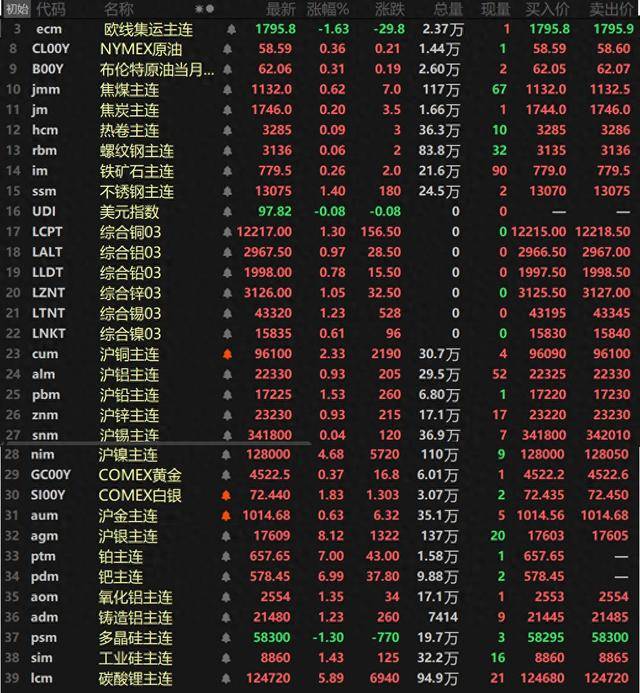
Metal Market - Domestic base metals collectively rose, with nickel leading at a 4.68% increase, reaching a peak of 130,880 yuan/ton, a new high since April 2025 [1] - Copper rose by 2.33%, hitting a record high of 96,750 yuan/ton, while lead increased by 1.53% [1] - Lithium carbonate surged by 5.89%, reaching a peak of 127,880 yuan/ton, a new high since November 2023 [1] - In the black metal sector, stainless steel rose by 1.4%, and iron ore increased by 0.26% [1] - Internationally, base metals also saw gains, with tin up by 1.23% and copper reaching a historical high of $12,282/ton [1] Precious Metals - COMEX gold rose by 0.37%, reaching a historical high of $4,555.4/ounce [2] - COMEX silver increased by 1.83%, peaking at $72.75/ounce, also a historical high [2] - Domestic gold rose by 0.63%, hitting a new high of 1,022.88 yuan/gram, while silver surged by 8.12%, reaching 17,671 yuan/kilogram [2] - Platinum and palladium both saw significant increases, with platinum up by 7% and palladium by 6.99% [2] Macro Environment - In November, China's total electricity consumption increased by 6.2% year-on-year, totaling 835.6 billion kWh [5] - The National Development and Reform Commission emphasized the need for strategic restructuring and high-quality mergers in state-owned enterprises [7] - The People's Bank of China conducted a net withdrawal of 208 billion yuan through reverse repos [7] - The US dollar index fell by 0.08% to 97.82, marking three consecutive declines [8]
百利好晚盘分析:GDP远超预期 黄金高位震荡
Sou Hu Cai Jing· 2025-12-24 08:59
Gold Market - The U.S. GDP data for Q3 was reported at 4.3%, a significant increase from the previous value of 3.8%, but the actual growth rate is believed to be closer to 2% when excluding anomalies [1] - Wall Street is shifting focus from recession risks to concerns about economic overheating and rising inflation due to the strong GDP data [1] - Gold prices experienced a short-term decline but remain in an upward trend, with a historical high of $4525 reached [1] - Key support for gold is at $4445, while resistance is at $4545 [1] Oil Market - Oil prices are rising as the market weighs strong U.S. economic data against geopolitical risks from Venezuela and Ukraine [2] - Strong personal consumption expenditure data supports the outlook for future oil demand [2] - OPEC+ has no plans to increase production in Q1 2026, which, along with geopolitical risks and improving U.S. economic conditions, may drive oil prices higher [2] - Key support for oil is at $57.70, while resistance is at $59.20 [2] U.S. Dollar Index - The U.S. GDP data of 4.3% exceeded market expectations, leading to a reduced probability of a Fed rate cut in January to 13% from 26% [3] - The Eurozone economy has shown unexpected resilience, leading to lowered expectations for a rate cut in March 2026 [3] - The market is currently in a downward trend, with a focus on the support level of 97.40 and resistance at 98.10 [3] Nasdaq Index - The Nasdaq index closed with a small gain, approaching the upper line of a symmetrical triangle [4] - The market shows a short-term upward trend, but there is a potential for a technical pullback due to increased divergence from the 120-day moving average [4] - Key resistance is at 25700, while support is at 25350 [4] Copper Market - Copper prices have reached new highs, continuing an upward trend [5] - The price has broken through previous consolidation levels and is trading above the 60/120-day moving averages [5] - Key resistance for copper is at $5.60, while support is at $5.48 [5] Market Overview - The U.S. economy expanded at a rate of 4.3% in Q3, marking the fastest growth in two years [6] - Investors have reduced bets on a Fed rate cut next year, with the probability of a cut at the January 28 meeting estimated at only 17% [6] - President Trump stated that anyone opposing him will never hold the position of Fed Chair, indicating a desire for lower interest rates if the market performs well [6]