
矿业

Search documents
中巴深化合作推进矿业全价值链融合
Xin Hua She· 2026-01-30 09:26
由全巴中资企业协会主办的中巴矿业全价值链合作论坛28日在 巴基斯坦首都伊斯兰堡举行。 本次论坛以"矿蕴腾飞,链筑未来"为主题,旨在推动两国矿业全 产业链深度融合。两国政府官员、矿业专家及企业代表约900人参 会。中巴双方企业在论坛期间签署多项谅解备忘录。 巴基斯坦规划、发展与特别项目部长阿赫桑·伊克巴尔在致辞中 说,中国是巴基斯坦矿业行业的核心战略合作伙伴。他指出,两国企 业多个合作项目已取得卓越成效,期待中方企业继续助力巴清洁能源 和高端制造业发展。 巴基斯坦石油部长阿里·佩尔瓦伊兹·马利克表示,中国在矿产勘 探、冶炼等领域的先进经验显著提升了巴基斯坦矿产出口与能源安 全。当前,巴方正积极改善矿业投资环境,简化审批流程,期待与中 方深化全价值链合作。 中国驻巴基斯坦大使姜再冬说,中巴双方首次举办矿业主题论 坛,立足"全价值链"合作,有利于从全面上开局破题、在发展上用力 收功,建议双方企业本着对国家发展有利、对生态环境友好、对矿区 民众友爱的精神推进合作。同时,希望巴方创造更加有利的营商环 境,切实统筹发展与安全,推动两国务实合作行稳致远。 全巴中资企业协会会长王辉华表示,通过全价值链合作,双方能 够将互补优 ...
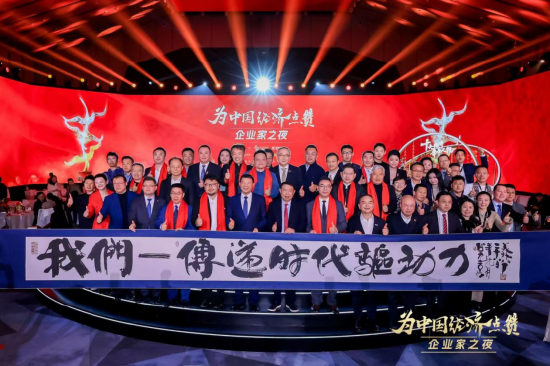
为什么是他们?40年激流,10座高峰,10个造舟者
新浪财经· 2026-01-30 09:24
Core Insights - The article highlights the achievements of ten exemplary entrepreneurs who have significantly contributed to China's economic landscape, showcasing their courage, vision, and resilience in various industries [3][4]. Group 1: Industrial Leadership - The emergence of great companies often begins with leaders who possess a profound insight into the "certainty" of their times, as exemplified by Ma Changhai of Weichai Power and Chen Jinghe of Zijin Mining [6]. - Chen Jinghe transformed Zijin Mining from a struggling company into a global mining giant by focusing on independent research and development, overcoming external competition and internal technical challenges [7][9]. - Ma Changhai led Weichai Power through comprehensive reforms and innovations, emphasizing the importance of mastering core technologies to strengthen China's industrial autonomy [11]. Group 2: Commitment to Excellence - Entrepreneurs like Leng Youbin of Feihe Dairy and Wu Xiangdong of Zhenjiu demonstrate the depth and warmth of "Made in China" through their commitment to quality and cultural heritage [13][16]. - Leng Youbin's strategic decisions during a crisis in the dairy industry led to the establishment of a complete supply chain for infant formula, enhancing safety and quality [14]. - Wu Xiangdong's acquisitions in the liquor industry allowed him to transition from brand management to controlling core production capabilities, thus preserving cultural heritage while achieving commercial success [17][19]. Group 3: Innovation and New Frontiers - Entrepreneurs such as Peng Jun of Xiaoma Zhixing and Zhao Deli of XPeng Huitian are pioneering new avenues in transportation, focusing on autonomous driving and flying cars, respectively [25][27]. - Liu Debing of Zhipu and Han Bicheng of Qiangnao Technology are exploring the intersection of artificial intelligence and life sciences, contributing to China's shift from application-driven innovation to foundational research [27][30]. - The article emphasizes the importance of these entrepreneurs in driving technological advancements and establishing China as a leader in global innovation [30].


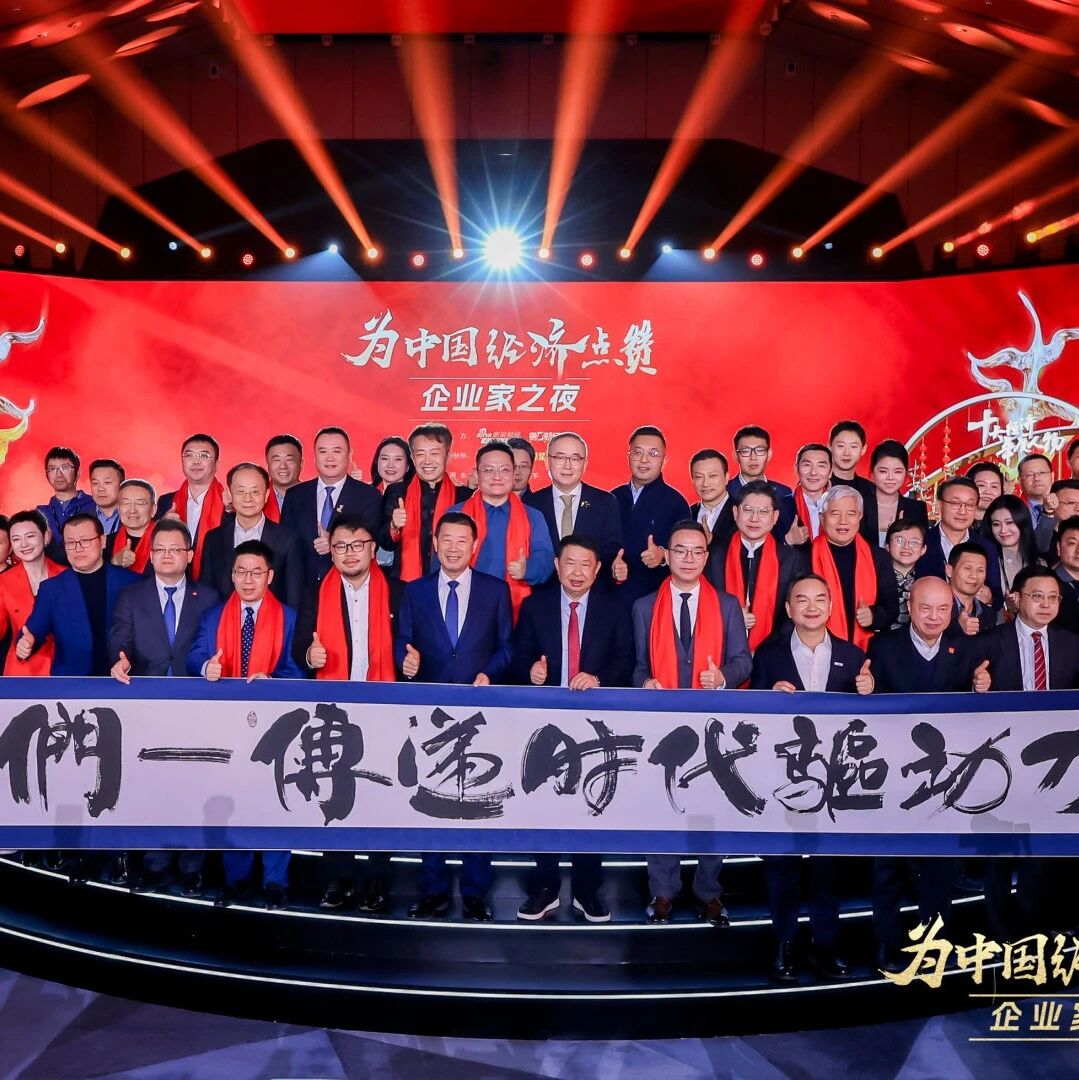
广东明珠:2025年净利同比预增2908.49%~3577.04%
Mei Ri Jing Ji Xin Wen· 2026-01-30 09:20
Core Viewpoint - Guangdong Mingzhu (600382.SH) expects a significant increase in net profit attributable to shareholders, projecting a range of 166 million to 203 million yuan for 2025, representing a year-on-year growth of 2908.49% to 3577.04% [2] Group 1: Financial Performance - The expected net profit growth is primarily driven by substantial increases in the production and sales volume of iron concentrate from its wholly-owned subsidiary, Mingzhu Mining [2] - Additional contributions to profit are expected from new sales of lump ore and changes in non-recurring gains and losses, including reduced amortization of unrecognized financing income, decreased investor compensation expenses, and increased gains from changes in the fair value of stocks [2]

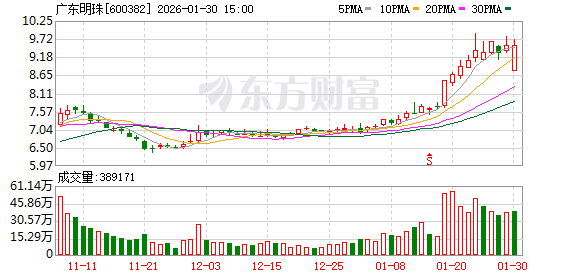
1月29日的夜晚,早已伏脉于千里之外
Xin Lang Cai Jing· 2026-01-30 08:53
Group 1 - The article highlights the significant contributions of various entrepreneurs to China's economic landscape over the past 40 years, emphasizing their courage, vision, and resilience in shaping the future of industries and the nation [2][35] - The narrative focuses on the theme of not just wealth and success, but also on pioneering new pathways in deep industrial waters and nurturing world-class dreams on the soil of national confidence [2][35] Group 2 - The emergence of great enterprises often begins with leaders who possess a profound insight into the "certainty" of the times, as exemplified by Ma Changhai of Weichai Power and Chen Jinghe of Zijin Mining [3][36] - In 1997, Chen Jinghe posed a critical question about the survival of Zijin Mining, which at the time was struggling with a seemingly worthless gold mine, and he committed to self-research and innovation to overcome external and internal challenges [3][37] Group 3 - Chen Jinghe's leadership led to significant advancements in technology and international strategy, transforming Zijin Mining from a local enterprise into a global mining giant [5][39] - Similarly, Ma Changhai faced fierce competition in the heavy machinery sector and emphasized the importance of mastering core technologies to ensure China's industrial autonomy [7][41] Group 4 - The stories of Chen Jinghe and Ma Changhai reflect the broader narrative of China's industrial evolution from scale chasing to reaching the pinnacle of technology and value chains [8][42] - The article also discusses the commitment of entrepreneurs like Cold Friend and Wu Xiangdong to redefine "Made in China" through deep-rooted business practices and cultural confidence [9][43] Group 5 - Cold Friend's strategic decisions during the crisis in the dairy industry led to the establishment of a complete supply chain for infant formula, enhancing the global competitiveness of Chinese dairy products [9][43] - Wu Xiangdong's acquisitions in the liquor industry marked a significant shift from brand operation to controlling core production capacities, thereby reinforcing cultural heritage through commercial success [11][45] Group 6 - The article emphasizes the role of entrepreneurs like Ma Yin in creating spaces that blend commerce and culture, establishing new value benchmarks in the real estate sector [14][48] - Lu Mai's advocacy for rural children's development highlights the importance of social equity and community engagement in entrepreneurial efforts [16][50] Group 7 - The narrative also covers the innovative pursuits of leaders like Peng Jun and Zhao Deli in the fields of autonomous driving and flying cars, pushing the boundaries of transportation technology [20][21] - Liu Debing and Han Bicheng are noted for their contributions to artificial intelligence and brain-computer interfaces, showcasing China's shift from follower to leader in global tech competition [23][28] Group 8 - The article concludes by celebrating the diverse stories of these entrepreneurs, portraying them as architects of a new era that encourages innovation and exploration [30][63] - It acknowledges the challenges faced on their journeys, underscoring their determination and commitment to their visions [31][63]
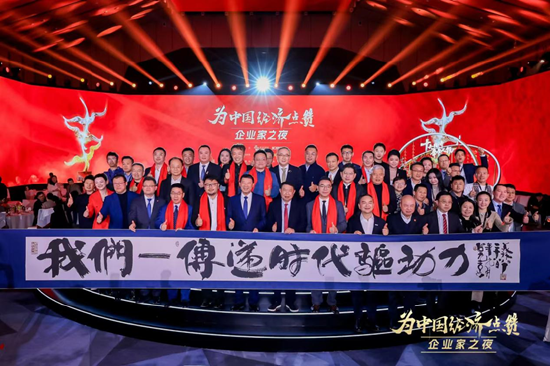
为什么是他们?40年激流,10座高峰,10个造舟者
Xin Lang Cai Jing· 2026-01-30 08:46
Core Insights - The article highlights the achievements of ten distinguished entrepreneurs who have significantly contributed to China's economic landscape, showcasing their courage, vision, and resilience in various industries [2][33]. Group 1: Industrial Leadership - Chen Jinghe, founder of Zijin Mining, transformed the company from a small local enterprise into a global mining giant by overcoming technical challenges and establishing an international strategy [5][37]. - Ma Changhai, chairman of Weichai Power, led the company through a comprehensive reform process, focusing on mastering core technologies and achieving breakthroughs in heavy-duty engines and hydraulic systems [7][40]. - Both Chen and Ma's stories symbolize China's industrial evolution from scale chasing to technological and value chain leadership [8][40]. Group 2: Manufacturing Excellence - Cold Friend, chairman of Feihe Dairy, adopted a long-term strategy to ensure the safety and quality of infant formula, establishing a complete supply chain from pasture to product [9][43]. - Wu Xiangdong, chairman of Guizhou Zhenjiu, transitioned from brand management to controlling core production capacities through strategic acquisitions, enhancing the cultural value of Chinese liquor [11][45]. - Ma Yin, founder of Anaya, created a unique cultural and tourism destination that emphasizes the integration of business and humanity, setting a new value benchmark in the real estate sector [14][47]. Group 3: Technological Innovation - Peng Jun, chairman of Pony.ai, is pioneering the field of autonomous driving, addressing complex challenges in algorithms and hardware to redefine future transportation [19][53]. - Zhao Deli, founder of XPeng, is working on flying cars, tackling significant technical and regulatory challenges to establish a new industry in low-altitude economy [22][56]. - Liu Debing, chairman of Zhipu AI, is focused on developing AI infrastructure with independent intellectual property rights, marking a significant step in China's AI industry [23][60]. - Han Bicheng, founder of Strong Brain Technology, is innovating in brain-computer interfaces, contributing to advancements in life sciences and assistive technologies [25][58]. Group 4: Social Responsibility and Vision - Lu Mai, former vice chairman of the China Development Research Foundation, emphasizes the importance of early childhood development in rural areas, advocating for immediate action to support children's growth [16][50]. - The article underscores the entrepreneurial spirit as a driving force behind China's transition from manufacturing to value creation, highlighting the importance of social responsibility and cultural heritage in business [18][52].

西藏矿业:预计2025年度净利润亏损2000万元~4000万元
Mei Ri Jing Ji Xin Wen· 2026-01-30 08:14
Group 1 - The core point of the article is that Tibet Mining has announced a profit warning, expecting a net loss attributable to shareholders of 20 million to 40 million yuan for 2025, a significant decline from the previous year's profit [1] - The basic earnings per share are projected to be a loss of 0.038 to 0.077 yuan, compared to a profit of 0.21 yuan in the same period last year [1] - The main reasons for the performance change include a decline in sales and prices of key products such as lithium concentrate and ferrochrome due to changes in production and resource endowment [1] Group 2 - The company is currently in a capacity ramp-up phase following the commissioning of the Zabuye Phase II project, which has not yet released its full production capacity [1]

西藏矿业(000762.SZ)发预亏,预计2025年归母净亏损2000万元至4000万元
智通财经网· 2026-01-30 08:01
Core Viewpoint - Tibet Mining (000762.SZ) has disclosed its 2025 annual performance forecast, expecting a net loss attributable to shareholders of between 20 million to 40 million yuan, and a net loss of 30 million to 60 million yuan after deducting non-recurring gains and losses [1] Financial Performance - The company anticipates a net loss of 20 million to 40 million yuan for the year 2025 [1] - The expected net loss after excluding non-recurring items is projected to be between 30 million to 60 million yuan [1]
西藏矿业:预计2025年全年净亏损2000.00万元—4000.00万元
2 1 Shi Ji Jing Ji Bao Dao· 2026-01-30 07:54
Core Viewpoint - Tibet Mining is expected to report a net loss attributable to shareholders of the listed company ranging from 20 million to 40 million yuan for the year 2025, indicating a significant decline in profitability due to various operational challenges [1] Financial Performance - The company anticipates a net profit loss, excluding non-recurring gains and losses, between 30 million and 60 million yuan for the year 2025 [1] - The decline in financial performance is attributed to a decrease in both sales volume and prices of key products, including lithium concentrate and ferrochrome, compared to the same period last year [1] Operational Challenges - The production capacity of the company's main product, lithium concentrate, and ferrochrome has been affected by changes in output and resource endowment [1] - The second phase of the Zabuye project is still in the capacity ramp-up stage, which has resulted in the inability to fully release production capacity [1]
美元走弱引爆“大调仓”:新兴市场大涨11%,市值狂增1万亿,多国股市涨超20%
Hua Er Jie Jian Wen· 2026-01-30 07:28
随着美元滑落至四年低点,全球资本市场正在经历一场剧烈的资产重新定价与配置转移,投资者正加速 将资金从美国资产分散至全球其他地区,推动新兴市场股票、债券和货币在2026年开局迎来全面爆发。 MSCI新兴市场股票指数在1月份已飙升近11%,继2025年大涨31%后创下自2017年以来的最佳表现。这 一强劲涨势推动该指数成分股市值在今年增加了逾1万亿美元,总市值达到28万亿美元。相比之下,发 达市场的表现显得更为温和,MSCI世界指数今年仅上涨2.8%,而标普500指数涨幅为1.6%。 除了宏观货币环境的宽松,特定行业的爆发也是推动本轮行情的关键动力。Ninety One股票投资组合经 理Archie Hart指出,如果观察黄金、白银和存储芯片的价格走势,会发现它们几乎呈现"垂直上涨"态 势。自去年10月以来,由于AI需求导致供应短缺,部分存储芯片的现货价格几乎翻了两番。 这种需求直接利好作为全球供应链关键环节的亚洲市场。中国台湾和韩国的芯片制造商股票在今年早些 时候录得显著涨幅,这些企业是美国AI公司的关键供应商,目前在新兴市场基准指数中占据很大比 重。此外,MSCI南非蓝筹股指数(主要由矿业和银行股组成)今年已 ...
巴西、南非股市因投资者对美国政策不确定性保持警惕而走强
Jin Rong Jie· 2026-01-30 07:17
Core Viewpoint - Emerging stock markets, particularly in Brazil and South Africa, are experiencing a boost due to global investors' concerns over U.S. policy uncertainty and a weakening dollar, leading to a shift in asset allocation away from Wall Street stocks towards diversification [1] Group 1: Emerging Markets Performance - The trend of diversifying investments has extended beyond gold and other precious metals, with emerging market stocks showing significant gains [1] - The MSCI Emerging Markets Index is projected to outperform the MSCI Developed Markets Index for the first time in five years by 2025 [1] - Major stock indices in Latin America, the Middle East, Africa, and Eastern Europe have reached new highs [1] Group 2: Investment Trends in Brazil and South Africa - From the beginning of the year to January 23, foreign investors have net purchased Brazilian stocks totaling 177 billion Brazilian Reais (approximately 3.3 billion USD), exceeding half of the total for the entire year of 2025 [1] - South African stocks are benefiting from high commodity prices, with Impala Platinum's stock price rising nearly 40% since the end of last year [1] - As gold and other precious metals continue to reach new highs, investors are increasingly buying stocks to capitalize on potential earnings growth [1]